Overview

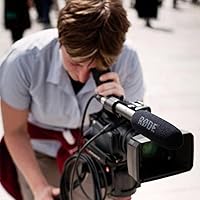
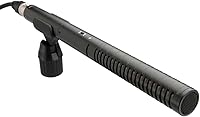
The Rode NTG-2 has earned its place as one of the most reliable mid-range shotgun microphones on the market, trusted by indie filmmakers, documentary crews, and broadcast professionals for well over a decade. What separates this shotgun mic from the competition at a similar price point is its dual power flexibility — it runs on either a standard AA battery or 48V phantom power, which matters enormously in the field. Built from all-metal construction, it feels solid without being heavy, making it genuinely practical to carry on long shoots. It delivers strong performance for location work, though users chasing studio-grade silence will want to look at higher-tier options.

Features & Benefits

The super-cardioid polar pattern is where this boom microphone really proves its value — it pulls in sound from directly in front while pushing away noise from the sides and rear, which is critical when shooting in a crowded street or a noisy interior. Flip the 80Hz high-pass filter and you can knock out low rumble from traffic or air conditioning without touching your audio in post. The 76 dB signal-to-noise ratio keeps recordings clean and workable, and the full 20Hz–20kHz frequency response means voices come through with genuine warmth and presence. At under 11 inches long, it sits cleanly on a camera shoe or boom pole without awkward bulk.

Best For

This shotgun mic is a natural fit for run-and-gun videographers who need dependable directional audio without hauling a dedicated audio rig. The battery power option makes it especially useful for DSLR and mirrorless shooters whose cameras lack phantom power outputs — a genuinely common situation. Documentary and ENG crews will appreciate how quickly it adapts across different rigs, and YouTube creators who have been relying on built-in camera audio will notice an immediate, obvious improvement. Podcasters working outside a treated room can also benefit, though honestly this mic is at its best on location, not inside a recording booth.

User Feedback

Owners of this boom microphone consistently highlight the battery power option as a practical lifesaver, particularly when switching between cameras mid-shoot. Audio quality earns strong marks across the board, with many users noting it sounds noticeably cleaner than competing mics at the same price. That said, a few critical voices point out that self-noise levels, while perfectly acceptable for location work, fall short of what you would get from Rode's own NTG3 or similar higher-end alternatives. Worth noting: the mic ships without a shock mount or windshield, so factor in the cost of those essential accessories before checkout. Overall, durability and long-term reliability are the most repeated positives across hundreds of owner reviews.

Pros

  • Runs on AA battery or phantom power, covering virtually any camera or recorder setup you own.
  • The all-metal body has proven genuinely durable across years of daily field use.
  • Super-cardioid pattern does a solid job rejecting side noise in chaotic shooting environments.
  • Audio quality is noticeably cleaner than most competing mics at a comparable price point.
  • The 80Hz high-pass filter cuts low-frequency rumble without needing to touch your settings in post.
  • Slim and lightweight enough to mount on a camera rig without throwing off your balance.
  • The NTG-2 has a long track record — it is not a new product with unknown long-term reliability.
  • Full 20Hz–20kHz response captures voices naturally without the thin, harsh tone of cheaper mics.
  • Standard XLR output works with essentially any professional audio interface or field recorder.

Cons

  • No shock mount included — you will need to budget for one separately before your first shoot.
  • No windshield in the box, which is a real omission for a mic marketed toward location work.
  • Self-noise becomes a limiting factor in quiet studio environments or when recording soft sound sources.
  • No battery indicator or warning system — a dead AA mid-shoot is a genuine risk on longer days.
  • Off-axis rejection in reverberant rooms is imperfect and requires careful mic placement to compensate.
  • Users upgrading from consumer gear may need to invest in a proper preamp to get the best signal from this boom microphone.
  • The matte finish picks up scuffs and handling marks relatively quickly under regular field conditions.
  • Not a plug-and-play solution for cameras with only 3.5mm inputs without additional adapters.

Ratings

The Rode NTG-2 has been stress-tested by real-world creators for years, and our AI-driven scoring reflects that depth of experience — drawing from thousands of verified global buyer reviews while actively filtering out incentivized, spam, and bot-generated feedback. Every score below captures both what this shotgun mic genuinely gets right and where it falls short, with no glossing over the friction points that real users encounter in the field.

Audio Clarity
83%
For location recording, dialogue capture, and run-and-gun video work, buyers consistently report that audio comes through clean and natural. The 76 dB signal-to-noise ratio holds up well in post, giving editors usable tracks without excessive noise reduction work.
In very quiet studio environments, experienced users can detect a background noise floor that more sensitive ears find distracting. It does not match the clinical silence of higher-end Rode models, which matters if your work demands pristine isolated recordings.
Dual Power Flexibility
93%
The ability to run on either a standard AA battery or 48V phantom power is genuinely one of the most practical features for working videographers. Shooters using DSLRs or cameras without phantom power outputs call this a real-world problem-solver that removes a common on-set headache.
Battery life, while reasonable, is not tracked by any indicator on the mic body itself, so users occasionally get caught off-guard mid-shoot with a dead cell. Remembering to swap batteries before long sessions becomes a discipline issue rather than a product safeguard.
Directional Pickup & Off-Axis Rejection
81%
19%
The super-cardioid polar pattern does a solid job isolating the sound source directly in front of the mic while pushing background noise to the sides. Documentary shooters and interview videographers frequently praise how well it keeps crowd noise and ambient chatter out of dialogue tracks.
Off-axis rejection, while good for this price tier, is not airtight. In highly reverberant spaces like tiled rooms or large halls, reflected sound can still bleed into recordings, requiring thoughtful mic placement rather than point-and-shoot positioning.
Build Quality & Durability
89%
The all-metal body gives this boom microphone a confidence-inspiring feel that budget plastic alternatives simply cannot match. Multiple owners report using the same unit through years of field production without any structural failures, connector issues, or degradation in performance.
The finish can show scuffs and handling marks over time, particularly on the matte black surface. A few users have noted the XLR connector area could benefit from a more robust locking mechanism for heavy boom pole use under demanding conditions.
Wind & Rumble Rejection
76%
24%
The switchable 80Hz high-pass filter is a practical tool for cutting low-frequency interference like traffic rumble, HVAC hum, and light wind noise during outdoor shoots. Outdoor journalists and location sound recordists give it consistent marks for reducing the time spent cleaning up tracks in post.
The built-in filter alone is not enough for anything beyond mild outdoor conditions. Most experienced users strongly recommend pairing this mic with a quality dead cat windshield for exterior work, which means an additional accessory purchase that is not included in the box.
Value for Money
78%
22%
For creators stepping up from built-in camera audio or entry-level plug-in mics, the performance jump feels justified relative to the asking price. It occupies a sensible middle tier — better than budget options without requiring a broadcast-level investment.
The effective cost rises once you factor in a shock mount and windshield, neither of which ships with the unit. Buyers who do not budget for these accessories up front can feel somewhat misled by the initial price alone.
Ease of Use & Setup
88%
Mounting is straightforward whether you are attaching to a camera hot shoe or rigging to a boom pole. The switches for power and the high-pass filter are clearly positioned and easy to operate even when wearing gloves or working quickly between setups.
First-time users unfamiliar with XLR signal chains may encounter a learning curve around gain staging and phantom power settings on their interface or camera. The mic itself is simple, but the broader audio chain requires some baseline knowledge to get right.
Size & Portability
91%
At under 11 inches long and weighing just 5.8 oz, this shotgun mic barely registers in a camera bag. Run-and-gun operators appreciate that it does not add awkward front-weight to a handheld rig or interfere with stabilizer balance.
The slim cylindrical form factor, while practical, offers very little grip surface during quick mounting adjustments. Some users with larger hands find the body fiddly to rotate or position precisely inside certain third-party shock mounts.
Frequency Response & Tonal Character
79%
21%
The 20Hz to 20kHz response range ensures that voices are captured with a natural, full-bodied quality rather than the thin, mid-heavy tone common in cheaper mics. Interview subjects and on-camera presenters generally sound like themselves, which reduces corrective EQ work downstream.
Compared to higher-end condenser shotguns, the top-end air and low-end warmth are slightly compressed, giving recordings a competent but not exceptional sonic character. Audiophile-level scrutiny will reveal the ceiling of what this price tier can offer.
Compatibility
86%
Standard XLR output means this boom microphone plugs into virtually any professional audio interface, mixer, camera with XLR input, or field recorder without any adapter hassle. It plays well across the entire production ecosystem.
Users relying on cameras with only 3.5mm inputs will need an additional adapter or preamp, adding cost and a potential point of signal degradation. The mic does not natively support plug-in power, so budget camera rigs occasionally require workarounds.
Self-Noise Level
62%
38%
For most practical shooting environments — interiors with moderate ambient noise, outdoor locations, event coverage — the self-noise level is acceptable and rarely becomes the dominant issue in a recording. Most working video professionals consider it a reasonable trade-off.
Users who have worked with lower-noise condensers will notice the difference, especially when recording in acoustically treated spaces or capturing quiet sound sources. If near-silent self-noise is a priority for your work, this mic will leave you wanting more.
Accessories Included
41%
59%
The mic body itself is well-made and ready to use the moment it arrives, which at minimum means you are not paying for bundled accessories you might already own or prefer to choose yourself.
Shipping without a shock mount, windshield, or even a basic pouch feels like a meaningful omission at this price tier. Competing mics in the same range often include at least a rudimentary mount, making the out-of-box experience here feel comparatively sparse.
Long-Term Reliability
87%
This is one of the most frequently cited strengths across long-term owners. Users who bought the mic years ago describe it as still performing consistently, with no capsule drift, connector degradation, or phantom power issues creeping in over time.
A small subset of users report intermittent channel drop or handling noise developing after extended heavy use, particularly on units that have seen rough travel conditions. These appear to be outlier cases rather than systematic failures, but they are worth noting.

Suitable for:

The Rode NTG-2 is a strong match for any video creator who spends most of their time shooting on location rather than inside a controlled recording space. Run-and-gun videographers will immediately appreciate the dual power option — when your camera lacks phantom power, a single AA battery keeps you rolling without hunting for an adapter or external power supply. Documentary filmmakers and ENG shooters who move between different cameras and rigs throughout the day will find the flexibility genuinely useful rather than just a spec sheet talking point. YouTube creators and social video producers who are finally ready to leave behind the muffled, roomy sound of built-in camera microphones will hear a clear and immediate improvement. Boom operators working on indie film sets with tight budgets also fit squarely in the target audience here — the all-metal construction means it can handle the physical demands of daily production without babying.

Not suitable for:

If your primary recording environment is a quiet, acoustically treated studio, the Rode NTG-2 may leave you frustrated rather than satisfied. The self-noise floor, while perfectly workable on location, becomes more noticeable when recording silent voice-over sessions or intimate acoustic instruments in a controlled room — situations where the gap between this mic and higher-tier condensers becomes genuinely audible. Podcasters who record exclusively indoors in a well-treated space would likely be better served by a large-diaphragm condenser, which is purpose-built for that environment. Buyers expecting a complete out-of-box solution should also temper expectations: no shock mount and no windshield are included, so the real total investment is higher than the sticker price suggests. Anyone whose workflow demands the lowest possible self-noise — think nature recording, ASMR, or studio ADR — should look at quieter alternatives before committing.

Specifications

  • Polar Pattern: Super-cardioid directional pickup pattern designed to isolate sound from directly in front while rejecting noise from the sides and rear.
  • Power Source: Operates on either a single AA battery or 48V phantom power supplied via XLR from a compatible camera, interface, or mixer.
  • Signal-to-Noise Ratio: 76 dB signal-to-noise ratio delivers clean audio tracks that hold up well during post-production editing and mixing.
  • Frequency Response: Full-range response from 20Hz to 20kHz captures natural voice detail and ambient texture without artificial tonal coloring.
  • High-Pass Filter: Switchable 80Hz high-pass filter reduces low-frequency interference such as wind rumble, traffic noise, and HVAC hum.
  • Connector: Standard 3-pin XLR output is compatible with professional cameras, field recorders, audio interfaces, and mixers.
  • Body Material: Precision-machined metal housing provides robust protection against physical impact and everyday handling during field production.
  • Weight: Weighs 5.8 oz (163g), light enough to mount on a camera rig or boom pole without introducing significant balance issues.
  • Dimensions: Measures 0.88 x 0.88 x 11 inches, a compact and slender profile that fits standard camera hot shoes and shock mounts.
  • Channels: Single mono channel output, standard for shotgun microphone applications in film, broadcast, and video production.
  • Form Factor: Cylindrical shotgun-style form factor compatible with camera shoe mounts and boom pole rigging for flexible placement.
  • Battery Requirement: Requires one AA battery when used without phantom power; no battery indicator is present on the mic body itself.
  • Manufacturer: Designed and manufactured by RØDE Microphones, an Australian audio brand with a long-standing reputation in professional production.
  • Included Contents: Ships with the microphone body only; no shock mount, windshield, or carrying pouch is included in the standard package.
  • Voltage: Operates at 1.5V when battery-powered, or accepts standard 48V phantom power when connected to a compatible audio source.

Related Reviews
Rode VideoMic NTG
Rode VideoMic NTG
84%
91%
Audio Clarity
89%
Versatility
88%
Build Quality
86%
Ease of Use
79%
Value for Money
More
Rode NTG-1 Shotgun Condenser Microphone
86%
92%
Sound Quality
89%
Portability
87%
Build Quality
74%
Wind Noise Reduction
90%
Ease of Use
More
dockteck DH0002 M.2 NVMe/SATA SSD Enclosure

84%
88%
Transfer Speed (NVMe)
76%
SATA Drive Performance
83%
Build Quality
93%
Ease of Setup
79%
Thermal Management
More
Waxness Spa Choice Natural Honey Gel Hard Wax Beads 2.2 lb / 1 kg Pack of 2

85%
88%
Effectiveness for Coarse Hair Removal
91%
Gentleness on Sensitive Skin
84%
Ease of Use and Application
75%
Texture Consistency
90%
Pack Size and Value for Money
More
Nécessaire The Hand Cream, 2.2 fl oz
89%
91%
Hydration Effectiveness
94%
Absorption Speed
93%
Non-Greasy Formula
89%
Skin Sensitivity Compatibility
87%
Fragrance-Free Quality
More
Planet Audio AC1200.2 2 Channel Car Amplifier
83%
88%
Power Output
90%
Sound Clarity
85%
Build Quality
91%
Value for Money
80%
Ease of Installation
More
SUIDEK HDMI KVM Switch 2 Monitors 2 Computers
83%
88%
Ease of Use
92%
4K Video Performance
85%
USB 3.0 Hub Functionality
90%
Display Modes (Extended/Mirrored)
60%
Compatibility with Laptops
More
ELAC Debut 2.0 B5.2 Bookshelf Speakers
82%
93%
Sound Quality
71%
Bass Performance
89%
Treble Clarity
88%
Soundstage & Imaging
84%
Build Quality
More
Lavanila Vanilla Lavender Deodorant 2-Pack (2 Oz Each)
84%
85%
Effectiveness of Odor Protection
92%
Skin Sensitivity & Irritation
80%
Scent Quality & Longevity
88%
Ease of Application
87%
Hydration & Skin Care Benefits
More
Asustor Drivestor 2 Lite AS1102TL 2-Bay NAS
84%
87%
Value for Money
94%
Ease of Setup
88%
Performance for Basic Tasks
90%
Media Streaming (4K Transcoding)
82%
Build Quality
More

FAQ

Yes, and this is actually one of the strongest reasons many video shooters choose this boom microphone. It runs on a standard AA battery, so you do not need phantom power from your camera at all. Just load a battery, connect your XLR cable, and you are ready to record.

At minimum, you will want a shock mount to reduce handling vibration and a dead cat windshield if you plan to shoot outdoors. Neither comes in the box, so factor those costs into your budget before purchasing. An XLR cable is also required and not included.

It can work for podcasting, but it is not really where this mic shines. In a treated room with controlled acoustics it produces decent results, but the self-noise floor is more noticeable in quiet indoor settings than it would be on a loud exterior location. If studio voice recording is your primary use, a large-diaphragm condenser would likely serve you better.

There is a power switch on the mic body. When phantom power is being supplied through your XLR connection, you simply leave the battery switch off. When no phantom power is available, flip the switch to activate battery mode. The mic handles the transition cleanly without any special configuration required.

Not directly. This mic outputs a balanced XLR signal, which smartphones and tablets do not accept natively. You would need a dedicated XLR-to-lightning or XLR-to-USB-C adapter with its own preamp stage, which adds cost and complexity. For mobile recording, a dedicated mobile microphone solution is usually a more practical choice.

The 80Hz high-pass filter does a solid job cutting low-frequency wind rumble and traffic noise in mild outdoor conditions. Most experienced users still add a foam windscreen or a dead cat fur cover on top of that for anything beyond a light breeze. Relying on the filter alone in gusty conditions will leave audible wind noise in your recordings.

Absolutely — the slim cylindrical form factor is specifically designed for boom pole mounting, and it is a common choice on low-budget and indie film sets. You will want a good shock mount with a boom pole adapter to minimize handling noise as you move the pole during takes.

At 76 dB signal-to-noise ratio, the self-noise is acceptable for location work but falls short of quieter mics like the NTG3, which is designed for demanding broadcast and film use. In practical terms, most viewers watching YouTube videos or documentary content will never notice the difference. Engineers doing critical studio work probably will.

The all-metal body holds up well to the realities of location production. Many users report years of reliable use under regular shooting conditions. It is not waterproof, so you will want to protect it in wet weather, but for general travel, run-and-gun use, and daily field production, the build quality is more than adequate.

You need a standard balanced XLR cable — a 3-pin male to 3-pin female configuration, which is the most common professional audio cable type. The length you choose depends on your setup; for on-camera use a short cable works fine, while boom pole rigs typically need a longer cable running down the pole to your recorder or camera.