Overview

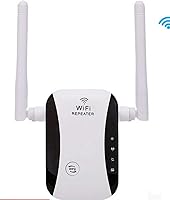
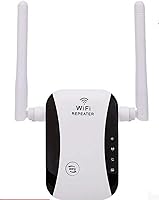
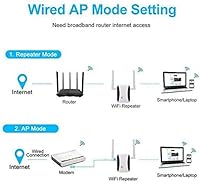
The SANOXY WAP-300 Wireless-N Wifi Repeater has been sitting in budget electronics lineups since 2011, and it's still doing the same basic job it always did: stretching a wireless signal a little further. Physically, this wifi extender is unassuming — a compact white box that plugs straight into a wall outlet without any external cables or bulky brackets. What sets it apart from some no-frills extenders is that it isn't locked into a single function. You can run this range repeater in standard repeater mode to boost an existing signal, or switch it over to act as a standalone access point. For a device this old and this cheap, that kind of flexibility is worth noting.
Features & Benefits

On paper, the spec sheet reads like a typical mid-2010s networking gadget rather than anything cutting-edge. This network booster tops out at 300Mbps, which won't compete with newer mesh systems but is plenty for basic browsing and streaming in a single dead zone. It supports the older 802.11b, g, and n standards, so compatibility with aging routers shouldn't be an issue. Two built-in 2dBi antennas handle the actual signal-boosting work, and the dual-mode setup means you're not locked into one configuration. At just over 7 ounces, this wifi extender is light enough to tuck behind furniture or near a window without drawing attention, and it sticks to the standard 2.4GHz band most home networks already use.

Best For

This device makes the most sense for people who aren't trying to overhaul their entire home network — just patch one weak spot. If you're renting a small apartment with a single stubborn dead zone, or running an older router that's never fully reached the back bedroom, this range repeater can fill that gap without much fuss. It's also a reasonable pick for anyone who wants a secondary access point on hand rather than buying a second router outright. Buyers expecting smartphone apps, detailed signal analytics, or dual-band speeds should look elsewhere; this is a straightforward tool built for a specific, modest job, not a do-it-all networking upgrade.

User Feedback

With an average of 3.5 stars across 180 ratings, opinions on this network booster land somewhere in the middle, which tracks with what you'd expect from budget extenders generally. Some buyers report exactly the coverage bump they were hoping for, especially in smaller homes where one extra access point makes a real difference. Others run into the kind of friction that's common at this price point — setup that takes more trial and error than expected, or results that depend heavily on router placement and existing network conditions. The dual-mode option seems to be a genuine selling point for some reviewers, while others may never touch it. As with most budget hardware, expectations matter as much as the device itself.

Pros

  • Dual-mode setup lets you switch between repeater and standalone access point without buying separate hardware.
  • Compact white housing plugs directly into an outlet, so there's no separate power brick to manage.
  • Supports the widely compatible 802.11b/g/n standards, making it easy to pair with older routers.
  • Lightweight build at just over 7 ounces makes it easy to tuck into tight spaces.
  • Price point keeps it accessible for buyers who just need one dead zone fixed, not a full upgrade.
  • Built-in 2dBi antennas give it a real shot at extending signal into nearby rooms.
  • Long track record on the market since 2011 means its quirks and limitations are well documented.
  • Works on the standard 2.4GHz band that the vast majority of home routers already use.

Cons

  • Average 3.5-star rating signals genuinely mixed results, not universal satisfaction.
  • 300Mbps is well below what newer mesh and dual-band systems offer today.
  • No companion app means all configuration happens through a more old-school web interface.
  • Setup experience appears inconsistent, with some buyers reporting more trial and error than expected.
  • Single-band 2.4GHz operation can get congested in homes with many connected devices.
  • No official specs mention guest network support or advanced parental controls.
  • Coverage improvement seems to depend heavily on placement, which takes some experimentation.
  • Doesn't include the kind of detailed signal strength reporting found on newer extenders.

Ratings

These scores for the SANOXY WAP-300 Wireless-N Wifi Repeater were generated by AI after analyzing verified buyer reviews from around the world, with spam, bot activity, and incentivized feedback filtered out before any number was calculated. The categories below reflect both where this network booster genuinely performs well and where real owners ran into friction, without smoothing over the rough edges. Use them as a practical snapshot of how this range repeater holds up once it is actually installed in someone's home.
Signal Range & Coverage
72%
28%
Many buyers report a genuine improvement in spots like home offices or back bedrooms that previously dropped Wi-Fi entirely. The 2dBi antennas seem to handle short-to-medium range gaps reasonably well, especially in apartments and smaller single-story homes.
Coverage gains shrink fast in larger homes or houses with thick walls, where one unit just is not enough to close every gap. Some users placed it too far from the router and saw little to no improvement until they repositioned it.
Setup & Ease of Use
58%
42%
Buyers who took time to read the manual found the web-based configuration straightforward enough, especially compared to fumbling with mismatched cables on older routers. Once paired, daily use requires no further interaction.
Without a companion app, initial pairing trips up plenty of non-technical users, and the trial-and-error process can eat up an entire evening. Several reviews mention having to reset and reconfigure the unit more than once before it stuck.
Value for Money
81%
19%
At this price point, getting both repeater and access point functionality in one device feels like a fair trade-off for buyers who just need a basic fix. It is an easy low-risk purchase for a single weak-signal room.
Buyers expecting performance closer to modern extenders may feel the savings come at the cost of speed and reliability. A few reviewers noted that spending a bit more upfront might have saved them a return or a second purchase.
Speed Performance
66%
34%
For everyday tasks like email, browsing, and music streaming in a home office or kitchen nook, the 300Mbps ceiling rarely becomes noticeable. Single-device use cases tend to feel smooth enough day to day.
Households streaming 4K video or running multiple devices through the repeater simultaneously often notice slowdowns compared to newer dual-band hardware. The older 802.11n spec simply was not built for today's bandwidth-heavy households.
Connection Stability
69%
31%
Once properly positioned, several long-term owners report the connection holding steady for months without needing a reset, particularly in stable home environments. It is described as a set-it-and-forget-it solution after the initial setup.
A subset of users describe intermittent drops, especially when the repeater sits at the edge of the router's range. Interference from neighboring 2.4GHz networks in apartment buildings appears to make stability less predictable for some buyers.
Build Quality
74%
26%
The compact white housing feels appropriately solid for a plug-in device, and its light 7.2-ounce weight keeps it from straining typical wall outlets. It tucks discreetly behind furniture or near baseboards without looking out of place.
The plastic casing is fairly basic and clearly built to a budget, so it will not impress anyone comparing it to premium mesh hardware. A few buyers wished for sturdier antenna mounts after repeated repositioning.
Router Compatibility
83%
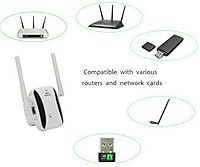
Supporting 802.11b, g, and n on the 2.4GHz band means it plays nicely with the vast majority of existing home routers, including older models many households still use. This broad compatibility is a relief for anyone not chasing the newest router standard.
Anyone relying on a 5GHz-only network or newer mesh ecosystem will find this device offers no benefit there. It is strictly a 2.4GHz solution, so it cannot help with dual-band coverage gaps.
Dual-Mode Flexibility
79%
21%
Being able to switch between repeater mode and standalone access point mode gives buyers more practical use cases than a single-purpose extender, particularly for wiring a garage or basement with ethernet. Reviewers who needed both functions found real value here.
Switching between modes is not always intuitive for first-time users, and the menus feel dated compared to toggle-based app controls. Buyers who only ever use one mode may never notice this flexibility was worth paying for.
Antenna Performance
71%
29%
The two 2dBi antennas do a reasonable job pushing signal through a wall or two, which covers the most common dead-zone scenario in smaller homes. Several users specifically credit the antennas for closing gaps near garages or upstairs bedrooms.
Performance drops noticeably beyond that range, and the fixed antenna design offers little room for fine-tuning direction or angle. Buyers in larger or oddly shaped homes often needed a second unit to fully close coverage gaps.
Design & Portability
77%
23%
Its compact, white plug-in form factor blends into most outlets without drawing attention, and at 7.2 ounces it is light enough to move between rooms if your needs change. No external cables or stands are needed.
Because it plugs directly into the wall, placement is limited to wherever outlets happen to be, rather than wherever signal strength is strongest. There is no desktop or shelf-mount option for buyers wanting more placement flexibility.
Documentation & Instructions
52%
48%
Buyers who carefully followed the included steps generally got the device running without needing outside help, and the basic web interface covers the essential settings clearly enough once located, especially for anyone comfortable navigating a router's admin page.
Multiple reviewers describe the printed instructions as thin or confusing, pushing them to search online forums for clearer setup guidance. This appears to be one of the more consistent frustrations driving down overall satisfaction.
Overall Customer Satisfaction
70%
30%
Buyers who bought this network booster purely to patch one specific dead zone tend to report being satisfied with the outcome relative to what they paid. It is frequently described as doing exactly what a basic budget extender should.
The 3.5-star average reflects a real split between buyers who got a smooth experience and those who struggled with setup or limited range. Expectations going in seem to matter just as much as the hardware itself.

Suitable for:

The SANOXY WAP-300 Wireless-N Wifi Repeater fits best in households where one room or corner just never gets a strong signal, rather than homes needing a full network overhaul. Renters in small apartments who cannot run ethernet cable or install a mesh system will likely get the most practical use out of it. It also suits anyone running an older router that only broadcasts on 2.4GHz, since compatibility will not be a concern here. Buyers who just want a plug-and-go fix for a single dead zone, without learning a companion app or juggling multiple settings menus, are the right audience. Someone needing a spare access point for a side project, a garage workspace, or a guest room could also get solid use out of it. Overall, it works best as a targeted patch, not a network foundation.
Not suitable for:

Anyone expecting modern dual-band speeds or mesh-style seamless roaming should look past the SANOXY WAP-300 Wireless-N Wifi Repeater entirely, since its hardware reflects an early-2010s design. Households with many connected devices, smart home hubs, or 4K streaming needs will likely find the 300Mbps ceiling limiting. Buyers who want app-based monitoring, firmware updates, or detailed signal analytics will not find any of that here. If your home has multiple weak spots spread across a large floor plan, a single unit like this probably will not solve the whole problem. People who get frustrated easily with manual setup steps might also want to consider a plug-and-play alternative with clearer instructions. It is simply not built for anyone chasing top-tier performance or modern smart-home integration.
Specifications

  • Brand: Manufactured by SANOXY, a budget-focused networking accessories brand.
  • Model Number: Officially listed under the model number WAP-300.
  • Wireless Standard: Supports the 802.11b, 802.11g, and 802.11n wireless protocols.
  • Data Transfer Rate: Rated for wireless transfer speeds of up to 300 Mbps.
  • Antennas: Equipped with two external antennas rated at 2dBi each.
  • Frequency Band: Operates exclusively on the 2.4GHz wireless frequency band.
  • Operating Modes: Functions as either a wireless repeater or a standalone access point.
  • Color: Housed in a white plastic enclosure.
  • Item Weight: Weighs approximately 7.2 oz.
  • Package Dimensions: Ships in retail packaging measuring 8.8 x 5.6 x 2.9 in.
  • Power Connection: Plugs directly into a standard wall outlet via a built-in US plug, with no separate adapter needed.
  • Customer Rating: Holds an average customer rating of 3.5 out of 5 stars based on 180 ratings.
  • Market Availability: Has been sold as a budget networking option since 2011.

Related Reviews
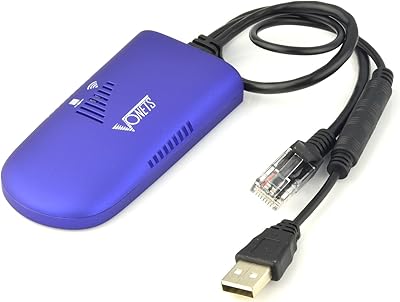
Vonets VAP11G-300 WiFi Bridge Repeater
72%
58%
Ease of Setup
83%
Bridge Mode Performance
67%
Repeater Mode Performance
61%
Wireless Range
71%
Build Quality & Durability
More
Lenovo 300 Wireless Keyboard
75%
94%
Ease of Setup
88%
Typing Noise
91%
Value for Money
62%
Build Quality
86%
Battery Life
More
Linksys E2000 Wireless-N Router
74%
88%
Ease of Setup
71%
Wireless Signal Strength
67%
Dual-Band Performance
91%
Wired Connection Reliability
83%
Guest Network Feature
More
Mercusys MW302R Wireless N Router
73%
91%
Ease of Setup
58%
Wi-Fi Speed & Throughput
67%
Wi-Fi Coverage & Range
74%
Signal Stability
63%
Parental Controls
More
Logitech Zone 300 Wireless Bluetooth Headset
78%
84%
Microphone Quality
78%
Comfort & Wearability
88%
Battery Life
86%
Call Clarity
61%
Audio Quality (Music & Media)
More
beyerdynamic Aventho 300 Wireless Over-Ear Headphones
77%
93%
Sound Quality
96%
Battery Life
74%
Noise Cancellation
71%
Comfort & Fit
67%
Dolby Atmos & Head Tracking
More
Vonets VAP11N-300 Mini WiFi Bridge
85%
86%
Performance
91%
Ease of Setup
88%
Power Efficiency
84%
Connectivity Range
90%
Device Compatibility
More
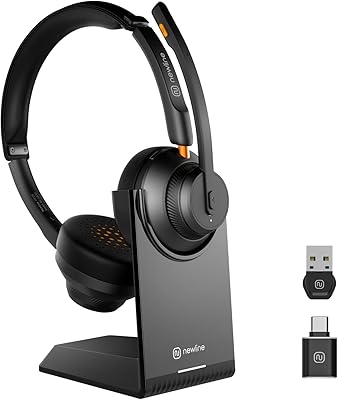
N newline Newcoo 50CDB
77%
88%
Battery Life
71%
Microphone Noise Cancellation
83%
Connection Reliability
67%
Wearing Comfort
86%
Charging Base Usability
More
Cisco WAP4410N Wireless-N Access Point

71%
88%
Build Quality
91%
Long-Term Durability
58%
Wireless Performance
76%
PoE Implementation
62%
Ease of Setup
More
Monster N-Lite 211 Wireless Earbuds
78%
88%
Battery Life
82%
Sound Quality
79%
Connectivity & Stability
58%
Mic & Call Quality
66%
Fit & Comfort
More

FAQ

In most cases, yes. It supports the 802.11b, g, and n standards on the 2.4GHz band, which covers the vast majority of home routers, including older ones. The one thing to keep in mind is that it does not touch 5GHz networks, so if your router relies on 5GHz for certain devices, this will not extend that side of things.

Repeater mode picks up your existing wireless signal and rebroadcasts it further into your home, basically stretching your current network. Access point mode is different, since it creates its own separate wireless network, which is handy if you are running an ethernet line into a far room and want wireless access there. Most buyers stick with repeater mode, but it is nice to have the option.

No, this network booster operates only on the 2.4GHz band. If you need 5GHz coverage extended too, you would want a dual-band extender instead, though those typically cost more.

Ideally somewhere roughly halfway between your router and the dead zone you are trying to fix, within range of both. Plugging it too close to the router defeats the purpose, and too far away means it will not pick up a strong enough signal to rebroadcast. A little trial and error with outlet placement usually gets you there.

It is not overly complex, but it is also not as plug-and-play as some newer extenders with companion apps. You will typically need to access a basic web-based configuration page to connect it to your existing network. Buyer feedback suggests the setup experience varies, so a little patience helps if it does not connect on the first try.

No app is required or available for this device. Configuration happens through a browser-based interface instead, which was fairly standard for extenders from this era.

For a single weak spot, especially in a smaller home or apartment, it has a reasonable chance of helping. It will not perform miracles in a large house with multiple dead zones, but for one problem area within reasonable range of your router, this range repeater can make a real difference.

It is enough for basic browsing, email, and standard or even most HD streaming on a single device. If you are trying to stream 4K content or game competitively on multiple devices through it at once, you will likely notice the limits of an older 300Mbps connection.

Technically you could plug it in as a separate repeater, but it is not designed to integrate with mesh networking systems, and mixing the two often creates more network confusion than benefit. If you already have a mesh setup, you are better off adding an official satellite node instead.

It depends on what you need it for. If you want a basic, inexpensive fix for one weak signal area and do not mind a slightly dated setup process, plenty of buyers have had good results. If you want guaranteed performance, app-based controls, or dual-band speeds, the mixed reviews suggest you might be happier spending more on a newer model.