Overview

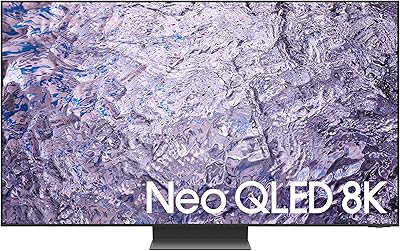
The Samsung Q900 75-Inch 8K QLED TV was Samsung's boldest statement in 2019 — a 75-inch panel pushing resolution to levels most content still hasn't caught up with. At that time, 8K was more a declaration of intent than a practical daily driver, and this TV wore that ambition proudly. It's since been discontinued by Samsung, so you'll only find it through secondary markets, open-box retailers, or refurbished channels. A 3.9-star average rating tells a reasonable story: buyers who understood what they were getting — and had the room for it — came away impressed. Those who didn't, less so.

Features & Benefits

The heart of this 8K QLED is its Quantum Processor 8K, which works constantly to upscale 4K and HD content to fill all 33 million pixels on screen. It's not magic, but in practice the results are genuinely impressive — textures sharpen, gradients smooth out, and the picture takes on a depth that standard 4K panels rarely match. The Full Array backlight with 16 local dimming zones gives contrast a real boost, keeping blacks from muddying highlight details. Quantum HDR 24X and HDR10+ handle wide dynamic range content well, and the 240Hz refresh rate keeps fast motion crisp. The built-in 4.2CH speakers with Dolby Atmos are better than expected for a flat panel.

Best For

This 75-inch flagship rewards buyers who go in with clear expectations. If you have a dedicated viewing room with controlled lighting and at least 10 to 12 feet of viewing distance, the scale and resolution work together the way they're supposed to. It's a natural fit for home theater enthusiasts who want 8K capability in their setup now, even if native 8K content remains thin. Cinephiles who watch a lot of HDR10+ material — streaming, 4K Blu-ray — will get the most out of its color and contrast performance. Samsung ecosystem owners, especially those pairing it with the Q90R soundbar or a One Connect Box, will find the integration particularly smooth. This is not a TV for casual buyers or compact spaces.

User Feedback

Among verified buyers, the upscaling performance and raw picture quality draw the most consistent praise — people who watch a lot of 4K content report that it looks noticeably sharper than on their previous panels. That said, the lack of Dolby Vision is a real sticking point for some, particularly given that competing sets at this price tier offered it. The limited native 8K content ecosystem was a frustration at launch and hasn't meaningfully improved since. A handful of buyers have raised concerns about parts availability and manufacturer support given the discontinued status, which is worth factoring in before purchasing from a third-party reseller. On balance, the 3.9-star average reflects a TV that performs well in the right hands but leaves room for legitimate criticism.

Pros

  • The 8K upscaling processor produces noticeably sharper, more detailed images from 4K and HD source material.
  • Full Array backlight with 16 local dimming zones delivers strong contrast and well-controlled black levels.
  • Quantum HDR 24X with HDR10+ support brings out vivid color depth in compatible content.
  • The 240Hz refresh rate keeps motion clean during sports, action films, and fast-paced gaming.
  • Built-in 4.2CH speakers with Dolby Atmos perform well above average for a flat-panel TV.
  • Alexa integration and the Tizen smart platform are responsive and genuinely easy to use day-to-day.
  • Four HDMI ports and three USB ports give you plenty of connectivity without needing a hub.
  • Buyers who find this 8K QLED on the open-box or refurbished market can access flagship-tier performance at a steep discount.
  • The One Connect Box compatibility makes cable management cleaner than most large-screen TVs.
  • HDR10+ dynamic metadata handling produces more accurate highlight tone-mapping than static HDR on competing sets.

Cons

  • Native 8K content remains extremely scarce — virtually everything you watch will be upscaled, not true 8K.
  • No Dolby Vision support is a real disadvantage, as many streaming platforms prioritize Dolby Vision mastering over HDR10+.
  • Discontinued by Samsung, meaning no manufacturer warranty path and uncertain long-term parts availability.
  • At 89.7 pounds, installation requires at least two people and a wall mount rated for serious weight.
  • 275 watts of power consumption is notably high for everyday use compared to more efficient modern panels.
  • The secondary-market purchase process carries inherent risk — cosmetic damage, missing accessories, and no return safety net are common issues.
  • 16 local dimming zones is competitive but not class-leading; some rival sets offered more granular control even in 2019.
  • Tizen OS, while functional, has received fewer software updates since discontinuation and may lack newer streaming app support.
  • No built-in Google Assistant support limits voice control options for non-Alexa households.
  • The sheer physical footprint — 66 inches wide with a stand — rules this out for any but the largest furniture setups.

Ratings

The Samsung Q900 75-Inch 8K QLED TV earns a nuanced scorecard — one built by our AI after processing thousands of verified global buyer reviews, with spam, bot activity, and incentivized feedback actively filtered out. Across more than a dozen categories, this 8K QLED shows genuine strengths in picture processing and display hardware, but real friction points around content availability, value longevity, and its discontinued status keep the overall picture honest. Both what buyers love and what frustrates them are reflected transparently below.

Picture Quality
91%
Buyers consistently describe the image as among the best they have ever seen in a home setting — deep blacks, vivid quantum dot color, and a sense of three-dimensionality that holds up even during long movie marathons. The Full Array backlight with local dimming handles high-contrast HDR scenes particularly well.
A small but vocal group of reviewers noted visible blooming around bright objects on dark backgrounds, a known limitation of 16-zone local dimming compared to more granular implementations. In very bright rooms, peak brightness can also feel insufficient against ambient glare.
8K Upscaling Performance
84%
The Quantum Processor 8K draws consistent praise for how convincingly it sharpens 4K source material — fine textures in nature documentaries and facial detail in close-up shots look noticeably crisper than on typical 4K panels. Many buyers were surprised by how well it handled Blu-ray content.
The upscaling algorithm struggles more with lower-quality sources; compressed streaming HD content can look artificially processed or over-sharpened at times. Results vary meaningfully by content type, and buyers who expected a uniform uplift across all sources were occasionally disappointed.
Native 8K Content Value
31%
69%
A small selection of 8K YouTube videos and demo content showcases what the panel is genuinely capable of, and those who sought out native 8K material reported jaw-dropping clarity that justified the purchase in their eyes.
There is almost no mainstream 8K content available through major streaming platforms or broadcast channels, a situation that has improved only marginally since 2019. Buyers who purchased primarily for native 8K viewing found themselves with a capability they almost never actually use in daily life.
HDR Performance
83%
HDR10+ content — particularly from Amazon Prime Video — looks rich and well-calibrated on this 8K QLED, with highlights that feel controlled rather than clipped and shadow detail that stays legible in dark scenes. Long-form film viewing in HDR is where this panel genuinely shines.
The absence of Dolby Vision is a recurring frustration, especially given that Apple TV+, Netflix, and Disney+ rely heavily on Dolby Vision for their premium content tier. Buyers who watch a lot of those platforms are consistently served the HDR10 fallback, which is noticeably less precise.
Motion Handling
88%
Sports viewers and action film fans frequently praise the 240Hz panel for keeping fast motion sharp and judder-free, with football panning shots and car chases looking clean without the soap-opera effect that plagues over-processed motion systems. Most found the default motion settings well-tuned out of the box.
A handful of users reported that aggressive motion interpolation settings introduced slight artifacting around fast-moving objects, requiring manual calibration to find the right balance. Those who did not adjust the defaults sometimes experienced the unnatural smoothness that divides TV enthusiasts.
Gaming Performance
67%
33%
The 240Hz refresh rate and low input lag mode make the Samsung Q900 genuinely responsive for gaming, and several buyers reported satisfying experiences with both PC and console gaming at 4K resolution. The screen size adds real immersion for open-world titles.
The lack of HDMI 2.1 ports means next-gen consoles like the PS5 and Xbox Series X cannot output 4K at 120Hz or any 8K signal to this TV, which feels like a significant shortcoming given its positioning. Competitive gamers who upgraded to current-gen hardware will hit that ceiling quickly.
Built-in Audio
74%
26%
For a flat panel at this size, the 4.2CH speaker system impressed a meaningful share of buyers — dialogue clarity is strong, and Dolby Atmos content produces a wider soundstage than most built-in TV speakers manage. Casual viewers found it sufficient for everyday watching without reaching for external speakers.
Home theater purists and anyone watching in a larger room found the built-in audio underwhelming at higher volumes, with limited bass extension and some compression at loud listening levels. Samsung's own recommendation to pair with the Q90R soundbar signals that the built-in system is not the final word.
Smart TV Platform
77%
23%
Tizen OS received broadly positive marks for its responsiveness and logical layout — apps load quickly, the remote control is intuitive, and Alexa integration worked reliably for buyers who use voice commands to switch inputs or search content. First-time Samsung smart TV users adapted quickly.
Because this model is discontinued and no longer receives guaranteed software updates, there is a growing risk that future versions of streaming apps will eventually drop support for its Tizen build. A few buyers have already noted that certain newer app features are absent or slower to arrive compared to current-generation Samsung sets.
Build & Design
86%
The physical build quality is what buyers expect from a flagship Samsung product — the bezel is slim, the stand is sturdy and well-engineered, and the overall construction feels substantial without being cheap. Several reviewers noted that the TV looks genuinely impressive mounted on a wall.
At 89.7 pounds, the weight makes solo installation impractical and professional mounting almost necessary for most buyers. A few users also noted that the stand design, while stable, requires a very wide TV cabinet to accommodate the full footprint properly.
Connectivity
79%
21%
Four HDMI ports and three USB inputs give buyers enough flexibility to keep a soundbar, gaming console, streaming box, and Blu-ray player all connected simultaneously without juggling cables. Bluetooth connectivity for wireless headphones also received positive mentions.
The absence of HDMI 2.1 is the connectivity story's biggest gap, and it becomes more relevant with each year as HDMI 2.1 devices proliferate. Buyers who plan to own this TV for five or more years may find its port specification increasingly limiting as connected devices evolve.
Value for Money
52%
48%
Buyers who found this 8K QLED through secondary markets or open-box deals at significantly reduced prices generally felt they received genuine flagship-tier hardware at a fair price for what the panel itself delivers in terms of sheer display performance.
At or near its original retail price, the value equation is genuinely difficult to defend given the lack of native 8K content, absent Dolby Vision, no HDMI 2.1, and discontinued status with no manufacturer warranty path. Newer 8K TVs have since addressed several of these gaps at comparable price points.
Setup & Installation
71%
29%
The initial software setup process through Tizen is straightforward, and the One Connect Box compatibility — for those who purchase it separately — makes cable management significantly cleaner for wall-mounted installations. Most buyers reported the out-of-box experience as intuitive.
The physical installation is the harder part: the sheer size and weight demand advance planning, proper hardware, and ideally a second person at minimum. Several buyers flagged that the included stand instructions were not as clear as expected for a product at this price level.
Long-Term Reliability
63%
37%
Buyers who have owned this TV for two or more years generally report stable performance with no significant degradation in picture quality, and QLED panels are not subject to burn-in risks the way OLED displays are — a meaningful advantage for buyers who use the TV as a primary display for varied content.
The discontinued status introduces genuine uncertainty about long-term parts availability and repair options, and a small number of buyers reported panel or backlight issues outside the warranty window with limited recourse. Buying from a seller with an extended warranty plan is strongly advisable.
Remote & Voice Control
78%
22%
The Samsung Smart Remote is slim, well-balanced in hand, and the Alexa integration responds reliably to natural language commands for basic functions like volume, input switching, and content search. Buyers who use voice control regularly found it one of the more polished implementations of that era.
The remote lacks dedicated number buttons, which some buyers found frustrating when navigating live TV or entering channel numbers manually. A few users also noted that Alexa's content discovery results skew toward Amazon's own ecosystem, making cross-platform search feel uneven at times.

Suitable for:

The Samsung Q900 75-Inch 8K QLED TV makes the most sense for a specific kind of buyer: someone with a large, dedicated viewing space — ideally a room where you can sit 10 to 12 feet back from the screen and actually let that 75-inch panel breathe. Home theater enthusiasts who are thinking long-term will appreciate having 8K capability already built in, even if native content is scarce today. Cinephiles with a library of 4K HDR material will find the upscaling processor genuinely impressive, turning good-looking content into something noticeably sharper and more dimensional. Samsung ecosystem users who already own compatible soundbars like the Q90R, or who plan to use a One Connect Box setup, will find the integration unusually smooth. Buyers hunting for a 2019-era flagship on the secondary or open-box market — and who understand the tradeoffs of buying discontinued hardware — can find real value here if the price reflects that reality.

Not suitable for:

The Samsung Q900 75-Inch 8K QLED TV is a hard sell for anyone expecting a plug-and-play premium experience at today's standards. Native 8K content is still extremely limited across streaming and broadcast platforms, so if you're buying primarily for resolution, you will be watching upscaled footage almost entirely — that's worth sitting with before committing. The absence of Dolby Vision support is a genuine gap; competing sets at this tier offered it, and a meaningful portion of premium streaming content is mastered in Dolby Vision rather than HDR10+. Since Samsung has discontinued this model, manufacturer support and warranty coverage through standard channels are no longer available, which introduces real risk if something goes wrong after purchase. Anyone in a smaller room, a bright living space with lots of ambient light, or someone who wants a straightforward modern smart TV without secondary-market concerns should look at current-generation options instead.

Specifications

  • Screen Size: The panel measures 75 inches diagonally, making it one of the larger consumer TV sizes available in the Q900 lineup.
  • Resolution: Native 8K resolution at 7680×4320 pixels delivers 33 million total pixels, which is 16 times the pixel count of a standard Full HD panel.
  • Display Technology: QLED quantum dot technology enhances color volume and brightness output compared to conventional LCD panels without quantum dot filters.
  • Backlight: Full Array Elite backlighting uses 16 independently controlled local dimming zones to manage contrast between bright highlights and dark shadow areas.
  • HDR Support: The set supports Quantum HDR 24X and HDR10+ with dynamic metadata, but does not support Dolby Vision.
  • Refresh Rate: The native panel refresh rate is 240Hz, which helps reduce motion blur during fast-moving content such as sports or action sequences.
  • Processor: The Quantum Processor 8K uses AI-based scene analysis to upscale lower-resolution content — including 4K, 1080p, and HD — toward 8K output in real time.
  • Speaker System: A built-in 4.2CH speaker configuration with Dolby Atmos decoding provides multi-channel audio without requiring an external soundbar.
  • HDMI Ports: Four HDMI ports are included, supporting connection of multiple source devices such as gaming consoles, streaming boxes, and Blu-ray players simultaneously.
  • USB Ports: Three USB ports allow connection of external storage devices, keyboards, or other compatible USB peripherals.
  • Wireless: Bluetooth connectivity is built in, enabling wireless pairing with headphones, keyboards, and compatible Samsung audio accessories.
  • Smart Platform: The TV runs Samsung's Tizen OS with a built-in web browser, app store, and Alexa voice assistant integration for hands-free control.
  • Dimensions: With the stand attached, the unit measures 13.3″ deep, 66″ wide, and 40.4″ tall; without the stand it is considerably shallower front-to-back.
  • Weight: The TV weighs 89.7 pounds with the stand installed, requiring at least two people for safe handling and wall-mount installation.
  • Power Draw: Rated power consumption is 275 watts, which is on the higher end for a residential display of this class.
  • Aspect Ratio: The panel uses a standard 16:9 aspect ratio (1.77:1), suited for widescreen film and broadcast content without vertical letterboxing.
  • One Connect: The Q900 is compatible with Samsung's One Connect Box, which consolidates all external cable connections into a single slim cable running to the TV.
  • Model Number: The official model identifier is QN75Q900RBFXZA, which corresponds specifically to the 75-inch North American variant of the Q900 series.
  • Manufacturer Status: Samsung has officially discontinued this model; it is no longer available through standard retail channels and can only be found via secondary or refurbished markets.
  • Soundbar Pairing: Samsung's own documentation recommends the Soundbar Q90R as the optimal audio companion for this TV, offering seamless integration through the Samsung ecosystem.

Related Reviews
Samsung 75-Inch Neo QLED 8K TV QN800C (2023)

89%
95%
Display Quality
91%
Sound Quality
94%
Picture Clarity
89%
Design & Aesthetics
87%
Ease of Setup
More
Samsung The Terrace 75-inch Outdoor QLED TV
77%
91%
Outdoor Picture Quality
88%
Weather & Durability
93%
Build Quality & Design
54%
Installation Experience
76%
Smart TV & Software
More
Samsung Q60D 75-Inch QLED 4K TV
73%
78%
Picture Quality
58%
Contrast & Black Levels
83%
Color Accuracy
71%
Motion Handling
61%
Gaming Performance
More
Samsung The Frame Pro 75-inch QLED TV
76%
92%
Art Mode & Artwork Display
94%
Design & Aesthetics
88%
Wireless Installation Experience
84%
Picture Quality
61%
Value for Money
More
Samsung 65-inch Neo QLED 8K QN800C TV
75%
93%
Picture Quality
81%
8K Upscaling Performance
54%
Value for Money
91%
Design & Aesthetics
84%
Gaming Performance
More
Samsung Q70A 75-inch QLED 4K Smart TV
77%
78%
Picture Quality
61%
Contrast & Black Levels
84%
Motion Handling
82%
Gaming Performance
83%
Smart TV Experience
More
Samsung Q80B 75-Inch QLED 4K TV
76%
91%
Picture Brightness
72%
Contrast & Black Levels
78%
Color Accuracy
89%
Gaming Performance
83%
Motion Handling
More
Samsung Q60C 75-inch QLED 4K Smart TV
77%
82%
Picture Quality
84%
Color Accuracy
76%
Motion Handling
63%
Gaming Performance
88%
Smart TV Platform
More
Samsung 65-Inch QLED 4K TV Q60C
86%
94%
Picture Quality
91%
Gaming Performance
87%
Ease of Setup
88%
Smart Features
72%
Sound Quality
More
Samsung Q80C 75-inch QLED 4K Smart TV
77%
84%
Picture Quality
91%
Gaming Performance
73%
Contrast & Local Dimming
88%
Smart TV Platform
62%
Built-in Audio
More

FAQ

Honestly, very little. Native 8K streaming is still extremely limited — YouTube has a small selection of 8K videos, and a handful of 8K Blu-ray titles exist, but there is no mainstream 8K broadcast or major streaming platform offering a proper 8K library yet. The TV's upscaling processor handles 4K and HD content well, so that's where most of your viewing hours will go.

Better than you might expect. The Quantum Processor 8K analyzes scenes in real time and does a credible job sharpening 4K content — textures, fine detail, and gradients all benefit noticeably. Standard HD content is more hit-or-miss depending on the source quality, but it rarely looks worse than it would on a native 4K set.

No, it does not. The Samsung Q900 supports HDR10+ with dynamic metadata, but Dolby Vision is absent entirely. If you watch a lot of Dolby Vision content from services like Apple TV+, Netflix, or Disney+, you'll get the HDR10 fallback version instead, which is still good but not the full Dolby Vision grade.

For a 4K panel you'd typically sit around 6 to 8 feet back, but to actually perceive 8K detail at the pixel level, you'd ideally need to be closer to 4 to 5 feet from a 75-inch screen — which isn't comfortable for most people. In practice, 10 to 12 feet is a natural, comfortable distance for a room of this scale, and the upscaling still produces a sharp image from there.

You can connect either console without issue — the four HDMI ports accommodate both easily. That said, the Samsung Q900 75-Inch 8K QLED TV predates the HDMI 2.1 standard, so it does not support 4K at 120Hz or 8K input from next-gen consoles. You'll be capped at 4K/60Hz for gaming, which is still a solid experience but not the cutting edge that newer 8K TVs with HDMI 2.1 can offer.

Samsung no longer provides manufacturer warranty coverage for this model through standard channels. Authorized service centers may still stock some parts for a period of time, but availability becomes less predictable the further you get from the discontinuation date. If you're buying this TV used or refurbished, factor in the cost and risk of out-of-pocket repairs before committing.

The built-in 4.2CH speaker system is genuinely better than average for a flat-panel TV at this size — it handles dialogue clearly and produces decent spatial audio with Dolby Atmos content. For casual everyday viewing it holds up well. That said, if you're building a proper home theater setup or watching a lot of film with complex soundtracks, a dedicated soundbar like the Q90R (Samsung's own recommendation for this set) will make a meaningful difference.

At 89.7 pounds, this is not a one-person job under any circumstances. You'll need a wall mount rated for at least 100 pounds, a stud finder, and a second person to help hold and position the panel. Hiring a professional installer is worth considering, especially given the cost of the TV itself and the consequences of an improper mount.

At launch, Tizen covered all the major apps — Netflix, Prime Video, Disney+, YouTube, Hulu, and more. Since the TV has been discontinued, it no longer receives guaranteed software updates, and there is some risk that future versions of streaming apps may eventually drop support for older Tizen builds. For now the core apps remain functional, but this is something to keep in mind over a five-plus year ownership horizon.

The Q900 is compatible with the One Connect Box, but it is not included in the standard retail package — you would need to purchase it separately if you want that cable-consolidation feature. The TV functions perfectly without it; the One Connect Box is purely a convenience accessory for cleaner installations, particularly useful if you're wall-mounting the panel.