Overview

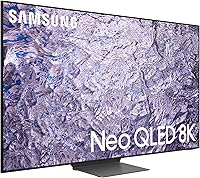
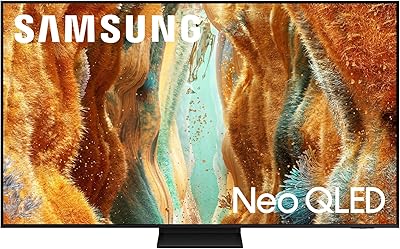
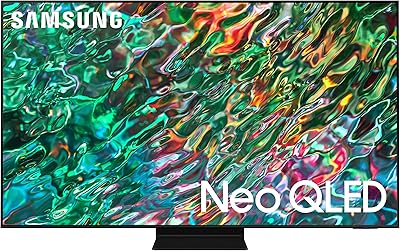
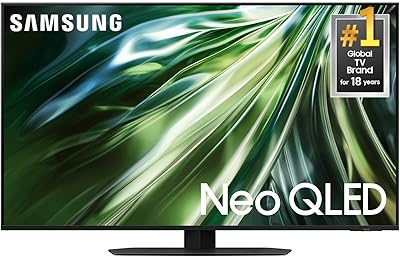
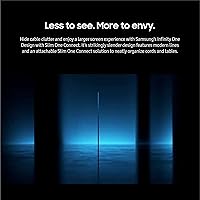
The Samsung 65-inch Neo QLED 8K QN800C TV is Samsung's most ambitious 65-inch panel from its 2023 lineup, built squarely for early adopters and dedicated home cinema enthusiasts. At its core, the Quantum Matrix Pro Mini LED backlight is what separates this set from the mainstream — thousands of tiny LEDs working in tight zones to deliver contrast that most LCD panels simply can't match. The ultra-slim Infinity One design, paired with the Slim One Connect box, keeps cables hidden and the profile remarkably thin. One honest note upfront: native 8K content is still scarce, so the majority of what you watch will be upscaled. That context matters when weighing this TV's 3.9-out-of-5-star average.
Features & Benefits

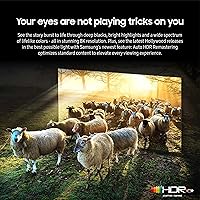
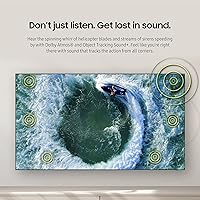
The Neural Quantum Processor 8K does the heavy lifting for anyone watching 4K or HD content — and that's essentially everyone right now. It analyzes and upscales incoming signals with enough intelligence that 4K Blu-ray and streaming material looks sharper and more dimensional than on most competing panels. The Neo Quantum HDR 8K+ system leans on precise Mini LED zone control to produce deep, punchy contrast without the blooming artifacts that plagued older LED designs. Built-in audio reaches 70 watts with Dolby Atmos and Object Tracking Sound+, which won't replace a dedicated soundbar but performs better than expected for a flat panel. Gamers also benefit from 120Hz refresh and Samsung Gaming Hub access.

Best For

This Neo QLED set makes the most sense for buyers building a long-term home theater setup who don't want to upgrade again in a few years. The 65-inch screen rewards large rooms, and the Anti-Glare Viewing Angle technology means guests sitting off to the side still get a clean, accurate image. Samsung ecosystem owners will appreciate Q-Symphony 3.0, which lets a compatible soundbar and the TV's speakers work in coordination rather than competing. If you care about cable-free aesthetics, the Slim One Connect box is a genuine differentiator. This is not the pick for buyers chasing maximum value per dollar at this size — it's for those who want the ceiling.

User Feedback

The 3.9-star average is telling — it's a strong score, but not the near-perfect rating you'd expect at this price tier. Owners consistently praise the picture clarity and slim profile, and upscaling performance draws regular compliments from buyers who watch a mix of 4K and HD content. The criticisms are pointed: Tizen OS surfaces ads in places buyers at this level find frustrating, and the smart remote has a real learning curve. A number of users question whether the QN800C's picture meaningfully outpaces Samsung's own 4K QLED lineup at this size — a fair debate. Setup complexity around the One Connect cable has also tripped up some owners during installation.

Pros

  • Quantum Matrix Pro Mini LED backlight delivers contrast and black levels that clearly outperform standard LED panels in a dark room.
  • The Neural Quantum Processor 8K upscales 4K and HD content convincingly, which matters since native 8K streaming barely exists yet.
  • Anti-Glare with Ultra Viewing Angle keeps the picture accurate even for viewers sitting well off-center in large rooms.
  • The Infinity One design and Slim One Connect box make for one of the cleanest, most design-forward TV installations available.
  • 120Hz refresh rate and Samsung Gaming Hub make the QN800C a capable next-gen gaming display, not just a passive viewing screen.
  • Q-Symphony 3.0 lets compatible Samsung soundbars and the TV speakers work together rather than one overriding the other.
  • Built-in Dolby Atmos with Object Tracking Sound+ performs better than most flat-panel audio systems at this size.
  • Alexa is built in, reducing the need for an external smart home hub for voice control of compatible devices.

Cons

  • Native 8K content is almost nonexistent on major streaming platforms, making the resolution headline largely theoretical for now.
  • Tizen OS displays promotional content and ads that feel inappropriate and frustrating at this price level.
  • The smart remote has a learning curve that multiple owners flag as unintuitive, especially during initial setup.
  • Some users report complications with the One Connect box cable during installation, requiring patience to route cleanly.
  • The real-world picture gap between this and Samsung's own 4K QLED sets is narrower than the price gap suggests.
  • Q-Symphony 3.0 only works with Samsung Q-Series and S-Series soundbars, locking out buyers with third-party audio setups.
  • At 71.9 pounds, wall-mounting requires a sturdy mount and ideally a second person — not a casual solo installation.
  • The 3.9-star average reflects a meaningful contingent of buyers who feel the premium price was not fully justified by day-to-day performance.

Ratings

The Samsung 65-inch Neo QLED 8K QN800C TV has been scored across key performance categories by our AI system after analyzing thousands of verified global user reviews, with spam, bot-submitted, and incentivized feedback actively filtered out. These scores reflect the honest distribution of real buyer experiences — the genuine strengths this panel delivers and the friction points that keep it from universal acclaim. Both sides of the ownership experience are represented transparently below.
Picture Quality
93%
Owners consistently describe the Mini LED backlight as a meaningful step up from standard LED and even older QLED panels, particularly in dark room conditions where the contrast depth becomes obvious. HDR movie watching — especially on 4K Blu-ray — draws consistent praise for how well the TV renders shadow detail without crushing blacks.
A small portion of users note that in very bright rooms, the full contrast advantage diminishes, and some report minor blooming around bright objects on dark backgrounds, which is a known characteristic of zone-based Mini LED systems rather than true per-pixel OLED control.
8K Upscaling Performance
81%
19%
For a TV where native 8K content is nearly nonexistent, the Neural Quantum Processor 8K does a genuinely impressive job with 4K source material, adding perceived sharpness and texture that makes streaming content look more refined than on comparable 4K panels. Regular cable and HD broadcast content also benefits more than most owners expected.
Upscaling results vary by source quality — highly compressed streaming content at lower bitrates can still look soft, and the gap between upscaled 4K and true native 8K is noticeable when the rare native 8K demo content is played side by side. Managing expectations here is critical.
Value for Money
54%
46%
For buyers committed to an 8K future and a design-forward installation, the QN800C delivers a premium hardware package that covers gaming, audio, and picture quality in one device, which partially justifies the significant outlay compared to assembling separate components.
This is where the 3.9-star average is most telling: a meaningful portion of owners feel the real-world picture advantage over Samsung's own 4K Neo QLED lineup does not justify the price premium, especially given how little native 8K content exists today. Sophisticated buyers doing side-by-side comparisons often walk away questioning the delta.
Design & Aesthetics
91%
The Infinity One ultra-slim profile genuinely impresses in person — multiple reviewers describe it as the first TV they have owned that looks intentional on a wall rather than just functional. The Titan Black finish and near-invisible bezels hold up well even in design-conscious living spaces.
The Slim One Connect box, while clever, introduces its own cable management challenge — the connecting cable between the box and panel needs to be routed carefully, and a handful of owners report that the cable is shorter than expected for their particular wall-mount configuration.
Gaming Performance
84%
The 120Hz refresh rate and low input lag in game mode make the QN800C a capable display for PS5 and Xbox Series X gaming, with Samsung Gaming Hub adding the convenience of cloud gaming without a console connected. Motion clarity during fast-paced titles is noticeably smooth.
Some dedicated gaming users note the absence of a VRR toggle that is as accessible as on competing panels, and HDMI 2.1 bandwidth allocation across ports requires careful setup to unlock full next-gen gaming capabilities — it is not automatic out of the box.
Built-in Audio
72%
28%
At 70 watts with Dolby Atmos processing, the onboard speakers outperform what most buyers expect from a flat panel at this size — dialogue clarity is strong, and the Object Tracking Sound+ feature does create a convincing sense of directionality during action scenes without a soundbar present.
Sustained bass and overall room-filling volume still fall short of what even a modest soundbar adds, and owners who try the TV speakers after using a dedicated audio system almost universally recommend budgeting for a soundbar addition, especially for music or cinematic content.
Q-Symphony Soundbar Integration
78%
22%
Users who own compatible Samsung Q-Series or S-Series soundbars report that Q-Symphony 3.0 works as described — the two audio systems coordinate naturally, and the result feels more cohesive than a standard soundbar passthrough, with overhead channels filling in more convincingly.
The feature is entirely locked to Samsung's own soundbar ecosystem, which feels limiting at this price point. Owners with premium third-party soundbars from Sony, Sonos, or Bose get none of this benefit and must treat the TV audio and external audio as completely separate systems.
Smart TV Interface
61%
39%
Tizen OS is genuinely fast and responsive compared to competing smart TV platforms — app load times are quick, the interface is logically organized for most common streaming use cases, and Alexa integration works reliably for voice-controlled smart home commands.
Promotional content tiles and sponsored rows on the home screen are a recurring source of frustration in user reviews, and the feeling of being advertised to on a flagship-priced purchase is a legitimate grievance that Samsung has not adequately addressed in software updates.
Setup & Installation
67%
33%
For buyers who use a TV stand rather than wall-mounting, setup is straightforward and the Slim One Connect approach keeps the entertainment unit tidy. First-time smart TV users generally find the on-screen setup wizard clear enough to get streaming running within minutes.
Wall-mount installation is more involved than a standard TV — routing the Slim One Connect cable cleanly, managing the box placement, and the 71.9-pound weight all add complexity. Several owners recommend professional installation, which adds cost that should be factored into the overall budget.
Anti-Glare & Viewing Angle
86%
In large living rooms with windows or overhead lighting, the Anti-Glare coating performs noticeably better than glossy-panel alternatives, and the Ultra Viewing Angle technology keeps color and contrast accurate for viewers sitting well off to the sides — a genuine differentiator for family viewing setups.
In a pitch-dark dedicated home theater where ambient light is fully controlled, the anti-glare coating can introduce a very slight haze that OLED panel owners sometimes find noticeable. It is a minor complaint but one that purists in light-controlled environments occasionally raise.
Remote Control
58%
42%
The Solar Cell Remote is a thoughtful hardware choice — it charges via ambient light and USB-C, eliminating battery replacements entirely, and the physical build quality feels premium in hand with a clean button layout.
The smart remote's reliance on the SmartThings app for full device control has a real learning curve, and several owners report that the button mapping feels counterintuitive when switching between inputs or adjusting picture settings during initial weeks of use.
Connectivity Options
79%
21%
The port selection covers the practical needs of most setups — multiple HDMI inputs, USB ports, USB-C, Bluetooth, and Wi-Fi ensure that consoles, streaming sticks, soundbars, and peripherals can all be connected simultaneously without compromise.
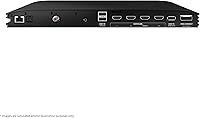
Port access is routed entirely through the Slim One Connect box rather than directly on the panel, which means any future cable changes require locating and accessing the box — a minor inconvenience that becomes slightly annoying if the box is tucked away behind furniture.
Long-Term Reliability
74%
26%
Samsung's broader QLED lineup has a solid multi-year track record for panel longevity, and the QN800C inherits that reputation. Users who have owned the set for over a year report no degradation in picture quality or backlight performance under normal usage conditions.
Mini LED backlights are a newer technology than traditional LED and OLED, and long-term failure rates at scale are still being established. A small number of users report backlight uniformity shifts after extended use, though it is not yet a widespread documented pattern for this specific model.

Suitable for:

The Samsung 65-inch Neo QLED 8K QN800C TV was built for a specific kind of buyer, and that buyer knows who they are. If you're setting up a dedicated home theater in a large room, the combination of 65 inches, wide-angle Anti-Glare technology, and precise Mini LED contrast control makes a real and visible difference over a standard 4K panel. Samsung ecosystem users will get the most out of Q-Symphony 3.0 if they pair this with a compatible Q-Series or S-Series soundbar, turning the entire audio setup into a coordinated system rather than two separate devices doing their own thing. Early adopters who want to be 8K-ready without waiting another hardware cycle will find the Neural Quantum Processor 8K handles upscaling well enough that the content library gap feels less painful day-to-day. Anyone who cares deeply about a clean, cable-minimal installation will also appreciate the Slim One Connect box, which genuinely delivers on that promise.
Not suitable for:

If your primary concern is getting the most picture quality per dollar at the 65-inch size, the Samsung 65-inch Neo QLED 8K QN800C TV is a hard sell compared to Samsung's own 4K QLED lineup or strong competitors at a lower price point. The honest reality is that native 8K content is still extremely limited — most of what you watch will be upscaled 4K or HD, which means you're partly paying for future-readiness rather than an immediate, tangible upgrade in what you actually stream tonight. Buyers who find Tizen OS intrusive will not find relief here; the platform surfaces promotional content in ways that feel out of place on a premium purchase. If you're not already invested in the Samsung audio ecosystem, Q-Symphony 3.0 adds no practical value. And if your viewing room is smaller or your seating position is fixed and centered, the wide-angle technology is a feature you'll never actually need.
Specifications

  • Screen Size: The panel measures 64.5 inches diagonally, marketed as a 65-inch class display with a 16:9 aspect ratio.
  • Resolution: Native 8K resolution at 7680 x 4320 pixels, delivering four times the pixel count of a standard 4K panel.
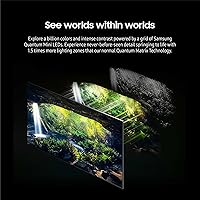
  • Display Technology: Neo QLED panel using Quantum Matrix Pro Mini LEDs arranged in a dense grid for precise zone-level backlight control.
  • Processor: The Neural Quantum Processor 8K handles real-time upscaling, AI-driven picture optimization, and audio enhancement across all input sources.
  • HDR Support: Neo Quantum HDR 8K+ is supported, using Mini LED zone control to produce bright highlights and deep blacks simultaneously.
  • Refresh Rate: Native 120Hz refresh rate supports smooth motion for both broadcast sports content and next-generation gaming consoles.
  • Audio Output: Built-in speaker system outputs 70 watts total, with Dolby Atmos and Object Tracking Sound+ for directional audio rendering.
  • Soundbar Sync: Q-Symphony 3.0 allows compatible Samsung Q-Series and S-Series soundbars to operate in concert with the TV speakers as a unified system.
  • Design: Infinity One ultra-slim profile is paired with a Slim One Connect box that consolidates all ports and external connections away from the panel.
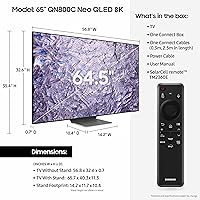
  • Dimensions: With stand, the TV measures 10.4″ deep, 56.8″ wide, and 35.4″ tall; without stand dimensions will vary.
  • Weight: The unit weighs 71.9 pounds with stand, which requires a sturdy wall mount or solid TV stand for safe installation.
  • Connectivity: Ports include HDMI, USB, USB-C, with wireless options covering Bluetooth and dual-band Wi-Fi for streaming and peripheral connections.
  • Smart Platform: Runs Samsung's Tizen OS with Alexa built-in, Samsung Gaming Hub, and access to major streaming apps out of the box.
  • Color Finish: Available in Titan Black, with the Infinity One design minimizing visible bezels for a nearly borderless front appearance.
  • Model Number: The exact model identifier is QN65QN800CFXZA, which should be used when cross-referencing compatible mounts, accessories, or warranty documentation.
  • Anti-Glare: Anti-Glare with Ultra Viewing Angle technology is built into the panel coating to maintain color accuracy across wide off-axis seating positions.
  • Included Items: The box includes a user manual, e-manual, and power cable; no soundbar or external streaming device is included.
  • Model Year: This is a 2023 model, first listed for sale in February 2023 as part of Samsung's QN800C flagship series.

Related Reviews
Samsung 75-Inch Neo QLED 8K TV QN800C (2023)
89%
95%
Display Quality
91%
Sound Quality
94%
Picture Clarity
89%
Design & Aesthetics
87%
Ease of Setup
More
Samsung QN95B 65-Inch Neo QLED 4K TV
75%
93%
Picture Brightness
88%
Color Accuracy
76%
Contrast & Black Levels
89%
Gaming Performance
84%
Anti-Glare Effectiveness
More
Samsung QN70F 65-inch Neo QLED Smart TV
80%
86%
Picture Quality
91%
Gaming Performance
88%
Motion Handling
79%
AI Upscaling
71%
Smart Platform
More
Samsung Q900 75-Inch 8K QLED TV
73%
91%
Picture Quality
84%
8K Upscaling Performance
31%
Native 8K Content Value
83%
HDR Performance
88%
Motion Handling
More
Samsung QN85C 65-inch Neo QLED 4K TV
82%
91%
Picture Quality
83%
Local Dimming & Contrast
93%
Gaming Performance
88%
Motion Handling
86%
HDR Performance
More
Samsung 65-Inch QLED 4K TV Q60C
86%
94%
Picture Quality
91%
Gaming Performance
87%
Ease of Setup
88%
Smart Features
72%
Sound Quality
More
SAMSUNG 43-Inch Neo QLED 4K QN90B TV
88%
95%
Picture Quality
92%
Color Accuracy
87%
Sound Quality
94%
Brightness & Contrast
89%
Ease of Setup
More
Samsung QN85D 65-inch 4K QLED TV
79%
93%
Picture Brightness
74%
Contrast & Black Levels
88%
Color Accuracy
91%
Motion Handling
82%
Gaming Performance
More
Samsung QN90F 50-inch Neo QLED 4K TV
88%
96%
Picture Quality
94%
HDR Performance
92%
Brightness and Glare Handling
90%
Motion Handling
91%
Gaming Performance
More
Samsung QN90D 98-inch Neo QLED 4K TV
80%
93%
Picture Quality
96%
Screen Size Impact
88%
HDR Performance
87%
Gaming Performance
89%
Motion Clarity
More

FAQ

Honestly, very little. A small number of 8K YouTube videos and some select titles exist, but no major streaming platform offers a meaningful 8K content library yet. The Neural Quantum Processor 8K upscales 4K and HD content in real time, and that is what most owners are actually watching day to day. If you are buying this expecting a deep 8K library, you will be disappointed — but if you are buying it as a long-term investment in a panel that will still be relevant when 8K content eventually arrives, that is a more defensible position.

Quite good, in practice. The processor does a genuine job of sharpening edges, adding perceived depth, and reducing noise in 4K Blu-ray and streaming sources. It is not magic — you will not confuse it with true native 8K — but the result is noticeably cleaner and more detailed than what you get from a standard 4K panel processing the same content.

The 70-watt built-in system with Dolby Atmos is better than most flat-panel TVs at this size, so casual viewers may be satisfied. That said, Q-Symphony 3.0 is a real feature that works well if you pair it with a compatible Samsung Q-Series or S-Series soundbar — the two systems coordinate rather than one overriding the other. If you already own a third-party soundbar, Q-Symphony will not apply, but you can still connect it normally via HDMI ARC or optical.

The Slim One Connect box is a small external unit that houses all the TV ports — HDMI, USB, power — and connects to the panel via a single thin cable. It keeps the TV itself free of port clutter and makes wall mounting much cleaner since you can route the single cable and hide the box nearby. It is not optional; it is part of how this TV is engineered, so you will be using it regardless.

Yes, with some caveats. The 120Hz refresh rate and Samsung Gaming Hub make it a capable gaming display for PS5 and Xbox Series X owners. Input lag in game mode is low enough for responsive play. The Gaming Hub lets you stream cloud games without a console connected, which is a useful bonus. Just be aware that HDMI 2.1 bandwidth details should be confirmed against your specific console's output requirements before assuming full 4K 120Hz or 8K support.

They are noticeable enough that they come up repeatedly in user reviews, which says something. Samsung places sponsored content tiles in the home screen and in certain menus, and on a TV at this price point, many buyers find that frustrating. You can minimize some of it through settings, but you cannot eliminate it entirely. It does not affect picture or performance, but it is a genuine quality-of-life irritant worth knowing about.

At 71.9 pounds, this is not a comfortable solo wall-mount job. Two people and a VESA-compatible mount rated for the weight are the minimum. If you are also routing the Slim One Connect cable through the wall for a truly clean look, a professional installer will make that significantly easier and less stressful. The result when done right looks excellent — but plan for it rather than improvising.

This is the most honest question to ask before buying. Samsung's 4K QLED lineup at 65 inches delivers outstanding picture quality at a lower price, and for most viewing content — which is 4K or below — the practical difference is smaller than the price gap implies. The QN800C wins on future-proofing, panel brightness ceiling, and Mini LED precision, but if you are purely optimizing for picture quality per dollar today, Samsung's own 4K options are a strong counter-argument.

For 8K resolution to be perceptible, you generally need to sit closer than you would with a 4K panel of the same size — roughly 4 to 5.5 feet is often cited for 65 inches, though many viewers sit further back in real living rooms. At typical seating distances of 8 to 10 feet, the resolution advantage over 4K shrinks considerably. This does not make the TV a bad choice, but it is worth understanding before expecting a dramatic perceptual leap from your current couch position.

The box comes with the TV panel, Slim One Connect box and its connecting cable, a power cable, and printed and digital manuals. You will need your own HDMI cables for any external devices like a streaming box, console, or soundbar, as none are included. A wall mount is also sold separately if you plan to hang it. For most buyers, the TV is ready to use out of the box with Wi-Fi streaming, but a dedicated soundbar will improve the audio experience noticeably.