
Overview

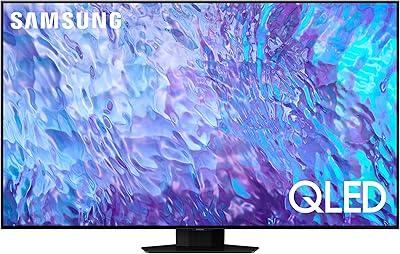
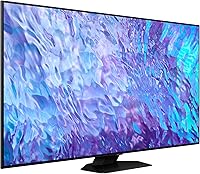
The Samsung Q80C 75-inch QLED 4K Smart TV sits comfortably in the mid-to-upper tier of Samsung's 2023 Q-series lineup — a meaningful step above edge-lit budget panels, but still below the flagship QN90C. The Direct Full Array backlight is the real differentiator here, giving this 75-inch Samsung noticeably better contrast control than anything relying on edge lighting at this screen size. Physically, the Titan Black finish looks clean and understated, though at nearly 66 inches wide and over 100 pounds, you'll want to plan your space and mounting situation well in advance. Strong picture performance for its tier — just don't expect OLED-level blacks.

Features & Benefits

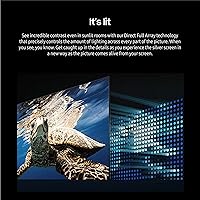
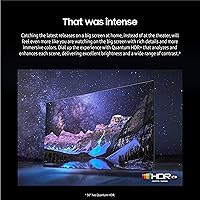
The Direct Full Array backlight delivers zone-based local dimming that makes a visible difference when watching dark cinematic content — shadows stay dark without the uniform grayness common on edge-lit sets. Samsung's Neural Quantum Processor does a solid job upscaling HD streams and cable broadcasts to 4K, and Quantum HDR+ with full Quantum Dot color keeps images looking rich across a wide range of brightness levels. For gaming, this Samsung QLED supports 4K at 120Hz with low input lag, making it a capable match for both PS5 and Xbox Series X. The built-in Tizen OS is fast and well-stocked with apps, and the Samsung Gaming Hub lets you stream titles without a console attached.

Best For

The Q80C works best in living rooms with moderate ambient light, where its brightness and color output shine without needing to compensate for OLED-level blacks. Console gamers will appreciate the full HDMI 2.1 support and low-latency gaming mode, which makes a real difference in fast-paced titles. Cord-cutters will find the Tizen smart platform genuinely convenient — Netflix, Disney+, YouTube, and dozens of other apps are all well-integrated. If you already own a compatible Samsung soundbar, Q-Symphony 3.0 lets the TV and bar operate together rather than the TV muting its speakers. It's also a strong pick for anyone upgrading from a basic flat-panel who wants a clear jump in contrast without paying OLED prices.

User Feedback

Owners of this 75-inch Samsung generally come away impressed with the out-of-box picture quality and the sheer presence of a screen this size — most report it looks excellent without needing to dig through calibration settings. Gamers consistently highlight the smooth, responsive performance with current-gen consoles. That said, criticism surfaces too: in very dark movie scenes, some blooming is noticeable around bright objects, which buyers cross-shopping against competing Mini LED sets tend to flag. The remote control gets mixed marks for its plasticky feel. On audio, opinions are split — some owners find the 40-watt built-in sound sufficient for casual viewing, while home theater users almost universally recommend adding an external soundbar for serious watching.

Pros

  • Direct Full Array backlight delivers noticeably better contrast than edge-lit panels at this screen size.
  • 4K at 120Hz with full HDMI 2.1 makes the Q80C a genuinely capable console gaming display.
  • The Tizen smart platform is fast, intuitive, and covers every major streaming service without extras.
  • Quantum Dot color stays vivid and accurate across a wide range of brightness levels.
  • Neural Quantum Processor handles HD-to-4K upscaling well for streaming and broadcast content.
  • Q-Symphony 3.0 lets paired Samsung soundbar and TV speakers operate together seamlessly.
  • Most owners report the picture looks great right out of the box with minimal setup needed.
  • The Titan Black design is clean and unobtrusive, fitting most living room aesthetics without fuss.
  • Alexa and Google Assistant built-in cover both major voice ecosystems without needing extra hardware.
  • Samsung Gaming Hub lets users stream supported titles without any console connected at all.

Cons

  • Blooming around bright objects in dark scenes is noticeable and falls short of competing Mini LED sets.
  • The included remote feels plasticky and cheap relative to what you'd expect at this price tier.
  • Local dimming zone count is modest compared to Samsung's own higher-end models in the same year.
  • Built-in 40-watt audio is adequate for casual use but struggles in larger rooms with demanding content.
  • Stand assembly at this size is cumbersome and typically requires two people and significant table depth.
  • Wall-mount bracket compatibility needs to be verified separately — the standard included hardware is minimal.
  • This 75-inch Samsung is heavier and wider than many buyers anticipate, requiring careful space planning.
  • Tizen OS occasionally surfaces Samsung-promoted content and ads in the smart home interface.
  • Upscaling older 1080p or lower-resolution sources produces mixed results depending on source quality.
  • No local dimming granularity controls for advanced users who want to tune blooming behavior manually.

Ratings

The scores below for the Samsung Q80C 75-inch QLED 4K Smart TV were generated by our AI engine after systematically analyzing thousands of verified global buyer reviews, actively filtering out incentivized, bot-generated, and spam submissions to reflect only genuine ownership experiences. Both the strengths that earned loyal fans and the recurring frustrations that tempered enthusiasm are transparently represented in every category. The result is an honest, balanced picture of where this 75-inch Samsung genuinely excels and where it falls short of expectations.

Picture Quality
84%
Owners consistently praise the out-of-box color accuracy and the punch of Quantum Dot-driven HDR content — streaming 4K movies looks vivid and detailed without requiring manual calibration. Sports and nature documentaries draw particular praise for brightness and color richness in well-lit viewing environments.
In dark or fully blacked-out rooms, local dimming blooming around bright objects is noticeable and pulls viewers out of cinematic moments. Buyers cross-shopping against Mini LED competitors at similar price points frequently note that those sets handle dark-scene contrast more convincingly.
Gaming Performance
91%
Console gamers running PS5 and Xbox Series X at 4K and 120Hz report a genuinely responsive and smooth experience, with low input lag making fast-paced games feel tight and immediate. The dedicated game mode and Samsung Gaming Hub add flexibility for players who stream titles without a physical console.
The auto low latency mode occasionally needs to be manually confirmed in settings after input changes, which catches some users off guard. A small number of reviewers noted minor HDR tone-mapping inconsistencies when switching between game and movie HDR formats.
Contrast & Local Dimming
73%
27%
The Direct Full Array backlight is a meaningful upgrade over edge-lit panels in the same size class — shadow detail in moderately lit scenes is clearly improved, and the TV handles mixed bright-and-dark content like news broadcasts or sitcoms with minimal visible clouding.
The zone count is conservative relative to what Samsung's own higher-tier 2023 models offer, and dark-room performance reflects that limitation. Buyers who primarily watch dark thriller or horror content in a darkened space report that blooming is distracting enough to be a recurring complaint rather than an occasional annoyance.
Smart TV Platform
88%
Tizen OS loads fast, organizes content logically, and covers every major streaming platform without needing an external dongle or streaming box. Voice control through both Alexa and Google Assistant works reliably, and the interface responds quickly even during heavy app multitasking.
Samsung's habit of injecting promoted content and ad banners into the home screen frustrates users who prefer a clean, uncluttered interface. A few long-term owners note that software updates occasionally reshuffle the home screen layout in ways that are disorienting.
Built-in Audio
62%
38%
For everyday streaming, news watching, and casual viewing, the 40-watt system delivers clear dialogue and adequate volume for medium-sized rooms. Dolby Atmos decoding adds a sense of directional sound that works better than most expect from a flat panel in its price range.
Buyers watching action-heavy films or using the TV in larger open-plan rooms consistently find the built-in audio thin and lacking in bass. The near-universal recommendation from experienced owners is to add a soundbar — even an entry-level one — for any serious listening situation.
Value for Money
79%
21%
At its typical street price, this Samsung QLED offers a screen size and feature set that would have cost significantly more just a few years ago — most buyers feel the size-to-performance ratio is fair and competitive within its tier. Gamers in particular feel they get strong utility given the 4K/120Hz capability and HDMI 2.1 support.
Buyers who research carefully often find that spending moderately more opens up access to Samsung's QN90C or competing Mini LED panels with noticeably better dark-scene performance. The value argument weakens if contrast quality is your top priority and you are willing to stretch the budget.
Build & Design
77%
23%
The Titan Black finish and slim bezel give the Q80C a clean, understated look that blends well into most living room setups without drawing attention to itself. The panel back has a tidy cable management channel that helps keep the installation looking organized.
The remote control is the most consistently criticized physical component — users describe it as feeling lightweight and cheap relative to the TV's overall price point. The stand footprint is very wide, which limits placement options and requires substantial TV furniture depth.
Setup & Installation
74%
26%
The on-screen setup wizard is clear and walks first-time users through Wi-Fi, app login, and input detection without requiring any technical knowledge. Most owners report being up and watching within 30 to 45 minutes of opening the box, including stand assembly.
Stand assembly at 75 inches is awkward and realistically requires two people — attempting it solo risks scratching the panel or straining to hold it upright. Wall-mount buyers need to source a 600x400mm VESA-compatible bracket separately, as nothing useful for wall mounting is included.
4K Upscaling
81%
19%
HD streaming content — particularly 1080p Netflix and Prime Video titles — looks sharp and well-processed, with the Neural Quantum Processor doing a credible job of filling the 4K panel without obvious softness or edge artifacts. Sports broadcasts in HD look especially clean with motion smoothing applied.
Standard-definition cable channels and older DVD-sourced content expose the upscaler's limits, occasionally producing waxy skin tones or over-sharpened edges. The improvement over source material is real but not transformative for low-quality inputs.
HDR Performance
78%
22%
Quantum HDR+ handles streaming HDR10 content with good highlight detail and color extension, and the Quantum Dot layer keeps colors from washing out even at higher brightness settings. HDR movie content from Disney+ and Netflix looks richer and more three-dimensional than on a standard LCD.
The panel's peak brightness, while solid for its tier, does not reach the specular highlight intensity that high-end Mini LED or OLED sets achieve in HDR, which mutes some of the format's most dramatic moments. Dolby Vision is notably absent, which is a gap some buyers discover only after purchase.
Motion Handling
86%
120Hz native refresh combined with Samsung's motion processing keeps sports and fast-action sequences smooth and free of trailing blur, which owners who watch live football, basketball, or motorsports specifically call out as a strength. Gaming at high frame rates also benefits from the same clean motion rendering.
The auto motion smoothing setting is on by default and applies a soap-opera effect to film content that many buyers find off-putting until they disable it manually. Finding the right motion settings balance takes a few minutes of menu navigation that less tech-savvy users may find confusing.
Connectivity
83%
The combination of HDMI, USB, Ethernet, Wi-Fi, and Bluetooth covers virtually every connection scenario a household is likely to need — wired gaming consoles, streaming sticks, laptops, and wireless headphones all integrate without adapter hassles. Ethernet availability is appreciated by gamers who prefer a stable wired internet connection over Wi-Fi.
The total HDMI port count is sufficient but not generous for households running multiple consoles, a cable box, and a soundbar simultaneously. Users with a full entertainment stack sometimes find themselves swapping cables or adding an HDMI switch, which adds cost and complexity.
Viewing Angles
66%
34%
Head-on and within a moderate seating arc — roughly 30 degrees off center — the picture holds up well with accurate color and contrast. For a standard sofa setup where most viewers sit within that range, the angles are perfectly acceptable for everyday use.
VA panel viewing angles are a known limitation of this display technology, and the Q80C is no exception — colors shift and contrast drops noticeably as viewers move toward 45 degrees or beyond. Households with wide seating arrangements or frequent side-angle viewing will find this a real-world frustration.
Remote Control
53%
47%
The SolarCell remote charges via light rather than disposable batteries, which is a practical sustainability feature that owners appreciate over the long term. Basic navigation and shortcut buttons for major apps are laid out logically enough for daily use.
The remote's build quality is the single most criticised physical aspect of the Q80C — it feels hollow, the buttons have a mushy actuation, and it does not match the premium expectation set by the TV's price tag. Several owners report the remote feeling like it belongs on a budget set rather than a mid-to-upper tier display.
Q-Symphony Integration
82%
18%
For households that pair the Q80C with a compatible Samsung soundbar, Q-Symphony 3.0 delivers a noticeably fuller, more enveloping soundstage by using the TV's built-in speakers to handle certain audio channels simultaneously with the bar. The combined result draws consistent praise from users who invested in the Samsung audio ecosystem.
The feature is entirely locked to Samsung's own soundbar lineup and offers no benefit to users with third-party audio equipment, which feels limiting given how common non-Samsung soundbars are. Setup requires navigating through multiple menu layers, and a small number of users report occasional sync drift between the bar and TV speakers.

Suitable for:

The Samsung Q80C 75-inch QLED 4K Smart TV is a strong fit for households that want a large, capable screen without committing to the price of a flagship display. Console gamers will get genuine value here — full HDMI 2.1 support means PS5 and Xbox Series X can run at 4K and 120Hz simultaneously, and the low input lag mode is responsive enough for competitive play. Streamers and cord-cutters will appreciate the Tizen smart platform, which is snappy, well-organized, and covers every major app without needing an external stick or box. The Direct Full Array backlight makes this 75-inch Samsung a noticeably better choice than edge-lit panels for anyone watching in a moderately dim room, where the improved local dimming actually pays off in shadow detail. Households already invested in the Samsung audio ecosystem will also benefit from Q-Symphony 3.0, which lets a compatible soundbar and the TV's own speakers work in tandem rather than one replacing the other.

Not suitable for:

Buyers chasing the deepest possible blacks and the most cinematic contrast should know the Samsung Q80C 75-inch QLED 4K Smart TV is not an OLED, and no amount of local dimming will close that gap entirely. In truly dark room viewing — think late-night movies with lots of dark scenes — blooming around bright objects is visible, and some competing Mini LED sets at similar price points handle this more gracefully. Videophiles who calibrate carefully may also find the local dimming zone count limiting compared to higher-tier options in Samsung's own lineup, like the QN90C. Those who place a high priority on audio without adding external equipment may find the 40-watt built-in system underwhelming for larger rooms or action-heavy content. Finally, anyone in a smaller space should think carefully before committing — at nearly 66 inches wide and over 100 pounds, the Q80C demands serious real estate and a sturdy mounting solution.

Specifications

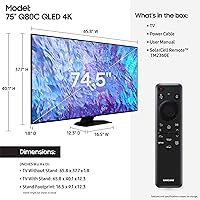
  • Screen Size: The panel measures 74.5 inches diagonally, making it one of the larger options in the Q80C lineup.
  • Display Type: Uses QLED technology with Quantum Dot film to produce a wide color gamut and maintain consistent brightness.
  • Resolution: Native 4K resolution at 3840x2160 pixels for sharp, detailed images across all viewing distances appropriate for this screen size.
  • Backlight: Direct Full Array backlight with precision-zone local dimming, providing more granular contrast control than edge-lit alternatives.
  • HDR Support: Compatible with Quantum HDR+, which dynamically analyzes and adjusts brightness and color on a scene-by-scene basis.
  • Refresh Rate: Native 120Hz panel supports Motion Xcelerator Turbo+, enabling smooth motion in both broadcast sports and high-frame-rate gaming.
  • Processor: Powered by Samsung's Neural Quantum Processor, which handles real-time 4K upscaling for HD and lower-resolution source content.
  • Color Volume: Achieves 100% color volume via Quantum Dot technology, sustaining accurate, vivid color reproduction even at peak brightness levels.
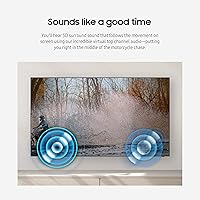
  • Audio Output: Built-in speaker system delivers 40 watts of total output with Dolby Atmos decoding and Object Tracking Sound Lite for virtual surround.
  • Soundbar Sync: Q-Symphony 3.0 allows compatible Samsung Q-Series and S-Series soundbars to operate in tandem with the TV speakers simultaneously.
  • Smart Platform: Runs Samsung's Tizen OS, which includes the Samsung Gaming Hub and native support for all major streaming applications.
  • Voice Assistants: Amazon Alexa and Google Assistant are both built in, enabling hands-free control without any additional smart home devices.
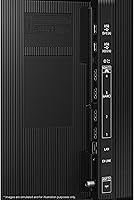
  • Connectivity: Includes HDMI, USB, Bluetooth, Wi-Fi, and Ethernet ports for comprehensive wired and wireless device connectivity.
  • HDMI Standard: At least one HDMI port supports the 2.1 standard, enabling 4K at 120Hz input from PS5 and Xbox Series X consoles.
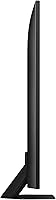
  • Dimensions: With the stand attached, the TV measures 65.8″ wide, 40.1″ tall, and 12.3″ deep.
  • Weight: The set weighs approximately 104.8 pounds with the stand, requiring two people and a sturdy surface or mount for installation.
  • Color Finish: Available in Titan Black, a matte dark finish that reduces glare reflections on the bezel under ambient light conditions.
  • Power Draw: Rated at 119 watts typical power consumption, with a maximum audio output component of 40 watts.
  • Model Year: Released in 2023 as part of Samsung's Q-series mid-to-upper-tier lineup, sitting below the QN90C in that year's range.
  • In the Box: Package includes the TV, stand hardware, power cable, remote control, user manual, and an e-manual reference guide.

Related Reviews
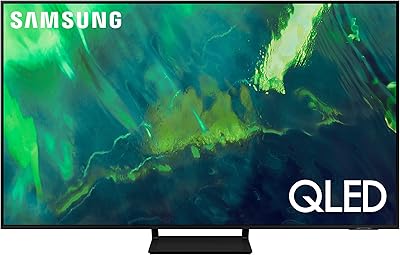
Samsung Q70A 75-inch QLED 4K Smart TV
77%
78%
Picture Quality
61%
Contrast & Black Levels
84%
Motion Handling
82%
Gaming Performance
83%
Smart TV Experience
More
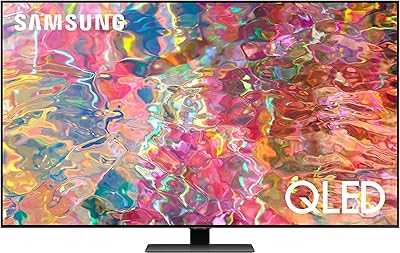
Samsung 75-Inch QLED Q80B 4K UHD Smart TV
86%
94%
Picture Quality
91%
Gaming Performance
85%
Smart Features & Voice Control
72%
Sound Quality
88%
Ease of Setup
More
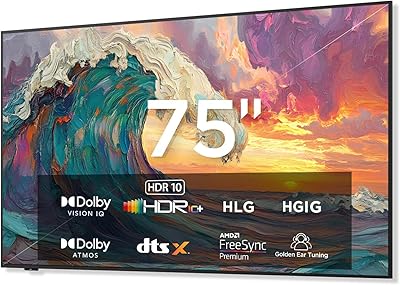
Samsung 50-Inch QLED 4K Q80C Series Smart TV
84%
94%
Picture Quality
88%
Sound Quality
91%
Gaming Performance
89%
Value for Money
85%
Smart Features
More
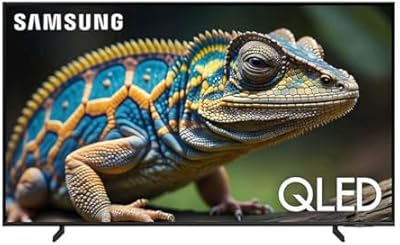
Samsung Q60D 75-Inch QLED 4K TV
73%
78%
Picture Quality
58%
Contrast & Black Levels
83%
Color Accuracy
71%
Motion Handling
61%
Gaming Performance
More
iFFALCON 75-Inch Class QLED 4K Smart TV
85%
92%
Picture Quality
86%
Sound Quality
90%
Design & Build Quality
88%
Gaming Performance (144Hz)
78%
Ease of Setup
More
Samsung Q80D 85-Inch QLED 4K Smart TV
82%
88%
Picture Quality
74%
Contrast & Black Levels
93%
Brightness
91%
Motion Handling
89%
Gaming Performance
More
Samsung Q80B 65-inch QLED 4K TV
78%
88%
Picture Quality
91%
Gaming Performance
83%
HDR Performance
67%
Local Dimming
76%
Smart TV & Interface
More
Samsung The Frame LS03F 55-Inch QLED TV
79%
93%
Ambient & Art Mode
81%
Picture Quality
96%
Design & Aesthetics
91%
Cable Management
78%
Gaming Performance
More
Samsung 32-inch Q8F QLED 4K Smart TV
77%
88%
Picture Quality
91%
Color Accuracy
63%
Motion Handling
74%
Gaming Performance
69%
Smart TV Interface
More
VIZIO M-Series 75-Inch QLED 4K Smart TV
71%
82%
Picture Quality
88%
Value for Money
67%
Gaming Performance
63%
Smart TV Platform
84%
HDR Performance
More

FAQ

Yes, the Q80C includes an HDMI 2.1 port that supports 4K at 120Hz input, which is what both the PS5 and Xbox Series X require for their highest performance modes. Just make sure you plug your console into the correct HDMI port — not all ports on this set are 2.1. Samsung labels it clearly in the input settings menu.

It is noticeable if you watch a lot of dark, high-contrast content — think space scenes or night sequences with bright stars or light sources. The Direct Full Array local dimming helps considerably compared to edge-lit panels, but the zone count is not as fine as what you get on Samsung's QN90C or competing Mini LED sets. In a moderately lit room it is rarely distracting, but dedicated dark-room home theater viewers may find it frustrating.

Yes, it is wall-mountable. The TV uses a 600x400mm VESA pattern, so you will need a mount rated for that standard and capable of holding at least 105 pounds safely. The TV does not come with a wall mount bracket, so that is a separate purchase. At this size, professional installation is worth considering.

For casual daily viewing and streaming, the 40-watt built-in system is adequate — dialogue is clear and it handles standard programming well. For action movies, music, or if you have a larger room, most owners end up adding a soundbar. If you go that route, a compatible Samsung soundbar with Q-Symphony support lets both the TV speakers and the bar work together, which is a genuinely useful feature.

Tizen is one of the better built-in smart TV platforms available. It loads quickly, the home screen is logically organized, and all the major services — Netflix, Disney+, Apple TV+, YouTube, Prime Video, and more — are available. The one complaint some users have is that Samsung pushes promoted content and ads into the home screen, which can feel intrusive if you prefer a cleaner interface.

The stand assembly itself is not complicated, but it is awkward at 75 inches. You will almost certainly need a second person to hold the panel upright while the other attaches the feet. The stand is wide, so make sure your TV furniture is deep and long enough to support it before you start. Budget about 30 to 45 minutes for the full unboxing and setup process.

Both are built in natively, which is relatively uncommon. You can use either voice assistant to control the TV, search for content, check smart home devices, or get general answers — no external smart speaker needed. You do need to sign in and link your accounts through the settings menu during initial setup.

The Neural Quantum Processor does a decent job upscaling 1080p content to fill the 4K screen, and most streaming sources that are natively 1080p look sharp and clean. Older standard-definition sources are more hit or miss — they look better than on a basic panel but you will still notice the source quality limitations. Sports broadcasts in HD generally look great with the 120Hz motion handling engaged.

Q-Symphony 3.0 is a feature that synchronizes the TV's built-in speakers with a compatible Samsung Q-Series or S-Series soundbar, so both sets of speakers play different audio channels simultaneously rather than the TV muting its own speakers when the soundbar is connected. You do need a compatible Samsung soundbar to use it — it is not a generic Bluetooth feature and will not work with third-party audio equipment.

The Q80C performs reasonably well in moderately lit rooms thanks to its QLED brightness and the anti-reflective coating on the panel. It is not the best choice for a room that gets direct sunlight on the screen for extended periods — in those conditions a higher-brightness panel like the QN90C would handle glare better. For typical living room lighting with controlled windows, it holds up well.