Overview

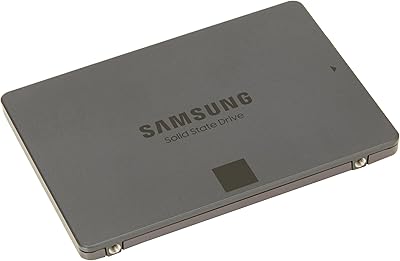
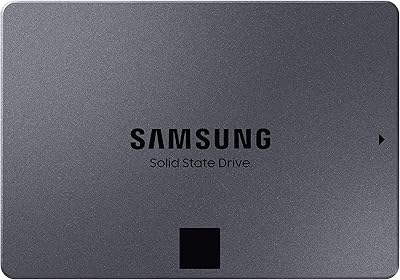
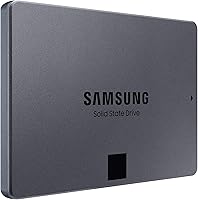
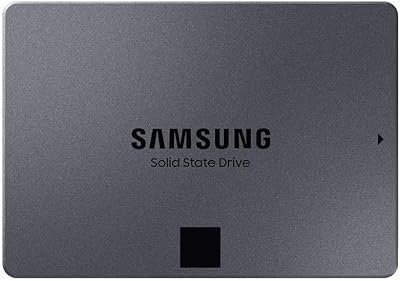
The Samsung 870 QVO 1TB 2.5″ Internal SSD is Samsung's second-generation QLC SATA drive, launched in mid-2020 as a practical answer to the growing demand for affordable, high-capacity storage. It occupies a comfortable middle ground — not the cheapest option on the shelf, not a premium NVMe performer either, but a reliable everyday workhorse for anyone still working within a SATA ecosystem. Samsung builds both the NAND and DRAM in-house, which gives them tighter control over consistency than third-party component sourcing allows. In a crowded field that includes the Crucial MX500 and WD Blue 3D NAND, this Samsung QVO drive holds its own on brand trust and software support alone.

Features & Benefits

Over a SATA III connection, the 870 QVO 1TB reaches sequential read speeds of up to 560 MB/s — essentially the practical ceiling of the interface. The QLC NAND architecture trades a bit of write endurance for higher storage density, which is how Samsung keeps the price reasonable on a full terabyte. Hardware-level AES 256-bit encryption runs without any noticeable performance cost. Samsung Magician is worth mentioning specifically: it's more than a health monitor. The app lets you run benchmarks, push firmware updates, and keep tabs on long-term drive condition. Auto Garbage Collection and an enhanced ECC algorithm also work together to reduce the write throttling that QLC NAND is sometimes prone to during heavy sustained transfers.

Best For

This SATA SSD makes the most sense for anyone pulling a spinning hard drive out of an older laptop or desktop. Boot times that used to stretch past a minute can drop to under 15 seconds — that kind of difference is immediately obvious and doesn't require any benchmarking to appreciate. Content creators working with large video or photo libraries will find the 1TB capacity useful for keeping projects local rather than shuffling files to external drives. IT teams deploying across multiple machines will appreciate the consistent reliability and the scalable capacity options. If you have an open M.2 slot, a faster NVMe drive is worth considering instead — but for SATA-only systems, this is a very sensible upgrade.

User Feedback

With over 20,000 ratings and a score that sits near the top of its category, this Samsung QVO drive has clearly earned broad confidence among buyers. The most consistent praise centers on effortless installation and the immediate, tangible improvement over a traditional hard drive — particularly for boot speed and application load times. The criticism that does appear tends to come from power users: under sustained, back-to-back large file writes, QLC drives can slow down once the cache buffer fills, and the 870 QVO is no exception to that. For everyday tasks, though, most users report it behaves exactly as expected. The Samsung brand and the included Magician software are frequently cited as added peace of mind rather than afterthoughts.

Pros

  • Replacing an old hard drive with this SATA SSD cuts boot times dramatically — often from over a minute to under 15 seconds.
  • Samsung builds both the NAND and DRAM in-house, which translates to more consistent quality control than many competitors.
  • AES 256-bit hardware encryption works quietly in the background with no measurable impact on daily performance.
  • Samsung Magician is genuinely useful software — health tracking, benchmarking, and firmware updates all in one place.
  • The 2.5-inch SATA form factor makes installation straightforward, even for first-time upgraders with minimal technical experience.
  • Available in capacities up to 8TB, so users can scale up without switching ecosystems if their needs grow.
  • Over 20,000 buyer ratings with a near-perfect score reflects broad, real-world satisfaction across a wide range of use cases.
  • Auto Garbage Collection helps the 870 QVO 1TB maintain performance over time rather than degrading rapidly with age.
  • Priced competitively for the capacity offered, making it one of the more practical SATA upgrades available today.

Cons

  • QLC NAND write speeds can throttle significantly during sustained, back-to-back large file transfers once the cache buffer is exhausted.
  • At 360 TBW, the 1TB model's endurance rating trails some TLC-based rivals in the same price range.
  • Offers no advantage over competing SATA drives when it comes to raw sequential performance — all are bottlenecked by the interface.
  • Not a meaningful upgrade for users who already have a functioning SSD; the gains are only dramatic coming from a hard drive.
  • Samsung Magician, while useful, is Windows-centric and offers a more limited experience on macOS systems.
  • No bundled cloning software or mounting bracket is included in the box, which can add minor friction for laptop upgraders.
  • QLC technology is still viewed skeptically by enthusiasts, which may affect resale value compared to TLC-based alternatives.
  • Users who need NVMe speeds and have an available M.2 slot are leaving significant performance on the table by choosing this drive.

Ratings

The scores below for the Samsung 870 QVO 1TB 2.5″ Internal SSD were generated by AI after analyzing tens of thousands of verified global buyer reviews, with spam, bot activity, and incentivized feedback actively filtered out. The result is an honest, data-driven snapshot of how real users experience this drive across a range of everyday and demanding scenarios. Both the genuine strengths and the recurring frustrations are reflected transparently in each category score.

Real-World Read Performance
88%
For anyone coming from a mechanical hard drive, the jump in read speed is immediately noticeable — Windows boots in seconds, applications snap open, and large files load without the old spinning-disk hesitation. Buyers consistently report that daily tasks like browsing, streaming, and multitasking feel fundamentally faster after the switch.
Seasoned users who benchmark carefully will note that the 870 QVO 1TB is hitting the practical ceiling of the SATA interface, not exceeding it. If you already have a SATA SSD from a recent generation, the read speed gains over your existing drive will be marginal at best.
Sustained Write Performance
67%
33%
Under normal usage — saving documents, downloading files, installing software — sustained write performance holds up without any perceptible issue. The SLC write cache does a solid job absorbing the kinds of writes that most home users and office workers will ever throw at it on a given day.
This is where QLC NAND shows its limits most clearly. Once the cache buffer fills during large sequential writes, speeds can drop sharply, which some buyers discovered when transferring large video archives or cloning drives. Users with heavy, continuous write workloads will find this bottleneck genuinely frustrating rather than theoretical.
Installation Experience
94%
Buyers across all skill levels — from first-time upgraders to IT professionals swapping out a dozen drives — consistently praise how physically simple the installation is. The standard 2.5-inch form factor means it slots directly into most laptops and desktops without adapters, and the drive is recognized immediately upon boot in virtually all cases.
Samsung does not include a mounting bracket for 3.5-inch desktop bays, which catches some desktop users off guard. There is also no bundled SATA data cable, which occasionally adds a small extra cost for upgraders who lack spare components.
Value for Money
86%
At the 1TB capacity point, this Samsung QVO drive consistently ranks among the more cost-effective options buyers consider, and the Samsung brand carries enough credibility that most feel confident the price reflects genuine quality rather than a budget gamble. For users replacing a hard drive rather than a competing SSD, the performance-per-dollar ratio feels particularly strong.
A few buyers note that the price gap between this and TLC-based competitors like the Crucial MX500 has narrowed over time, making the case for QLC NAND slightly less compelling on value grounds alone. Those who compare endurance ratings carefully sometimes feel the lower TBW rating means the long-term value proposition is less clear-cut than the upfront price suggests.
Long-Term Reliability
79%
21%
Samsung's track record with consumer storage hardware gives buyers genuine confidence, and the in-house NAND and DRAM manufacturing is a real differentiator for quality consistency. The refined ECC algorithm and Auto Garbage Collection are meaningful features that help the drive maintain stable behavior over months and years of normal use.
The 360 TBW endurance rating on the 1TB model is lower than what TLC-based alternatives typically offer at the same capacity, which is a legitimate concern for users who write heavily day after day. A small number of long-term owners also report that QLC NAND degrades more noticeably over time compared to their previous TLC or MLC drives.
Software & Ecosystem
83%
Samsung Magician is one of the better drive companion apps available — it monitors health status, runs speed benchmarks, pushes firmware updates, and manages encryption settings all in one interface. Buyers who use it regularly describe it as genuinely useful rather than something they installed once and forgot about.
Samsung Magician's full feature set is largely Windows-only, which leaves macOS users with a stripped-down experience that some find frustrating given how central the software is to the drive's overall value proposition. Linux users get essentially no official software support at all.
Compatibility
91%
The 2.5-inch SATA form factor is about as universal as storage gets, and buyers report near-zero compatibility issues across a wide range of laptop and desktop hardware spanning multiple generations. It even works as an upgrade in older systems that some users assumed were too dated to bother with.
The drive is fundamentally limited to SATA-equipped systems — it simply cannot be used in machines that only have an M.2 NVMe slot. Buyers who don't verify their system's available interfaces before purchasing occasionally end up returning the drive, which is a configuration error rather than a product fault but is worth flagging.
Noise & Heat
96%
Like all solid-state drives, this SATA SSD runs completely silently and generates very little heat under normal workloads. Laptop users in particular appreciate not having to deal with the whirring and occasional clicking that old mechanical drives produced, especially in quiet work environments.
Under sustained heavy writes, the drive can run marginally warmer than some competing SSDs, though it remains within safe operating temperatures in virtually all reported cases. This is rarely a practical concern for typical users but worth noting for those installing the drive in particularly cramped or poorly ventilated enclosures.
Encryption & Security
81%
19%
Hardware-level AES 256-bit encryption is a meaningful inclusion for IT administrators deploying this drive across business workstations, as it protects sensitive data at rest without creating any measurable slowdown in everyday use. Support for TCG Opal and IEEE 1667 standards also means it integrates cleanly with enterprise security policies.
Activating and managing the encryption features requires Samsung Magician or compatible third-party tools, which adds a setup step that less experienced users sometimes skip entirely. A handful of buyers also note that enabling hardware encryption can complicate drive recovery scenarios if credentials are lost.
Packaging & Unboxing
72%
28%
The drive arrives well-protected and in compact, no-frills packaging that most buyers find appropriate for the product. There is no excessive plastic waste, which a growing number of environmentally conscious buyers have noted positively in their reviews.
Beyond the drive itself, the box is sparse — no cables, no bracket, no migration tool on physical media. Buyers expecting a more complete kit, particularly those new to DIY upgrades, sometimes feel caught short and need to source additional accessories separately before they can complete the installation.
Capacity Options
89%
The QVO lineup's availability up to 8TB is a genuine differentiator in the SATA SSD space, and buyers who anticipate needing more storage down the road appreciate being able to stay within the same product family rather than switching ecosystems. Even the 1TB entry point gives most everyday users more room than their previous drive offered.
The 1TB model is the most commonly purchased, but some buyers discover they would have benefited from stepping up to 2TB after factoring in their actual storage usage. The price jump between capacity tiers is noticeable, and for budget-sensitive buyers, that math sometimes feels steep.
Brand Confidence
93%
Samsung's reputation in consumer storage hardware is consistently cited as a deciding factor among buyers who compared several options before purchasing. The knowledge that both the NAND and DRAM are produced by Samsung rather than sourced from third parties gives many buyers a level of assurance they don't get with lesser-known brands.
The premium associated with the Samsung name means buyers occasionally find that competing drives offer similar or better raw specifications at a lower price point. For shoppers who are comfortable with less familiar brands and focus purely on specs, the Samsung logo adds cost without always adding proportional performance.

Suitable for:

The Samsung 870 QVO 1TB 2.5″ Internal SSD is an excellent fit for anyone whose primary goal is replacing a slow mechanical hard drive in an older laptop or desktop — the kind of upgrade that genuinely transforms how a machine feels to use day to day. Students and everyday users who browse, stream, work on documents, and run standard applications will get everything they need from this drive without paying a premium for performance headroom they'd never use. Content creators who need generous local storage for photo libraries, video projects, or audio sessions will appreciate the 1TB capacity and the peace of mind that comes from Samsung's in-house components. IT administrators managing a fleet of SATA-based workstations will find the 870 QVO 1TB a practical, repeatable choice across multiple deployments. Anyone locked into a 2.5-inch SATA form factor with no available M.2 slot should consider this one of the strongest options currently in its category.

Not suitable for:

The Samsung 870 QVO 1TB 2.5″ Internal SSD is not the right pick for users who regularly move very large files — think multi-gigabyte video exports or large database transfers — in rapid succession. QLC NAND has a smaller write cache than TLC or MLC drives, and once that cache fills under sustained workloads, write speeds can drop noticeably; this is a known architectural tradeoff, not a defect. Gamers who plan to use the drive as a primary storage device for a modern gaming PC with an available M.2 slot would be better served by an NVMe drive, which offers substantially higher throughput. Professionals in fields like video production or scientific computing who depend on consistently high write performance under load should look at TLC-based alternatives or dedicated NAS drives instead. If endurance is a priority, the 360 TBW rating on the 1TB model is workable for most casual users but is lower than what you'd find on comparable TLC-based competitors.

Specifications

  • Interface: Connects via SATA III (6 Gb/s) and is backward compatible with SATA II ports, though at reduced speeds.
  • Form Factor: Follows the standard 2.5-inch form factor, fitting most laptops and desktop drive bays designed for SATA storage.
  • Capacity: Available in this configuration at 1TB, with the broader QVO lineup offering 2TB, 4TB, and 8TB variants.
  • Sequential Read: Reaches sequential read speeds of up to 560 MB/s under the SATA III interface ceiling.
  • Sequential Write: Delivers sequential write speeds of up to 530 MB/s during cache-assisted transfers.
  • NAND Type: Uses QLC (Quad-Level Cell) NAND flash memory, manufactured in-house by Samsung for higher storage density per cell.
  • DRAM Cache: Includes a Samsung-produced DRAM cache buffer that accelerates random access and improves overall responsiveness.
  • Endurance: Rated at 360 TBW (Terabytes Written) for the 1TB model, reflecting its expected write lifespan under typical workloads.
  • Encryption: Supports AES 256-bit hardware encryption, fully compliant with TCG Opal and IEEE 1667 security standards.
  • ECC & Maintenance: Incorporates a refined Error Correction Code (ECC) algorithm alongside Auto Garbage Collection to sustain long-term performance.
  • Dimensions: Measures 3.94 x 2.76 x 0.27 inches, conforming to the standard 2.5-inch 7mm height profile.
  • Weight: Weighs 3.2 ounces, making it light enough for both laptop and desktop installations without any concern.
  • Software: Compatible with Samsung Magician software, which provides drive health monitoring, performance benchmarking, and firmware management.
  • OS Compatibility: Works with Windows and macOS systems; Samsung Magician offers full functionality primarily on Windows environments.
  • Generation: Represents the second generation of Samsung's QVO series, succeeding the original 860 QVO with refined performance characteristics.
  • Compatible Devices: Designed for internal installation in desktop PCs and laptops that feature a standard 2.5-inch SATA drive bay.
  • Color: Ships in a black enclosure with no additional color options available for this model.
  • Warranty: Backed by a 3-year limited warranty from Samsung, consistent with the broader QVO product line.

Related Reviews
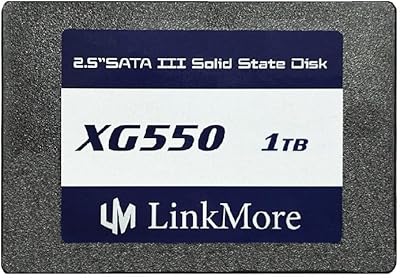
LinkMore XG550 1TB 2.5″ SATA III Internal SSD
84%
89%
Performance
92%
Value for Money
86%
Read Speed
85%
Write Speed
94%
Ease of Installation
More
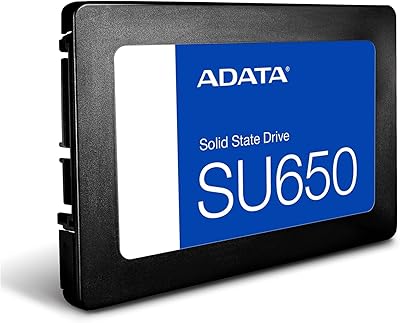
ADATA SU650 1TB 3D-NAND SATA 2.5 inch Internal SSD
86%
88%
Performance
92%
Value for Money
85%
Installation Ease
87%
Speed (Read/Write)
78%
Software Experience
More
Samsung 860 QVO 1TB SSD
83%
92%
Value for Money
85%
Performance for Everyday Use
90%
Ease of Installation
88%
Data Security Features
75%
Speed Compared to Premium SSDs
More
Samsung 870 QVO 8TB SATA SSD
85%
85%
Performance
91%
Ease of Installation
96%
Storage Capacity
88%
Energy Efficiency
83%
Durability/Build Quality
More
Samsung 870 QVO 4TB Internal SSD
84%
88%
Everyday Performance
61%
Sustained Write Speed
93%
Storage Capacity Value
94%
Installation Experience
86%
Long-Term Reliability
More
Kingston KC600 1TB SATA3 2.5″ SSD
85%
88%
Performance
91%
Speed and Responsiveness
85%
Ease of Installation
87%
Durability and Build Quality
89%
Data Security
More
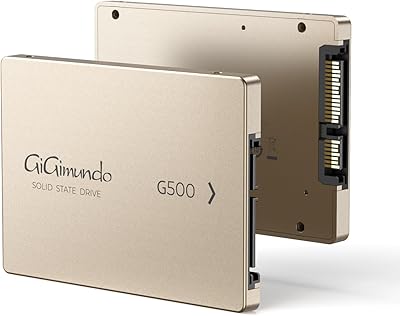
GiGimundo G500 1TB 2.5″ SATA SSD
84%
92%
Performance (Speed)
89%
Ease of Installation
85%
Build Quality (Durability)
91%
Value for Money
87%
Compatibility
More
Samsung 870 QVO 2TB SATA III SSD
87%
91%
Value for Money
87%
Performance in Gaming
90%
Reliability & Durability
89%
Speed (Read/Write)
94%
Ease of Setup
More
Toshiba MQ01ABD100 1TB 2.5″ Internal Hard Drive
81%
88%
Value for Money
91%
Noise Level
93%
Installation Ease
52%
Read/Write Speed
67%
Long-Term Reliability
More
Verbatim 256GB Vi550 SATA III 2.5″ Internal SSD
86%
92%
Performance
88%
Value for Money
85%
Build Quality
90%
Ease of Installation
87%
Durability
More

FAQ

Almost certainly yes, as long as your laptop has a 2.5-inch SATA drive bay, which is standard on the vast majority of pre-2018 laptops. The swap is usually straightforward — remove the old drive, slide this one in, and reinstall your OS or restore from a backup. The speed difference coming from a hard drive will be immediately obvious.

It will work in a PS4 as a storage upgrade for the internal bay, which uses a 2.5-inch SATA slot. The PS5 is a different story — its internal expansion slot requires an NVMe M.2 drive, so this SATA SSD would not fit there. You could use it externally via a USB enclosure with a PS5, but you won't get the same performance as a native internal NVMe install.

For most everyday tasks — booting Windows, opening apps, browsing files, loading games — you won't notice any difference between QLC and TLC NAND at all. The tradeoff only becomes apparent when you're writing very large amounts of data in rapid succession, such as copying a 50GB video archive. In those cases, speeds can dip once the drive's cache fills. If you're not doing that kind of work regularly, it's essentially a non-issue.

A standard Phillips-head screwdriver is typically all you need. Most laptops require removing a back panel and unscrewing the drive caddy. Desktop installations are even simpler. No adapter is needed as long as your system has a 2.5-inch SATA bay; some desktop cases may need a 3.5-inch mounting bracket, which is sold separately.

Samsung Magician is Samsung's own drive management application, and while it's not required for the drive to function, it's genuinely worth installing. It lets you monitor the drive's health status, run speed benchmarks, push firmware updates, and enable or manage encryption settings. Think of it as a dashboard that helps you stay informed about your drive's condition over its lifetime.

Both are solid SATA SSDs with similar peak speeds, and either would be a major upgrade over a hard drive. The MX500 uses TLC NAND, which gives it a slight edge in sustained write performance and a higher endurance rating at comparable capacities. The 870 QVO 1TB edges ahead on maximum available capacity and benefits from Samsung's integrated NAND and DRAM production. For everyday use, most buyers would be hard-pressed to feel a difference between the two.

Yes, this works well. A 2.5-inch SATA-to-USB enclosure is inexpensive and widely available, and the 870 QVO 1TB makes for a fast and reliable external drive when paired with one. Speeds will be limited by the USB interface rather than the drive itself, but you'll still see much faster transfers than a portable hard drive.

Samsung does not include dedicated cloning software in the box, but they partner with Acronis to offer Samsung Data Migration software as a free download from their website. It's reasonably straightforward to use and handles the cloning process for most standard Windows setups without needing a third-party tool.

Like any SSD, the 870 QVO 1TB can experience slightly reduced write performance as it approaches full capacity, since there's less free space available for the controller to manage writes efficiently. The Auto Garbage Collection feature helps mitigate this over time, but as a general rule, keeping 10 to 15 percent of the drive free is a good habit for maintaining long-term responsiveness.

It's not designed for that use case. Consumer SSDs like this one are optimized for desktop and laptop workloads with typical daily usage patterns. For a NAS or always-on server environment, you'd want a drive specifically rated for 24/7 operation and higher endurance, such as Samsung's own enterprise-focused lineup. Using this drive in a NAS would likely void the warranty and could lead to premature wear.

Where to Buy