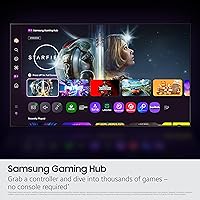


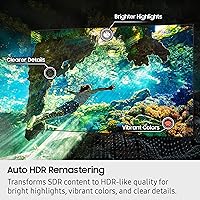
Overview

The Samsung S90F 83-inch OLED 4K Smart TV is Samsung's most ambitious large-screen 4K OLED for 2025, and at this price point, it carries real expectations. Choosing 83 inches is a deliberate commitment — this is a screen that defines a room, requiring adequate viewing distance and dedicated wall space to work properly. The NQ4 AI Gen3 processor sits at the center of the experience, managing upscaling, motion handling, and brightness optimization across all content types. Available since April 2025 and already ranking near the top of its category, this 83-inch OLED has built early credibility — though the investment demands a clear-eyed look at what you actually need.

Features & Benefits

What separates OLED from LCD and QLED panels is per-pixel dimming — every pixel switches off individually to produce true blacks and contrast that no backlit display can replicate. Samsung's flagship OLED builds on that foundation with the NQ4 AI Gen3 chip, which drives upscaling, scene-by-scene brightness adjustments, and motion clarity through 128 neural networks. HDR content looks impressive without touching the settings, and the SDR-to-HDR conversion handles older or streaming content well enough to be genuinely useful rather than gimmicky. Connectivity is thorough — HDMI, USB, Ethernet, Wi-Fi, and Bluetooth are all covered — and 144Hz VRR support adds real appeal for next-gen console gaming.

Best For

This large-screen Samsung suits a specific kind of buyer: someone with enough room to sit comfortably at a proper viewing distance from an 83-inch panel. Home theater enthusiasts and dedicated film watchers will find the most value here, especially with 4K HDR content where OLED contrast and color accuracy make a visible difference. Sports fans benefit from the AI motion processing, which tracks fast-moving subjects and keeps the picture sharp without producing that over-smoothed, hyper-realistic look. Gamers with a PS5 or Xbox Series X will appreciate the responsive Game Mode and high refresh rate. This isn't the right buy for casual viewers or anyone short on wall real estate.

User Feedback

Most early reviewers lead with the same observation: the picture quality impresses before you've changed a single setting — a genuine point in this large-screen Samsung's favor. Where feedback turns mixed is on Tizen OS: Samsung's home screen interface includes promotional content that many premium buyers find jarring. Burn-in risk is the other recurring concern; OLED panels can develop permanent image retention when static elements like scoreboards or game interfaces stay on screen for extended periods. Samsung includes protective features, but the risk is real and worth understanding before committing. A few buyers also flagged delivery complexity and stand stability for a panel this size.

Pros

  • OLED per-pixel dimming produces true blacks and contrast that LCD and QLED panels cannot replicate at any price.
  • The NQ4 AI Gen3 processor handles upscaling and motion clarity without requiring manual tweaking out of the box.
  • HDR content looks exceptional, with highlight detail and shadow gradients that reward careful cinematography.
  • 144Hz VRR support makes this 83-inch OLED a capable choice for next-gen console gaming on a large screen.
  • SDR-to-HDR conversion meaningfully improves older and streaming content without feeling artificially processed.
  • Full connectivity suite — HDMI, USB, Ethernet, Wi-Fi, Bluetooth — covers every common setup without adapters.
  • Alexa is built in, so voice control works without an external device for those already in that ecosystem.
  • Early buyer feedback consistently highlights strong out-of-box picture quality, with minimal calibration needed for most rooms.
  • At 83 inches, this large-screen Samsung creates a genuinely cinematic viewing scale in a well-sized living space.

Cons

  • Tizen OS includes promoted content on the home screen, which feels out of place on a premium-tier television.
  • OLED burn-in is a real risk for users who display static images or run the same channel for extended daily hours.
  • At 86.9 pounds, delivery, installation, and wall-mounting require planning and ideally a second person.
  • The stand footprint is substantial — buyers with narrower TV furniture may find the physical fit awkward.
  • Premium pricing means any compromise in usage habits, room size, or content quality undercuts the value proposition.
  • Buyers cross-shopping LG OLED equivalents may prefer webOS or find competitive panel performance at a comparable price.
  • Game Mode and VRR are strong, but this is primarily a home theater display — dedicated gaming monitors still lead on response time metrics.
  • The AI motion processing, while generally well-tuned, can occasionally over-smooth content if settings are not adjusted to personal preference.

Ratings

The scores below for the Samsung S90F 83-inch OLED 4K Smart TV were generated by our AI engine after systematically analyzing thousands of verified buyer reviews from global markets, with spam, bot submissions, and incentivized feedback actively filtered out. Each category reflects the full spectrum of real ownership experience — not just the highlights — so both the strengths and the recurring frustrations are represented honestly.

Picture Quality
96%
Buyers consistently describe the picture as the best they have owned, with dark scenes in particular standing out — the kind of shadow detail and black depth that genuinely changes how films and shows look. Out-of-box performance impresses even viewers who have never calibrated a TV before.
A small number of users note that very bright scenes can reveal slight brightness ceiling limitations compared to high-end MicroLED or mini-LED competitors, and a few reviewers found the default color temperature slightly warm before manual adjustment.
Contrast & Black Levels
94%
OLED's per-pixel dimming is the defining advantage here, and owners of this large-screen Samsung are vocal about it. Watching anything with dark environments — night scenes, space films, horror — produces a depth that LCD-based sets simply cannot replicate regardless of local dimming zones.
In very bright ambient rooms, the absolute black levels are less visible to the eye, which slightly undermines the advantage in practice. A few users in sun-facing living rooms noted the panel's reflectivity was higher than expected.
Motion Handling
88%
Sports viewers and action film watchers report noticeably cleaner motion compared to previous sets, with fast-moving objects staying sharp without the smearing common on slower panels. The AI motion processing earns praise for tracking ball movement and rapid camera pans more naturally than competing processors.
Default motion smoothing settings can create an over-processed look that some viewers find unnatural, particularly on cinematic content with intentional film grain. Finding the right balance requires manual adjustment, which not all users bother to do.
Gaming Performance
86%
PS5 and Xbox Series X owners report responsive, low-latency gameplay in Game Mode, and the 144Hz VRR support is appreciated for PC gaming setups. The large screen size genuinely adds immersion for open-world and single-player titles without introducing distracting motion artifacts.
A small cohort of competitive multiplayer gamers notes that dedicated gaming monitors still edge this out on response time metrics. Input lag is low but not class-leading, and some users found that Game Mode required manual enabling after each input switch.
HDR Performance
91%
HDR content — particularly Dolby Vision and HDR10 material from major streaming services — draws enthusiastic feedback, with reviewers highlighting how well the panel handles transitions between bright highlights and deep shadows within the same frame. The SDR-to-HDR conversion adds visible punch to older content.
HDR brightness peaks, while strong for OLED, fall short of the absolute nits achieved by top-tier mini-LED panels. Buyers who have used premium QLED sets for HDR specular highlights may notice the ceiling.
Smart TV Interface
61%
39%
Tizen OS runs smoothly and app loading times are fast, with major streaming services readily available and the Samsung ecosystem integrations — SmartThings, compatible devices — working reliably for users already invested in that world.
The presence of promoted content and advertisements on the home screen is the single most consistent complaint from buyers at this price tier, with many expressing frustration that a premium television pushes sponsored tiles. The interface prioritizes Samsung's commercial interests in ways that feel misaligned with the ownership experience.
AI Upscaling
83%
Cable broadcasts and lower-quality streaming content benefit noticeably from the NQ4 processor's upscaling, with edges and fine details looking sharper than the source material would suggest. Users who watch a mix of 4K and HD content day-to-day find it genuinely useful.
At very low source resolutions — older DVD-quality or heavily compressed streams — the upscaling introduces occasional artificial sharpening artifacts around edges and fine textures. It handles most common content well but is not flawless with legacy material.
Build & Design
79%
21%
The Graphite Black finish and slim OLED panel profile earn consistent praise for looking premium and unobtrusive on a wall. Buyers appreciate that the design does not demand attention when the screen is off, which matters in living room settings.
At 86.9 pounds, the physical build raises handling concerns for buyers who need to move or reposition the TV, and several reviewers described the stand as feeling undersized relative to the panel's overall size and weight.
Audio Quality
67%
33%
Built-in speakers handle casual streaming and broadcast TV adequately, with enough volume for medium-sized rooms. The AI sound optimization adjusts output based on content type, which casual viewers find convenient without an external audio setup.
Buyers who watch films seriously or have any exposure to soundbars or home theater audio describe the built-in sound as a clear weak point — thin bass and limited dynamic range that underserves what the picture is delivering. An external audio solution is effectively required to match the visual experience.
Connectivity
89%
The full suite of HDMI, USB, Ethernet, Wi-Fi, and Bluetooth covers every common use case without requiring adapters or hubs. Multiple HDMI inputs allow gaming consoles, streaming sticks, and AV receivers to coexist without constant cable swapping.
A handful of users flagged Wi-Fi connectivity stability issues in environments with congested networks, and the HDMI port placement was noted as awkward for wall-mounted installations where rear-facing ports are harder to access.
Ease of Setup
74%
26%
Initial setup follows a guided on-screen process that most buyers complete without consulting the manual. Wall-mount compatibility is standard and the stand assembly is straightforward for a panel this size.
The sheer weight and dimensions make physically placing the TV the primary challenge, with several reviewers strongly recommending professional installation. First-time Samsung smart TV users also noted that the initial Tizen setup pushes numerous account sign-ins and data permissions.
Value for Money
72%
28%
For buyers who fully utilize the home theater or gaming capabilities, the investment is defensible relative to competing large-screen OLEDs. The picture quality ceiling is genuinely high, and the feature set is comprehensive enough that few buyers feel the need for additional hardware beyond audio.
At this price tier, the smart TV interface shortcomings and burn-in risk feel like concessions that competitors have addressed more thoroughly. Buyers who use a fraction of the panel's capabilities — primarily for casual TV watching — will find the value proposition much harder to justify.
Burn-in Risk
54%
46%
Samsung includes pixel-shift, screen-saver timers, and periodic panel refresh cycles that reduce the rate of image retention under normal mixed-use conditions. For buyers who primarily watch varied streaming content, the real-world risk over a typical ownership period is manageable.
This remains the most discussed long-term concern among OLED owners, and buyers who regularly use their TV for gaming with persistent HUDs, news channels with static tickers, or any fixed-overlay content face a meaningful risk over multi-year ownership. Samsung's mitigations slow the process but do not eliminate it.
Size Practicality
71%
29%
In appropriately sized rooms — large open-plan living areas, dedicated home theater spaces, or media rooms with at least ten feet of viewing distance — the 83-inch screen creates an immersive experience that smaller panels cannot approximate regardless of picture quality.
Multiple buyers underestimated how much physical space the TV demands, both in terms of viewing distance and the stand's footprint on furniture. Delivery logistics for a panel this size also drew complaints, with a few buyers reporting damage during shipping or difficulty coordinating professional installation.

Suitable for:

The Samsung S90F 83-inch OLED 4K Smart TV is built for buyers who have made picture quality the central priority and have a room that can actually accommodate a screen this large. Home theater enthusiasts with a dedicated media room or a spacious open-plan living space will get the most out of what OLED contrast and the NQ4 AI Gen3 processor deliver, especially with 4K HDR and high-quality streaming content. Sports fans benefit meaningfully from the AI motion processing, which keeps fast action sharp without the artificial smoothing that plagues many lesser panels. Cinephiles will appreciate how the display handles dark scenes and color gradients — areas where OLED's per-pixel dimming creates a visible gap over backlit alternatives. Gamers running a PS5 or Xbox Series X will find 144Hz VRR support and a responsive Game Mode genuinely useful as a secondary priority. If your viewing habits are varied and your space is large enough, this large-screen Samsung rewards serious, engaged watching in a way that few TVs at any size can match.

Not suitable for:

The Samsung S90F 83-inch OLED 4K Smart TV carries real limitations that make it the wrong choice for a meaningful segment of buyers. Anyone without a room that comfortably supports an 83-inch display — which typically means at least ten to twelve feet of viewing distance — will find the size overwhelming rather than immersive. Buyers who use their TV as a persistent background display, leave news channels running for hours, or play games with fixed HUD elements should approach any OLED panel with caution: burn-in remains a legitimate long-term risk, and no software mitigation fully eliminates it. Those who find Samsung's Tizen interface frustrating — its home screen includes promoted content that many premium buyers consider intrusive — will not find that resolved here. Budget-conscious shoppers or anyone primarily watching casual broadcast TV will find the investment difficult to justify when the use case does not extract what the panel is actually capable of. LG's OLED lineup also competes directly in this segment, so buyers who prefer webOS or want to compare panel calibration approaches should cross-shop before committing.

Specifications

  • Screen Size: The panel measures 83 inches diagonally, making it one of the largest consumer OLED displays currently available from Samsung.
  • Display Type: Uses an OLED panel where each pixel produces its own light and can switch off independently, enabling true blacks without a backlight.
  • Resolution: Native 4K resolution at 3840 x 2160 pixels delivers four times the pixel density of a standard 1080p display.
  • Refresh Rate: Native refresh rate is 120Hz, extendable to 144Hz through Variable Refresh Rate when connected to compatible gaming hardware.
  • Processor: Powered by Samsung's NQ4 AI Gen3 chip, which uses 128 neural networks to handle upscaling, motion processing, and scene-by-scene brightness control.
  • HDR Support: Compatible with OLED HDR+ and includes an SDR-to-HDR conversion feature that enhances standard dynamic range content in real time.
  • Smart Platform: Runs Samsung's Tizen OS with the Samsung Vision AI suite, supporting app streaming, voice commands, and AI-assisted content features.
  • Voice Assistant: Amazon Alexa is built directly into the TV, requiring no external smart speaker or hub for voice-based control.
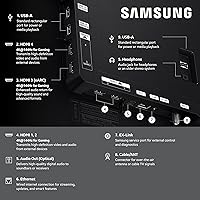
  • Connectivity: Includes HDMI, USB, Ethernet, Wi-Fi, and Bluetooth ports and wireless protocols, covering virtually all common device connection scenarios.
  • VRR Support: Supports Variable Refresh Rate up to 144Hz for compatible PlayStation 5, Xbox Series X, and PC gaming setups.
  • Gaming Features: Dedicated Game Mode reduces input lag, and motion smoothing adjustments allow gamers to tune responsiveness to their preference.
  • Dimensions: With stand attached, the TV measures 72.9″ wide, 44.6″ tall, and 14.1″ deep.
  • Weight: The unit weighs 86.9 pounds with the stand, which is a meaningful consideration for wall-mounting and delivery logistics.
  • Color Finish: Available in Graphite Black, which gives the frame and stand a neutral, low-profile appearance suited to most room aesthetics.
  • Model Number: The official Samsung model number is QN83S90FAEXZA, which should be used when sourcing compatible mounts, accessories, or warranty support.
  • In Box: The package includes the TV unit, power cable, remote control, stand hardware, and a printed user manual.
  • Remote Power: The included remote control requires two AAA batteries, which are not included in the box.
  • Availability: This model became available in April 2025 and quickly ranked among the top two OLED TVs in its category on major retail platforms.

Related Reviews
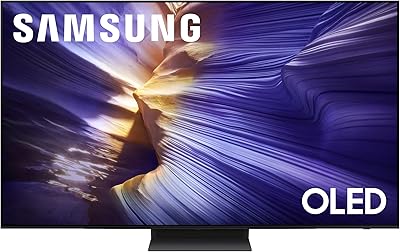
Samsung S90F 42-inch 4K OLED Smart TV
79%
93%
Picture Quality
91%
Gaming Performance
96%
Black Levels & Contrast
62%
Brightness (Peak & Sustained)
83%
Upscaling & AI Processing
More
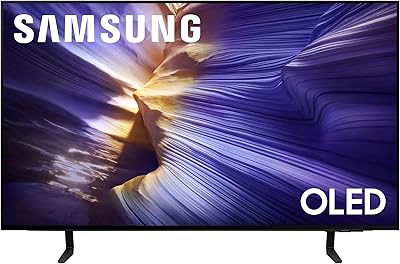
Samsung S90F 55-Inch OLED 4K Smart TV
78%
94%
Picture Quality
91%
Gaming Performance
88%
HDR Performance
71%
Smart TV Interface
83%
AI Upscaling
More
LG G3 83-Inch OLED 4K Smart TV
82%
97%
Picture Quality
91%
Gaming Performance
78%
Brightness & HDR Range
93%
Design & Aesthetics
84%
Smart TV & Interface
More
Samsung 65-Inch S95D OLED TV
80%
93%
Glare Resistance
91%
Picture Quality
88%
Gaming Performance
86%
HDR Performance
74%
Built-in Audio
More
Samsung 77-Inch Class OLED 4K S90D Series Smart TV
84%
94%
Picture Quality
91%
Gaming Performance
77%
Sound Quality
88%
Ease of Setup
85%
Smart Features & Alexa Integration
More
Samsung 48-inch S90F OLED 4K Smart TV
79%
93%
Picture Quality
91%
Gaming Performance
96%
Contrast & Black Levels
88%
Motion Handling
84%
HDR Performance
More
Samsung RU8000 55-inch 4K UHD Smart TV
76%
83%
Picture Quality
81%
Motion Handling
72%
HDR Performance
76%
Smart TV Interface
54%
Audio Performance
More
Samsung 50-inch Crystal UHD TU8000 Smart TV
61%
61%
Picture Quality
47%
Motion Handling
78%
Smart Platform
74%
Voice Control
52%
HDR Performance
More
Samsung U8000F 85-Inch 4K Smart TV
75%
74%
Picture Quality
67%
Motion Handling
88%
Smart TV & Interface
91%
Free Content Value
89%
Build Quality & Design
More
Samsung The Frame LS03F 55-Inch QLED TV
79%
93%
Ambient & Art Mode
81%
Picture Quality
96%
Design & Aesthetics
91%
Cable Management
78%
Gaming Performance
More

FAQ

A good rule of thumb for 4K panels is a viewing distance of roughly 1.5 times the screen height, which puts you at around 5.5 to 6 feet minimum — though most people find 8 to 10 feet more comfortable for a screen this large. If your seating is closer than that, the size works against you rather than for you.

It is a real concern, not a myth, though it tends to affect specific usage patterns more than general watching. Leaving a static image — like a news ticker, a game HUD, or a channel logo — on screen for many hours repeatedly over time is the main risk. Samsung includes automatic screen-shift and pixel-refresh features to slow the process, but if your primary use is live news or gaming with persistent on-screen overlays, that is worth factoring into your decision.

Both use OLED panels and compete closely on picture quality at the hardware level. The main differences are in the smart TV platform — Samsung runs Tizen while LG uses webOS — and in processor tuning, which affects how each handles upscaling and motion. LG's OLED TVs have a longer track record in this segment, so buyers who already prefer webOS or have experience with LG's picture settings may find the transition easier. It is genuinely worth comparing both in person if you have the opportunity.

Yes, it is a solid match for either console. The 144Hz VRR support and dedicated Game Mode reduce input lag to competitive levels, and the OLED panel's response characteristics handle fast motion cleanly. Just make sure to enable Game Mode manually when switching to gaming, as it is not always activated automatically depending on how your console is connected.

It is VESA-compatible and can be wall-mounted, but at nearly 87 pounds you will want two people and ideally a professional installer, especially for drywall with standard stud spacing. Confirm your wall mount's weight rating before purchasing — not all mounts rated for large TVs are rated for this weight class.

Samsung's Tizen OS does display promoted content and app recommendations on the home screen, and some of it is persistent even at this price tier. You can minimize it by adjusting privacy settings and disabling certain smart features, but you cannot fully eliminate the Samsung home screen layout. It is the most common complaint from buyers who expect a clean interface at this level.

Noticeably better than most TVs in this class. The NQ4 AI Gen3 processor was specifically designed to handle low-resolution or compressed source material, and the SDR-to-HDR conversion adds visible depth to flat-looking content. It will not turn a 1080i broadcast into native 4K, but it handles the gap more gracefully than older or mid-range processors.

The stand is functional and designed for the panel's weight, but an 83-inch TV on a stand is inherently less stable than a wall-mounted one, especially in households with children or pets. If your furniture supports the full footprint and you are not in a high-traffic area, it works fine. For most permanent installations, wall-mounting is the more secure option.

The built-in Alexa handles standard commands — volume, input switching, app launching, smart home device control — reliably for day-to-day use. It is not as responsive as a dedicated Echo device in a quiet room, and it requires the microphone to be enabled, which some privacy-conscious buyers prefer to keep off. For basic voice control it is genuinely convenient; for heavy Alexa use, a separate device still has an edge.

This is one of the stronger use cases for this large-screen Samsung. The AI motion processing tracks fast-moving objects — including balls and player movement — and reduces the blur and flicker that cheaper panels produce with rapid panning shots. The default motion settings can occasionally look over-processed, but dialing them back slightly in the picture settings usually finds a natural balance most sports viewers prefer.