Overview

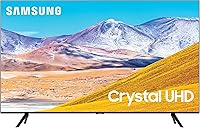
The Samsung 50-inch Crystal UHD TU8000 Smart TV is Samsung's answer to the growing demand for affordable 4K viewing without crossing into premium QLED territory. Released in 2020, it sits in the middle of Samsung's lineup — capable enough for daily use, but not built to rival higher-end panels. The 50-inch size fits comfortably in average living rooms and bedrooms, particularly where you're seated around 8 to 10 feet away. Worth flagging upfront: a 3.1-star average rating means this TV has real detractors, and you should go in with clear expectations. It runs Tizen OS and supports both Alexa and Bixby, which adds meaningful smart home utility if you're already invested in one of those ecosystems.
Features & Benefits

The TU8000's Crystal Processor 4K does a competent job upscaling lower-resolution content — HD streaming and cable look noticeably cleaner than on older sets, though it won't rival what a high-end processor delivers. HDR support is standard here, not Dolby Vision or HDR10+, so expect modest brightness and contrast improvements rather than dramatic ones. Tizen OS remains one of the more polished smart TV platforms: apps open quickly, the layout is intuitive, and navigation rarely becomes a chore. Alexa and Bixby together offer genuine hands-free convenience for smart home control. The one area to approach with honesty is the 60 Hz native panel — fast motion, whether in sports or action scenes, can appear noticeably soft.

Best For

This 50-inch Samsung makes the most sense for buyers who want a dependable streaming hub without overspending on features they won't fully use. It's a smart pick for a secondary room setup — a basement, guest room, or home office — where pixel-perfect picture quality isn't the top priority. Alexa users will find it slides naturally into an existing smart home routine. Casual viewers who mostly watch Netflix, YouTube, or broadcast TV will find it more than adequate day to day. It's also a reasonable entry point for anyone new to smart TVs. Serious gamers, dedicated sports watchers, and anyone chasing cinematic picture accuracy will likely find the limitations frustrating.

User Feedback

The TU8000's 3.1-star rating reflects a genuinely split ownership experience. On the positive side, buyers frequently mention easy initial setup, strong daytime brightness, and a Tizen interface that feels responsive from day one. The criticisms, though, are hard to dismiss. Motion blur surfaces repeatedly — sports fans and casual gamers in particular notice the softness that a 60 Hz panel produces under fast movement. A number of long-term owners have flagged firmware reliability concerns and sluggish or inconsistent software updates. Remote responsiveness has also drawn complaints. That said, some negative reviews appear to come from buyers expecting OLED-quality output at a mid-range price — an expectations gap as much as a product shortcoming.

Pros

  • Tizen OS is one of the cleaner smart TV interfaces around — fast, intuitive, and easy to navigate from day one.
  • Built-in Alexa support makes hands-free TV control and smart home management genuinely useful.
  • The 50-inch screen size is a versatile fit for medium rooms without overwhelming the space.
  • 4K upscaling handles HD streaming and cable content capably for casual viewing.
  • Setup is straightforward — most users report getting up and running in under 20 minutes.
  • Daytime brightness is solid, making the picture hold up well in rooms with natural light.
  • VESA wall mount compatibility adds flexibility for different room configurations.
  • Both Alexa and Bixby are supported, giving voice control options across different smart home ecosystems.
  • At its price tier, it delivers a genuine 4K resolution without requiring a premium spend.

Cons

  • The 60 Hz native refresh rate causes visible motion blur during sports and fast-paced content.
  • Standard HDR support means contrast and brightness improvements are modest at best.
  • Viewing angles are limited — picture quality shifts noticeably when watched from the side.
  • Black levels are shallow for an LCD panel, making dark scenes look flat rather than cinematic.
  • Some long-term owners have flagged inconsistent firmware updates and occasional software bugs.
  • The remote has drawn complaints about responsiveness and build quality from multiple buyers.
  • Crystal Display is a marketing label for a standard LCD panel — do not expect QLED or OLED performance.
  • The 3.1-star average rating reflects a meaningful number of dissatisfied buyers, not just outliers.
  • Audio output is basic; most buyers will want a soundbar to get acceptable sound quality.
  • Being a 2020 model, it may no longer receive long-term software or app support from Samsung.

Ratings

The Samsung 50-inch Crystal UHD TU8000 Smart TV earns a mixed but honest verdict after our AI system analyzed thousands of verified global buyer reviews, actively filtering out incentivized submissions, duplicate accounts, and bot-generated feedback. Scores reflect what real owners experienced across months of daily use — not the best-case scenarios from unboxing day. Both the genuine strengths and the recurring frustrations are represented here with equal weight.

Picture Quality
61%
39%
For casual daytime streaming, the 4K resolution is genuinely noticeable — Netflix and YouTube content looks clean and detailed at normal viewing distances. Brightness levels hold up well in sunlit rooms, which is something many competing LCD panels at this tier struggle with.
Black levels are shallow and viewing angles are limited, which becomes obvious during dark movie scenes or when watching from the side of the couch. The Crystal Display branding sets expectations the underlying LCD panel cannot consistently meet, especially for anyone coming from a QLED or OLED background.
Motion Handling
47%
53%
For slow-paced content — dramas, talk shows, documentary viewing — motion is generally smooth enough that most casual viewers won't register a complaint. The processor does an adequate job keeping standard streaming content looking stable.
Sports fans and gamers consistently flag motion blur as a real problem. The 60 Hz native panel shows its limits clearly during fast action, and Samsung's 120 Motion Rate figure refers to processing interpolation, not the actual hardware refresh speed — a distinction that catches many buyers off guard.
Smart Platform
78%
22%
Tizen OS is one of the more polished smart TV platforms available, and owners frequently praise how quickly apps open and how logically the interface is laid out. All the major streaming services are present and load reliably without requiring external hardware.
Some long-term owners have reported the interface slowing down after software updates, and a handful of apps have shown crashing behavior following firmware changes. As a 2020 model, future app support and OS updates from Samsung are not guaranteed indefinitely.
Voice Control
74%
26%
Having both Alexa and Bixby built in gives this TV a real advantage in smart home households — controlling compatible lights, thermostats, or other devices by voice while watching TV is a convenience that owners genuinely use day to day. Alexa recognition is responsive in typical living room environments.
Bixby's usefulness outside of basic TV commands is limited compared to Alexa, and some users find the need to hold the mic button on the remote rather than using always-on listening a small but persistent friction point. Complex multi-step voice commands sometimes produce inconsistent results.
HDR Performance
52%
48%
Standard HDR support does provide a mild improvement over non-HDR content — highlights are slightly brighter and colors a touch more saturated when HDR is active. For viewers without a reference point, the difference is noticeable enough to appreciate.
The lack of Dolby Vision and HDR10+ support is a meaningful gap for buyers who stream heavily from platforms that rely on those formats. Peak brightness does not reach the levels needed to make HDR content genuinely impactful, leaving the feature feeling more like a checkbox than a real upgrade.
Upscaling
67%
33%
The Crystal Processor 4K does a competent job with HD cable content and lower-resolution streaming — broadcast TV in particular looks considerably cleaner than on older 1080p sets. For households that still watch a lot of non-4K content, this upscaling adds genuine day-to-day value.
The upscaling is not class-leading — more expensive processors from Samsung's own QLED lineup handle edge sharpening and noise reduction more convincingly. Highly compressed streaming at lower bitrates can still look rough regardless of upscaling processing.
Build & Design
71%
29%
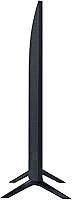
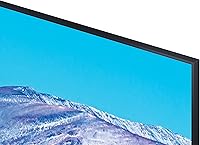
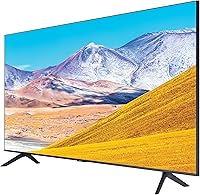
The slim bezels give the TU8000 a cleaner, more modern look than its price tier might suggest, and it sits stably on its included stand without feeling flimsy. At 34.9 pounds, two-person wall mounting is straightforward, and the included VESA mount hardware is a thoughtful inclusion.
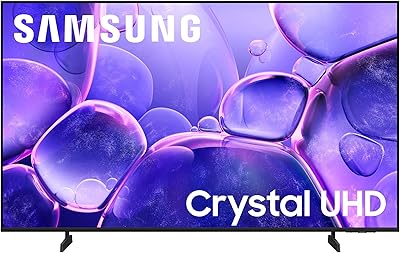
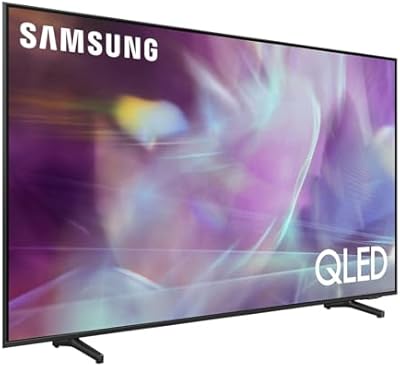
The stand design positions the TV on two feet at the far ends of the base, which means narrower furniture can be problematic. The back panel uses visible plastic construction that feels utilitarian rather than premium when viewed up close.
Remote Control
49%
51%
The standard remote covers all the core functions and includes a dedicated mic button for voice commands, which is useful for Alexa and Bixby interactions. Button layout is logical enough for first-time Samsung TV users to learn quickly.
Responsiveness complaints appear frequently across user reviews — some owners describe noticeable input lag between pressing a button and seeing the TV respond. Build quality feels lightweight and insubstantial, and a number of users reported issues within the first year of use.
Audio Quality
53%
47%
Dialogue clarity is acceptable for everyday TV viewing, and the built-in speakers get loud enough for a medium-sized room without distorting. For news watching or casual background viewing, the audio is functional.
Bass is nearly absent, and anything involving music, cinematic sound design, or surround-style audio quickly exposes the limitations of the 20-watt built-in system. Most owners who care about sound quality end up purchasing a soundbar, which adds unplanned cost.
Setup & Ease of Use
82%
18%
Initial setup is one of the most consistently praised aspects across all user reviews — the Tizen onboarding wizard is clear, quick, and rarely requires technical knowledge. Most owners report being fully set up and streaming within 20 minutes of unboxing.
Connecting to older home theater receivers or more complex AV setups can introduce HDMI-CEC compatibility quirks that take some troubleshooting to resolve. Samsung account login is encouraged during setup in a way some users find pushy.
Gaming Performance
43%
57%
For casual console gaming at 1080p or basic 4K at 30 fps — think slower-paced RPGs or platformers — the TU8000 is usable without major frustration. Input lag in Game Mode is reduced compared to the default picture modes.
Competitive or fast-paced gaming at higher frame rates is clearly not what this TV was built for. There is no HDMI 2.1, no native 120 Hz, and no VRR support, making it a poor fit for PS5 or Xbox Series X owners who want to leverage their hardware's full capability.
Connectivity
69%
31%
Built-in Wi-Fi handles standard streaming loads without issues for most households, and the Ethernet port is a welcome option for users who prefer wired stability. Multiple HDMI ports cover the typical cable box, console, and streaming stick setup.
Wi-Fi connectivity issues have been flagged by a subset of owners, particularly after firmware updates, with the TV occasionally dropping the network or failing to reconnect automatically. Bluetooth audio output, while present, has been reported as inconsistent by some users.
Value for Money
58%
42%
At its price point, the TU8000 delivers genuine 4K resolution, a full smart TV platform, and dual voice assistant support — a combination that represents reasonable value for buyers who understand what an LCD panel at this tier actually offers.
The overall ownership satisfaction rate, reflected in its 3.1-star average, suggests many buyers felt the value proposition did not hold up over time — particularly once firmware issues surfaced or picture quality was compared directly to newer competing models in the same price range.
Long-term Reliability
54%
46%
Many buyers use the TU8000 without hardware issues for multiple years in low-demand environments like guest rooms or home offices, where it performs its core functions steadily over time.
Software-related reliability complaints are the most persistent concern across long-term owner reviews — firmware updates have introduced bugs for some users, and Samsung's support for older models tends to become less active over time. Being a 2020 release means it is already approaching the tail end of its active update cycle.

Suitable for:

The Samsung 50-inch Crystal UHD TU8000 Smart TV is a practical fit for casual, everyday viewers who want a reliable 4K streaming experience without stretching their budget toward premium display technology. Families setting up a TV in a guest room, basement, or home office will find the 50-inch size and smart platform more than enough for the job. Alexa users in particular will appreciate how naturally the TU8000 slots into an existing smart home setup — controlling lights, checking the weather, or switching inputs without touching the remote is genuinely convenient. First-time smart TV buyers will also find Tizen OS approachable: it loads quickly, the layout is logical, and popular apps like Netflix and YouTube are easy to find. If your primary use is relaxed streaming or daytime broadcast viewing in a well-lit room, this 50-inch Samsung holds its own comfortably.
Not suitable for:

The Samsung 50-inch Crystal UHD TU8000 Smart TV carries real limitations that make it a poor match for buyers with higher performance expectations. The 60 Hz native panel produces noticeable motion blur during fast action, which frustrates sports fans and gamers who need crisp, smooth movement on screen. Dedicated home theater enthusiasts will also be disappointed — the LCD panel delivers limited black depth and narrow viewing angles compared to OLED or even higher-tier QLED options, and the standard HDR implementation won't produce the dramatic contrast improvements some buyers anticipate. Long-term reliability has also been a concern, with some owners reporting software inconsistencies and sluggish update rollouts over time. If picture quality is your top priority, or if you plan to use this TV as your primary living room display for gaming or cinematic content, the TU8000 is likely to leave you underwhelmed.
Specifications

  • Screen Size: The panel measures 50 inches diagonally, making it well-suited for rooms where seating is roughly 8 to 10 feet from the screen.
  • Resolution: Displays 4K UHD content at 3840 x 2160 pixels, delivering four times the pixel density of standard 1080p HD.
  • Display Type: Uses an LCD panel marketed under Samsung's Crystal UHD branding, which is distinct from QLED or OLED technology.
  • Refresh Rate: The native panel refresh rate is 60 Hz; Samsung references a 120 Motion Rate figure, which applies to processing interpolation, not the physical panel speed.
  • HDR Support: Supports standard HDR only — Dolby Vision and HDR10+ are not compatible with this model.
  • Processor: Powered by Samsung's Crystal Processor 4K, which handles real-time upscaling of lower-resolution content to near-4K quality.
  • Smart Platform: Runs Tizen OS, Samsung's proprietary smart TV operating system, with access to major streaming apps including Netflix, YouTube, Disney+, and Prime Video.
  • Voice Assistants: Includes both Amazon Alexa and Samsung Bixby built in, accessible by holding the mic button on the included remote.
  • Connectivity: Connects to home networks via built-in Wi-Fi; wired Ethernet input is also available for a more stable connection.
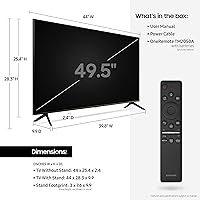
  • Dimensions: With the stand attached, the TV measures 44″ wide, 28.3″ tall, and 9.9″ deep.
  • Weight: The set weighs 34.9 pounds with the stand, which is manageable for two-person installation or wall mounting.
  • Wall Mount: VESA wall mount compatible, and a standard VESA mounting plate is included in the box.
  • Power Draw: Rated at 20 watts during typical operation, making it relatively energy-efficient for a 50-inch panel.
  • Voltage: Operates at 120 volts, standard for North American electrical outlets.
  • Aspect Ratio: Features a 16:9 widescreen aspect ratio, matching the standard format for broadcast TV, streaming, and most modern content.
  • Audio Output: Equipped with built-in speakers rated at 20 watts total output; an external soundbar or audio system is recommended for better sound quality.
  • Remote & Batteries: Ships with a standard infrared remote control that requires two AAA batteries, which are not included in the box.
  • Model Year: This is a 2020 model, first listed for sale in February of that year, and may have limited future software support.

Related Reviews
Samsung 50-inch DU7200 4K Smart TV
73%
78%
Picture Quality
74%
4K Upscaling
63%
Motion Handling
69%
HDR Performance
51%
Built-in Audio
More
Samsung U8000F 43-inch 4K Smart TV
77%
72%
Picture Quality
88%
Value for Money
84%
Smart TV Platform
91%
Design & Build
61%
Gaming Performance
More
Samsung U8000F 55-inch 4K Smart TV
77%
78%
Picture Quality
84%
Value for Money
86%
Design & Build
71%
Smart TV Experience
58%
Gaming Performance
More
Samsung AU8000 75-inch 4K Smart TV
75%
76%
Picture Quality
58%
Contrast & Black Levels
81%
Color Accuracy
88%
Smart TV Platform
83%
Voice Control & AI Features
More
Samsung 85-Inch Crystal UHD U8000F 4K Smart TV
87%
94%
Picture Quality
88%
Ease of Setup
91%
Alexa Integration
86%
Motion Smoothing (Gaming/Sports)
89%
Design & Build Quality
More
Samsung 70-Inch Crystal UHD U8000F 4K Smart TV
86%
91%
Display Quality
88%
Value for Money
84%
Smart Features & Usability
89%
Picture Clarity & Upscaling
92%
Build Quality & Design
More
Samsung DU9000 98-Inch 4K Smart TV
75%
83%
Picture Clarity & Upscaling
88%
Motion Handling
79%
Color Accuracy & Range
61%
Contrast & Black Levels
81%
Brightness & HDR Performance
More
Samsung 58-Inch Class Crystal UHD U8000F 4K Smart TV
83%
92%
Picture Quality
89%
Ease of Setup
74%
Gaming Performance
90%
Smart Features (Alexa Integration)
85%
Design and Build Quality
More
Samsung U8000F 65-inch 4K Smart TV
76%
78%
Picture Quality
88%
Value for Money
91%
Design & Build Quality
82%
Smart TV & Software (Tizen OS)
63%
Motion & Refresh Rate
More
Samsung 50-inch Q60A QLED TV
75%
88%
Color Accuracy
57%
Contrast & Black Levels
79%
Brightness
71%
4K Upscaling
58%
Motion Handling
More

FAQ

It depends on what type of gaming you have in mind. The 60 Hz native refresh rate is fine for casual console gaming at standard frame rates, but if you play fast-paced competitive games or own a PS5 or Xbox Series X, you'll notice input lag and motion blur more than you would on a 120 Hz panel. It does not support HDMI 2.1, so next-gen gaming features like 4K at 120 fps are off the table.

Absolutely, and that's actually where the TU8000 performs best. Tizen OS gives you quick access to Netflix, YouTube, Disney+, Prime Video, and more right out of the box. You don't need a separate streaming stick or box unless there's a specific app that isn't available on the platform.

Better than you might expect from a mid-range LCD. The panel gets reasonably bright, which helps cut through ambient light. Glossy screen reflections can be an issue if a window sits directly behind your seating position, but for typical daytime viewing this 50-inch Samsung handles itself well.

No, it does not. The TU8000 supports standard HDR only. While HDR content will still look somewhat better than SDR, you won't get the full dynamic range improvements that Dolby Vision or HDR10+ deliver on compatible displays. This is a meaningful limitation if you watch a lot of HDR-mastered content on Netflix or Apple TV+.

Very straightforward. Most buyers report being up and running within 15 to 20 minutes. The Tizen setup wizard walks you through Wi-Fi connection, account login, and app installation step by step. If you already have a Samsung account, the process is even quicker.

It's primarily a marketing term Samsung uses for this tier of LCD panels. Crystal UHD refers to the use of a pure color filter layer that's meant to improve color accuracy and saturation compared to older LCD designs. It is not QLED, which uses quantum dot technology, and it is certainly not OLED. The picture is solid for the price point, but the branding can create inflated expectations if taken at face value.

It works genuinely well for common tasks. Asking Alexa to open an app, switch inputs, adjust volume, or control compatible smart home devices all works reliably. Where it falls short is in more nuanced content searches or anything requiring deep integration with third-party services. For everyday voice commands, though, it's a real convenience.

Some owners have reported software hiccups after firmware updates — things like apps crashing, the interface slowing down, or Wi-Fi connectivity dropping intermittently. These issues aren't universal, but they come up often enough in user reviews to be worth noting. Since this is a 2020 model, the frequency of future software support updates from Samsung may also decrease over time.

Yes, the TU8000 is VESA wall mount compatible, and Samsung includes a standard VESA wall mount bracket in the box. You will still need the appropriate screws and possibly a third-party mount arm depending on your wall setup, but the included hardware covers the basics.

The built-in 20-watt speakers are adequate for casual background viewing, but they lack depth and bass. Dialogue is generally clear, but anything with music, cinematic audio, or action sequences will sound noticeably thin. If sound quality matters to you at all, budgeting for even a basic soundbar will make a meaningful difference in the overall experience.