
Overview

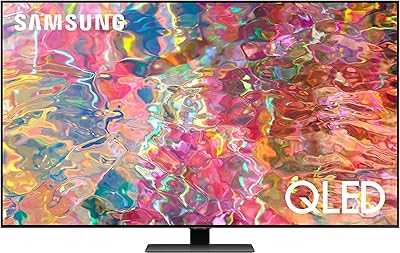
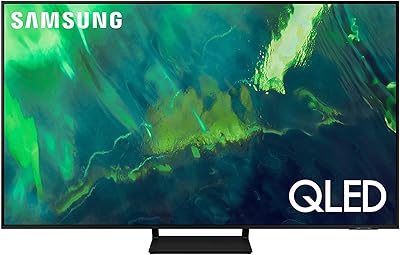
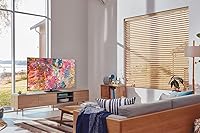
The Samsung Q80B 65-inch QLED 4K TV sits in a precise spot within Samsung's 2022 lineup — a meaningful step above the Q70B, primarily because of its Direct Full Array backlight, yet it stops short of the peak brightness the flagship QN90B delivers. That distinction matters when you're spending real money on a screen. At 65 inches, the panel fits naturally in most large living rooms without overwhelming the space. Samsung's Tizen OS runs things here, and it's genuinely snappy compared to Google TV or LG's webOS — though its home screen leans heavier on content recommendations than some people will appreciate.

Features & Benefits

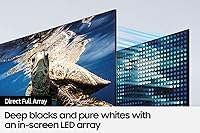
The Direct Full Array backlight is the real reason to choose this over a cheaper QLED. With local dimming zones behind the panel, you get noticeably deeper blacks than edge-lit alternatives — put on a dark thriller and the improvement is visible within minutes. The Quantum Processor handles upscaling competently, so streaming HD content looks cleaner than you might expect. Color output stays rich and consistent even at high brightness levels. For gamers, 120Hz with AMD FreeSync and input lag under 10ms in gaming mode keeps things properly responsive, and four HDMI 2.1 ports eliminate cable-swapping between consoles. The built-in Dolby Atmos speakers are adequate for casual use, but a dedicated soundbar will make a noticeable difference if audio is a priority.

Best For

The Q80B earns its place most naturally in a household that does a bit of everything. Console gamers who also want a go-to family TV for movies and sports will find this 65-inch panel checks both boxes without needing a separate gaming monitor. It performs especially well in moderately lit rooms — peak brightness fights off afternoon glare confidently, though a pitch-dark room will expose some blooming around bright objects. Buyers stepping up from a mid-range LED set will notice the contrast improvement immediately. And for voice-control users, having Alexa, Google Assistant, and Bixby built in natively is a convenience most competitors at this screen size simply don't offer.

User Feedback

Aggregate ratings for this Samsung QLED sit around 4.4 out of 5 stars, and the qualitative patterns in owner reviews are fairly consistent. Color vibrancy and daylight brightness draw frequent praise, and gamers specifically highlight the smooth, responsive feel during fast-paced play. Where criticism clusters, it tends to involve two things: the local dimming can be aggressive enough to cause visible blooming in dark scenes when a bright object sits against a black background, and the Tizen home screen's content-push approach bothers a vocal subset of users. A handful of buyers also note that out-of-box calibration skews slightly toward oversaturation, though a quick picture mode tweak typically resolves it in minutes.

Pros

  • Direct Full Array backlighting produces noticeably deeper contrast than edge-lit QLED panels at a similar price.
  • Native 120Hz refresh rate with AMD FreeSync Premium Pro keeps fast gaming visuals smooth and tear-free.
  • Input lag drops well under 10ms in game mode — genuinely responsive for competitive play.
  • Four HDMI 2.1 ports mean you can keep multiple consoles and a PC connected without swapping cables.
  • Bright, vibrant colors hold up well in rooms with natural daylight, where OLED sets can struggle.
  • The Quantum Processor handles upscaling of HD and lower-resolution streaming content more competently than expected.
  • Tizen OS is fast and stable, with a broad app library and reliable voice assistant integration across three platforms.
  • The slim 2.2-inch depth makes wall-mounting clean and practical without a bulky adapter.
  • Multiple voice assistants — Alexa, Google Assistant, and Bixby — are all natively supported out of the box.
  • The 65-inch screen size hits a practical sweet spot for large living rooms without dominating smaller spaces.

Cons

  • Local dimming aggressiveness causes blooming around bright objects in dark scenes — a consistent complaint from owners.
  • Built-in speakers are adequate at best; a soundbar is almost always needed to do the picture quality justice.
  • Out-of-box color calibration skews toward oversaturation, requiring manual adjustment for accurate picture reproduction.
  • The Tizen home screen pushes sponsored content and app recommendations in ways some users find persistently annoying.
  • The Q80B is a 2022 model, so newer display technologies and software features in current competitors may now look more attractive.
  • Blooming is particularly noticeable during dark cinematic content with subtitles or bright highlights — not ideal for dedicated home theater setups.
  • At 61.3 pounds, installation and repositioning without a second person is awkward and carries some risk.
  • The solar-powered remote, while convenient in theory, has drawn scattered complaints about durability over extended daily use.

Ratings

The scores below reflect an AI-driven analysis of verified global buyer reviews for the Samsung Q80B 65-inch QLED 4K TV, with spam, incentivized submissions, and bot-generated feedback actively filtered out before scoring. Each category is weighted against real ownership experiences across diverse use cases — movie nights, competitive gaming, everyday streaming, and more. Both the genuine strengths and the frustrations that real buyers encounter are transparently represented in every score.

Picture Quality
88%
Color vibrancy is consistently the first thing owners mention after setup — Quantum Dot technology gives the panel a richness that stands out immediately when watching HDR content or nature documentaries. Daylight viewing is particularly impressive, with brightness levels that prevent washed-out images even in sun-facing rooms.
In a fully darkened room, the Direct Full Array local dimming introduces visible blooming around bright objects set against dark backgrounds — a recurring complaint in cinema-focused reviews. The contrast ceiling, while strong for an LCD panel, still trails OLED noticeably in worst-case dark scene performance.
Gaming Performance
91%
Input lag drops to under 10ms in game mode, and the 120Hz native refresh rate combined with AMD FreeSync Premium Pro certification makes fast-paced titles feel genuinely responsive and smooth. Owners report that switching between a PS5 and Xbox Series X via separate HDMI 2.1 ports is effortless and adds real day-to-day convenience.
The automatic game mode detection occasionally fails to activate on certain devices, requiring manual switching through the settings menu. A small number of users also noted inconsistent VRR behavior at lower frame rates, which can introduce mild judder in specific game genres.
HDR Performance
83%
The Quantum HDR 12x rating on this 65-inch variant delivers genuinely punchy highlights — explosions, sunsets, and specular reflections on compatible content carry impact that lower-tier panels can't match. HDR10+ content looks particularly well-handled, with tone mapping that avoids the crushed shadows some cheaper sets produce.
Dolby Vision is absent, which matters for viewers who subscribe to platforms where Dolby Vision is the primary premium HDR format. Peak brightness, while competitive, doesn't reach the levels of Samsung's own QN90B, so the HDR experience in very bright rooms is strong but not class-leading.
Local Dimming
67%
33%
Compared to edge-lit QLED panels at lower price points, the Direct Full Array backlight is a meaningful step up — black bars during widescreen movies are darker and more uniform, and the overall contrast in mixed-light scenes is noticeably improved. Most buyers watching in living room lighting conditions found the dimming performance satisfying.
The dimming algorithm runs aggressively in the default setting, and the blooming halo around subtitles or bright credits on dark backgrounds is a persistent criticism from careful viewers. Owners who watch in a dedicated dark room frequently end up disabling local dimming entirely to reduce the distraction, sacrificing some contrast depth in the process.
Smart TV & Interface
76%
24%
Tizen OS is genuinely fast by smart TV standards — apps open quickly, navigation is fluid, and the system rarely stutters or requires reboots. The breadth of available streaming apps and the integration with Samsung's SmartThings ecosystem adds practical value for households already invested in Samsung devices.
The home screen prominently displays sponsored content and algorithmically pushed recommendations, which a vocal portion of owners find intrusive and difficult to minimize. There is no way to fully disable the ads through standard settings, which stands out as a frustration at a mid-to-upper-premium price point.
Motion Handling
84%
Motion Xcelerator Turbo+ handles sports and action sequences well, keeping fast pans and rapid edits sharp without the soap-opera over-smoothing effect that plagues heavy motion processing on lower-tier sets. Soccer broadcasts and motorsports content were frequently cited as looking natural and clean.
The default motion settings lean toward aggressive interpolation, and first-time owners often spend time dialing them back to find a comfortable middle ground. Film content with deliberate cinematic motion can occasionally look slightly artificial before calibration is done.
Audio Quality
58%
42%
The built-in Dolby Atmos decoding and Object Tracking Sound system handles dialogue clarity well for everyday TV watching, and casual viewers on a budget report it as functional enough for daily streaming without additional hardware.
Bass response is thin and the soundstage is narrow — most owners who care about their viewing experience end up pairing the Q80B with a soundbar within weeks of purchase. At this price tier, the built-in audio is widely considered the weakest link, and it would be misleading to suggest otherwise.
Connectivity
93%
Four HDMI 2.1 ports is genuinely generous and practically useful — owners with multiple consoles, a PC, and an eARC soundbar can keep everything connected simultaneously without using a switch. Wi-Fi, Bluetooth, USB, and Ethernet all perform reliably without reported dropout issues.
A small number of users reported that the USB ports deliver limited power output, making some powered accessories less reliable. The RF input is present but lacks the fine-tuning options some cable users prefer for antenna signal optimization.
Upscaling
79%
21%
The Quantum Processor 4K produces noticeably cleaner results when upscaling HD streaming content compared to basic processors — older TV shows and cable broadcasts look sharper and better resolved than owners expected going in.
Standard definition content and low-bitrate streams still expose the limits of upscaling; the processor improves the image but cannot recover detail that simply doesn't exist in the source. Heavily compressed content from some cable providers can still look soft even at maximum upscaling settings.
Voice Assistant Integration
81%
19%
Having Alexa, Google Assistant, and Bixby all natively available without a separate smart speaker is a genuine convenience — switching inputs, adjusting volume, or launching a specific streaming app by voice works reliably across all three platforms.
Bixby's response accuracy trails the other two assistants for complex or specific queries, and some users found its default behavior overly eager to intercept commands. Users with existing Alexa or Google ecosystems generally stick to their preferred assistant and find Bixby redundant.
Build Quality
74%
26%
The Titan Black finish looks sharp in person, and the slim bezel design gives the panel a premium aesthetic consistent with its price positioning. The stand is stable and holds the 65-inch panel firmly without wobble under normal conditions.
The solar-powered remote received scattered complaints about long-term button reliability and charging consistency in low-light interiors. A few owners noted minor backlight uniformity issues near panel edges — not a widespread defect, but mentioned often enough to flag.
Out-of-Box Calibration
63%
37%
For buyers who simply want to plug in and watch without adjusting anything, the default picture modes are vibrant and eye-catching — the Dynamic and Standard modes look impressive in a showroom or bright living room setting.
Color accuracy in the default modes skews heavily toward oversaturation, and color temperature runs noticeably warm. Getting accurate, filmmaker-intent picture quality requires either manual calibration or using the Movie mode paired with some fine-tuning, which casual buyers are unlikely to attempt on their own.
Value for Money
77%
23%
The Q80B sits in a sensible position for buyers who want Direct Full Array contrast and genuine HDMI 2.1 gaming support without climbing all the way to flagship pricing — the feature set is hard to replicate at a meaningfully lower cost.
As a 2022 model, newer alternatives now offer comparable or superior specs at similar or reduced prices, which weakens the value case somewhat for late buyers. The additional cost of a soundbar — which most owners end up adding — effectively raises the total investment beyond what the panel price alone suggests.

Suitable for:

The Samsung Q80B 65-inch QLED 4K TV makes the most sense for households that pull double duty — part family entertainment hub, part gaming setup. If you have one or two consoles connected and want 4K at 120Hz with variable refresh rate support, this panel delivers that without asking you to compromise on everyday TV watching. It particularly shines in living rooms with some ambient light, where its peak brightness gives it a clear edge over OLED panels that can wash out in daylight conditions. Buyers stepping up from an older mid-range LED set will notice an immediate and meaningful jump in contrast and color depth. The four HDMI 2.1 ports also make cable management genuinely easier if you run multiple devices simultaneously.

Not suitable for:

If you watch a lot of content in a fully darkened room — think late-night movies with the lights completely off — the Samsung Q80B 65-inch QLED 4K TV has a real limitation worth knowing about: its local dimming, while better than edge-lit panels, can produce visible blooming around bright objects against dark backgrounds. Buyers who prioritize near-perfect black levels and are willing to pay the premium for them should be looking at OLED options instead. This panel also won't satisfy audiophiles who expect TV speakers to carry the room — the built-in sound is functional but rarely impressive, and most serious buyers will need to budget for a soundbar separately. Those who dislike algorithm-driven home screens with content recommendations pushed front and center may also find Tizen's interface more intrusive than competitors like webOS.

Specifications

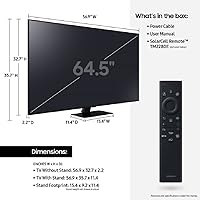
  • Screen Size: The panel measures 64.5 inches diagonally, sold as a 65-inch class display.
  • Resolution: Native 4K UHD resolution at 3840 x 2160 pixels for sharp detail across all content types.
  • Display Technology: QLED panel with Quantum Dot filter delivering 100% color volume across a wide brightness range.
  • Backlight: Direct Full Array backlight with local dimming zones for improved contrast versus edge-lit alternatives.
  • Refresh Rate: Native 120Hz panel with Motion Xcelerator Turbo+ for smooth motion in fast-moving content and games.
  • HDR Support: Quantum HDR 12x on the 65-inch model, with HDR10, HDR10+, and HLG format compatibility.
  • Processor: Quantum Processor 4K handles picture optimization, noise reduction, and real-time upscaling of lower-resolution sources.
  • Operating System: Samsung Tizen OS with a built-in app store, Samsung Gaming Hub, and support for major streaming platforms.
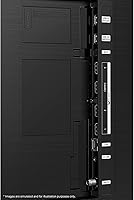
  • HDMI Ports: Four HDMI 2.1 ports supporting 4K at 120Hz, eARC on port 3, and VRR passthrough for compatible devices.
  • Gaming Features: AMD FreeSync Premium Pro certified with input lag under 10ms in game mode for responsive play.
  • Audio System: Built-in speaker system with Dolby Atmos decoding and Object Tracking Sound for directional audio positioning.
  • Voice Assistants: Natively supports Amazon Alexa, Google Assistant, and Samsung Bixby without any additional hardware required.
  • Connectivity: Includes Wi-Fi, Bluetooth, Ethernet, USB ports, and RF input alongside the four HDMI connections.
  • Dimensions: With stand installed, the set measures 11.4″ deep x 56.9″ wide x 35.7″ tall.
  • Wall Mount Depth: Without the stand, the panel depth is approximately 2.2 inches, making flush wall-mounting practical.
  • Weight: The unit weighs 61.3 pounds with the stand attached; wall-mount weight will differ slightly.
  • Color & Finish: Available in Titan Black with a slim bezel design consistent across Samsung's 2022 upper QLED range.
  • Model Number: Official Samsung model identifier is QN65Q80BAFXZA for the 65-inch US market variant.
  • Power Supply: Operates on AC 110-120V at 50/60Hz with a standby power consumption of approximately 0.5 watts.
  • Release Year: This model was introduced as part of Samsung's 2022 television lineup, first available in March 2022.

Related Reviews
Samsung 65-Inch QLED 4K TV Q60C
86%
94%
Picture Quality
91%
Gaming Performance
87%
Ease of Setup
88%
Smart Features
72%
Sound Quality
More
Samsung QN85D 65-inch 4K QLED TV
79%
93%
Picture Brightness
74%
Contrast & Black Levels
88%
Color Accuracy
91%
Motion Handling
82%
Gaming Performance
More
SAMSUNG 65-Inch Neo QLED 4K QN95B TV
88%
96%
Picture Quality
92%
Sound Quality
90%
Gaming Performance
85%
Value for Money
94%
Build Quality
More
Samsung 65-Inch Neo QLED QN70F 4K Smart TV
86%
94%
Picture Quality
91%
Gaming Performance (144Hz)
86%
Smart Features & Alexa Integration
89%
Build Quality
88%
Ease of Setup
More
Samsung 65-Inch The Frame LS03F 4K QLED Smart TV
86%
91%
Picture Quality
96%
Design & Aesthetics
84%
Ease of Setup
89%
Gaming Performance
80%
Sound Quality
More
Samsung 75-Inch QLED Q80B 4K UHD Smart TV
86%
94%
Picture Quality
91%
Gaming Performance
85%
Smart Features & Voice Control
72%
Sound Quality
88%
Ease of Setup
More
Samsung 65-Inch Q70A QLED 4K Smart TV
80%
83%
Picture Quality
91%
Gaming Performance
86%
Motion Handling
71%
HDR Performance
74%
Smart TV & Software
More
Samsung The Serif 55-inch QLED 4K TV
79%
96%
Design & Aesthetics
78%
Picture Quality
91%
Anti-Glare Performance
88%
Stand & Placement Flexibility
74%
Smart Platform & App Support
More
Samsung Q60D 55-inch QLED 4K TV
83%
88%
Picture Quality
91%
Color Accuracy
82%
HDR Performance
84%
Motion Handling
70%
Audio Performance
More
SAMSUNG 65-Inch Neo QLED 4K QN85C
87%
94%
Display Quality
88%
Sound Quality
91%
Gaming Performance
85%
Smart Features
89%
Build Quality
More

FAQ

It genuinely does both well. The 120Hz native panel, sub-10ms input lag in game mode, and AMD FreeSync Premium Pro certification make it a solid choice for console and PC gaming. The four HDMI 2.1 ports are a practical bonus if you're running multiple devices at once.

It's worth being honest here: blooming is a real limitation. When a bright object — a subtitle, a lamp, a star — sits against a very dark background, you'll see a faint halo of light around it. It's more noticeable in a pitch-black room than in typical evening lighting. If most of your viewing happens in full darkness and perfect black levels matter to you, an OLED panel would serve you better.

No, it does not. Samsung TVs use HDR10+ as their premium HDR format rather than Dolby Vision. For most streaming content the difference is minimal in practice, but if you specifically want Dolby Vision, you'll need to look at a different brand.

Yes, easily. The Q80B has four HDMI 2.1 ports, so you can keep both consoles, a soundbar via eARC, and a streaming device all connected simultaneously with no cable swapping needed.

Tizen is genuinely fast and responsive — app loading and navigation feel snappier than many competitor platforms. The main complaint worth noting is that the home screen pushes sponsored content and app recommendations front and center, which bothers some users more than others. You can reorganize it somewhat, but you can't remove the ads entirely.

The built-in audio handles casual daytime viewing fine, but it won't impress anyone who takes sound seriously. For movies and music, the speakers lack depth and bass. Most owners at this tier pair the Q80B with a soundbar fairly quickly, and it's worth factoring that into your budget from the start.

The HDR rating reflects peak brightness capability — the 65-inch Q80B is rated at Quantum HDR 12x, while the 55-inch and 50-inch variants are rated at 8x. In practical terms, the 65-inch delivers higher peak brightness for HDR highlights, which translates to a more impactful HDR experience, particularly on bright scenes.

At 61.3 pounds, wall-mounting is definitely a two-person job. The TV itself is VESA mount compatible and the slim 2.2-inch depth without the stand looks clean on a wall. Just make sure your wall bracket is rated for the weight, and budget time for routing cables cleanly behind the wall if aesthetics matter to you.

The Quantum Processor 4K does a respectable job cleaning up lower-resolution sources. Cable TV and HD streaming look noticeably sharper than they would on a basic upscaler. That said, genuinely poor source quality will still show its limits — upscaling improves the picture but can't manufacture detail that wasn't there to begin with.

You can absolutely use it without internet. All the HDMI inputs, the built-in tuner for antenna or cable, and USB playback work offline without any issue. You'll just lose access to smart TV apps and streaming services, which require a network connection to function.