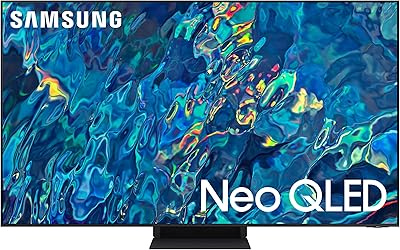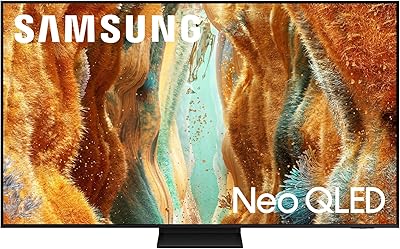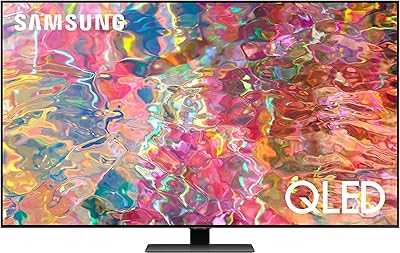



Overview

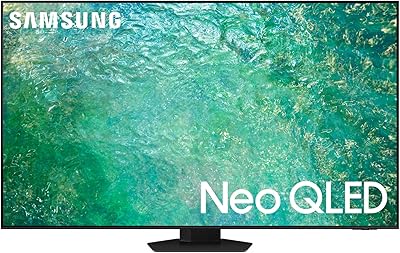
The Samsung QN85D 65-inch 4K QLED TV sits in an interesting spot in Samsung’s 2024 lineup — comfortably above the entry-level QLED models but a step below the top-tier QN90D and QN95D. The biggest upgrade here is the Mini LED backlight, which gives this panel a meaningful contrast advantage over conventional edge-lit QLED displays. At 65 inches, it fits naturally in most living rooms without overwhelming the space. Buyers at this price tier will reasonably ask how it stacks up against OLED — and the honest answer is that this Samsung Mini LED TV trades the absolute blacks of OLED for significantly higher peak brightness and better performance in well-lit rooms.

Features & Benefits

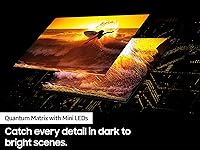
The QN85D’s Quantum Matrix Technology divides the backlight into thousands of individually controlled Mini LED zones, which translates to noticeably tighter local dimming than you’d get from a conventional edge-lit panel. In practice, HDR content on Disney+ and Netflix pops with impressive highlight detail — specular reflections, sunsets, and stadium lighting all look punchy and defined. The NQ4 AI Gen2 processor handles upscaling older HD cable content surprisingly well, though results vary by source. Motion performance at 120Hz is legitimately smooth for live sports and fast-action sequences. The built-in Dolby Atmos audio creates a decent sense of space, but it’s the processor doing the heavy lifting on sound, not the 2.2CH speakers.

Best For

This 65-inch QLED is purpose-built for buyers who want a bright, high-performing display without crossing into OLED territory on price. Sports viewers will appreciate how motion stays sharp during fast pans and how the panel holds up in a sunlit room — this is not a TV that needs the curtains drawn. Gamers running a PS5 or Xbox Series X will find the 120Hz capability useful, though it’s worth confirming HDMI 2.1 port count before assuming full bandwidth for 4K/120 gaming. Households that watch a wide mix — streaming, cable, older DVDs — will benefit from the AI upscaling, which does a respectable job regardless of source quality. Built-in Alexa rounds things out for smart home users.

User Feedback

Out of the box, most owners are immediately impressed by color vibrancy and how bright the panel gets — reactions to HDR content tend to be enthusiastic. The criticism that surfaces most consistently is blooming around subtitles and small bright objects against dark backgrounds, which is a known Mini LED limitation rather than a QN85D-specific defect. The Tizen interface earns praise for its snappy responsiveness, though several users flag pre-loaded ads on the home screen as a minor annoyance. Built-in audio is described as acceptable for casual viewing, but the recommendation to add a soundbar comes up frequently. At nearly 60 pounds, wall-mounting requires real planning — a sturdy bracket and a second pair of hands are not optional.

Pros

  • Mini LED backlighting delivers significantly better brightness and contrast than conventional edge-lit QLED panels.
  • Peak brightness holds up impressively well in sunlit rooms — one of the QN85D’s clearest real-world advantages.
  • 120Hz refresh rate keeps fast sports and action scenes genuinely smooth without obvious motion blur.
  • AI upscaling does a commendable job with HD cable and streaming content, not just native 4K sources.
  • The Tizen smart platform is fast, responsive, and easy to navigate day to day.
  • Alexa is fully integrated — no extra hardware required for basic smart home control.
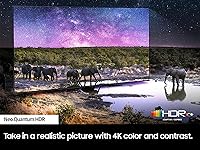
  • Neo Quantum HDR tone mapping adjusts dynamically per scene, producing more natural-looking highlights across varied content.
  • 65-inch screen size hits a practical sweet spot for most living rooms without requiring a massive viewing distance.
  • Out-of-box color vibrancy is consistently praised — minimal calibration needed for most buyers.
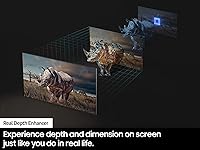
  • Real Depth Enhancer adds a subtle but noticeable sense of dimension to nature documentaries and cinematic content.

Cons

  • Mini LED blooming is visible in dark scenes with small bright objects — star fields and subtitle text are common pain points.
  • Built-in 2.2CH speakers are underwhelming at this price tier; budget for a soundbar from the start.
  • Dolby Vision support is not confirmed, which may matter for Apple TV+ and some Disney+ content purists.
  • At 59.1 lbs, wall-mounting this 65-inch QLED is a two-person job and requires a heavy-duty bracket.
  • Samsung’s Tizen home screen includes pre-loaded ads that some users find intrusive and hard to fully remove.
  • HDMI 2.1 port count should be verified before assuming full 4K/120Hz bandwidth for multiple next-gen consoles simultaneously.
  • The QN85D sits below Samsung’s top-tier models, meaning Object Tracking Sound Lite is a stripped-back version of the full OTS+ system.
  • Dark scene performance, while improved over edge-lit panels, still falls short of what a same-priced OLED can achieve.

Ratings

Our AI-generated scores for the Samsung QN85D 65-inch 4K QLED TV were produced by analyzing thousands of verified global buyer reviews, with spam, bot-submitted, and incentivized feedback actively filtered out before scoring. Each category reflects the honest balance of praise and frustration real owners have reported across multiple markets and use cases. Where this TV shines, the scores show it — and where it falls short of buyer expectations at this price tier, that is reflected just as clearly.

Picture Brightness
93%
Peak brightness is one of the most consistently praised aspects of the QN85D, with owners reporting that HDR highlights on Disney+ and nature documentaries look genuinely striking. In bright living rooms where other TVs look washed out, this panel holds its own with impressive luminance across a wide range of content types.
A small number of users note that auto-brightness limiting in sustained bright scenes can cause brief dips in overall luminance, which is a known behavior in panels designed to manage heat and power draw over time.
Contrast & Black Levels
74%
26%
Compared to conventional edge-lit QLED panels, the Mini LED backlight delivers noticeably tighter contrast zones, and daytime HDR content with mixed bright and shadow areas looks significantly more three-dimensional as a result.
In truly dark scenes — space sequences, horror films, or any content with small bright objects against a black background — blooming halos are visible and distracting for viewers who sit close or watch in a darkened room. This is an inherent Mini LED limitation rather than a defect, but it is a real trade-off compared to OLED at this price tier.
Color Accuracy
88%
Out of the box, colors are vivid and punchy — which most living room viewers love immediately. Switching to Filmmaker Mode brings the palette closer to reference accuracy, and users who took that extra step reported genuinely cinematic results for streaming movies.
Default factory settings lean toward oversaturation to make a strong first impression, which means skin tones and natural scenes can look slightly artificial until the picture mode is adjusted. Casual viewers who never change settings may never get the most accurate image the panel is capable of.
Motion Handling
91%
Sports fans consistently single out motion performance as a highlight — fast panning shots during live football or basketball stay crisp and readable at 120Hz in a way that lower-refresh panels simply cannot match. Even at default motion settings, the experience holds up well for casual viewing.
Some users find that higher motion smoothing settings introduce a noticeable soap opera effect on cinematic content, requiring manual adjustment. Finding the right balance between sports clarity and movie-appropriate motion takes a few minutes of tinkering.
Gaming Performance
82%
18%
The 120Hz panel and low input lag in Game Mode make this a competent gaming display for PS5 and Xbox Series X users, with fast-action titles feeling responsive and smooth. Samsung’s Game Hub is also a convenient way to access cloud gaming without switching inputs.
Buyers should verify which HDMI ports support full HDMI 2.1 bandwidth before assuming all four inputs deliver 4K at 120Hz — not all ports are equal on this model. Those running multiple next-gen consoles simultaneously may find port configuration limiting.
HDR Performance
86%
Neo Quantum HDR’s per-scene tone mapping does a meaningful job of preserving detail in both highlights and shadows simultaneously, which is especially appreciated during films with wide dynamic range. HDR10+ content from Amazon and compatible sources looks particularly well-rendered.
The absence of confirmed Dolby Vision support is a tangible gap for viewers who rely heavily on Apple TV+ or Dolby Vision–mastered Netflix titles, as those will fall back to HDR10 playback rather than the director-intended Dolby Vision grade.
AI Upscaling
79%
21%
When watching HD cable news, older streaming seasons on Netflix, or YouTube content in 1080p, the NQ4 AI Gen2 processor applies visible sharpening and noise reduction that makes lower-resolution sources look closer to native 4K. Most users are pleasantly surprised by how watchable standard content becomes.
Heavily compressed streams — lower-bitrate live TV, free ad-supported services, or older DVD-quality video — show the limits of upscaling, with some artificial sharpening halos appearing around edges in challenging scenes.
Built-in Audio
58%
42%
For casual daytime viewing, background TV watching, or news content, the 2.2CH speaker system is perfectly functional and dialogue comes through with reasonable clarity at moderate volume levels.
The built-in audio falls noticeably short of what buyers at this price tier expect for movie nights or sports events — bass is thin, and the virtual Dolby Atmos height effect from the speakers is subtle at best. The majority of user reviews mention purchasing a soundbar shortly after setup, effectively treating external audio as a required accessory rather than an upgrade.
Smart TV Interface
77%
23%
Tizen OS is genuinely fast compared to many competing smart TV platforms — apps load quickly, input switching is snappy, and navigating between streaming services feels responsive rather than sluggish. Alexa integration works reliably for basic voice commands and smart home control.
Pre-loaded advertisements on the Tizen home screen are a recurring annoyance that a notable share of owners flag in reviews. While some ad placements can be reduced through settings, they cannot be fully disabled, which feels out of place on a premium-tier television.
Setup Experience
72%
28%
The on-screen setup wizard walks new users through Wi-Fi, streaming account linking, and picture calibration efficiently, and most buyers report being up and running within 20 to 30 minutes of unboxing.
At 59.1 lbs, this is not a TV you should attempt to wall-mount alone — the weight and depth make it genuinely awkward for one person to handle safely. Several reviewers noted that sourcing the correct heavy-duty bracket added unexpected complexity and cost to the installation process.
Build Quality
83%
The Graphite Black finish and slim bezel give the QN85D a premium look that fits naturally in modern living rooms, and the overall panel rigidity feels solid when handling during installation. Most buyers describe the build as befitting its price tier.
The stand design, while stable, occupies a wide footprint that requires a large TV console or media unit — a few users found it incompatible with narrower furniture they already owned. Flex in the outer frame is minimal but perceptible on a very large 65-inch panel.
Value for Money
76%
24%
For buyers who specifically want a bright, high-performing Mini LED display for mixed content and sports without crossing into OLED territory on price, the QN85D delivers a strong feature-to-cost ratio relative to its direct competitors in the 2024 mid-to-upper QLED segment.
Buyers who were expecting soundbar-quality audio or OLED-grade black levels included in the price will feel the gap between expectation and reality. The hidden cost of a soundbar, which most owners end up buying, makes the total effective investment higher than the sticker price alone suggests.
Viewing Angles
67%
33%
For viewers seated directly in front of the TV or within a modest off-axis range, color and contrast hold up well enough for comfortable group viewing in a typical living room arrangement.
QLED panels are inherently weaker on viewing angles than OLED, and the QN85D is no exception — colors and contrast shift perceptibly when viewed from the far sides of a wide couch or from an adjacent seating area. Households that frequently watch from wide angles may notice this limitation during busy scenes.
Connectivity
81%
19%
Built-in Bluetooth and dual-band Wi-Fi work reliably for streaming and wireless audio device pairing, and the smart hub connects to major streaming platforms without additional hardware.
The HDMI port lineup requires careful review before purchase — users expecting all ports to support full HDMI 2.1 bandwidth for 4K/120Hz gaming should confirm port specifications, as mixed HDMI generations across inputs is a common source of post-purchase frustration on this model.

Suitable for:

The Samsung QN85D 65-inch 4K QLED TV is a strong match for buyers who want a meaningful step up from standard QLED without committing to OLED pricing. If your living room gets a lot of natural light during the day, this panel’s high peak brightness is a genuine advantage — colors stay vivid and readable where an OLED might look washed out. Sports fans will find the 120Hz motion handling particularly convincing, especially during fast-paced live events where panning shots can turn soft on lesser panels. Households that watch a wide variety of content — streaming 4K HDR, cable TV, older DVDs — will appreciate the AI upscaling, which makes lower-resolution sources look considerably better without heavy manual tuning. Gamers with next-gen consoles who want smooth, responsive performance will also get solid value here, provided they verify HDMI 2.1 port availability meets their setup needs. Smart home users who prefer Alexa already built in, rather than adding a separate hub, will find the integration convenient and well-implemented.

Not suitable for:

Buyers who primarily watch movies in a dark, dedicated home theater should think carefully before choosing the QN85D over an OLED alternative. The Samsung QN85D 65-inch 4K QLED TV uses Mini LED local dimming, which is genuinely improved over edge-lit QLED but still produces visible blooming — that faint glow around bright objects against very dark backgrounds — in demanding scenes like starfields or dark cinematic titles with subtitles. If near-perfect black levels and absolute contrast are your benchmarks, an OLED panel at a comparable price point will serve you better. Audiophiles or anyone expecting theater-quality sound from the built-in speakers will be disappointed — the 2.2CH system is adequate at best, and a soundbar should be treated as a necessary accessory rather than an optional upgrade. Buyers in smaller rooms or those looking for a more compact screen size will find the 65-inch footprint and 59.1-lb weight less practical, particularly for wall-mounting without professional help.

Specifications

  • Screen Size: The panel measures 65 inches diagonally, making it well-suited for living rooms with a viewing distance of roughly 8 to 13 feet.
  • Display Technology: QLED panel with Quantum Matrix Technology, using Mini LEDs for more precise backlight control compared to conventional edge-lit QLED designs.
  • Resolution: Native 4K resolution at 3840 x 2160 pixels, delivering over 8 million pixels across the panel.
  • Refresh Rate: Native 120Hz refresh rate via Motion Xcelerator Turbo, supporting smooth motion for live sports, fast-action content, and compatible gaming titles.
  • HDR Support: Neo Quantum HDR with dynamic per-scene tone mapping is supported; HDR10+ is expected, though Dolby Vision compatibility is not confirmed for this model.
  • Processor: Powered by Samsung’s NQ4 AI Gen2 processor, which handles picture upscaling, audio processing, and the Tizen smart platform simultaneously.
  • Audio System: Built-in 2.2CH speaker configuration with Dolby Atmos decoding and Object Tracking Sound Lite for basic virtual surround staging.
  • Smart Platform: Runs Samsung’s Tizen OS with a built-in Alexa voice assistant, plus access to all major streaming apps including Netflix, Disney+, and YouTube.
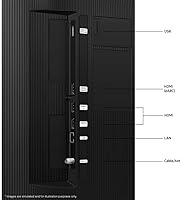
  • Connectivity: Wireless connectivity includes dual-band Wi-Fi and Bluetooth; wired ports include multiple HDMI inputs — verify HDMI 2.1 port count for 4K/120Hz gaming needs.
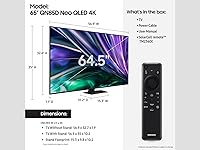
  • Dimensions: With the stand attached, the TV measures 10.2″ deep, 56.9″ wide, and 35″ tall.
  • Weight: The set weighs 59.1 lbs with the stand, requiring a sturdy wall bracket and at least two people for safe installation.
  • Model Number: The official Samsung model identifier for this configuration is QN65QN85DBFXZA.
  • Color Finish: Available in Graphite Black, with a slim bezel design consistent with Samsung’s 2024 mid-to-upper QLED aesthetic.
  • Release Year: This is a 2024 model, first listed for sale in March 2024 as part of Samsung’s refreshed QN85 series.
  • Upscaling: The NQ4 AI Gen2 processor applies AI-based upscaling to lower-resolution sources, improving apparent sharpness on HD cable, streaming, and older video content.
  • In the Box: Included in the package are the TV unit, a power cable, a remote control, and a printed user manual — no soundbar or external streaming device is included.

Related Reviews
Samsung 65-Inch QLED 4K TV Q60C
86%
94%
Picture Quality
91%
Gaming Performance
87%
Ease of Setup
88%
Smart Features
72%
Sound Quality
More
SAMSUNG 55-Inch QN85D Series 4K QLED TV
87%
94%
Picture Quality
87%
Sound Quality
88%
Ease of Use
90%
Design & Build Quality
92%
Gaming Performance
More
SAMSUNG 65-Inch Neo QLED 4K QN95B TV
88%
96%
Picture Quality
92%
Sound Quality
90%
Gaming Performance
85%
Value for Money
94%
Build Quality
More
Samsung QN85D 85-inch QLED 4K Smart TV
77%
91%
Picture Brightness
87%
Color Accuracy
74%
Contrast & Black Levels
88%
Motion Handling
83%
AI Upscaling
More
Samsung 65-Inch Neo QLED QN70F 4K Smart TV
86%
94%
Picture Quality
91%
Gaming Performance (144Hz)
86%
Smart Features & Alexa Integration
89%
Build Quality
88%
Ease of Setup
More
Samsung 65-Inch The Frame LS03F 4K QLED Smart TV
86%
91%
Picture Quality
96%
Design & Aesthetics
84%
Ease of Setup
89%
Gaming Performance
80%
Sound Quality
More
Samsung Q80B 65-inch QLED 4K TV
78%
88%
Picture Quality
91%
Gaming Performance
83%
HDR Performance
67%
Local Dimming
76%
Smart TV & Interface
More
Samsung 65-Inch Q70A QLED 4K Smart TV
80%
83%
Picture Quality
91%
Gaming Performance
86%
Motion Handling
71%
HDR Performance
74%
Smart TV & Software
More
SAMSUNG 65-Inch Neo QLED 4K QN85C
87%
94%
Display Quality
88%
Sound Quality
91%
Gaming Performance
85%
Smart Features
89%
Build Quality
More
Samsung The Serif 55-inch QLED 4K TV
79%
96%
Design & Aesthetics
78%
Picture Quality
91%
Anti-Glare Performance
88%
Stand & Placement Flexibility
74%
Smart Platform & App Support
More

FAQ

Dolby Vision is not confirmed for this model. The QN85D supports Samsung’s own Neo Quantum HDR format and is expected to include HDR10+ compatibility, which covers most streaming platforms well. If you watch a lot of Apple TV+ or Dolby Vision–mastered content specifically, this is worth factoring into your decision.

The 120Hz refresh rate is a real asset for next-gen console gaming, and the panel handles fast movement cleanly. That said, you should verify which HDMI ports on the QN85D support the full HDMI 2.1 bandwidth needed for 4K at 120Hz — not all ports on every Samsung model are equal in that regard. Input lag is generally low in Game Mode, which helps with responsiveness.

It’s noticeable in specific scenarios — particularly small bright objects against very dark backgrounds, like white subtitles on a black screen or stars in a night sky. In mixed and brighter content, it’s rarely an issue. Mini LED is a step up from edge-lit QLED in this regard, but it’s not on the same level as OLED for pure black handling. Most users find it acceptable; dedicated home theater purists may not.

For casual TV watching and streaming, the built-in speakers get the job done. But the 2.2CH system won’t impress anyone who cares about audio quality — dialogue clarity is fine, but bass depth and spatial detail are limited. If you watch movies or sports regularly with any enthusiasm, budgeting for a soundbar is a practical decision rather than an optional luxury.

Technically yes, but it’s not a solo job. At just over 59 lbs, you’ll need a second person to safely handle the panel. Make sure your wall bracket is rated for the weight and matches the VESA mounting pattern for this model. Stud-mounted installation is strongly recommended — drywall anchors alone are not adequate for a TV this size.

Generally quite well — it’s one of the faster smart TV platforms available, and finding apps or switching inputs is quick and intuitive. The main complaint users raise is the presence of promoted content and ads on the home screen, which Samsung has continued to include in its smart TV software. You can minimize some of it through settings, but you can’t eliminate it entirely.

The core trade-off is brightness versus black levels. The QN85D gets significantly brighter, which makes it better for daytime viewing and HDR highlights in well-lit environments. OLED panels produce true blacks at the pixel level, which gives them an edge in dark room cinematic viewing. If your room gets a lot of light or you watch a lot of sports, the QN85D has a real advantage. If you mostly watch movies at night with lights dimmed, OLED competes more directly.

For basic commands — switching inputs, adjusting volume, opening apps, controlling smart home devices — the built-in Alexa integration works reliably. It’s not as robust as a dedicated Echo device for complex routines, but it removes the need for a separate smart home hub for most everyday tasks.

When you’re watching standard HD content from cable, YouTube, or older streaming libraries, the NQ4 AI Gen2 processor analyzes each scene and applies sharpening and noise reduction to bring it closer to a 4K-like appearance. The results vary by source quality — cleaner HD signals upscale well, while heavily compressed streams show more limitations. It’s genuinely useful and better than no upscaling, but it won’t make old footage look like native 4K.

Most owners are satisfied with the out-of-box picture, particularly the brightness and color pop on HDR content. Samsung’s default picture modes tend to oversaturate slightly to make a strong first impression in a store or living room. If you want more accurate colors for movies, switching to Filmmaker Mode or doing a basic calibration through the settings menu makes a noticeable difference and takes only a few minutes.

Where to Buy

Plesser's Appliances
In stock $1,199.99
Creation Networks
In stock $1,399.00
shopsilica.com
In stock $1,399.99
Brown's TV and Appliance
In stock $1,799.99
The Appliance Plug
In stock $1,799.99