



Overview

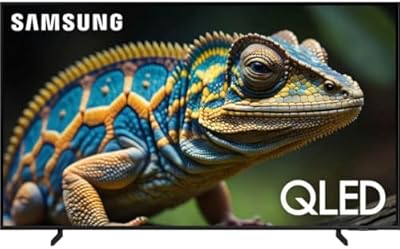
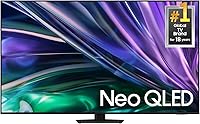
The Samsung QN85D 55-Inch QLED 4K Smart TV is Samsung's 2024 step up from standard QLED, pairing Mini LED backlighting with an NQ4 AI Gen2 processor to handle picture, sound, and smart features from a single chip. At 55 inches, it fits comfortably in most medium to large living rooms without overwhelming the space. Within Samsung's lineup, it sits below the flagship QN90D but well above entry-level QLED models, which puts it in genuinely competitive territory. That said, buyers coming from OLED should keep expectations grounded — Mini LED is a real improvement over traditional LED panels, but it doesn't match OLED's pixel-level black levels.

Features & Benefits

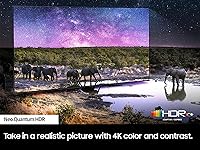
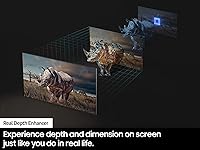
The Quantum Matrix Mini LEDs are where this TV earns its price. Instead of a handful of large dimming zones, hundreds of smaller LEDs work together to lift brightness in bright areas while keeping dark regions genuinely dark — reducing the blooming you'd see on older full-array panels. Neo Quantum HDR adds dynamic tone mapping that adjusts contrast on a scene-by-scene basis, so color accuracy feels consistent rather than artificially boosted. The 120Hz refresh rate handles fast sports and action sequences without obvious judder. AI upscaling does a solid job pulling HD content closer to 4K. Real Depth Enhancer adds subtle foreground pop that makes scenes feel less flat. One honest caveat: the 2.2CH speaker system with Dolby Atmos is decent background audio, but most living rooms will want a soundbar.

Best For

This 55-inch Mini LED TV punches above its weight for a specific type of buyer. Sports fans get real value here — the bright panel handles afternoon sunlight without washing out, and 120Hz motion keeps fast play sharp. Casual gamers will appreciate the low input lag and smooth refresh without paying for a premium gaming display. Households that bounce between streaming services and cable will find the AI upscaling genuinely useful, since not everything is native 4K. If you're coming from a 1080p LED set that's five or more years old, the jump will feel dramatic. Where it's less suited: dark-room cinephiles who want the absolute best contrast would be better served by an OLED.

User Feedback

Most owners land in satisfied territory. The picture quality — especially in well-lit environments — comes up repeatedly as the standout, with reviewers praising the vibrant color reproduction and how bright the panel gets during the day. The Samsung smart platform runs quickly and feels intuitive, though a handful of users flag the pre-loaded ads and Samsung's data collection practices as minor but persistent irritants. On the audio side, the consensus matches what the specs suggest: fine for casual viewing, underwhelming for anything immersive. Local dimming blooming is a real complaint in darker rooms, particularly during movies with stark light-to-dark transitions. Gamers are generally positive about input lag, though a few note it still can't compete with a dedicated gaming monitor. Overall, a strong mid-range performer.

Pros

  • The Mini LED backlight delivers noticeably better contrast than standard QLED panels, especially in mixed-lighting scenes.
  • Exceptional peak brightness makes this 55-inch TV one of the better options for sun-filled living rooms.
  • 120Hz motion handling keeps fast sports and action sequences sharp and smooth without manual tweaking.
  • The NQ4 AI Gen2 processor does a convincing job upscaling HD streaming content toward 4K clarity.
  • Dynamic HDR tone mapping adjusts contrast scene by scene, keeping colors accurate rather than artificially punchy.
  • The Samsung Tizen smart platform is fast, responsive, and easy to navigate for all ages.
  • Alexa integration works reliably and adds genuine hands-free convenience for everyday TV control.
  • Input lag is low enough for casual and mid-core gaming without needing to hunt through advanced settings.
  • The 55-inch form factor is a practical sweet spot — large enough to impress, manageable enough for most rooms.
  • Real Depth Enhancer adds subtle but noticeable dimension to flat-looking content without over-processing the image.

Cons

  • Local dimming blooming is still visible in very dark scenes with bright elements, such as subtitles or starfields.
  • The built-in 2.2CH speakers are underwhelming for movies and music — a soundbar purchase is almost inevitable.
  • Samsung's Tizen platform includes pre-loaded apps and occasional promotional banners that users cannot fully remove.
  • Dolby Vision support is absent, which limits HDR compatibility with certain streaming platforms and discs.
  • Data collection and advertising practices within the smart TV interface are a recurring complaint from privacy-conscious owners.
  • Competitive gamers will find input lag performance adequate but not best-in-class compared to gaming-focused displays.
  • The QN85D does not approach OLED-level black depth, which matters in dedicated home theater or dark-room setups.
  • At 44.3 pounds, wall mounting requires planning and ideally a second person — it is not a lightweight install.

Ratings

Our AI rating system analyzed thousands of verified global user reviews for the Samsung QN85D 55-Inch QLED 4K Smart TV, actively filtering out incentivized, bot-generated, and low-credibility feedback to surface what real buyers actually experience. The scores below reflect a transparent synthesis of both the standout strengths and the recurring frustrations that genuine owners report after weeks and months of daily use. No category was softened to flatter the product — the numbers reflect honest consensus.

Picture Quality
91%
Owners consistently cite the picture as the QN85D's most compelling attribute, praising its vivid color reproduction and strong peak brightness during daytime viewing. The Mini LED backlight gives HDR content genuine pop, and sports broadcasts in particular look sharp and saturated in ways that budget QLED sets cannot match.
In very dark rooms, subtle blooming around bright objects on dark backgrounds — like subtitles during a night-sky scene — is noticeable enough to bother detail-oriented viewers. It remains a real gap versus OLED panels, and buyers expecting OLED-level black depth will be disappointed.
Brightness & HDR
88%
The Quantum Matrix Mini LED system pushes brightness to levels that make this one of the better choices for rooms flooded with natural light or overhead fixtures. HDR highlights in streaming content — sunsets, explosions, stadium lighting — look genuinely radiant rather than clipped or flat.
HDR performance is noticeably stronger with HDR10+ content than with standard HDR10, and the absence of Dolby Vision support means Apple TV+ and some Disney+ content does not render at its full intended quality. Users who switch between platforms daily may notice the inconsistency.
Contrast & Black Levels
74%
26%
Compared to a conventional full-array LED panel, contrast here is meaningfully better — dark scenes in thriller or horror content hold more shadow detail, and bright highlights don't bleed into adjacent dark areas as aggressively as older Samsung sets were known for.
The contrast ceiling is real and regularly mentioned by users who've also owned or auditioned OLED sets. Local dimming blooming during high-contrast transitions — a white logo on a black screen, for instance — remains a consistent complaint that no firmware update has fully addressed.
Motion Handling
87%
The 120Hz refresh rate earns consistent praise from sports viewers who say fast-moving play — basketball, soccer, tennis — looks crisp and natural without the soap opera effect that over-processed motion can produce on competing sets. Out-of-the-box motion settings are also reasonable for most users.
At higher motion enhancement settings, some users report a processing artifact that makes film content look artificially smooth and slightly unnatural. Finding the right balance requires a bit of manual calibration, which can be frustrating for buyers who just want to plug in and watch.
Gaming Performance
82%
18%
Console gamers with a PS5 or Xbox Series X generally report a satisfying experience — 120Hz output is smooth, input lag in Game Mode is low enough that responsiveness feels tight, and the large bright panel makes open-world and action titles look genuinely impressive.
Competitive PC gamers and those accustomed to high-refresh gaming monitors find the input lag acceptable but not class-leading. Variable refresh rate support works but is less robust than what dedicated gaming displays offer, and some users note occasional flickering when VRR is active.
AI Upscaling
83%
The NQ4 AI Gen2 processor handles upscaling of HD streaming and cable content noticeably well — older sitcoms and sports broadcasts look cleaner and sharper than the source material would suggest. Households that watch a mix of content tiers appreciate not having to switch picture modes constantly.
Upscaling quality varies with source material quality — heavily compressed streaming content can still look soft or introduce minor artifacts around fine detail like hair or jersey textures. It is a real improvement over no upscaling, but it is not magic, and very low-quality sources remain visibly limited.
Smart TV Interface
79%
21%
Samsung's Tizen platform runs quickly and feels well-organized for a household with multiple users and apps. Alexa integration is reliable and responsive, and the ability to control smart home devices directly from the TV remote adds genuine day-to-day convenience.
Pre-loaded promotional banners and app suggestions on the home screen are a recurring irritant that users cannot fully disable. Privacy-conscious buyers also flag Samsung's data collection practices as a concern, and the settings menus to limit this are buried deeper than they should be.
Audio Quality
61%
39%
The built-in 2.2CH system handles dialogue clarity well during news, talk shows, and daytime TV without any uncomfortable harshness. Dolby Atmos processing does widen the soundstage slightly compared to a basic stereo setup, which is adequate for background viewing.
For movies, music, or anything where audio texture matters, the built-in speakers fall noticeably short. Bass is thin, volume headroom is limited at higher levels, and the virtual Atmos effect does not produce convincing height or surround cues. Most owners end up adding a soundbar within the first few months.
Value for Money
84%
At its price tier, the QN85D offers a combination of Mini LED backlighting, 120Hz motion, AI upscaling, and a capable smart platform that would cost significantly more from competing brands at the same screen size. Buyers upgrading from aging 1080p or entry-level 4K sets consistently describe the improvement as dramatic.
Buyers who stretch to this price tier expecting near-OLED performance may feel the value proposition weakens when comparing directly against OLED sets available for a modest premium. The lack of Dolby Vision also feels like an omission at this price point that harder-to-satisfy buyers won't easily overlook.
Build & Design
78%
22%
The Graphite Black finish looks clean and understated in most living room setups, and the slim bezel keeps the focus on the screen rather than the frame. The stand design is stable and secure without taking up an excessive footprint on a TV unit.
At 44.3 pounds, the TV feels denser than some rivals in the same size class, which makes solo wall mounting genuinely awkward. The back panel, while tidy, does not feel as premium as the front would suggest, and cable management options are somewhat limited for a clean installation.
Setup & Ease of Use
86%
Initial setup is guided and straightforward — connecting to Wi-Fi, logging into streaming accounts, and configuring Alexa takes most users under 20 minutes. The remote is well-designed and intuitive, with quick-access buttons for major streaming services that reduce navigation friction.
During setup, Samsung prompts users to agree to multiple data and advertising terms, and opting out of each requires deliberate navigation through several menus. Some users also find the default picture and audio modes need adjustment before the TV performs at its best.
Connectivity
85%
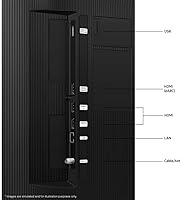
The port selection covers the practical needs of most living room setups — multiple HDMI inputs, USB ports for media playback, Bluetooth for wireless audio devices, and both wired Ethernet and Wi-Fi for network flexibility. The high-bandwidth HDMI port accommodates next-generation console output without needing an adapter.
Users with a lot of connected devices note that the HDMI port count, while adequate, becomes tight if you are running a console, soundbar, streaming dongle, and cable box simultaneously. A fifth HDMI port would have been a practical addition at this price tier.
Color Accuracy
81%
19%
Out of the box, color reproduction is vibrant and engaging for everyday content — streaming shows, sports, and casual movie watching all look rich without feeling artificially over-saturated. The dynamic tone mapping adjusts color rendering based on scene context, which keeps skin tones and natural subjects looking believable.
For buyers who care about factory calibration, the default color settings skew slightly warm and punchy rather than technically accurate. Filmmaker Mode brings it closer to reference, but achieving proper calibration for a home theater setup still benefits from a manual or professional calibration pass.
Long-Term Reliability
76%
24%
Samsung has a well-established service network and the QN85D benefits from regular Tizen firmware updates that have addressed minor bugs and improved performance since launch. Most owners report no hardware issues after extended use, and the panel shows no signs of the burn-in risk that concerns some OLED buyers.
A small but notable share of user reports mention occasional software glitches — random reboots or apps freezing — that require a restart to resolve. These are infrequent for most, but they are consistent enough across feedback sources to suggest the software platform could benefit from further stability improvements.

Suitable for:

The Samsung QN85D 55-Inch QLED 4K Smart TV is a strong match for households that watch a wide variety of content — live sports, streaming, and casual gaming — in a room that gets a fair amount of natural light during the day. The bright Mini LED panel holds up well in sunlit conditions where cheaper QLED sets start to look washed out, making it a particularly good pick for living rooms that don't have blackout curtains. Sports fans will notice the difference that 120Hz motion handling makes during fast-paced games or matches, where competing panels at lower price points tend to blur. Casual and mid-core gamers get a responsive, fluid experience without needing to spend up for a dedicated gaming display. Households upgrading from an older 1080p or entry-level 4K LED TV will find the jump in contrast and color depth genuinely satisfying, especially if they regularly stream content that benefits from AI upscaling to 4K.

Not suitable for:

The Samsung QN85D 55-Inch QLED 4K Smart TV is not the right call for buyers who watch a lot of movies in a darkened room and demand the deepest possible blacks and shadow detail — for that use case, an OLED remains the benchmark that Mini LED simply hasn't matched yet. Local dimming blooming, while controlled better here than on older full-array panels, is still visible during high-contrast scenes like white credits rolling over a black background. Audio purists will also find the built-in 2.2CH speaker system a ceiling, not a solution — it handles daytime TV fine, but it noticeably underperforms during action films or music content, and budgeting for a soundbar should be treated as a near-requirement. Hardcore competitive gamers who prioritize sub-millisecond response times and ultra-high refresh rates above all else will find purpose-built gaming monitors a better fit. Finally, buyers who are sensitive to smart TV data collection practices or find pre-installed app promotions irritating may find Samsung's Tizen platform a recurring frustration.

Specifications

  • Screen Size: The panel measures 55 inches diagonally, making it well-suited for medium to large living rooms viewed from roughly 7 to 11 feet away.
  • Display Type: QLED panel using Quantum Matrix technology with Mini LED backlighting for improved local dimming and brightness control over standard full-array LED sets.
  • Resolution: Native 4K resolution at 3840 x 2160 pixels, with AI-powered upscaling to bring lower-resolution content closer to 4K quality.
  • Refresh Rate: Native 120Hz refresh rate via Motion Xcelerator Turbo, reducing motion blur and judder during fast-paced sports and action content.
  • HDR Support: Supports Neo Quantum HDR with dynamic scene-by-scene tone mapping; Dolby Vision compatibility is not confirmed for this model.
  • Processor: Powered by the NQ4 AI Gen2 processor, which manages picture upscaling, audio processing, and the smart TV interface simultaneously using 20 specialized neural networks.
  • Audio System: Built-in 2.2CH speaker configuration with support for Dolby Atmos and Object Tracking Sound Lite for virtual surround audio.
  • Smart Platform: Runs Samsung Tizen OS with a built-in smart hub, supporting Alexa voice control, Samsung SmartThings integration, and major streaming apps.
  • Connectivity: Includes multiple HDMI ports, USB ports, Bluetooth, dual-band Wi-Fi, and a wired Ethernet port for network connectivity.
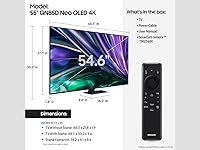
  • Dimensions: With the stand attached, the TV measures 9.6″ deep, 48.3″ wide, and 30.2″ tall — verify wall clearance and stand footprint before purchasing.
  • Weight: The unit weighs 44.3 pounds with the stand, which means wall mounting should be planned carefully and ideally done with two people.
  • Color Finish: Available in Graphite Black, with a slim bezel design and matte-finish back panel typical of Samsung's 2024 mid-tier QLED lineup.
  • Model Number: The official model identifier is QN55QN85DBFXZA, which can be used to verify compatibility with Samsung accessories, mounts, and firmware updates.
  • Release Year: This is a 2024 model, first made available in March 2024, representing Samsung's current-generation NQ4 processing and Quantum Matrix backlighting.
  • In the Box: The package includes the TV unit, a power cable, a Samsung Smart Remote, and a printed user manual — no third-party streaming device or soundbar is included.
  • Aspect Ratio: Standard 16:9 widescreen aspect ratio, compatible with all modern broadcast, streaming, and gaming content formats.
  • Gaming Features: Supports low input lag mode and 120Hz output, making it suitable for casual to mid-core console and PC gaming on current-generation hardware.
  • Voice Assistants: Alexa is built in and ready to use without an external device; Samsung Bixby is also supported through the Samsung smart hub.

Related Reviews
Samsung QN70F 55-inch Neo QLED Smart TV
78%
83%
Picture Quality
88%
Gaming Performance
84%
Motion Handling
81%
Brightness & HDR
78%
Smart TV Platform
More
Samsung QN85D 85-inch QLED 4K Smart TV
77%
91%
Picture Brightness
87%
Color Accuracy
74%
Contrast & Black Levels
88%
Motion Handling
83%
AI Upscaling
More
Samsung The Frame LS03F 55-Inch QLED TV
79%
93%
Ambient & Art Mode
81%
Picture Quality
96%
Design & Aesthetics
91%
Cable Management
78%
Gaming Performance
More
Samsung Q60D 55-inch QLED 4K TV
83%
88%
Picture Quality
91%
Color Accuracy
82%
HDR Performance
84%
Motion Handling
70%
Audio Performance
More
Samsung The Serif 55-inch QLED 4K TV
79%
96%
Design & Aesthetics
78%
Picture Quality
91%
Anti-Glare Performance
88%
Stand & Placement Flexibility
74%
Smart Platform & App Support
More
Samsung QN85D 65-inch 4K QLED TV
79%
93%
Picture Brightness
74%
Contrast & Black Levels
88%
Color Accuracy
91%
Motion Handling
82%
Gaming Performance
More
iFFALCON 55F75 55-Inch QLED Smart TV
78%
83%
Picture Quality
78%
Art Mode & Aesthetics
86%
Gaming Performance
79%
Design & Build Quality
81%
Smart TV & Software
More
Samsung RU8000 55-inch 4K UHD Smart TV
76%
83%
Picture Quality
81%
Motion Handling
72%
HDR Performance
76%
Smart TV Interface
54%
Audio Performance
More
Samsung Q80A 55-Inch QLED 4K TV
80%
86%
Picture Quality
89%
Brightness & HDR Performance
92%
Gaming Performance
67%
Local Dimming & Contrast
83%
Motion Handling
More
TCL 55-inch QM751G QLED Mini LED TV
80%
88%
Picture Quality
91%
Brightness & HDR
79%
Contrast & Black Levels
83%
Color Accuracy
87%
Gaming Performance
More

FAQ

The QN85D supports Neo Quantum HDR and HDR10+ but does not officially support Dolby Vision. If you watch a lot of content from Apple TV+ or Disney+, which prefer Dolby Vision, you may notice a slight difference versus a Dolby Vision-capable set. For most streaming and broadcast content, the difference in day-to-day viewing is subtle.

The Samsung QN85D 55-Inch QLED 4K Smart TV includes multiple HDMI ports, with at least one HDMI 2.1-spec port capable of handling 4K at 120Hz for compatible gaming consoles like the PS5 or Xbox Series X. Always check the label on the TV's input panel to identify which port is the high-bandwidth one before connecting your console.

For casual daytime TV watching, news, and sitcoms, the built-in 2.2CH speakers are perfectly adequate. Where they fall short is in anything immersive — action movies, concerts, or gaming with positional audio. Dolby Atmos through the built-in system gives you a wider soundstage than a basic stereo TV, but it doesn't compare to even a mid-range soundbar. If audio quality matters to you at all, plan for an upgrade.

Yes, it handles current-generation gaming well. The 120Hz refresh rate and low input lag mode make for a smooth, responsive gaming experience, and the bright Mini LED panel makes games look vivid. It's not a purpose-built gaming monitor, so hardcore competitive players chasing the lowest possible response times may want something more specialized, but for most console gamers it's a great fit.

This is genuinely one of the QN85D's stronger suits. The Mini LED backlight pushes peak brightness high enough that the picture holds up well under overhead lighting and indirect sunlight. It's not completely glare-proof, but it performs noticeably better in bright rooms than most standard QLED or entry-level 4K panels at a similar size.

Yes, this 55-inch Mini LED TV is wall-mount compatible. You'll want to verify the VESA pattern from Samsung's official spec sheet for the QN55QN85DBFXZA before purchasing a bracket, as Samsung occasionally adjusts mounting patterns across generations. At 44.3 pounds, make sure your wall mount is rated appropriately, and consider having a second person help during installation.

Samsung's Tizen platform does display promotional banners and recommended content on the home screen, and some users find this mildly irritating. You can reduce the frequency by adjusting privacy and interest-based ad settings in the menu, but you cannot remove the home screen layout entirely. It's a known trade-off with Samsung's smart TV ecosystem and worth knowing before you buy.

OLED panels still produce deeper blacks and better per-pixel contrast because each pixel generates its own light and can switch off entirely. The QN85D's Mini LEDs are a real improvement over traditional LED sets, but they can't fully eliminate blooming in high-contrast scenes — you may still see a faint glow around bright objects against dark backgrounds. In bright rooms or for mixed-use viewing, the QN85D can actually look more impressive than OLED because of its higher peak brightness. It comes down to whether your priority is dark-room cinema or all-around versatility.

Samsung's Tizen platform comes pre-loaded with major streaming apps including Netflix, Prime Video, Disney+, Hulu, and YouTube, among others. The Samsung app store allows you to download additional services as needed. Alexa is built in, so you can also search for content or control compatible smart home devices using just your voice.

It's genuinely useful, not just a marketing claim. The NQ4 AI Gen2 processor analyzes content scene by scene and applies sharpening, noise reduction, and detail enhancement to bring 1080p and even 720p content closer to 4K clarity. The result won't look identical to native 4K footage, but cable broadcasts, older Blu-rays, and HD streaming content look considerably cleaner than they would on a TV without AI upscaling.