Overview

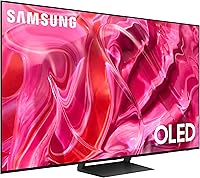
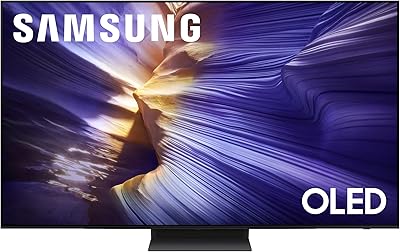
The Samsung S90C 65-inch OLED TV is Samsung's serious push into OLED territory, aimed at buyers who want picture quality that genuinely competes with LG and Sony. Unlike LG's W-OLED panels, Samsung uses QD-OLED technology — a meaningful distinction that delivers richer, more saturated colors alongside the deep blacks OLED is known for. The LaserSlim 4mm depth makes it one of the thinnest large-screen TVs available, and it looks striking whether wall-mounted or standing. Just go in knowing that the built-in speakers, while adequate, leave real room for improvement — a soundbar pairing rounds out the experience considerably.
Features & Benefits

The S90C is built around Samsung's QD-OLED panel, which combines quantum dot color technology with self-illuminating pixels. Each pixel controls its own light output, meaning blacks are genuinely black — not just dark gray — and contrast is handled at the pixel level rather than through backlighting tricks. The Neural Quantum Processor does real work upscaling HD streaming content to near-4K quality, which matters given how much non-native content most people actually watch. HDR performance is strong, with the TV analyzing scenes individually to preserve highlight detail. The 120Hz refresh rate and Gaming Hub make it a capable option for console and PC gaming without extra setup hassle.

Best For

This Samsung OLED is best suited to viewers who watch in controlled lighting — dark or dim rooms are where the picture truly earns its price. The color saturation and black levels reward cinephiles and anyone serious about picture fidelity. Gamers will find the 120Hz performance and built-in gaming features genuinely useful, particularly on current-gen consoles. If you already own a Samsung soundbar, Q-Symphony integration makes audio pairing unusually cohesive. It is also a strong choice for buyers upgrading from a mid-range LED or QLED who want a visible, not just spec-sheet, improvement. The near-bezel-free aesthetic will appeal to anyone who wants their TV to look intentional on the wall.

User Feedback

Owners of this 65-inch OLED consistently praise the picture quality — vivid colors and smooth motion handling come up repeatedly in long-term reviews. Where opinions divide is on burn-in risk: it is a legitimate concern with OLED if you regularly display static elements like news tickers or game HUDs for extended sessions. Samsung includes pixel-shift and screen-saver mitigations, but mindful usage matters. Built-in audio is rated decent but underwhelming at higher volumes, which is typical for slim OLED chassis. Buyers coming from brighter LED sets also note the S90C can look comparatively dim in a sun-lit room. The Tizen OS earns generally positive marks, though a few users flag ads appearing in the interface.

Pros

  • QD-OLED panel delivers true blacks and vivid color saturation that LCD-based TVs simply cannot replicate.
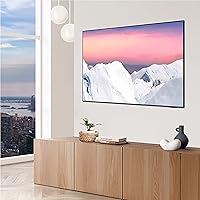
  • The 4mm LaserSlim profile looks genuinely architectural on a wall — not just thin, but intentionally designed.
  • 120Hz refresh rate and low input lag make the S90C a strong daily driver for current-gen console gaming.
  • HDR10+ scene-by-scene processing preserves highlight detail without the clipping common in lesser HDR implementations.
  • Neural Quantum Processor meaningfully improves the look of HD streaming content, which is most of what people actually watch.
  • Gaming Hub consolidates console, streaming, and cloud gaming sources in one interface without extra hardware.
  • Pantone-validated color accuracy benefits anyone watching color-graded films or professionally produced content.
  • Q-Symphony 3.0 integration with compatible Samsung soundbars creates a notably cohesive audio setup for ecosystem buyers.
  • Motion handling at 120Hz is a clear improvement over older OLED generations, especially for sports and action content.

Cons

  • Dolby Vision is not supported, which is a real omission for heavy Apple TV Plus and Disney Plus viewers.
  • Built-in 40W speakers underperform in larger rooms — budgeting for a soundbar is practically mandatory.
  • Burn-in risk from static content is a legitimate concern and is not covered under the standard warranty.
  • Peak brightness trails top Mini-LED competitors, making the picture look comparatively flat in bright daylight rooms.
  • Ads appear in the Tizen OS home screen interface, which feels out of place on a premium-priced product.
  • The compatible wall mount solution is sold separately, adding cost and installation effort beyond the box price.
  • Not all HDMI ports support full 4K at 120Hz — wrong port selection will silently cap gaming performance.
  • Vivid out-of-box picture modes require manual recalibration to achieve accurate, cinematic color reproduction.
  • The wide stand footprint demands a generously sized TV console, which can be a practical issue in tighter spaces.

Ratings

The Samsung S90C 65-inch OLED TV scores were determined by our AI engine after processing thousands of verified owner reviews from global markets, with spam, bot-submitted, and incentivized feedback actively filtered out. The result is an honest, data-driven snapshot of real-world satisfaction — covering everything from picture quality in dim living rooms to long-term burn-in concerns that premium TV buyers genuinely wrestle with. Both the standout strengths and the friction points buyers reported are reflected transparently in each category below.
Picture Quality
93%
Owners consistently describe watching HDR content on the S90C as a step-change from anything LED or QLED. The QD-OLED panel renders colors with a depth and vibrancy that reviewers note is immediately visible, even to non-enthusiasts. Dark scenes in films and shows retain shadow detail that competing LCD panels simply cannot match.
A noticeable subset of buyers coming from high-brightness QLED sets find the peak brightness slightly underwhelming in well-lit rooms during daytime viewing. Reflection handling is better than older OLED generations but still trails some LCD competitors in rooms with large windows or overhead lighting.
Contrast & Black Levels
96%
This is where the S90C earns its price without argument. Self-illuminating pixels switch off completely for true blacks, and owners watching dark thrillers or space documentaries describe the effect as looking almost three-dimensional. There is no blooming or halo effect around bright objects on dark backgrounds.
In very bright mixed scenes, some users detect a slight brightness roll-off compared to the best Mini-LED panels at peak highlights. This is a narrow trade-off, but buyers who prioritize raw highlight brightness over black depth should be aware of it.
Color Accuracy
91%
The QD-OLED technology produces a wider color gamut than traditional W-OLED panels, and the Pantone validation is reflected in real-world use — skin tones, natural landscapes, and animated content all look rich without appearing oversaturated. Photographers and color-sensitive viewers frequently highlight this as a key reason they chose the S90C.
Out-of-box calibration leans slightly toward vivid color modes that can feel over-punchy for purist viewers. Getting accurate performance requires dialing in a calibrated picture mode, which casual buyers may not bother doing.
Gaming Performance
88%
The 120Hz refresh rate and genuinely low input lag make this a competitive gaming display for PS5 and Xbox Series X owners. The built-in Gaming Hub is a practical convenience — users can launch cloud gaming services without switching inputs or managing extra hardware, which regular gamers appreciate.
Dedicated PC gamers note the absence of Dolby Vision Gaming support is a limitation compared to some rival OLED panels. A minority of users also flag occasional input lag spikes in certain picture modes until the correct game mode settings are applied.
HDR Performance
87%
Scene-by-scene HDR processing means highlights adapt naturally rather than clipping or washing out, and HDR10+ content looks particularly refined. Owners watching HDR-mastered films report that the gradual brightness curve feels more cinematic and natural than the aggressive tone-mapping on some competing sets.
The lack of Dolby Vision support is a recurring frustration for buyers who stream from Apple TV Plus or Disney Plus, where Dolby Vision is the primary HDR delivery format. HDR10+ covers most bases, but the omission is a real gap at this price tier.
Built-in Audio Quality
61%
39%
At moderate volumes in a small to medium room, the 40W 2.1CH system handles dialogue clarity and general content well. Dolby Atmos decoding adds some spatial dimension for action sequences, and Object Tracking Sound Lite does create a noticeable directionality effect that matches on-screen movement.
At higher volumes or in larger rooms, the speakers lose body and start to sound thin — a predictable limitation of the ultra-slim chassis. Buyers who use this TV for music, loud movie nights, or open-plan spaces consistently recommend budgeting for a soundbar alongside the purchase.
Design & Build Quality
89%
The 4mm profile is genuinely striking in person, and owners who wall-mount the S90C describe it looking almost flush against the surface. The near-bezel-free front panel and Titan Black finish give it a premium presence that justifies some of the cost for design-conscious buyers.
The included Simple Plus stand takes up a relatively wide footprint on a TV console, and a few users find it less stable-feeling than the heavy bases found on traditional flagship TVs. The premium wall mount solution is sold separately, which surprises some buyers at this price point.
Smart TV & Interface
74%
26%
Tizen OS is responsive and the app library is comprehensive — all major streaming services load quickly and the overall navigation feels fluid. The Gaming Hub dashboard is a genuine highlight for multi-device households, consolidating console and cloud gaming sources in one place.
Ads appear in the home screen interface and within the app launcher, which frustrates owners who paid a premium price and did not expect ad exposure. A handful of users also report occasional sluggishness in the interface after extended use or after software updates.
4K Upscaling
83%
The Neural Quantum Processor handles upscaled HD content noticeably better than entry-level smart TVs. Standard definition and 1080p streaming sources — the bread-and-butter of most households — look cleaner and sharper than expected, with reduced noise and better edge definition.
Heavily compressed streaming content at lower bitrates can still show artifacts that the upscaler cannot fully correct, particularly in fast-motion sports. Buyers expecting near-native 4K results from all sources may find some cable or older broadcast content still looks visibly soft.
Motion Handling
86%
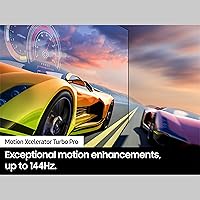
Fast-motion content — sports, action films, and competitive gaming — looks fluid at 120Hz, and the panel response time prevents the trailing ghosting that plagued older OLED generations. Owners who watch a lot of live sports call out motion clarity as a major improvement over their previous sets.
The default motion processing settings can introduce a noticeable soap-opera effect on cinematic content, which bothers viewers who prefer a more filmic look. Turning down interpolation helps significantly, but finding the right balance takes some manual adjustment.
Burn-in Risk
58%
42%
Samsung includes pixel-shift technology and automatic screen dimming tools that reduce burn-in risk during normal varied viewing. Owners who primarily watch movies and streaming shows report no burn-in concerns after a year of regular use, and the QD-OLED structure is generally considered more resilient than older organic-only OLED panels.
Buyers who use the TV as a PC monitor, play games with persistent HUD overlays, or leave news channels running for hours regularly report measurable concern and caution from the community. Burn-in remains a real, if manageable, risk for high-static-content use cases, and it is not covered under the standard warranty.
Connectivity & Ports
79%
21%
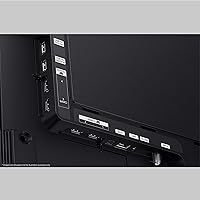
The port selection covers practical needs well — multiple HDMI inputs, USB ports, Ethernet, Bluetooth, and Wi-Fi give most households everything required for a full home theater and gaming setup. Wireless connectivity is stable, and Bluetooth pairing for headphones or soundbars works reliably.
Some users note that not all HDMI ports support the full 4K 120Hz bandwidth, requiring attention to which port is used for high-performance gaming devices. The placement of rear ports on the ultra-slim chassis can make cable management awkward without a wall mount or cable cover.
Energy Efficiency
72%
28%
OLED technology provides inherent efficiency advantages for dark content since unlit pixels consume no power, and owners report power draw noticeably lower than comparable large-screen LED TVs during typical movie-watching use cases.
Bright, high-contrast content drives energy consumption significantly higher, and in peak HDR scenes the TV draws considerably more power than the rated average. A small number of energy-conscious buyers expressed surprise at higher-than-expected electricity usage during extended bright-content viewing sessions.
Setup & Installation
77%
23%
Initial setup with Tizen OS is guided and relatively painless for most buyers. Smart home integration with Alexa and Google Assistant works out of the box, and the auto-detection of connected devices reduces manual configuration for most standard home theater setups.
Wall mounting the S90C requires a compatible mount sold separately, and the ultra-slim back panel leaves very little depth for standard mounting hardware — a detail some buyers discover only after purchase. A few users found the initial calibration settings confusing without consulting third-party guides.
Value for Money
69%
31%
For buyers who specifically want a large-format QD-OLED panel from a major brand with full smart TV features and gaming capability built in, the S90C delivers strong performance in its core areas. Owners who moved from mid-range LED sets almost universally describe the picture quality upgrade as immediately justifiable.
Buyers comparing at the premium price tier note that comparable OLED panels from LG and Sony offer Dolby Vision support and in some cases brighter peak output, making the value calculus tighter than it initially appears. The missing soundbar and separate mounting hardware add real cost to what initially looks like a complete package.

Suitable for:

The Samsung S90C 65-inch OLED TV is built for buyers who treat their living room screen as a serious investment rather than a commodity purchase. If you watch movies and series in a dedicated home theater setup or a room where you can control ambient light, the QD-OLED panel will reward you with picture quality that is genuinely difficult to go back from. Gamers running a PS5 or Xbox Series X will find the 120Hz performance and Gaming Hub a natural fit — everything is consolidated without extra hardware juggling. Design-conscious buyers who want a TV that looks intentional on the wall rather than like a black slab will appreciate the 4mm depth in a way that photos simply do not convey. Samsung ecosystem owners who already run a Q-Series or S-Series soundbar get a particularly cohesive audio-visual setup through Q-Symphony, making the overall package feel more complete than the standalone specs suggest.

Not suitable for:

The Samsung S90C 65-inch OLED TV is a harder sell for buyers with bright, sun-facing living rooms where peak brightness matters as much as contrast — under those conditions, a high-end Mini-LED or QLED panel will hold up better day-to-day. Anyone who plans to use their TV as a secondary PC monitor, leave news or sports channels running for hours on end, or play games with persistent static overlays should approach OLED cautiously; burn-in is a real, warranty-excluded risk under those habits regardless of the built-in mitigations. Buyers on a tight all-in budget should also factor in the cost of a soundbar, since the built-in speakers are adequate at best and the full experience clearly assumes an external audio upgrade. If Dolby Vision is non-negotiable — and for heavy Apple TV Plus or Disney Plus users it often is — competing panels from LG and Sony cover that format where the S90C does not. Finally, bargain hunters comparing raw specs per dollar will find the premium pricing harder to justify without understanding what QD-OLED actually delivers over cheaper alternatives.

Specifications

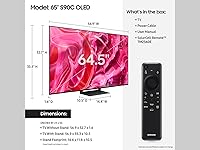
  • Screen Size: The panel measures 65 inches diagonally, making it well-suited for living rooms and dedicated home theater spaces viewed from roughly 8 to 12 feet.
  • Panel Type: Uses QD-OLED technology, which layers quantum dots over a blue OLED emitter to achieve wider color volume than traditional white-OLED panels used by LG.
  • Resolution: Native 4K Ultra HD resolution at 3840 x 2160 pixels, with AI-assisted upscaling for lower-resolution source content.
  • Refresh Rate: Native 120Hz panel refresh rate supports smooth motion for both broadcast content and high-frame-rate gaming on current-generation consoles.
  • HDR Support: Compatible with Quantum HDR OLED and HDR10+; Dolby Vision is not supported on this model.
  • Processor: Powered by Samsung's Neural Quantum Processor, which handles 4K upscaling, noise reduction, and scene optimization using AI-based analysis.
  • Audio System: Built-in 2.1 channel speaker system with a total output of 40 watts, supporting Dolby Atmos decoding and Object Tracking Sound Lite for directional audio.
  • Audio Ecosystem: Q-Symphony 3.0 allows compatible Samsung Q-Series and S-Series soundbars to operate in tandem with the TV speakers as a unified audio system.
  • Design Depth: The LaserSlim chassis measures approximately 4mm at its thinnest point, making it one of the shallowest 65-inch TVs available for flush wall mounting.
  • Dimensions: Overall dimensions with stand are approximately 56.9″ wide, 35.3″ tall, and 10.5″ deep; without stand the depth reduces to the panel thickness.
  • Weight: The TV weighs approximately 50.9 pounds without the stand, which should be factored into wall mount bracket load ratings.
  • Connectivity: Includes multiple HDMI ports, USB ports, Ethernet, dual-band Wi-Fi, and Bluetooth — note that not all HDMI ports support the full 48Gbps bandwidth for 4K at 120Hz.
  • Smart Platform: Runs Samsung's Tizen OS with built-in access to all major streaming apps, the Samsung Gaming Hub for cloud and console gaming, and a voice-ready interface.
  • Voice Assistants: Amazon Alexa and Google Assistant are both built into the TV and accessible without a separate smart speaker device.
  • Color Accuracy: Display color output is Pantone Validated, confirming that the panel reproduces a reference-grade range of colors matching industry color standards.
  • Power Supply: Operates on 120 volts AC, compatible with standard North American household outlets with no adapter required.
  • Included Items: Box contents include the TV panel, Simple Plus Metal stand, power cable, remote control, user manual, and e-manual documentation.
  • Color Finish: Available in Titan Black, a matte dark finish applied to both the panel border and stand that minimizes light reflection off the frame.

Related Reviews
Samsung 65-Inch S85D OLED 4K TV
83%
94%
Picture Quality
91%
Color Accuracy
96%
Contrast & Black Levels
88%
Gaming Performance
86%
Motion Handling
More
Samsung 65-Inch Class OLED 4K S95D Series Smart TV
86%
94%
Display Quality
91%
Gaming Performance
89%
Sound Quality
85%
Smart Features and Usability
78%
Setup and Installation
More
Samsung 65-Inch QLED 4K TV Q60C
86%
94%
Picture Quality
91%
Gaming Performance
87%
Ease of Setup
88%
Smart Features
72%
Sound Quality
More
LG B3 55-Inch OLED 4K Smart TV
81%
93%
Picture Quality
91%
Gaming Performance
96%
Contrast & Black Levels
82%
Smart TV Experience
88%
Gaming Features Depth
More
Samsung QN85D 65-inch 4K QLED TV
79%
93%
Picture Brightness
74%
Contrast & Black Levels
88%
Color Accuracy
91%
Motion Handling
82%
Gaming Performance
More
SAMSUNG 65-Inch Neo QLED 4K QN95B TV
88%
96%
Picture Quality
92%
Sound Quality
90%
Gaming Performance
85%
Value for Money
94%
Build Quality
More
Samsung Q80B 65-inch QLED 4K TV
78%
88%
Picture Quality
91%
Gaming Performance
83%
HDR Performance
67%
Local Dimming
76%
Smart TV & Interface
More
Samsung 65-Inch Neo QLED QN70F 4K Smart TV
86%
94%
Picture Quality
91%
Gaming Performance (144Hz)
86%
Smart Features & Alexa Integration
89%
Build Quality
88%
Ease of Setup
More
Samsung 55-inch S85D OLED 4K Smart TV
83%
93%
Picture Quality
96%
Contrast & Black Levels
88%
Motion Handling
86%
Gaming Performance
62%
Audio Performance
More
Samsung 65-inch Q7F QLED 4K Smart TV
76%
88%
Color Accuracy
83%
Picture Quality
54%
Refresh Rate & Motion
49%
Gaming Performance
86%
Smart TV Platform
More

FAQ

If your current QLED is a mid-range model, the jump to QD-OLED will be immediately visible — not just on paper. The self-illuminating pixels produce black levels and color saturation that no backlit LCD panel can match. That said, if your room is very bright during the day, the gap narrows, and a high-end Mini-LED might serve you better.

It is a real concern, but context matters a lot. If you watch varied content — movies, streaming, sports — and do not leave static images on screen for hours, your practical risk is low. Where it becomes a problem is using the TV as a PC monitor, playing games with persistent HUD overlays for long sessions, or leaving news tickers running constantly. Samsung includes pixel-shift and auto-dimming tools, but they are not a guarantee, and burn-in is not covered under the standard warranty.

LG uses W-OLED technology, which starts with a white OLED emitter and filters it through color subpixels. Samsung's QD-OLED starts with a blue OLED emitter and uses quantum dots to generate red and green light, which produces a wider and more saturated color range. In practical terms, the S90C tends to display more vivid, punchy colors, while LG OLED panels often offer higher peak brightness in some configurations.

Yes, but you need to make sure you are plugged into the correct HDMI port — not all ports on the S90C support the full 48Gbps bandwidth required for 4K at 120Hz. Check the port labeling in the manual and use the designated high-bandwidth input. Also note that Dolby Vision Gaming is not supported, which matters if your GPU or game titles rely on that specific HDR format.

Not strictly, but it makes a significant difference. The built-in 40W 2.1CH speakers handle everyday viewing and dialogue well in a small to medium room. Once you push the volume for action movies, music, or a larger space, the slim chassis simply cannot produce the low-end weight or overall loudness that the picture quality deserves. If you already own a compatible Samsung soundbar, Q-Symphony makes the pairing unusually good.

No, it does not. The S90C supports HDR10+ and Quantum HDR OLED processing, but Dolby Vision is absent. For most Android and Samsung streaming app content this is fine, but if you rely heavily on Apple TV Plus or Disney Plus where Dolby Vision is the primary HDR delivery format, you will either get HDR10 fallback or standard dynamic range depending on the source.

Gaming Hub has two sides to it. For cloud gaming services like Xbox Cloud Gaming or NVIDIA GeForce Now, you can stream directly through the TV without a console at all — just a controller and an internet connection. For local console gaming, you still connect your PS5 or Xbox via HDMI, but Gaming Hub provides a unified dashboard to switch between sources and access settings more conveniently.

No. The box includes the Simple Plus Metal stand, but the wall mount solution is sold separately. Given how thin the S90C is, Samsung designed a near-flush wall mount specifically for it, but you will need to budget for that purchase independently. Standard VESA-compatible third-party mounts also work, but verify the weight rating since the panel is just under 51 pounds.

Yes, Tizen OS does display sponsored content and ads in certain parts of the home screen and app launcher. It is a common frustration among owners at this price tier. You can reduce ad exposure by limiting Samsung's data collection in the privacy settings and disabling the interest-based advertising toggle, though this does not remove all promotional placements from the interface entirely.

This is one of the S90C's genuine limitations. The QD-OLED panel is not the brightest OLED available, and in a room with large windows or strong overhead lighting, picture quality takes a noticeable hit compared to viewing in dim conditions. Samsung includes an ambient light sensor that adjusts brightness automatically, which helps somewhat, but if daytime bright-room viewing is your primary use case, a high-brightness QLED or Mini-LED panel will serve you better.