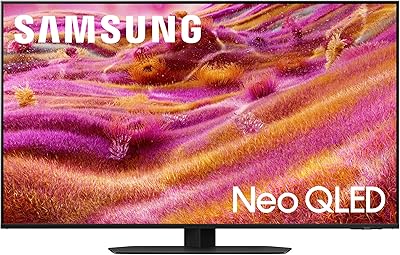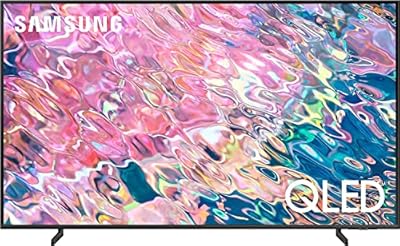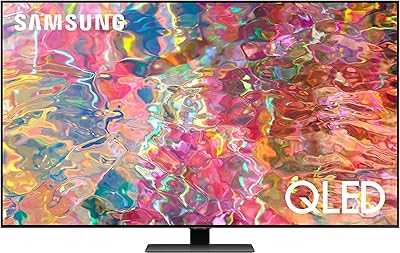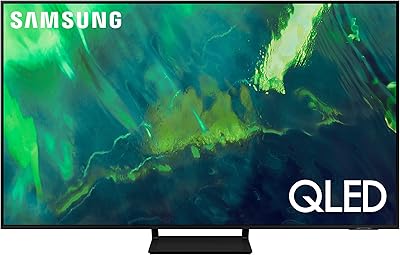


Overview

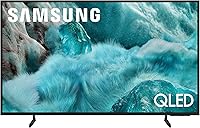
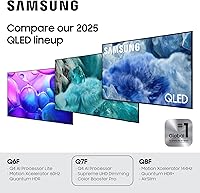
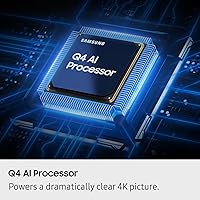
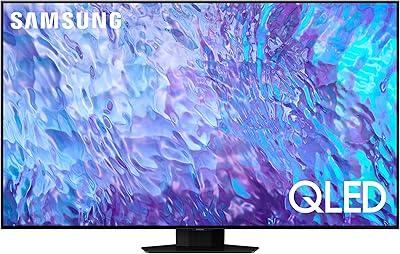
The Samsung 50-inch Q7F QLED 4K Smart TV landed in early 2025 as a deliberate middle-ground option — not a budget panel, but well short of Samsung's premium Neo QLED lineup. It runs on the Q4 AI Gen1 processor, which handles Vision AI tasks like adjusting picture and audio to match content type on the fly. The Quantum Dot panel is the real draw here: colors stay accurate and rich even in a bright room, which separates it from standard LED sets at similar prices. Against rivals like the LG QNED and TCL QLED in the same range, this 50-inch Samsung holds its ground, and its quick rise to a top-ranked position on Amazon suggests buyers are taking notice.

Features & Benefits

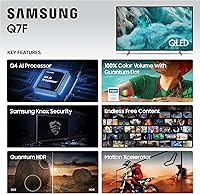
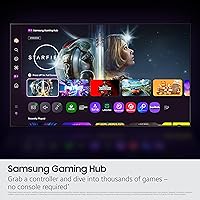
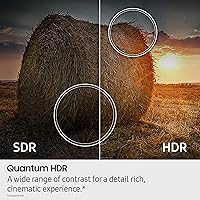
The Q7F handles HDR content through HDR10+ dynamic tone mapping, which adjusts contrast on a scene-by-scene basis rather than applying a flat global setting — a noticeable improvement when watching darker films or high-contrast sports broadcasts. The AI upscaling does a reasonable job pulling detail out of 720p and 1080p streams, though it won't perform miracles on very low-quality sources. Object Tracking Sound Lite adds a layer of directional audio, but it's worth being clear: this is a stripped-down version of the sound tech found on Samsung's higher-end models. Gaming Hub is a convenient feature for cloud gaming, though the 60 Hz panel makes this 50-inch Samsung a poor choice for serious competitive play.

Best For

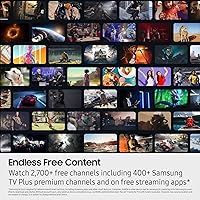
This Samsung QLED makes the most sense for someone upgrading from an older 1080p set or a dim LCD that struggles in daylight — the color accuracy and brightness improvement will be immediately obvious. Cord-cutters and heavy streamers will genuinely appreciate the Samsung TV Plus library; 2,700+ channels sounds inflated, but there's a solid mix of news, sports, and on-demand content available without paying a monthly fee, even if ads are part of the deal. Casual gamers who use cloud gaming services via Gaming Hub will find it adequate, as will anyone fitting a screen into a bedroom or mid-sized living room where 50 inches hits the sweet spot without overwhelming the space.

User Feedback

Buyers consistently highlight the out-of-the-box picture quality as a genuine strength — most report that colors pop immediately without requiring manual calibration, which matters to people who don't want to dig through settings menus. On the downside, motion handling comes up repeatedly as a sticking point; 60 Hz is workable for regular TV and movies, but anyone who tested it with fast sports or action titles noticed the difference from higher-refresh panels. The Tizen smart TV interface gets mixed marks — snappy enough in most use cases, but some users flag Samsung's habit of pushing ads into the home screen. A notable share of buyers mention adding a soundbar within weeks, which says something about the built-in audio's limits.

Pros

  • Quantum Dot panel delivers vibrant, accurate colors right out of the box with no manual calibration needed.
  • HDR10+ dynamic tone mapping handles contrast well across a wide range of streaming and broadcast content.
  • AI-driven 4K upscaling noticeably improves the quality of 1080p and lower-resolution sources.
  • Samsung TV Plus provides a large free content library that cord-cutters can lean on from day one.
  • Gaming Hub centralizes cloud gaming services in one place without needing an additional console.
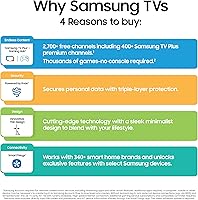
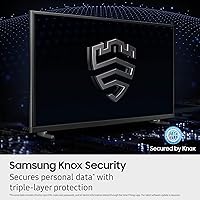
  • Samsung Knox security adds meaningful protection for personal data and connected smart home devices.
  • Tizen smart TV platform is responsive, well-organized, and supports all major streaming apps.
  • Alexa built-in allows hands-free control without purchasing a separate smart speaker.
  • The Q7F holds strong value in its price tier compared to similarly spec'd competitors.
  • Setup is straightforward, and the stand is stable enough for most standard TV furniture arrangements.

Cons

  • The 60 Hz native refresh rate is a real ceiling — fast motion in sports and action content can look soft.
  • No variable refresh rate or HDMI 2.1 support limits this 50-inch Samsung for current-gen console gaming.
  • Object Tracking Sound Lite is a noticeably downgraded audio system compared to higher Samsung tiers.
  • Built-in speakers lack depth and volume for larger rooms, pushing many buyers toward a soundbar purchase.
  • Samsung's Tizen interface places promotional ads on the home screen, which some users find persistently annoying.
  • Local dimming is absent, so dark scenes can look washed out or lack the deep blacks that rivals offer.
  • The Q4 AI Gen1 processor handles everyday tasks well but feels less capable under heavier multitasking loads.
  • Free Samsung TV Plus channels come with ad interruptions that break up viewing more than most paid services.
  • The remote design, while functional, has drawn complaints about button layout and shortcut key placement.

Ratings

Our AI rating system analyzed thousands of verified global buyer reviews for the Samsung 50-inch Q7F QLED 4K Smart TV, actively filtering out incentivized, duplicate, and bot-generated submissions to surface what real owners actually experience. Scores reflect a balanced picture — the genuine strengths that make this 50-inch Samsung a compelling mid-range pick, alongside the recurring pain points that cost it points in specific categories. Whether you are deciding between this and a rival QLED or just want to know if it is worth the spend, these scores give you an honest, unvarnished starting point.

Picture Quality
86%
The Quantum Dot panel consistently earns high marks from owners who switched from standard LED or older 1080p sets — colors in nature documentaries and animated films look genuinely rich and well-saturated without overshooting into artificial territory. In well-lit living rooms, the brightness holds up better than most OLED competitors at this price.
Dark room performance is where the Q7F shows its mid-range positioning most clearly — without local dimming, deep shadow scenes in thriller or horror content look a bit flat and washed-out. Buyers accustomed to Neo QLED or OLED contrast levels will notice the gap fairly quickly.
HDR Performance
78%
22%
HDR10+ support with dynamic tone mapping means the TV adapts contrast and brightness settings on a scene-by-scene basis, which makes a real difference when streaming HDR content from Prime Video or Netflix — highlights in outdoor scenes and explosions in action films genuinely pop compared to non-HDR sources.
Peak brightness is not high enough to fully exploit the HDR specification, so the overall HDR impact feels more subtle than dramatic, especially compared to higher-brightness panels from Sony or Samsung's own premium tier. Buyers expecting a visibly transformative HDR experience may walk away underwhelmed.
Color Accuracy
83%
Out-of-box color accuracy in standard and movie modes is better than what most buyers expect at this price tier — skin tones read naturally, and color gradients in landscape photography look smooth without obvious banding. The Quantum Dot layer maintains that accuracy even as peak brightness increases, which is a meaningful advantage over standard LCD panels.
The default Dynamic picture mode, which many users never change, applies heavy saturation and sharpness boosts that push colors past the point of realism and can make flesh tones look orange under warm lighting. Buyers who do not explore the settings may never experience the panel at its most accurate.
Motion Handling
61%
39%
For typical broadcast TV, sitcoms, and slower-paced drama series, the 60 Hz panel performs without any noticeable issues, and the AI motion processing smooths out modest blur reasonably well without introducing excessive soap-opera effect when set conservatively.
Live sports, fast-action films, and any gaming content that pushes past 60 frames per second expose the hard ceiling of this panel immediately — motion blur and trailing artifacts are consistently flagged in reviews. This is not a fixable software issue; it is a hardware limitation that makes the Q7F a genuinely poor choice for motion-sensitive viewers.
Gaming Performance
54%
46%
Gaming Hub is a legitimately convenient feature for cloud gaming subscribers — accessing Xbox Cloud Gaming or GeForce Now through the TV interface without a separate device is a real quality-of-life improvement for casual players, and input lag in Game Mode is low enough to feel responsive for slower-paced titles.
The 60 Hz refresh rate and absence of HDMI 2.1, VRR, or 120 Hz support make this 50-inch Samsung a poor match for anyone with a current-generation console who wants to use it at full capability. Competitive gamers and anyone who paid a premium for PS5 or Xbox Series X performance will feel constrained immediately.
Sound Quality
58%
42%
Object Tracking Sound Lite does a serviceable job keeping dialogue clear and centered during standard TV watching, and for casual daytime viewing at moderate volume levels, most buyers report that it gets the job done without feeling completely hollow.
Bass response is minimal, volume headroom runs out quickly in larger rooms, and the directional audio effect is too subtle to make a meaningful impression during action sequences or music content. A notable portion of verified buyers mention purchasing a soundbar within the first month, which is a consistent signal that the built-in audio underdelivers for serious home entertainment use.
Smart TV Interface
74%
26%
Tizen is one of the more polished smart TV operating systems available — app load times are fast, the layout is logically organized, and all major streaming services are available and kept reasonably up to date. Voice search through Alexa works reliably for basic commands like switching inputs or launching apps.
Samsung's habit of placing sponsored content and ads directly on the home screen is a recurring irritant among owners — it feels intrusive in an interface that buyers paid for, and it cannot be fully disabled. Some users also report that the home screen layout prioritizes promoted content over recently used apps, which adds unnecessary friction to daily use.
App Ecosystem
81%
19%
The Tizen app store covers virtually every major streaming platform a mainstream buyer would need, and the Samsung TV Plus library adds a surprisingly usable layer of free content that fills gaps for cord-cutters between subscription services. App update frequency is generally consistent compared to some competing smart TV platforms.
Niche app availability is thinner than what Android TV platforms offer, and a handful of regional or sports-specific apps are missing from the Tizen store entirely. Users who rely on less mainstream services may find themselves resorting to a connected streaming stick as a workaround.
Free Content Value
76%
24%
Samsung TV Plus genuinely delivers a broad mix of live news, sports highlights, classic movies, and specialty channels that cord-cutters can lean on as a daily driver alongside their paid subscriptions — it is not filler content, and new channels are added regularly.
The ad load on free channels is heavier than most buyers anticipate, and the ad frequency during movies in particular can disrupt viewing in a way that feels more like broadcast television from twenty years ago than a modern streaming service. It is free, but the trade-off in interruptions is real.
Setup & Installation
84%
Most buyers report a clean, guided setup experience from first power-on — the on-screen prompts are straightforward, Wi-Fi connection is reliable, and smart TV account linking takes only a few minutes even for less tech-savvy users. The stand assembly is tool-minimal and clearly documented in the included manual.
The initial setup process nudges users through several Samsung account and data-sharing prompts that some find pushy or confusing to opt out of. A small number of buyers also report that the out-of-box software requires a significant firmware update before all features function correctly.
Build & Design
79%
21%
The Q7F has a clean, slim bezel design that looks more expensive than its price suggests, and the matte finish on the panel does a reasonable job of diffusing glare without adding an obvious texture layer. At just under 21 pounds with the stand, it is light enough for a two-person installation without professional help.
The back panel and stand use a mix of materials that feel slightly less premium on close inspection — the plastic construction is functional but does not inspire the same confidence as the front-facing design suggests. A few buyers flag minor flex in the stand legs on uneven surfaces.
Remote Control
67%
33%
The Samsung SolarCell remote is compact and rechargeable, which eliminates the ongoing cost of replacing batteries and is a practical convenience for everyday use. Button placement covers the core navigation needs without being overcrowded.
Dedicated shortcut buttons for specific streaming services take up prime real estate on the remote face and cannot be reassigned, which frustrates buyers who do not use those services. Several users also note that the remote occasionally requires multiple button presses to register, particularly when pointed at an angle.
Security & Privacy
88%
Samsung Knox provides a meaningful layer of protection that runs passively in the background — buyers who use their TV for smart home hub functions or store account credentials appreciate that there is a legitimate enterprise-grade security framework behind it rather than basic manufacturer claims.
Knox protects against external threats effectively, but it does not address concerns about Samsung's own data collection practices within the Tizen OS, which some privacy-conscious buyers flag as a separate and unresolved issue. Users who want granular control over what the TV reports back will find the privacy settings menus limited.
Value for Money
82%
18%
At its price point, the Q7F offers a combination of QLED display quality, a mature smart TV platform, built-in Alexa, free content access, and Samsung Knox security that represents a genuinely competitive package — buyers upgrading from budget-tier TVs consistently report feeling that they got more than they paid for in terms of visual experience.
The value calculation shifts if a buyer also needs to purchase a soundbar to compensate for weak built-in audio, which can meaningfully change the total cost picture. Competing models from TCL and Hisense offer 120 Hz panels at overlapping price points, making the Q7F feel less like an obvious choice and more like a brand-trust premium purchase.

Suitable for:

The Samsung 50-inch Q7F QLED 4K Smart TV is a strong fit for households making a meaningful visual upgrade from an aging 1080p or dim LCD panel, where the jump in color accuracy and brightness will be immediately noticeable. Streamers and cord-cutters who want a well-rounded content experience without stacking up subscriptions will appreciate the built-in Samsung TV Plus library, even if they go in knowing ads are part of the arrangement. The 50-inch footprint hits a practical sweet spot for mid-sized living rooms and larger bedrooms, offering enough screen presence without dominating the space. Casual gamers who want cloud gaming access through Gaming Hub — and are not chasing high frame rates — will find the Q7F capable enough for their needs. Anyone who values a reliable smart TV platform with broad app support, Alexa integration, and the peace of mind that comes with Samsung Knox security will feel at home here.

Not suitable for:

The Samsung 50-inch Q7F QLED 4K Smart TV is not the right call for anyone who takes gaming seriously — the 60 Hz native panel, with no variable refresh rate support, puts it at a real disadvantage against competing sets that offer 120 Hz at comparable price points. Cinephiles or home theater purists chasing the deepest blacks and the sharpest contrast will find this QLED tier falls short; without a local dimming array, it cannot match what Samsung's own Neo QLED lineup or OLED panels from other brands deliver in dark room performance. Buyers who are sensitive to ad-heavy interfaces should also be aware that Tizen pushes promotional content onto the home screen in ways that some users find intrusive. Those expecting full, rich surround sound from the built-in speakers will likely be disappointed — Object Tracking Sound Lite is a modest audio feature, and many buyers end up pairing this 50-inch Samsung with an external soundbar shortly after setup. If your priority is future-proofing a gaming or home theater setup, the trade-offs here are hard to overlook.

Specifications

  • Screen Size: The panel measures 50 inches diagonally, making it well-suited for mid-sized living rooms and larger bedrooms.
  • Display Type: Uses Quantum Dot LED (QLED) technology, which applies a Quantum Dot filter to enhance color volume and brightness compared to standard LED-LCD panels.
  • Resolution: Native 4K resolution at 3840 x 2160 pixels delivers four times the pixel density of a standard 1080p display.
  • Refresh Rate: The panel runs at a native 60 Hz refresh rate, which handles everyday TV viewing and casual gaming but falls short for high-frame-rate gaming scenarios.
  • HDR Support: Compatible with both HDR10+ and Quantum HDR, enabling dynamic scene-by-scene tone mapping for improved contrast in supported content.
  • Processor: Powered by Samsung's Q4 AI Gen1 chip, which manages real-time picture optimization, 4K upscaling, and content-aware audio adjustments.
  • Sound System: Object Tracking Sound Lite provides basic directional audio that follows on-screen movement, though it is a step below the full Object Tracking Sound found on Samsung's higher-end models.
  • Operating System: Runs Samsung's Tizen smart TV platform, which supports all major streaming apps and features a home screen with built-in content recommendations.
  • Voice Assistant: Alexa is built directly into the TV, allowing hands-free voice control without a separate smart speaker device.
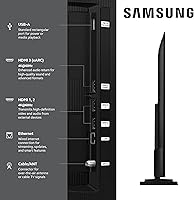
  • Connectivity: Includes HDMI, USB, Bluetooth, Wi-Fi, and Ethernet ports, covering all standard wired and wireless connection needs for home setups.
  • Free Content: Samsung TV Plus provides access to over 2,700 free ad-supported channels, including 400-plus premium channels, without requiring any subscription.
  • Security: Samsung Knox triple-layer security protects stored PINs, passwords, and data from connected IoT devices against malware and phishing threats.
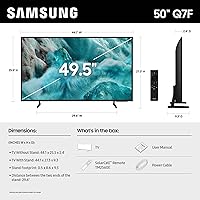
  • Dimensions: With the stand attached, the TV measures 44.1″ wide, 28.3″ tall, and 9.3″ deep.
  • Weight: The unit weighs 20.9 pounds with the stand, which is manageable for a standard two-person wall-mount or tabletop installation.
  • Model Number: The official Samsung model number is QN50Q7FAAFXZA, which is the identifier used for warranty registration and parts compatibility.
  • AI Upscaling: The Q4 AI Gen1 processor applies machine-learning-based upscaling to 1080p and lower-resolution sources, improving apparent sharpness on the 4K panel.
  • In the Box: Each unit ships with a power cable, remote control, stand hardware, and a printed user manual — no external streaming device is included.
  • Aspect Ratio: Standard 16:9 widescreen aspect ratio, which matches most HD and 4K broadcast, streaming, and physical media content formats.

Related Reviews

Samsung The Frame LS03F 50-inch QLED TV
77%
91%
Art Mode & Display Illusion
78%
Picture Quality
94%
Design & Aesthetics
58%
Art Store Value
88%
Installation & Setup
More
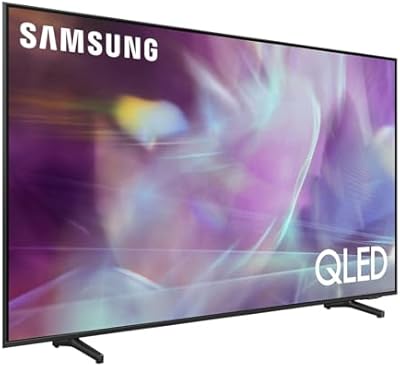
Samsung 50-Inch QLED 4K Q80C Series Smart TV
84%
94%
Picture Quality
88%
Sound Quality
91%
Gaming Performance
89%
Value for Money
85%
Smart Features
More
Samsung 50-inch Q60A QLED TV
75%
88%
Color Accuracy
57%
Contrast & Black Levels
79%
Brightness
71%
4K Upscaling
58%
Motion Handling
More
Samsung 50-inch Crystal UHD TU8000 Smart TV
61%
61%
Picture Quality
47%
Motion Handling
78%
Smart Platform
74%
Voice Control
52%
HDR Performance
More
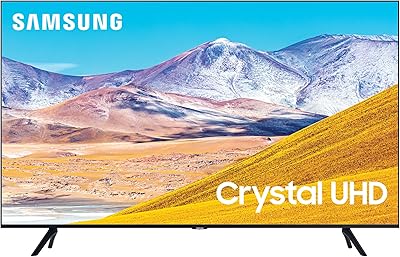
Samsung QN90F 50-inch Neo QLED 4K TV
88%
96%
Picture Quality
94%
HDR Performance
92%
Brightness and Glare Handling
90%
Motion Handling
91%
Gaming Performance
More
Samsung Q60B 50-inch QLED TV
75%
82%
Picture Quality
84%
Color Accuracy
63%
HDR Performance
54%
Viewing Angles
78%
Smart TV Experience
More
Samsung QN85D 85-inch QLED 4K Smart TV
77%
91%
Picture Brightness
87%
Color Accuracy
74%
Contrast & Black Levels
88%
Motion Handling
83%
AI Upscaling
More
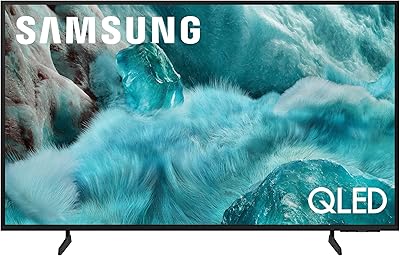
Samsung Q70A 75-inch QLED 4K Smart TV
77%
78%
Picture Quality
61%
Contrast & Black Levels
84%
Motion Handling
82%
Gaming Performance
83%
Smart TV Experience
More
Samsung QN70F 55-inch Neo QLED Smart TV
78%
83%
Picture Quality
88%
Gaming Performance
84%
Motion Handling
81%
Brightness & HDR
78%
Smart TV Platform
More
Samsung 65-Inch The Frame LS03F 4K QLED Smart TV
86%
91%
Picture Quality
96%
Design & Aesthetics
84%
Ease of Setup
89%
Gaming Performance
80%
Sound Quality
More

FAQ

It depends on what kind of gaming you have in mind. For casual play, cloud gaming through the built-in Gaming Hub, or older console titles, the 60 Hz panel is perfectly fine. But if you own a PS5 or Xbox Series X and want to push 120 frames per second or use variable refresh rate, this TV cannot do either of those things. Serious gamers would be better served by a panel with HDMI 2.1 and a 120 Hz native refresh rate.

Most buyers report that the colors look genuinely impressive right from the first power-on, especially if you are coming from an older LCD or a 1080p screen. The AI picture optimization does a decent job selecting a reasonable mode for whatever you are watching. That said, if you want to get the most accurate image possible, switching from the default Dynamic mode to Movie or Filmmaker Mode will reduce oversaturation and give you a more natural result.

Yes, this is actually one of its stronger points. QLED panels handle ambient light better than OLED screens, and the Quantum Dot layer helps maintain color accuracy even when sunlight is hitting the screen. It is not the brightest TV in its class, but for a normally lit living room it performs well without washing out.

The Tizen platform covers all the major services — Netflix, Disney Plus, Prime Video, Apple TV, YouTube, and Hulu are all there. The app selection is broad and generally keeps pace with updates. One thing worth knowing is that the home screen will show promoted content and ads even when you have not opened any app, which some users find annoying.

Not strictly, but a lot of buyers end up doing it within the first few weeks. The built-in Object Tracking Sound Lite is functional for dialogue-heavy content and general TV watching, but it lacks bass and volume for movies or music at room-filling levels. If you are setting this up in a smaller bedroom and watching at moderate volume, you may be fine without one. In a larger room or if audio quality matters to you, budgeting for a soundbar is worth considering.

The Q7F comes with multiple HDMI ports, but they are HDMI 2.0 specification, not the newer 2.1 standard. That means you can connect a cable box, streaming stick, and a gaming console simultaneously, but you will not get 4K at 120 Hz or enhanced audio return channel features that HDMI 2.1 supports. For most everyday setups, this is a non-issue.

The stand holds the TV securely on most TV stands and media consoles, and the feedback from buyers is mostly positive on stability. The base has a moderate footprint, so measure your furniture surface before assuming it will fit. Wall mounting is always an option if you prefer it — the TV uses a standard VESA mount pattern, so compatible third-party brackets are easy to find.

Knox is Samsung's security framework, originally developed for their mobile devices and extended to their smart TVs. On the Q7F, it works in the background to block malicious apps, flag suspicious network activity, and keep stored credentials like PINs from being exposed. It also extends some protection to IoT devices connected through the TV. You do not need to configure anything — it runs passively.

Yes, it works as a standard display without a Wi-Fi or Ethernet connection. You can still watch content from HDMI-connected devices like a cable box, Blu-ray player, or game console with no internet required. Smart features, app streaming, and Samsung TV Plus channels will not be available offline, but the core TV functionality is unaffected.

Both are solid mid-range picks, but they have different strengths. The Q7F tends to deliver richer color saturation and a more polished smart TV interface through Tizen. The LG QNED typically offers better local dimming performance in dark room viewing and runs on webOS, which many users find equally intuitive. If you watch a lot of films in a darkened room, the LG may edge ahead on contrast. For everyday bright-room streaming and color-forward content, this 50-inch Samsung holds its own comfortably.