Overview

The SABRENT Rocket 4 4TB NVMe SSD arrived in late 2024 to address a real gap: most Gen4 drives top out at 2TB, leaving power users scrambling across multiple drives. This Sabrent drive changes that calculus by packing serious sequential performance into a single-sided M.2 2280 form factor — a design choice that matters enormously for PS5 owners and slim laptops where double-sided boards simply won't fit. Against rivals like the Samsung 990 Pro and WD Black SN850X at 4TB, it holds its own on specs and undercuts both on price in many configurations. A 5-year limited warranty with registration rounds out a strong value argument for anyone planning to keep this drive long-term.

Features & Benefits

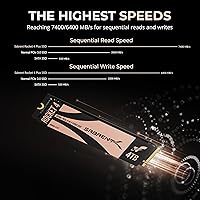
What those headline numbers actually mean in practice is worth unpacking. The 7450 MB/s sequential read speed translates to near-instant game load screens, snappy project file opens, and large video transfers that finish in seconds rather than minutes. Write performance on the 4TB model specifically hits 6400 MB/s — note that the 1TB and 2TB variants are rated slightly lower at 6100 MB/s, so compare the right SKU. Random IOPS up to 1000K read and 950K write keep things responsive during multitasking or asset streaming. The 3D TLC NAND with a 3000TB endurance rating means this drive should outlast most systems it installs in. Thermal behavior is notably controlled, reducing throttling risk during extended workloads even without an active heatsink.

Best For

The Rocket 4 4TB is a natural fit for PS5 storage upgrades — its single-sided board slots in cleanly without any clearance drama, and 4TB gives console owners enough room to stop making painful delete decisions. PC gamers building large libraries, and video editors working with uncompressed 4K footage, will appreciate the combination of raw throughput and sheer capacity. Laptop users with M.2 2280 slots should double-check their chassis specs, but the single-sided layout gives this drive a compatibility advantage over thicker alternatives. It also makes strong sense for anyone consolidating two older drives into one clean install, or for engineers running database-intensive tasks that benefit from sustained high IOPS. This is not a budget drive; it earns its place for users who genuinely need the headroom.

User Feedback

With 64 ratings and a 4.6-star average, the early reception for this high-capacity NVMe is positive — though the review pool is still relatively small for sweeping conclusions. Buyers consistently highlight fast real-world speeds and clean PS5 installation as standout positives, with several noting the drive runs cooler than expected under load. On the critical side, a handful of users flagged that the warranty registration process felt more involved than anticipated. Price sensitivity surfaces in a few reviews too — some feel the premium is well justified, while others comparison-shop against Samsung and WD options. Feedback on Sabrent support has been broadly favorable where mentioned, but the sample is not yet large enough to draw firm conclusions about long-term reliability.

Pros

  • 4TB capacity in a single M.2 slot eliminates the need for multiple drives or external storage workarounds.
  • Single-sided PCB design fits PS5, slim laptops, and tight chassis where double-sided boards cause clearance problems.
  • Sequential read speeds translate to noticeably faster game load times, file transfers, and project opens in real use.
  • Thermal behavior is well-controlled, reducing performance throttling even during extended heavy workloads.
  • 3D TLC NAND with up to 3000TB endurance rating gives heavy users genuine confidence in long-term reliability.
  • Broad OS compatibility across Windows, macOS, and Linux makes this a flexible choice across different setups.
  • 5-year limited warranty provides solid coverage for a long-term storage investment — provided you register at setup.
  • Early buyer feedback consistently praises installation ease, especially for PS5 users upgrading their console storage.

Cons

  • Warranty coverage requires active registration — easy to overlook at setup, but skipping it voids the 5-year protection.
  • Write speed varies by capacity: the 1TB and 2TB models are rated lower than the 4TB, which can mislead cross-SKU comparisons.
  • The review pool is still small (under 100 ratings), making long-term reliability conclusions premature at this stage.
  • Premium pricing is hard to justify for light or casual users who won't stress the drive's upper performance range.
  • Users on PCIe Gen3 platforms will not see the rated speeds, getting a capable but overqualified drive for their system.
  • No heatsink is included in the box, which matters for desktop builds without M.2 thermal pads already in place.
  • Sabrent is a smaller brand than Samsung or WD, which may give pause to buyers who weight brand reputation heavily in storage decisions.

Ratings

Our AI rating engine analyzed verified global buyer reviews for the SABRENT Rocket 4 4TB NVMe SSD, actively filtering out incentivized, bot-generated, and duplicate submissions to surface what real users actually experience. The scores below reflect both the genuine strengths that earned this drive a strong early consensus and the friction points that a subset of buyers ran into — nothing is smoothed over. Whether this drive earns its place in your build depends heavily on your specific use case, and these ratings are designed to help you make that call clearly.

Sequential Throughput
93%
Users consistently report that large file transfers — think moving a 50GB game install or exporting a finished 4K project — feel noticeably faster than on their previous Gen3 or entry-level Gen4 drives. The sustained read performance holds up under extended sessions rather than spiking briefly and dropping off.
A small number of users running older PCIe Gen3 platforms reported confusion when their benchmarks came in far below the rated figures, which is expected behavior but not clearly communicated at point of sale. Peak speeds are also only achievable with the drive at a comfortable operating temperature.
Random I/O Performance
88%
Content creators and engineers doing concurrent reads and writes — like running a game while recording footage or compiling large codebases — find this Sabrent drive handles multitasking without the stuttering they experienced on lower-IOPS alternatives. The high random read ceiling keeps the system feeling responsive even under pressure.
For typical everyday computing tasks like web browsing and document editing, the IOPS headroom goes completely untapped, making this spec largely irrelevant for light users. In synthetic benchmarks at queue depth 1, real-world random performance is closer to what any decent NVMe drive delivers.
Thermal Management
86%
Buyers installing this drive in PS5 consoles and slim laptops — where there is little room for active cooling — were pleasantly surprised by how cool the board runs during extended gaming sessions. Several PC builders noted it stayed within comfortable ranges even without a dedicated M.2 heatsink installed.
A few desktop users running back-to-back large transfers in warm cases did observe some throttling without a heatsink, though this is a broadly expected behavior for any high-performance NVMe at sustained load. The drive does not ship with a thermal pad, which is a minor but real omission for buyers upgrading barebones setups.
PS5 Compatibility
91%
PS5 owners report the installation process as clean and straightforward — the single-sided board clears the expansion bay without needing a thinner heatsink or any clearance workarounds that some competing double-sided 4TB drives require. Multiple reviewers called out 4TB as the sweet spot for building a large console library without compromise.
While installation is smooth, Sabrent does not include a PS5-compatible heatsink in the box, so budget-conscious console buyers need to factor in that additional purchase. The drive also requires a firmware update check through Sabrent's portal, which some console-only users found less intuitive than expected.
Value for Money
74%
26%
At the 4TB Gen4 tier, the Rocket 4 4TB undercuts Samsung and WD Black pricing in many retail configurations while delivering comparable rated speeds, which buyers tracking the high-capacity NVMe market recognize as a genuine advantage. For users who have been waiting to make a single large-capacity upgrade rather than buying two 2TB drives, the math often works out favorably.
Buyers who do not genuinely need 4TB or top-end Gen4 performance feel the price is difficult to justify compared to a 2TB Gen4 drive at a significantly lower cost. A handful of reviewers noted that the price-per-gigabyte, while competitive at this tier, still represents a significant outlay compared to budget Gen4 options from Teamgroup or Silicon Power.
Installation Experience
84%
Most buyers across desktop, laptop, and PS5 installs described a plug-and-play experience with no driver installation required on Windows or Linux. The standard M.2 2280 footprint means it drops into any compatible slot without adapters or firmware preparation steps before first use.
Users who attempted to migrate an existing OS to this drive noted that third-party cloning software compatibility was occasionally inconsistent, requiring a clean install instead. The warranty registration step — separate from physical installation — caught a few buyers off guard who assumed coverage was automatic.
Warranty & Support
77%
23%
The 5-year limited warranty is a meaningful commitment at this product tier, and buyers who contacted Sabrent support generally described the experience as responsive and knowledgeable. Having firmware updates available through a dedicated portal adds a layer of longevity most budget brands do not offer.
The requirement to actively register the drive to unlock the full warranty is a friction point that some buyers only discover after the fact, and a portion of users simply never complete that step. Support documentation online is less extensive than what Samsung or WD provide, which can be frustrating for less technical users troubleshooting edge cases.
Endurance & Longevity
89%
The 3,000TB write endurance rating on the 4TB model gives heavy users — media editors, engineers, and power users writing terabytes per month — a realistic path to many years of use before approaching the TBW ceiling. The 3D TLC NAND choice strikes a practical balance between density and write durability at this capacity.
Since this drive launched in late 2024 and has under 100 reviews, long-term real-world endurance data simply does not exist yet — the TBW rating is a manufacturer specification, not a community-validated figure. Buyers who require proven multi-year track records from a large review base may want to wait another 12 to 18 months before drawing firm conclusions.
Broad Compatibility
82%
18%
The combination of M.2 2280 form factor, NVMe 1.4 protocol, and cross-platform OS support means this high-capacity NVMe works in an unusually wide range of devices out of the box. M.2 enclosure users reported it working cleanly over Thunderbolt and USB4 connections for high-speed portable storage setups.
macOS compatibility is real but contextually limited — most modern MacBooks cannot physically accept this drive, so it applies mainly to Mac Pro builds or external enclosures. Gen3-only systems will work but miss the performance point entirely, and this incompatibility is not always visible to less technical buyers before purchase.
Brand Reputation
71%
29%
Among storage enthusiasts and PC building communities, Sabrent has built a credible reputation for competitive pricing and genuine performance at the component level, with a growing catalog that earns respect in informed buyer circles. The 5-year warranty signals a manufacturer willing to stand behind the product past the typical 3-year industry baseline.
Sabrent lacks the decades-long track record of Samsung or Western Digital in consumer storage, and first-time buyers unfamiliar with the brand sometimes hesitate at checkout. The relatively modest review count for this specific model (under 100 at time of writing) means brand trust is doing more work than verified product-specific evidence right now.
Form Factor Design
87%
The single-sided PCB is a practical engineering choice that pays dividends in real installations — particularly for ultrabook owners and PS5 users where board thickness directly determines whether the drive fits at all. Weighing just 0.24 ounces, it adds nothing meaningful to the physical footprint of any build.
The absence of any included thermal solution means buyers in heatsink-less configurations are left to source one separately, adding a small but real step to what should be a complete out-of-box experience. For enclosure users, the slim profile is a pure advantage, but desktop builders without M.2 heatsinks need to plan ahead.
Benchmark Consistency
83%
Users running CrystalDiskMark and similar tools on PCIe Gen4 systems reported benchmark results that closely matched Sabrent's rated figures, which is a positive signal for a drive this new to market — some competitors post rated numbers that are difficult to replicate outside of controlled lab conditions.
A small but vocal subset of reviewers noted that sustained write performance over very large sequential transfers showed some expected SLC cache exhaustion, where write speeds stepped down after several hundred gigabytes of consecutive writes. This is a known characteristic of TLC NAND drives and not a defect, but buyers expecting peak speeds to hold indefinitely should set realistic expectations.

Suitable for:

The SABRENT Rocket 4 4TB NVMe SSD is purpose-built for users who have genuinely outgrown smaller drives and need capacity and speed to coexist in a single slot. PS5 owners get the clearest benefit: the single-sided M.2 2280 board fits Sony's expansion bay cleanly, and 4TB is enough to house a serious game library without constant juggling. PC gamers building out large rigs, video editors shuttling heavy project files, and engineers running read-intensive workloads will all find the throughput genuinely useful rather than theoretical. It also makes real sense for laptop users with M.2 2280 slots who need a single-sided drive to avoid chassis clearance conflicts — a constraint that rules out several competing options. Anyone looking to consolidate two aging drives into one clean, fast install will find the value proposition here particularly compelling.

Not suitable for:

The SABRENT Rocket 4 4TB NVMe SSD is a harder sell for buyers who don't actually need 4TB or the raw Gen4 speeds that come with it. If your workload is general office use, light browsing, or casual gaming on a budget PC, the performance headroom this drive provides goes largely untapped, and a Gen3 or lower-capacity Gen4 option would serve just as well at a meaningfully lower cost. Users on older platforms limited to PCIe Gen3 will see the drive throttle back automatically — it will still work, but you won't be getting what you paid for. Those who skip the warranty registration process should also know the 5-year coverage requires it, so inattention at setup could cost you later. Finally, buyers who prioritize independently validated long-term reliability data should note that this drive launched in late 2024 and has fewer than 100 ratings to date — the early signs are good, but the track record is still short.

Specifications

  • Interface: Uses a PCIe Gen4 x4 connection with NVMe 1.4 protocol, delivering significantly higher bandwidth than older Gen3 drives.
  • Form Factor: Standard M.2 2280 (80mm length) with a single-sided PCB layout, keeping component height minimal for tight clearance installations.
  • Sequential Read: Rated up to 7450 MB/s sequential read speed on the 4TB model under optimal conditions.
  • Sequential Write: The 4TB variant is rated up to 6400 MB/s sequential write; the 1TB and 2TB models are rated lower at up to 6100 MB/s.
  • Random Read IOPS: Delivers up to 1,000,000 random read IOPS, supporting responsive performance during multitasking and data-intensive workloads.
  • Random Write IOPS: Rated up to 950,000 random write IOPS, sustaining throughput during concurrent write operations such as game asset streaming.
  • Flash Memory: Built with 3D TLC (Triple-Level Cell) NAND flash, balancing storage density, endurance, and cost-per-gigabyte at the 4TB tier.
  • Endurance (TBW): Rated up to 3,000TB written (TBW) on the top capacity model, providing substantial headroom for years of heavy daily use.
  • Operating Temp: Rated for operation between 0°C and 70°C, covering standard desktop, laptop, and console environments without active cooling requirements.
  • Storage Temp: Safe for storage between -40°C and 85°C, making it resilient during shipping and long-term archival without power.
  • Dimensions: Measures 3.1 x 0.87 x 0.08 inches (approximately 80 x 22 x 2mm), consistent with the standard M.2 2280 footprint.
  • Weight: Weighs just 0.24 ounces, adding negligible mass to any build or portable device.
  • Compatible Devices: Officially compatible with desktop PCs, laptops with M.2 2280 slots, PS5 consoles, and M.2 enclosures for external use.
  • OS Support: Works across Windows, macOS, and Linux without requiring proprietary drivers for basic operation.
  • Warranty: Covered by a 5-year limited warranty that requires product registration through Sabrent's website to activate full coverage.
  • Capacities: Available in three capacity options — 1TB, 2TB, and 4TB — under the same Rocket 4 product family.
  • Controller: Uses an advanced PCIe Gen4 NVMe controller optimized for both high sequential throughput and controlled thermal output under sustained load.
  • Power Efficiency: Engineered for low power draw relative to its performance tier, reducing heat generation without sacrificing sustained speed.

Related Reviews
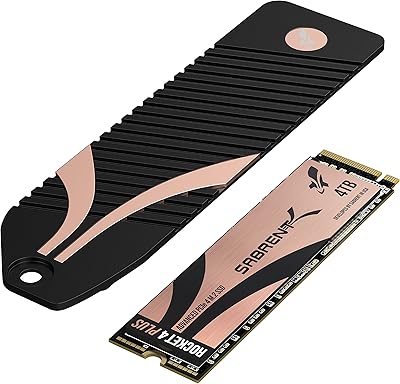
Sabrent 4TB Rocket 4 Plus NVMe 4.0 Gen4 PCIe M.2 SSD
87%
95%
Performance
89%
Thermals & Cooling
93%
PS5 Compatibility
85%
Value for Money
91%
Build Quality & Durability
More
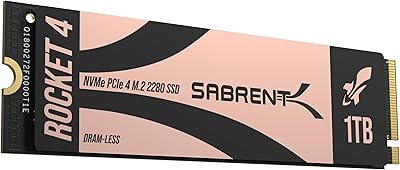
Sabrent 1TB Rocket 4 Plus NVMe 4.0 SSD
88%
94%
Performance
88%
Installation Ease
92%
Value for Money
70%
Thermal Management
91%
Compatibility
More
Sabrent Rocket 4 1TB NVMe SSD
86%
94%
Performance
92%
Speed (Read/Write)
74%
Thermal Management
89%
Reliability
91%
Compatibility
More
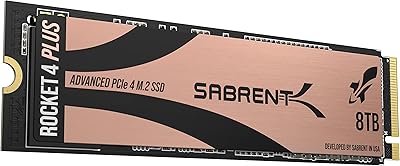
SABRENT Rocket 5 4TB NVMe SSD
88%
94%
Performance
92%
Transfer Speed
89%
Compatibility
88%
Build Quality
75%
Cooling Efficiency
More
SABRENT Rocket 4 Plus 2TB NVMe SSD
83%
94%
Read/Write Performance
91%
Heatsink Build Quality
96%
PS5 Compatibility
88%
Thermal Management
83%
Value for Money
More
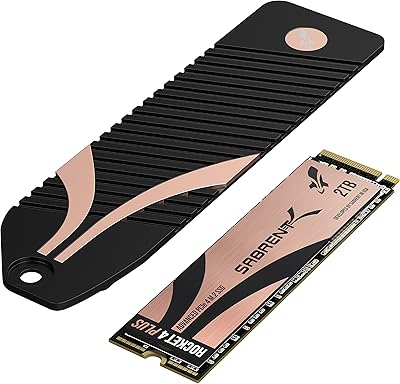
SABRENT Rocket 4 Plus 8TB NVMe SSD
80%
93%
Sequential Read Speed
89%
Sequential Write Speed
61%
Thermal Management
67%
Value for Money
88%
NAND Endurance
More
Sabrent Rocket Q4 1TB NVMe SSD
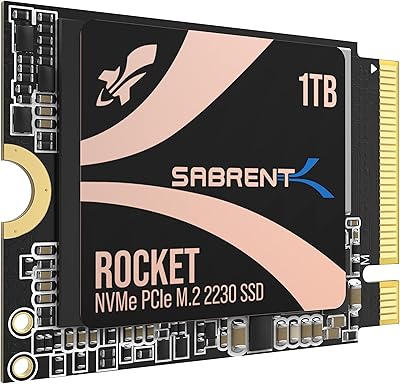
79%
91%
Sequential Read Performance
58%
Sustained Write Performance
84%
Value for Money
61%
Thermal Management
93%
Installation & Setup
More
SABRENT Rocket 2230 1TB NVMe SSD
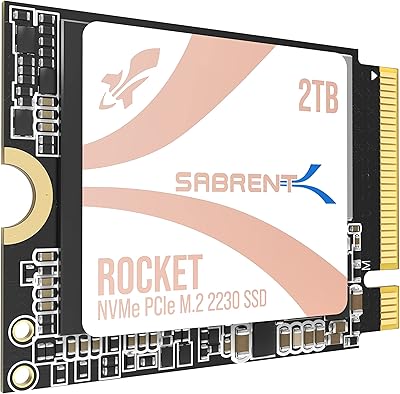
83%
88%
Read Speed Performance
71%
Write Speed Performance
93%
Form Factor Compatibility
91%
Installation Experience
74%
Thermal Management
More
SABRENT Rocket Q4 2230 2TB NVMe SSD
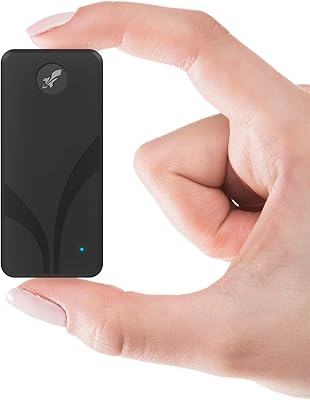
81%
97%
Form Factor Compatibility
88%
Read Performance
67%
Write Performance
83%
Installation Experience
74%
Thermal Management
More
Sabrent Rocket Nano V2 4TB External SSD
81%
93%
Transfer Speed
89%
Build Quality
96%
Portability & Form Factor
71%
Thermal Management
88%
Compatibility
More

FAQ

Yes, the single-sided M.2 2280 design fits the PS5 expansion bay without any adapter or heatsink swap — though Sony recommends using a heatsink, which you can add separately. The board clears the PS5 slot cleanly, which is not guaranteed with all double-sided 4TB drives on the market.

No — if your motherboard only supports PCIe Gen3, the drive will fall back to Gen3 speeds automatically. It will still function and be recognized, but you won't see anywhere near the rated 7450 MB/s. For full performance, you need a PCIe Gen4-compatible M.2 slot.

It's worth paying attention to this. The 1TB and 2TB models top out at around 6100 MB/s sequential write, while the 4TB model reaches up to 6400 MB/s. The read speeds are the same across all capacities. If you're comparing SKUs, make sure you're looking at the matching spec sheet for each one.

For basic use on Windows, macOS, or Linux, no special drivers are needed — the OS will recognize it natively. Sabrent does offer a firmware update tool through their website, and registering your drive there also activates the warranty, so it's worth visiting even if you skip the software side.

No, the SABRENT Rocket 4 4TB NVMe SSD does not come with a heatsink. Most desktop motherboards include one for the M.2 slot, and the PS5 has its own thermal pad slot. If you're installing it in a laptop or a board without a heatsink, the drive's low thermal design helps, but an aftermarket M.2 heatsink is a cheap and worthwhile addition.

Yes, it's compatible with M.2 NVMe enclosures. Keep in mind that the maximum speed you'll see externally is capped by your enclosure's USB or Thunderbolt interface, not the drive itself. For Thunderbolt 4 enclosures, you can still get very impressive transfer speeds.

You register through Sabrent's website using your purchase details and serial number. The 5-year limited warranty is tied to registration, so if you skip it and run into a problem later, coverage may not apply. It only takes a few minutes and is worth doing right after installation.

It works on macOS, but you need to check your specific Mac's storage interface first. Most modern MacBooks use Apple's proprietary SSD connector, not a standard M.2 slot, so this drive won't physically fit. It's a better fit for non-Apple laptops with standard M.2 2280 slots, or for Mac Pros and external enclosures used with macOS.

At 4TB, all three are competitive on raw specs, with Sabrent often coming in at a slightly lower price point. Samsung and WD carry stronger brand recognition and longer market track records at this tier, which matters to some buyers. This Sabrent drive is newer to the 4TB market, but early feedback on speed and thermals has been positive.

Honest answer: for typical gaming and everyday use, the difference between a good Gen4 drive and a great one is subtle. Where the Rocket 4 4TB earns its keep is in sustained large-file transfers, 4K video editing with heavy scratch disk use, and workloads that keep the drive busy for minutes at a time. If you're mostly browsing and loading mainstream games, a cheaper Gen4 option at 2TB would likely serve you just as well.

Where to Buy

Newegg.com
In stock $879.99
SHI International
In stock $559.00
Neobits.com
In stock $662.99