
Overview

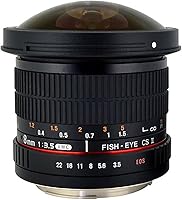
The Rokinon 8mm f/3.5 HD Fisheye Lens is Rokinon's improved take on an already popular ultra-wide optic, built specifically for Canon APS-C DSLR shooters who want bold, distortion-heavy imagery without spending a fortune. This is an HD-generation upgrade over the original model, bringing refined multi-layer coatings and noticeably better optical clarity. At 15.6 ounces with a compact build, it is easy enough to carry all day, and the removable petal hood is a genuinely useful feature at this price point. One thing to flag upfront: this lens is manual focus only. There is no autofocus motor, so buyers coming from kit lenses should plan for a real adjustment period before getting consistent results.

Features & Benefits

The headline spec here is the 180-degree field of view on APS-C sensors — it pulls everything around you into that characteristic curved-horizon composition fisheye shooters chase. A hybrid aspherical element helps the lens deliver sharp detail across the full frame, which is not a given at this price point. The super multi-layer coating does real, visible work keeping flare and ghosting in check even when shooting into strong backlight. Close-focus capability sits at just 11.8 inches, opening up perspective opportunities with nearby subjects that most wide-angle lenses simply cannot match. Removing the hood also allows circular filters to be used — something most fisheyes with fixed hoods cannot accommodate.

Best For

This wide-angle manual lens is a natural choice for landscape and architecture photographers who want extreme perspective without a big investment. Skaters, surfers, and action sports videographers will love the barrel distortion — it is practically the signature look of skating footage, and for good reason. Astrophotographers benefit from the fast f/3.5 aperture and sweeping coverage for capturing wide swaths of night sky in a single frame. Creative portrait and event photographers who enjoy working close to subjects will get a lot out of the nearly 12-inch minimum focus distance. One firm caveat: on a full-frame body, you will get a pronounced circular vignette rather than full-frame coverage.

User Feedback

Across more than 800 reviews, the Rokinon 8mm fisheye earns its 4.3-star average largely through what buyers describe as strong optical value — they regularly compare it favorably to name-brand alternatives that cost significantly more. The biggest friction point is the manual focus system. Hobbyists coming from autofocus cameras consistently flag a learning curve, and that honest detail matters if you are shopping for your first manual lens. Some owners have also reported intermittent issues with aperture chip communication on certain Canon bodies, leading to exposure inconsistencies. Additionally, a small percentage of reviewers note unit-to-unit variation in build quality — worth factoring in, especially when buying secondhand.

Pros

  • Delivers impressive sharpness across the frame for a fisheye lens at this price point.
  • The 180-degree field of view on APS-C sensors creates genuinely immersive, distortion-rich compositions.
  • Hybrid aspherical element helps control edge softness that plagues cheaper fisheye alternatives.
  • Super multi-layer coating keeps flare and ghosting well under control in backlit conditions.
  • Minimum focus distance of just 11.8 inches opens up creative close-perspective shots most wide lenses cannot do.
  • The removable petal hood allows use of circular filters — a rare and practical advantage for a fisheye.
  • At 15.6 ounces with a compact footprint, this fisheye lens travels and handles without fatigue.
  • Aperture range from f/3.5 to f/22 provides solid flexibility for both low-light and bright outdoor shooting.
  • Strong value compared to name-brand fisheye options that cost two to three times more.
  • Over 830 real-world buyers give it a 4.3-star average, reflecting consistently solid satisfaction.

Cons

  • No autofocus at all — a genuine dealbreaker for event, sports, or fast-action photographers.
  • Manual focus requires a real learning investment; hobbyists switching from kit lenses often struggle early on.
  • Aperture chip communication errors have been reported on select Canon bodies, causing inconsistent exposure readings.
  • Quality control variation between individual units means some buyers receive a noticeably better copy than others.
  • Full-frame Canon users will see heavy circular vignetting rather than edge-to-edge coverage — a common surprise.
  • No standard filter thread; using filters requires removing the hood entirely, which is inconvenient in the field.
  • Six diaphragm blades produce less rounded bokeh than lenses with more blades, though bokeh is rarely the priority here.
  • Fisheye distortion is highly stylized and non-correctable in a natural way — it limits versatility outside specific genres.

Ratings

The scores below for the Rokinon 8mm f/3.5 HD Fisheye Lens were generated by our AI after analyzing verified buyer reviews from multiple global markets, with spam, incentivized, and bot-generated feedback actively filtered out. Both the genuine strengths and the real frustrations buyers encountered are reflected honestly in every category. Nothing here is rounded up to protect a brand — if users ran into consistent issues, the score shows it.

Optical Sharpness
83%
For a manual fisheye at this price tier, center sharpness consistently impresses real-world users — landscape photographers report crisp horizon detail and strong mid-frame clarity even when shooting wide open at f/3.5. The hybrid aspherical element makes a noticeable difference compared to cheaper fisheye alternatives buyers tested side by side.
Edge sharpness drops off more noticeably than center performance, particularly at wider apertures. Astrophotographers shooting at f/3.5 have flagged coma and star smearing toward the outer corners, which requires stopping down to partially correct.
Value for Money
91%
This is arguably where the Rokinon 8mm fisheye earns its strongest praise. Buyers who compared it against name-brand Canon fisheye options consistently felt the optical output did not justify the large price gap in favor of the alternatives. For hobbyists and enthusiast videographers, the return on investment is genuinely hard to argue with.
A small subset of buyers received units that underperformed optically compared to the majority of copies — and when quality control varies, the value calculation becomes less predictable. For those unlucky buyers, the savings feel less meaningful.
Build Quality
71%
29%
The lens barrel feels solid in hand, with a reassuring density for its compact size, and most users report no wobble in the focus ring after extended use. The removable petal hood adds a layer of front-element protection that shooters on outdoor shoots genuinely appreciate.
A documented minority of buyers have received copies with noticeably looser tolerances, inconsistent focus ring tension, or minor cosmetic defects out of the box. The build is not weather-sealed, which limits confident use in rain, mist, or dusty field conditions.
Ease of Use
58%
42%
For photographers already comfortable with manual focus, the wide depth of field at typical shooting distances makes this wide-angle manual lens far more forgiving than a manual telephoto would be. Zone focusing works reliably for action and street work once you learn the lens behavior.
Buyers coming from autofocus kit lenses — a significant portion of the audience this lens targets — consistently describe a steep adjustment period. Getting consistently sharp shots of moving subjects in real-time shooting scenarios takes meaningful practice, and some users never fully adapt.
Flare & Ghosting Control
79%
21%
The super multi-layer coating does visible, practical work in keeping flare under control during backlit landscape shooting and golden-hour photography. Users shooting into the sun report better resistance than they expected from a lens at this price point.
In extreme high-contrast situations — direct sun in the corner of the frame or shooting indoor events with mixed artificial lighting — some ghosting still creeps in. It is better than uncoated budget lenses but not on par with premium optics in worst-case lighting scenarios.
Low-Light Performance
76%
24%
The f/3.5 maximum aperture gives astrophotographers and night landscape shooters a genuinely useful light-gathering capability without the cost of a faster prime. Wide-sky Milky Way shots at high ISO on APS-C cameras come out cleaner than many budget lenses allow at this focal length.
The six-blade aperture produces less aesthetically pleasing light sources in nighttime cityscapes compared to lenses with more blades. At f/3.5, some chromatic aberration appears in high-contrast night scenes, which requires correction in post-processing.
Distortion Character
88%
The barrel distortion produced by this fisheye lens is exactly what the skate, surf, and action sports community wants — dramatic, immersive, and consistently pleasing. Architecture and creative portrait photographers using distortion intentionally find the rendering predictable and artistically expressive.
Fisheye distortion is entirely non-correctable in any natural-looking way, so buyers who expected something closer to a rectilinear ultra-wide will be disappointed. This is purely a genre-specific tool, and using it outside its intended style creates unusable imagery for most professional contexts.
Close-Focus Capability
84%
An 11.8-inch minimum focus distance is legitimately impressive for a fisheye, and creative photographers shooting close subjects — like skate tricks, macro-style environmental portraits, or architectural details — get a dramatic perspective warping effect that is difficult to achieve any other way.
At minimum focus distances, the extreme distortion can make subject rendering unflattering unless the framing is very intentional. New users often need several outings before they develop the spatial intuition to frame close subjects effectively with this lens.
Compatibility
66%
34%
The Canon EF mount covers a massive range of Canon DSLR bodies spanning over a decade of production, giving this fisheye lens a very broad pool of compatible cameras among Canon APS-C shooters from entry-level Rebels to the 7D Mark II.
Full-frame Canon users will be genuinely disappointed — the lens produces a heavily vignetted circular image on bodies like the 5D or 6D rather than filling the sensor. Additionally, intermittent aperture chip communication errors on select Canon bodies have caused metering inconsistencies for a portion of users.
Filter Usability
62%
38%
The fact that circular filters can be used at all — by removing the petal hood — is more than most fisheye lenses at this price allow. Users who regularly shoot ND filters for video or polarizers for landscape work genuinely appreciate having that access available.
The hood-removal workflow for filter use is genuinely awkward in the field, particularly when lighting changes quickly or when you need to switch between filtered and unfiltered shots rapidly. There is also no standard filter thread size, which means improvisation rather than a clean solution.
Portability
86%
At 15.6 ounces and a nearly cube-shaped compact profile, this wide-angle manual lens adds minimal bulk to any camera bag. Travel photographers and hikers carrying a full kit appreciate not sacrificing significant weight for an ultra-wide specialty lens.
The petal hood does add some length and awkwardness to the package when mounted, which makes lens cap placement slightly fiddly. It is a minor complaint, but users who pack lenses tightly in crowded bags have flagged the hood as the main friction point.
Quality Control Consistency
54%
46%
The majority of buyers — a clear and substantial portion of over 800 reviewers — receive a copy that performs as described and earns their satisfaction. When the product performs to specification, the value proposition holds up well across real-world shooting tests.
The documented rate of unit-to-unit variation is high enough to be a genuine concern rather than an isolated anomaly. Some buyers have reported noticeably different sharpness, focus ring smoothness, or aperture behavior from copies of the same model, which undermines confidence especially when buying from third-party resellers.
Hood Design
77%
23%
The removable petal-shaped hood is a well-thought-out practical feature — it provides front-element protection in the field and can be detached quickly when filter use is needed. Most users find the hood attachment mechanism secure without being difficult to operate.
The petal hood design means no lens cap fits naturally with the hood attached — a minor but recurring frustration mentioned in user feedback. Some buyers have also noted that the hood shows wear and surface marks more visibly than the lens barrel itself over time.

Suitable for:

The Rokinon 8mm f/3.5 HD Fisheye Lens is a strong fit for Canon APS-C DSLR shooters who want to explore ultra-wide, high-distortion imagery without committing to the price of a name-brand alternative. Landscape and architecture photographers will appreciate the near-180-degree field of view, which lets you pack enormous context into a single frame — something no standard wide-angle can replicate. Action sports creators, particularly skaters and surfers, will find the barrel distortion practically purpose-built for their shooting style. Astrophotographers also stand to benefit considerably: the f/3.5 maximum aperture and sweeping coverage make it a capable and affordable option for night sky work. If you already have some comfort with manual focus — or are genuinely willing to learn — this wide-angle manual lens rewards patience with optical quality that punches well above its price tier.

Not suitable for:

Buyers who depend on autofocus for fast-moving subjects or event work should look elsewhere before considering the Rokinon 8mm f/3.5 HD Fisheye Lens, because there is simply no autofocus here — not a slow one, not a limited one, none at all. If you have never shot with a manual focus lens before and your primary subjects move unpredictably, the learning curve will be genuinely frustrating rather than manageable. Full-frame Canon shooters should also approach with caution: on a full-frame body, this fisheye lens does not cover the sensor edge to edge, producing a circular image with heavy vignetting rather than the dramatic wide look you might expect. Photographers who need clinical, distortion-free wide-angle coverage for real estate, product shooting, or professional portraiture will find the fisheye rendering completely unsuitable for those use cases. Finally, anyone who has had bad experiences with inconsistent third-party lens quality control should weigh that risk here, as a small but real proportion of buyers have received units that did not perform to the same standard as others.

Specifications

  • Focal Length: Fixed 8mm focal length delivers a consistent ultra-wide perspective with no zoom capability.
  • Maximum Aperture: Opens to f/3.5, making it usable in lower-light conditions including dusk landscapes and night sky shooting.
  • Minimum Aperture: Stops down to f/22, giving photographers full control over depth of field in bright outdoor environments.
  • Lens Mount: Designed for Canon EF mount, compatible with Canon APS-C DSLR bodies and usable on full-frame with significant cropping caveats.
  • Field of View: Covers a diagonal angle of view between 167° and 180° when mounted on an APS-C sensor camera.
  • Focus Type: Fully manual focus with no autofocus motor or electronic focus assistance built into the lens.
  • Min Focus Distance: Focuses as close as 11.8 inches (0.3m) from the subject, enabling dramatic close-perspective fisheye compositions.
  • Optical Construction: Built with 10 glass elements arranged in 7 groups, including one hybrid aspherical element for edge sharpness.
  • Aperture Blades: Features 6 diaphragm blades, which influence the shape of out-of-focus highlights and bokeh rendering.
  • Lens Coating: Super multi-layer ultra coating is applied to reduce lens flare, ghosting, and internal reflections in high-contrast lighting.
  • Hood Design: Includes a removable petal-shaped lens hood that can be detached to allow use of circular screw-on filters.
  • Filter Access: No standard filter thread is built into the lens barrel; filter use requires removing the petal hood entirely.
  • Dimensions: Measures 3.03 x 2.95 x 2.95 inches, giving it a compact, nearly cube-like footprint on the camera body.
  • Weight: Weighs 15.6 ounces, reasonably light for a fisheye optic and manageable during extended handheld shooting sessions.
  • Max Diameter: Outer barrel diameter reaches 2.95 inches (75mm) at its widest point.
  • Manufacturer: Made by Rokinon, a South Korean optical brand known for producing manual focus lenses at accessible price points.
  • Model Number: Official model designation is HD8M-C, with the HD suffix indicating the improved high-definition optical generation.
  • Sensor Compatibility: Optimized for APS-C sensor cameras; produces a circular vignette with heavy cropping when used on full-frame Canon bodies.

Related Reviews
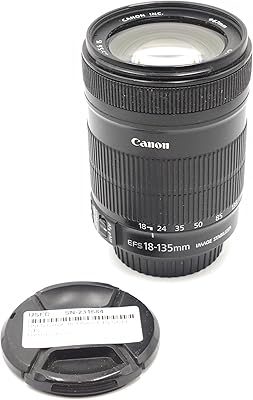
Canon EF-S 18-135mm f/3.5-5.6 IS Zoom Lens
77%
91%
Zoom Versatility
88%
Image Stabilization
76%
Sharpness & Clarity
58%
Low-Light Performance
79%
Autofocus Speed
More
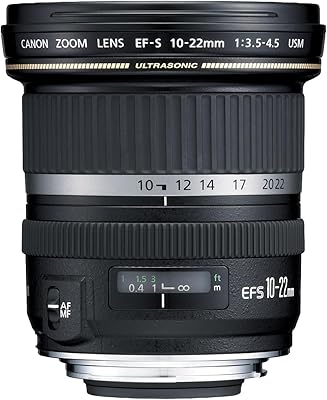
Canon EF-S 10-22mm f/3.5-4.5 USM Wide-Angle Lens
80%
88%
Image Sharpness
91%
Autofocus Performance
84%
Build Quality
63%
Distortion Control
67%
Chromatic Aberration
More
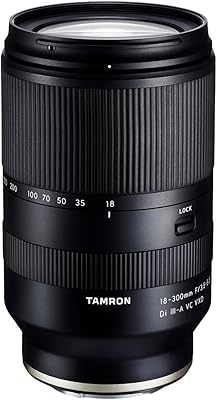
Tamron 18-300mm F/3.5-6.3 Zoom Lens
81%
91%
Autofocus Speed & Accuracy
96%
Zoom Range Versatility
74%
Image Sharpness
88%
Optical Image Stabilization
61%
Low-Light Performance
More
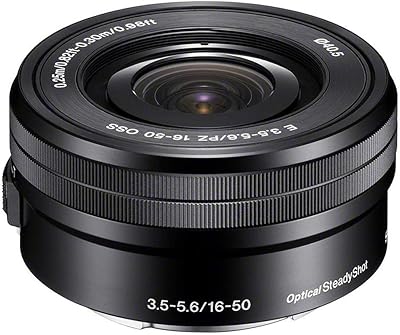
Sony 16-50mm f/3.5-5.6 OSS Alpha E-Mount Retractable Zoom Lens
85%
91%
Value for Money
87%
Image Quality
93%
Portability/Size
88%
Ease of Use
82%
Build Quality
More
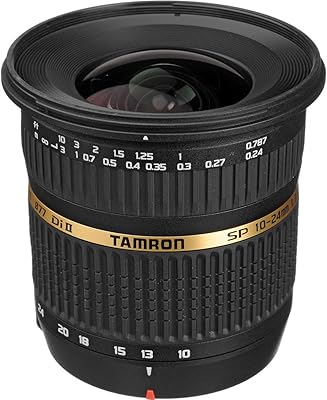
Tamron 10-24mm f/3.5-4.5 SP Di II LD Aspherical (IF) Lens for Nikon
85%
87%
Image Quality
82%
Autofocus Speed
80%
Build Quality
91%
Portability
70%
Low-Light Performance
More
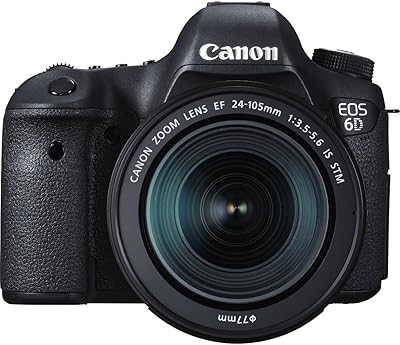
Canon EOS 6D DSLR Camera with EF 24-105mm f/3.5-5.6 IS STM Lens Kit
84%
94%
Image Quality
82%
Autofocus Performance
88%
Ease of Use
90%
Low-Light Performance
85%
Build Quality
More
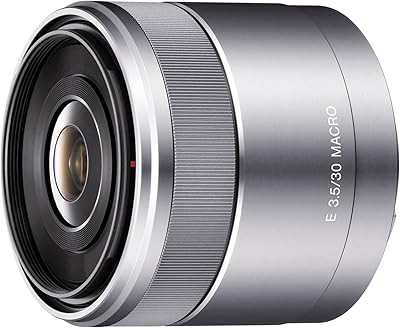
Sony SEL30M35 30mm Macro Lens
79%
88%
Optical Sharpness
91%
Close-Up Performance
67%
Autofocus Speed
79%
Video Autofocus
93%
Portability & Size
More
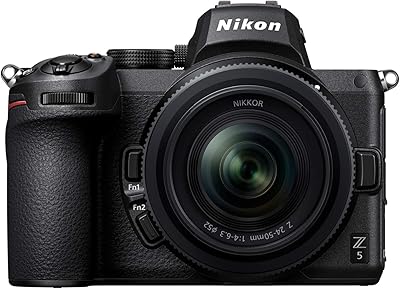
Nikon Z5 Full-Frame Mirrorless Camera
81%
92%
Image Quality
88%
Low-Light Performance
83%
Autofocus Performance
91%
In-Body Image Stabilization
86%
Build Quality & Ergonomics
More
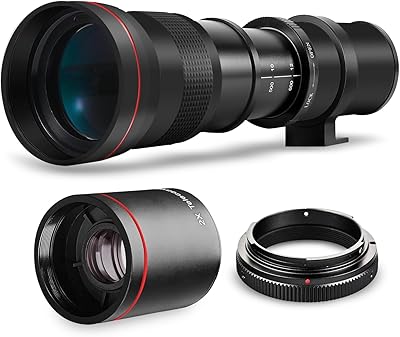
Big Mike's 420-1600mm f/8.3 HD Manual Telephoto Lens for Nikon
82%
89%
Value for Money
92%
Image Quality at Long Focal Lengths
67%
Manual Focus Precision
86%
Build Quality and Durability
72%
Ease of Use
More
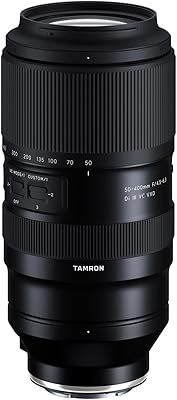
Tamron 50-400mm f/4.5-6.3 Telephoto Zoom Lens
82%
83%
Image Quality
81%
Autofocus Performance
93%
Zoom Range Versatility
58%
Low-Light Capability
76%
Build Quality
More

FAQ

No, it does not. The Rokinon 8mm f/3.5 HD Fisheye Lens is fully manual focus — there is no autofocus motor inside, and that will not change regardless of which Canon body you mount it on. You will need to focus by turning the focus ring yourself, which takes some getting used to if you have only ever shot with autofocus lenses.

It will mount and fire, but the results will not be what most people expect. On a full-frame body, the lens only covers the center of the sensor, leaving a dark circular border around the image rather than filling the frame. It is genuinely designed for APS-C cameras, and that is where it performs as intended.

Honest answer: there is a real learning curve, especially if you are coming from kit lenses or any autofocus system. Wide fisheye lenses are actually a bit more forgiving than telephotos because the depth of field at typical shooting distances is very deep, but you still need to learn to use the focus ring confidently. Using live view with magnification on your camera makes the process considerably easier while you are getting comfortable.

You can, but it requires removing the petal-shaped hood first since there is no standard filter thread built into the lens barrel itself. Once the hood is off, you can access the front element area to attach circular filters. It is a bit less convenient than a lens with a built-in filter thread, but most users find it workable in practice.

Canon's fisheye lenses cost significantly more and include autofocus, which is a meaningful difference for some shooters. In terms of pure optical output on an APS-C body, the Rokinon 8mm fisheye is widely regarded by users as delivering very competitive sharpness and color rendering for the money. If autofocus is not a priority for your shooting style, the gap in real-world image quality is much smaller than the price gap suggests.

Yes, it is one of the more popular budget options for night sky shooting. The f/3.5 maximum aperture lets in a solid amount of light, and the near-180-degree field of view captures a sweeping portion of the sky in a single frame. Just be aware that the very edges of the frame may show some coma or star distortion at wide open apertures, which is common for fisheye lenses used in astrophotography.

It fits any Canon EF mount DSLR, which covers a very wide range of Canon bodies from entry-level Rebels up through the 7D series and full-frame models like the 5D and 6D. Just keep in mind the full-frame caveat — on those bodies you will get a circular cropped image, not full-frame fisheye coverage. For APS-C bodies like the Rebel series, 90D, or 7D Mark II, it works exactly as intended.

A small number of users have reported that the lens occasionally does not communicate aperture data correctly to the camera body, which can cause inconsistent exposure readings or EXIF data errors. It does not happen across the board, but it is worth knowing about. If you experience it, it typically affects metering rather than your ability to shoot, and many photographers using manual exposure settings do not encounter the issue at all.

The minimum focus distance is 11.8 inches measured from the camera sensor plane, which is genuinely close for a wide-angle lens. This enables some really striking perspective-warping compositions where your subject looms large in the center while the background stretches dramatically behind them. It is one of the more creatively useful features of this particular optic.

Generally yes — the construction feels sturdy and the petal hood adds some front-element protection. That said, a minority of buyers have noted variation in build quality between individual units, so it is not perfectly consistent across the board. It is not a weather-sealed professional lens, so shooting in heavy rain or dusty conditions without extra care is not advisable. For typical outdoor landscape, sports, or travel use, most owners find the build more than adequate.

Where to Buy