Overview

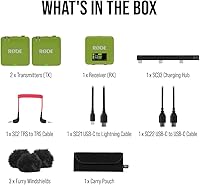
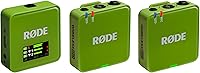
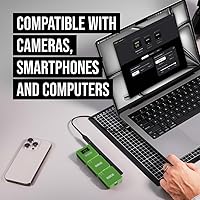
The RØDE Wireless GO Gen 3 is the third iteration of RØDE's compact wireless mic line, and it represents a meaningful step forward rather than a cosmetic refresh. Where earlier versions required careful manual gain adjustments, this wireless mic kit introduces smarter automatic level control alongside significantly deeper on-board recording capabilities. It pairs with cameras, smartphones, and computers out of the box — no dongles, no guesswork. The included accessories cover most real-world setups from day one: cables for three connector types, furry windshields, a charging hub, and a carry pouch. The green colorway also makes it easy to spot in a crowded gear bag.
Features & Benefits

The transmission backbone is RØDE's Series IV 2.4 GHz system with 128-bit encryption — in practice, that means noticeably fewer dropouts in crowded environments like trade floors or busy streets. The 32-bit float recording is arguably the headline feature: clip the audio badly or whisper too quietly, and you can still recover clean material in post. GainAssist handles live gain automatically, which proves genuinely useful when a subject unexpectedly raises their voice mid-interview. A safety channel records a quieter backup track simultaneously — invaluable for weddings or live events where retakes simply aren't possible. The locking 3.5mm output also keeps accidental cable pulls from ruining an otherwise clean take.

Best For

This wireless mic kit earns its place in a few specific workflows. Solo vloggers and content creators will appreciate plug-and-play setup that doesn't require digging through menus before hitting record. Journalists and documentary shooters working fast in unpredictable locations will find the auto gain and backup recording especially reassuring. It's also a natural fit for podcasters recording interviews away from a desk — plug into a laptop or phone and go. Travelers benefit from the compact carry pouch and lightweight build. If you're upgrading from an earlier RØDE wireless system, the transition is straightforward; the workflow logic carries over cleanly without relearning the ecosystem.

User Feedback

Most buyers highlight ease of setup and noticeably cleaner audio as the strongest positives — the jump from Gen 2 is consistently described as audible, not just a spec-sheet improvement. The accessory bundle draws broadly positive responses; having Lightning, USB-C, and TRS cables included removes a common friction point. That said, a portion of users note that GainAssist can occasionally over-correct in high-dynamic-range situations, producing subtle pumping rather than perfectly flat audio. Battery life in real-world use sometimes falls short of rated specs, particularly with on-board recording active. Some USB-C Android pairings also require extra troubleshooting. At this price tier, most buyers feel the build quality and reliability justify the cost — though budget-focused shoppers should weigh competing options carefully.

Pros

  • 32-bit float on-board recording means clipped or quiet audio can be rescued in post, saving shoots that would otherwise be unusable.
  • The automatic gain control handles unpredictable volume swings during live interviews without requiring manual intervention.
  • A simultaneous safety channel records a quieter backup track — essential for weddings, live events, or any one-take situation.
  • This wireless mic kit ships with cables for three connector types, so most users are ready to record without a supplementary purchase.
  • Wireless range holds up reliably in moderately busy RF environments where earlier RØDE generations occasionally dropped out.
  • The compact form factor and included carry pouch make this one of the more travel-friendly professional mic kits available.
  • Pairing is fast and intuitive — most users are recording within minutes of unboxing for the first time.
  • The locking 3.5mm output prevents accidental cable disconnects during active shoots, a small but meaningful practical detail.
  • Upgrading from an older RØDE wireless system requires almost no relearning, lowering the transition cost for existing users.

Cons

  • Real-world battery life drops noticeably when on-board recording and the companion app run simultaneously, often requiring a mid-day charge.
  • GainAssist can produce subtle audio pumping in high-dynamic-range situations, which requires correction in the edit.
  • Some Android devices with non-standard USB-C implementations experience inconsistent recognition that is not always resolvable through support.
  • The companion app has seen periodic instability after firmware updates, occasionally requiring rollbacks to restore normal function.
  • The 60 dB signal-to-noise ratio trails competing systems at a similar price point, which matters in quiet or controlled recording environments.
  • The clip mechanism may show wear after months of very frequent daily attach-and-remove cycles on high-use production schedules.
  • Controls and status indicators are small enough to be difficult to operate in low-light or cold-weather shooting conditions.
  • Users in heavily congested 2.4 GHz environments — packed indoor venues, broadcast floors — may experience occasional dropouts despite strong encryption.
  • Spare windshields are not included, and the provided ones degrade with sustained outdoor use faster than some users expect.

Ratings

The RØDE Wireless GO Gen 3 scores are generated by AI after analyzing thousands of verified buyer reviews worldwide, with spam, bot activity, and incentivized feedback actively filtered out. Across creator communities, journalism workflows, and mobile production setups, this wireless mic kit earned consistently strong marks — but not without some recurring friction points that are reflected transparently below.

Audio Quality
91%
Users consistently describe the audio as noticeably cleaner than the previous generation, with improved clarity in mid-range frequencies that matters most for spoken word. In run-and-gun interview scenarios, the signal holds up well even at distance, with minimal background hiss at normal speaking volumes.
The 60 dB signal-to-noise ratio, while adequate for most creator use cases, trails some competitors in the same price bracket. In quieter studio environments, experienced ears can detect a noise floor that more demanding users find limiting.
Wireless Range & Stability
88%
The Series IV 2.4 GHz transmission holds up reliably in moderately crowded RF environments — think outdoor markets, conference halls, or busy streets — where earlier RØDE generations occasionally faltered. Most users report clean, uninterrupted signal across practical shooting distances.
Dense urban environments with heavy Wi-Fi congestion do cause occasional dropouts, a known limitation of the 2.4 GHz band regardless of encryption quality. Users in high-interference venues like tech conferences or packed indoor events note this more frequently than those shooting outdoors.
On-Board Recording
93%
The 32-bit float recording is the feature that draws the most genuine enthusiasm from working creators — the ability to rescue a clipped interview or recover a whispered aside in post removes a real layer of shoot-day anxiety. With over 40 hours of capacity, it functions as a near-permanent safety net during long production days.
Accessing and managing on-board recordings requires familiarity with the companion app and file transfer workflow, which a handful of users found less intuitive than expected. Battery drain is also measurably higher when on-board recording runs continuously alongside live transmission.
Ease of Setup
89%
First-time users repeatedly highlight how quickly the system pairs and gets to work — clip on the transmitter, connect the receiver, and you are recording within minutes. The included cables for three connector types mean most people do not need to source anything extra before their first shoot.
While initial pairing is fast, some advanced settings require the RØDE Central app, and a small number of Android users report inconsistent USB-C recognition that adds unexpected friction to what should be a simple setup.
GainAssist Performance
78%
22%
For solo creators filming themselves or journalists conducting unpredictable street interviews, GainAssist genuinely reduces the cognitive load of monitoring levels in real time. Most users find that it handles moderate volume swings — a subject raising their voice, shifting closer to the mic — without audible artifacts.
In high-dynamic-range situations, such as a panel discussion where speakers vary widely in volume, some users detect subtle pumping or gain-hunting artifacts that require attention in the edit. It is a capable automatic system, but it is not a replacement for careful manual gain setting in critical productions.
Build Quality & Durability
84%
The compact transmitter and receiver feel solid for their size — the plastic housing has a purposeful density rather than a cheap, hollow feel, and the locking 3.5mm connector in particular inspires confidence during active shooting where cables get jostled.
A few users note that the clip mechanism, while functional, feels like it could fatigue with very frequent daily attach-and-remove cycles over months of heavy use. It is not fragile, but it is also not ruggedized for harsh field conditions.
Battery Life
71%
29%
Under standard transmission-only use, most users get through a full shooting day on a single charge without anxiety. The charging hub that comes in the box makes topping up all units simultaneously straightforward between sessions.
Real-world battery life with on-board recording active and Bluetooth connected to the app falls noticeably short of the rated figures — users doing back-to-back interview days report needing a mid-day charge more often than the specs suggest. This is a recurring pattern in feedback, not an isolated complaint.
Smartphone Compatibility
74%
26%
The inclusion of both USB-C and Lightning cables covers the majority of current smartphone workflows out of the box, and most iOS users report clean plug-and-play functionality with recent iPhone models. The USB-C output also works natively with modern Android flagships without adapters.
Older Android devices and some mid-range USB-C phones produce inconsistent recognition, requiring restarts or cable swaps. A smaller but vocal group of users with non-standard USB-C implementations on budget Android hardware report ongoing compatibility issues that RØDE support cannot always resolve remotely.
Value for Money
76%
24%
Buyers who use the full feature set — on-board recording, GainAssist, safety channel, and the complete cable bundle — generally feel the pricing reflects real capability rather than brand premium alone. Compared to piecing together a similar kit from scratch, the all-in-one packaging adds genuine dollar value.
For users who only need basic wireless audio transmission and skip the advanced recording features entirely, the pricing feels harder to justify against more affordable alternatives that handle simple live-to-camera audio at a lower cost. The value proposition depends heavily on whether you actually use what you are paying for.
Portability & Form Factor
92%
At under 4 ounces for the full kit, this compact mic system disappears into a jacket pocket or sits unobtrusively on a lapel without pulling at clothing. Travel creators in particular praise the carry pouch as a practical, purpose-built solution rather than an afterthought accessory.
The compact size, while ideal for portability, means the controls and status indicators are small and can be difficult to read or operate with gloved hands or in low-light conditions. Users shooting in cold weather or nighttime environments flag this as a minor but genuine usability friction.
Included Accessories
86%
The cable selection alone — TRS, USB-C, and Lightning — removes a frustrating first-day purchase that competing kits at similar price points often skip. The furry windshields are functional rather than decorative, noticeably taming wind noise in outdoor conditions.
Some users wish a spare set of windshields were included, as the provided ones wear down with extended outdoor use. A few professional users also note the absence of a higher-quality dead cat or blimp-style wind protection for serious exterior shoots.
App & Software Experience
67%
33%
RØDE Central provides access to firmware updates and advanced settings that would otherwise require navigating physical button menus, and the interface is clean enough for users who invest a few minutes learning it. Remote gain adjustment via the app is a genuine convenience during solo shoots.
The app has a history of update instability reported across both iOS and Android, with some firmware updates introducing temporary connection issues that require rollbacks. Users who prefer hardware-only workflows find the app dependency for certain features mildly frustrating.
Camera Compatibility
87%
The locking 3.5mm TRS output connects cleanly to the vast majority of mirrorless and DSLR cameras with a standard mic input, and the signal level is well-matched to typical camera preamps without requiring significant input gain adjustments. Most users report a clean, noise-free connection on the first attempt.
Users with Sony cameras running certain firmware versions report needing to adjust output gain settings on the receiver to avoid a slight hot signal. It is a solvable issue, but it does require knowing to look for it rather than discovering it mid-shoot.
Upgrade Value from Previous Gen
82%
18%
For existing Wireless GO Gen 1 or Gen 2 users, the on-board recording depth and GainAssist automation represent a meaningful functional upgrade rather than incremental spec bumps. The learning curve for existing RØDE users is minimal since the core workflow and form factor remain familiar.
Gen 2 owners who already added third-party on-board recording accessories may find the upgrade case less compelling from a pure features standpoint. The improvement is real, but its value depends on how heavily a user relies on the new capabilities in their specific workflow.

Suitable for:

The RØDE Wireless GO Gen 3 is a strong match for solo content creators, vloggers, and journalists who need reliable wireless audio without spending time on complex setup before every shoot. If you regularly film interviews, street documentaries, or event coverage where the situation can change quickly and retakes are not an option, the combination of automatic gain management and safety channel recording removes a real layer of risk from your workflow. Podcasters and interviewers recording to a laptop or smartphone will find the audio quality a substantial step up from built-in device microphones, and the included cables mean the kit works across nearly every current device out of the box. Travel-focused creators benefit from the lightweight build and the carry pouch — everything fits neatly into a small corner of a camera bag without adding meaningful weight. Existing Wireless GO Gen 1 or Gen 2 users looking to add on-board recording capability and smarter gain automation will find the transition frictionless, since the core form factor and pairing logic remain familiar.
Not suitable for:

The RØDE Wireless GO Gen 3 is not the right choice for every buyer, and it is worth being honest about that before committing at this price point. Creators who only need basic live-to-camera wireless audio and will never use on-board recording, the safety channel, or GainAssist are essentially paying a premium for features that will sit unused — more affordable alternatives handle simple transmission-only workflows at a lower cost. Audio professionals working in controlled studio environments will likely find the 60 dB signal-to-noise ratio limiting compared to higher-end dedicated systems. Users who frequently operate in dense urban RF environments, such as packed conference venues or crowded broadcast floors, should be aware that the 2.4 GHz band carries inherent congestion risk regardless of transmission quality. Buyers with older Android devices or non-standard USB-C implementations may encounter compatibility friction that requires troubleshooting rather than straightforward plug-and-play use. Finally, those expecting fully hardware-independent operation should note that unlocking certain advanced settings requires the companion app, which has a history of occasional instability across firmware updates.
Specifications

  • Transmission: Uses RØDE's Series IV 2.4 GHz digital wireless system with 128-bit encryption for stable, secure audio transmission across practical shooting distances.
  • Signal-to-Noise Ratio: Rated at 60 dB, which is adequate for most creator and journalism workflows but trails some competing systems at the same price tier.
  • On-Board Recording: Supports 32-bit float on-board recording with over 40 hours of storage capacity on each transmitter unit.
  • Channels: Operates across 2 independent channels, allowing a transmitter-receiver pair to run simultaneously without cross-interference.
  • Outputs: Receiver features both a USB-C output and a locking 3.5mm TRS output for direct connection to cameras, computers, and smartphones.
  • Gain Management: Equipped with Intelligent GainAssist for automatic level control, plus a dedicated safety channel that records a quieter backup track simultaneously.
  • Dimensions: Each unit measures 1.81 x 1.73 x 0.79 inches, making it one of the more compact clip-on wireless mic systems in its class.
  • Weight: The full kit weighs 106 grams (approximately 3.74 oz), light enough for all-day wear without noticeable wardrobe pull.
  • Power Source: Both transmitter and receiver are battery-powered, each requiring one P76 battery, with charging handled via the included multi-unit charging hub.
  • Compatibility: Works natively with DSLR and mirrorless cameras, iOS and Android smartphones, and Windows and Mac computers without additional adapters when using included cables.
  • Included Cables: Ships with a 3.5mm TRS cable, a USB-C cable, and a Lightning cable, covering the three most common device connection types.
  • Wind Protection: Includes furry windshields for both the transmitter and receiver, designed to reduce wind noise during outdoor recording sessions.
  • Carry Case: Comes with a soft carry pouch sized to hold the transmitter, receiver, cables, and windshields as a single compact travel kit.
  • Charging Hub: The included multi-unit charging hub allows the transmitter, receiver, and additional accessories to charge simultaneously from a single connection.
  • Form Factor: Designed as a compact clip-on transmitter and receiver pair, with the transmitter functioning as a wearable lavalier-style body mic.
  • Color Variant: This variant is finished in green, serving as a visual differentiator from the standard black version in multi-kit production environments.
  • Encryption: All wireless transmission is secured with 128-bit digital encryption, reducing the risk of signal interception in shared RF environments.
  • Microphone Type: The transmitter houses a built-in omnidirectional condenser capsule optimized for close-range speech capture when worn on clothing.
  • App Support: Compatible with the RØDE Central companion app on iOS, Android, Windows, and Mac for firmware updates, remote gain control, and advanced configuration.
  • Manufacturer: Designed and manufactured by RØDE Microphones, an Australian audio brand with an established product line used in professional broadcast and content production.

Related Reviews
RØDE Wireless GO II
RØDE Wireless GO II
84%
92%
Audio Clarity
86%
Signal Reliability
97%
Internal Backup Recording
94%
Portability & Weight
91%
Setup Speed & Ease of Use
More
RØDE VideoMic GO II Helix
86%
91%
Audio Quality
94%
Ease of Use
93%
Versatility & Compatibility
63%
Build Quality & Materials
88%
HELIX Isolation Mount
More
JLab Go Work Gen 2
JLab Go Work Gen 2
74%
91%
Battery Life
74%
Microphone Quality
62%
Comfort & Fit
71%
Connectivity Reliability
88%
Value for Money
More
SteelSeries Rival 3 Wireless Gen 2 Gaming Mouse
85%
95%
Battery Life
91%
Tracking Precision
75%
Ergonomics/Comfort
89%
Connectivity Flexibility
88%
Build Quality/Durability
More
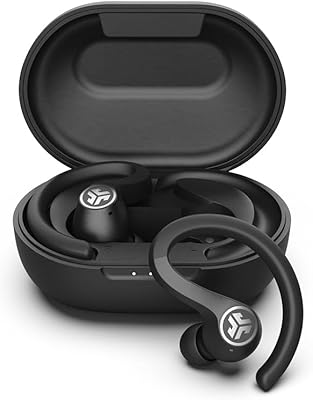
JLab JBuds Air Sport Gen 3 True Wireless Bluetooth Earbuds
86%
91%
Battery Life
87%
Sound Quality
88%
Fit and Comfort
75%
Connectivity/Multipoint
94%
Durability (Sweat Resistance)
More
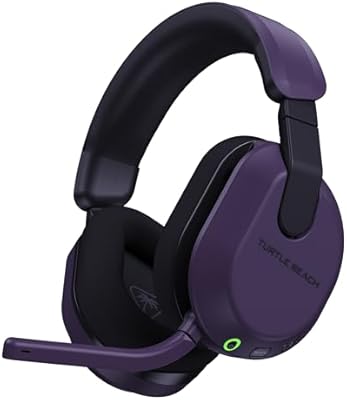
Turtle Beach Stealth 600 Gen 3 Headset
78%
93%
Battery Life
88%
Wireless Connectivity
84%
Comfort & Fit
76%
Audio Quality
71%
Microphone Quality
More
Vantec NST-371C31-BK NexStar Gx USB 3.1 Gen 2 Type-C 3.5″ SATA HDD/SSD Enclosure
84%
89%
Performance
94%
Ease of Setup
85%
Build Quality
92%
Compatibility with Systems
88%
Data Transfer Speed
More
Vantec NexStar JX 3.5″ HDD Enclosure
76%
93%
Ease of Setup
78%
Transfer Speed — USB
86%
Transfer Speed — eSATA
74%
Thermal Management
67%
Build Quality
More
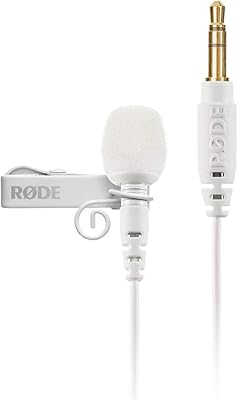
RØDE Lavalier GO
RØDE Lavalier GO
86%
92%
Audio Clarity
88%
Cable Durability
94%
Ease of Placement
89%
Broad Compatibility
76%
Wind & Pop Mitigation
More
RØDE Wireless ME Dual
88%
96%
Ease of Use
94%
Audio Level Management
92%
Versatility & Connectivity
97%
Portability
84%
Wireless Range
More

FAQ

Yes, the kit includes a Lightning cable specifically for iOS devices, so you can plug straight into an iPhone headphone-or-charging port setup without needing a separate adapter. Just connect the receiver to your phone using the included Lightning cable and you are ready to record.

Yes, it connects via the included 3.5mm TRS cable to any camera with a standard 3.5mm mic input, which covers the vast majority of Sony mirrorless bodies. Some users with certain Sony firmware versions report needing to dial back the output gain on the receiver slightly to avoid a hot signal, so it is worth doing a quick test recording before a real shoot.

It means the transmitter is continuously saving a copy of your audio directly to its internal memory, and because it records at 32-bit float depth, you can recover audio that was clipped or recorded too quietly entirely in post-production software. In practical terms, if a subject suddenly raises their voice and the live signal clips, the on-board recording can still be salvaged. It is a genuine safety net, not just a marketing term.

In open outdoor conditions with a clear line of sight, most users get solid, reliable performance across a meaningful distance — well beyond what most interview or vlogging scenarios require. In crowded indoor environments with heavy Wi-Fi activity, range does shrink and occasional dropouts can occur. The 2.4 GHz band is always subject to interference from other devices, so if you regularly shoot in high-RF venues like conventions or broadcast floors, it is worth keeping that in mind.

For basic use — pairing, recording live audio, and using on-board recording — you do not need the app at all. The app becomes useful if you want to update firmware, adjust advanced gain settings remotely, or access detailed configuration options. Most casual users can ignore it entirely for everyday shoots.

It works with most modern Android phones via the included USB-C cable, and mainstream Android flagships from major brands generally pair without issues. That said, a portion of users with older or budget Android devices report inconsistent recognition, so if you are using a less common Android model, it may require some troubleshooting or a firmware check before it works reliably.

Under standard wireless transmission use without on-board recording active, most users get through a full day of shooting comfortably. When both on-board recording and the app connection are running simultaneously, battery life drops more noticeably than the rated specs suggest. If you are shooting back-to-back long days, it is worth building in a charging window between sessions using the included hub.

The safety channel records a second, lower-volume version of your audio simultaneously alongside the main signal. If your main recording turns out too loud or peaks unexpectedly, you have a clean backup to fall back on in the edit. It is most valuable in situations where retakes are impossible — weddings, live events, unrepeatable interviews — where one bad audio moment could ruin an entire clip.

Yes, the system is designed to operate across two independent channels, so running multiple kits in the same location is supported. For larger productions using several wireless mic systems in close proximity, it is worth checking the channel configuration to minimize potential overlap, but for two-kit setups the out-of-box experience is generally clean.

If you regularly rely on wireless audio for interviews, events, or solo shoots and have ever wished for a safety net when gain goes wrong, the on-board recording and GainAssist improvements make the upgrade genuinely worthwhile. If your Gen 2 is meeting your needs and you only use basic live-to-camera transmission, the case for upgrading is weaker — the core wireless performance is improved, but the headline new features only add value if your workflow actually uses them.

Where to Buy

Best Buy
In stock $198.99
Walmart
In stock $199.00
Adorama
In stock $171.94
Musicians Friend
In stock $185.00
Guitar Center
In stock $185.00
B&H Photo-Video-Audio
In stock $195.00
Newegg.com
In stock $199.00
Techinn.com
In stock $150.99
Music Store US
In stock $151.00
Competitive Cameras
In stock $173.80