Overview

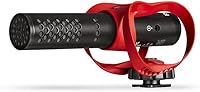
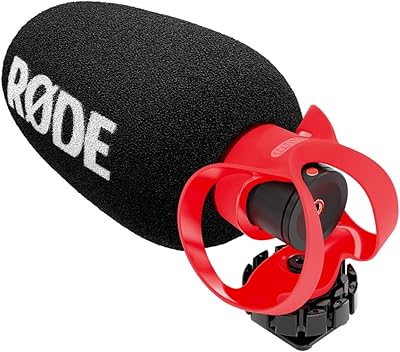
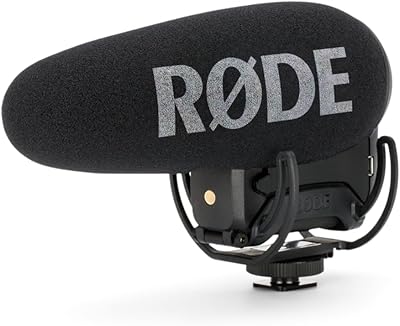
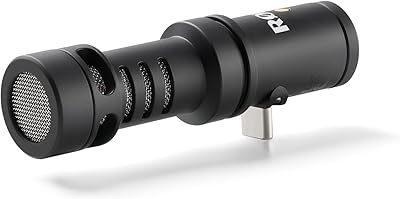
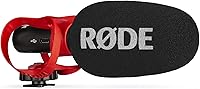
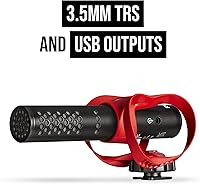
The RØDE VideoMic GO II Helix is the third generation of a shotgun mic line that has quietly earned its place in the bags of working creators worldwide. What makes this iteration stand out is the bundled HELIX isolation mount — a practical upgrade that addresses one of the most common frustrations with on-camera audio. At its price point, it targets hobbyists and semi-pros who want a real step up from their camera's built-in mic without drowning in settings or carrying spare batteries. The dual output design — both 3.5mm TRS and USB-C — means it works with a camera one day and a smartphone the next, which is more versatile than it might first appear.
Features & Benefits

The super-cardioid polar pattern is the core of what makes this on-camera microphone worth considering over cheaper alternatives. It pulls in sound from directly ahead and rejects ambient noise from the sides — a real advantage in busy environments where a built-in camera mic would capture everything indiscriminately. The USB-C output is a standout for smartphone creators; no adapters, no fuss. Handling vibration is where the HELIX mount earns its keep — it genuinely reduces the low-frequency rumble from footsteps and camera taps. If you want more control, RØDE's Central app adds a high-pass filter, pad, and high-frequency boost, though it requires a separate download and a few minutes of setup to unlock those options.

Best For

This shotgun mic is most at home mounted on a mirrorless or DSLR camera for vlogging, documentary work, or any run-and-gun situation where you need reliable audio without fiddling with settings. YouTubers tired of fighting room echo will find it does a solid job isolating their voice without heavy post-processing. Mobile journalists and smartphone creators benefit directly from the USB-C connection, which removes an often-overlooked friction point. It also suits video podcasters who want a single mic that handles both camera-mounted and computer-connected recording. If you are making your first jump away from built-in camera audio, this is a sensible, well-supported place to start.

User Feedback

Most buyers describe an immediate, noticeable improvement the first time they compare footage against their camera's internal mic. The HELIX mount draws specific praise — reviewers frequently credit it with reducing handling rumble that cheaper mounts rarely manage. On the critical side, the plastic construction does attract comments; it feels light in hand, and while widespread durability complaints are rare, buyers expecting a premium-feel build may be caught off guard. A handful of more experienced users wish it offered a headphone monitoring jack or onboard gain control for critical work. Overall sentiment leans strongly positive, especially considering how much clean, focused audio this on-camera microphone delivers straight out of the box.

Pros

  • Dual 3.5mm and USB-C outputs make this shotgun mic genuinely versatile across cameras, smartphones, and laptops.
  • No batteries required means one less thing to forget, fail, or replace mid-shoot.
  • The HELIX isolation mount noticeably reduces handling vibration and camera body noise.
  • Audio improvement over built-in camera mics is immediate and audible from the very first recording.
  • Super-cardioid pattern rejects off-axis noise well for outdoor and busy-environment shooting.
  • Lightweight at 57 g, so it does not unbalance smaller mirrorless camera bodies.
  • RØDE Central app unlocks useful DSP tools including a high-pass filter and high-frequency boost.
  • Included windshield and SC14 cable mean you are ready to record straight out of the box.
  • Bus-powered operation eliminates battery anxiety on long shooting days entirely.
  • Strong brand support and app ecosystem give it a longer useful lifespan than budget alternatives.

Cons

  • No onboard gain control limits flexibility when your camera lacks a dedicated mic input level setting.
  • Plastic construction feels noticeably lightweight, raising reasonable questions about long-term durability.
  • Stock windshield is insufficient for genuinely windy outdoor conditions without an upgrade purchase.
  • Advanced DSP features require a separate app download and setup — not truly plug-and-play for those functions.
  • No headphone monitoring jack means you cannot check your audio in real time through the mic itself.
  • The SC14 cable, while included, feels thin and may not hold up well to frequent daily swapping between devices.
  • Super-cardioid pattern requires subjects to stay on-axis — group recordings or wide scenes suffer audible drop-off.
  • Powering the mic via USB-C can accelerate battery drain on smartphones during longer mobile shoots.
  • No onboard level indicator or signal clipping warning leaves you guessing in unpredictable recording environments.
  • Taller profile than a bare cold shoe adapter may look awkward on very compact camera bodies in frame.

Ratings

The RØDE VideoMic GO II Helix scores presented here were generated by AI after analyzing thousands of verified buyer reviews from global markets, with spam, bot-submitted, and incentivized feedback actively filtered out. This on-camera microphone earns strong marks in most areas, though a few real-world limitations — particularly around build feel and advanced user controls — are reflected honestly in the scores below. Both what buyers consistently love and what occasionally frustrates them are represented without sugarcoating.

Audio Quality
91%
The improvement over built-in camera audio is immediately audible — reviewers consistently describe cleaner dialogue, less room wash, and a noticeably more focused sound in everyday shooting environments. The 79 dB signal-to-noise ratio holds up well in quiet indoor recordings where hiss would otherwise become distracting.
In very loud or complex acoustic environments, the super-cardioid pattern can still let in more ambient noise than some users expect. It is not a studio condenser, and buyers chasing broadcast-level clarity may eventually want to step up.
Ease of Use
94%
No batteries, no switches, no gain knobs to second-guess — you mount it, plug it in, and it works. First-time mic buyers specifically mention how little mental overhead this shotgun mic adds to their setup, letting them focus on the actual shoot.
The simplicity that beginners love can feel limiting to more experienced creators. There is no onboard level control, so if your camera does not have a dedicated mic input gain setting, you have limited ability to fine-tune input levels.
Versatility & Compatibility
93%
Having both a 3.5mm TRS output and a USB-C port on a single mic genuinely covers a wide range of workflows — mirrorless camera in the morning, smartphone interview in the afternoon. Reviewers frequently single out this dual-output design as the deciding factor over competing options.
The USB-C output works well for direct digital recording but does not supply phantom power to external devices, and the mic does not function as a USB audio interface in the traditional sense. Users expecting monitor mixing or low-latency playback through the USB connection will be disappointed.
Build Quality & Materials
63%
37%
The lightweight plastic construction does keep the overall weight down to just 57 g, which matters on smaller mirrorless cameras where front-heavy accessories cause balance issues during handheld shooting.
A meaningful number of reviewers mention that the plastic housing feels noticeably light — not in a good way. Compared to metal-bodied rivals at similar prices, this on-camera microphone gives the impression of being less robust, which creates hesitation around long-term durability even when actual failures are rarely reported.
HELIX Isolation Mount
88%
The HELIX mount is one of the most talked-about physical features in buyer reviews. It absorbs low-frequency vibration from handling, footsteps, and camera body noise in a way that generic rubber shock mounts at this price range rarely manage as effectively.
The mount is effective but adds a bit of height and bulk compared to a standard cold shoe adapter. A few users found the mounting mechanism required careful alignment to seat securely, which can be fiddly when you are rushing between shots.
Wind & Noise Rejection
82%
18%
The included windshield handles light outdoor breezes and reduces plosive thumps during handheld interview-style recording. For most YouTube and vlog work shot outdoors on calm to moderately windy days, the provided accessory is sufficient without needing an upgrade.
In genuinely windy outdoor conditions — beach shoots, open-air events — the stock windshield shows its limits. Creators who regularly film outside in variable weather will likely need a dedicated fur windshield to maintain clean audio.
Value for Money
89%
At its price tier, the combination of dual outputs, the HELIX mount, and RØDE brand reliability delivers strong perceived value. Buyers upgrading from a basic lav mic or internal camera audio almost universally feel the expenditure is justified after their first real shoot.
A handful of reviewers feel the plastic construction does not quite match the asking price when compared to metal-bodied competitors. Those focused purely on hardware build rather than feature set may feel they are paying a slight premium for the RØDE name.
RØDE Central App & DSP Features
74%
26%
For users willing to connect and configure, the RØDE Central app unlocks genuinely useful tools — a high-pass filter to cut low-frequency rumble, a high-frequency boost for added vocal presence, and a pad for louder sources. These features meaningfully extend the mic's adaptability.
The advanced features require downloading a separate app, connecting via USB, and spending time in settings before you see any benefit. Several reviewers were unaware these options existed, and others found the initial setup process unintuitive enough to abandon it entirely.
Size & Portability
92%
At 57 g and compact enough to slip into a jacket pocket, this shotgun mic adds almost no meaningful weight or volume to a travel kit. Creators who pack light for street shooting or travel content specifically mention how little it intrudes on their everyday bag setup.
The dimensions, while compact for a shotgun mic, still add noticeable height above a camera body. On very small mirrorless cameras or action-cam style rigs, the proportions can feel slightly awkward in frame during selfie-style shooting.
Cable & Accessory Quality
71%
29%
The included SC14 right-angle cable is a thoughtful inclusion that routes cleanly along a camera body without sticking out at an awkward angle. Having the cable bundled means you are ready to shoot immediately without a separate purchase.
The cable feels thin, and a few users reported concerns about long-term connector durability with repeated plugging and unplugging. Buyers who frequently swap the mic between devices would benefit from picking up a spare cable as insurance.
Polar Pattern Performance
84%
The super-cardioid pickup pattern performs well for on-axis voices in real shooting conditions — dialogue, commentary, and interview-style content all come through with good clarity and minimal off-axis bleed when the subject is speaking directly toward the mic.
The narrower pickup angle of super-cardioid means that slight camera repositioning or subject movement off-axis causes audible drop-off. Users recording group conversations or wide scenes sometimes find the focused pattern works against them.
Power & Battery Experience
96%
Bus-powered operation is one of those features that only reveals its true value after you have scrambled for batteries mid-shoot once. Reviewers repeatedly call out the zero-battery requirement as a genuine time-saver, particularly on longer shooting days.
Being entirely reliant on the host device for power means that recording to a power-hungry smartphone while simultaneously powering the mic can accelerate battery drain noticeably. This is a minor but real consideration for long mobile shoots.
Compatibility With Camera Systems
88%
The 3.5mm TRS output works reliably with the vast majority of mirrorless and DSLR cameras that include a dedicated mic input. Sony, Canon, Fujifilm, and Nikon users all report straightforward plug-and-play results with no level matching issues in typical conditions.
Cameras without a dedicated 3.5mm mic port — certain entry-level bodies and action cameras — are limited to the USB-C connection, which not all camera systems support natively for audio input. Buyers should verify their specific camera's compatibility before purchasing.
Setup Speed
93%
From bag to rolling in under a minute is a realistic expectation. The cold shoe mount seats quickly, the cable clicks in cleanly, and because there are no settings to configure on the mic itself, the workflow friction is essentially zero for the baseline recording experience.
If you want to use the DSP features via RØDE Central, that zero-friction experience disappears — the app setup introduces a meaningful pause the first time. Subsequent sessions are faster, but the initial configuration is not the plug-and-play experience the packaging implies.

Suitable for:

The RØDE VideoMic GO II Helix is genuinely well-matched for creators who prioritize speed and simplicity over granular control — the kind of person who wants to mount a mic, hit record, and focus on their content rather than their gear. YouTubers and vloggers shooting on mirrorless or DSLR cameras will find it slots naturally into their workflow, delivering a clear and immediate improvement over whatever internal mic their camera ships with. Mobile journalists and smartphone creators also get real, practical value here, since the USB-C output removes the adapter juggling that makes other shotgun mics frustrating to use on the go. It is equally well-suited to video podcasters who move between a camera setup and a laptop, since a single mic handles both without compromise. Beginners making their first dedicated audio purchase will appreciate that there is essentially no learning curve — the mic works correctly the moment it is connected, which is not something every competitor in this category can claim.
Not suitable for:

Buyers who need precise, professional-grade control over their audio signal will likely outgrow this on-camera microphone fairly quickly. There is no onboard gain adjustment, no headphone monitoring jack, and no way to check your input levels without relying entirely on your recording device — limitations that experienced audio engineers or broadcast journalists would find genuinely restrictive in high-stakes situations. Creators who film primarily in harsh outdoor environments should also think carefully; the included windshield handles moderate conditions, but sustained wind will require an aftermarket fur cover that adds to the total cost. If build quality and a premium physical feel matter to you as much as audio performance, the plastic housing may leave you underwhelmed relative to some metal-bodied alternatives at comparable prices. And if your camera lacks a 3.5mm mic input and does not support USB audio input — a real scenario with some entry-level and action camera bodies — compatibility issues could make the VideoMic GO II Helix the wrong tool entirely regardless of its other merits.

Specifications

  • Polar Pattern: Super-cardioid directional pattern focuses pickup on sound directly in front of the mic while rejecting noise from the sides and rear.
  • Outputs: Dual connectivity via a 3.5mm TRS analog output for cameras and a USB-C digital output for smartphones, tablets, and computers.
  • Signal-to-Noise Ratio: 79 dB signal-to-noise ratio delivers clean, low-hiss audio suitable for dialogue, commentary, and interview recording at this price tier.
  • Audio Sensitivity: Sensitivity is rated at -38 dBV/Pa, calibrated for typical on-camera voice and ambient recording scenarios.
  • Weight: The microphone body weighs 57 g (2.01 oz), keeping front-end camera balance manageable on compact mirrorless bodies.
  • Dimensions: The unit measures 5.91 x 1.97 x 2.06 inches (L x W x H), making it compact enough for travel kits and shoulder rigs.
  • Power Source: Fully bus-powered via either the USB-C connection or the camera's 3.5mm mic input — no batteries required at any point.
  • Microphone Form: On-camera hot shoe mount form factor, designed to sit directly on a camera cold shoe or accessory rail.
  • Isolation Mount: Includes the HELIX isolation mount system, which uses a suspension design to decouple the mic from handling vibration and camera body noise.
  • Windshield: A deluxe foam windshield is included in the box, providing protection against light wind and plosive bursts during handheld or outdoor recording.
  • Included Cable: Ships with one SC14 right-angle 3.5mm TRS cable designed to route cleanly along a camera body without snagging.
  • App Compatibility: Compatible with the RØDE Central desktop application, which unlocks a high-pass filter, high-frequency boost, and pad setting via USB-C connection.
  • Compatible Devices: Works with DSLR and mirrorless cameras via 3.5mm TRS, and with smartphones, tablets, and computers via USB-C digital output.
  • Material: The microphone housing is constructed from plastic, contributing to its low overall weight but resulting in a lighter physical feel than metal-bodied alternatives.
  • Channels: Mono single-channel microphone; records one channel of audio, appropriate for on-camera dialogue and narration use cases.
  • Generation: This is the 3rd generation variant of the VideoMic GO II line, specifically the Helix edition bundled with the new isolation mount system.
  • Podcasting Software: Compatible with RØDE Connect podcasting and streaming software when connected via USB-C to a computer.
  • UPC: The product UPC is 698813012985, corresponding to the 3rd Gen VMGO II Helix configuration.

Related Reviews
RØDE Wireless GO II
RØDE Wireless GO II
84%
92%
Audio Clarity
86%
Signal Reliability
97%
Internal Backup Recording
94%
Portability & Weight
91%
Setup Speed & Ease of Use
More
RØDE VideoMic Pro+
RØDE VideoMic Pro+
85%
93%
Audio Clarity
88%
Build Quality
91%
Shock Mount & Isolation
89%
Safety Channel
86%
Power Flexibility
More
RØDE VideoMicro II
RØDE VideoMicro II
81%
88%
Audio Clarity
83%
Build Quality
86%
Handling Noise Rejection
94%
Portability & Size
61%
Wind Noise Resistance
More
RØDE Lavalier GO
RØDE Lavalier GO
86%
92%
Audio Clarity
88%
Cable Durability
94%
Ease of Placement
89%
Broad Compatibility
76%
Wind & Pop Mitigation
More
RØDE Wireless GO Gen 3
83%
91%
Audio Quality
88%
Wireless Range & Stability
93%
On-Board Recording
89%
Ease of Setup
78%
GainAssist Performance
More
RØDE VideoMic Me-C+ Directional Microphone
88%
87%
Sound Quality
94%
Ease of Use
92%
Portability
85%
Build Quality
88%
Wind Noise Reduction
More
BOOX Go Color 7 Gen II
79%
91%
Display Quality (B&W)
67%
Display Quality (Color)
84%
Build Quality & Design
72%
Performance & Responsiveness
58%
Stylus Experience
More
Kat Von D Go Big or Go Home Mascara Trooper Black 10g
83%
92%
Volume and Length
90%
Waterproof Performance
85%
Brush Design and Application
88%
Vegan and Cruelty-Free Formula
87%
Lasting Wear/Smudge Resistance
More
OM System OM-1 Mark II with M.Zuiko 12-40mm f/2.8 PRO II
81%
93%
Autofocus Performance
91%
Weather Sealing & Durability
84%
Image Quality
71%
Autofocus in Low Light
92%
Lens Quality (M.Zuiko 12-40mm f/2.8 PRO II)
More
RØDE RØDECaster Duo
RØDE RØDECaster Duo
85%
94%
Audio Quality
88%
Ease of Use
91%
Build Quality
92%
Features and Effects
85%
Connectivity
More

FAQ

No batteries at all — this shotgun mic draws power directly from whatever it is plugged into. Connect it via USB-C to a smartphone or computer and it powers up immediately; plug it into a camera via the 3.5mm output and the camera supplies the power. It is one less thing to manage on a shoot.

Yes, in the vast majority of cases. As long as your camera has a standard 3.5mm mic input jack, the included SC14 cable handles the connection and the mic works without any configuration. If your camera body lacks a 3.5mm mic port, check whether it supports USB audio input before purchasing.

You can connect it to any device with a USB-C port, which covers most current Android smartphones and newer iPad models. For iPhones with a Lightning port, you would need a separate Lightning-to-USB-C adapter. The mic does not natively support Lightning without that additional accessory.

The HELIX mount is a suspension-style isolation system that sits between the mic and your camera's cold shoe. It physically decouples the microphone from vibrations traveling through the camera body — things like autofocus motor noise, button presses, and footsteps while walking. If you do any handheld or moving camera work at all, it makes a genuinely audible difference.

It handles light to moderate outdoor conditions reasonably well thanks to the included foam windshield and the directional super-cardioid pattern. For calm days or sheltered spots, you should be fine out of the box. For genuinely windy environments — open fields, beaches, or rooftop shoots — you will want to invest in an aftermarket fur windshield for reliable results.

Those features live inside the RØDE Central app, which you download free from the RØDE website. You connect this on-camera microphone to a computer via USB-C, open the app, and adjust the settings from there — they are then saved to the mic itself. It works well once set up, but it is not instant; expect to spend ten to fifteen minutes the first time.

Yes, connecting via USB-C turns it into a plug-and-play USB microphone for any computer application including Zoom, Teams, GarageBand, Audacity, or OBS. Your computer recognizes it as an audio input device automatically without needing drivers. It is a straightforward way to get a cleaner voice signal than a built-in laptop mic.

Not through the mic itself — there is no headphone jack on this unit. If you need real-time audio monitoring, you will need to rely on your camera body or recording device to provide that functionality. It is a genuine limitation worth knowing about before you buy, especially for critical interview or live-stream work.

The housing is plastic, which does feel lighter and less premium than metal-bodied competitors. That said, widespread reports of structural failures are uncommon in buyer reviews — the concern is more about perceived durability than documented breakage. If you treat it reasonably and store it protected, it should last through normal creator use for years.

The core microphone capsule and audio performance are the same. The Helix edition specifically bundles the new HELIX isolation mount system instead of a standard shock mount. If you do any amount of handheld or moving-camera work, the Helix version is worth the difference for the improved vibration isolation alone.