Overview

The SteelSeries Rival 3 Wireless Gen 2 Gaming Mouse sits comfortably in the mid-range wireless segment, offering genuine gaming hardware at a price that doesn't demand a second thought. SteelSeries has spent years building credibility with competitive players, and this release reflects that experience rather than just catching up to trends. Compared to the original Rival 3 Wireless, the Gen 2 brings tightened click latency and refined internals — not merely a cosmetic refresh. It's built for players who want dependable wireless performance without stretching into flagship territory. The white colorway fits cleanly into lighter desk setups and adds a bit of personality without being loud about it.

Features & Benefits

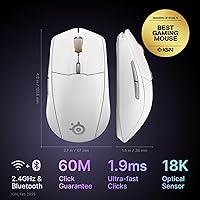
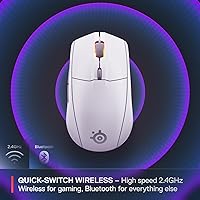
What makes the Rival 3 Gen 2 worth considering starts with its dual wireless setup. The 2.4GHz connection delivers a 1.9ms click latency that most players simply won't notice, while Bluetooth lets you pair it to a laptop or secondary device without needing a dongle swap. The TrueMove Air sensor tracks at up to 18,000 DPI with genuine 1-to-1 accuracy — no prediction, no smoothing, just your hand reflected exactly on screen. Battery life is a real highlight: 200 hours on 2.4GHz and up to 450 on Bluetooth from one AAA cell. The 100% PTFE feet glide consistently, and the 60 million click rating suggests the hardware is built to outlast most upgrade cycles.

Best For

This wireless gaming mouse makes the most sense for players who are done with cables but aren't ready to pay flagship prices. If you regularly switch between a gaming PC and a work laptop, the Bluetooth mode is genuinely practical — no re-pairing headaches. It also suits anyone making their first wireless upgrade from a budget wired mouse; the improvement in feel and freedom is noticeable right away. Lighter-preference users can simply remove one AAA battery and feel the difference. Windows, macOS, and Linux support is included, which matters more than people realize at the buying stage. This covers a wide range of everyday gaming needs without demanding much in return.

User Feedback

Sitting at a 4.2-star average from 176 ratings since its May 2025 launch, early buyer response leans positive. Most praise targets the satisfying click feel straight out of the box and the battery runtime, which buyers say lives up to what's advertised. On the critical side, the AAA battery approach divides opinion — players accustomed to rechargeable mice find it inconvenient, while others appreciate grabbing a spare from a drawer anywhere. A few reviewers mention the shape may feel snug for larger hands. Given the limited review pool and recent release date, long-term reliability is still an open question. The early picture is promising, but the sample size warrants some patience before drawing firm conclusions.

Pros

  • Exceptional battery life means most players go weeks between battery swaps on 2.4GHz alone.
  • The 2.4GHz connection delivers low latency that holds up well in fast-paced competitive games.
  • Bluetooth mode makes it easy to pair with a laptop or secondary device without any dongle juggling.
  • The TrueMove Air sensor tracks accurately without the smoothing or acceleration that frustrates precise aimers.
  • 100% PTFE feet provide a consistently smooth glide across most popular mouse pad surfaces.
  • Click feel is crisp and satisfying straight out of the box, with a durability rating built for years of heavy use.
  • Cross-platform support for Windows, macOS, and Linux is genuinely useful and often overlooked at this tier.
  • The white colorway is clean and pairs well with lighter or minimalist desk setups.
  • Removing one battery is a quick way to noticeably reduce weight for players sensitive to mouse heft.
  • Sits at a competitive price point that makes solid wireless gaming hardware accessible without a major compromise.

Cons

  • The shape may feel cramped for gamers with larger hands during long play sessions.
  • AAA battery power is a dealbreaker for players who prefer plug-in charging convenience.
  • The review pool is still small given the May 2025 launch, so long-term durability remains unconfirmed.
  • No onboard memory for storing profiles means settings depend on software being installed and running.
  • Scroll wheel feedback has drawn occasional complaints about a lack of tactile definition between steps.
  • At around 159g with both batteries, it is not among the lightest options available for weight-conscious competitive players.
  • Bluetooth mode introduces slightly higher latency compared to 2.4GHz, making it unsuitable for serious in-game use.
  • Limited color options currently available may disappoint buyers who want a specific aesthetic match.

Ratings

The scores below reflect an AI-driven analysis of verified buyer reviews for the SteelSeries Rival 3 Wireless Gen 2 Gaming Mouse, collected from global sources with spam, bot-generated, and incentivized feedback actively filtered out. Each category is scored independently to give you an honest, granular picture of where this mouse excels and where real buyers ran into friction. Both standout strengths and genuine pain points are represented as transparently as the data allows.

Battery Life
93%
Buyers consistently describe this as the mouse's most impressive real-world trait — many report going several weeks without a battery swap when using Bluetooth mode. The ability to grab a replacement AAA anywhere, from an airport shop to a gas station, is a practical advantage that rechargeable mice simply cannot match.
A small number of users feel the runtime figures are slightly optimistic under heavy 2.4GHz gaming loads with polling rates pushed high. Those who game for six or more hours daily report the 200-hour estimate feels generous rather than conservative.
Wireless Performance
88%
The 2.4GHz connection holds up well in typical home environments, with buyers noting minimal dropouts even with several wireless devices nearby. The 1.9ms click latency is fast enough that most players cannot distinguish it from a wired connection during normal competitive play.
A handful of reviewers noted occasional micro-stutters in environments with significant 2.4GHz interference, such as dense apartment buildings. Bluetooth mode, while convenient, introduces enough latency that it noticeably affects reaction-time-critical gameplay for more sensitive users.
Sensor Accuracy
86%
The TrueMove Air sensor earns consistent praise from players who switched from lower-tier optical sensors and immediately noticed improved crosshair consistency. In titles where precise flick shots matter, buyers report that the cursor lands where they expect it to without the wobble correction or smoothing that cheaper sensors add.
At the very top end of the DPI range, a few technically minded reviewers picked up on minor tracking inconsistencies at unusually fast swipe speeds. This is unlikely to matter to the average player, but enthusiasts who test sensors methodically have flagged it.
Click Feel & Durability
84%
Fresh out of the box, the primary clicks have a satisfying, crisp snap that buyers compare favorably to mice costing significantly more. The 60 million actuation rating gives most users confidence that the switch quality will not degrade meaningfully within a typical two-to-three-year ownership window.
Some buyers noticed the right click feels marginally softer than the left from the factory, which is a minor inconsistency but one that attentive users pick up on quickly. There are too few long-term reviews yet to confirm whether click quality holds up past the one-year mark under daily heavy use.
Build Quality
79%
21%
The shell feels solid in hand with no noticeable flex or creaking during firm grip, which buyers appreciate given the mid-range price point. The white finish resists minor scuffs reasonably well and does not show fingerprints as aggressively as some glossy alternatives.
A recurring observation is that the side buttons feel slightly hollow and produce a faint rattle when the mouse is shaken — not a dealbreaker, but noticeable. The scroll wheel, while functional, draws criticism for feeling cheaper than the rest of the build, with less defined step feedback than buyers expected.
Glide & Mouse Feet
82%
18%
The 100% PTFE feet provide a smooth, consistent glide on both hard and soft surfaces, and buyers who play on cloth pads specifically call out how effortlessly the mouse tracks across longer swipes. There is very little break-in period — the feet feel well-conditioned from first use.
On rougher or textured hard pads, a small number of users noticed the feet catch slightly at high speeds. Replacement feet will eventually be needed after extended use, and availability of official SteelSeries skates for this exact model is not yet well established given its recent launch.
Ergonomics & Comfort
67%
33%
For small to medium hands using a claw or fingertip grip, the shape feels natural and causes no fatigue during sessions of two to three hours. The symmetrical-leaning design works reasonably well for both left and right-handed users within that hand size range.
This is the most consistently cited limitation in buyer reviews — players with larger hands describe the shape as cramped, particularly during palm-grip sessions exceeding 90 minutes. The hump placement sits lower than many competitors, which forces larger hands into an unnatural arch that creates wrist strain over time.
Weight & Handling
74%
26%
At around 159g with one battery, the mouse sits in a manageable weight range for most casual and intermediate competitive players. The option to drop 11g by removing one battery gives players a lightweight configuration that costs nothing extra and takes seconds to achieve.
Compared to ultralight competitors in the same price bracket — some of which dip below 70g — this mouse will feel noticeably heavier to players who have already made weight a priority. Even with one battery removed, it does not reach the sub-100g range that dedicated lightweight hunters are chasing.
Value for Money
83%
Buyers who compare this mouse to similarly priced wired competitors consistently conclude they are getting more per dollar, particularly given the dual wireless modes and the sensor quality. The AAA battery design also removes the hidden cost of managing a degrading built-in cell over years of ownership.
A portion of reviewers feel the mid-range price could be pushed slightly lower given the absence of a rechargeable cell and the relatively basic software ecosystem. Those who compare it against current-generation ultralight wireless mice at similar price points sometimes feel the weight and shape fall short of full value justification.
Software & Customization
66%
34%
SteelSeries GG is straightforward to install and covers the essentials — DPI adjustment, button remapping, and basic profile saving — without overwhelming new users with unnecessary complexity. For the majority of players who just want to set their DPI and forget it, the software does the job cleanly.
Linux users are effectively left without official software support, which limits customization options to third-party workarounds. The absence of onboard memory means profiles do not travel with the mouse, so switching between computers requires re-configuring settings or keeping the software running on each machine.
Multi-Device Flexibility
81%
19%
The ability to flip between a gaming PC on 2.4GHz and a work laptop on Bluetooth without re-pairing is genuinely useful for buyers who use one mouse across multiple setups throughout the day. Several reviewers specifically bought this mouse to replace two separate mice — one for gaming, one for work — and found it handles both roles adequately.
Switching between modes requires physically toggling the switch on the underside of the mouse, which is less fluid than the dedicated multi-device buttons found on some competitors. Bluetooth pairing occasionally requires re-initiation after longer periods of inactivity, which a few buyers found mildly disruptive.
Out-of-Box Experience
78%
22%
Setup is refreshingly fast — plug in the dongle, insert the included battery, and the mouse is ready to use within a minute or two. Buyers who have struggled with complicated wireless pairing on other devices appreciate how little friction there is getting started with this one.
The packaging and accessory bundle are minimal, and buyers who expect documentation beyond the basics may feel underserved. There is no carrying case, no additional dongle storage solution on the mouse itself, and no quick-start card that clearly explains the battery removal weight trick.
Long-Term Reliability
61%
39%
The hardware specifications — particularly the switch durability rating and PTFE feet — suggest the internal components are chosen with longevity in mind rather than cost-cutting. Early adopters have not reported systematic failure patterns in the first few months of use, which is an encouraging baseline.
With only a few months of real-world data available and fewer than 200 reviews at the time of writing, there simply is not enough evidence to draw confident conclusions about one-year or two-year reliability. Buyers who prioritize long-term peace of mind may want to revisit this category once the review pool matures.

Suitable for:

The SteelSeries Rival 3 Wireless Gen 2 Gaming Mouse is a strong fit for everyday PC gamers who want a dependable wireless experience without committing to a flagship price. If you spend long sessions in competitive titles and hate the idea of charging your mouse every few days, the exceptional battery runtime on a single AAA cell is a genuine practical advantage. Players who move between a gaming desktop and a work laptop will appreciate the ability to switch between 2.4GHz and Bluetooth without carrying extra hardware. It also makes a lot of sense as a first real upgrade for anyone stepping away from a basic wired mouse — the improvement in freedom and tracking feel is hard to miss. Linux and macOS users are included here too, which narrows the field considerably among gaming mice at this price point.
Not suitable for:

Buyers with larger hands may find the Rival 3 Gen 2 a bit snug for extended sessions, and that ergonomic limitation is worth taking seriously before purchasing. If you strongly prefer a built-in rechargeable battery and a USB-C charging cable, the AAA cell approach of the SteelSeries Rival 3 Wireless Gen 2 Gaming Mouse will feel like a step backward regardless of how long that battery lasts. Gamers chasing the absolute lowest possible weight for competitive play may also find the form factor limiting, even with one battery removed. Those who rely heavily on per-game macro profiles and deep RGB customization through software ecosystems will want to check SteelSeries GG compatibility before buying. Finally, anyone expecting long-term reliability data should note this mouse launched in mid-2025 and has a relatively small review base — patience may be warranted.
Specifications

  • Sensor: Equipped with the TrueMove Air optical sensor capable of up to 18,000 DPI, delivering accurate 1-to-1 tracking with no artificial smoothing or acceleration.
  • Click Latency: The 2.4GHz wireless connection achieves a 1.9ms click latency, keeping input response tight during fast-paced gameplay.
  • Wireless Modes: Supports both 2.4GHz (via USB dongle) and Bluetooth dual-mode connectivity, allowing flexible use across gaming and non-gaming devices.
  • Battery Life: Delivers up to 200 hours of continuous use on 2.4GHz and up to 450 hours on Bluetooth from a single AAA battery.
  • Power Source: Powered by one AAA battery, which is included in the box; no built-in rechargeable cell is present.
  • Click Durability: Primary mouse buttons are rated for up to 60 million click actuations, indicating a long operational lifespan under regular gaming use.
  • Mouse Feet: Features 100% PTFE glide pads on the underside, providing low-friction movement across most hard and soft mouse pad surfaces.
  • Weight: Weighs approximately 5.6 oz (159g) with one AAA battery installed; removing the battery reduces weight by roughly 11g.
  • Color: Available in White, with a smooth matte finish suited to lighter or minimalist desktop setups.
  • Compatibility: Fully compatible with Windows, macOS, and Linux operating systems without requiring platform-specific drivers for basic functionality.
  • Software: Supports SteelSeries GG software on Windows and macOS for DPI customization, button remapping, and profile management.
  • Model Number: Official SteelSeries model number is 62688, used for warranty registration and support identification.
  • Manufacturer: Designed and manufactured by SteelSeries, a gaming peripherals company with an established presence in the competitive gaming market.
  • Release Date: First made available in May 2025, making it a recent addition to the Rival wireless lineup.
  • Movement Detection: Uses optical movement detection technology, which tracks surface movement via reflected light rather than a mechanical or laser mechanism.

Related Reviews
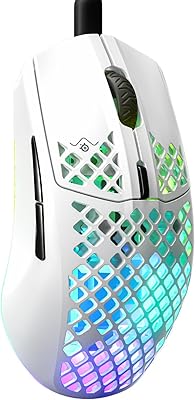
SteelSeries Aerox 3 Gaming Mouse
88%
92%
Lightweight Design
88%
Durability
85%
RGB Lighting Customization
91%
Performance in FPS Games
68%
Ergonomics for Large Hands
More
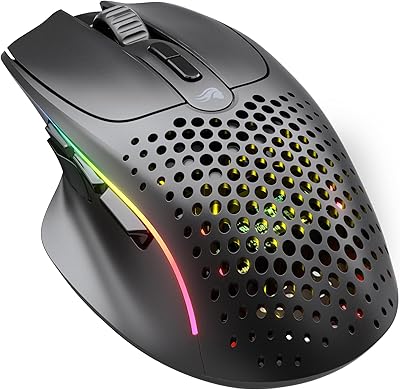
Glorious Model I 2 Wireless Gaming Mouse
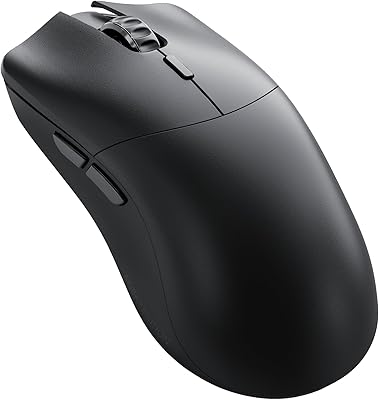
87%
91%
Performance
94%
Ergonomics & Comfort
90%
Battery Life
88%
Customization & Features
85%
Build Quality & Durability
More
SteelSeries Wireless Gaming Mouse CS2 Dragon Lore Edition
83%
94%
Performance and Accuracy
92%
Battery Life
78%
Comfort and Ergonomics
88%
Design and Aesthetics
91%
Connectivity and Versatility
More
Glorious Model O 2 PRO Wireless Gaming Mouse
86%
94%
Performance & Accuracy
91%
Build Quality
89%
Battery Life
80%
Ergonomics & Comfort
88%
Polling Rate Options
More
SteelSeries Arena 3 2.0 Desktop Gaming Speakers

85%
88%
Audio Quality
82%
Ease of Setup
90%
Sound Clarity
85%
Bass Response
87%
Bluetooth Performance
More
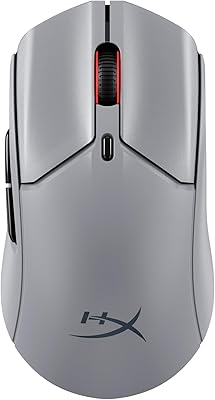
HyperX Pulsefire Haste 2 Pro 4K Wireless Gaming Mouse
86%
94%
Precision and Tracking Accuracy
89%
Battery Life
82%
Connectivity (2.4GHz vs Bluetooth)
90%
Ergonomics and Comfort
93%
Weight and Maneuverability
More
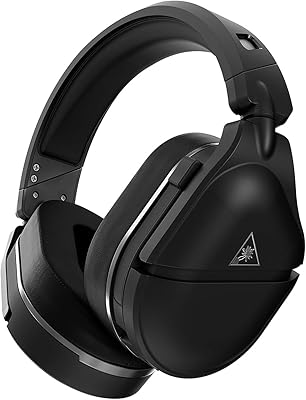
Turtle Beach Stealth 700 Gen 2 Wireless Gaming Headset
88%
92%
Sound Quality
88%
Comfort for Long Sessions
91%
Battery Life
86%
Build Quality
94%
3D Audio Performance
More
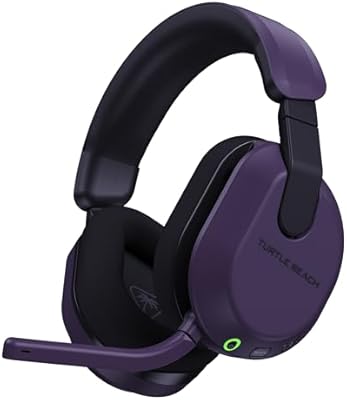
Turtle Beach Stealth 600 Gen 3 Headset
78%
93%
Battery Life
88%
Wireless Connectivity
84%
Comfort & Fit
76%
Audio Quality
71%
Microphone Quality
More
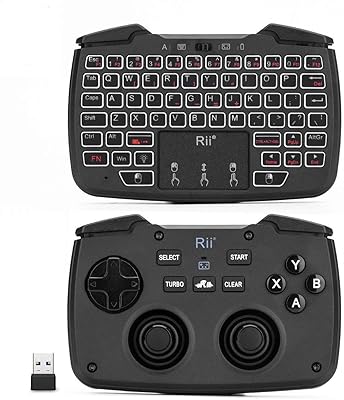
Rii RK707 3-in-1 Wireless Game Controller, Keyboard, and Mouse Combo
83%
86%
Ease of Use
80%
Build Quality
84%
Performance in Gaming
88%
Battery Life
65%
Ergonomics
More
Vantec NexStar JX 3.5″ HDD Enclosure
76%
93%
Ease of Setup
78%
Transfer Speed — USB
86%
Transfer Speed — eSATA
74%
Thermal Management
67%
Build Quality
More

FAQ

Yes, the Rival 3 Gen 2 functions as a plug-and-play device on Windows, macOS, and Linux without needing any software installed. You will get full core functionality right away. If you want to adjust DPI settings, remap buttons, or save profiles, you will need SteelSeries GG, which is free to download.

Absolutely. The Bluetooth mode works independently of the 2.4GHz dongle, so you can pair it directly to any Bluetooth-enabled device like a laptop or tablet. Keep in mind that Bluetooth introduces slightly more latency than 2.4GHz, so it is better suited to casual use or productivity tasks than to competitive gaming.

A AAA battery is included in the box, so you can start using it right away. When it eventually runs out, any standard AAA battery from a drugstore or supermarket will work as a replacement — no proprietary cells required.

SteelSeries rates this wireless gaming mouse at up to 200 hours on 2.4GHz and up to 450 hours on Bluetooth, and early buyers generally report those figures feel accurate in practice. For most people gaming a few hours a day, that translates to weeks or even months between battery swaps on Bluetooth mode.

Yes, the mouse is designed to operate with either one or two AAA batteries, and removing one drops the weight by about 11g. The trade-off is reduced battery runtime, so it is worth deciding whether weight savings matter more to you than fewer swap intervals.

This is one area where honest feedback from early buyers is mixed. The shape and size lean toward small to medium hands, and players with larger hands have flagged some discomfort during extended sessions. If hand size is a concern, it is worth checking the physical dimensions against a mouse you currently find comfortable before buying.

It works on all three. Basic plug-and-play functionality is available on macOS and Linux without any extra steps. Full software customization through SteelSeries GG is officially supported on Windows and macOS, though Linux users may find third-party tools like Piper can help with some configuration.

Switching between modes is handled by a toggle on the underside of the mouse, which is a common design approach for dual-wireless mice at this tier. There is no need to install anything to make the switch — just flip the toggle and the mouse connects to whichever mode is selected.

PTFE feet do wear down over time depending on the surface you use, but replacement skate sets for SteelSeries mice are widely available from third-party accessory makers. SteelSeries also sells official replacement feet through their store. Swapping them out is straightforward with a steady hand and a thin tool.

With a May 2025 release and around 176 ratings at the time of writing, the early feedback is positive, sitting at a 4.2-star average. However, the sample size is still small and most reviewers are reporting short-term impressions rather than months of heavy use. The click durability rating of 60 million actuations suggests the hardware is built to last, but it is fair to say long-term reliability data is still being established.

Where to Buy