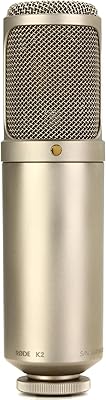
Rode NT1 4th Gen Condenser Microphone

Overview
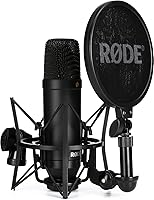
The Rode NT1 4th Gen Condenser Microphone has earned a near-permanent spot on the short list of go-to studio condensers for good reason — it has been refined over years into something genuinely dependable. The 4th Gen update brings real improvements rather than a cosmetic refresh, with a notably low self-noise floor that puts it ahead of many rivals at a similar price point. Built from aluminum and bundled with Rode's SMR shock mount, it arrives ready to work. One important caveat up front: this condenser mic requires an XLR interface and phantom power, so it is not a plug-and-play solution for beginners without existing gear.
Features & Benefits
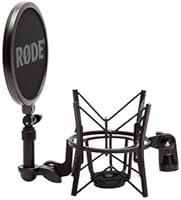
What separates the NT1 from cheaper condensers is the noise floor. With a 90 dB signal-to-noise ratio, recordings come out clean enough that background hiss simply stops being a problem — a real advantage when tracking quiet vocals or delicate acoustic instruments. The large-diaphragm cardioid design captures sound with natural fullness while rejecting most of what comes from the sides and rear. Frequency response stretches from 20 Hz to 20 kHz, covering everything the human ear can detect. The included SMR mount isolates the capsule from desk vibrations and physical knocks. At just over 15 oz, the aluminum housing feels solid without being unwieldy on a standard boom arm.
Best For
This condenser mic makes the most sense for people who already have an audio interface — or are ready to buy one. Vocalists cutting podcast episodes, narration tracks, or bedroom demos will find it punches well above what most entry-level mics can manage. YouTubers recording commentary or dialogue will notice the difference immediately, especially in a treated room. Musicians tracking acoustic guitar, piano, or other nuanced instruments benefit most from the low noise floor, where every quiet detail is preserved rather than buried in hiss. If you are stepping up from a USB mic and want professional-quality results without building a full commercial studio, Rode's large-diaphragm mic is a strong candidate.
User Feedback
With over 6,000 ratings averaging 4.6 stars, the NT1 has the kind of track record that holds up across years, not just launch-week buzz. The most consistent praise centers on how quiet the mic is — buyers coming from entry-level gear often describe the clean signal as a revelation. That said, the feedback is not entirely one-sided. Several reviewers point out that pairing this mic with a weak or budget preamp undercuts everything it does well; the interface matters. Others note that room acoustics expose limitations no microphone can overcome. On the more practical side, buyers are genuinely pleased the included shock mount is high quality and not a throwaway plastic clip — that detail matters for long-term setup stability.
Pros
- Exceptionally low self-noise floor keeps recordings clean and free of background hiss.
- The 90 dB signal-to-noise ratio is genuinely competitive even against more expensive studio mics.
- Included SMR shock mount is high quality and immediately useful, not a filler accessory.
- Large-diaphragm cardioid design captures vocals with natural warmth and real depth.
- Aluminum build feels solid and durable without making the mic awkward to position on a boom arm.
- Wide 20 Hz to 20 kHz frequency response handles everything from deep bass to airy highs accurately.
- Over 6,000 buyer ratings averaging 4.6 stars reflects consistent, long-term satisfaction.
- Works with any professional XLR interface or mixer, so it fits into nearly any existing studio chain.
- The NT1 holds its resale value well, making it a smart long-term investment for growing setups.
Cons
- Requires a separate XLR audio interface — total setup cost is higher than it first appears.
- Weak or budget preamps significantly reduce the mic's performance potential.
- Highly sensitive cardioid pattern demands proper mic placement technique to sound its best.
- Untreated rooms with echo or ambient noise will be picked up and exposed clearly.
- No USB connectivity means it cannot function as a standalone solution for laptop or mobile recording.
- Phantom power dependency makes it incompatible with interfaces or recorders that lack 48V support.
- Beginners unfamiliar with gain staging may struggle to get optimal results without some learning curve.
Ratings
The scores below reflect an AI-driven analysis of verified global buyer reviews for the Rode NT1 4th Gen Condenser Microphone, with spam, bot activity, and incentivized feedback actively filtered out before scoring. Each category is rated independently, drawing on patterns across thousands of real-world experiences from home studio vocalists, podcasters, musicians, and content creators. Both the standout strengths and the genuine frustrations buyers have encountered are transparently represented in every score.
Audio Clarity
Self-Noise Performance
Build Quality
Vocal Recording
Value for Money
Ease of Setup
Acoustic Instrument Recording
Shock Mount Quality
Polar Pattern Precision
Compatibility
Frequency Response Accuracy
Durability Over Time
Noise Isolation
Podcast Production Suitability
Suitable for:
The Rode NT1 4th Gen Condenser Microphone is built for anyone who is serious about audio quality and already has — or is willing to invest in — a decent XLR audio interface. Vocalists recording music demos, podcast hosts who want their voice to sound polished and professional, and YouTubers producing narration-heavy content will all find the NT1 delivers results that genuinely match their ambitions. Bedroom producers tracking acoustic instruments like guitar or piano will particularly appreciate how the extremely low self-noise floor preserves quiet, delicate details that cheaper mics simply bury. Voiceover artists and content creators who need clean, broadcast-ready recordings without renting studio time will get consistent, reliable performance from this condenser mic. It also makes strong sense as a long-term investment for anyone who plans to grow their setup over time, since Rode's large-diaphragm mic holds its value and remains relevant well beyond the beginner stage.
Not suitable for:
The Rode NT1 4th Gen Condenser Microphone is the wrong choice for anyone expecting a plug-and-play experience straight out of the box. Because it uses XLR connectivity and requires phantom power, buyers without an existing audio interface will need to factor in that additional cost and setup — this is not a mic you plug directly into a laptop or gaming PC via USB. People recording in untreated rooms with significant background noise or echo should also pause before purchasing, because the NT1 is sensitive enough to capture everything in the environment, and no amount of microphone quality compensates for poor acoustics. Live performers or musicians who need something rugged for stage use will find the NT1 is designed for controlled studio environments, not the wear and tear of a live rig. Beginners on a very tight budget who cannot also afford a quality preamp or interface should consider waiting, since pairing this condenser mic with a weak signal chain significantly limits what it can actually do.
Specifications
- Microphone Type: Large-diaphragm cardioid condenser microphone designed for studio and controlled recording environments.
- Polar Pattern: Unidirectional cardioid pattern captures sound primarily from the front while naturally rejecting off-axis noise from the sides and rear.
- Signal-to-Noise Ratio: Rated at 90 dB, placing the NT1 among the quietest large-diaphragm condensers available at its market tier.
- Self-Noise: Extremely low self-noise floor ensures recordings remain clean and free of audible background hiss, even during quiet passages.
- Frequency Response: Covers the full audible spectrum from 20 Hz to 20,000 Hz, accurately reproducing everything from deep lows to airy high-frequency detail.
- Connectivity: Uses a standard 3-pin XLR connector, compatible with professional audio interfaces, mixers, and preamps.
- Power Source: Requires 48V phantom power supplied by a compatible audio interface or external phantom power unit; no battery option is available.
- Body Material: Constructed from aluminum, providing a durable and resilient housing that resists everyday studio wear without adding excessive weight.
- Weight: Weighs 15.5 oz (0.44 kg), making it manageable on a standard boom arm without requiring a heavy-duty counterbalance.
- Dimensions: Measures 15 x 5 x 11 inches, a standard large-diaphragm form factor that fits most professional shock mounts and mic clips.
- Generation: 4th Gen model, representing a refined iteration of Rode's long-running NT1 line with improved internal components over earlier versions.
- Included Accessories: Ships with Rode's SMR shock mount for vibration isolation and an RM2 mic clip for direct stand mounting when preferred.
- Compatible Devices: Works with computers, laptops, and cameras when connected via a compatible XLR audio interface or mixer.
- Channels: Single-channel (mono) microphone, suited for capturing one sound source at a time with maximum focus and clarity.
- Sales Ranking: Ranked #45 in Vocal Condenser Microphones and #696 in Musical Instruments on Amazon, reflecting strong and sustained market demand.
- Manufacturer: Made by RODE Microphones, an Australian audio equipment company with a long-standing reputation in professional and prosumer recording gear.
- UPC: Product UPC is 698813003044, corresponding to the standard black retail configuration of the NT1 4th Gen kit.
- Availability: This model is confirmed as not discontinued by the manufacturer and remains an active product in Rode's current lineup.
Related Reviews
Rode NT1-A
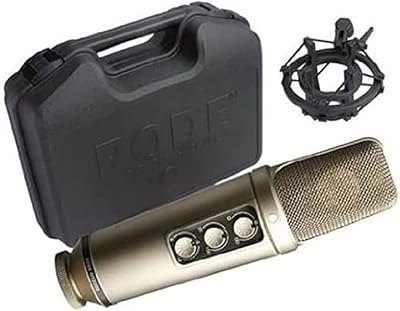
Rode NT2000 Large-Diaphragm Condenser Microphone

Rode NTG-1 Shotgun Condenser Microphone

Rode NT3 Medium-Diaphragm Condenser Microphone
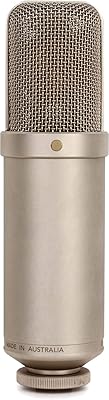
Rode NTK
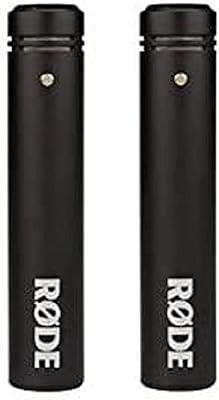
Rode M5 Matched Pair

Rode NT55 Multi-Pattern Condenser Microphone
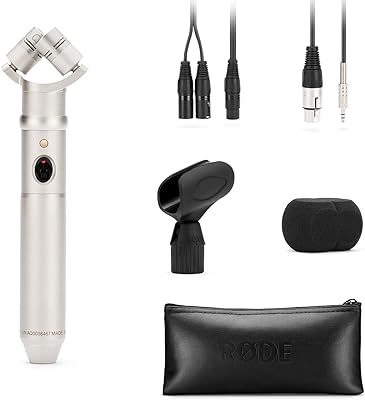
Rode NT4 Stereo Condenser Microphone

Rode NT5-S