Overview

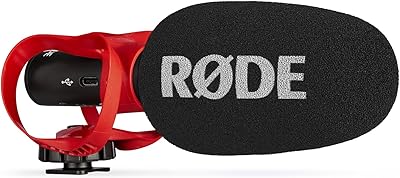
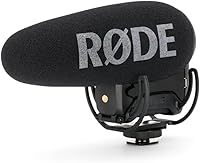
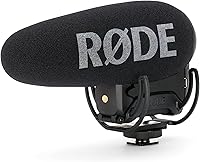
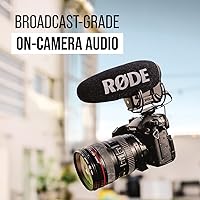
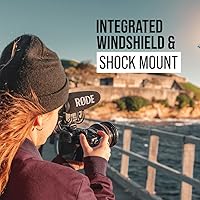
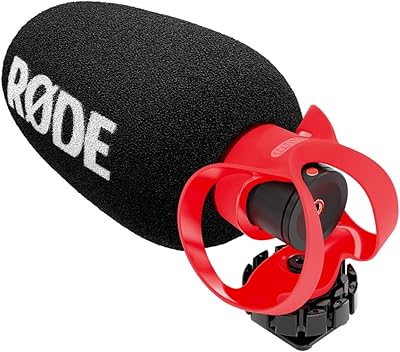
The RØDE VideoMic Pro+ picks up where the original VideoMic Pro left off, bringing a noticeably more capable package to filmmakers and content creators who take audio seriously. It occupies the premium tier of the on-camera mic market, and the build quality reflects that positioning without apology. The Rycote Lyre suspension system comes fitted as standard — a shock mount many shooters specifically seek out because it isolates handling vibrations far better than basic rubber solutions. Compact enough to live on a camera hot shoe full-time, this shotgun mic punches well above its form factor.

Features & Benefits

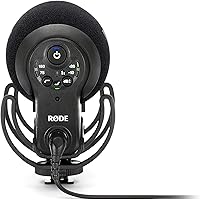
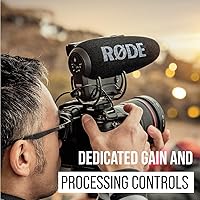
What separates the VideoMic Pro+ from most of its competition is how thoughtfully its feature set maps onto real shooting situations. The automatic power-off function kicks in when you unplug the mic from your camera — a small detail that saves batteries and prevents dead-mic moments on the next shoot. The safety channel is genuinely useful: it records a second, quieter version of your audio simultaneously, so if an unexpected loud sound clips your main track, you have a usable backup. Add a high-pass filter for killing wind rumble, a high-frequency boost for dialogue clarity, and digital switching throughout, and this on-camera microphone covers serious ground.

Best For

This shotgun mic is built for people who shoot in the real world, not controlled studios. Run-and-gun videographers, documentary shooters, and solo YouTubers will find it particularly well-suited — especially those who cannot babysit audio levels mid-shoot. The safety channel alone makes it worth considering for solo content creators who need a quiet safety net. It also handles location recording well, with high-pass filter settings that give you a practical tool against wind and traffic noise rather than hoping you get lucky in post. That said, the price is a real commitment, and shooters with compact mirrorless bodies should check the physical fit first.

User Feedback

Across several hundred verified purchases, the VideoMic Pro+ holds a strong 4.6-out-of-5 rating. Buyers repeatedly single out audio clarity and low self-noise as the biggest wins over cheaper alternatives, and the rechargeable battery system earns consistent praise for reducing the hassle of constantly buying AAs. The automatic power-off feature gets particular appreciation from run-and-gun shooters who have forgotten to switch off mics before. On the critical side, some reviewers find the physical bulk awkward on compact mirrorless cameras, and a portion acknowledge the premium price as a genuine barrier — though most conclude the build quality and feature depth justify the investment.

Pros

  • The safety channel silently records a backup track, rescuing takes ruined by unexpected loud sounds.
  • Rycote Lyre suspension isolates handling vibration better than most mics at this size and price tier.
  • Three power options — rechargeable battery, AA cells, or USB — mean dead batteries rarely stop a shoot.
  • Audio clarity and low self-noise are consistently praised by buyers switching from cheaper alternatives.
  • Automatic power-off when unplugging prevents wasted battery life between setups.
  • Digital switching for filters and gain reduces signal degradation compared to older analog controls.
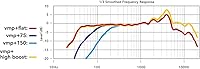
  • High-pass filter at 75 Hz or 150 Hz tackles wind and rumble before they become a post-production problem.
  • The high-frequency boost adds voice presence and air without requiring EQ work in editing.
  • Metal construction and integrated battery door feel built to survive real production workloads.
  • Sits cleanly on a hot shoe without requiring a separate mounting arm or adapter on most camera bodies.

Cons

  • The LB-1 rechargeable battery is proprietary, so a dead cell without a backup forces a switch to AAs.
  • The micro USB charging port feels outdated compared to the USB-C standard now common across camera gear.
  • Compact mirrorless users frequently report the mic looks and feels oversized on smaller camera bodies.
  • The included windshield runs out of effectiveness quickly in genuinely windy outdoor conditions, requiring a separate deadcat purchase.
  • Small, closely spaced physical switches are easy to nudge accidentally during handheld shooting.
  • No digital output means connecting to smartphones or tablets requires additional adapters.
  • The safety channel adds a post-production step that editors need to actively set up and manage.
  • Price represents a significant commitment that is hard to justify for hobbyists who shoot infrequently.

Ratings

The RØDE VideoMic Pro+ earns its reputation as one of the most capable on-camera shotgun microphones in its class, and the scores below reflect exactly that — no inflation, no spin. Our AI has analyzed verified buyer reviews from global markets, actively filtering out incentivized, bot-generated, and outlier feedback to surface what real shooters consistently experience. Both the genuine strengths and the recurring frustrations are reflected transparently in every score.

Audio Clarity
93%
Buyers across skill levels consistently describe the audio as noticeably cleaner and more present than anything they used before at this camera-mount form factor. Dialogue recordings in interview settings come through with natural warmth, and the low self-noise at 74 dB SNR means quiet environments do not expose a hiss floor.
A small number of users shooting in very reverberant spaces note that the unidirectional pickup pattern, while focused, does not fully mask room reflections the way a longer rifle-style mic might. It is still an on-camera mic, not a boom replacement, and critical listeners will hear that distinction.
Build Quality
88%
The metal housing feels reassuringly solid in hand, and most buyers comment that it does not have the hollow, plasticky feel common to lower-tier on-camera mics. The integrated battery door — a design change from the original — is specifically called out as a practical durability improvement that removes the risk of losing a tiny cover mid-shoot.
Some reviewers note minor flex around the hot shoe mount after extended use, particularly when the mic is left mounted during transport. Nothing that affects function, but it does raise questions about long-term mechanical wear for shooters who frequently move the mic between rigs.
Shock Mount & Isolation
91%
The Rycote Lyre suspension system is a known quantity among serious shooters, and its inclusion here is one of the most praised hardware decisions. Handling noise and footstep rumble are absorbed effectively, making handheld and shoulder-rig shooting far more usable without constant post-processing to clean up low-end thuds.
A few users working with particularly resonant camera bodies — certain entry-level DSLRs with aggressive mirror slap — report that very low-frequency mechanical vibrations occasionally make it through. The Lyre does the heavy lifting, but it is not a complete acoustic isolator under every condition.
Safety Channel
89%
For solo shooters who cannot monitor levels in real time, the safety channel is the kind of feature that quietly saves projects. Recording a simultaneous backup track at a significantly reduced level means an unexpected shout, door slam, or crowd surge does not ruin an otherwise clean take — something interview and event videographers find invaluable.
The safety channel output requires post-production awareness — editors need to know to check for it and sync or replace as needed, which adds a small workflow step. Users expecting automatic in-camera protection may need to adjust their editing pipeline before this feature pays off consistently.
Power Flexibility
86%
Having three distinct power paths — rechargeable lithium-ion, standard AA batteries, or continuous micro USB — is genuinely practical rather than a spec-sheet luxury. Shooters on multi-day location jobs appreciate being able to top up via a USB power bank rather than hunting for batteries, and the included LB-1 battery holds charge reliably through long shooting days.
The micro USB port, while functional, feels dated given the widespread shift to USB-C across camera accessories. A handful of reviewers also report that the LB-1 battery, while good, is proprietary, meaning a dead cell on a remote shoot without a backup requires falling back to AAs rather than borrowing a common battery type.
Ease of Use
84%
The automatic power-off function when unplugging the TRS cable is one of those features that only registers once you have wasted a battery by forgetting to switch off a mic. Run-and-gun shooters working fast and alone particularly appreciate not needing a separate power ritual before and after each setup change.
The physical controls — filter switches, pad settings, boost toggle — are small and sit close together on the mic body, making in-the-moment adjustments slightly fiddly, especially with gloves or in low light. New users occasionally report accidentally nudging a setting without noticing until reviewing footage.
Wind Noise Rejection
79%
21%
The built-in high-pass filter options at 75 Hz and 150 Hz give shooters a practical first line of defense against low-frequency wind rumble without requiring the deadcat windshield. For light outdoor use, the included windshield performs well enough that many users report clean dialogue in mild breezy conditions.
In genuinely windy outdoor environments — coastal shoots, open fields, exterior event coverage — the standard included windshield runs out of headroom quickly. Buyers shooting regularly outdoors note they almost always end up purchasing the RØDE DeadCat separately, which adds to the total cost and bulk.
Frequency Response & Tonality
87%
The frequency range of 20 Hz to 20 kHz is reproduced with a slightly forward midrange character that works particularly well for spoken dialogue — voices cut through without sounding artificially processed. The optional high-frequency boost adds presence and air to voice recordings in a way that reduces the need for EQ boosts in post.
The same forward midrange that flatters dialogue can make music or ambient sound recording feel slightly colored rather than neutral. Users hoping to use this mic for musical performance capture or natural sound recording may find the tonal character requires correction to sit naturally in a mix.
Size & Camera Compatibility
74%
26%
The compact shotgun profile mounts cleanly on full-size DSLRs and cinema-oriented mirrorless bodies without looking or feeling disproportionate. On standard hot shoe setups the balance point is reasonable, and most users report no significant front-weight issues during handheld shooting.
On compact mirrorless cameras — Sony ZV-E10, Fujifilm X-S series, and similar small bodies — the mic visually and physically dominates the rig in a way several reviewers describe as awkward or impractical for run-and-gun street work. Physical size is one of the most consistently raised objections from smaller-camera users.
Value for Money
72%
28%
For shooters who use their camera audio professionally — paid interviews, documentary work, branded content — the feature depth justifies the investment over time, and the build quality means it is unlikely to need replacing within a typical production lifespan. Repeat buyers upgrading from the original VideoMic Pro frequently describe the jump as worth it.
At this price, budget-conscious creators and hobbyists will reasonably pause. Competing options exist at lower price points that cover the basics, and buyers who do not actively use the safety channel or digital switching features may feel they are paying for capabilities they never trigger. It is a hard sell for casual use.
Self-Noise Performance
88%
A 74 dB signal-to-noise ratio is genuinely competitive for an on-camera shotgun, and it shows up in practice when recording in quiet environments like indoor interviews or controlled studio setups. The noise floor stays low enough that modest gain boosts in post do not introduce distracting hiss.
Shooters coming from studio condenser microphones may still notice the noise floor in very quiet, heavily amplified contexts. It is excellent for its category, but the physics of a compact on-camera capsule mean it cannot fully match a large-diaphragm condenser in absolute noise performance.
Compatibility
83%
The 3.5mm TRS output connects reliably to DSLRs, mirrorless cameras, and portable audio recorders without adapters, covering the vast majority of camera setups working filmmakers actually use. Plug-in power availability adds further flexibility for devices that supply power through the 3.5mm jack.
There is no digital output option — USB audio or a direct connection to smartphones and tablets requires additional adapters or a separate interface. Creators working with mobile rigs or iPad-based editing setups note this as a workflow gap compared to newer purpose-built mobile microphones.
Directional Focus
85%
The unidirectional supercardioid pickup pattern does a solid job of prioritizing the subject directly in front of the mic while rejecting side noise from adjacent sound sources. In a noisy press room or busy market, the difference in subject isolation compared to a basic on-camera stereo mic is immediately apparent.
The polar pattern tightens the usable recording window, meaning subjects who move off-axis — during active interviews or unpredictable documentary moments — can fall outside the optimal capture zone. Users who cannot control subject placement report occasional inconsistency in level and tone when subjects shift laterally.

Suitable for:

The RØDE VideoMic Pro+ is built for creators and filmmakers who treat audio as seriously as their image. Documentary shooters, interview videographers, and YouTube creators working with DSLRs or full-frame mirrorless cameras will find it hits a practical sweet spot between professional capability and on-camera convenience. Solo operators who cannot dedicate attention to monitoring levels mid-shoot benefit especially from the safety channel — knowing a backup track is running quietly in the background removes a genuine source of production anxiety. Location shooters dealing with unpredictable environments will appreciate the high-pass filter options that tackle wind and traffic rumble before the signal even reaches the camera. Anyone upgrading from a budget on-camera mic or stepping up from the original VideoMic Pro will notice the difference in audio quality and workflow refinement almost immediately.

Not suitable for:

Buyers shooting primarily on compact mirrorless bodies — think smaller Sony, Fujifilm, or Micro Four Thirds systems — may find the RØDE VideoMic Pro+ physically oversized and front-heavy for comfortable handheld use. Casual hobbyists or creators just starting out may struggle to justify the premium investment if they are not actively using features like the safety channel or digital switching, since capable options exist at meaningfully lower price points. It is not a replacement for a dedicated boom setup in narrative film production where precise placement and longer reach matter. Musicians or ambient sound recordists looking for a neutral, flat-response microphone will find the mic's dialogue-focused tonal character works against them. And anyone hoping to connect directly to a smartphone or tablet without adapters will hit a compatibility wall, since the output is a standard 3.5mm TRS with no native mobile or digital output path.

Specifications

  • Form Factor: Compact shotgun microphone designed to mount directly onto a camera hot shoe without requiring a separate arm or adapter.
  • Polar Pattern: Unidirectional supercardioid pickup pattern focuses on sound directly in front of the mic while rejecting noise from the sides and rear.
  • Frequency Response: Captures audio across the full 20 Hz to 20 kHz range, covering the complete spectrum of human speech and most ambient sound sources.
  • Signal-to-Noise Ratio: 74 dB signal-to-noise ratio delivers a low noise floor suitable for quiet indoor recording environments and sensitive dialogue capture.
  • High-Pass Filter: Two-stage high-pass filter switchable between 75 Hz and 150 Hz to reduce low-frequency rumble from wind, traffic, and handling noise.
  • Level Controls: Three-position output level pad with settings at -10 dB, 0 dB, and +20 dB to match a wide range of camera input sensitivities.
  • Safety Channel: Dedicated safety channel records a simultaneous backup track at a reduced level to protect against unexpected audio clipping on the main track.
  • High-Freq Boost: Switchable high-frequency boost adds presence and air to voice recordings, reducing the need for corrective EQ in post-production.
  • Shock Mount: Rycote Lyre suspension system is integrated into the mount, isolating the capsule from camera handling vibrations and mechanical noise.
  • Power Options: Operates on the included RØDE LB-1 lithium-ion rechargeable battery, two standard AA batteries, or continuous power via micro USB connection.
  • Output Connection: 3.5mm TRS output connects directly to the microphone input of DSLRs, mirrorless cameras, and portable audio recorders.
  • Switching Type: Digital switching is used for all filter and gain controls, minimising signal path interference compared to traditional analog toggle switches.
  • Auto Power: Automatic Power Function detects when the TRS cable is unplugged and switches the microphone off to prevent unnecessary battery drain.
  • Dimensions: The microphone body measures 4.3 x 6.69 x 2.59 inches, keeping it compact enough for standard hot shoe mounting on most camera bodies.
  • Weight: Weighs 4.3 ounces (approximately 0.27 pounds), light enough to avoid significantly affecting camera balance on most mid-to-large body setups.
  • Compatible Devices: Designed for use with DSLR cameras, video cameras, and portable audio recorders that feature a standard 3.5mm microphone input.
  • Included Contents: Package includes the VideoMic Pro+ microphone, one RØDE LB-1 lithium-ion rechargeable battery, and one 3.5mm TRS output cable.
  • Material: The microphone housing is constructed from metal, contributing to its durable, professional-grade build quality.

Related Reviews
RØDE VideoMic Me-C+ Directional Microphone
88%
87%
Sound Quality
94%
Ease of Use
92%
Portability
85%
Build Quality
88%
Wind Noise Reduction
More
RØDE VideoMic GO II Helix
86%
91%
Audio Quality
94%
Ease of Use
93%
Versatility & Compatibility
63%
Build Quality & Materials
88%
HELIX Isolation Mount
More
Ubiquiti UniFi Dream Machine Pro UDM-Pro
86%
94%
Performance
88%
Ease of Use
90%
Reliability
92%
Connectivity
85%
Network Security Features
More
DS18 PRO-DR1PK44 Compression Driver with PRO-H44/BK Horn
86%
96%
High-Frequency Loudness
93%
Sensitivity & Efficiency
88%
Vocal Clarity & Naturalism
86%
Build Quality & Materials
81%
Installation Versatility
More
DS18 PRO-ZXI10MBASS 10-inch Pro Audio Mid Bass Loudspeaker
86%
88%
Sound Quality
91%
Bass Performance
85%
Ease of Installation
87%
Durability and Build Quality
92%
Value for Money
More
Apple MacBook Pro 14-inch M1 Pro 16GB RAM 1TB SSD
87%
95%
Performance
92%
Display Quality
89%
Battery Life
91%
Build Quality
82%
Value for Money
More
Cinema Secrets Pro Cosmetics Ultimate Corrector 5-In-1 Pro Palette No.1
86%
91%
Effectiveness for Color Correction
88%
Blendability
84%
Coverage Customization
85%
Longevity of Wear
93%
Suitability for All Skin Tones
More
Cinema Secrets Pro Cosmetics Ultimate Foundation 5-In-1 Pro Palette 500A

88%
93%
Coverage & Pigmentation
85%
Skin Compatibility (Sensitive Skin)
88%
Ease of Application
90%
Longevity & Wear
91%
Versatility (Contouring & Concealing)
More
HP Pro Tower 290 G9 Desktop (i5-12500, 32GB RAM, 1TB SSD)
81%
96%
Multitasking Capability
91%
Value for Money
88%
Port Selection
84%
Thermal & Acoustic Performance
93%
Boot Speed & Storage
More
RØDE RØDECaster Duo
RØDE RØDECaster Duo
85%
94%
Audio Quality
88%
Ease of Use
91%
Build Quality
92%
Features and Effects
85%
Connectivity
More

FAQ

Yes, it connects via a standard 3.5mm TRS cable to the microphone input found on the vast majority of DSLRs and mirrorless cameras from Sony, Canon, Nikon, and most other major brands. No adapters are needed for typical camera setups.

The safety channel records a second, quieter version of your audio simultaneously alongside your main track — typically around 10 dB lower in level. If a sudden loud noise clips your main recording, you have a usable backup track to fall back on in editing. It outputs through the same 3.5mm TRS connection, so your camera needs to support stereo recording for both channels to be captured separately.

RØDE rates the LB-1 battery at approximately 100 hours of use under typical conditions, which is more than enough for extended shooting days. In practice, most users find they charge it infrequently, and the micro USB charging option means you can top it up from a standard power bank if needed.

Honestly, yes — several users with smaller bodies report that the VideoMic Pro+ looks and feels disproportionately large on compact mirrorless systems. It mounts and functions fine, but the physical bulk can make handheld shooting feel front-heavy. If you are primarily shooting on a small body, it is worth checking size comparison photos before committing.

Yes, the micro USB port supports continuous power, so you can run it from a USB power bank or a wall adapter during longer shoots like interviews, events, or live streams. Just keep in mind the USB cable will need to be managed carefully so it does not interfere with camera movement.

The RØDE VideoMic Pro+ uses the Rycote Lyre system, which is widely regarded as one of the better passive isolation solutions available at this size. It does a noticeably better job than basic rubber mounts at absorbing footstep rumble and camera handling noise, which matters most if you are shooting handheld or walking while filming.

The included foam windscreen handles light indoor drafts and mild outdoor breezes reasonably well, but in genuinely windy conditions it will struggle. Most shooters who regularly work outdoors end up adding the RØDE DeadCat wind muff as a separate purchase for reliable wind rejection in open environments.

Most users upgrading from the original report a clear improvement in overall clarity and a lower noise floor, alongside the practical feature additions like the safety channel and rechargeable battery. The capsule and line tube were both revised in this version, so it is not simply a rebrand — the sonic difference is generally considered meaningful rather than marginal.

Not directly via the standard TRS connection — smartphones and tablets typically use TRRS connectors or USB-C, so you would need an appropriate adapter or a small interface in between. There is no built-in USB audio output on this mic, so mobile use does require an extra step compared to dedicated mobile microphones.

These settings adjust the output level of the mic to match your camera's input sensitivity. The 0 dB setting is the standard starting point for most cameras. If your camera is recording distorted audio even at low input gain, switch to -10 dB to bring the signal down. The +20 dB boost is useful if your camera has a weak preamp or if you are recording a very quiet sound source and need more signal before it enters the camera.