RØDE Procaster

Overview
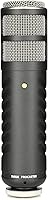
The RØDE Procaster has been a fixture in broadcast and podcasting setups since it launched in 2008, built specifically for people who take their audio seriously. RØDE designed this broadcast mic around an XLR-only connection — no USB option, no compromise. That choice alone tells you who it's for: presenters, voice-over artists, and podcast hosts who already have, or are willing to invest in, a decent audio interface or mixing console. Think of it as competing in the same league as the Shure SM7B and Electro-Voice RE20, often at a more accessible price. Get your gain staging right, and it rewards you.
Features & Benefits
The internal pop filter is one of those features you genuinely appreciate after setup — one less piece of gear cluttering your desk. The capsule sits on an internal shock mount, so bumping the desk or adjusting the mic mid-session does not translate into ugly low-frequency thumps in your recording. Sound-wise, this dynamic vocal mic produces a warm, full-bodied vocal tone with a subtle presence lift that makes voices cut through a mix without aggressive EQ work. The tight unidirectional polar pattern is effective at rejecting room noise from the sides and rear, and the all-metal build feels appropriately serious.
Best For
This broadcast mic makes the most sense for podcasters who already have a basic recording chain — an interface like the Focusrite Scarlett or a dedicated mixer — and want to step up from a USB mic without going full condenser. It is also a natural fit for radio and broadcast professionals who need consistent vocal performance night after night. Voice-over artists will appreciate that the Procaster requires no phantom power, which removes one variable from a sometimes fussy signal chain. Streamers ready to commit to an XLR setup will notice the audio quality jump immediately. Beginners expecting a plug-in-and-go experience should look elsewhere.
User Feedback
People who buy this dynamic vocal mic tend to come away pleased with the vocal character — warm, present, and broadcast-ready with very little post-processing required. Where things get more nuanced is around gain. Dynamic mics like this one have lower output sensitivity than condensers, and if your interface lacks a solid, clean preamp, the noise floor will creep in before you hit usable recording levels. A few buyers also flag that the box is sparse — no swivel adapter or stand included at this price point. That said, the all-metal build earns consistent praise, and many users find it holds its own against more expensive competitors.
Pros
- Vocal tone is warm, full, and broadcast-ready with minimal EQ required straight from the start.
- The built-in pop filter genuinely works, keeping your desk cleaner and your setup simpler.
- All-metal construction feels serious and durable — this broadcast mic is built to last years of daily use.
- Internal shock mounting keeps low-frequency desk bumps and vibrations out of your recordings.
- Tight polar pattern rejects off-axis noise effectively, even in moderately busy home environments.
- No phantom power needed, making it compatible with a wider range of mixers and interfaces.
- Holds its own against more expensive competitors when paired with a quality preamp.
- Long-term owners report no drop in audio performance even after five or more years of regular use.
- Balanced XLR output keeps the signal clean over longer cable runs without interference.
- RØDE backs the mic with a five-year warranty, which is reassuring for a tool at this price point.
Cons
- Budget audio interfaces often cannot supply enough clean gain — poor preamp pairing ruins the experience.
- No stand adapter, swivel mount, or XLR cable included in the box at this price point.
- Low output sensitivity catches many buyers off guard, especially those upgrading from USB microphones.
- A separate inline preamp booster may be needed, adding unexpected cost to the total setup.
- Heavier than many competing mics, which can strain lighter or cheaper boom arms over time.
- Speakers who move off-axis frequently will notice a thin, hollow sound shift during recordings.
- High impedance spec requires careful compatibility checks with older or budget preamp inputs.
- Not a versatile all-rounder — the tuning is narrowly optimized for close-mic spoken word only.
- Steep learning curve for audio newcomers unfamiliar with gain staging and signal chain management.
- Proximity effect can become excessive for speakers who naturally work very close to the capsule.
Ratings
The RØDE Procaster scores below are generated by AI after analyzing thousands of verified buyer reviews worldwide, with spam, bot submissions, and incentivized feedback actively filtered out. Real-world usage patterns from podcasters, voice-over artists, and broadcast professionals inform every score. Both consistent strengths and recurring frustrations are reflected honestly — nothing has been glossed over.
Vocal Sound Quality
Build Quality
Noise Rejection
Gain Requirements & Preamp Compatibility
Internal Pop Filter
Internal Shock Mount
Value for Money
Ease of Setup
Box Contents & Accessories
Frequency Response Consistency
Handling Noise
Durability & Longevity
Polar Pattern Accuracy
No Phantom Power Requirement
Suitable for:
The RØDE Procaster is purpose-built for people who are serious about spoken-word audio and already have — or are ready to build — a proper XLR recording chain. Podcasters who record in a home studio, treated spare room, or professional booth will get the most out of it, particularly those who want a warm, broadcast-quality vocal tone without spending hours in post-production. Radio hosts and on-air professionals will appreciate its consistent performance under pressure, and voice-over artists will find the dynamic capsule forgiving across long recording sessions without the fatigue some condensers introduce. Streamers looking to step up from USB microphones and invest in a more reliable, studio-standard signal chain are also well-served here. If you already own a capable audio interface — something like a Focusrite Scarlett 2i2 or a dedicated broadcast mixer — this broadcast mic will slot into your workflow and immediately justify its price.
Not suitable for:
Anyone expecting a simple plug-in-and-record experience should look carefully before buying the RØDE Procaster, because it demands more from your setup than a USB mic ever would. Without a quality preamp or audio interface that delivers strong, clean gain, the low output sensitivity of this dynamic vocal mic will expose noise floor issues that no amount of software processing can fully fix. Budget interfaces in the under-50-dollar range are almost certainly not up to the task without a separate inline preamp booster like a Cloudlifter, which adds further cost. Beginners who are still learning the basics of audio production may find the gain-staging requirements frustrating and confusing. It is also not a great fit for musicians who want a versatile studio mic for instruments or vocals in varied settings — the tuning is firmly optimized for close-proximity spoken word, not broad recording applications. Finally, buyers expecting a complete out-of-the-box kit will be disappointed by the bare-bones packaging.
Specifications
- Microphone Type: Dynamic moving-coil microphone designed specifically for broadcast and spoken-word applications.
- Polar Pattern: Unidirectional (supercardioid) pattern that captures sound primarily from the front while rejecting noise from the sides and rear.
- Frequency Response: Tuned between 75 Hz and 18 kHz, optimized for close-proximity vocal recording with a natural presence boost.
- Sensitivity: Output sensitivity is rated at -56 dBV/Pa, which is on the lower end and requires a capable preamp to achieve a clean, noise-free signal.
- Signal-to-Noise Ratio: Rated at 78 dB, delivering a clean audio output with low self-noise for a dynamic microphone in its class.
- Impedance: Output impedance is 1500 Ohm, which requires compatibility verification with your specific preamp or audio interface input.
- Connector: Standard 3-pin XLR output — no USB variant exists; an audio interface or mixer is required to use this mic.
- Pop Filter: Internal pop filter is built directly into the mic body to reduce plosive sounds without requiring a separate external accessory.
- Shock Mount: Internal capsule shock mounting isolates the diaphragm from vibration and handling noise transmitted through the mic body or stand.
- Phantom Power: Phantom power is not required or used; the mic operates as a passive dynamic transducer compatible with any standard XLR input.
- Body Material: Full all-metal construction provides robust durability and resistance to cosmetic wear in studio, broadcast, and live environments.
- Weight: The mic body weighs 1.06 pounds (approximately 481 grams), which requires a boom arm rated for heavier microphones.
- Dimensions: The mic measures 11.25″ in length, 2.5″ in width, and 5.5″ in height, making it a large-format broadcast-style body.
- Included Items: The package includes only the microphone itself — no stand adapter, swivel mount, XLR cable, or carrying case is included in the box.
- Warranty: RØDE provides a five-year limited warranty in eligible markets when the product is registered through their official website.
- Compatibility: Designed for use with audio interfaces, mixing consoles, and digital recorders that accept a standard balanced XLR input signal.
- Power Source: Entirely passively powered through the XLR signal chain — no batteries, USB power, or phantom power supply needed.
- Channels: Single-channel mono microphone intended for one voice source at a time in broadcast and voice-over applications.
Related Reviews
RØDE VideoMicro II
RØDE Lavalier GO
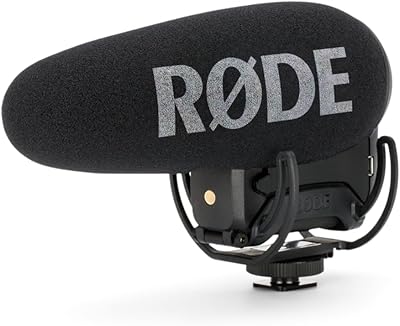
RØDE VideoMic Pro+
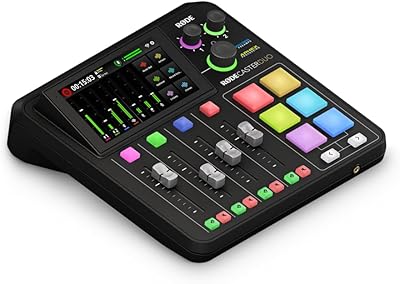
Rode RØDECaster Duo Podcast Production Console
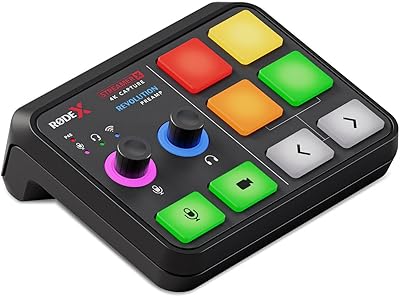
RØDE Streamer X Audio Interface Capture Card
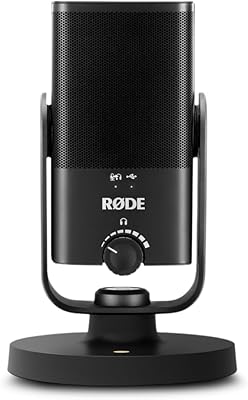
RØDE NT-USB Mini
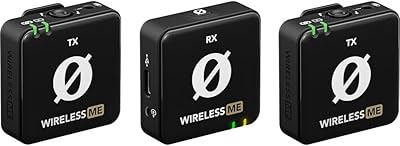
RØDE Wireless ME Dual
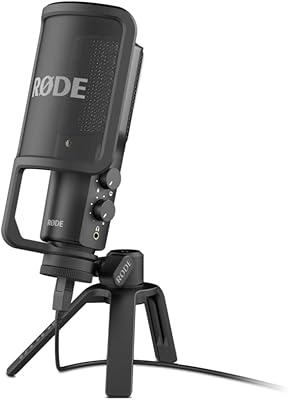
RØDE NT-USB USB Condenser Microphone
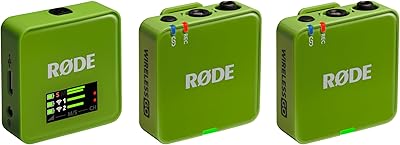
RØDE Wireless GO Gen 3