Overview

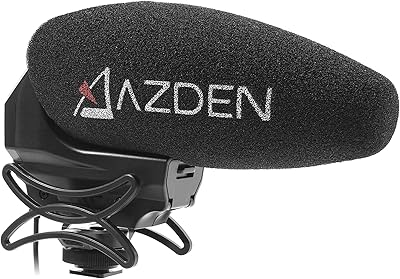
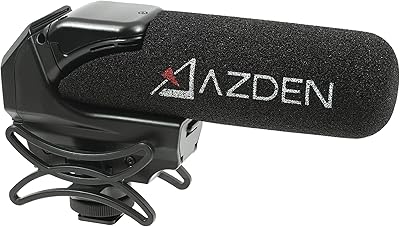
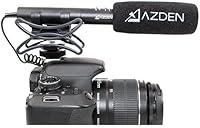
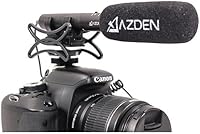
The Azden SMX-10 Stereo Condenser Microphone has been around long enough to prove it isn't a fluke — this is a mic that keeps selling because it genuinely solves a real problem for video shooters. Clip it to your camera's hot shoe, plug in the built-in cable, and you're recording stereo audio in seconds. No external recorder, no tangled adapters. It sits comfortably in the middle of the market — more capable than relying on a camera's built-in audio, but without the complexity or cost of a professional rig. Think of it as a practical field tool for creators who want better sound without overthinking the setup.
Features & Benefits

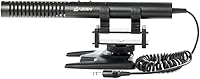
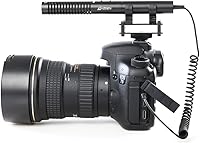
What makes this stereo camera mic click for so many shooters is how little it demands from you. The dual unidirectional capsules pull in sound from both sides with a focused pickup pattern, so you get genuine stereo width without turning your camera into a noise sponge for every distant distraction. The built-in 3.5mm cable plugs directly into your camera's mic jack — no dongles, no workarounds. Power comes from a single AAA battery, which is refreshingly low-maintenance. The included foam windscreen handles light breeze reasonably well, and at just over five ounces, the whole unit adds almost no weight to your rig. It mounts and dismounts in seconds.

Best For

This on-camera condenser is a strong fit for anyone who shoots video on a DSLR or mirrorless camera and wants a meaningful audio upgrade without adding complexity to their kit. Run-and-gun videographers will appreciate how quickly it's ready to shoot — no levels to set up, no external gear to sync. Travel vloggers benefit from the compact size and plug-and-play simplicity, and documentary or interview shooters get a noticeable sense of spatial audio depth that flat mono audio simply can't deliver. It's also a sensible choice for film students or indie creators working within a tight budget. If your camera has a 3.5mm mic input, this mic fits your workflow.

User Feedback

The Azden shotgun mic tends to earn consistent praise for one thing above all else: how immediately obvious the improvement is over a camera's built-in audio. Buyers frequently describe it as a no-fuss upgrade that just works. On the downside, some users report a faint background hiss in quiet indoor environments, and the foam windscreen — while useful — doesn't fully block wind in gusty conditions. Build quality gets mixed reviews; it feels light, and a few long-term users note it's better suited to regular hobby use than heavy daily professional work. That said, stereo separation draws consistent compliments across reviews, and for the price tier, most buyers feel they got real value.

Pros

  • Immediate, noticeable improvement over any camera's built-in microphone from the very first use.
  • True stereo capture adds spatial depth that makes footage feel more immersive and professional.
  • The built-in 3.5mm cable means zero adapter hassle — just plug in and start recording.
  • Runs on a single AAA battery, so you're never hunting for a proprietary charger in the field.
  • Mounts directly to a standard camera shoe in seconds with no tools required.
  • At just over five ounces, this on-camera condenser adds almost no weight to your camera setup.
  • Stereo separation quality consistently earns positive comments from buyers at this price tier.
  • The foam windscreen handles light outdoor breezes well enough for casual exterior shooting.
  • Has remained in production for years, which speaks to its reliability and steady buyer demand.
  • Compact enough to travel easily without taking up meaningful space in a camera bag.

Cons

  • Self-noise can produce a faint but noticeable hiss in very quiet indoor recording environments.
  • The foam windscreen falls short in genuinely windy conditions, letting unwanted noise through.
  • Build quality feels lightweight and somewhat fragile compared to more robust field microphones.
  • Not compatible with XLR-only camera systems without additional adapters that undercut its convenience.
  • Heavy daily professional use over time may reveal durability limits not apparent in casual shooting.
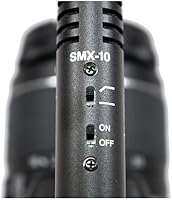
  • No on-board gain control means you're relying entirely on your camera's input level settings.
  • Sensitivity levels may underwhelm shooters trying to capture subjects more than a few feet away.
  • Long-term reliability concerns surface occasionally among users who push it beyond hobbyist workloads.

Ratings

Our AI rating system analyzed verified buyer reviews for the Azden SMX-10 Stereo Condenser Microphone from across global markets, actively filtering out incentivized, bot-generated, and outlier feedback to surface what real users consistently experience. The scores below reflect an honest picture of where this on-camera condenser genuinely delivers and where it falls short — no spin, no omissions.
Audio Quality
73%
27%
For shooters stepping up from a camera's built-in mic, the improvement in clarity and stereo presence is immediately apparent — even non-technical viewers notice the difference. Dialogue, ambient sound, and environmental texture all come through with noticeably more depth than a flat mono internal microphone can produce.
In controlled indoor environments, a residual noise floor becomes hard to ignore, especially when monitoring on headphones during post-production. The mic is not optimized for pristine, low-noise studio capture, and that limitation shows up clearly when background silence is critical.
Stereo Separation
81%
19%
The dual unidirectional capsule design produces genuine left-right stereo imaging that gives footage a sense of spatial realism, particularly useful for documentary-style shooting or capturing scenes with ambient environmental sound. Reviewers consistently call out stereo width as one of the mic's strongest real-world attributes.
The stereo field narrows noticeably as subject distance increases, so wide outdoor environments or subjects more than a few meters away tend to collapse toward a narrower image. It is stereo in the truest sense but not a wide-field recording solution.
Ease of Setup
93%
Clip it to the shoe, plug in the built-in cable, drop in a AAA battery — that is genuinely all there is to it. Run-and-gun shooters and travel vloggers repeatedly praise how fast this on-camera condenser is ready to record compared to rigs involving external recorders or XLR adapters.
The lack of any onboard controls means you are entirely dependent on your camera's audio menu to manage input levels, which can frustrate users who want quick manual gain adjustments in changing environments without diving into menus mid-shoot.
Build Quality
59%
41%
The mic feels solid enough for regular hobby use, and nothing about the construction feels overtly cheap at first handling. Users who treat it carefully and use it for occasional shoots report no structural issues over extended ownership periods.
The lightweight plastic construction gives the unit a somewhat fragile feel, and several long-term users report concern about its ability to survive the bumps and drops of daily professional fieldwork. It is functional rather than robust, and that distinction matters as usage intensity increases.
Wind Noise Rejection
61%
39%
The included foam windscreen handles calm-to-light breeze conditions acceptably well for casual outdoor vlogging or urban street shooting where wind is an occasional rather than constant factor. For fair-weather outdoor use, most buyers find it adequate.
In genuinely windy conditions — coastal locations, open fields, or even a breezy city plaza — the foam windscreen allows noticeable wind rumble to bleed into recordings. Users who shoot regularly in exposed outdoor environments almost universally recommend upgrading to a furry dead-cat style cover.
Value for Money
78%
22%
At its price point, this stereo camera mic delivers a meaningful and immediately audible upgrade over built-in camera audio without requiring a significant financial commitment. For students, hobbyists, and content creators testing the waters of better audio, the return on investment is clear.
As buyers progress in skill and expectation, the limitations become more apparent relative to competing options at slightly higher price tiers. A few buyers feel that marginally more investment would have bought significantly better noise performance and build robustness.
Compatibility
84%
The standard 3.5mm mini plug works with the vast majority of consumer DSLR, mirrorless, and camcorder bodies without any adapters or additional hardware. Most buyers report zero compatibility friction right out of the box across Canon, Nikon, Sony, and Panasonic camera lines.
Cameras that use USB-C or Lightning audio inputs, or professional bodies with XLR-only inputs, are simply out of scope without additional adapter hardware that can introduce its own complications. Smartphone compatibility is inconsistent and largely untested by the manufacturer.
Portability
88%
At just over five ounces and a compact form factor, the Azden shotgun mic adds almost nothing meaningful to the weight of a camera setup. It slides in and out of a camera bag without occupying dedicated space, which travel shooters consistently appreciate.
The built-in cable, while convenient, creates a minor snag risk when packing the mic loosely in a bag, and a few users mention the cable requires careful coiling to avoid stress on the connection point over time.
Battery Life
89%
A single AAA battery consistently carries shooters through full-day sessions without needing a swap, which removes one logistical variable from a shoot. The universal availability of AAA batteries means replacements are easy to source anywhere in the world.
There is no battery level indicator on the unit itself, so users have no way to gauge remaining power during a shoot other than by tracking usage time mentally or swapping preemptively. A battery dying mid-recording is a real risk if you forget to check before going out.
Self-Noise Level
54%
46%
For outdoor environments with natural ambient sound or moderately loud subject matter, the mic's noise floor blends into the recording without causing obvious problems. Most casual viewers watching footage on a phone or computer speaker will not detect it.
Audio engineers and experienced editors listening on studio monitors or quality headphones will hear the noise floor clearly in quiet passages. This limits the mic's usefulness for any application where silence between dialogue lines is expected to sound genuinely clean.
Durability Over Time
62%
38%
Hobbyist users who shoot a few times per month report largely positive long-term experiences, with many owners noting the mic continues functioning well after years of occasional use without obvious degradation in audio performance.
Heavy daily professional use appears to accelerate wear on the lightweight construction, with some long-term owners reporting connector or housing issues after sustained intensive deployment. It is built for frequency of use typical of enthusiasts, not working professionals.
Mounting Stability
76%
24%
The camera shoe mount seats firmly on standard hot and cold shoes without wobble during handheld shooting, which matters for avoiding handling noise transferred through a loose mount. Most buyers report that it stays put reliably under normal shooting conditions.
On some camera bodies with worn or slightly non-standard shoe dimensions, minor play in the mount can introduce low-frequency vibration into recordings during movement. It is not a common complaint, but enough users mention it that it is worth checking before a critical shoot.
Sensitivity & Reach
64%
36%
Within a reasonable working distance of a subject — roughly arm's length to a couple of meters — the mic captures dialogue and near-field sound with solid presence and adequate level for most camera preamp inputs.
Subjects beyond a few meters away begin to lose presence and intelligibility, and the mic can struggle to pull clean audio from a distance without the camera's gain introducing additional noise. It is not a long-reach solution.

Suitable for:

The Azden SMX-10 Stereo Condenser Microphone is a smart pick for video creators who are tired of the flat, lifeless audio their camera produces on its own and want a straightforward fix without building out a complex audio rig. It works particularly well for travel vloggers, documentary shooters, and run-and-gun filmmakers who need to move fast and can't afford to fuss with external recorders or complicated signal chains. Film students and indie creators on a budget will find it hits a useful middle ground — more capable than nothing, and far less expensive than stepping up to professional broadcast gear. Interview shooters benefit from the stereo width, which adds a sense of presence and space that mono on-camera audio simply cannot replicate. If your camera has a 3.5mm mic input and you want an honest, functional audio upgrade with minimal setup time, this stereo camera mic delivers exactly that.
Not suitable for:

The Azden SMX-10 Stereo Condenser Microphone is not the right tool for creators who need broadcast-quality, low-noise audio in controlled or professional environments. If you regularly shoot in quiet indoor settings — like voiceovers, product reviews in a studio, or seated interviews in a silent room — the mic's self-noise floor can introduce a faint but audible hiss that becomes harder to ignore once you know it's there. Professionals whose cameras use XLR inputs will also find this on-camera condenser incompatible without additional adapters, which largely defeats the convenience it offers. It also isn't built for punishing daily professional use; the lightweight construction holds up well for hobbyists but may not survive years of heavy field abuse. If wind is a regular factor in your shooting environment, the included foam windscreen alone won't be enough — you'd want a proper blimp or dead cat, which adds cost and bulk this mic isn't really designed to accommodate.
Specifications

  • Microphone Type: Dual unidirectional electret-condenser capsules configured for true stereo recording.
  • Configuration: Stereo, using two directionally focused capsules to capture left and right audio channels simultaneously.
  • Connector: Built-in 3.5mm stereo mini plug cable connects directly to cameras and handheld recorders without adapters.
  • Power Source: Requires one AAA battery (1.5V); no proprietary charging system or phantom power needed.
  • Dimensions: The mic body measures 11.5 x 3 x 2.5 inches, with a usable capsule length of 7 inches.
  • Weight: The complete unit weighs 5.6 ounces, adding minimal load to a camera-mounted rig.
  • Mount Type: Standard camera shoe mount allows direct, tool-free attachment to most DSLR, mirrorless, and camcorder hot shoes.
  • Windscreen: A foam windscreen is included in the box to reduce light wind noise and breath interference during outdoor use.
  • Compatible Platforms: Designed for use with cameras featuring a 3.5mm mic input, including DSLR, mirrorless, and traditional camcorder bodies.
  • Model Number: The official Azden model identifier for this unit is AZ-DSMX010.
  • Color: Available in black only; no alternate color variants are offered for this model.
  • Availability: This model is confirmed as still in production and has not been discontinued by the manufacturer.
  • Date Introduced: The product was first made available in June 2006, reflecting a long-standing presence in the on-camera audio market.
  • Accessories Included: Box contents include the microphone unit with built-in cable, a foam windscreen, and a camera shoe-mount holder.
  • Hardware Interface: Operates at 3.0V TTL signal compatibility, consistent with standard electret-condenser mic input requirements on consumer cameras.

Related Reviews

Azden SMX-30 Stereo/Mono Video Microphone
74%
83%
Versatility
67%
Audio Clarity
61%
Mono Shotgun Performance
58%
Stereo Width & Quality
84%
Gain Control
More
Shure MV88 iOS Condenser Microphone
80%
91%
Audio Clarity
93%
Build Quality
94%
Portability
86%
Polar Pattern Versatility
61%
App Experience
More
Rode NT4 Stereo Condenser Microphone
81%
91%
Sound Quality
89%
Stereo Imaging
87%
Build Quality
74%
Value for Money
88%
Ease of Use
More
Azden SMX-15 Shotgun Video Microphone
77%
83%
Audio Quality Improvement
78%
Gain Booster Effectiveness
93%
Ease of Setup
76%
Off-Axis Noise Rejection
81%
Low-Cut Filter Utility
More
Audio-Technica AT2022 X/Y Stereo Condenser Microphone
68%
78%
Stereo Imaging Quality
86%
Portability & Setup Speed
54%
Build Quality
51%
Output Level & Preamp Compatibility
73%
Low-Frequency Roll-off Usefulness
More
Audio-Technica AT8024
84%
93%
Versatility of Modes
88%
Setup & Ease of Use
76%
Audio Clarity & Detail
82%
Build Quality & Durability
79%
Shock Mount Performance
More
Studio Projects C4 Small-diaphragm Condenser Microphone Pair
76%
83%
Sound Quality
81%
Stereo Matching
74%
Capsule System
78%
Build Quality
79%
Value for Money
More
Aston Microphones Stealth Condenser Microphone
79%
88%
Sound Quality
84%
Voice Mode Versatility
86%
Built-in Preamp
91%
Build Quality
83%
Value for Money
More
Blue Blueberry Cardioid Condenser Microphone
79%
93%
Tonal Character
91%
Vocal Performance
89%
Build Quality
94%
Capsule Quality
71%
Preamp Compatibility
More
Neat Microphones Skyline USB Desktop Condenser Microphone
89%
94%
Audio Quality
91%
Ease of Use
89%
Build Quality
90%
Mute Button Functionality
92%
Value for Money
More

FAQ

Yes, as long as your camera has a standard 3.5mm microphone input jack, this stereo camera mic will connect and function correctly. Most Sony, Fujifilm, Canon, and Nikon mirrorless bodies include this input, but it is worth double-checking your specific model's spec sheet before buying.

Not really — plug it in, drop in a AAA battery, and your camera should detect it automatically through the mic jack. You will want to go into your camera's audio menu to set the input level manually rather than relying on auto-gain, which can cause unwanted pumping in quiet scenes.

This is worth being upfront about: the Azden SMX-10 Stereo Condenser Microphone does have an audible noise floor in very quiet indoor environments. It is unlikely to bother most viewers watching on phones or laptops, but if you are editing in a quiet studio and listening on headphones, you may notice a faint hiss. For outdoor or ambient-heavy shoots, it is a non-issue.
It handles light breezes and gentle wind reasonably well, but in genuinely gusty conditions it will let some wind rumble through. If you plan to shoot regularly outdoors on windy days, investing in a more substantial furry windscreen cover designed for this size mic is a good idea.

Technically possible if your phone has a 3.5mm combo jack that accepts external microphone input, but results can vary significantly depending on the phone model and its mic input sensitivity. It is primarily designed for camera use, and smartphone compatibility is not guaranteed.

A single AAA battery typically lasts many hours of continuous recording — most users report getting through full shooting days without needing a replacement. That said, it is always a good habit to carry a spare AAA when heading out for a long shoot.

It records genuine stereo using two separate unidirectional capsules, so you get actual left-right spatial separation rather than a duplicated mono signal. The stereo width is one of the features that receives the most consistent praise from buyers who have used it in the field.

No — the 3.5mm cable is built directly into the mic body and cannot be removed or replaced. This keeps the design clean and reduces connection points that could fail, but it does mean that if the cable is damaged, repair options are limited.

The Azden shotgun mic uses a standard camera shoe mount, so it should fit any standard hot shoe or cold shoe adapter without issue. If your cage uses a non-standard mounting point, you may need a small adapter, but standard shoe compatibility is very broad across common rig configurations.

For most vloggers, the answer is yes — clearly and noticeably so. The improvement in stereo depth, directional focus, and overall audio clarity over a built-in camera mic is immediately apparent, even to non-audio-savvy viewers. If you are shooting in controlled indoor environments and need studio-level silence, you may eventually want something more capable, but as a first serious mic upgrade it holds up well.

Where to Buy