Overview

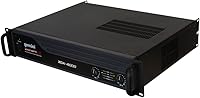
The Gemini XGA-4000 2-Channel Power Amplifier has been around since 2009, and that kind of staying power means something in a market where budget audio gear comes and goes quickly. Before anything else, let's address the elephant in the room: the 4000W figure on the box is a peak rating. Real-world continuous output sits at 2x350W RMS at 4Ω stereo, or 700W bridged mono — respectable numbers for the price, but not what the headline implies. It slots into a standard 2U rack space, making it a practical fit for any gigging DJ or small venue operator building out a PA rack. With a 4.0-star average across nearly 900 ratings, it has earned a broad base of satisfied users, even if not without reservations.
Features & Benefits

What makes this Gemini amp genuinely useful day-to-day is how little fussing it requires to hook up. XLR, 1/4-inch TRS, and RCA inputs mean you can feed it from a professional mixer, a consumer-grade source, or just about anything in between. On the output side, Speakon connectors handle the pro-speaker side of things, while binding posts cover bare-wire or budget speaker situations. Flip it into bridge mode and it focuses its output into a single subwoofer — handy for smaller installs that need more bottom end. Cooling runs front-to-rear, and the thermal fan keeps it from throttling during extended sets. Built-in short-circuit and DC protection add a meaningful layer of security for your connected speakers.

Best For

The XGA-4000 is squarely aimed at people who need something reliable without spending a fortune. Mobile DJs playing small-to-medium events — think 100 to 300 guests — will find it handles the load without complaint. It also works well in fixed installations: small clubs, rehearsal studios, and houses of worship have been running this power amp for years. Rental companies sometimes stock it as a solid backup unit, since the steel chassis holds up to regular transport better than you might expect at this price tier. It is also a reasonable choice for a musician looking to drive a pair of passive speakers in a practice room or small performance space.

User Feedback

Across hundreds of reviews, a few clear themes emerge. On the positive side, owners consistently mention easy initial setup, solid build quality for the money, and the no-frills control layout — gain knobs, LED clip indicators, and not much else to overthink. Long-term users in rental and mobile DJ contexts report it holding up through regular use without major reliability issues. That said, the most consistent complaint centers on fan noise at higher volumes — it is audible in quieter settings, which matters in certain installation scenarios. The 4000W headline still catches some buyers off guard; those who read the RMS specs beforehand tend to leave more satisfied reviews. Warranty and support experiences appear mixed.

Pros

  • Broad input compatibility — XLR, 1/4-inch TRS, and RCA — means almost no source device requires an adapter.
  • Bridge mode lets you redirect output into a single sub or full-range cab when mono power is more useful than stereo split.
  • Speakon outputs and binding posts together cover professional and budget speaker cable setups without modification.
  • The 2U steel chassis fits standard racks cleanly and holds up better than plastic-bodied competitors at a similar price.
  • Front-to-rear thermal cooling keeps the unit running through long continuous sets without noticeable throttling.
  • Built-in limiter, DC, and short-circuit protection reduce the risk of damaging connected speakers during a hard push.
  • Setup is genuinely straightforward — gain knobs, LED clip indicators, and clear labeling make it accessible for non-engineers.
  • Long-term owners in mobile DJ and rental contexts report consistent reliability across years of regular use.
  • At its price point, this Gemini amp offers a level of input and output flexibility that comparable units rarely match.
  • A product history stretching back to 2009 means real-world feedback is abundant and easy to research before buying.

Cons

  • The 4000W headline is a peak figure — actual RMS delivery is far lower, which catches uninformed buyers off guard.
  • Fan noise at higher output levels is audible enough to be disruptive in quiet or acoustically sensitive environments.
  • Warranty and manufacturer support experiences have been inconsistent, which is a real risk for working professionals who depend on gear reliability.
  • At 22.8 pounds, it is on the heavier side for a budget 2U amp, which matters for mobile DJs loading and unloading frequently.
  • Output headroom runs out quickly in larger venues or outdoor setups, making it a poor match for high-demand live sound situations.
  • Some users report the RCA inputs feeling less robust than the XLR connections under repeated use.
  • No onboard DSP, crossover, or EQ — buyers who need signal processing built in will need to handle that upstream.
  • Build quality, while adequate for the price, does not inspire the same confidence as mid-tier or professional-grade competitors.

Ratings

The Gemini XGA-4000 2-Channel Power Amplifier scores below are generated by AI after analyzing thousands of verified global user reviews, with spam, bot activity, and incentivized feedback actively filtered out. This Gemini amp has accumulated a meaningful review base since its 2009 launch, and both its genuine strengths and recurring frustrations are transparently reflected in each category score. Whether you are a working mobile DJ or a small venue operator, the ratings below give you a realistic picture of what this power amp actually delivers day-to-day.

Value for Money
83%
For the asking price, buyers consistently feel they are getting more amplifier than expected — a steel chassis, multi-format inputs, Speakon outputs, and a bridgeable design that competitors in the same tier often omit. Mobile DJs on a tight budget routinely cite it as one of the best entry points into rackmount PA amplification.
The misleading 4000W peak figure causes some buyers to feel short-changed once they understand the real RMS numbers, which erodes perceived value even when the actual output is reasonable for the price tier. A handful of reviewers felt the pricing was only justified if you went in with accurate expectations.
Power Output
67%
33%
The real-world 2x350W RMS at 4Ω stereo handles small-to-medium indoor events comfortably — mobile DJs running rooms of 100 to 250 people report it keeps up without strain. Bridge mode at 700W mono is a practical option when funneling power into a single subwoofer.
The 4000W peak headline creates expectations the amp cannot sustain, and buyers who plan large outdoor events or high-SPL installations will run out of headroom faster than anticipated. This is a budget-tier output level dressed up with a dramatic number, and experienced audio professionals recognize the gap immediately.
Build Quality
78%
22%
The steel chassis gives the unit a reassuringly solid feel compared to plastic-bodied alternatives at a similar price, and long-term users in mobile DJ and rental contexts report it surviving years of routine loading, unloading, and rack installation. The front panel controls feel firm and well-seated.
It is still a budget-tier build, and close inspection reveals cost-saving choices in the rear connector area and internal component quality that remind you this is not a professional touring-grade unit. A few owners noted cosmetic wear appearing sooner than expected under heavy transport use.
Input Versatility
91%
XLR, 1/4-inch TRS, and RCA inputs on the same unit means virtually no source device requires an adapter — DJ mixers, audio interfaces, laptop outputs, and consumer decks all connect directly. AV installers and rental technicians especially appreciate not needing to carry a bag of adapters just to hook it up on-site.
The RCA inputs, while convenient, feel less robustly constructed than the XLR connections and have drawn occasional comments about looseness after extended use. Buyers running high-end balanced sources may also notice a slight quality difference when comparing XLR versus RCA signal paths at higher volumes.
Output Connectivity
88%
Three Speakon connectors alongside binding post terminals give this power amp genuine flexibility — whether your speakers use professional NL4 Speakon cables or bare wire, you are covered without needing a patch panel. Rental companies find this particularly useful when equipping rigs that mix speaker brands and cable types.
Three Speakon ports is a slight oddity for a two-channel amp and can cause minor confusion during initial setup. Binding posts, while functional, feel less premium than those found on mid-tier competitors and may not grip thicker gauge speaker cable as securely.
Ease of Setup
92%
Owners across skill levels consistently describe the initial hookup as refreshingly simple — plug in your source, connect your speakers, set the gain, and you are running. The clear front-panel layout with labeled gain knobs and LED clip indicators means even less experienced users can get it operational in under ten minutes.
The owner's manual is considered thin by several reviewers, particularly for buyers less familiar with bridge mode wiring or impedance matching. A few users initially miswired the bridged output because the documentation did not spell out the Speakon pin configuration clearly enough.
Cooling & Thermal Management
73%
27%
The front-to-rear airflow design with a thermally controlled fan does its job — the unit stays cool through multi-hour continuous sets, and reports of thermal shutdowns are rare even from users pushing it hard in warm DJ booths or packed club environments. The fan ramps up intelligently rather than running at full blast constantly.
The fan noise at elevated output levels is the most consistently mentioned complaint in reviews, and it is audible enough to be noticeable in quieter environments such as corporate AV installs or houses of worship. Users in noise-sensitive settings should factor this in before buying.
Protection Circuits
84%
The combination of limiter, DC output protection, and short-circuit protection gives working DJs and installers a meaningful safety net when driving passive speakers hard over long events. Multiple owners credit these features with saving their speaker cabinets during moments where the signal was inadvertently clipped or a cable was briefly shorted.
The limiter, while useful, engages somewhat aggressively at high gain settings and can color the sound in ways that more discerning listeners will notice. It is a functional safeguard rather than a transparent one, which is an acceptable trade-off at this price but worth knowing about upfront.
Reliability Over Time
76%
24%
The XGA-4000 has a longer commercial track record than most budget amps, and long-term owners — some using it for five or more years in mobile or rental contexts — frequently report it still running without major faults. That kind of longevity at this price point is not something every competitor can claim.
Reliability at the component level is not uniform across all units, and a subset of reviewers describe failures within the first year that fell outside normal heavy-use wear. The inconsistency suggests quality control variability, which is a known risk factor in budget-tier amplifier manufacturing.
Portability & Weight
62%
38%
At 22.8 pounds, it is manageable enough for a solo mobile DJ to rack-mount and transport in a standard rolling case without needing extra help. Its compact 2U footprint keeps the rack profile lean, which matters when you are packing a full DJ setup into a vehicle.
22.8 pounds is on the heavier end for a budget 2U amp, and DJs doing multiple events per week feel that weight accumulate over time — especially when loading and unloading from vehicles without a loading dock. Lighter alternatives exist at similar price points, though often with fewer features.
Bridge Mode Performance
77%
23%
Bridge mode works as advertised, and users who deploy it specifically for subwoofer duty report solid low-end impact in small club and party environments. For anyone building a simple mono sub-plus-tops system, it removes the need for a separate mono amp in the rack.
At 700W bridged into typical 8Ω sub loads, real headroom is limited, and heavy bass programming at a well-attended outdoor event will have the limiter working hard. Buyers expecting bridged output to dramatically transform the amp's performance ceiling may come away underwhelmed.
Wattage Transparency
41%
59%
Once buyers understand the RMS versus peak distinction, the actual output figures are clearly printed on the unit and in the documentation, and there is no attempt to obscure the real numbers from anyone who looks for them. Informed buyers report no issues with the amp delivering what it genuinely promises.
The 4000W peak figure plastered on the product name and marketing materials is the single biggest source of negative reviews, with many buyers feeling deceived when they discover the RMS output is a fraction of the headline. This is a marketing practice that undermines trust and consistently pulls down satisfaction scores among buyers who did not research carefully beforehand.
Warranty & Support
53%
47%
Gemini Sound is an established brand with a customer service presence, and some buyers report straightforward resolution of defective unit claims within a reasonable timeframe. For buyers purchasing through reputable retailers, the standard warranty provides a baseline level of protection.
Support experiences are notably inconsistent in the review base — a meaningful number of owners describe difficulty reaching responsive service or getting timely replacements on failed units. For professional users who depend on their gear for paid gigs, this unpredictability in after-sales support is a genuine concern worth weighing.
Rack Integration
89%
The standard 19-inch, 2U form factor drops cleanly into any professional equipment rack without adapters or modification — a basic expectation, but one this power amp meets reliably. Mobile DJs and installed sound technicians alike appreciate that rack ears are properly built into the chassis rather than added as an afterthought.
The unit's depth of just under 15 inches means it fits most rack cases without issue, but very shallow portable rack bags may be a tight fit. A small number of users also noted that the rear connector layout makes cable routing slightly awkward in densely packed rack configurations.

Suitable for:

The Gemini XGA-4000 2-Channel Power Amplifier is a strong fit for anyone who needs a workhorse PA amp without committing to a premium budget. Mobile DJs covering weddings, birthday parties, or corporate events in rooms holding up to a few hundred people will find the real-world stereo output more than adequate for those environments. Small clubs, rehearsal studios, and houses of worship running a fixed rack setup benefit from its standard 2U form factor and broad input compatibility — XLR, 1/4-inch TRS, and RCA cover virtually any mixer or source device without adapters. AV integrators and rental companies building out starter or backup rigs on a tight budget will appreciate that this power amp has been on the market since 2009, giving it a long enough track record to assess reliability. Musicians who simply need to drive a pair of passive speakers for practice or small live performances will also find it gets the job done without unnecessary complexity.

Not suitable for:

Buyers expecting the Gemini XGA-4000 2-Channel Power Amplifier to deliver the full 4000W implied by its name should look elsewhere — the actual continuous RMS output is 2x350W at 4Ω stereo, and while that is workable for many scenarios, anyone planning to fill a large venue or run a high-SPL outdoor event will hit its limits quickly. Professional touring engineers or serious club installers who depend on rock-solid reliability night after night may want to invest in a higher-tier brand, since this is a budget-category unit and should be evaluated as such. The fan noise at higher output levels is a recurring complaint and makes it a poor choice for quiet listening environments, corporate AV installs, or houses of worship where ambient noise is a genuine concern. Anyone prioritizing manufacturer support or a robust warranty experience should research current service options carefully before buying, as feedback on that front has been inconsistent. If your speaker load demands sustained high-headroom power with low distortion at volume, the XGA-4000 is simply not engineered for that tier of performance.

Specifications

  • RMS Power: Delivers 2x350W RMS at 4Ω in stereo mode, providing the actual continuous output buyers should plan their speaker setups around.
  • Bridged Output: In bridge mode, the unit combines both channels into a single mono output rated at 700W, useful for driving one subwoofer or full-range cabinet.
  • Peak Power: The manufacturer's stated peak power figure is 4000W, which reflects short-burst capability rather than sustained continuous output.
  • Channels: Features 2 independent channels that can operate in stereo or be bridged together for mono operation.
  • Inputs: Accepts XLR, 1/4-inch TRS, and RCA inputs, covering professional balanced sources as well as consumer-grade devices.
  • Outputs: Equipped with three Speakon connectors and binding post terminals to support a range of speaker cable types and configurations.
  • Form Factor: Fits a standard 2U rack space, making it compatible with any professional DJ or PA equipment rack.
  • Dimensions: Measures 19.02 x 14.77 x 4.02 inches, sized to fit standard 19-inch rack enclosures without modification.
  • Weight: Weighs 22.8 pounds, which is typical for a steel-chassis amp in this class but worth noting for frequent mobile transport.
  • Chassis: Constructed from steel with a road-ready build intended to withstand the handling demands of mobile DJ and rental use.
  • Cooling System: Uses a front-to-rear forced-air design with a thermal fan that activates based on internal temperature to manage heat during extended operation.
  • Protection: Includes a built-in limiter, DC output protection, and short-circuit protection to safeguard both the amplifier and connected speakers.
  • Voltage: Operates at 110V with a supply voltage range of 100–250V, making it adaptable for use in various electrical environments.
  • Brand: Manufactured by Gemini Sound, a DJ and pro-audio equipment brand with a history in the budget-to-mid-range amplifier market.
  • Model Number: The official model designation is XGA-4000, as listed by the manufacturer and used across product documentation.
  • Impedance: Rated for 4Ω stereo operation at full RMS output; always verify speaker impedance before connecting to avoid mismatched loads.
  • Release Date: The XGA-4000 was first made available in October 2009, giving it a long commercial track record relative to competing budget amplifiers.
  • Ratings: Holds an average rating of 4.0 out of 5 stars based on approximately 880 customer reviews on Amazon as of the time of writing.

Related Reviews

Gemini XGA-5000
Gemini XGA-5000
70%
83%
Value for Money
51%
Power Output Accuracy
78%
Build Quality
86%
Connectivity & I/O
69%
Cooling & Thermal Management
More
Rockville RPA5 2-Channel Power Amplifier
78%
88%
Value for Money
76%
Power Output & Headroom
67%
Build Quality & Construction
79%
Cooling & Thermal Management
91%
Connectivity & I/O Flexibility
More
Pyle PTA1000BT 2-Channel Bluetooth Power Amplifier
73%
82%
Value for Money
51%
Power Output Accuracy
58%
Build Quality
89%
Ease of Setup
71%
Bluetooth Performance
More
Power Acoustik VA2-1400D Vertigo Series 1,400-Watt 2-Channel Amplifier
83%
91%
Value for Money
88%
Power Output
85%
Ease of Installation
92%
Size and Portability
81%
Build Quality
More
Planet Audio AC1200.2 2-Channel Car Amplifier
72%
84%
Value for Money
67%
Power Output
88%
Ease of Installation
71%
Sound Quality
58%
Thermal Performance
More
Orion CBA2500.2 2-Channel Car Amplifier
73%
82%
Value for Money
63%
Power Output
67%
Build Quality
88%
Ease of Installation
71%
Sound Quality
More
Crunch GP-2000.2 2-Channel Car Amplifier
71%
88%
Value for Money
83%
Ease of Installation
61%
Power Output
58%
Build Quality
54%
Heat Management
More
Hosyond TDA7498E 2.1 Channel Bluetooth Amplifier Board 160W×2+220W
73%
88%
Value for Money
76%
Power Output & Headroom
83%
Bluetooth Connectivity
79%
Build & Component Quality
62%
Thermal Management
More
Blaupunkt AMP7502 2-Channel Car Amplifier
66%
72%
Value for Money
67%
Sound Quality
51%
Power Output Accuracy
58%
Build Quality
84%
Ease of Installation
More
Onkyo M-5010 2-Channel Power Amplifier
78%
88%
Audio Clarity
91%
Build Quality
93%
Noise Floor
84%
Power Delivery
71%
Value for Money
More

FAQ

No, and this is the most important thing to understand before buying. The 4000W figure is a peak rating, meaning it reflects the absolute maximum the amp can theoretically produce in a brief burst under ideal conditions. The real number you should care about is 2x350W RMS at 4Ω in stereo, or 700W bridged mono — those are the sustained, continuous output figures that determine how your speakers will actually perform night after night.

Yes. The XGA-4000 occupies exactly 2U of rack space and is 19 inches wide, which is the industry-standard form factor. It will drop right into any standard 2U rack slot without any modification or adapter hardware.

Absolutely. Beyond the Speakon outputs, the amp includes binding post terminals that accept bare speaker wire, spade connectors, or banana plugs. So if your speakers do not have Speakon ends, you can still connect them without buying new cables.

Bridge mode combines both channels into a single mono output, which gives you 700W going into one speaker or subwoofer instead of splitting power across two. It is most useful when you are running a single sub and want to maximize the low-end output, or when your setup only requires one full-range cabinet. Just keep in mind you lose the ability to run stereo when bridged.

At moderate volumes it stays reasonably quiet, but multiple owners have flagged the fan noise as noticeable at higher output levels. If you are using it in a loud club or outdoor event, it will not matter at all. However, if you are installing this in a house of worship or a quiet corporate AV environment where background noise is a concern, the fan is worth factoring into your decision.

The Gemini XGA-4000 2-Channel Power Amplifier accepts XLR balanced, 1/4-inch TRS balanced, and RCA unbalanced inputs. That covers the vast majority of DJ mixers, audio interfaces, and consumer source devices. If your mixer has a standard XLR or TRS main output, you are good to go with no adapters needed.

It is built around a steel chassis and has been in production since 2009, which gives it a reasonable track record. Long-term mobile DJ owners generally report it holding up well to regular transport and use. That said, it is a budget-tier unit, so treat it with care — it is not as bulletproof as more expensive touring-grade amps, and rough handling over years will eventually show.

In practical terms, it performs reliably for events in the range of 100 to 300 people in an indoor space with decent acoustics. Smaller clubs, rehearsal rooms, and event halls fit well within its sweet spot. For larger outdoor events or high-SPL environments, you will likely want more headroom than this amp provides.

Yes — it includes three key protection features: a limiter that prevents the signal from clipping into dangerous territory, DC output protection that cuts the signal if a DC fault is detected, and short-circuit protection that shuts things down if a speaker cable short occurs. These are standard but genuinely useful safeguards, especially when you are pushing the amp hard at a long event.

It is actually a fairly popular choice for exactly that purpose. The combination of broad input and output compatibility, a familiar rack form factor, and a relatively low replacement cost makes it a practical unit to have as a backup or in a budget starter rig. Just manage expectations around sustained power output and make sure your rental team understands the RMS versus peak distinction when matching it to speaker loads.