Overview

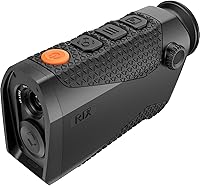
The RIX Pocket K2 Thermal Monocular arrived in early 2024 as a genuinely compact option in a market where most thermal devices are bulky, expensive, or both. At just 200 grams, this compact thermal monocular fits in a jacket pocket without drama — lighter than a typical smartphone. It's built for hunters, hikers, and outdoor explorers who want real thermal capability without lugging around a dedicated kit. IP67 waterproofing means rain and fog are non-issues, and the included battery paired with Wi-Fi connectivity rounds out a surprisingly complete package for its price tier.
Features & Benefits

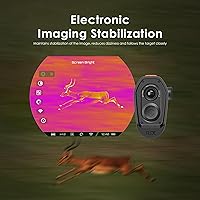
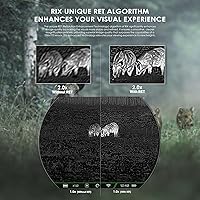
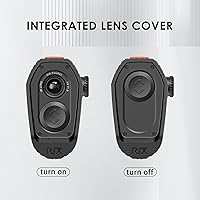
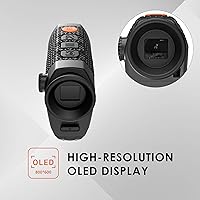
The sensor runs at 50Hz with NETD under 25mK, which in plain terms means it picks up subtle heat differences even in misty or overcast conditions — the kind that trip up cheaper sensors. The 800x600 OLED display looks sharp given the raw 256x192 sensor resolution; RIX's Resolution Enhanced Technology uses AI upscaling to fill in pixels, making the image appear more detailed than the hardware alone would produce. That's a useful boost for target identification, not a replacement for a native higher-resolution sensor. Built-in Electronic Image Stabilization genuinely helps when scanning slowly across a treeline, and the sliding integrated lens cover is a small but practical field detail.

Best For

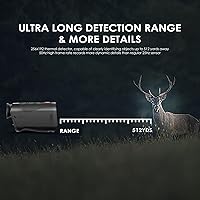
This compact thermal monocular hits a useful sweet spot for hunters scouting at dusk or dawn who want thermal awareness without the bulk or cost of full-sized units. It's also a solid fit for hikers and campers needing basic wildlife detection for safety rather than precision at distance. At 512 yards of detection range, it handles most close-to-mid-range scenarios comfortably — though if you're regularly scanning open fields beyond that, a larger objective lens would serve you better. Wi-Fi sharing adds real convenience for reviewing footage on your phone post-session. Those needing high optical zoom or swappable lenses should look at larger, pricier alternatives.

User Feedback

Buyers generally settle around 4.4 out of 5 stars, with most praise centered on how much thermal performance is packed into something this light. Image quality for the size comes up repeatedly as a genuine surprise for first-time users. Where the Pocket K2 draws more measured responses is battery life — runtime specs aren't published by RIX, and some field users report it runs shorter than expected on longer hunts. A few buyers also flag the companion app as occasionally inconsistent. The OLED display performs well indoors but can wash out slightly in strong ambient light. Overall the consensus is positive, with battery runtime being the clearest gap between this device and a stronger rating.

Pros

  • Genuinely pocketable at 200 grams — lighter than most smartphones and easy to carry all day.
  • IP67 waterproofing holds up in rain, fog, and heavy dew without needing a protective case.
  • The 50Hz refresh rate keeps motion rendering smooth, which matters when tracking a moving animal.
  • OLED display looks crisp and detailed for a 256x192 base sensor, thanks to effective upscaling.
  • Detection range up to 512 yards covers the majority of real-world hunting and scouting scenarios.
  • Wi-Fi sharing lets you pull footage to your phone immediately after a session — no cables needed.
  • Integrated sliding lens cover is a smart field detail that eliminates one of the most annoying budget-optic problems.
  • Built-in electronic image stabilization makes handheld scanning noticeably steadier than expected.
  • Includes battery out of the box — no surprise accessory purchases required to get started.
  • At its price tier, the Pocket K2 delivers thermal capability that previously required spending significantly more.

Cons

  • Battery runtime is undisclosed by RIX, and some users report shorter life than expected on full-day outings.
  • The companion Wi-Fi app has received mixed feedback for reliability and stability across devices.
  • A 9mm objective lens limits detection performance in dense vegetation or cluttered terrain.
  • RET upscaling improves appearance but does not close the gap against units with natively higher-resolution sensors.
  • The OLED display can appear washed out in strong ambient light, reducing usability in bright outdoor conditions.
  • Fixed focus means no ability to fine-tune sharpness for different distances or eye preferences.
  • Optical zoom tops out at 1.7x, which feels limiting when you need to quickly size up a distant target.
  • No mention of a companion warranty or customer support track record makes long-term ownership a mild risk.
  • Field of view at 19.4 degrees is relatively narrow for rapid wide-area scanning.
  • Users needing interchangeable lenses or accessories will find no ecosystem support around this device.

Ratings

The RIX Pocket K2 Thermal Monocular has been scored across key performance categories by our AI system after analyzing verified buyer reviews from global marketplaces, with spam, bot-generated, and incentivized feedback actively filtered out before scoring. The results reflect a balanced picture — real strengths that make this device genuinely competitive at its price tier, alongside honest pain points that value-conscious buyers deserve to know before committing. Both sides are represented transparently in every scorecard below.
Portability & Form Factor
93%
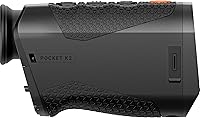
Buyers consistently describe carrying this compact thermal monocular in a shirt pocket or vest without any bulk or discomfort — something almost no rival device in its class can claim. At 200 grams, it genuinely disappears into a kit bag, making it a practical everyday carry for hunters who want thermal capability always within reach.
A small handful of users with larger hands find single-handed grip slightly awkward during extended scanning sessions, and the narrow body offers limited surface area for secure fingertip control in cold weather with gloves on.
Thermal Image Quality
78%
22%
For a 256x192 sensor, the on-screen image quality earns consistent praise — buyers regularly note that heat signatures read clearly enough to distinguish animal body shapes from background clutter at practical hunting ranges. The OLED display and AI upscaling work together to make the output look noticeably sharper than the raw sensor resolution alone would suggest.
Users coming from 384x288 or higher-resolution devices notice the step down in fine detail, particularly when trying to assess antler structure or identify small animals at distance. The RET upscaling helps, but it cannot fully substitute for native pixel density in demanding identification situations.
Detection Range
71%
29%
Within 300 to 400 yards across open fields or pasture, the Pocket K2 detects deer, hogs, and other warm-bodied animals reliably, which covers the majority of real-world scouting scenarios for most hunters. Buyers using it for campsite wildlife awareness or trail scanning are generally satisfied with how far it reaches.
The 512-yard figure reflects best-case open-terrain conditions, and several field users report that detection confidence drops meaningfully in wooded or brushy environments due to the small 9mm objective lens limiting light capture. Long-range observers or users hunting in dense timber will find this range underwhelming compared to larger competing units.
Display & Viewing Experience
82%
18%
The 800x600 OLED panel is widely praised for its contrast and color rendering, making heat signatures pop clearly during low-light morning or evening sessions. Buyers note that the display feels noticeably premium compared to LCD-based competitors in the same price range.
In strong ambient daylight or bright overcast conditions, the OLED panel can appear washed out, reducing effective contrast and making subtle heat signatures harder to read. This is a known limitation of OLED optics in direct light environments and is mentioned by multiple buyers who use the device outside of dedicated low-light windows.
Electronic Image Stabilization
74%
26%
During slow deliberate pans across a field or tree line, the EIS makes a real difference — buyers describe the image as staying steadier than expected for a lightweight handheld device, which reduces eye fatigue during longer observation periods. It earns genuine credit for making the 1.7x optical view manageable without a tripod.
At faster movement speeds or when breathing heavily after a long hike, the stabilization reaches its limits and the image noticeably jumps. A few buyers characterize EIS as helpful but not transformative, noting that it works best when you are already mostly still rather than actively compensating for body movement.
Build Quality & Durability
86%
The housing feels solid and purposeful in hand — not the hollow plastic sensation common in budget thermal units. IP67 waterproofing holds up in field conditions including rain, stream crossings, and heavy morning dew, and buyers report no ingress issues across multiple seasons of use.
Some buyers note that the exterior finish picks up scuffs and micro-scratches relatively quickly with regular pocket carry, and the sliding lens cover mechanism, while clever, feels slightly loose on a small number of units after extended use.
Battery Life
58%
42%
The included lithium-ion battery is sufficient for shorter outings — buyers focused on a single morning or evening hunt report no issues completing their session on a full charge without having to manage power conservation actively.
RIX does not publish an official runtime figure, and this omission frustrates buyers who need to plan extended field days. Multiple reviewers report the battery draining faster than expected when Wi-Fi is active or video recording is in use, and several recommend carrying a power bank as standard practice — a workaround that partially defeats the pocketable convenience pitch.
Wi-Fi & App Connectivity
61%
39%
When the app connects cleanly, buyers appreciate the convenience of pulling footage to a smartphone immediately after a hunt without cables, and the live-view feature over Wi-Fi works well for sharing a screen with a hunting partner in the field.
App reliability is the most frequently cited frustration beyond battery life — several Android and iOS users report connection drops, delayed live feeds, and occasional app crashes. The experience appears inconsistent across device models and operating system versions, and RIX has not released frequent app updates to address user-reported bugs.
Resolution Enhanced Technology
69%
31%
RET upscaling does produce a noticeably cleaner and more defined on-screen image compared to unprocessed 256x192 output, and buyers new to thermal optics generally perceive it as sharp and impressive for the price point. It meaningfully closes the perceived quality gap to mid-tier higher-resolution competitors.
Experienced thermal users are quick to point out that AI pixel-doubling is not the same as native sensor resolution, and fine detail in the upscaled image can appear slightly soft or artificially smooth on close inspection. Setting accurate expectations here is important — it improves visual readability but does not replicate the crispness of a 384x288 native sensor.
Value for Money
83%
Buyers who compare this handheld thermal device against alternatives in its price range consistently conclude it offers strong overall capability relative to cost — particularly praising the OLED display, waterproofing, and portability combination as difficult to match at this tier. First-time thermal buyers especially feel they received more than expected.
More experienced buyers who have owned higher-resolution or longer-range thermal devices sometimes feel the trade-offs in sensor resolution and battery transparency leave some value on the table. At this price point, the lack of published battery specs and app reliability issues are small but real friction points that nudge perceived value slightly downward.
Ease of Use
88%
Setup out of the box is fast — the included battery, intuitive button layout, and integrated lens cover mean most buyers are operational within minutes of unboxing. The single-handed design works exactly as intended for field use, and digital zoom switching is straightforward even with gloves.
The companion app adds a mild learning curve for less tech-savvy buyers, and the absence of a manual focus adjustment means users cannot compensate for individual vision differences the way they can with adjustable diopter systems on competing models.
Low-Light Performance
81%
19%
During the pre-dawn and post-sunset windows that define most hunting sessions, the Pocket K2 produces reliable, usable thermal imagery that gives buyers a genuine advantage for detecting animal movement before or after legal shooting light. The under-25mK NETD rating translates to real sensitivity in the field.
In conditions where temperature contrast is low — such as warm summer nights when ambient and animal temperatures converge — image differentiation becomes noticeably harder, and buyers report more false detections and missed detections in these atypical thermal environments.
Tripod Compatibility
76%
24%
The integrated tripod mount allows buyers to use the Pocket K2 for stationary observation or longer recording sessions without hand-holding, which is a practical bonus that similarly priced competitors sometimes omit entirely. Buyers doing trail surveillance or camp monitoring find this especially useful.
The mount is standard threaded but the small body size means securing it on some heavier tripod heads can feel slightly unbalanced, and buyers note the unit benefits from a lightweight travel tripod rather than a full-size model for best stability.
Field of View
67%
33%
At close ranges under 200 yards, the 19.4-degree horizontal field of view is workable for scanning the immediate area around a stand or blind, and buyers do not typically report issues when the device is used within its intended range envelope.
For wide open terrain scanning or rapid target acquisition across a broad landscape, the narrow field of view at 1.7x optical magnification feels limiting — buyers used to wider-FOV binocular-style thermals or lower magnification devices mention having to sweep the device more deliberately to cover ground effectively.

Suitable for:

The RIX Pocket K2 Thermal Monocular is a strong fit for hunters who want a reliable thermal tool for pre-dawn scouting or end-of-day game detection without committing to a heavy, expensive setup. At 200 grams, it genuinely disappears into a jacket pocket, making it practical for anyone covering ground on foot — whitetail hunters, hog hunters, or backcountry hikers who need thermal awareness as a secondary tool rather than a primary optic. Campers and trail runners who want a quick way to scan for wildlife in low-light conditions will also find it capable enough for that kind of casual but safety-conscious use. The IP67 waterproofing means it holds up on wet mornings without any special care, and the Wi-Fi connectivity is a real bonus for anyone who likes to review or share footage from a session. If your priority is portability and you operate mostly within 400 to 500 yards, this handheld thermal device covers a lot of ground for its size and price point.
Not suitable for:

The RIX Pocket K2 Thermal Monocular has real limitations that make it the wrong call for certain buyers, and it is worth being direct about those. The 9mm objective lens is small by thermal optics standards, and in dense timber or heavy brush, detection confidence drops noticeably compared to units with larger apertures. Anyone needing to identify targets reliably at 600 yards or beyond should look at higher-resolution, longer-range thermal options — the 512-yard detection spec is useful but reflects ideal open-terrain conditions, not dense or cluttered environments. The RET upscaling technology improves on-screen image appearance, but it does not replace native sensor resolution, so users accustomed to 384x288 or 640x480 sensors will notice the difference in fine detail. Battery runtime is an open question since RIX does not publish official figures, and field users have flagged shorter-than-expected life on extended outings — a real drawback if you are spending full days outdoors. Buyers who need optical zoom flexibility, interchangeable lenses, or a polished companion app experience may also find this handheld thermal device falls short of their expectations.

Specifications

  • Sensor Resolution: The thermal sensor captures at 256x192 pixels with a 12μm pixel pitch, enabling detection of subtle heat differences across the scene.
  • NETD: Noise Equivalent Temperature Difference is rated under 25mK, meaning the sensor can distinguish very small temperature contrasts even in challenging weather conditions.
  • Frame Rate: The sensor operates at 50Hz, producing smooth, near-real-time motion rendering suitable for tracking moving animals or scanning terrain quickly.
  • Objective Lens: The objective lens measures 9mm in diameter, a compact aperture appropriate for close-to-mid-range detection in open or semi-open environments.
  • Detection Range: Rated for human-sized target detection up to 468m (512 yd) under ideal open-terrain conditions.
  • Optical Zoom: Fixed optical magnification is 1.7x, with additional digital zoom steps available at 1x, 2x, and 4x.
  • Field of View: Horizontal field of view spans 19.4 degrees, equivalent to approximately 37.3 yards at 100 yards distance.
  • Display: An 800x600 OLED panel delivers the on-screen image, providing strong contrast and visible detail beyond what the raw sensor resolution alone would suggest.
  • Eye Relief: Eye relief is 13.5mm, allowing comfortable viewing with or without eyeglasses for most users.
  • Dimensions: The unit measures 4.9 x 1.8 x 2.9 inches, making it compact enough to fit in a standard jacket or cargo pocket.
  • Weight: Total unit weight is 200g (7.1 oz), lighter than most mid-range thermal monoculars and comparable to a modern smartphone.
  • Waterproofing: IP67-rated protection means the device can withstand temporary immersion in up to 1 meter of water for 30 minutes, and handles rain and heavy moisture with no issues.
  • Built-in Storage: 8GB of onboard memory is included for storing recorded video clips in MP4 format and still images in JPG format.
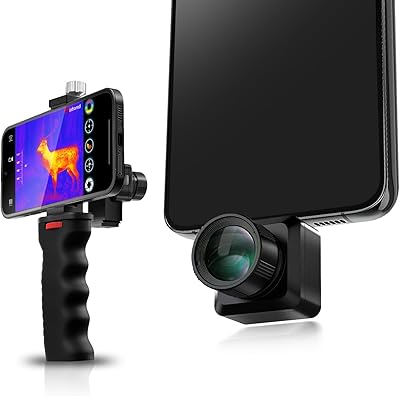
  • Connectivity: Wi-Fi is built in, enabling wireless pairing with a smartphone for live viewing, image transfer, and video review via the companion app.
  • Battery: A lithium-ion battery is included in the box; RIX does not publish an official runtime figure, so real-world battery life varies by usage conditions.
  • Image Stabilization: Electronic Image Stabilization (EIS) is built in to reduce the effect of hand tremor during handheld scanning or observation.
  • Tripod Mount: A standard tripod mount is integrated into the body, allowing the unit to be fixed on a tripod for stationary observation or recording.
  • Lens Cover: An integrated sliding lens cover is built directly into the housing and opens or closes with a single finger slide, eliminating the need for a separate removable cap.
  • Focus System: Focus is fixed rather than manually adjustable, so no focusing ring or diopter adjustment is available on this model.
  • Manufacturer: Produced by Visir Inc. under the RIX brand, with the model designated POCKET-K2 and first listed for sale in March 2024.

Related Reviews
InfiRay T2 Pro Thermal Monocular
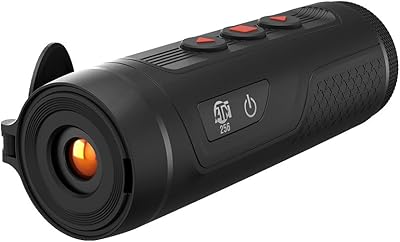
84%
91%
Thermal Imaging Quality
87%
Zoom Functionality
89%
Battery Life
92%
Portability/Size
76%
Android App Connectivity
More
ATN BlazeSeeker-210 Thermal Monocular
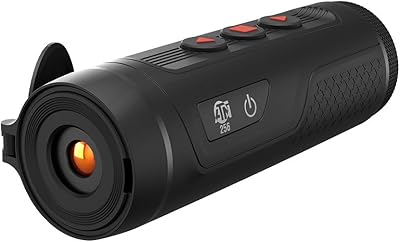
78%
83%
Thermal Sensor Performance
78%
Image Clarity
76%
Color Palette Usability
86%
Magnification Range
81%
Wi-Fi and App Integration
More
ATN BlazeSeeker-207 Thermal Imaging Monocular
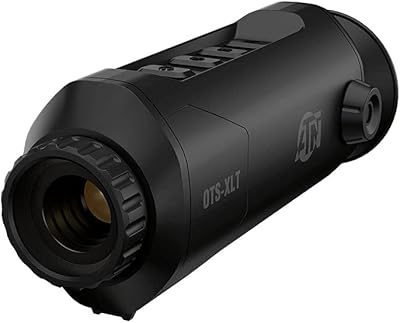
74%
78%
Image Clarity
74%
Detection Range
83%
Thermal Sensitivity
62%
Build Quality
57%
Battery Life
More
ATN OTS XLT Thermal Monocular 2-8x
85%
89%
Image Clarity
94%
Battery Life
91%
Portability/Weight
86%
Ease of Use
77%
Magnification Range
More
DJI Pocket 2
DJI Pocket 2
85%
96%
Portability & Size
91%
Stabilization Performance
89%
Video Quality (4K)
87%
Ease of Use
85%
Audio Quality & Noise Reduction
More
Starscope 10x42 Monocular
85%
88%
Optical Quality
91%
Ease of Use
94%
Portability & Weight
85%
Build Durability
70%
Smartphone Compatibility
More
Belmeri 10-300x40 Monocular
80%
91%
Value for Money
88%
Portability & Size
84%
Image Quality at Moderate Zoom
77%
Zoom Magnification Performance
72%
Focus Precision
More
Pankoo 16x52 Monocular
74%
74%
Optical Clarity
71%
Magnification Performance
52%
Low-Light Performance
77%
Build Quality & Durability
81%
Waterproofing & Fog Resistance
More
PhysioPhyx 80x100 Monocular
65%
63%
Optical Clarity
58%
Magnification Performance
61%
Build Quality & Durability
78%
Smartphone Compatibility
86%
Portability & Size
More
Brunton Echo 7x18 Monocular
73%
94%
Portability
76%
Optical Clarity (Daytime)
47%
Low-Light Performance
82%
Build Quality & Durability
78%
Magnification Usability
More

FAQ

Thermal imaging works entirely on heat, not light, so complete darkness is no problem at all. The Pocket K2 detects heat signatures from animals, people, and objects regardless of whether there is any ambient light present. This makes it genuinely useful for pre-dawn hunts or fully dark environments where a traditional night vision device would struggle.

The official detection range is listed at 512 yards under ideal open-terrain conditions, but real-world results vary depending on cover, weather, and the temperature contrast between the animal and its surroundings. In dense brush or heavy timber, expect that range to drop noticeably. For most deer hunting scenarios within 300 to 400 yards, it performs reliably.

At close to mid-range distances, this compact thermal monocular produces enough detail to distinguish animal body shape and movement fairly well. The AI-based upscaling helps the on-screen image look more defined than the raw 256x192 sensor would produce on its own. That said, fine identification detail — like antler configuration — is limited at longer ranges, as with most sensors in this resolution class.

The unit creates its own Wi-Fi hotspot that your smartphone connects to directly — no router or cell signal needed. Once connected, you can use the companion app to view a live feed, capture images, or pull recorded video. A few users have noted the app can be inconsistent depending on your phone's operating system version, so it is worth testing the connection before relying on it during a hunt.

Yes, the 13.5mm eye relief is generally comfortable for eyeglass wearers, though as with any monocular it may require slight adjustment in positioning to get the full field of view. Most users with standard frames report no issues.

RIX does not publish an official runtime figure, which is worth noting before you buy. Based on buyer feedback, runtime on a full charge appears adequate for shorter outings but can fall short on full-day hunts, particularly if Wi-Fi is active or you are recording frequently. Carrying a small USB power bank as backup is a sensible precaution.

Thermal devices are legal for hunting in many U.S. states, particularly for feral hog and predator hunting, but regulations vary widely. Some states restrict thermal use for big game like deer. Always check your specific state and local hunting regulations before heading out — this is your responsibility as a hunter and cannot be answered universally for this device.

Yes, the handheld thermal device has 8GB of built-in storage and records video in MP4 format and stills in JPG. You can review footage directly on the device, transfer files wirelessly via the companion app, or likely via USB cable, though you should confirm cable transfer support with RIX directly.

The IP67 rating means it is fully protected against rain, splashing, and brief submersion up to about 1 meter for 30 minutes. A drop in a shallow puddle or stream crossing is unlikely to cause damage. Just avoid sustained deep-water exposure and let any wet ports dry before charging.

For slow, deliberate scanning across a field or treeline, the EIS makes a noticeable difference — the image stays steadier than you would expect from a purely handheld device at 1.7x optical magnification. It is less effective if you are moving quickly or the unit is shaking significantly, as EIS technology in this class has limits. For typical stationary or slow-pan use cases, it works well.

Where to Buy