
Overview

The DJI Pocket 2 Handheld Gimbal Camera is DJI's answer to a real traveler's dilemma: how do you get smooth, high-quality footage without hauling a bag full of gear? Compared to the original Osmo Pocket, this iteration brought a significantly larger sensor, better audio hardware, and improved subject tracking — meaningful upgrades, not cosmetic ones. At this price point, you're paying for hardware stabilization that phone software simply cannot replicate. That said, it's not a professional cinema tool. If you shoot weddings or need RAW video, look elsewhere. But for everyone else, the value proposition here is genuinely hard to argue with.

Features & Benefits

The 3-axis motorized gimbal is the headline feature, and rightly so — walking shots, panning across a landscape, even jogging with the camera in hand all produce footage that looks deliberately crafted rather than casually captured. The 1/1.7-inch sensor handles low light better than you'd expect from something this small, and 4K at 60fps gives real flexibility in post. ActiveTrack 3.0 does a solid job keeping faces locked in frame during movement, though it can occasionally struggle with fast direction changes. The four-microphone array is genuinely impressive; audio directionality and wind reduction put it well ahead of any phone microphone setup.

Best For

This compact stabilized camera is practically built for solo travelers and vloggers who refuse to carry a full camera bag. Point it at yourself, enable tracking, and you have a reliable one-person crew. Short-form content creators will appreciate how quickly footage goes from capture to publishable — the AI Editor, while basic, is a legitimate time-saver for simple highlight edits. Parents capturing kids at a birthday party will get results far beyond what a shaky phone delivers. Where it falls short is for anyone needing interchangeable lenses or professional RAW output — this gimbal camera simply isn't designed for that workflow.

User Feedback

Among verified buyers, the praise centers on portability and reliability — people are consistently surprised by how capable something this small turns out to be. The plug-and-play setup gets particular appreciation from non-technical users. On the flip side, battery performance in cold weather comes up regularly, and the small touchscreen can feel fiddly during quick adjustments. A few buyers were caught off-guard by microSD card compatibility — not all cards work well, so checking the recommended list matters. The included mini control stick and tripod mount earn strong reviews. Shoppers comparing this to a phone gimbal often conclude that the built-in camera and audio justify the step up.

Pros

  • Hardware stabilization produces walking and moving shots that software-based phone stabilization simply cannot match.
  • The 1/1.7-inch sensor delivers genuinely impressive low-light performance for a camera this size.
  • At 4.1 oz, the Pocket 2 fits in a jeans pocket — no bag required for a full day of shooting.
  • ActiveTrack 3.0 keeps subjects centered reliably enough for dependable solo filming sessions.
  • The four-microphone array with directional audio modes is a serious differentiator over competing compact options.
  • 4K at 60fps gives editors real flexibility, including the ability to slow footage down in post.
  • Setup time is minimal — take it out, point it, and shoot without a lengthy configuration process.
  • The included tripod mount and mini control stick expand usability without requiring expensive additional accessories.
  • HDR video mode handles tricky high-contrast scenes — bright skies against shadowed subjects — noticeably better than flat shooting.
  • Compatible with both Lightning and USB-C phones, making it broadly usable across device ecosystems.

Cons

  • Battery life drops noticeably in temperatures below 10°C, limiting outdoor winter shooting sessions.
  • The touchscreen is small enough that precise adjustments in the field often require multiple taps.
  • Not all microSD cards are compatible — buyers who skip the recommended list often run into recording errors.
  • The fixed focal length offers no optical zoom for stills beyond the 64MP crop mode, which softens at distance.
  • The AI Editor produces basic results suitable for casual sharing but frustrates anyone with a specific creative vision.
  • No RAW video or photo output limits color grading flexibility for post-production workflows.
  • The gimbal head can occasionally hunt or overcorrect when a subject moves laterally at speed.
  • Internal storage is absent — without a compatible microSD card inserted, you cannot record at all.
  • The small form factor means heat can build up during extended 4K recording in warm conditions.
  • Replacement batteries are not user-swappable in the field, making a power bank an essential companion accessory.

Ratings

The scores below for the DJI Pocket 2 Handheld Gimbal Camera were generated by our AI system after analyzing thousands of verified global buyer reviews, actively filtering out incentivized, bot-generated, and spam submissions to surface honest, real-world sentiment. Every category reflects both what users genuinely praised and where they ran into friction — nothing has been smoothed over to make the product look better than it is.

Gimbal Stabilization
93%
Users consistently describe footage shot while walking, hiking, or even light jogging as looking deliberately cinematic rather than casually handheld. The 3-axis motorized system earns particular praise from travel vloggers who say it replaced an entire camera-plus-gimbal kit without any noticeable quality trade-off.
A small number of users report the gimbal occasionally over-compensates during very abrupt direction changes, producing a brief wobble before re-locking. This is rare, but noticeable when it happens on fast-paced action clips.
Video Quality
88%
4K at 60fps gives creators room to slow footage down in editing while retaining sharpness, and HDR mode handles bright outdoor scenes with shadow detail that genuinely surprised users accustomed to phone cameras. Low-light performance for a sensor this small earns consistent compliments, particularly for indoor and evening shooting.
Some users note that the fixed 20mm focal length can feel limiting for certain shots, and digital zoom during video recording produces a visible drop in sharpness. Color accuracy in mixed artificial lighting also drew occasional criticism from more experienced shooters.
Audio Quality
89%
The four-microphone array with directional audio modes genuinely sets this camera apart from phone gimbals and action cameras in its class. Buyers who use it for outdoor commentary or travel narration are consistently impressed by how clearly voice cuts through ambient noise, and the wind reduction works well in mild breezes.
In strong sustained wind — think coastal walks or high-altitude trails — wind noise can still bleed through despite the reduction system being active. A few users also found the audio zoom feature over-processed and preferred recording in standard stereo mode.
Portability
96%
At 4.1 oz and roughly the size of a large marker, the Pocket 2 slips into a jeans pocket without any bulk, which buyers cite as the single most practical feature for travel. Parents and casual users especially appreciate being able to grab it one-handed the moment something worth filming happens.
The form factor means there is essentially no room for ergonomic grip features, and extended single-handed holding during long shoots can cause minor hand fatigue. Users with larger hands occasionally mention the body feels almost too small to hold securely.
Subject Tracking
78%
22%
ActiveTrack 3.0 performs well for its intended use case — solo creators setting up the camera and stepping in front of it for a talking-head style vlog. Face lock-on is fast, and the system handles slow lateral movement and moderate subject distance changes without losing the target.
Fast, unpredictable movement or crowded scenes with multiple people can confuse the tracking algorithm, causing the gimbal to drift toward a background subject. Users filming active sports, kids running, or busy street environments report more frequent target drops than they expected.
Image Quality
82%
18%
The 64MP photo mode with 8x zoom capability gives travel photographers real flexibility to capture wide establishing shots and then crop into detail without needing to physically reposition. HDR stills in challenging outdoor lighting draw genuine praise for retaining sky detail without blowing out shadows.
At full 64MP resolution, shot-to-shot processing time is slower than many users expect, which can mean missing spontaneous moments. Low-light stills, while better than most compact cameras, still show visible noise at higher ISO equivalents.
Battery Life
61%
39%
Under typical mixed-use conditions — short clips spread across a travel day — most users get a reasonable number of hours before needing a charge. The USB-C power input means topping up from a standard power bank on the go is straightforward.
Battery life drops noticeably in temperatures below 10°C, which is a recurring and legitimate frustration for users shooting in autumn or winter climates. The non-removable battery means there is no option to swap in a fresh cell mid-shoot, making a power bank a near-mandatory travel companion.
Ease of Use
86%
New users consistently describe setup as fast and intuitive — unbox, insert a microSD card, connect to the app once, and start shooting. The one-handed operation design means there is very little to figure out before getting usable footage, which particularly resonates with parents and casual creators.
The small touchscreen becomes frustrating when navigating deeper menu settings in bright sunlight or with cold hands, and text on the display is small enough that users with presbyopia sometimes struggle to read it clearly without glasses.
App Experience
71%
29%
The DJI Mimo app handles live preview, settings control, and AI editing in a single interface, and users appreciate not needing third-party apps to get polished short-form content. The AI Editor is a genuine convenience for users who have no interest in desktop editing software.
Several users report the app feeling occasionally sluggish, particularly on older Android devices, with a lag between tapping controls and the camera responding. The AI Editor also has limited customization, frustrating creators who want more control over transitions and music selection.
Build Quality
84%
The chassis feels solid and purposeful for its weight class, and the protective cover included in the box keeps the gimbal head and lens safe during bag or pocket transport. Users who have carried it daily for extended periods report no structural issues with the body itself.
The gimbal arms are the most mechanically vulnerable part of the device, and a hard drop or sustained pressure in a packed bag has resulted in damage for a subset of users. The camera is not weather-sealed, which limits confidence in light rain or dusty environments.
Accessory Ecosystem
81%
19%
The included mini control stick and 1/4-inch tripod mount are praised across the board as genuinely useful rather than token additions, enabling real shooting flexibility right out of the box. The broader DJI accessory lineup — wide-angle lens, waterproof case, do-it-all handle — gives buyers clear upgrade paths.
Many useful accessories are sold separately at prices that can add up quickly, and some users feel that the full potential of the camera is locked behind additional purchases. Third-party accessory compatibility is also inconsistent, with fit and quality varying significantly between brands.
microSD Compatibility
58%
42%
When a recommended card is used, recording is stable and reliable even at 4K, and the support for cards up to 256GB gives users ample space for extended travel without card swaps.
This is arguably the most consistently frustrating post-purchase discovery — users who insert off-list cards frequently encounter recording errors, mid-clip stops, or outright refusal to format. DJI provides a recommended card list, but it is not prominently highlighted in the box or quick-start guide.
Value for Money
77%
23%
For creators who would otherwise need to buy a camera body and a separate gimbal, consolidating both into one pocket-sized device at this price point represents real savings and convenience. The audio hardware alone, compared to phone gimbal setups, represents meaningful added value that buyers recognize after using it.
At this price, the absence of RAW output, user-replaceable battery, and weather sealing leaves some buyers feeling the value equation does not fully stack up against competing devices that offer one or more of those features. Users who rarely make video content may also find the price hard to justify.
Touchscreen Usability
54%
46%
The screen is adequate for basic framing and quick setting changes in controlled conditions, and its presence at all on a device this small is a practical convenience that buyers appreciate compared to gimbal-only setups with no display.
The screen is genuinely small, and usability suffers in direct sunlight where glare makes it nearly unreadable. Several users specifically mention that the touchscreen sensitivity requires deliberate, precise taps rather than casual swipes, which slows down on-the-fly adjustments.
Cold Weather Performance
47%
53%
The camera functions normally in temperatures above 10°C, covering the majority of typical travel and outdoor shooting conditions across most climates and seasons.
Below 10°C, battery drain accelerates sharply, and some users report gimbal motor response becoming sluggish in sub-zero conditions. Winter travelers and ski or mountain filmers consistently flag cold-weather performance as a meaningful limitation that is not clearly communicated in product marketing.

Suitable for:

The DJI Pocket 2 Handheld Gimbal Camera is an excellent fit for anyone who wants genuinely smooth, high-quality video without committing to a full camera-and-gimbal setup. Solo travelers will appreciate being able to slip it into a jacket pocket and pull it out the moment something worth filming appears. Vloggers and short-form content creators benefit from the combination of hardware stabilization, capable subject tracking, and a four-microphone array that actually captures clear audio in noisy environments — something a phone gimbal rarely delivers with the same consistency. Parents documenting family moments, school events, or vacations will find the learning curve low and the results consistently better than a smartphone. Beginners who feel intimidated by complex camera systems will find the AI Editor and one-handed operation genuinely approachable without feeling like they are using a toy.

Not suitable for:

The DJI Pocket 2 Handheld Gimbal Camera is not the right tool for photographers or videographers with serious professional requirements. There is no RAW video output, no option to swap lenses, and the fixed 20mm equivalent focal length can feel limiting when you need reach or subject compression. The small built-in touchscreen, while convenient, becomes genuinely frustrating for precise menu navigation in the field — especially with cold or gloved hands. Battery life is decent in mild conditions but noticeably shorter in cold weather, which is a real consideration for winter travel or outdoor shoots. Anyone planning extended shooting sessions without access to a power bank will run into limitations. If your workflow depends on a specific color science, external monitor support, or advanced manual controls, this compact stabilized camera will feel restrictive rather than liberating.

Specifications

  • Weight: The camera weighs 4.1 oz (117g), light enough to hold one-handed for extended periods without fatigue.
  • Dimensions: It measures 4.91 x 1.5 x 1.18 inches, fitting comfortably in a standard jeans or jacket pocket.
  • Sensor: A 1/1.7-inch CMOS sensor captures more light and detail than the smaller sensors found in most compact cameras at this size.
  • Photo Resolution: Still images can be captured at up to 64MP, enabling significant cropping flexibility without visible quality loss.
  • Video Resolution: Video recording reaches up to 4K at 60fps, providing smooth, high-resolution footage suitable for both direct publishing and post-production editing.
  • Aperture: The fixed lens aperture is f/1.8, which supports better low-light capture compared to narrower-aperture competitors in this category.
  • Focal Length: The lens has a 20mm equivalent focal length, offering a wide field of view well suited to vlogging, travel, and environmental shots.
  • Gimbal: A 3-axis motorized gimbal physically counteracts camera movement in real time, producing stabilized footage that software-based stabilization cannot replicate.
  • Subject Tracking: ActiveTrack 3.0 uses AI to identify and follow faces or subjects across the frame during movement.
  • Microphones: Four built-in microphones work together using DJI Matrix Stereo technology to capture directional, surround-sound-style audio with wind noise reduction.
  • Zoom: When shooting at 64MP, the Pocket 2 supports up to 8x zoom while retaining usable image sharpness.
  • Storage: Media is stored on a microSD card (sold separately) with support for cards up to 256GB in UHS-I Speed Grade 1 or Grade 3 format.
  • Connectivity: The package includes both a Lightning adapter and a USB-C adapter, enabling direct connection to a wide range of smartphones.
  • Battery: Power comes from a built-in Lithium Polymer battery; the cell is not user-replaceable, so a power bank is recommended for all-day use.
  • Operating Temp: The camera is rated to operate between 0°C and 40°C (32°F to 104°F), limiting use in freezing outdoor conditions.
  • App Compatibility: The DJI Mimo app is required for full feature access and is compatible with iOS 11.0 or later and Android 7.0 or later.
  • HDR Video: HDR video mode captures multiple exposure levels per frame and blends them, improving detail retention in high-contrast lighting situations.
  • AI Editor: The built-in AI Editor automatically selects clips, adds transitions, and pairs footage with music for quick, shareable edits directly in the app.
  • Box Contents: The package includes the camera body, cover, mini control stick, 1/4-inch tripod mount, wrist strap, power cable, and both smartphone adapters.
  • Security Updates: DJI committed to providing security software updates for this model through December 31, 2024.

Related Reviews
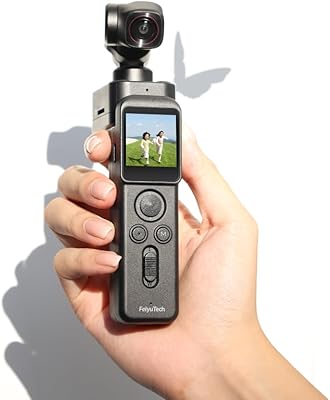
FeiyuTech Pocket 3 Gimbal Camera
74%
91%
Gimbal Stabilization
84%
Video Quality
88%
Detachable Design
76%
AI Subject Tracking
67%
Battery Life
More
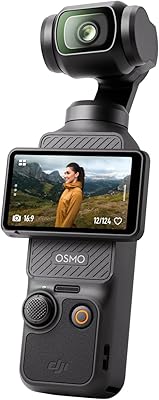
DJI Osmo Pocket 3 Vlogging Camera
83%
93%
Video Quality
88%
Low-Light Performance
96%
Gimbal Stabilization
84%
Subject Tracking (ActiveTrack)
89%
Build Quality & Portability
More
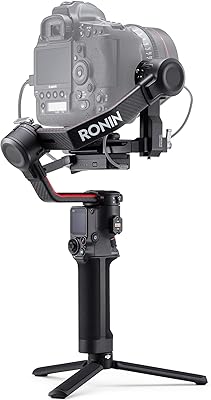
DJI RS 2 3-Axis Gimbal Stabilizer
81%
93%
Build Quality
91%
Stabilization Performance
89%
Payload Capacity
84%
Touchscreen Usability
81%
Balancing & Setup
More
DJI RSC 2 Pro Combo 3-Axis Gimbal Stabilizer
86%
95%
Stabilization Performance
89%
Portability & Design
90%
Ease of Use
85%
Battery Life
88%
Build Quality
More
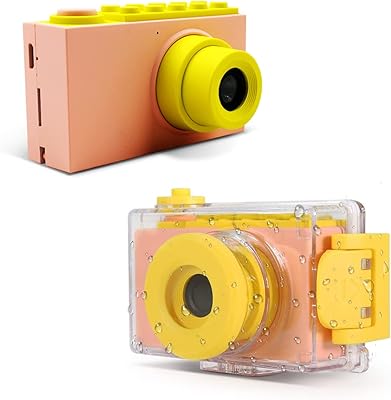
myFirst Camera 2 Kids Waterproof Camera
76%
83%
Waterproof Performance
79%
Build & Durability
91%
Ease of Use for Kids
72%
Photo Quality
61%
Video Quality
More
ZHIYUN Weebill 2 3-Axis Gimbal Stabilizer
77%
83%
Stabilization Performance
88%
Touchscreen Usability
79%
Build Quality & Durability
74%
Ergonomics & Handling
91%
Battery Life
More
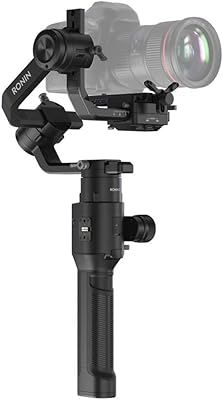
DJI Ronin-S Camera Gimbal Stabilizer
79%
93%
Stabilization Performance
91%
Motor Strength
88%
Build Quality
87%
Cable Integration
86%
Camera Compatibility
More
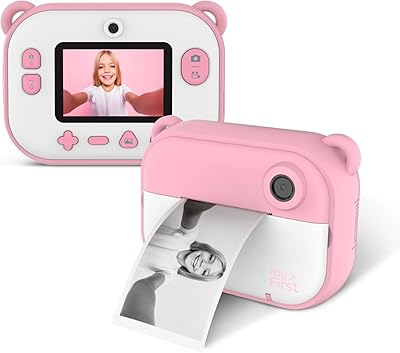
myFirst Insta 2 Kids Instant Print Camera
78%
62%
Print Quality
88%
Ease of Use
79%
Build Quality
83%
Value for Money
72%
Battery Life
More
RunCam Phoenix 2 SE FPV Camera
86%
94%
Video Quality
91%
Build Quality
90%
Field of View
86%
Ease of Setup
88%
Durability
More
DJI Action 2 Power Combo Action Camera
73%
91%
Video Quality
88%
Stabilization
47%
Thermal Management
61%
Battery Life
93%
Portability & Size
More

FAQ

Yes, it operates as a fully standalone camera. You can record video, take photos, and navigate settings using the small built-in touchscreen without any phone attached. Connecting a smartphone via the DJI Mimo app unlocks additional controls and the AI Editor, but it is completely optional for basic shooting.

Not every card on the market is compatible, and this catches a lot of buyers off guard. DJI recommends specific cards including the SanDisk Extreme series and Samsung EVO Plus and Pro lines in UHS-I Speed Grade 1 or Grade 3. Sticking to the recommended list avoids recording errors and dropped frames, especially at 4K.

A phone gimbal stabilizes your phone camera but does nothing for the camera optics or sensor — you are still limited by your phone's image quality. The Pocket 2 pairs hardware gimbal stabilization directly with its own 1/1.7-inch sensor and fixed lens, so the whole system is designed to work together. The result tends to be smoother and optically cleaner, particularly in low light.

It depends on how you shoot. For typical travel use with a mix of short clips throughout the day, most users get through several hours before needing a recharge. Cold weather significantly cuts into battery performance, though. Carrying a small power bank is a smart habit if you plan on shooting all day or in winter conditions.

Absolutely — this is one of the most common use cases. ActiveTrack 3.0 can lock onto your face and follow you as you move, so you can set it on the included tripod mount, step back, and it will keep you in frame. It works best when movement is relatively predictable; fast lateral dashes can occasionally cause it to lose the subject briefly.

No, it does not support RAW video or RAW photo output. Images and footage are processed in-camera and saved as JPEG or standard video files. If your workflow depends on RAW files for color grading or heavy post-processing, this camera will not meet that requirement.

Noticeably better in most real-world scenarios. The four-microphone array with Matrix Stereo captures directional audio and handles wind noise reduction in a way that a single phone microphone simply cannot match. If you are recording outdoor commentary, interviews, or any scene where ambient sound matters, the difference is meaningful rather than marginal.

The lens is fixed at 20mm equivalent with no optical zoom. During video recording you can use digital zoom, but like all digital zoom it comes at a cost to image quality. The 8x zoom with retained quality only applies when shooting 64MP photos, where the extra resolution provides room to crop without obvious degradation.

It works with both. The box includes a Lightning adapter for iPhones and a USB-C adapter for Android devices. The DJI Mimo app requires Android 7.0 or later, which covers the vast majority of Android phones still in active use.

The build feels solid for its size and weight, and most users carry it in a pocket or loose in a bag without issues. That said, the gimbal arms are small mechanical components that can be damaged by a hard drop or significant pressure in a packed bag. The included protective cover is worth using when it is not in your hand — it shields the lens and gimbal head during transport.