Overview

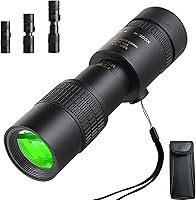
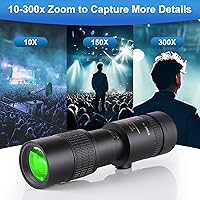
The Belmeri 10-300x40 Monocular Telescope is a compact, budget-oriented optic built for casual outdoor use — the kind of thing you toss in a jacket pocket before a hike or a concert. Its headline claim is a 10x to 300x zoom range, which sounds extraordinary but deserves honest context: with a 40mm objective lens, the upper end of that range is more theoretical than practical. What is genuinely useful is the lightweight, pocket-friendly build — just 8.4 oz and roughly 5 inches long. The BAK-4 prism and fully multi-coated lens give it a respectable optical foundation for an entry-level instrument. Go in with realistic expectations, and this monocular has real merit.

Features & Benefits

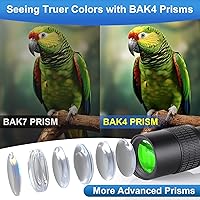
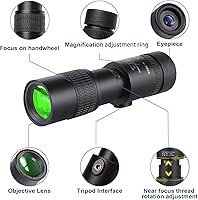
The optical setup centers on a BAK-4 prism paired with fully multi-coated glass — a combination that improves light transmission and reduces internal reflections, producing cleaner, brighter images compared to cheaper BK-7 prism alternatives. A variable zoom ring lets you adjust magnification across the full range, while a dedicated manual focus wheel helps dial in sharpness at different distances. Glasses wearers get a diopter adjustment on the eyepiece, a small but welcome touch. The whole package measures just 5 x 1.8 x 1.8 inches and weighs under 9 oz. One important note upfront: no tripod or smartphone adapter is included, and at higher magnifications you will absolutely want some form of stabilization to get a usable image.

Best For

Casual birdwatchers on day hikes will appreciate the light carry weight — it adds almost nothing to a pack. Concert and stadium sports fans who want a closer look without lugging binoculars will find this pocket telescope genuinely handy. Budget-minded stargazers can get decent views of the moon and bright planets at lower magnifications without spending serious money on dedicated astronomy gear. It also works as a travel companion for anyone who wants occasional long-distance views without heavier optics. As a first optic for a teenager or curious beginner, it is hard to argue with at this price. That said, serious birders, wildlife photographers, or anyone needing consistent high-zoom clarity should look elsewhere.

User Feedback

With a 3.4 out of 5 rating across 181 reviews, buyer opinion on the Belmeri scope lands firmly in mixed territory — and for understandable reasons. On the positive side, owners frequently praise its surprisingly small footprint and image clarity at lower zoom settings, roughly 10x to 30x, where the 40mm objective does its best work. The complaints, though, are consistent: pushing zoom toward the high end produces shaky, dim, and noticeably soft images — a physics problem no budget monocular can escape at this aperture size. Hand tremor becomes a real obstacle without any support. A few buyers also found the build quality adequate but not particularly robust. Fine for light, occasional use; less so for anything demanding.

Pros

  • Extremely compact and light at 8.4 oz — slips into a coat pocket without a second thought.
  • BAK-4 prism with fully multi-coated optics delivers noticeably better light transmission than bare-bones alternatives at this price.
  • Variable zoom gives flexibility for different viewing scenarios, from wide-angle scanning to moderate close-ups.
  • Diopter adjustment on the eyepiece makes it usable for glasses wearers without extra fuss.
  • Manual focus wheel is straightforward and responsive for quick adjustments in the field.
  • Low-magnification image clarity gets consistent praise from buyers — the sweet spot sits roughly between 10x and 30x.
  • Tube length of 6.8 inches makes it easy to steady with one hand during casual use.
  • At this price tier, it offers a genuinely accessible entry point for anyone new to monoculars.

Cons

  • The 300x magnification claim is misleading — a 40mm lens simply cannot produce bright, sharp images at that extreme.
  • Image quality drops off sharply beyond moderate zoom, with softness and dimness becoming obvious.
  • Hand tremor at high magnification makes steady viewing nearly impossible without external support.
  • No tripod is included, yet one is effectively required for any zoom setting above roughly 30x.
  • No smartphone adapter in the box, which surprises buyers who assumed photo capture was part of the package.
  • Build quality is adequate but not confidence-inspiring for rough outdoor conditions or heavy regular use.
  • The focus wheel can require repeated micro-adjustments as zoom changes, slowing down target acquisition.
  • Low-light performance is limited — evening or dawn use quickly exposes the constraints of the 40mm aperture.

Ratings

The scores below reflect our AI-powered analysis of verified global buyer reviews for the Belmeri 10-300x40 Monocular Telescope, with spam, bot-generated, and incentivized feedback actively filtered out to ensure an honest picture. Reviewers ranged from casual hikers and concert-goers to beginner stargazers, giving us a broad cross-section of real-world use cases. Both the genuine strengths and the frustrating limitations are reflected transparently in every category score.

Optical Clarity
61%
39%
At lower magnifications — roughly 10x to 30x — the BAK-4 prism and fully multi-coated lens deliver images that genuinely surprise buyers at this price point. Colors look reasonably accurate in good daylight, and for spotting birds in a tree or reading a sign across a field, the view is clean and usable.
Push the zoom ring much past the midpoint and sharpness deteriorates quickly, with chromatic fringing and softness becoming obvious. Several buyers described images at high zoom as looking like they were shot through frosted glass, which is a direct consequence of the 40mm aperture being asked to do too much.
Zoom Performance
43%
57%
The variable zoom mechanism itself operates smoothly enough, and the range from 10x to around 40x is genuinely functional for most everyday outdoor tasks — spotting wildlife, scanning a stadium, or checking out a distant mountain ridge during a hike.
The 300x headline figure is the single most complained-about aspect of this pocket telescope across all reviews. At extreme zoom, images are dark, unstable, and essentially unusable without a rigid tripod — and even then, the 40mm objective simply cannot gather enough light for a satisfying result. Many buyers felt the top-end claim was outright misleading.
Build Quality
58%
42%
The body feels reasonably solid in hand for the price tier, and the zoom and focus rings turn with decent resistance — not loose or rattly. A handful of buyers who used it regularly over several months reported no mechanical failures, which is a reasonable baseline expectation.
The plastic construction lacks the reassurance of rubberized or metal-bodied alternatives, and several users noticed creaking or minor wobble in the extension mechanism after repeated use. It is not a scope that inspires confidence if you drop it, and buyers who took it on rainy hikes reported concern about moisture ingress.
Portability
89%
At just 8.4 oz and small enough to sit flat in a jeans pocket, this is one of the most genuinely pocketable monoculars available. Hikers and travelers consistently praised being able to carry it all day without feeling it, and concert-goers appreciated having it on hand without occupying bag space.
The trade-off for that compact size is that the eyecup and zoom ring offer a somewhat cramped grip, which a few buyers with larger hands found fiddly. The short body also makes high-magnification hand-holding more difficult than with longer, heavier scopes that rest more naturally against the face.
Ease of Use
72%
28%
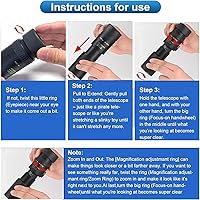
The two-control setup — a central focus wheel and a separate zoom ring — is intuitive enough that most users had the basics figured out within a few minutes. Glasses wearers appreciated the diopter adjustment working reliably without requiring any tools or technical knowledge.
Getting a sharp image requires coordinating both the focus wheel and the zoom ring sequentially, and when zooming in or out, refocusing from scratch is often necessary. A few buyers found the learning curve steeper than expected, particularly when trying to track moving subjects like birds in flight.
Low-Light Performance
47%
53%
In bright daylight conditions the fully multi-coated optics and BAK-4 prism do a reasonable job of delivering a bright, clear image at lower magnifications. For daytime birdwatching or outdoor events in good weather, low-light performance is not a concern.
As light levels drop — even into moderate shade or during the golden hour — image quality degrades noticeably. For any serious dawn or dusk wildlife observation, or attempting to view star clusters at night, the 40mm aperture is simply insufficient to gather enough light for a satisfying experience.
Value for Money
66%
34%
Judged purely against comparable budget monoculars in its price range, the Belmeri scope offers a respectable optical specification — BAK-4 prism, FMC coating, diopter adjustment — that you do not always find at this tier. For a casual user who genuinely only needs occasional, low-magnification viewing, the value equation is fair.
Buyers who purchased primarily because of the 300x claim felt the product did not deliver on its core marketing promise, which undercuts the value perception significantly. If you need reliable performance above 50x or 60x, spending more on a purpose-built instrument will deliver far better return on investment.
Image Stability
38%
62%
At the lowest magnification settings, the Belmeri scope can be hand-held without excessive shake affecting the viewing experience, making it practical for casual scanning during hikes or at events where you just need a quick look.
This is arguably the most consistent complaint across all user reviews: any magnification above roughly 30x amplifies hand tremor to the point where the image becomes difficult to use. Without a tripod — which is not included — sustained high-zoom viewing is essentially not viable for most people.
Focus Accuracy
63%
37%
The manual focus wheel turns with enough resistance to allow fine adjustments, and at lower zoom settings it is generally straightforward to land on a sharp image within a few turns. For stationary subjects in good light, focus accuracy is perfectly adequate.
At higher magnifications the depth of field narrows dramatically, meaning even a slight refocus is often needed after any zoom change. Tracking a moving bird or panning to a new target requires starting the focus process over, which several users described as slow and frustrating in practice.
Durability
54%
46%
For light, infrequent use in dry conditions, the build holds up acceptably well. Several reviewers who used it purely as a travel or concert companion reported no issues after many months of occasional use.
The consensus from buyers who used it more regularly or in outdoor conditions is that the construction feels susceptible to wear. There is no weatherproofing or water resistance to speak of, and the plastic extension mechanism showed loosening in some units after repeated extension and retraction cycles.
Accessories Included
31%
69%
The monocular itself arrives ready to use out of the box, and for buyers who only ever plan to hand-hold it at low magnifications, the lack of extras is not necessarily a dealbreaker in day-to-day casual use.
The absence of both a tripod and a smartphone adapter is a recurring source of buyer frustration, particularly given that the product marketing leans heavily on high-magnification and stargazing use cases that practically require a stable mount. Neither accessory is mentioned prominently until after purchase.
Packaging & Presentation
67%
33%
Buyers generally reported that the product arrived well-packaged with no damage, and the included carry pouch — a basic but functional addition — was appreciated for protecting the optics during travel.
The instruction materials are minimal, which leaves first-time monocular users without much guidance on how to properly set up the diopter and zoom for their specific vision. A few buyers were unsure whether their blurry out-of-box experience was a defect or a setup issue.
Comfort & Ergonomics
59%
41%
The narrow cylindrical body is easy to slip into a pocket and comfortable to hold briefly during casual use. Buyers with average-sized hands generally found the grip natural enough for short viewing sessions at lower magnifications.
Extended viewing sessions at higher zoom settings are tiring because the body offers limited grip surface and no rubberized coating to anchor the hand. A few buyers noted eye strain during longer use, partly due to the narrow exit pupil at high magnification settings.

Suitable for:

The Belmeri 10-300x40 Monocular Telescope is a solid pick for anyone who wants a lightweight, grab-and-go optic without spending serious money. Casual birdwatchers heading out on day hikes will appreciate how easily it slips into a jacket pocket while still delivering clear, usable views at lower magnifications. Concert-goers and sports fans who want a closer look at the action without the bulk of binoculars will find this pocket telescope genuinely practical. Beginners curious about stargazing can get satisfying views of the moon and brighter planets without committing to expensive astronomy equipment. It also makes a thoughtful, low-risk gift for a teenager or hobbyist who wants to explore outdoor observation for the first time.

Not suitable for:

Buyers expecting the Belmeri 10-300x40 Monocular Telescope to deliver sharp, stable images at or near its advertised 300x maximum will almost certainly be disappointed — that claim runs into hard optical physics with a 40mm objective lens, producing dim, blurry, and tremor-sensitive views at extreme zoom. Serious birders, wildlife observers, or anyone who needs consistent, reliable image quality at high magnification should invest in a purpose-built spotting scope instead. Astrophotography or detailed planetary observation is not realistic with this instrument. Buyers who plan to use a smartphone adapter for photos or video should also know upfront that no adapter or tripod is included, and neither is available in the box — those are separate purchases. If long-term durability or rugged field use is a priority, the build quality reported by users suggests this monocular is better suited to occasional, light-duty outings.

Specifications

  • Brand: Manufactured and sold under the Belmeri brand.
  • Zoom Range: Variable magnification from 10x to 300x, adjustable via a dedicated zoom ring.
  • Objective Lens: 40mm objective lens diameter, which governs light-gathering capability and image brightness.
  • Prism Type: BAK-4 borosilicate prism, which offers superior light transmission and edge clarity compared to BK-7 alternatives.
  • Lens Coating: Fully multi-coated (FMC) optics on all air-to-glass surfaces to reduce glare and improve contrast.
  • Eyepiece Type: Super Plossl eyepiece design, providing a relatively wide apparent field of view at lower magnifications.
  • Focus System: Manual focus wheel positioned centrally on the body for single-hand adjustment during use.
  • Diopter Adjust: Rotating diopter ring on the eyepiece allows compensation for individual eye differences, including use with eyeglasses.
  • Dimensions: Body measures 5″ x 1.8″ x 1.8″ with an optical tube length of 6.8 inches when extended.
  • Weight: 8.4 oz (0.24 kg), making it one of the lighter options in the entry-level monocular category.
  • Finderscope: Straight-through finderscope configuration for direct, unobstructed target alignment.
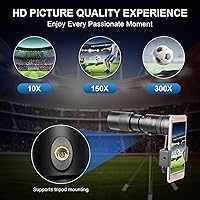
  • Mount Support: Compatible with a triangle bracket mount style, though no tripod is included in the box.
  • Smartphone Adapter: No smartphone adapter is included; one must be purchased separately if photo or video capture is desired.
  • Focus Type: Entirely manual focus with no autofocus mechanism, requiring hand adjustment to achieve a sharp image.
  • Product Rating: Holds an average customer rating of 3.4 out of 5 stars based on 181 verified ratings on Amazon.
  • Availability Date: First made available for purchase on May 21, 2024.
  • BSR Ranking: Ranked #654 in Camera and Photo Products and #113 in the Monoculars subcategory on Amazon.

Related Reviews
HURYSIN 8x42 Monocular
79%
74%
Optical Clarity
83%
Build Quality
88%
Waterproofing
86%
Eye Relief & Comfort
67%
Focus Mechanism
More
URBANCOAST 15x54 Monocular
77%
83%
Optical Clarity
81%
Build Quality
74%
Waterproofing & Weather Resistance
79%
Comfort & Ergonomics
77%
Magnification Performance
More
PhysioPhyx 80x100 Monocular
65%
63%
Optical Clarity
58%
Magnification Performance
61%
Build Quality & Durability
78%
Smartphone Compatibility
86%
Portability & Size
More
Pankoo 40x60 Monocular
73%
74%
Optical Clarity
68%
Magnification Performance
66%
Low-Light Performance
71%
Build Quality
78%
Waterproofing & Weather Resistance
More
OLIMT 8x25 Compact Monocular
75%
83%
Optical Clarity
94%
Portability & Size
76%
Build Quality
88%
Waterproof Performance
86%
Value for Money
More
Pankoo 16x52 Monocular
74%
74%
Optical Clarity
71%
Magnification Performance
52%
Low-Light Performance
77%
Build Quality & Durability
81%
Waterproofing & Fog Resistance
More
FEEMIC SO-1 8x42 Monocular
76%
74%
Optical Clarity
81%
Build Quality
78%
Waterproofing & Weather Resistance
83%
Magnification & Field of View
67%
Ease of Focus
More
Aurosports 10-30x40 Zoom Monocular
71%
83%
Optical Clarity (Low Magnification)
54%
Optical Clarity (High Magnification)
91%
Portability & Size
78%
Build Quality & Durability
76%
Waterproofing & Weather Resistance
More
AYRAVIIO RM 12x60 Monocular Telescope
79%
78%
Optical Clarity
71%
Low-Light Performance
74%
Build Quality
66%
Focus Mechanism
88%
Bundle Value
More
Pankoo 12x50 Monocular Telescope
75%
76%
Optical Clarity
91%
Value for Money
63%
Build Quality
82%
Ease of Use
86%
Accessories Included
More

FAQ

Technically the zoom ring can be pushed toward the top of its range, but practically speaking, the 40mm objective lens does not gather enough light to produce a bright, sharp image at extreme magnification. At very high zoom settings, images become noticeably dim, soft, and extremely sensitive to hand tremor. Most users find the usable sweet spot is somewhere between 10x and 40x, where the optics perform much more reliably.

No tripod is included in the box. For casual low-magnification use you can hand-hold it without much trouble, but once you start pushing the zoom above roughly 30x, even minor hand movement becomes very apparent in the image. If you plan to use this monocular at higher magnifications — for stargazing or distant birdwatching, for example — picking up a small tabletop or travel tripod separately is genuinely worthwhile.

A smartphone adapter is not included with the Belmeri 10-300x40 Monocular Telescope. You would need to purchase a compatible universal phone adapter separately if you want to capture images. Keep in mind that hand-held phone shots through any monocular at elevated magnification will typically show significant blur without a steady mount to support both the scope and the phone.

Yes, there is a diopter adjustment ring on the eyepiece that accommodates glasses wearers. You can leave the eyepiece in its default position and simply look through it with your glasses on, which is the standard approach for most eyeglass users with monoculars.

There are two separate adjustments to work through. First, use the central focus wheel to bring the subject roughly into focus. Then, if the image still looks soft, try the diopter ring on the eyepiece to fine-tune it for your eye. It is also worth making sure the zoom ring is not pushed too high — at extreme settings the image will always look degraded regardless of focus adjustments, so pulling back to a lower magnification often produces a dramatically clearer result.

For casual birdwatching — spotting birds perched in trees or wading near water at moderate distances — the Belmeri scope handles the job reasonably well at lower magnifications. It is light enough to carry all day without noticing it. Serious birders who need fast target acquisition, wide fields of view, or consistent sharpness at long range will likely find it frustrating, but for a weekend hiker wanting to get a closer look, it is a practical, affordable option.

You can get decent views of the moon and very bright objects like Jupiter or Saturn at moderate magnification. The BAK-4 prism and multi-coated optics help with clarity in low-light conditions up to a point, but the 40mm aperture limits how much light this pocket telescope can gather compared to even a small dedicated telescope. It is a fun entry point for someone who is curious about the night sky, but it will not replace a proper astronomy instrument.

The build quality is adequate for light, occasional outdoor use — it feels solid enough in hand and is not obviously fragile. That said, buyer feedback suggests it is not built to withstand rough handling, repeated drops, or prolonged exposure to wet conditions. Treat it as a casual outdoor accessory rather than a rugged field tool, and it should hold up fine for normal weekend use.

Start around 10x to 20x when you first pick it up. At that range the field of view is widest, the image is brightest, and it is much easier to locate and track your subject. Once you have found what you are looking for, you can gradually zoom in from there. Jumping straight to maximum zoom makes it nearly impossible to find anything and the image quality will disappoint.

It is actually a pretty good fit for that use case. It is compact enough for smaller hands, simple to operate once you understand the two adjustment rings, and the price means you are not taking a big financial risk if it gets banged around or outgrown. A curious teenager who enjoys hiking, camping, or watching wildlife will likely get a lot of genuine enjoyment out of it, especially at lower magnifications where the optics perform at their best.