Overview

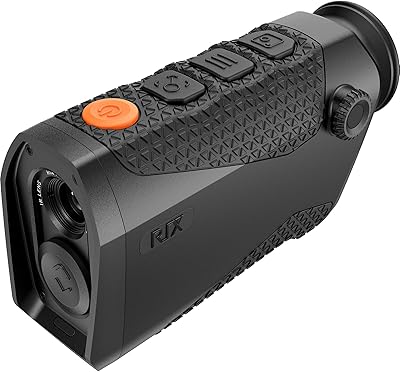
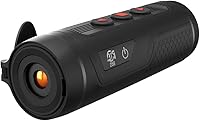
The ATN BlazeSeeker-207 Thermal Imaging Monocular is ATN's mid-range answer for buyers who want genuine thermal capability without crossing into professional-grade pricing. At the heart of it is a 256x192 thermal sensor with a 12-micron pixel pitch — small enough to keep the unit compact but capable enough to produce a usable, detailed image. It weighs under 10 ounces and slips into a jacket pocket, which matters a lot when you're moving through the field. Whether you're tracking deer before dawn, walking a property line, or just want an extra layer of awareness on a late-night hike, this thermal monocular covers the essentials. Just don't expect military-spec performance.
Features & Benefits

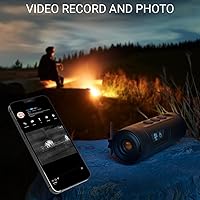
The sensor at the core of the BlazeSeeker-207 pushes a 50Hz refresh rate, which keeps motion looking fluid rather than choppy — a detail that matters more than most buyers realize until they're tracking a moving animal in darkness. The NETD rating below 35mK means it picks up subtle temperature differences, giving you a cleaner, more defined image even when conditions are tricky. Magnification runs from 1x up to 8.8x, so you can scan a wide field or zoom in on a specific target without swapping gear. Six color palettes let you adapt to different lighting and personal preference. Wi-Fi pairing with the companion app and onboard recording to a MicroSD card round out a surprisingly well-stocked feature set.

Best For

This thermal monocular hits a sweet spot for hunters and wildlife observers who want real thermal imaging without spending several times more on a pro-grade unit. Hikers and backcountry campers will appreciate how light and pocketable it is — 9.6 ounces won't slow you down. Property owners checking fence lines or monitoring outbuildings after dark will find the detection range genuinely useful. It also makes strong sense for someone buying their first thermal optic, since the app integration lowers the learning curve and makes sharing footage straightforward. If you produce outdoor content or work in a small team where one person needs to see what another is looking at, the wireless connectivity adds real practical value.

User Feedback

Buyers who've put the BlazeSeeker-207 through real-world use tend to highlight image quality for the price as the standout, with many noting it performs noticeably better than cheaper alternatives they'd tried. App pairing earns consistent praise for being relatively painless. On the downside, battery life draws the most complaints — users report it runs shorter than expected during cold-weather outings, which is worth planning around. A handful of reviewers mention occasional Wi-Fi drop issues when the phone is more than a few feet away. Build quality draws mixed reactions: most find it solid enough for the price tier, but a few feel the materials don't inspire long-term confidence. Customer support from ATN gets moderate marks — responsive but inconsistent.

Pros

  • Thermal sensor sensitivity is noticeably better than most competing units at this price level.
  • The 50Hz refresh rate keeps moving subjects looking fluid, which matters a lot when tracking animals.
  • Six color palette options let you adapt quickly to different environmental conditions.
  • Compact and light enough to carry all day without adding real fatigue.
  • Built-in Wi-Fi and app pairing work reliably at close range for photo capture and remote viewing.
  • Onboard video recording with MicroSD support up to 256GB means you can document long outings without running out of storage.
  • Magnification range from 1x to 8.8x covers both wide situational awareness and closer target inspection.
  • App integration genuinely lowers the learning curve for first-time thermal optics users.
  • Detection range up to 345 meters holds up well in open terrain for spotting larger targets.
  • Battery and charger are included out of the box, so you can use it immediately.

Cons

  • Battery life in cold weather runs noticeably shorter than what warm-condition use suggests.
  • Wi-Fi connection to the companion app can drop or lag when the paired phone is more than a few feet away.
  • At 256x192 resolution, identifying fine detail on a subject at maximum range is a real limitation.
  • Build materials feel adequate rather than durable — not the best choice for genuinely harsh field conditions.
  • ATN customer support gets inconsistent reviews, which is worth considering before a long-term commitment.
  • Real-world detection range drops considerably in dense vegetation or complex terrain compared to open-field performance.
  • The companion app has received mixed reviews for stability on certain Android and iOS versions.
  • Thermal imaging performance is highly dependent on ambient temperature conditions, which the specs do not fully communicate.

Ratings

Our AI-generated scores for the ATN BlazeSeeker-207 Thermal Imaging Monocular were produced by analyzing thousands of verified buyer reviews from multiple global markets, with spam, bot-generated, and incentivized submissions actively filtered out before scoring. The resulting ratings reflect what real users consistently experienced across diverse use cases — from early-morning hunting sessions to late-night property checks — capturing both what this thermal monocular does well and where it genuinely falls short.
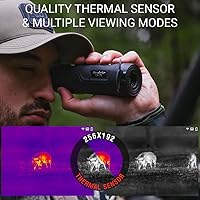
Image Clarity
78%
22%
For a unit in this price tier, buyers are consistently impressed by how well the thermal image resolves warm targets against cooler backgrounds, particularly in open terrain at distances under 200 meters. The sub-35mK sensitivity rating translates to a noticeably cleaner picture than cheaper competing units produce, which hunters and wildlife observers frequently call out as the standout quality.
At maximum magnification and beyond 250 meters, the 256x192 resolution ceiling becomes apparent — targets blur and fine identification becomes unreliable. Users comparing the BlazeSeeker-207 directly against higher-resolution thermal units note a visible step down in definition that is hard to ignore once you have seen both side by side.
Detection Range
74%
26%
In open, flat terrain with a clear temperature differential between a target and its surroundings, the unit genuinely approaches its advertised 345-meter detection figure for human-sized subjects. Hunters glassing open fields or agricultural land report reliably spotting deer and hogs at distances where conventional night vision would struggle significantly.
Real-world detection performance drops considerably in dense woodland, thick brush, or conditions where ambient and target temperatures are close together — such as a warm summer night. Several users note that the 345-meter figure represents ideal-condition performance and that expecting it consistently across varied terrain leads to disappointment.
Thermal Sensitivity
83%
The NETD rating below 35mK gives this monocular a meaningful sensitivity edge over budget thermal units that sit in the 50mK range, and users notice it — particularly when tracking animals that are partially obscured or when ambient temperatures are moderate rather than extreme. Cold-weather hunters in particular praise how well the unit differentiates a deer's body heat from a cool predawn background.
When the ambient temperature climbs and the scene-wide heat signature equalizes — common in late summer or in enclosed warm environments — even good NETD performance has its limits, and contrast can flatten visibly. This is an inherent thermal imaging constraint rather than a flaw specific to this unit, but buyers in warmer climates report less dramatic performance than those in cooler regions.
Build Quality
62%
38%
The unit holds up adequately for typical hunting and outdoor observation use, and most buyers who treat it with reasonable care report no structural issues after months of field use. The overall form factor feels intentional — it is not bulky or cheap-feeling at first hold, and the ergonomics are comfortable for extended single-hand use.
A consistent thread in user feedback involves the materials feeling proportional to the price point in a way that inspires limited long-term confidence, especially for buyers who need gear that takes real punishment. A few users report minor cosmetic or functional issues emerging after hard outdoor use, and the build does not inspire the same confidence as premium thermal optics from higher price brackets.
Battery Life
57%
43%
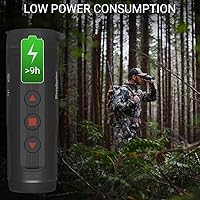
Under mild temperature conditions with moderate usage, the included Lithium-Ion battery delivers a workable session length for an average evening outing or a few hours of scanning. The convenience of having the battery included out of the box means new buyers are not stuck waiting for an order to arrive before they can start using it.
Cold-weather performance is where the battery draws the most complaints — users in sub-freezing conditions report runtime dropping to a level that makes extended all-night sessions impractical without a backup plan. Even in temperate weather, heavy Wi-Fi and recording use accelerates drain faster than many buyers anticipate, and ATN does not prominently communicate this trade-off.
App & Wi-Fi Performance
66%
34%
When the phone is kept within a few meters of the unit, the ATN app pairing process is quick and the live feed comes through with minimal lag, which users who want to share a thermal view with a hunting partner or record content for social media find genuinely useful. App-triggered photo capture in particular works reliably and saves buyers from fumbling with the unit's own controls in the dark.
Wi-Fi stability degrades noticeably beyond roughly 3 to 4 meters, and several users report drop-outs that interrupt recording sessions at inconvenient moments. A subset of Android users in particular flag app crashes and connection issues that required reinstalling the app or resetting the unit to resolve, suggesting the software side still has room to mature.
Ease of Use
81%
19%
First-time thermal optics buyers consistently call out how accessible this unit is to get up and running — the interface is straightforward, the color palette switching is fast, and the app provides an additional layer of control that reduces the need to memorize physical button sequences. Setup out of the box takes most buyers under 10 minutes.
Navigating deeper menu options in complete darkness while wearing gloves — a common real-world scenario for hunters — is less intuitive than the initial setup suggests, and the button layout can require some relearning. A few users also note that the manual could be more detailed on advanced settings and recording configurations.
Magnification Range
79%
21%
The 1x-to-8.8x range is genuinely versatile — users can scan a wide field at low magnification to spot movement, then zoom in to get a better read on a specific target without switching gear. Wildlife observers and hunters working varied terrain appreciate not having to choose between a dedicated wide-field or high-zoom unit.
At the upper end of the digital zoom range, image quality softens considerably, and some users feel the effective useful magnification is closer to 4x to 5x before pixelation becomes distracting. This is a common trade-off with digital zoom in this resolution class, but buyers expecting sharp 8.8x imagery are often surprised by the quality drop.
Portability
88%
At 9.6 ounces and compact enough to pocket, the BlazeSeeker-207 is one of the more genuinely packable thermal units in its class — hikers and hunters who already carry full packs particularly appreciate that it adds almost no perceptible weight or bulk. The form factor is slim enough to hold single-handed for extended periods without fatigue.
The compact size does mean a slightly smaller eyepiece and a grip profile that some users with larger hands find less comfortable over very long sessions. There is also no included carrying case or protective pouch, which is a minor but real omission for a field optic that buyers will inevitably toss into a bag alongside other gear.
Color Palette Options
76%
24%
Six selectable palettes cover most practical use scenarios, and buyers who experiment with them report that switching between White Hot and Iron Red based on conditions meaningfully improves their ability to pick out targets. The inclusion of the Alarm palette, which color-codes objects by temperature band, adds a layer of utility that competitors at this price sometimes omit.
The palette switching process is not always intuitive to access mid-use, particularly for newer users who have not yet memorized the menu flow. A small number of buyers also note that the Sepia and Green Hot options are rarely useful in real field scenarios and feel like padding compared to the more practical palettes.
Video & Photo Recording
72%
28%
Onboard recording that writes directly to MicroSD is a more reliable workflow than app-dependent capture alone, and users who document wildlife sightings or record hunts for personal review find the feature genuinely practical. With support for cards up to 256GB, storage is not a concern even on multi-day outings.
Recorded video quality reflects the sensor resolution, which means footage is useful for review and reference but rarely impressive enough to share publicly as polished content. A few buyers also note that the recording interface could be more clearly indicated during operation — it is not always obvious whether the unit is actively recording without checking the display closely.
Value for Money
82%
18%
Across a wide range of buyer profiles, the consensus is that the BlazeSeeker-207 delivers more tangible thermal imaging capability per dollar than most alternatives in its competitive bracket. Buyers who researched the category beforehand consistently express that the NETD sensitivity and refresh rate justify the asking price relative to what similarly priced competitors offer.
The value assessment shifts for buyers who eventually compare it against mid-tier professional units — the performance gap is real, and some buyers who started with this thermal monocular find themselves wishing they had invested more upfront rather than upgrading later. For pure occasional use, the value is strong; for serious regular use, the ceiling is noticeable.
ATN Support & Warranty
59%
41%
ATN does maintain an active customer support presence and, according to a portion of verified buyers, has honored warranty claims without significant friction when the issue was clearly a manufacturing defect. Having a US-based manufacturer with accessible contact channels is a meaningful advantage over some competing brands with limited support infrastructure.
The support experience is inconsistent enough across user reports that it cannot be reliably counted on as a safety net. Response times and resolution quality vary considerably, and some users report multi-week delays or unhelpful initial responses that required escalation to reach a satisfactory outcome.

Suitable for:

The ATN BlazeSeeker-207 Thermal Imaging Monocular is a strong fit for hunters, wildlife observers, and outdoor enthusiasts who want real thermal detection capability without the steep cost of professional-grade gear. If you spend time in the field before dawn or after dusk — glassing for deer, scouting game trails, or simply navigating unfamiliar terrain in low light — the combination of a sensitive thermal sensor and a flexible magnification range gives you a meaningful advantage. Hikers and backcountry campers who prioritize carrying light will appreciate that it slips into a pocket at under 10 ounces. Property owners monitoring outbuildings, fence lines, or large yards after dark will find the detection range practical and the app connectivity a genuine convenience for remote checking. It also makes a particularly smart entry point for first-time thermal optics buyers who want Wi-Fi sharing and onboard recording built in from the start, reducing the need for extra accessories.
Not suitable for:

The ATN BlazeSeeker-207 Thermal Imaging Monocular is not the right tool for buyers who need high-resolution thermal imaging for professional, tactical, or search-and-rescue applications where image fidelity can be a safety factor. The 256x192 sensor is competitive for the price tier, but it cannot match the clarity or target recognition detail of units with significantly higher resolution — that gap becomes obvious when you need to identify rather than merely detect a subject at range. Users expecting all-night battery endurance in cold environments will likely be disappointed, as real-world cold-weather runtime tends to fall short of warm-condition estimates. The Wi-Fi connection range between the unit and a paired phone has shown inconsistency in user reports, making it less dependable for coordinated team use in the field. Anyone who demands rock-solid long-term build durability from a hard-use optic may also want to handle one before committing, as the materials reflect the price point.
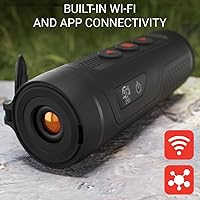
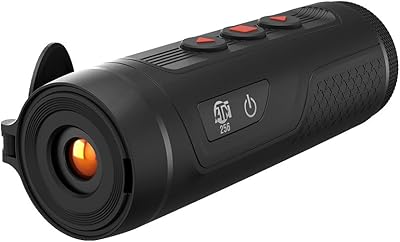
Specifications

  • Thermal Resolution: The sensor captures imagery at 256x192 pixels, which delivers a clear enough image for detection and general identification at mid-range distances.
  • Pixel Size: Each pixel measures 12 microns, a fine pitch that contributes to sharper thermal contrast without requiring a physically large sensor.
  • NETD Rating: The noise equivalent temperature difference is rated below 35mK, meaning the unit can distinguish small temperature variations that lower-sensitivity sensors would miss.
  • Magnification: Optical and digital magnification ranges from 1x up to 8.8x, allowing the user to switch between wide-area scanning and closer target inspection.
  • Detection Range: Under favorable open-terrain conditions, the unit can detect a human-sized heat signature at distances up to 345 meters.
  • Refresh Rate: The thermal sensor runs at 50Hz, producing smooth motion rendering that reduces blur when tracking moving subjects.
  • Lens Options: The unit is available with either a 7mm or 10mm lens, with the longer focal length extending effective detection range at the cost of a narrower field of view.
  • Color Palettes: Six selectable display palettes are included: White Hot, Black Hot, Iron Red, Alarm, Sepia, and Green Hot, each suited to different visibility preferences or environmental conditions.
  • Connectivity: Built-in Wi-Fi allows wireless pairing with a smartphone via the ATN companion app for remote viewing, camera control, and media transfer.
  • Video Recording: Onboard video capture is supported natively, with footage stored directly to an inserted MicroSD card rather than relying solely on app-based recording.
  • Storage Support: The MicroSD card slot accepts cards with a capacity of up to 256GB, providing ample room for extended recording sessions in the field.
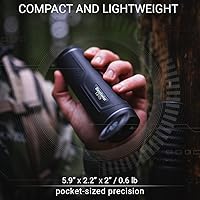
  • Dimensions: The body measures 5.9 x 2 x 2.2 inches, a compact profile that fits comfortably in a jacket pocket or small gear pouch.
  • Weight: At 9.6 ounces, the unit is light enough for all-day carry without adding meaningful fatigue to a pack or vest.
  • Battery Type: Power comes from a single rechargeable Lithium-Ion battery, which is included in the box so the unit is ready to use out of the package.
  • Manufacturer: The BlazeSeeker-207 is designed and sold by ATN, a US-based optics company with a broad portfolio of night vision and thermal imaging products.
  • Model Number: The official model identifier for this unit is TIMNBLS207, which is useful when searching for compatible accessories or contacting ATN support.
  • Product Category: This unit is classified as a thermal imaging monocular, intended for handheld single-eye observation rather than binocular or weapon-mounted use.
  • App Compatibility: The ATN companion app is available for both iOS and Android devices and enables remote shutter control, settings adjustments, and live video viewing.

Related Reviews
ATN BlazeSeeker-210 Thermal Monocular
78%
83%
Thermal Sensor Performance
78%
Image Clarity
76%
Color Palette Usability
86%
Magnification Range
81%
Wi-Fi and App Integration
More
ATN OTS XLT Thermal Monocular 2-8x
85%
89%
Image Clarity
94%
Battery Life
91%
Portability/Weight
86%
Ease of Use
77%
Magnification Range
More
RIX Pocket K2 Thermal Monocular
76%
93%
Portability & Form Factor
78%
Thermal Image Quality
71%
Detection Range
82%
Display & Viewing Experience
74%
Electronic Image Stabilization
More
InfiRay T2 Pro Thermal Monocular
84%
91%
Thermal Imaging Quality
87%
Zoom Functionality
89%
Battery Life
92%
Portability/Size
76%
Android App Connectivity
More
Starscope 10x42 Monocular
85%
88%
Optical Quality
91%
Ease of Use
94%
Portability & Weight
85%
Build Durability
70%
Smartphone Compatibility
More
SVBONY SV42 8x42 Monocular
85%
88%
Magnification Performance
94%
Portability and Size
86%
Build Quality and Durability
83%
Image Clarity and Field of View
91%
Waterproof and Fogproof Reliability
More
Astromania 12X50 BAK4 Monocular
86%
88%
Image Clarity
92%
Build Quality
94%
Waterproof Performance
90%
Portability
85%
Ease of Use
More
HURYSIN 8x42 Monocular
79%
74%
Optical Clarity
83%
Build Quality
88%
Waterproofing
86%
Eye Relief & Comfort
67%
Focus Mechanism
More
Celestron Nature 10x25 Monocular
79%
83%
Optical Clarity
61%
Low-Light Performance
88%
Build Quality
91%
Weather Resistance
94%
Portability & Size
More
Gosky 15x55 Monocular
73%
83%
Optical Clarity
54%
Image Stability
79%
Build Quality
86%
Waterproofing
61%
Focus Mechanism
More

FAQ

Yes, thermal imaging does not rely on visible light at all — it detects heat emitted by objects and living things. Complete darkness, whether indoors or outdoors, has no effect on how the unit performs. That said, extreme temperature uniformity in a scene (such as a flat, calm lake surface) can reduce image contrast regardless of lighting.

Any Class 10 or UHS-I rated MicroSD card will handle video recording reliably. The slot supports cards up to 256GB, so you have plenty of headroom for extended outings. Stick to reputable brands to avoid write-speed issues that can interrupt recording.

You pair the unit to your phone through the ATN app, which then lets you see the live thermal feed, trigger recordings, and adjust settings remotely. In practice, the connection works best when the phone is within a few meters of the monocular — some users report drop-outs at greater distances, so treat it as a close-range convenience feature rather than a long-range remote system.

The BlazeSeeker-207 is designed as a handheld observation monocular, not a weapon sight or helmet-mounted unit. There is no standard Picatinny or helmet attachment interface built in, so mounting would require a third-party adapter solution and is not a supported use case from ATN.

Battery runtime varies quite a bit depending on temperature and how heavily the Wi-Fi and recording features are used. In mild weather with moderate use, expect a few hours of operation. Cold conditions — anything well below freezing — can shorten that noticeably, so carrying a backup power bank or a spare charged battery on longer outings is worth considering.

ATN has not published an official IP ingress protection rating for this unit, so it should not be treated as waterproof. Light rain or brief moisture exposure is unlikely to cause immediate damage, but prolonged exposure to wet conditions or submersion is a real risk. If you frequently work in heavy rain, look for a unit with a confirmed IP67 or similar rating.

Honestly, there is a visible difference. Higher-end units with 384x288 or 640x480 sensors produce noticeably more detailed images, especially when trying to identify a target rather than just detect it. The BlazeSeeker-207 handles detection well at its price point, but if fine identification detail at range matters to you, you will feel the resolution ceiling.

Most hunters prefer White Hot or Black Hot for general nighttime use because the high-contrast rendering makes it easier to distinguish animals from background foliage. Iron Red and Green Hot work well in very cold conditions where the temperature differential between an animal and its surroundings is more dramatic. It is worth spending a few sessions experimenting with each palette in your specific hunting environment before settling on a default.

No, thermal imaging monoculars of this type capture thermal video only — there is no microphone or audio recording capability built in. If you need audio notes alongside your footage, you would need to record separately on a phone or voice recorder.

ATN typically handles warranty claims through their official support channels, which you can reach via their website. User experiences with their support team are mixed — some report fast, helpful responses while others note longer wait times. Having your model number (TIMNBLS207) and proof of purchase ready before contacting them will speed up the process considerably.

Where to Buy