Overview

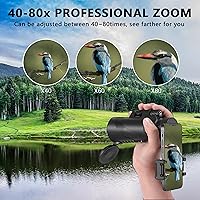
The PhysioPhyx 80x100 Monocular is a budget-friendly optic that promises serious magnification power without the serious price tag — and that promise is worth examining carefully. On paper, 80x magnification with a 100mm objective lens sounds impressive, but entry-level optics at this tier come with real trade-offs any honest buyer should understand upfront. That said, this monocular is genuinely compact and light, making it easy to toss in a daypack without a second thought. Smartphone compatibility via an included mount also sets it apart from more traditional single-lens optics, opening it up to a wider range of casual outdoor users.
Features & Benefits

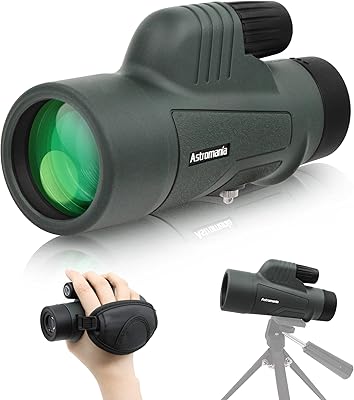
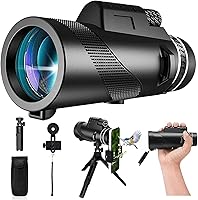
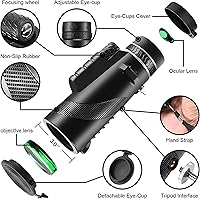
The fully coated lens is one of the more practical specs here — it aids light transmission and cuts down on glare, which matters when you're scanning a treeline at dusk or watching birds against a bright sky. The Plössl eyepiece tends to deliver a wider, cleaner field of view than basic alternatives, and the adjustable eyecup adds comfort for eyeglass wearers. Manual focus is simple and responsive once you get a feel for it. At roughly 15 ounces, the PhysioPhyx scope is easy to carry single-handed, and the included tripod and smartphone bracket make it practical for sharing views or capturing distant shots.

Best For

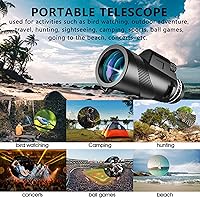
This handheld telescope is a solid match for beginners who want to explore outdoor optics without committing to a high-end purchase. Casual birdwatchers and wildlife observers will find it useful for spotting distant subjects on hikes or nature walks, while travelers who want to frame distant landscapes through their phone will appreciate the smartphone pairing. It also holds its own at outdoor events — concerts, sports matches — where you need occasional close-up views. Aspiring stargazers on a tight budget can use it as a low-commitment introduction to night sky observation, though realistic expectations going in will help considerably.

User Feedback

With over 2,000 ratings averaging 4 stars, this monocular has earned a broad base of generally satisfied buyers. Most praise centers on portability and quick setup — people appreciate how fast the smartphone bracket snaps on and how little room the whole kit takes in a bag. Where things get mixed is image sharpness at full magnification. At 80x, any hand tremor is amplified considerably, and without the tripod, views turn shaky fast. Some buyers also flagged that the build feels lightweight in a plastic-y way, which is not surprising at this price but worth knowing. Those who go in with grounded expectations tend to come away satisfied.

Pros

  • Genuinely compact and light enough to slip into a daypack without sacrificing other gear
  • The smartphone bracket clips on quickly and works across a wide range of phone sizes
  • 80x magnification pulls in distant subjects that lower-powered scopes simply cannot reach
  • Fully coated lens handles bright daytime conditions better than bare-glass alternatives
  • Includes a tripod right out of the box, which is essential for stable high-magnification viewing
  • The Plössl eyepiece delivers a wider, cleaner field of view than basic eyepiece designs
  • Adjustable eyecup makes it comfortable for eyeglass wearers during extended sessions
  • Setup is intuitive enough that first-time monocular users get going within minutes
  • Complete kit packaging means buyers have everything they need without additional purchases

Cons

  • Handheld image stability at 80x is essentially unworkable without the tripod as a crutch
  • Optical sharpness drops off noticeably at maximum magnification, especially on subject edges
  • Low-light and nighttime performance is weak — not viable for serious stargazing sessions
  • The plastic construction feels noticeably light and raises legitimate long-term durability questions
  • Focus wheel becomes hypersensitive at high magnification, making moving subjects hard to track
  • Smartphone bracket alignment requires trial and error and can shift during extended shooting
  • The bundled tripod is lightweight and wobbles on uneven or outdoor terrain
  • Image softness at distance disappoints buyers who expect mid-range optical performance
  • No weatherproofing rating makes it a risky choice for wet or humid outdoor conditions

Ratings

The PhysioPhyx 80x100 Monocular has been evaluated by our AI rating system after deep analysis of thousands of verified global buyer reviews, with spam, bot-generated, and incentivized feedback actively filtered out. Scores reflect real-world usage patterns across a wide range of buyers — from backyard birdwatchers to trail hikers — and both the genuine strengths and the honest shortcomings are weighted equally in each category. What you see below is an unvarnished look at where this handheld telescope delivers and where it asks for a little patience.
Optical Clarity
63%
37%
For casual daytime use at moderate distances, many buyers found the image quality surprisingly watchable — bright enough to track birds in a tree or scan a hillside without frustration. The fully coated lens does a decent job of pulling in light under good conditions.
At full 80x magnification, sharpness drops off noticeably, especially toward the edges of the frame. Multiple reviewers described distant subjects as slightly soft or hazy, which is a known limitation of high-magnification optics at this price point.
Magnification Performance
58%
42%
The 80x capability genuinely lets you pull in very distant subjects — a bird on a faraway branch, a deer at the tree line — in ways that lower-powered monoculars simply cannot. For occasional wow-factor moments, it delivers.
Sustaining a clear, stable image at 80x handheld is practically impossible for most users. The slightest movement turns the view into a blur, and many buyers only realized after purchase that a tripod is not optional at this magnification — it is essential.
Build Quality & Durability
61%
39%
The scope feels reasonably solid for its weight class and most buyers reported no issues out of the box. It handles normal outdoor handling without obvious problems, and the focus wheel operates smoothly on most units.
The plastic-dominant construction is apparent the moment you pick it up, and a subset of buyers flagged issues with the eyecup loosening over time or the focus wheel developing slop after extended use. It does not feel built to last years of serious field use.
Smartphone Compatibility
78%
22%
The quick-attach smartphone bracket is one of the more praised aspects of this scope. It clips on fast, accommodates a wide range of phone sizes, and lets users capture or share distant views without needing a separate adapter — a genuinely practical inclusion.
Alignment between the phone lens and the eyepiece takes some trial and error, and smaller or larger phones occasionally sit slightly off-center. A few buyers noted that long shooting sessions cause the bracket to shift, requiring readjustment.
Portability & Size
86%
At under a pound and compact enough to slide into a jacket pocket or a small pouch, this monocular is genuinely grab-and-go. Hikers and travelers consistently highlight how little space it takes up compared to binoculars with similar magnification claims.
The included tripod, while useful, adds bulk to the carry kit. Without it, high-magnification use is largely impractical, so buyers who want a truly minimalist setup may find the full package less compact than they expected.
Tripod & Accessories
71%
29%
The bundled tripod is a thoughtful inclusion and adds real functional value — at 80x, it transforms the scope from a shaky novelty into something actually usable for sustained viewing. Most buyers appreciated having it right out of the box.
The tripod itself is lightweight to the point of being wobbly on uneven ground. Wind or minor vibrations transmit easily through the legs, and a few buyers swapped it out for a heavier third-party option fairly quickly.
Ease of Use
77%
23%
Setup is intuitive — attach the bracket, mount on the tripod, and adjust the focus wheel. First-time monocular users generally get comfortable within a few minutes, and the adjustable eyecup makes it accessible for eyeglass wearers too.
Achieving a sharp focus at maximum magnification has a steeper learning curve than expected. Several buyers noted that small focus wheel adjustments make a big difference at 80x, and getting the sweet spot consistently takes practice.
Low-Light Performance
49%
51%
Under full daylight the 100mm objective pulls in reasonable brightness, and some buyers had passable results at dusk for wildlife observation. The coated lens does help compared to uncoated alternatives in this class.
Once light drops significantly — twilight stargazing or early morning birding — image quality deteriorates quickly. Buyers who expected solid low-light capability for astronomy were generally disappointed, as the optics simply do not gather enough light for true night use.
Value for Money
74%
26%
Relative to its asking price, the scope offers a lot of headline specs and a complete accessory kit. For buyers who understand they are buying an entry-level optic and set expectations accordingly, the value proposition holds up reasonably well.
Buyers who purchased based on the 80x specification alone often felt misled once they experienced the real-world image quality limitations. The gap between advertised capability and practical daily performance is wide enough to frustrate buyers expecting mid-range results.
Focus Mechanism
69%
31%
The manual focus wheel has decent travel and most units ship with smooth, consistent action. For stationary subjects, it is easy enough to dial in a clear image at lower magnification ranges where the optics perform best.
At maximum magnification, the focus wheel becomes hypersensitive — tiny adjustments cause large shifts, making it difficult to lock onto a moving subject. A handful of reviews flagged units where the focus wheel felt gritty or stiff from the start.
Field of View
66%
34%
The Plössl eyepiece contributes to a reasonably wide field of view for the category, which helps with tracking moving subjects like birds in flight. Buyers coming from budget scopes with narrower views often noticed the difference positively.
As magnification increases, the effective field of view narrows considerably, which makes locating and tracking subjects harder. Buyers using it for fast-moving wildlife at full zoom reported losing targets frequently.
Image Stability
44%
56%
When properly mounted on the included tripod on flat, stable ground, the view steadies enough for extended observation sessions. Several buyers mentioned this setup working well for stationary subjects like buildings or distant landscapes.
Handheld stability at 80x is essentially unworkable for most people. Even resting the scope against a solid surface only partially helps. This is the single most common frustration across buyer reviews and a fundamental constraint of extreme magnification at this size.
Packaging & Unboxing
73%
27%
The product arrives well-protected and most buyers described a positive unboxing experience. All accessories — bracket, tripod, lens caps, and carry pouch — are present and accounted for, which creates a solid first impression.
The instruction manual is basic and translated inconsistently, leaving some buyers to figure out the smartphone bracket alignment on their own. Better documentation would reduce the learning curve for first-time users.
Weather Resistance
41%
59%
The scope handles brief outdoor use in dry to lightly damp conditions without issue for most buyers. For fair-weather hikes and casual outdoor events, it holds up adequately under normal handling.
There is no stated weatherproofing rating and the construction does not inspire confidence in wet conditions. Buyers who used it during light rain or near water reported concerns about moisture entering the lens housing, and long-term humidity exposure is a real risk.

Suitable for:

The PhysioPhyx 80x100 Monocular is a strong fit for outdoor beginners who want to explore distant subjects without spending heavily on premium optics. Casual birdwatchers, wildlife spotters, and nature hikers will get genuine utility out of it during daytime outings, where lighting conditions work in the scope's favor. Travelers who want to share scenic views through their smartphone — rather than squinting through an eyepiece alone — will appreciate the included bracket more than most. It also works well as an introductory stargazing tool for curious beginners who are not yet ready to commit to a dedicated telescope. Campers, concertgoers, and sports fans who just want occasional close-up views on the go will find it compact enough to carry without complaint.
Not suitable for:

Serious optics enthusiasts, working wildlife photographers, or anyone who needs consistently sharp, stable images at maximum magnification should look elsewhere — the PhysioPhyx 80x100 Monocular is simply not built for that level of demand. The 80x magnification figure sounds impressive, but at that power, any vibration — even a heartbeat — disrupts the image, and the optical quality does not match what experienced users expect from high-magnification viewing. Low-light performance is a real weak point, which rules it out for dedicated astronomy sessions or dawn-and-dusk wildlife work. Buyers who plan to use it handheld at full zoom will almost certainly be frustrated; the tripod is not a bonus accessory here, it is a necessity. Those who have used mid-range or professional optics before will likely find the build and image quality a noticeable step down from what they are used to.
Specifications

  • Magnification: This monocular offers 80x magnification, allowing users to observe subjects at significant distances under favorable lighting conditions.
  • Objective Lens: The objective lens measures 100mm in diameter, designed to gather light and support brightness during daytime outdoor use.
  • Eyepiece Type: A Plössl eyepiece is used, which typically provides a wider and cleaner field of view compared to simpler single-element eyepiece designs.
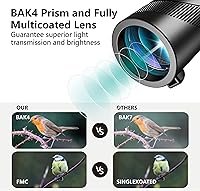
  • Lens Coating: All optical surfaces are fully coated to improve light transmission, reduce internal glare, and support image brightness.
  • Focus Type: Focusing is achieved manually via a centrally located focus wheel that adjusts the optical path for sharp viewing at varying distances.
  • Dimensions: The unit measures 7″ deep by 3″ wide by 4″ tall, making it compact enough for daypack or jacket pocket carry.
  • Weight: The scope weighs approximately 15.8 oz (0.45 kg), light enough for comfortable single-handed use during outdoor activities.
  • Eyecup: An adjustable eyecup allows users to customize eye relief distance, which is particularly useful for eyeglass wearers.
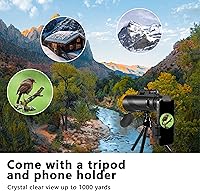
  • Smartphone Mount: A quick-attach smartphone bracket is included and designed to accommodate a wide range of modern smartphone sizes for afocal photography.
  • Tripod: A lightweight tabletop or mini tripod is included in the kit to support stable viewing, which is especially important at high magnification.
  • Finderscope: The scope uses a reflex-style finderscope to assist with quickly locating and centering distant subjects in the field of view.
  • Power Source: The unit is listed as battery powered, though this likely refers to optional accessories rather than the core optical function.
  • Compatibility: The smartphone bracket is compatible with various iOS and Android smartphone models across a standard size range.
  • Use Cases: Intended use cases include birdwatching, wildlife observation, stargazing, hiking, hunting, camping, travel, concerts, and sporting events.
  • Brand: Manufactured and sold under the PhysioPhyx brand, with the product first made available in May 2022.
  • Model Number: The official item model number listed by the manufacturer is 1, with ASIN B0BKQV6GN3 for marketplace identification.
  • Carry Pouch: A soft carry pouch is typically included in the packaging to protect the scope and accessories during transport and storage.
  • Lens Caps: Protective lens caps for both the objective and eyepiece ends are included to prevent scratching and dust accumulation during storage.

Related Reviews
Starscope 10x42 Monocular
85%
88%
Optical Quality
91%
Ease of Use
94%
Portability & Weight
85%
Build Durability
70%
Smartphone Compatibility
More
Belmeri 10-300x40 Monocular
80%
91%
Value for Money
88%
Portability & Size
84%
Image Quality at Moderate Zoom
77%
Zoom Magnification Performance
72%
Focus Precision
More
SVBONY SV42 8x42 Monocular
85%
88%
Magnification Performance
94%
Portability and Size
86%
Build Quality and Durability
83%
Image Clarity and Field of View
91%
Waterproof and Fogproof Reliability
More
Leica Monovid 8x20 Monocular
85%
94%
Optical Clarity
96%
Build Quality
91%
Portability & Size
88%
Close-Focus & Macro Performance
89%
Weather & Fog Resistance
More
OLIMT 8x25 Monocular Telescope
87%
91%
Optical Clarity
88%
Build Quality & Durability
93%
Portability & Weight
89%
Waterproof Performance
84%
Ease of Use
More
HURYSIN 8x42 Monocular
79%
74%
Optical Clarity
83%
Build Quality
88%
Waterproofing
86%
Eye Relief & Comfort
67%
Focus Mechanism
More
Pankoo 16x52 Monocular
74%
74%
Optical Clarity
71%
Magnification Performance
52%
Low-Light Performance
77%
Build Quality & Durability
81%
Waterproofing & Fog Resistance
More
Brunton Echo 7x18 Monocular
73%
94%
Portability
76%
Optical Clarity (Daytime)
47%
Low-Light Performance
82%
Build Quality & Durability
78%
Magnification Usability
More
Astromania 8x42 BAK4 Monocular
77%
83%
Optical Clarity
79%
Build Quality
77%
Waterproofing & Weather Resistance
91%
Portability & Size
68%
Ease of Focus
More
URBANCOAST 15x54 Monocular
77%
83%
Optical Clarity
81%
Build Quality
74%
Waterproofing & Weather Resistance
79%
Comfort & Ergonomics
77%
Magnification Performance
More

FAQ

Technically you can hold it by hand, but at 80x magnification, even the slightest hand tremor makes the image shake considerably. For casual lower-magnification viewing, handheld works fine. But if you want to use it at full power and actually see something clearly, the tripod is not optional — it is the difference between a usable view and a blurry mess.

The bracket clips onto the eyepiece end of the scope and holds your phone's camera lens directly over the eyepiece. It adjusts to fit most standard smartphone sizes, so flagship phones with wider frames generally work fine. Alignment takes a little trial and error the first time, but once you dial it in, sharing or capturing views is straightforward.

It can work for casual stargazing — spotting the moon in detail or picking out brighter planets is achievable. That said, its low-light performance is limited compared to dedicated astronomy equipment, and 80x on a lightweight monocular is harder to control than on a stable telescope mount. Think of it as a curious starter experience, not a serious astronomy tool.

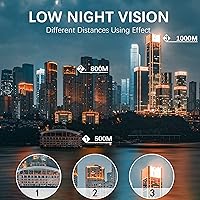
Under good daylight conditions, the 80x magnification can pull in subjects that are several hundred meters to over a kilometer away. The practical limit depends heavily on atmospheric conditions, available light, and how steady you can keep the scope. Hazy or overcast days will reduce effective range noticeably.

There is no official weatherproofing or water resistance rating listed for this scope. Light splashing is unlikely to cause immediate damage, but using it in rain or near water carries real risk of moisture getting into the housing. If you regularly hike or work in wet conditions, look for a model with an explicit IPX waterproofing rating.

Use a soft microfiber cloth and, if needed, a small amount of lens-safe cleaning solution. Never wipe a dry lens directly — blow off any loose dust or grit first using a blower brush or gentle breath. Avoid paper towels or clothing fabrics, which can leave fine scratches on coated optics over time.

The manufacturer lists it as suitable for adults, and the focus mechanism and tripod setup do require some patience and hand coordination. Older teens with an interest in nature or astronomy would likely handle it fine. For younger children, unsupervised use with the tripod at full extension is probably not the best fit.

At 80x, the field of view narrows significantly — which is normal for high-magnification optics. Tracking a moving bird or animal at full zoom is genuinely challenging because the target exits the frame quickly. Most users find it more practical to use at moderate magnification for moving subjects and reserve full zoom for stationary targets.

Yes, the adjustable eyecup is specifically designed to accommodate eyeglass wearers by allowing you to retract it and bring your eye closer to the lens. You may need to experiment a bit with the position to get the full field of view without vignetting, but most eyeglass users find a comfortable position after a short adjustment period.

The kit includes the monocular itself, a quick-attach smartphone bracket, a lightweight tripod, protective lens caps for both ends, and a soft carry pouch. Everything you need for basic outdoor use is there from day one, which makes it a reasonably complete starter package without requiring any additional purchases.

Where to Buy