Overview

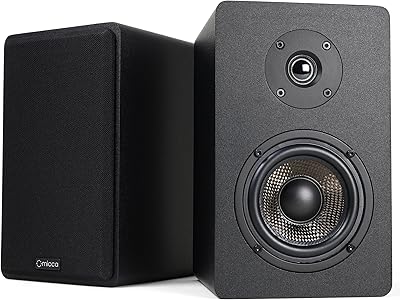
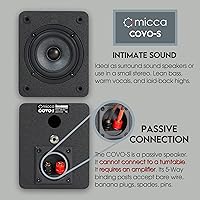
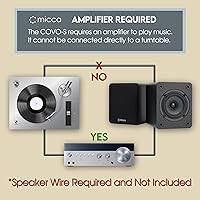
The Micca COVO-S Bookshelf Speakers are a compact passive speaker pair from a brand that has quietly built a devoted following among budget-conscious audio enthusiasts. The first thing to understand — and this really matters — is that an amplifier is required. These do not plug into a phone, laptop, or turntable directly. What you get for that extra step is a genuinely considered speaker design in a cabinet barely 5 inches tall, built around a wool fiber woofer and a concentric tweeter. For anyone taking their first real step into stereo listening, these compact bookshelf speakers represent a surprisingly thoughtful entry point into the hobby.
Features & Benefits

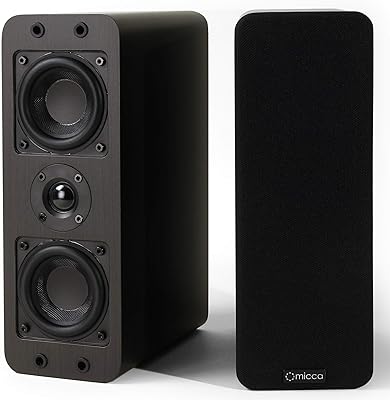
The wool fiber woofer is worth paying attention to — wool cones damp resonance more naturally than polypropylene, which translates to warmer, more forgiving midrange reproduction. The 0.75-inch PEI tweeter sits concentrically within the woofer, meaning both drivers share the same acoustic center. In practice, this helps vocals and instruments sound more cohesive, especially during crossover transitions. The ported wooden cabinet pushes usable bass down to around 90Hz — respectable for a cabinet this size, though not earth-shaking. What often goes unmentioned is the wall-mount capability: with optional brackets, the COVO-S pair can function as rear surround channels, making them genuinely versatile beyond a simple desktop setup.

Best For

These passive speakers are best suited to listeners who already own, or are willing to buy, a basic stereo amplifier or AV receiver. That could mean a college student building a first proper desktop setup, or someone assembling a budget 5.1 home theater on limited square footage. Apartment listeners will appreciate the compact footprint — at under 4.5 inches wide, they fit almost anywhere without dominating the room. Anyone currently using a soundbar or wireless speaker who wants to understand what a real stereo image sounds like will find the COVO-S pair a low-risk, educational upgrade. Deep bass lovers should look elsewhere or budget for a subwoofer.

User Feedback

Owners consistently highlight the warm, clear midrange as the standout quality — voices and acoustic instruments come through with surprising naturalness at this price tier. The most common complaint is predictable: limited low-end output. Many buyers report that adding even a modest subwoofer transforms the experience significantly. A few users noted some cabinet resonance when pushed to higher volumes, which is worth keeping in mind for larger rooms. Perhaps the most telling pattern is how often long-term owners describe these compact bookshelf speakers as the purchase that pulled them deeper into the hi-fi rabbit hole. Build quality, particularly the wooden enclosure, tends to impress buyers who expected something far more plasticky at this price.

Pros

  • Wool fiber woofer delivers noticeably warm, natural midrange that outperforms typical budget speaker drivers.
  • Concentric tweeter design produces a more focused, coherent stereo image than most competitors at this price.
  • Wooden cabinet construction feels and sounds more substantial than plastic-bodied alternatives in the same tier.
  • Compact dimensions make placement genuinely flexible — shelves, desks, and wall mounts all work well.
  • Wall-mount capability enables use as surround speakers in a 5.1 setup, adding real system versatility.
  • Compatible with most entry-level amplifiers and receivers, keeping the total system cost manageable.
  • Long-term owners consistently report reliable performance with no common driver or connector failure issues.
  • The COVO-S pair represents one of the more considered driver designs available at an accessible price point.
  • Ported enclosure extends bass response further than sealed cabinets of similar size typically allow.
  • A genuinely strong starting point for beginners curious about passive hi-fi audio without heavy financial risk.

Cons

  • An amplifier or AV receiver is mandatory — this catches many first-time buyers off guard at the worst moment.
  • Bass output below 90Hz is thin; a subwoofer is practically necessary for full-range listening enjoyment.
  • Wall-mount brackets are not included in the box and must be purchased separately.
  • Cabinet resonance becomes noticeable at higher playback volumes, limiting use in larger listening spaces.
  • The 25W power ceiling leaves little headroom for dynamic peaks when paired with underpowered amplifiers.
  • Treble can sound slightly recessed on brighter recordings, which may frustrate listeners used to livelier top-end.
  • Speaker wire is not included, adding another small purchase for new buyers setting up from scratch.
  • The narrow sweet spot rewards near-field listening but performs less convincingly when positioned farther away.

Ratings

The Micca COVO-S Bookshelf Speakers have been scored by our AI system after analyzing thousands of verified global user reviews, with spam, bot activity, and incentivized feedback actively filtered out. The ratings below reflect a balanced picture — real strengths and genuine frustrations alike — so you can make a confident, informed decision before buying. Across categories, these compact passive speakers punch above their weight in several areas, while showing clear limitations that are important to understand upfront.
Sound Quality
83%
Buyers repeatedly call out the warm, natural midrange as the standout quality — vocals in particular come through with a clarity that surprises listeners used to plastic-cabinet budget speakers. The concentric tweeter design contributes noticeably to a cohesive, focused soundstage for casual and critical listening alike.
At higher volumes, some listeners detect a slight harshness in the upper midrange, and the overall sound profile is clearly tuned for near-field listening rather than filling a large room. Those expecting wide-ranging frequency reproduction will be disappointed without additional equipment.
Bass Performance
54%
46%
For a cabinet barely 5 inches tall, the ported enclosure does a reasonable job of extending bass response into the lower registers — acoustic bass and male vocals have body rather than sounding thin. In a small desktop or bedroom setup, the low-end output is workable for everyday listening.
Bass performance is the most consistently flagged limitation across user reviews. Below around 90Hz, output falls off noticeably, meaning kick drums, bass guitars, and cinematic low-end are largely absent without a subwoofer. This is a real-world constraint that shapes the entire listening experience.
Build Quality
79%
21%
The wooden enclosure is the first thing buyers comment on when the box arrives — it feels more substantial than the price suggests, especially compared to fully plastic competitors in this tier. Cabinet joints are tight and the overall finish is clean for a budget product.
At higher playback volumes, some owners report audible cabinet vibration, which suggests the internal bracing has limits. The binding posts are functional but basic, and the overall construction, while solid for the price, would not hold up to the scrutiny applied to mid-range or premium speakers.
Value for Money
91%
Relative to what you get — wool fiber drivers, a wooden cabinet, concentric tweeter alignment — the asking price is genuinely difficult to argue with. Long-term owners frequently describe these as the best audio investment they made at an early stage of building a stereo system.
The value equation shifts if you factor in the mandatory amplifier purchase, which can easily cost more than the speakers themselves. Buyers who do not already own an amp or receiver need to budget accordingly, and the total system cost is often overlooked in initial purchase decisions.
Midrange Clarity
88%
The wool woofer cone is the key reason the midrange stands out — wool damps resonance more naturally than polypropylene, resulting in vocals and acoustic instruments that sound warm and textured rather than bright or harsh. Spoken word content and jazz recordings in particular benefit noticeably.
The midrange clarity advantage is most apparent at moderate listening volumes and in near-field positions. Step back a few feet, or push the volume hard, and some of the nuance gets lost. The sweet spot is real but relatively narrow.
Treble & High-Frequency Response
76%
24%
The PEI dome tweeter handles high frequencies cleanly at normal listening levels, with a smooth roll-off that avoids the piercing quality common in budget tweeters. Acoustic guitar overtones and cymbal decay come through with reasonable detail.
A small number of users find the treble slightly recessed compared to the assertive midrange, giving some recordings a muted top-end character. Those used to brighter-sounding speakers may find the treble presentation underwhelming rather than refined.
Imaging & Stereo Soundstage
81%
19%
The concentric driver layout — where the tweeter shares an acoustic center with the woofer — pays dividends in imaging precision. Instruments are placed with reasonable accuracy across the stereo field, which is notable at this price point where most speakers blur positional detail.
Soundstage width is naturally constrained by the small cabinet size and driver dimensions. These passive speakers produce a focused, intimate image rather than a expansive one, which suits desktop and near-field listening but can feel narrow in a larger listening room.
Setup & Ease of Use
62%
38%
Once you have an amplifier in hand, physical setup is genuinely straightforward — binding posts accept bare wire easily, and the compact dimensions mean placement options are plentiful. Wall-mount brackets open up additional installation scenarios that most competing speakers at this size do not offer.
The requirement for an external amplifier or receiver is the biggest friction point in the ownership experience. Multiple buyers in reviews describe frustration and returns after assuming plug-and-play compatibility with turntables or computers. The learning curve for first-time passive speaker buyers is real.
Compatibility & Amplifier Pairing
69%
31%
The 6-ohm impedance and modest 25W power handling make these passive speakers easy to drive with most entry-level integrated amplifiers and AV receivers. They are forgiving of modest amplifier quality, which suits the budget context they are typically purchased in.
The dependency on external amplification is a genuine limitation, and the 25W ceiling means there is not a lot of headroom for dynamic peaks. Users with underpowered or mismatched amplifiers sometimes report the speakers sounding flat or strained, pointing to the importance of appropriate pairing.
Size & Form Factor
93%
At 5.1 inches tall and 4.2 inches wide, the COVO-S pair occupies almost no footprint. Apartment dwellers, students, and minimalist home theater builders consistently praise the ability to tuck these into tight spaces without sacrificing the visual tidiness of a room.
The compact dimensions are a visual and spatial asset but an acoustic compromise. There is simply not enough cabinet volume to move significant amounts of air at low frequencies, which is an inherent physics constraint rather than a design flaw, but one that shapes realistic expectations.
Wall-Mount Versatility
78%
22%
The optional wall-mount capability is one of the more genuinely useful features for home theater applications — buyers building a 5.1 setup on a budget appreciate being able to position these as rear surround speakers without buying dedicated in-wall or on-wall units at higher price points.
The wall-mount brackets are not included in the box, which adds a small additional cost and an extra step that some buyers find inconvenient. Mounting also requires reasonable DIY confidence, and a few users note that the mounting holes are tighter than expected with standard bracket hardware.
Frequency Range Versatility
57%
43%
For midrange-heavy genres — jazz, acoustic folk, podcasts, classical chamber music — the frequency response is well-suited and the listening experience is genuinely enjoyable. The tonal character is musical rather than clinical, which makes extended sessions comfortable.
Below 90Hz and above around 16kHz, these passive speakers start to thin out. Electronic music, hip-hop, and film soundtracks expose this limitation quickly. Without a subwoofer handling the lower octaves, genre versatility is meaningfully constrained.
Long-Term Durability
74%
26%
Several multi-year owners report no driver failures, connector degradation, or cabinet damage under normal indoor use. The wooden enclosure and straightforward passive crossover design have fewer failure points than powered alternatives with integrated electronics.
Over extended periods at higher volumes, some owners have noted the cabinet develops a faint rattle, possibly from internal adhesive aging or port resonance. There are no widespread reports of driver failure, but the long-term durability picture beyond two to three years of regular use is less well-documented.
Aesthetic Design
72%
28%
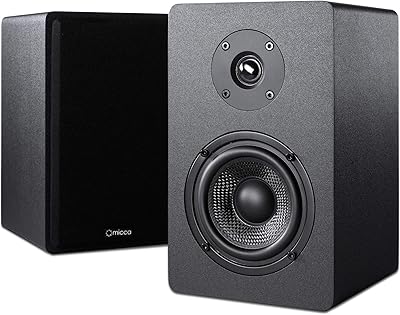
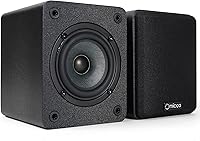
The understated black rectangular cabinet blends into most room setups without drawing attention — a practical advantage for buyers who want audio quality without a visual statement. The clean lines and matte finish look more considered than many speakers in the same price bracket.
Design is purely functional — there is no premium texture, distinctive grille pattern, or visual personality. Buyers who want their speakers to serve as a room feature rather than a background element will find these unremarkable. The minimalist look is intentional but not especially refined.

Suitable for:

The Micca COVO-S Bookshelf Speakers are an excellent fit for anyone taking their first serious step into passive stereo audio — particularly those who already own or are budgeting for a basic integrated amplifier or AV receiver. Students setting up a bedroom or dorm desk system will appreciate the tiny footprint, which leaves room for books, a monitor, or whatever else competes for shelf space. Home theater builders on a tight budget will find the wall-mount capability genuinely useful, allowing the COVO-S pair to serve as rear surround channels without the cost of dedicated surround speakers. Small-room and apartment listeners who primarily enjoy vocals, acoustic music, podcasts, or jazz will get the most out of the warm, natural midrange these passive speakers produce. They are also a smart choice for anyone currently relying on a soundbar or a cheap Bluetooth speaker who wants to understand what a real stereo image actually sounds like — these will be a clear and meaningful step forward.
Not suitable for:

The Micca COVO-S Bookshelf Speakers are a poor match for buyers expecting a plug-and-play experience — if you plan to connect directly to a turntable, laptop, phone, or TV without a separate amplifier, these will not work and the purchase will end in frustration. Anyone who listens primarily to bass-heavy genres like hip-hop, EDM, or cinematic soundtracks will find the low-end output genuinely unsatisfying without a dedicated subwoofer, which adds cost and complicates the setup. Listeners who want to fill a mid-sized or large room with sound will quickly discover the physical limits of a 3-inch driver in a compact cabinet — these passive speakers are optimized for near-field listening, not projection. Buyers who want a complete, ready-to-use audio system in a single box should look at powered desktop speaker pairs instead, where the amplifier is already built in. Finally, anyone who prioritizes wireless convenience or Bluetooth streaming will need to look elsewhere entirely — there is no wireless capability here whatsoever.
Specifications

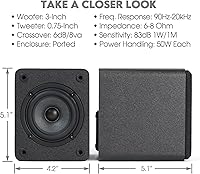
  • Driver Config: 2-way passive design featuring a woofer and tweeter operating in tandem with a passive crossover network.
  • Woofer: 3-inch wool fiber cone driver housed in a ported enclosure for warm, damped midrange and bass reproduction.
  • Tweeter: 0.75-inch PEI dome tweeter mounted concentrically within the woofer, sharing a common acoustic center point.
  • Enclosure Type: Ported (bass reflex) wooden cabinet designed to extend low-frequency output beyond what a sealed enclosure of this size would achieve.
  • Frequency Response: Usable bass extension reaches down to approximately 90Hz, with high-frequency response extending up to 20kHz.
  • Power Handling: Maximum continuous power handling is rated at 25 watts per speaker.
  • Impedance: Nominal impedance is 6 ohms, compatible with the majority of entry-level stereo amplifiers and AV receivers.
  • Dimensions: Each speaker measures 5.1″ high by 4.2″ wide by 5.1″ deep, making it one of the most compact passive bookshelf options available.
  • Weight: The pair weighs approximately 4.4 pounds combined, keeping installation and repositioning straightforward.
  • Cabinet Material: Wooden cabinet construction provides better internal resonance control compared to plastic-bodied speakers in the same price range.
  • Mounting: Wall-mountable with optional third-party brackets, enabling use as surround or center channel speakers in a home theater setup.
  • Connectivity: Standard wired speaker terminal binding posts; accepts bare wire connections from a connected amplifier or receiver.
  • Amplifier Req.: An external amplifier or AV receiver is required to operate these passive speakers — no onboard amplification is included.
  • Wireless: No wireless connectivity of any kind; these are purely wired passive speakers with no Bluetooth or Wi-Fi capability.
  • Channel Config: Sold as a stereo pair suitable for use in 2.0, 2.1, or multi-channel 5.0 and 5.1 surround configurations.
  • Color: Available in black with a clean, minimalist rectangular cabinet finish designed to blend into most room decors.
  • Indoor Use: Designed exclusively for indoor use; not water resistant and not suitable for outdoor or semi-exposed environments.
  • Included Items: Package includes two speakers only; speaker wire, wall-mount brackets, and amplification are not included.
  • Warranty: Covered by a limited manufacturer warranty from Micca; specific terms and duration should be confirmed with the retailer at time of purchase.
  • Model: Manufactured by Micca under the model designation COVO-S, available since September 2014 and not discontinued as of the latest listing data.

Related Reviews

Micca MB42X Bookshelf Speakers
84%
89%
Sound Quality
92%
Value for Money
85%
Ease of Setup
77%
Bass Performance
91%
Design & Aesthetics
More
Micca PB42X Powered Bookshelf Speakers
83%
87%
Sound Quality
91%
Value for Money
76%
Bass Performance
89%
Ease of Setup
85%
Build Quality
More
Micca OoO Passive Bookshelf Speakers
79%
86%
Sound Clarity
61%
Bass Performance
83%
Build Quality
89%
Design & Aesthetics
88%
Placement Versatility
More
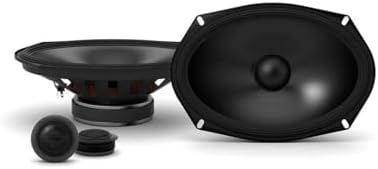
Alpine S-S69C S-Series 6×9 Component Speaker System
84%
91%
Sound Clarity
85%
Installation Ease
89%
Durability
88%
Bass Performance
86%
High Frequency Accuracy
More
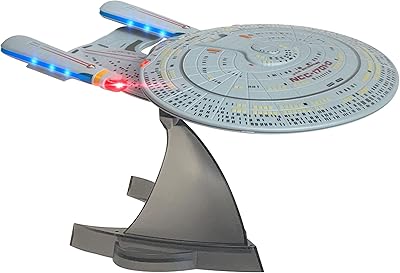
FAMETEK Star Trek U.S.S. Enterprise 1701-D Bluetooth Speaker
87%
88%
Sound Quality
93%
Design & Aesthetics
80%
Battery Life
84%
LED Lighting
89%
Ease of Use
More
Edifier S2000MKIII Bookshelf Speakers
86%
92%
Sound Quality
89%
Bluetooth Performance
88%
Build Quality
85%
Ease of Use
91%
Connectivity Options
More
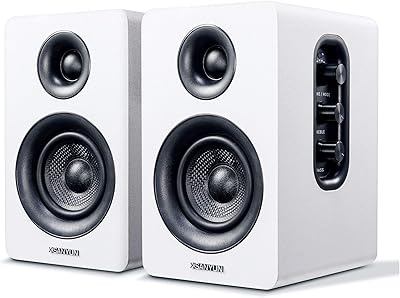
Sanyun SW208 3″ Bookshelf Speakers
86%
88%
Build Quality
84%
High-Frequency Clarity
91%
Mid-Range Warmth
78%
Bass Performance
93%
Control Ergonomics
More
Orroplus OR-02 Powered Bookshelf Speakers
77%
83%
Sound Clarity & Midrange
61%
Bass Performance
91%
Connectivity & Input Range
78%
Bluetooth Performance
72%
Setup & Ease of Use
More
Riowois DS6800M Bookshelf Speakers
83%
85%
Sound Quality
90%
Ease of Installation
82%
Build Quality
88%
Space-Saving Design
78%
Bass Performance
More
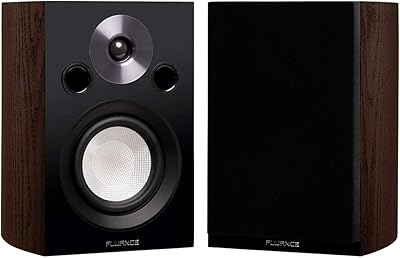
Fluance XL8SW Bookshelf Speakers
87%
90%
Sound Quality
84%
Bass Response
91%
Clarity of Midrange
87%
Ease of Installation
88%
Design & Build Quality
More

FAQ

No, they do not. The Micca COVO-S Bookshelf Speakers are passive, which means they have no built-in amplifier. You will need a separate stereo amplifier or AV receiver to power them — connecting them directly to a TV headphone jack, laptop, or phone will produce no sound at all.
Any stereo integrated amplifier or AV receiver with a speaker output rated at 6 ohms or higher will work well. You do not need anything expensive — a modest entry-level amp in the 20 to 50 watt per channel range is more than sufficient. Brands like Fosi Audio, SMSL, or Yamaha make affordable options that pair naturally with these compact bookshelf speakers.

Not directly. A turntable requires a phono preamp stage before the signal reaches a speaker, and since these passive speakers have no amplification at all, you would need both a phono preamp and a stereo amplifier in the chain. Some amplifiers have a built-in phono stage, which simplifies the setup.

For casual listening — podcasts, jazz, acoustic music, vocals — the bass is adequate in a small room. If you listen to hip-hop, electronic music, movies, or anything bass-heavy, you will notice the low-end drop-off fairly quickly. Adding a subwoofer makes a significant difference, and many owners consider it a near-essential pairing for a complete sound.

Yes, and this is one of the more practical features of the COVO-S pair. The cabinet is designed to accept standard wall-mount brackets, though you will need to purchase brackets separately. This makes them a cost-effective option for rear surround channels in a 5.1 home theater system where space is limited.

No, speaker wire is not included in the box. You will need to pick up a spool of standard speaker wire separately — nothing exotic is required. Basic 18 or 16 AWG copper speaker wire from any electronics retailer will work perfectly fine.

In a small to medium room — think a bedroom, home office, or studio apartment — these passive speakers get to a satisfying listening volume without strain. In a larger living room, they will start to feel underpowered and may develop some cabinet resonance if pushed hard. They are genuinely optimized for near-field and small-room use.

Yes, this is actually one of their strongest use cases. On a desk at near-field listening distance, the warm midrange and focused stereo image come through very well. You would still need a small desktop amplifier between your computer and the speakers, but the total footprint of such a setup remains compact.

Most owners are pleasantly surprised. The wooden cabinet feels noticeably more solid than plastic-bodied competitors at a similar price, and the finish is clean. They are not premium in an absolute sense, but they hold up well under normal daily use and do not rattle or flex under moderate handling.

They can be, provided the amplifier requirement is handled upfront. Once the system is set up with a basic amp and a music source, day-to-day use is as simple as adjusting volume. The warm, non-fatiguing sound signature is actually well-suited to extended listening sessions, and voices through these speakers tend to sound full and natural.