Overview

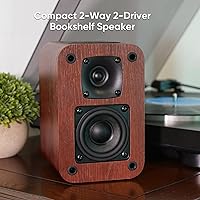
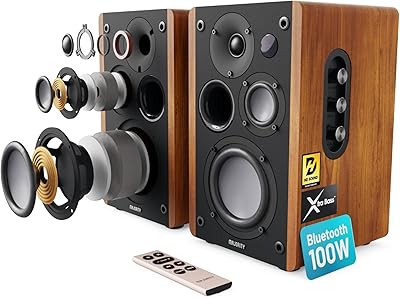
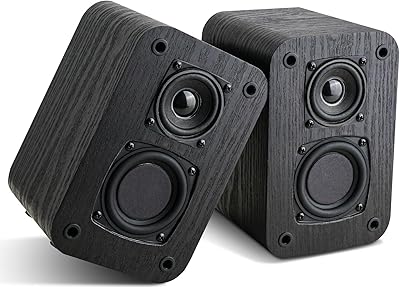
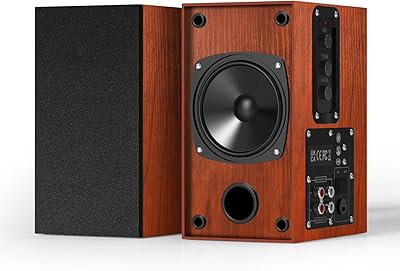
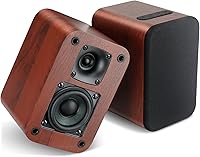
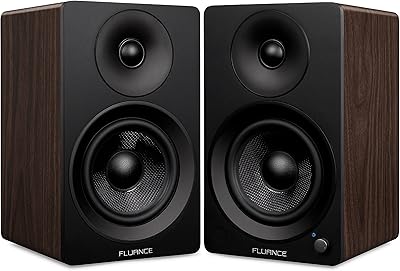
The RIOWOIS DS6701NP Powered Bookshelf Speakers are built around a simple idea: plug them in, connect your source, and listen — no amplifier, no receiver, no extra clutter. That all-in-one design makes them genuinely appealing for anyone who finds traditional stereo setups more trouble than they're worth. At their price point, you're not buying audiophile-grade hardware, and it's worth being upfront about that. What you are getting is a compact, self-contained stereo pair that fits neatly on a desk or shelf. The wood-grain MDF cabinet looks more put-together than most speakers in this range, with rounded corners that give it a tidy, natural appearance in a living room or home office.
Features & Benefits

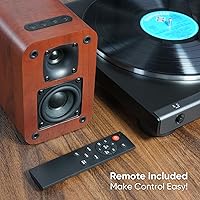
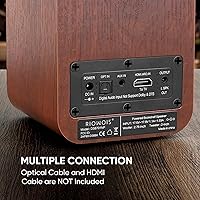
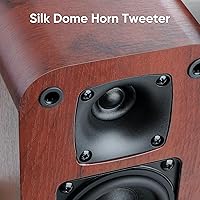
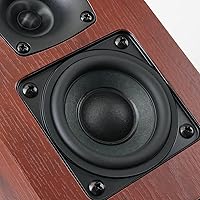
These bookshelf speakers cover a surprising number of connection bases for their size. Bluetooth 5.3 handles wireless streaming from phones and laptops reliably, and day-to-day pairing is straightforward. For wired setups, there's AUX for turntables or computers, optical for TVs, and TV-ARC — which is the real standout. With ARC connected, your TV remote controls the speaker volume directly, a genuinely handy feature when you're across the room. A dedicated remote also lets you switch inputs and cycle through three sound profiles without leaving your seat. The 2.75-inch woofer and 2-inch tweeter are modest drivers, best suited to near-field listening at desk or shelf distance rather than filling a large room.

Best For

This powered speaker set makes the most sense for a specific kind of buyer. Vinyl fans with a turntable that has Bluetooth output — not just Bluetooth input, which is a critical distinction — can connect cleanly without any extra gear. They're equally practical for small apartments or compact workspaces where a full-sized stereo pair simply isn't realistic. TV users wanting a noticeable audio step-up over built-in television speakers, without committing to an AV receiver, will find real value here. Budget-conscious shoppers setting up a first stereo system or adding a second listening space to another room will also appreciate how much connectivity comes included at this tier.

User Feedback

Buyers consistently highlight how quickly the RIOWOIS speakers get up and running — most report being connected and playing audio within minutes. The TV-ARC feature earns specific praise, though a handful of users note it doesn't cooperate with every TV model out there. Limited bass response is the most recurring criticism; with a 2.75-inch woofer, low-end depth has a ceiling, and listeners who prioritize heavy bass will notice it. Build quality tends to surprise people positively, with several buyers remarking the cabinet feels more solid than expected. The turntable compatibility issue trips up a meaningful number of purchasers who didn't confirm their deck has Bluetooth output — definitely worth verifying before ordering.

Pros

  • No amplifier or receiver needed — just plug in and you are ready to listen
  • TV-ARC lets you control volume directly from your TV remote, which is genuinely convenient
  • Bluetooth 5.3 pairs quickly and holds a stable connection across typical room distances
  • Multiple input options cover turntables, computers, TVs, and mobile devices in one speaker set
  • The MDF cabinet feels more solid and looks better than most speakers at this price
  • Included remote lets you switch inputs and adjust sound profiles without leaving your seat
  • Setup takes minutes — even buyers who are not tech-savvy report being up and running fast
  • Optical input adds a clean digital connection path for TVs that support it
  • Compact footprint fits on a desk, shelf, or TV stand without dominating the space
  • Comes with an optical cable included, which removes one common setup friction point

Cons

  • Bass response is noticeably thin — not a speaker set for hip-hop, EDM, or bass-heavy genres
  • The ARC feature does not work reliably with every TV brand, which can frustrate some buyers
  • Turntable compatibility is easy to get wrong — Bluetooth output on the deck is required, not just Bluetooth input
  • At higher volumes, clarity can soften and the small drivers show their limitations
  • The ARC cable itself is not included, so TV users need to source one separately
  • Three sound modes are a nice touch, but the differences between them are fairly subtle
  • No subwoofer output means there is no easy upgrade path if you want more low-end later
  • Build quality is decent for the price but not something you would mistake for premium hardware
  • Bluetooth range is adequate within a room but can drop if walls or interference are involved

Ratings

The scores below reflect an AI-driven analysis of verified global buyer reviews for the RIOWOIS DS6701NP Powered Bookshelf Speakers, with spam, incentivized, and bot-generated feedback actively filtered out before scoring. Each category is rated independently to give you an honest, granular picture of where these speakers genuinely deliver and where real buyers have run into frustration. Both the highlights and the sticking points are reflected without bias.

Ease of Setup
91%
This is the category where these bookshelf speakers earn their strongest marks across the board. Buyers consistently describe a plug-and-play experience — connect the cable, power it on, and audio is coming through within a few minutes. No driver installation, no configuration menus, no guesswork.
The one setup friction point that surfaces repeatedly is the TV-ARC connection, which requires a separately purchased HDMI ARC cable and doesn't behave identically across every TV brand. A small but vocal group of buyers found this part less intuitive than expected.
Value for Money
83%
For the price tier these speakers sit in, the sheer number of connectivity options — Bluetooth, AUX, optical, and ARC — represents strong value. Most buyers in this budget range are choosing between a Bluetooth-only speaker or a basic wired pair, so getting all four in one unit registers as a genuine win.
Buyers who came in expecting sound quality that competes with mid-range powered speakers costing significantly more tend to feel the value equation less convincingly. The entry-level drivers and 80 dB SNR are noticeable when compared side by side with pricier alternatives.
Sound Quality
62%
38%
For casual listening — podcasts, background music, streaming playlists, or TV dialogue — the RIOWOIS speakers perform adequately and produce clean stereo separation at moderate volumes. Vocals and mid-range frequencies come through with reasonable clarity, which suits the desk and shelf use cases well.
Low-end response is the consistent weak point; the 2.75-inch woofer simply cannot move enough air to produce satisfying bass, and listeners who favor bass-forward genres notice this immediately. At higher volumes, some buyers report that clarity softens and the sound can feel compressed.
Bass Performance
44%
56%
Within the physical constraints of a compact 2.75-inch driver, these speakers produce a low end that is acceptable for talk radio, acoustic recordings, and light pop. Buyers who prioritize voice clarity over bass weight tend to rate this aspect more charitably than music enthusiasts do.
For hip-hop, electronic, or any bass-driven genre, the low-end output is genuinely thin and this is the most repeated criticism in user reviews. There is no subwoofer output to compensate, meaning there is no practical upgrade path for low-end improvement within this system.
Bluetooth Reliability
78%
22%
Day-to-day Bluetooth pairing is fast and stable for most buyers — phones and laptops connect within a few seconds and hold the connection reliably across a typical room. Bluetooth 5.3 gives it a meaningful edge over older budget speakers that struggled with dropouts during everyday use.
A portion of buyers report range limitations when walls or multiple competing wireless devices are present, and a few note that switching between Bluetooth devices requires a manual disconnect step via the remote rather than automatic handoff. Not a dealbreaker, but noticeable in multi-device households.
TV-ARC Functionality
69%
31%
When the ARC connection works as intended, buyers genuinely appreciate being able to use their TV remote for volume control without switching input sources or reaching for the speaker remote. For living room setups where the speakers are paired with a smart TV, this feature meaningfully improves the daily experience.
Compatibility is not universal — several buyers found the ARC feature unreliable or non-functional with certain TV brands, and the missing ARC cable in the box adds an extra purchasing step that catches some buyers off guard. The experience is inconsistent enough that it warrants verifying TV compatibility before relying on it.
Build Quality
71%
29%
The reinforced MDF cabinet and wood-grain finish consistently surprise buyers who expected a cheaper-feeling product at this price point. The rounded, hand-polished corners give the speakers a tidier appearance than most competing units in the same bracket, and the cabinet feels solid when handled.
On closer inspection, some buyers note that the finish shows minor imperfections and that the overall construction, while solid enough for normal use, does not suggest long-term durability under heavy handling. The plastic components on the controls feel noticeably cheaper than the cabinet itself.
Remote Control
74%
26%
Having a physical remote that covers power, volume, input switching, and sound mode selection is a practical feature that buyers consistently mention positively — especially for TV setups where getting up to adjust settings is inconvenient. The ability to disconnect a paired Bluetooth device remotely is a thoughtful inclusion.
The remote is infrared, which means it requires line-of-sight and does not work reliably if aimed at an angle or through an obstruction. A handful of buyers also report that the remote feels lightweight and plasticky, and a few noted responsiveness issues after several months of use.
Connectivity Range
81%
19%
The combination of Bluetooth, AUX, optical, and TV-ARC in a single compact speaker set covers an unusually wide range of source devices for this price category. Whether you are connecting a turntable, a laptop, a TV, or a phone, at least one input option is likely to fit your existing setup without adapters.
The AUX input is a standard 3.5mm jack, which means turntable users with a standard RCA output will need an RCA-to-3.5mm adapter cable — a minor but occasionally overlooked requirement. There is no USB audio input, which some desktop users would have found convenient.
Turntable Compatibility
53%
47%
For buyers who own a turntable with Bluetooth audio output, the connection works without any additional hardware and the result is a genuinely clean, simple vinyl listening setup. Buyers in this specific scenario are among the most satisfied in the overall user feedback pool.
The compatibility limitation is significant and frequently misunderstood: the turntable must transmit Bluetooth, not just receive it. Buyers who ordered expecting their standard Bluetooth-input turntable to work were disappointed, and this single issue accounts for a disproportionate share of negative reviews for the RIOWOIS speakers.
Volume Output
61%
39%
For near-field listening in a small room — sitting at a desk or within eight to ten feet of the speakers — the volume output is more than sufficient and remains reasonably clean in the mid-range at moderate levels. Buyers using these as desktop or bedside speakers rarely complain about maximum volume.
Buyers who expected to fill a medium or large room with sound found the output lacking, and pushing the volume high introduces distortion that makes extended listening uncomfortable. These are genuinely near-field speakers and perform best when used that way.
Input Switching
72%
28%
Switching between inputs via the remote is fast and does not require powering the unit down, which makes it practical to move between a TV and a Bluetooth source during everyday use. The dedicated input buttons on the remote are clearly differentiated and easy to use without looking.
There is no automatic input detection, meaning the speakers will not switch to an active source on their own. If you forget to manually switch inputs, audio from a new source will not come through until you do, which is a minor but recurring friction point for multi-source users.
Aesthetic Design
77%
23%
The wood-grain finish and rounded cabinet profile help these speakers blend into a living room or home office far more naturally than the typical black-plastic budget speaker. Several buyers specifically mentioned that the appearance exceeded their expectations and matched their existing furniture well.
The wood-grain finish is a printed laminate rather than real veneer, which is apparent on close inspection and under direct lighting. The aesthetic holds up well from a normal viewing distance but does not carry the same warmth as genuine wood-finished speakers in higher price brackets.
Sound Mode Presets
58%
42%
Having three selectable sound presets built into a remote at this price point is a convenient touch, and buyers who use the feature find it useful for quickly adjusting the tonal character when switching between music genres and TV content without touching any app or software.
The differences between the three modes are subtle enough that several buyers were not sure they were functioning at all when first tested. None of the presets dramatically compensates for the bass limitations, which means their practical impact on the listening experience is limited.

Suitable for:

The RIOWOIS DS6701NP Powered Bookshelf Speakers are a strong fit for anyone who wants a clean, no-fuss stereo setup without buying into a full AV stack. They're particularly well-matched to vinyl listeners whose turntable already has Bluetooth output — that combination means zero extra hardware between the record and the sound. Small-space dwellers, whether in a studio apartment or a compact home office, will appreciate how little footprint this powered speaker set demands while still delivering genuine stereo separation. TV users who are tired of flat built-in audio but don't want to deal with a receiver or soundbar installation will find the ARC connection especially practical. Casual streamers who want Bluetooth as the daily driver with a wired fallback option also get a lot of flexibility for the price. If you're putting together a first stereo system on a tight budget, or outfitting a secondary room where you just want decent background sound, these bookshelf speakers make a very sensible starting point.
Not suitable for:

The RIOWOIS DS6701NP Powered Bookshelf Speakers will disappoint buyers who are chasing deep, room-filling bass or high-volume output — the 2.75-inch woofer is simply not engineered for that, and no amount of EQ tweaking will change the physics. Listeners who already own a traditional amplifier or AV receiver should also look elsewhere, since powered speakers and external amplification don't mix and this set is designed to work only as a standalone system. Turntable users need to pay close attention before buying: if your record player only has Bluetooth input for connecting your phone, it will not transmit audio to these speakers — only turntables with Bluetooth output will work. Serious home theater enthusiasts expecting surround-sound capability or a subwoofer output will find the 2.0 configuration limiting. Similarly, anyone who values premium driver materials, extended frequency response, or low-noise performance at high volumes will find the entry-level specs a ceiling rather than a foundation.
Specifications

  • Power Output: These speakers deliver 40W RMS continuous power, with a peak rating of 60W across the 2.0 stereo configuration.
  • Woofer Size: Each cabinet houses a 2.75-inch dynamic driver woofer handling the low and mid-frequency range.
  • Tweeter Size: A 2-inch dynamic driver tweeter in each unit handles higher frequencies for stereo detail.
  • Frequency Response: The system is rated up to 20 kHz, covering the standard range of human hearing on the high end.
  • Signal-to-Noise Ratio: The SNR is rated at 80 dB, which is adequate for casual listening but reflects entry-level internal electronics.
  • Bluetooth Version: Bluetooth 5.3 is built in, offering stable wireless pairing with phones, tablets, and laptops.
  • Wired Inputs: Three wired inputs are provided: a 3.5mm AUX jack, an optical (Toslink) port, and an HDMI ARC port for TV connectivity.
  • Channel Config: The system operates in a 2.0 stereo configuration with no subwoofer output or surround sound capability.
  • Cabinet Material: Cabinets are constructed from reinforced MDF with a wood-grain finish and hand-polished rounded corners.
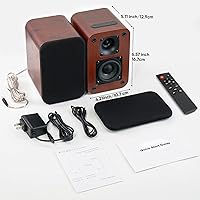
  • Dimensions: Each speaker measures 9.69″ deep, 7.6″ wide, and 6.22″ tall, making them well-suited for desk or shelf placement.
  • Weight: The combined unit weight is approximately 5.21 pounds, keeping the pair lightweight and easy to position.
  • Control Options: Both an included infrared remote and onboard buttons on the primary speaker provide full system control.
  • Sound Modes: Three selectable sound preset modes are accessible via the remote, allowing basic tonal adjustments without equalizer software.
  • Power Source: The speakers are powered by a corded AC connection and are not battery-powered or USB-powered.
  • Included Cables: An optical (Toslink) cable is included in the box; an HDMI ARC cable is not included and must be sourced separately.
  • Warranty: The product is listed with an extended warranty type, though buyers should confirm specific terms directly with the seller.
  • Mounting Type: These speakers are designed for tabletop or shelf placement and do not include wall-mount hardware.
  • Amplifier Required: No external amplifier or receiver is needed or compatible — the amplification is fully built into the primary speaker unit.

Related Reviews
RIOWOIS DS6800M Passive Bookshelf Speakers
73%
74%
Sound Clarity
51%
Bass Performance
71%
Treble Quality
82%
Build Quality
78%
Value for Money
More
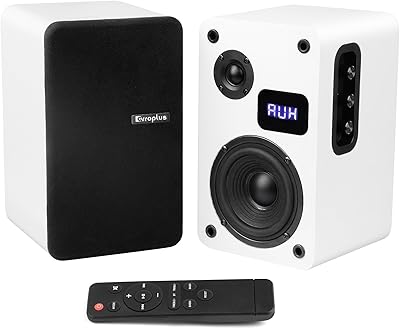
Orroplus OR-02 Powered Bookshelf Speakers
77%
83%
Sound Clarity & Midrange
61%
Bass Performance
91%
Connectivity & Input Range
78%
Bluetooth Performance
72%
Setup & Ease of Use
More
RIOWOIS DS6500M Passive Bookshelf Speakers
76%
83%
Sound Clarity
51%
Bass Performance
88%
Value for Money
76%
Build Quality
84%
Design & Aesthetics
More
Klipsch The Fives Powered Bookshelf Speakers
86%
92%
Sound Quality
89%
Connectivity Options
85%
Setup & Installation
88%
Build Quality
91%
Bass Performance
More
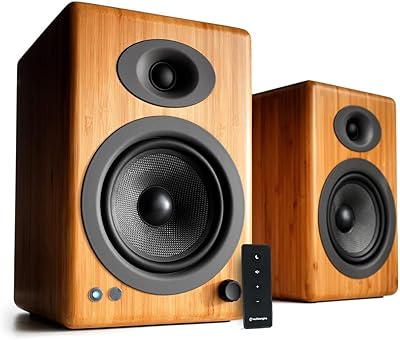
Audioengine A5+ Powered Bookshelf Speakers
80%
91%
Sound Quality
93%
Build Quality
88%
Amplifier Performance
67%
Connectivity & Inputs
78%
Value for Money
More
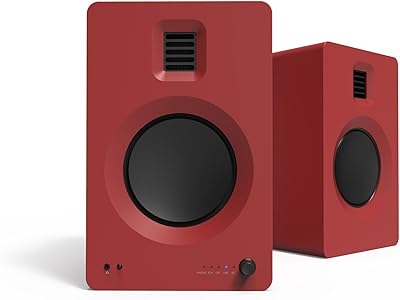
Kanto TUK Powered Bookshelf Speakers
88%
88%
Sound Quality
72%
Bass Response
93%
Setup & Installation
90%
Connectivity Options
85%
Build Quality
More
Majority D100 Bookshelf Speakers
74%
76%
Sound Quality
71%
Bass Performance
83%
Build Quality
89%
Connectivity Range
68%
Phono Stage
More
Fluance Ai41 Powered Bookshelf Speakers
82%
88%
Sound Quality
73%
Bass Performance
84%
Treble Clarity
91%
Build Quality
87%
Connectivity & Inputs
More
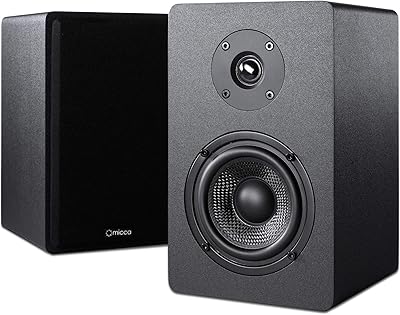
Micca PB42X Powered Bookshelf Speakers
83%
87%
Sound Quality
91%
Value for Money
76%
Bass Performance
89%
Ease of Setup
85%
Build Quality
More
Elimavi BT-04 Powered Bookshelf Speakers
70%
73%
Sound Quality
58%
Bass Performance
76%
Build Quality
84%
Value for Money
91%
Ease of Setup
More

FAQ

No, and in fact you should not connect them to one. The amplifier is built directly into the primary speaker, so plugging them into a receiver or external amp will not work and could cause damage. Just run a cable straight from your source — turntable, TV, or computer — and you are good to go.

That depends on your turntable, and this is worth checking carefully before you order. Your record player needs to have Bluetooth output — meaning it can transmit audio wirelessly to speakers or headphones. If your turntable only has Bluetooth input for receiving audio from your phone, it will not stream to these speakers. Check your turntable's spec sheet or manual for this detail.

You connect an HDMI ARC cable (not included) between the ARC port on these bookshelf speakers and the ARC-labeled HDMI port on your TV. Once connected, your TV remote can control the speaker volume directly, which is a convenient setup for couch listening. Keep in mind that ARC compatibility can vary slightly between TV brands, so most users find it works well, but a small number report inconsistencies with certain models.

The speakers can only actively play from one input at a time, but you can switch between inputs using the included remote. So you could have your phone paired over Bluetooth and your TV connected via ARC, then toggle between them as needed without disconnecting anything.

Honestly, not really. The 2.75-inch woofer produces respectable sound for its size, but low-end depth is noticeably limited. These speakers work well for vocals, acoustic music, podcasts, and general streaming, but if bass is a priority for you, you will likely find them underwhelming for bass-heavy genres.

In a typical open room, you can expect reliable pairing up to around 30 feet or so, which is standard for Bluetooth 5.3. Walls and interference from other devices can reduce that range, but for a bedroom, home office, or living room setup, the connection holds well in everyday use.

Mostly, yes. An optical cable is included, so if you plan to connect via optical you are set straight out of the box. If you want to use the TV-ARC feature, you will need to supply your own HDMI ARC cable. For AUX connections, a standard 3.5mm cable is all you need, and most people already have one.

Yes, and this is actually one of their stronger use cases. The compact size fits neatly on a desk, and you can connect via AUX from your computer's headphone output or pair wirelessly over Bluetooth. The near-field listening distance — meaning you are sitting relatively close to the speakers — suits the driver size well.

The three presets are toggled via the remote and offer basic tonal variations — generally something along the lines of a flat or neutral mode, a bass-boost mode, and a treble-forward mode, though the labeling can vary. The differences are noticeable but subtle, so do not expect dramatic changes between them. They are useful for minor adjustments depending on the content you are playing.

Better than you might expect at this tier. The MDF cabinet feels reasonably solid, and the wood-grain finish with rounded corners gives it a cleaner look than the typical plastic budget speaker. It is not going to feel like a premium product up close, but it holds up well in normal use and looks tidy on a shelf or desk.