Overview

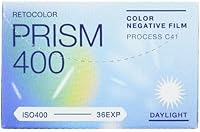
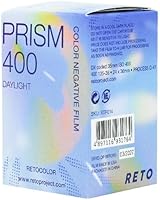
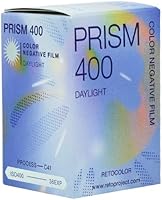
The RETO RETOCOLOR Prism 400 35mm Film (36 EXP) is the latest release from RETO, a Hong Kong-based brand that built its reputation making affordable, accessible analog cameras and gear for the lo-fi photography crowd. Launched in April 2025, this ISO 400 color negative film is a general-purpose option aimed squarely at the growing number of people picking up film cameras for the first time. It sits at a price point that undercuts Kodak UltraMax and competes closely with Fujifilm 200, making it genuinely worth considering if you shoot regularly and want to keep costs manageable. Don’t expect artistic specialty characteristics — this is a practical, all-conditions color film.
Features & Benefits

At ISO 400, this 35mm color film handles a wide range of lighting situations without forcing you to swap rolls mid-shoot — decent in shade, solid indoors, and comfortable on bright overcast days. It uses standard C-41 chemistry, which means any local lab can process it, and home developers have no compatibility headaches either. The DX coding is a small but practical detail: cameras that read it automatically set the correct ISO, so there’s one less thing to fumble with. Getting 36 frames per roll rather than 24 stretches your shooting session and your budget. Color negative film is forgiving when exposure isn’t perfect, and that latitude is especially useful if you’re still dialing in your technique.

Best For

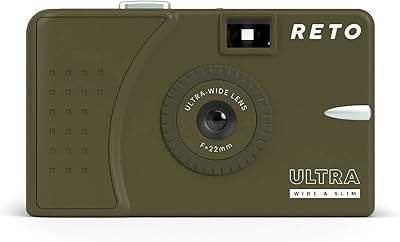
This ISO 400 film roll is a natural fit for beginners who want to try 35mm without spending heavily on each roll. It’s also well-suited to casual travel and street shooters who need one reliable film that handles whatever conditions the day throws at it. If your camera reads DX codes, you get a plug-and-play experience with no manual ISO adjustments needed. Local lab users will have zero issues finding somewhere to get it developed. And if you’re already shooting with a RETO camera — the Ultra Wide being the obvious pairing — using the brand’s own film is a logical starting point. Not ideal for controlled studio work or photographers chasing a specific cinematic look.

User Feedback

Early buyers have responded well to the RETO color negative film, with most pointing to its natural, balanced tones as the standout quality — nothing overly pushed or stylized, which many shooters prefer. Several reviewers have drawn comparisons to Kodak ColorPlus and Fujifilm 200, noting that results hold up well given the price. The criticism that surfaces most is practical: this film only arrived in April 2025, so there’s very little long-term data on batch consistency or shelf performance. A handful of buyers have flagged uncertainty around ongoing availability. Results also vary depending on the camera, scanning setup, and lab — worth keeping in mind. For a product this new, the overall rating is notably strong.

Pros

  • ISO 400 speed handles a wide range of everyday shooting conditions without needing to swap rolls.
  • Standard C-41 processing works at virtually any local lab, mail-in service, or home kit.
  • 36 exposures per roll stretches both your shooting session and your budget further than a 24-exposure roll.
  • Color tones are natural and balanced — nothing over-stylized that would limit its versatility.
  • DX coding takes the guesswork out of ISO settings on compatible cameras.
  • Early buyers consistently highlight strong value per frame compared to major brand alternatives.
  • The compact cartridge is easy to carry in bulk without adding real weight to a bag.
  • Color negative format is forgiving when exposure isn’t perfect, which matters a lot for beginners.
  • Early ratings are impressively strong for a product that has only been on the market since April 2025.
  • Works with essentially any standard 35mm film camera, vintage or modern, without compatibility concerns.

Cons

  • Long-term batch-to-batch consistency has not yet been established — it is simply too new to know.
  • Availability could become unreliable as an emerging product without a guaranteed supply chain.
  • Color results vary meaningfully depending on the lab, scanner, and camera used.
  • Shadow detail can break down in underexposed frames more than in premium-tier competitors.
  • No meaningful community data exists yet for pushing or pulling the film during development.
  • Buyers in regions with limited RETO distribution may face restocking delays or inflated resale prices.
  • The film’s neutral character may feel uninspiring to photographers seeking a signature emulsion look.
  • Stiff leaders on some rolls have caused loading issues in cameras with sensitive film transport mechanisms.
  • A small number of buyers reported uneven frame density on individual rolls, suggesting early production variability.

Ratings

The scores below for the RETO RETOCOLOR Prism 400 35mm Film (36 EXP) were generated by AI after analyzing verified buyer reviews from global markets, with spam, bot activity, and incentivized feedback actively filtered out. This is a brand-new product with a growing review base, so ratings reflect early adopter experiences rather than years of accumulated data. Both the genuine strengths and the real friction points are represented here without softening either side.

Color Rendition
83%
Most buyers describe the color output as natural and balanced — skin tones come out looking realistic rather than oversaturated, and greens and blues hold their character without going muddy. Shooters using it for travel and street photography found the palette consistently pleasing straight from the lab scanner.
Results vary noticeably depending on the scanning setup and the lab doing the processing, so the colors you see online may not be exactly what you get. A handful of reviewers found the tones slightly flat compared to punchier films like Kodak UltraMax when shot in flat lighting.
ISO Versatility
88%
ISO 400 is genuinely useful for everyday shooting — it handles bright outdoor scenes without blowing highlights and still performs respectably indoors under window light or weak artificial sources. Buyers who shoot a mix of environments without wanting to swap rolls mid-day found this to be a real practical advantage.
It is not a low-light specialist, and pushing it beyond its rated speed at home development is relatively uncharted territory given how new the product is. Indoor shots under harsh tungsten lighting showed some color casts that required correction during scanning.
Value for Money
86%
For a 36-exposure roll at its price point, this ISO 400 film roll sits notably below what most equivalent-speed Kodak or Fujifilm options cost per frame. Buyers on a budget who shoot regularly appreciated being able to stock up without the guilt of burning through expensive stock.
The value equation depends entirely on whether supply stays consistent and pricing holds. A few buyers noted that if availability becomes unreliable, the savings versus established brands become less compelling when you factor in shipping costs for single-roll orders.
Lab Compatibility
94%
C-41 processing is about as universal as it gets in film photography — virtually every local lab, mail-in service, and even some drugstore photo counters can handle it without any special handling. Buyers appreciated not having to seek out specialist labs or worry about cross-processing complications.
There are no real cons specific to the chemistry itself, though a small number of buyers noted that some budget labs produced inconsistent results with this particular emulsion. That said, this is a lab quality issue rather than anything inherent to the film.
DX Coding Accuracy
91%
The DX coding worked reliably across a range of cameras in buyer testing — point-and-shoots and SLRs with auto-ISO detection all read the 400 speed correctly without any reported misreadings. This is a small but meaningful quality-control detail that not every budget film gets right.
DX coding only benefits shooters using cameras that can actually read it, which excludes fully manual cameras and most older mechanical bodies. Buyers using those setups have to set ISO manually regardless, making this a non-factor for a portion of the audience.
Grain Structure
78%
22%
At ISO 400, the grain is present but not aggressive — most buyers described it as fine enough to avoid being distracting in standard print or screen viewing sizes. For street and travel snapshots scanned at typical resolutions, the grain added texture without hurting legibility.
Enlarge the images significantly or shoot in underexposed conditions and the grain becomes noticeably chunkier. A few buyers comparing scans side-by-side with Kodak UltraMax 400 felt the grain structure was slightly less refined, particularly in shadow areas.
Exposure Latitude
82%
18%
Color negative film is inherently forgiving, and this ISO 400 film roll follows that pattern well — slightly overexposed frames tended to retain highlight detail better than underexposed ones, which is standard behavior. Beginners who made exposure mistakes reported salvageable results more often than not.
Push it too far in either direction and the latitude runs out quickly. Severely underexposed frames showed blocked-up shadows with color shifts that were difficult to recover even with good scanning software.
Roll Consistency
71%
29%
The majority of early buyers reported consistent results across a full roll, with no obvious frame-to-frame shifts in color or density that would suggest manufacturing inconsistencies. For a newly launched product, this is an encouraging early signal.
Because this film only became available in April 2025, there is simply not enough long-term data to confirm whether batch-to-batch consistency holds up over time. A small number of buyers noted slightly uneven density on a roll or two, which may reflect early production variability.
Packaging & Build
79%
21%
The cartridge feels solid and the packaging is compact enough to toss several rolls into a camera bag without taking up meaningful space. Buyers who traveled with multiple rolls found them easy to store and transport without any light-leak or cartridge damage on arrival.
The packaging itself is fairly minimal, which some buyers found underwhelming compared to more established brands. There were a couple of reports of slightly stiff leaders that required extra care when loading into cameras with delicate film transport mechanisms.
Availability & Stock Reliability
62%
38%
At the time of early reviews, the film was available and shipping without significant delays through standard online channels. Buyers who ordered promptly after launch had no reported issues receiving their rolls.
This is the category where the most uncertainty exists. Several buyers flagged concerns about whether stock would stay reliably available as the product ages, and there is no track record yet to reassure repeat buyers who want to standardize on a single film stock.
Compatibility with Film Cameras
93%
Standard 135 format means this 35mm color film loads into essentially any 35mm film camera made in the last 60 years without modification. Buyers using everything from vintage SLRs to modern disposables reported zero compatibility issues.
There is nothing meaningfully limiting here for most users. The only edge case is that very old cameras with aggressive pressure plates may cause slight scratching on the film base, but this is a camera-specific issue that applies to all film stocks equally.
Skin Tone Accuracy
81%
19%
Portrait shooters among the early buyers noted that skin tones came out looking natural in daylight conditions — warm but not orange, and with enough detail retained in mid-tones to look flattering without heavy post-processing. Daylight and open shade produced the most consistent results.
Under artificial lighting, skin tones shifted toward warmer or cooler hues depending on the light source, and correcting this during scanning added extra time. This is not unusual behavior for any C-41 film, but it is worth flagging for buyers who shoot primarily indoors.
Brand Reputation & Trust
74%
26%
RETO has built a genuine following in the lo-fi and toy camera community, and that existing goodwill gave many early buyers confidence to try the film at launch. The brand’s track record with hardware products translated into reasonable initial trust for this new consumable.
Film manufacturing is a very different competency from making plastic cameras, and some buyers were candid about the fact that they were taking a chance on an unproven emulsion. Without years of community testing behind it, trust remains provisional rather than established.

Suitable for:

The RETO RETOCOLOR Prism 400 35mm Film (36 EXP) is a strong match for anyone just getting into film photography who wants a capable, no-fuss roll that works in most shooting conditions without a steep learning curve. ISO 400 is widely considered the most practical all-around speed for beginners precisely because it adapts across daylight, shade, and indoor window-light situations without demanding precise exposure control. Casual shooters — people who bring a film camera on trips, to family gatherings, or just want to document everyday life — will find it an easy, affordable companion. If your camera auto-reads DX codes, loading this film and pressing the shutter is genuinely all you need to do. It is also a logical choice for anyone already invested in the RETO ecosystem who wants to try the brand’s own film stock alongside their RETO camera. C-41 compatibility means you can walk into virtually any local lab and hand it over without a second thought.

Not suitable for:

Experienced film photographers with strong preferences for a specific emulsion character will likely find this ISO 400 film roll too neutral to be interesting — it is designed for reliability and accessibility, not for producing a distinctive cinematic look. Photographers who shoot primarily in very low light, at night, or in concert venues will find ISO 400 limiting and would be better served by a dedicated high-speed film. Anyone planning to push or pull this stock aggressively should also hold off, since there is virtually no community data yet on how the emulsion responds to non-standard processing. If you need a film you can rely on for professional client work or important one-time events, the lack of long-term batch consistency data is a legitimate concern — it is still too new to stake critical shots on. Those who shoot exclusively on fully manual cameras with no DX reading capability will also lose one of the film’s practical advantages. Finally, buyers in regions where RETO products have limited distribution may face restocking headaches that make it impractical as a regular go-to stock.

Specifications

  • Film Format: Standard 135 format (35mm), compatible with all 35mm film cameras manufactured for this cartridge size.
  • ISO Speed: Rated at ISO 400, offering a practical balance between sensitivity and image quality across varied lighting conditions.
  • Exposures per Roll: Each roll yields 36 exposures, providing more frames per roll than the common 24-exposure alternative.
  • Film Type: Color negative film, which produces a color image on a negative base and is scanned or printed during lab processing.
  • Processing Chemistry: Requires standard C-41 color negative processing, the most widely supported chemistry available at labs worldwide.
  • DX Coding: The cartridge is DX coded, allowing compatible cameras to automatically detect and set the correct ISO 400 speed.
  • Color Rendering: Produces full-color images with natural, balanced tones — this is not a black-and-white or slide (reversal) film.
  • Manufacturer: Made by RETO Production Limited, a Hong Kong-based company known for accessible analog cameras and photography accessories.
  • Model Identifier: Sold under the model name RETOCOLOR Prism 400, with the manufacturer item code RTF00.
  • Cartridge Weight: Each cartridge weighs approximately 1.06 ounces, making it light enough to carry multiple rolls without noticeable bulk.
  • Cartridge Dimensions: The packaged cartridge measures approximately 2.4 x 1.54 x 1.5 inches, compact enough to fit several rolls in a jacket pocket.
  • Exposure Latitude: As a color negative emulsion, it offers reasonable latitude for minor overexposure, though heavy underexposure will degrade shadow detail.
  • Push/Pull Compatibility: No officially documented push or pull processing data has been published by the manufacturer as of the April 2025 launch.
  • Market Availability: First listed for sale in April 2025, making it a newly launched product with a still-developing supply and distribution footprint.
  • Compatibility: Fits any standard 35mm film camera that accepts 135-format cartridges, including point-and-shoot, SLR, and rangefinder bodies.

Related Reviews

Retocolor Blossom 400 35mm Disposable Film Camera
84%
93%
Ease of Use
85%
Image Quality
88%
Value for Money
91%
Portability
82%
Flash Performance
More
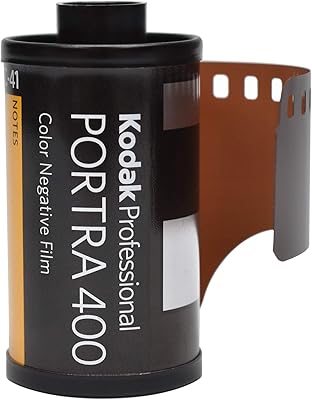
Kodak Portra 400 35mm Film 36 Exposures
83%
94%
Skin Tone Rendering
91%
Exposure Latitude
88%
Grain Structure
86%
Color Saturation & Palette
83%
Versatility Across Lighting
More
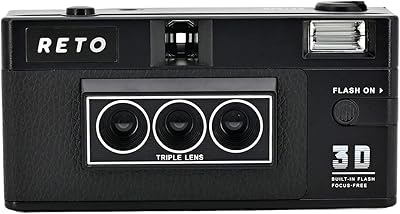
RETO Reto3D 35mm Film Camera
76%
83%
3D Wigglegram Effect Quality
88%
Ease of Use
71%
App Experience
63%
Build Quality
74%
Value for Money
More
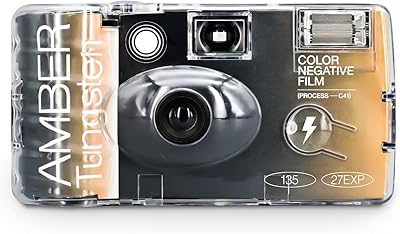
RETO Tungsten 35mm Disposable Camera
77%
83%
Photo Color & Tone
71%
Low-Light Performance
66%
Flash Effectiveness
93%
Ease of Use
74%
Build Quality & Feel
More
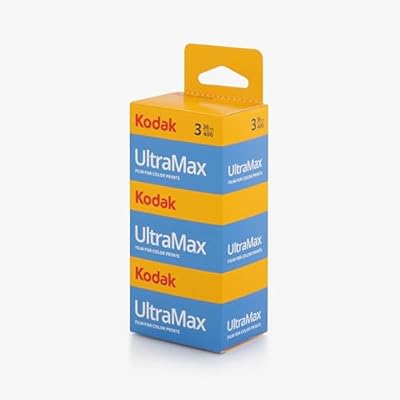
KODAK Ultra Max 400 35mm Color Film
87%
92%
Color Accuracy
88%
Grain Quality
90%
Versatility in Lighting
85%
Exposures per Roll
80%
Durability and Reliability
More
RETO Ultra Wide and Slim 35mm Reusable Film Camera
84%
92%
Ease of Use
94%
Portability
85%
Image Quality
61%
Build Quality
88%
Design & Ergonomics
More
Fujifilm Fujichrome Velvia 100 35mm Film 36 Exposures
86%
95%
Color Reproduction
92%
Sharpness & Detail
94%
Outdoor Photography Performance
89%
Vividness of Colors
90%
Grain Quality
More
Kodak M38 35mm Film Camera
82%
89%
Ease of Use
75%
Photo Quality
91%
Portability
80%
Build Quality
78%
Low-Light Performance
More
XINBAI B10 Reusable 35mm Film Camera
84%
89%
Ease of Use
72%
Image Quality
84%
Build Quality
91%
Portability/Weight
77%
Flash Performance
More
Kodak M35 35mm Reusable Film Camera
79%
93%
Ease of Use
61%
Image Quality
67%
Build Quality
88%
Value for Money
71%
Flash Performance
More

FAQ

Yes, as long as your camera accepts standard 135-format film cartridges — which virtually all 35mm point-and-shoots do — this ISO 400 film roll will load and shoot without any issues. If your camera reads DX codes, it will automatically recognize the ISO 400 speed, so you will not need to adjust anything manually.

Any lab that offers C-41 color negative processing can handle it, which covers the vast majority of local photo labs, mail-in services, and even some larger pharmacy chains that still offer film developing. C-41 is the most common film processing chemistry in use today, so finding a place to develop it should not be difficult regardless of where you are.

The RETO RETOCOLOR Prism 400 35mm Film (36 EXP) sits in a similar speed category to UltraMax and a step above Fujifilm 200 in sensitivity. Early buyers have described the color tones as comparable to Kodak ColorPlus rather than the punchier, more saturated output of UltraMax. The main differentiator is price — this film roll generally costs less per frame, which is the primary draw for budget-conscious shooters.

There is no official guidance from RETO on pushing this emulsion, and because the product only launched in April 2025, there is very little community testing data available yet. You can technically ask a lab to push it, but results will be unpredictable until more experienced shooters document their findings. For now, shooting it at its rated ISO 400 is the safest approach.

DX coding is a convenience feature, not a requirement. If your camera reads DX codes, it will automatically dial in ISO 400, which is helpful on fully automatic cameras where you cannot override the ISO setting. If you shoot a manual camera or a body that ignores DX codes, just set ISO 400 yourself and the film will perform exactly the same way.

It depends on the price per roll, but in general, more exposures per roll means a lower cost per frame, which adds up quickly if you shoot regularly. The practical benefit beyond cost is that you spend less time loading new rolls mid-session, which matters when you are traveling or shooting events where interruptions are annoying.

Indoor shooting under artificial light is a known challenge for any daylight-balanced color negative film, and this 35mm color film is no exception. You may see warmer or cooler color casts depending on your light source, and correcting those shifts during scanning adds some extra work. For occasional indoor shots it is fine, but if most of your shooting is under tungsten or fluorescent light, you might want to factor in that extra post-processing step.

Store unexposed rolls in a cool, dry place away from heat and direct sunlight — a refrigerator works well for longer storage periods. Let refrigerated rolls come to room temperature for around 30 minutes before loading them into your camera to avoid condensation forming on the film surface. Avoid leaving rolls in a hot car or near a window for extended periods.

It is a reasonable choice for a beginner. ISO 400 is forgiving across different lighting situations, C-41 processing is easy to access, and color negative film in general handles exposure mistakes better than slide film. The main caveat is that this is a very new product, so if something goes wrong with a roll, it can be harder to tell whether it is a user error or a product issue without an established track record to reference.

A small number of buyers have mentioned that the film leader on some rolls felt slightly stiff, which caused minor friction when loading into cameras with narrow film channels. This is not a widespread complaint, but if you are using a camera with a fiddly loading mechanism, take a bit of extra care threading the leader onto the take-up spool to avoid any transport issues.