Overview

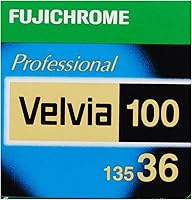
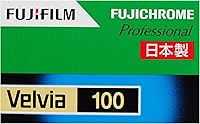
The Fujifilm Fujichrome Velvia 100 35mm Slide Film has held a near-mythic status among landscape photographers for decades, and it has not lost a step. At ISO 100, this is a slow, deliberate stock — not something you reach for when the light disappears. Unlike color negative film, this reversal film produces a finished positive transparency straight out of the E-6 process, meaning what you see on the lightbox is exactly what you captured. With 36 exposures per roll at a premium price point, every frame carries real weight. That scarcity is part of the discipline — and for serious shooters, it is part of the appeal.
Features & Benefits

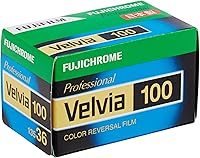
The defining characteristic of Velvia 100 is its vivid color saturation — greens go deep and electric, reds punch hard, and the whole image carries a richness that no digital filter has convincingly replicated. The ultra-fine grain holds up beautifully when scanned at high resolution, making this reversal film a strong pick for anyone extracting maximum detail in post. Balanced for daylight at 5500K, it performs at its best in clean natural light — under heavy overcast it can trend cool, and tungsten indoors needs correction. One habit worth building early: a slight underexposure of a third to half a stop often noticeably deepens the color payoff.

Best For

This slide film is squarely aimed at photographers who shoot outdoors in good light and care deeply about color. Landscape work is the obvious sweet spot — sunlit forests, coastal scenes, mountain meadows where that characteristic green-and-red intensity makes images feel almost hyper-real. Macro photographers chasing sharpness with emotional color will find it rewarding too. Regular scanners benefit from the fine grain, which yields clean, large files with genuine headroom for editing. That said, this is not a casual street shooter's stock or a low-light option. The ISO 100 speed demands workable conditions, and the cost-per-frame rewards methodical patience over volume shooting.

User Feedback

Holding a 4.4-out-of-5 rating across over 215 reviews, Velvia 100 earns consistent praise for its color rendering and sharpness in outdoor scenes — buyers frequently describe scanned results as striking in ways that color negative stocks simply do not match. The pushback is fair: the price per roll is significant, and the narrow exposure latitude means a half-stop mistake can genuinely cost you a frame. Several reviewers flag that E-6 processing is increasingly difficult to source locally, adding both shipping time and cost to an already demanding workflow. Experienced shooters who meter carefully find those friction points manageable. For newcomers, they are genuinely worth weighing before committing.

Pros

  • Color saturation — especially in greens and reds — is genuinely unlike anything available in color negative stocks.
  • Ultra-fine grain holds together beautifully when scanned at high resolution for large prints or detailed crops.
  • Edge sharpness and clarity reward subjects with strong natural detail, from foliage to rocky terrain.
  • Produces a finished positive transparency, ideal for projection or lightbox review without any inversion step.
  • Slight underexposure actively deepens color richness, giving experienced shooters meaningful creative control.
  • Works with any standard 35mm SLR or rangefinder that accepts a DX-coded cartridge — no special gear required.
  • Holds a strong 4.4-out-of-5 rating built on consistent real-world praise for color rendering and sharpness.
  • Still in active production — not a legacy stock being exhausted, so supply is relatively stable.
  • 36 exposures per roll encourages intentional, frame-conscious shooting that many photographers find rewarding.

Cons

  • Exposure latitude is very narrow — a half-stop mistake in either direction can ruin a frame entirely.
  • ISO 100 speed makes this slide film nearly unusable in low light or unpredictable indoor conditions.
  • E-6 processing is not widely available locally in many regions, often requiring mail-in lab turnaround.
  • Total cost per usable image — film plus processing plus potential reshoot — adds up quickly.
  • The strong color bias toward saturation makes it a poor choice for portraiture or clinical color accuracy.
  • Beginners without solid metering habits will waste rolls before getting consistently usable results.
  • No push or pull processing flexibility comparable to black-and-white or even some color negative stocks.
  • Daylight balance means artificial or mixed lighting requires filtration or correction to avoid heavy color casts.
  • Reversal film cannot simply be rescanned with different settings to recover a poorly exposed frame the way a RAW file can.

Ratings

Our AI scoring for the Fujifilm Fujichrome Velvia 100 35mm Slide Film was built by analyzing verified global buyer reviews, actively filtering out incentivized, duplicate, and bot-generated feedback to surface patterns from real-world shooters. Each category score reflects both the genuine strengths that keep enthusiasts coming back and the friction points that frustrated or surprised first-time buyers. Nothing has been smoothed over — where users struggled, the scores show it.
Color Saturation
96%
Across hundreds of reviews, color rendering is the single most praised quality — particularly the way greens in forested scenes and reds in autumn foliage come out with an intensity that feels almost surreal on the lightbox. Photographers consistently describe the Velvia palette as irreplaceable for landscape work, and many return to it specifically because no digital filter or color negative stock replicates it convincingly.
A small but vocal group of reviewers note that the heightened saturation can cross into unrealistic territory for certain subjects — portrait skin tones in particular tend to look oversaturated and unflattering. For photographers who value neutral color accuracy over visual drama, the signature Velvia rendering can actually work against them.
Grain & Sharpness
94%
Users who scan their film routinely highlight the ultra-fine grain as one of the most tangible advantages over other 35mm stocks — crops that would fall apart on faster films hold together cleanly here. Landscape photographers shooting intricate subjects like lichen-covered rock faces or dense canopy detail consistently report that the edge clarity exceeds their expectations even on entry-level flatbed scanners.
The sharpness advantage is most visible under ideal exposure conditions, and a slightly missed exposure can rob the image of the micro-contrast that makes this film special. A few reviewers also noted that the fine grain makes any dust or processing artifacts on the transparency more visually prominent when projected or scanned at high resolution.
Exposure Latitude
41%
59%
Experienced film photographers who meter carefully — whether using a handheld incident meter or spot metering off specific tones — report that working within the film's narrow window produces consistently stunning results. The discipline the film demands is something seasoned shooters actively appreciate, describing it as a constraint that sharpens their craft.
This is the most commonly cited frustration in negative reviews, and it is not a minor concern. A half-stop of overexposure can blow highlights beyond recovery, and underexposure past a stop drains shadow detail fast. Several buyers described losing entire rolls during cloudy or rapidly changing light conditions before they fully understood how unforgiving this reversal film is compared to the color negative stocks they had used previously.
Scan Quality
91%
Photographers who digitize their work consistently rate this slide film among the best 35mm stocks for scanning — the fine grain and high inherent sharpness translate into clean, highly detailed files that hold up well even after significant cropping or enlargement. Several reviewers specifically mentioned that scans from Velvia 100 required less cleanup and sharpening work in post compared to faster or grainier stocks.
Getting the best scan results requires reasonably capable hardware — basic consumer flatbed scanners struggle to fully capture what the film resolves, leaving some buyers underwhelmed until they upgraded their scanning setup. The positive transparency format also demands correct scanner calibration for reversal film, which is a step some users overlooked, resulting in color casts or flat contrast in their initial scans.
Value for Money
58%
42%
Buyers who shoot deliberately and get their exposures right consistently say the cost feels justified by the results — there are simply no cheap alternatives that produce the same color characteristics. Landscape photographers who treat each roll as an investment in finished work rather than a practice medium tend to find the price-to-output ratio acceptable over time.
The high per-roll cost combined with mandatory E-6 processing fees means the real cost of a single usable image is significantly higher than with most color negative stocks. Reviewers who lost rolls to exposure errors or processing mishaps expressed sharp frustration with the financial sting, and several explicitly said they could not justify repurchasing at current prices given the unforgiving nature of the format.
Processing Accessibility
47%
53%
Buyers in major metropolitan areas with access to dedicated analog labs report that E-6 turnaround times are manageable and that the finished transparencies arrive well-protected and ready to scan or project. For those who have already built a mail-in lab workflow, adding Velvia 100 to their rotation requires no extra logistical effort.
E-6 processing is not widely available outside of larger cities, and a significant number of reviewers described having to mail their film out — adding a week or more to the workflow and increasing the total per-roll cost substantially. A few buyers were caught off guard discovering that their local pharmacy or big-box store lab could not process this reversal film at all, having assumed E-6 was as available as C-41.
Daylight Performance
89%
In direct and golden-hour sunlight, this film is described by reviewers as operating at a level above every other 35mm color stock they have tried — colors are vivid without appearing garish, and highlight rolloff in bright outdoor scenes is controlled and pleasing. Photographers shooting around midday or in open shade with clear skies consistently get results they describe as frame-ready without heavy post-processing.
Performance drops noticeably under overcast or mixed lighting conditions, where the 5500K daylight balance introduces a cool, slightly flat rendering that requires correction either in scanning software or via filtration at the time of shooting. A handful of reviewers described being disappointed by results on cloudy hiking days when they expected the same vivid output they had seen in sunlit reference images.
Versatility
38%
62%
For the specific use cases it was designed for — outdoor landscapes, nature macro, and deliberate travel photography in good light — this reversal film is exceptionally well-optimized, and experienced users do not ask it to be anything else. Its focused character is seen as a strength by the photographers who know exactly what they are buying.
As a general-purpose film for everyday shooting, Velvia 100 is a poor fit — ISO 100, a daylight-only color balance, narrow exposure latitude, and specialty processing requirements make it nearly unusable in indoor, low-light, or fast-paced situations. Reviewers who bought it hoping to use it as a primary stock quickly found themselves reaching for color negative film for anything outside controlled outdoor conditions.
Projection Quality
88%
Film enthusiasts who still use slide projectors consistently describe the projected image quality as outstanding — the fine grain disappears entirely on a large screen, colors appear luminous and saturated in a way that digital projection does not match, and the transparency format gives projections an organic depth that is genuinely hard to describe until you have seen it.
Projection is a niche use case that most modern analog photographers never pursue, meaning this strength is irrelevant to a large portion of buyers. A few collectors who purchased with projection in mind also noted that sourcing a functioning 35mm slide projector and quality screen adds hidden cost and complexity to the experience.
Camera Compatibility
93%
The standard 135 DX-coded cartridge format means this film drops into virtually any 35mm camera without modification — reviewers using everything from vintage manual SLRs to modern point-and-shoot film cameras report zero compatibility issues. There is no adapter, modification, or workaround required.
No meaningful compatibility issues were raised by reviewers, but some users of older cameras without DX coding noted they had to set ISO manually to avoid the camera defaulting to an incorrect exposure setting — a minor but relevant operational note for vintage gear owners.
Packaging & Protection
82%
18%
Reviewers consistently note that the film arrives well-packaged in Fujifilm's standard cartridge box, with the canister properly sealed — no light leaks, no physical damage to the film leader, and no signs of rough handling even when purchased through third-party sellers. The compact dimensions also make it easy to store multiple rolls in a camera bag without taking up meaningful space.
Some buyers purchasing in bulk noted that individual rolls are not wrapped or padded beyond the basic cartridge box, which creates some anxiety about potential damage if the outer packaging is compromised in shipping. A small number of reviews mentioned receiving rolls that had been stored improperly before sale, resulting in slightly degraded color response — a supply chain concern rather than a product defect.
Brand Reliability
92%
Fujifilm's long manufacturing track record with Velvia is frequently cited as a source of confidence — buyers describe the emulsion consistency across different production batches as very high, meaning roll-to-roll results are predictable once a shooter has dialed in their technique. The fact that the film remains in active production rather than being a legacy stock reassures photographers who want a dependable long-term option.
A few reviewers expressed concern about the long-term future of E-6 film production broadly, noting that while Velvia 100 is currently available, the specialty film market is fragile enough that supply disruptions or discontinuation remain a background worry. This is more a market-level concern than a Fujifilm-specific complaint, but it does affect buyer confidence in making a long-term commitment to this format.
Learning Curve
44%
56%
Photographers who approach this reversal film as a discipline tool — using it intentionally to sharpen their metering and compositional habits — report that the steep learning curve ultimately improved their overall shooting. Several reviewers described their early frustrating rolls as the most valuable photography education they had experienced, precisely because the film punished carelessness so immediately and transparently.
For anyone without solid exposure fundamentals, the learning curve on this film is punishingly steep — reviewers describe losing two or three full rolls before understanding the metering precision required. Unlike color negative film, there is no safety net, and mistakes are expensive both financially and emotionally when you are carrying a camera into a once-in-a-season landscape.

Suitable for:

The Fujifilm Fujichrome Velvia 100 35mm Slide Film is purpose-built for photographers who treat outdoor shooting as a craft rather than a casual hobby. Landscape and nature photographers will get the most out of it — this is the stock that makes a sunlit forest canopy or a coastal cliff face look almost otherworldly, with greens and reds rendered at an intensity that feels closer to a painting than a snapshot. Photographers who scan their film and work in post will also appreciate the ultra-fine grain, which holds up cleanly at high resolution and gives real latitude for editing without the image falling apart. Those who still project slides or study them on a lightbox will find the positive transparency format inherently satisfying — the image is right there, finished and luminous. In short, if you shoot deliberately, meter carefully, and value color richness above all else, this reversal film is genuinely hard to beat.

Not suitable for:

The Fujifilm Fujichrome Velvia 100 35mm Slide Film is a poor fit for anyone who is new to film photography or still developing their exposure instincts. The ISO 100 speed makes it impractical in dim interiors, overcast street scenes, or anywhere you cannot control or rely on strong natural light. Unlike color negative stocks that forgive a stop or more of exposure error, this reversal film punishes sloppy metering — blow the highlights or underexpose too aggressively and the frame is simply lost. On top of that, E-6 processing is not something every local lab offers anymore, which can mean mailing your film out and waiting, adding both cost and turnaround time to an already expensive workflow. High-volume shooters who burn through rolls quickly will feel the cost per frame acutely. If your shooting style is fast, spontaneous, or low-light-heavy, a more forgiving color negative film will serve you far better.
Specifications

  • Film Type: Color reversal (slide/transparency) film that produces a finished positive image directly after processing.
  • ISO Speed: Rated at ISO 100, making it best suited for bright natural light or controlled studio conditions.
  • Format: 135 format (standard 35mm), compatible with any SLR or rangefinder camera that accepts a DX-coded cartridge.
  • Exposures: Each roll yields 36 exposures per cartridge.
  • Color Balance: Balanced for daylight at approximately 5500K, optimized for outdoor shooting in natural sunlight.
  • Processing: Requires E-6 chemistry development, which must be handled by a compatible professional or mail-in lab.
  • Grain Structure: Ultra-fine grain structure that retains clean, sharp detail even when scanned at high resolution or projected.
  • Color Saturation: Delivers high color saturation with particular intensity in greens and reds, characteristic of the Velvia rendering style.
  • Sharpness: High edge clarity and resolving power make it well-suited for fine-detail subjects such as foliage, landscapes, and macro photography.
  • Manufacturer: Manufactured by Fujifilm in Japan under the Fujichrome reversal film line.
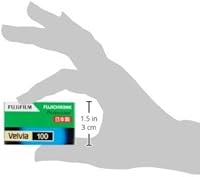
  • Package Size: Packaged in a compact cartridge box measuring 2.48 x 1.57 x 1.42 inches.
  • Item Weight: The packaged roll weighs 1.06 ounces, making it light and easy to carry multiple rolls in a bag or vest pocket.
  • Availability: This film is not discontinued and remains in active production as of the time of this writing.
  • Exposure Latitude: Narrow exposure latitude typical of reversal film; accurate metering is essential, and slight underexposure by a third to half a stop can enhance color saturation.
  • Projection Use: Finished transparencies are suitable for projection using a standard 35mm slide projector or viewing on a lightbox.
  • Scanning Quality: Ultra-fine grain and high sharpness make this film an excellent candidate for high-resolution digital scanning and post-processing workflows.

Related Reviews

Fujifilm Fujicolor 100 35mm Film (36 Exposures)
80%
88%
Color Rendition
91%
Grain & Sharpness
43%
Low-Light Performance
79%
Value for Money
93%
Daylight & Outdoor Use
More
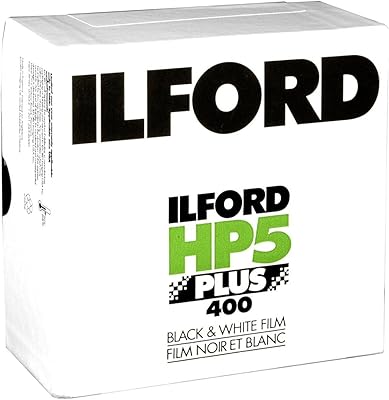
Ilford HP5 Plus Black and White Negative Film 35mm 100' Roll
86%
91%
Image Quality
85%
Flexibility in Lighting
92%
Value for Money
88%
Grain Quality
82%
Ease of Use
More
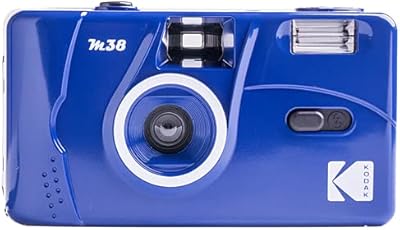
Kodak M38 35mm Film Camera
76%
93%
Ease of Use
81%
Value for Money
74%
Image Quality
78%
Flash Performance
62%
Build Quality
More
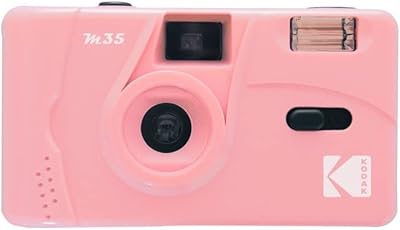
Kodak M35 35mm Reusable Film Camera
79%
93%
Ease of Use
61%
Image Quality
67%
Build Quality
88%
Value for Money
71%
Flash Performance
More
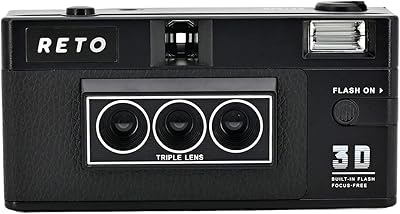
RETO Reto3D 35mm Film Camera
76%
83%
3D Wigglegram Effect Quality
88%
Ease of Use
71%
App Experience
63%
Build Quality
74%
Value for Money
More
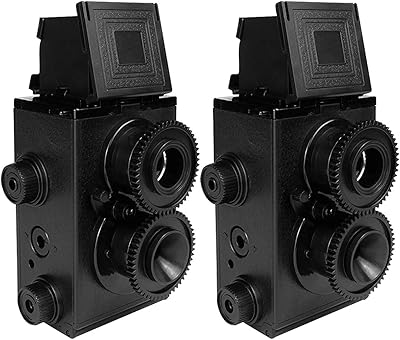
DEVMO Recesky TLR Camera Kit 2-Pack
74%
78%
Assembly Experience
44%
Instruction Clarity
81%
Value for Money
53%
Image Quality
51%
Build Quality & Durability
More
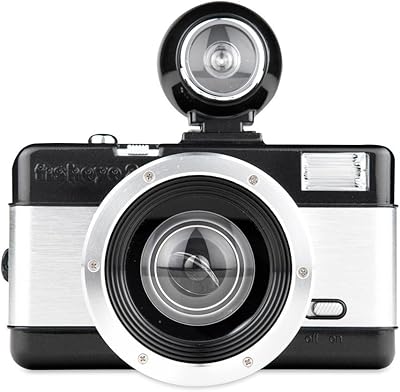
Lomography Fisheye No.2 35mm Film Camera
81%
91%
Creative Flexibility
87%
Ease of Use for Beginners
93%
Portability
80%
Build Quality
75%
Manual Control Usability
More
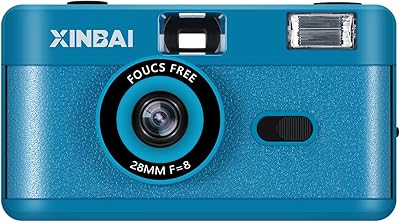
XINBAI B10 Reusable 35mm Film Camera
69%
74%
Value for Money
52%
Image Quality
81%
Ease of Use
49%
Build Quality
67%
Flash Performance
More
Fujifilm QuickSnap Flash 400
74%
78%
Image Quality
82%
Flash Performance
94%
Ease of Use
67%
Value for Money
74%
Film Speed & Low-Light Handling
More
Fujifilm Instax Mini 99
79%
91%
Build Quality
84%
Print Quality
78%
Creative Shooting Modes
73%
Color Effects
71%
Ease of Use
More

FAQ

Honestly, it is a tough starting point. The Fujifilm Fujichrome Velvia 100 35mm Slide Film has a very narrow exposure latitude, which means a metering mistake that would be forgivable on color negative film can result in a completely lost frame here. If you are still building your exposure instincts, a more forgiving color negative stock will let you learn faster and waste fewer rolls. Once you are confident with manual metering, Velvia 100 becomes much more rewarding.

Any standard 35mm SLR or rangefinder camera that accepts a DX-coded 135-format cartridge will work fine. That covers the vast majority of film cameras made from the 1980s onward. You do not need any special gear — just a camera in good working order and a reliable light meter, either built-in or handheld.

This reversal film requires E-6 chemistry, which is a more specialized process than the C-41 chemistry used for standard color negative film. Not every local lab offers it, so depending on where you live, you may need to mail your rolls to a dedicated film lab. Processing costs vary by lab, but expect to pay more than you would for C-41 development — factor that into your overall cost-per-roll calculation before buying.

Velvia 50 is even slower and is known for slightly higher saturation and finer grain, while Velvia 100 offers a bit more flexibility in moderate lighting conditions without sacrificing the signature color punch. For most shooters, the practical difference between the two is small, but if you frequently shoot in slightly lower light or want that extra stop of speed, Velvia 100 is the more versatile choice.

Technically yes — E-6 labs can push Velvia 100 by one stop to get an effective ISO of 200, which can help in moderately lower light. However, pushing increases contrast and grain, and it partially undercuts the very qualities that make this slide film worth using. Pulling is less common and rarely necessary given the film is already at ISO 100. Most experienced shooters prefer to use it as rated and manage light carefully rather than relying on push processing.

Landscapes are the classic answer — particularly scenes with lush vegetation, water, and blue sky, where the film's color bias toward vivid greens and deep reds produces striking results. Macro photography of flowers and natural textures also benefits from the sharpness and saturation. Portraits are generally not a great fit, as the heightened saturation can render skin tones in an unflattering way.

With reversal film, overexposure washes out the highlights quickly and permanently — there is no recovering a blown transparency the way you might rescue an overexposed RAW file in editing. This is one of the key reasons experienced shooters often dial in a slight underexposure when using this reversal film. The rule of thumb is to expose for the highlights and let the shadows fall where they may.

Keep unused rolls refrigerated if you are storing them for an extended period — cold temperatures slow the natural degradation of film emulsion over time. Let the roll return to room temperature for at least 30 to 45 minutes before loading it into your camera to prevent condensation from forming on the film surface. Avoid leaving rolls in a hot car or in direct sunlight for extended periods.

Both approaches work well, and the film handles either beautifully thanks to its fine grain and high sharpness. A capable flatbed scanner like the Epson V600 or V850 will extract excellent detail from this slide film. If you have access to a dedicated film scanner, the results can be genuinely impressive. Lab scanning is a convenient option if you do not want to invest in scanning equipment, though quality varies significantly between labs.

That depends entirely on what you are trying to accomplish. If vivid, punchy color and ultra-fine grain in outdoor scenes are priorities, this slide film delivers results that are genuinely difficult to replicate with color negative stocks. However, if you are shooting casually, experimenting with analog, or working in unpredictable light conditions, the combination of a higher per-roll cost and additional E-6 processing fees can make the overall investment hard to justify. Think of it as a specialty tool rather than an everyday stock.

Where to Buy