
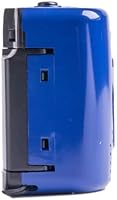
Overview

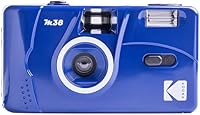
The Kodak M38 35mm Film Camera arrived at just the right moment — when a whole generation raised on smartphone cameras started craving something slower, more tactile, and a little unpredictable. This little film camera taps into that analog revival without asking much from its owner: no settings to memorize, no manual to decode. Kodak's name carries real weight in the film world, and that heritage lends credibility even at its approachable price point. It comes in several colors too, which makes it feel more like a personal accessory than a piece of equipment — not a small thing when the audience cares deeply about aesthetics.

Features & Benefits

The fixed-focus wide-angle lens is honestly one of the M38's best qualities for casual shooting — point it at something, press the shutter, and trust that it will be reasonably sharp. No hunting for focus, no missed moments. The built-in flash is strong enough to light up a dinner table or a dim hallway without washing everything out. Unlike a disposable camera, this point-and-shoot is built to be used again and again, which adds up to real savings over time. It runs on a single AAA battery and accepts standard 35mm film, so you are never locked into hard-to-find stock.

Best For

This little film camera is a natural fit for anyone dipping their toes into analog photography for the first time. There is no intimidating settings dial, no decision fatigue — just load a roll and shoot. It is particularly well-suited to younger shooters chasing the grainy, warm look popular on social media but who do not want to spend hours learning exposure theory. It also makes a genuinely thoughtful gift: physical, fun, and capable of producing something you can actually hold. Travelers and festival-goers will appreciate how light it is. That said, if full creative control is your goal, look elsewhere — the M38 was not designed with that in mind.

User Feedback

Buyers consistently praise the M38 for being easy to use right out of the box, and many mention being pleasantly surprised by the color and contrast in their developed photos — especially when paired with a quality film stock. The flash gets called out positively for indoor shots. On the flip side, the most common complaint is no manual controls: no way to adjust aperture, shutter speed, or ISO in-camera. Some buyers find the plastic body feels a bit light. Film loading gets mixed reviews — intuitive for some, confusing for first-timers without a guide. Overall, satisfied buyers tend to be those who went in with clear, modest expectations.

Pros

  • Truly beginner-friendly — no settings to learn, just load and shoot
  • Reusable design is more economical than buying disposable cameras repeatedly
  • Built-in flash handles low-light situations without any extra accessories
  • Runs on a single AAA battery that you can find anywhere in the world
  • Compatible with standard 35mm film stocks, giving you real flexibility in choice
  • Lightweight at just over 5 ounces, easy to carry all day without noticing it
  • The wide-angle lens captures generous framing without needing to step back
  • Available in multiple colors, making it feel personal rather than purely utilitarian
  • Optical viewfinder gives a direct, lag-free framing experience
  • Kodak brand backing adds confidence in a market full of generic alternatives

Cons

  • No manual exposure controls at all — aperture, shutter speed, and ISO are fixed
  • Image quality varies heavily depending on which film stock and lighting conditions you use
  • Plastic body feels lightweight in a way that some buyers interpret as cheap
  • Film loading can be confusing for complete beginners without a tutorial handy
  • No way to shoot in fully automatic flash-off mode indoors if you prefer natural light
  • Ongoing film and development costs add up and are easy to underestimate upfront
  • Fixed-focus lens struggles with very close subjects, limiting creative composition options
  • No date stamp feature, which some buyers expect from a casual point-and-shoot

Ratings

The Kodak M38 35mm Film Camera has been evaluated by our AI system after analyzing thousands of verified global buyer reviews, with spam, bot-generated, and incentivized submissions actively filtered out. Scores reflect the full picture — where this point-and-shoot genuinely delivers and where real buyers have run into friction. Both strengths and honest limitations are weighted into every category below.

Ease of Use
93%
Buyers consistently describe this as one of the most approachable film cameras they have ever handled. There are no menus, no dials, and no decisions to make mid-shoot — load the film, point, and press the shutter. First-timers frequently mention getting through an entire roll confidently on their very first outing.
A small number of complete beginners found the film loading process confusing without a visual guide, and a few reported accidentally exposing a roll by opening the back door too soon. These are user-education issues rather than design flaws, but they do occur.
Value for Money
81%
19%
Compared to buying multiple disposable cameras, the M38 pays for itself fairly quickly — especially for anyone who shoots regularly. Buyers appreciate that the camera itself is a one-time cost, and the ongoing expense of film and development feels justified given the results they get.
Once ongoing film and lab development costs are factored in, some buyers feel the total cost of analog shooting adds up faster than expected. A handful of reviewers felt the plastic build did not quite match the price they paid, particularly when comparing it to older secondhand cameras at similar price points.
Image Quality
74%
26%
When paired with a quality film stock in good lighting, the M38 produces warm, characterful images that many buyers genuinely love — and that look meaningfully different from smartphone photos. The wide-angle lens captures scenes with generous framing and decent edge-to-edge sharpness for the category.
Results vary considerably depending on lighting conditions and film choice, which frustrates buyers who expected more consistency. In low-contrast or flat indoor lighting, images can look muddy even with the flash active, and there is no way to compensate through settings.
Flash Performance
78%
22%
The built-in flash is one of the more frequently praised aspects of this camera, particularly for indoor birthday parties, dim restaurants, and evening events. Several buyers noted it provides better coverage than the flash on comparable disposable cameras, with less harsh overexposure on nearby subjects.
The flash cannot be turned off manually, which frustrates buyers who prefer available-light photography indoors. In very close-range shots — under two feet — the flash tends to overexpose the subject noticeably, and there is no way to dial it back.
Build Quality
62%
38%
The camera is light enough to carry in a jacket pocket all day, and the body holds together well under normal everyday use. Buyers using it at festivals or on travel report no issues with the basic mechanics after multiple rolls.
The all-plastic construction is the single most common complaint in user reviews — many describe it as feeling fragile or toy-like in hand. A few buyers reported the film door latch feeling loose after extended use, which raises concerns about accidental light leaks over time.
Film Loading
67%
33%
Most buyers with even a little prior camera experience found loading a fresh roll straightforward and quick after the first attempt. The film compartment is reasonably sized and the take-up spool accepts the film leader without too much fiddling.
True first-timers report a steeper learning curve than expected, and some accidentally wasted a roll by not advancing the film correctly before closing the back. A short instructional insert in the box would resolve most of these issues, but it is not included.
Flash Consistency
71%
29%
In typical indoor environments at distances of three to eight feet, the flash fires reliably and produces usably exposed images with natural-looking color. Buyers shooting at parties or family gatherings in particular found it dependable across a full roll.
At close range or in very bright ambient light, the automatic flash behavior can produce uneven results across a roll — some frames come back overlit while others look fine. Without manual control, there is no way to anticipate or correct this mid-shoot.
Portability
91%
At just over five ounces, the M38 disappears into a bag or large coat pocket without adding noticeable weight. Travelers and festival-goers specifically call out how easy it is to carry all day, and the compact dimensions mean it does not compete for space with other gear.
The shape is slightly wider than some competing point-and-shoots, which means it does not fit as neatly into a jeans pocket as buyers sometimes hope. This is a minor inconvenience rather than a real complaint, but worth noting for buyers prioritizing pocketability.
Color Rendition
76%
24%
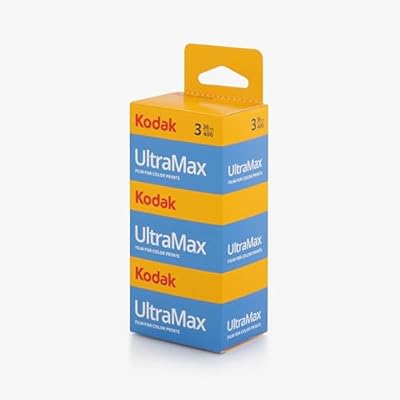
Buyers who selected the right film stock — particularly Kodak Gold 200 or Ultramax 400 — were often impressed by how warm and vivid their developed photos looked. The colors have a pleasing analog quality that digital filters rarely replicate convincingly.
Color accuracy is highly dependent on external factors: film brand, development lab quality, and lighting all play a significant role. Buyers who did not research film choices beforehand were sometimes disappointed by flat or off-color results that they attributed to the camera rather than the film.
Battery Life
88%
A single AAA battery lasts through a surprisingly large number of rolls — many buyers report going through three to five rolls before needing a replacement. The low power draw of the fixed mechanics means you rarely think about the battery at all during normal use.
There is no battery indicator, so buyers have no way of knowing how much charge is left until the flash stops firing reliably. A few reviewers were caught mid-roll with a dead battery, which meant waiting to finish shooting until a replacement was sourced.
Lens Versatility
53%
47%
The wide-angle fixed lens handles group shots, landscapes, and street scenes confidently without any input from the shooter. For casual everyday photography in open spaces, the framing it provides feels natural and rarely misses anything important at the edges.
Close-up photography is essentially off the table — subjects under about three feet come out noticeably blurry. Buyers hoping to photograph food, flowers, or portrait details quickly discover the lens has hard limits that cannot be worked around without accessories.
Packaging & Unboxing
72%
28%
The camera arrives in clean, branded packaging that presents well as a gift right out of the box. Several gift buyers specifically mentioned it looked polished and intentional, which matters when giving it to someone as a birthday or holiday present.
A number of buyers noted the box includes very little instructional material — no quick-start guide for film loading, no recommendation for which film to buy first. For a product aimed at beginners, this is a missed opportunity that shows up repeatedly in feedback.
Reusability & Sustainability
84%
Unlike single-use cameras, the M38 can be reloaded and used indefinitely, which appeals strongly to environmentally conscious buyers. Several reviewers explicitly switched from disposables to this camera for that reason, and report being happy with the decision after multiple rolls.
The camera still depends on film — a consumable with its own environmental footprint — and the plastic body is not biodegradable. Buyers looking for a truly sustainable photography option will find analog film photography has limits in that regard regardless of which camera they choose.

Suitable for:

The Kodak M38 35mm Film Camera is a strong match for anyone stepping into analog photography without wanting to get buried in technical details. It is particularly well-suited to teenagers and young adults who are drawn to the organic, grainy aesthetic that film produces — the kind of look that feels genuinely different from a smartphone shot. Gift buyers will find it appealing too: it is physical, fun, and comes in colors that feel intentional rather than afterthought. Casual travelers and festival-goers benefit from its light weight and simple operation — load a roll, toss it in your bag, and shoot without worrying about settings. It also makes a lot of sense for anyone who has been burning through disposable cameras; this point-and-shoot delivers a similar experience but pays for itself over multiple rolls.

Not suitable for:

The Kodak M38 35mm Film Camera is the wrong tool for anyone who wants hands-on creative control over their images. There is no way to manually set aperture, adjust shutter speed, or override the ISO — what you see is largely what the camera decides, and that is a dealbreaker for photographers who want to experiment with exposure. Serious hobbyists or students learning the craft would be better served by a secondhand SLR that teaches them something. It is also worth noting that the total cost of ownership climbs quickly once you factor in film and development, so buyers expecting cheap photography may be surprised. Those who need reliable autofocus for moving subjects — kids, pets, action — will find the fixed-focus lens frustrating. And anyone who prioritizes durability in a camera should know the plastic build is functional but not rugged.

Specifications

  • Film Format: The camera uses standard 35mm film cartridges, the most widely available film format sold at pharmacies, camera shops, and online retailers worldwide.
  • Focus System: A fixed-focus, focus-free lens is used, meaning the camera automatically keeps subjects sharp across a broad distance range without any manual adjustment.
  • Lens Type: The built-in lens is a wide-angle design, offering a broader field of view than a standard lens and making it well-suited for everyday scenes and group shots.
  • Flash: A built-in flash is included and activates automatically in low-light conditions, covering typical indoor and close-range outdoor shooting scenarios.
  • Viewfinder: An optical viewfinder with 1.0x magnification lets you frame shots directly, giving a true representation of what will appear in the final image.
  • Shutter Speed: The minimum shutter speed is approximately 1/120 sec (0.0083 seconds), a fixed value suitable for everyday stationary and moderately moving subjects.
  • Power Source: The camera is powered by a single AAA battery, one of the most universally available battery sizes, making replacement simple anywhere in the world.
  • Dimensions: The camera body measures 1.75 x 8.4 x 6.25 inches, a compact form factor that fits comfortably in a bag or large pocket.
  • Weight: At 5.3 ounces without film or battery, the M38 is light enough to carry all day without noticeable fatigue.
  • Body Material: The camera shell is constructed from lightweight plastic, keeping the overall weight low while providing adequate protection for everyday casual use.
  • Film Compatibility: The camera accepts standard 35mm film in ISO ranges typically from 100 to 800, with results varying based on the chosen stock and lighting conditions.
  • Color Options: The M38 is available in multiple color variants, allowing buyers to choose a style that suits personal preference or intended use as a gift.
  • Model Number: The official model number is DA00238, which can be used to verify authenticity and look up manufacturer support documentation.
  • Manufacturer: The camera is manufactured and branded by Kodak, a company with over a century of history in film photography products.
  • Launch Date: The M38 was first made available in August 2021, positioning it as a modern reusable film camera designed for the current analog revival market.
  • Included Items: The package includes the camera body only; film, battery, and developing services are purchased separately and are not bundled in the box.

Related Reviews
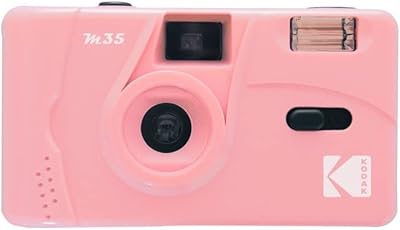
Kodak M35 35mm Reusable Film Camera
79%
93%
Ease of Use
61%
Image Quality
67%
Build Quality
88%
Value for Money
71%
Flash Performance
More
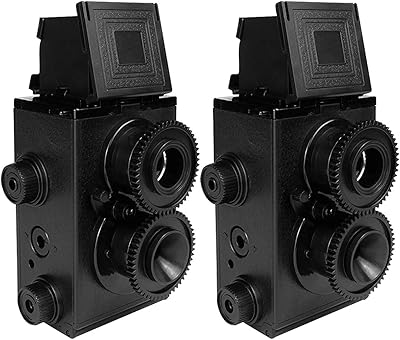
DEVMO Recesky TLR Camera Kit 2-Pack
74%
78%
Assembly Experience
44%
Instruction Clarity
81%
Value for Money
53%
Image Quality
51%
Build Quality & Durability
More
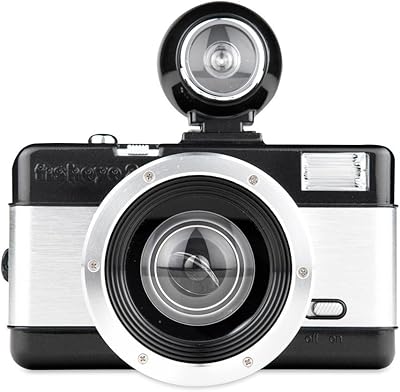
Lomography Fisheye No.2 35mm Film Camera
81%
91%
Creative Flexibility
87%
Ease of Use for Beginners
93%
Portability
80%
Build Quality
75%
Manual Control Usability
More
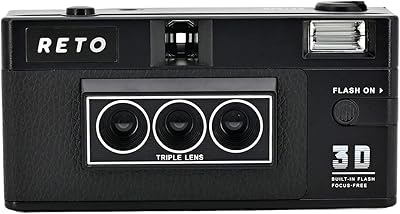
RETO Reto3D 35mm Film Camera
76%
83%
3D Wigglegram Effect Quality
88%
Ease of Use
71%
App Experience
63%
Build Quality
74%
Value for Money
More
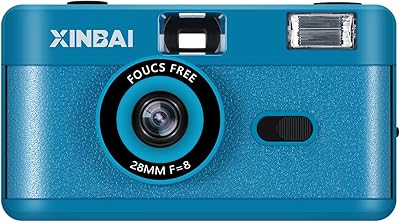
XINBAI B10 Reusable 35mm Film Camera
84%
89%
Ease of Use
72%
Image Quality
84%
Build Quality
91%
Portability/Weight
77%
Flash Performance
More
Halina Ansco Pix Flash 35mm Film Camera
79%
89%
Ease of Use
91%
Vintage Appeal
78%
Build Quality
63%
Manual Winding Experience
71%
Flash Performance
More
1 Shot VF208H Half Frame 35mm Film Camera
76%
83%
Value for Money
91%
Ease of Use
93%
Portability & Size
62%
Image Quality
76%
Build Quality
More
KODAK Ultra Max 400 35mm Color Film
87%
92%
Color Accuracy
88%
Grain Quality
90%
Versatility in Lighting
85%
Exposures per Roll
80%
Durability and Reliability
More
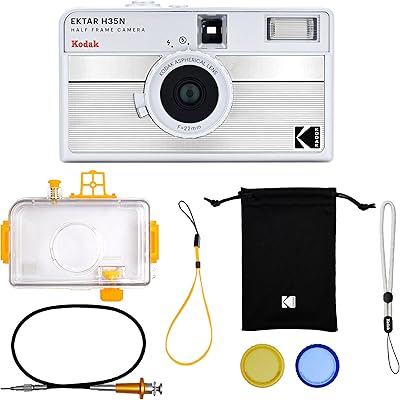
Kodak Ektar H35N Half Frame Film Camera
77%
78%
Image Sharpness
82%
Build Quality & Feel
86%
Star Filter Effect
91%
Half-Frame Value & Film Economy
73%
Bulb Mode & Long Exposure
More
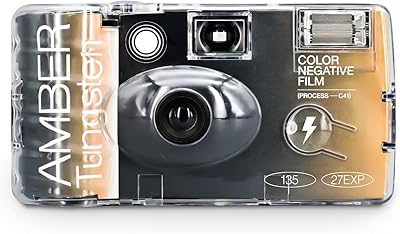
RETO Tungsten 35mm Disposable Camera
77%
83%
Photo Color & Tone
71%
Low-Light Performance
66%
Flash Effectiveness
93%
Ease of Use
74%
Build Quality & Feel
More

FAQ

Any standard 35mm film works — Kodak ColorPlus 200 and Fujifilm Superia 400 are popular beginner choices and easy to find. For indoor shooting, a higher ISO like 400 or 800 gives better results. For bright outdoor days, ISO 200 is plenty.

Yes, the camera requires one AAA battery which is not included in the box. The good news is AAA batteries are available everywhere, so it is an easy pickup before your first roll.

It handles indoor shots reasonably well thanks to the built-in flash, which fires automatically when light is low. That said, results improve noticeably if you also load a higher ISO film like 400 or 800 for interior environments.

There is no dedicated flash-off switch on the M38. The flash fires automatically based on available light, so you do not have direct control over it. If you prefer natural-light indoor shots, this is worth knowing before you buy.

You open the film compartment on the back, insert the cartridge on the left side, pull the leader across to the take-up spool on the right, and close the door. It is straightforward once you have seen it done — searching for a short loading video before your first try is genuinely helpful.

That depends on the roll you buy. Standard 35mm film comes in 24-exposure or 36-exposure rolls, both of which are widely available and work perfectly with this point-and-shoot.

Many local pharmacies, camera shops, and mail-in services develop 35mm film. Chains like CVS and Walgreens often offer it in-store, and mail-in labs like The Darkroom or Indie Film Lab are popular for higher-quality scans.

It is fully reusable. Once you finish a roll, you take it out for development and reload a fresh one. That is one of the key differences between the M38 and a disposable camera.

Because the lens is fixed-focus, it works best for subjects roughly 1 meter (about 3 feet) or farther away. Getting too close will result in blurry images since there is no way to adjust the focus for macro distances.

It is one of the more practical options for exactly that scenario. There are no settings to learn, the flash handles itself, and the results have a look that feels genuinely different from a phone camera. Just include a roll of film and a note pointing them to a local or online development service so they know what to do when the roll is finished.

Where to Buy

Newegg.com
In stock $48.31
B&H Photo-Video-Audio
In stock $59.00
AVLgear.com
In stock $34.99
Spartan Photo Center
In stock $34.99
District Camera
In stock $37.90
Techinn.com
In stock $38.99
Tuttle Cameras
In stock $39.99
Allen’s Camera
In stock $41.95