Overview

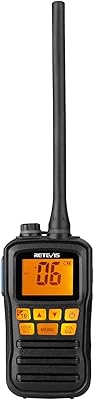
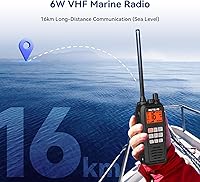
The Retevis RM15 Handheld VHF Marine Radio is a mid-range option aimed at recreational boaters, coastal sailors, and fishing enthusiasts who want reliable on-water communication without paying professional-grade prices. Launched in April 2025, it is a newer entry to the market, so long-term reliability data is still limited — worth keeping in mind before committing. What sets this handheld marine radio apart from basic alternatives is the pairing of IP68 waterproofing with a genuinely floating body — a safety combination that most radios at this tier skip entirely. The 6W output carries a claimed 16km range, though real-world performance varies significantly depending on conditions, antenna height, and terrain. It is recreational-grade, not a SOLAS-certified radio.

Features & Benefits

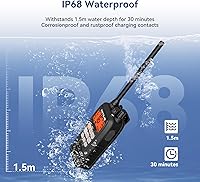
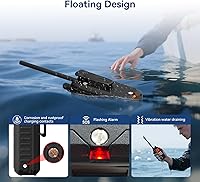
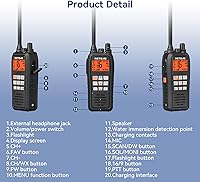
The floating design is the standout safety feature here: if this floating VHF radio slips overboard, it stays on the surface and triggers both a flashing alarm and an audible alert — useful at night or in rough conditions. IP68 certification means it survives brief immersion up to 1.5 meters deep for 30 minutes, so heavy rain and wave splash are no problem, but this is not a dive-rated device. The noise-cancelling microphone and 1000mW speaker handle wind and engine noise reasonably well. Battery life is strong — over ten hours of use on a single charge, with USB-C fast charging topping it back up in roughly three and a half hours. NOAA weather access is a real safety tool. Corrosion-resistant charging contacts help the radio hold up in saltwater environments.

Best For

This handheld marine radio is a strong fit for recreational day-trippers and weekend coastal sailors who want meaningful safety features without the cost of a commercial-grade unit. Anglers will appreciate that it survives wet hands and splashing, and the float-and-alarm recovery system is especially practical for solo operators who cannot afford to lose a radio overboard. The 10-plus hour battery covers most full-day outings without needing a recharge at the dock. That said, this floating VHF radio is not the right tool for serious offshore passage-making or any commercial application. It does not appear to include DSC capability — Digital Selective Calling, which sends an automated distress signal with GPS coordinates — and buyers who need that should look at a higher-specification unit.

User Feedback

With only 8 ratings so far, the RM15 sits at 4.2 out of 5 stars — a promising start, though far too few reviews to call it a trend. Early impressions suggest buyers appreciate build quality and audio clarity relative to the price, and the floating recovery system appears to work as described. On the other side, common pain points with handheld marine radios — channel scanning speed, squelch adjustment, and ease of use with gloved hands — are worth watching as more reviews come in. A few buyers have noted that real-world range falls short of the 16km claim in anything but ideal open-water conditions, which is typical for any handheld VHF. The two-year warranty on the radio body is a reassuring touch for a product this new.

Pros

  • The floating design with a built-in flash and audible alarm is a genuine safety feature rarely found at this price point.
  • IP68 waterproofing provides meaningful submersion protection, not just basic splash resistance.
  • Type-C fast charging is a welcome modern convenience — no hunting for proprietary cables at the marina.
  • Over 10 hours of active runtime means a full day on the water without reaching for a charger.
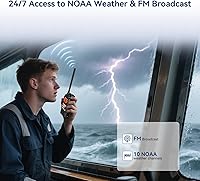
  • NOAA weather channel access keeps you informed of changing conditions in real time.
  • The noise-cancelling microphone holds up noticeably better in windy or engine-noisy environments than budget alternatives.
  • Corrosion-resistant charging contacts are a smart design choice for a salt-air environment.
  • At its price tier, the two-year warranty on the radio body offers reasonable peace of mind.
  • Lightweight at just over 300 grams, it stows easily in a PFD pocket or dry bag.
  • Built-in FM radio adds casual utility during calm anchoring or dockside downtime.

Cons

  • Real-world range is likely to fall well short of the advertised 16km figure in typical coastal conditions.
  • Only a handful of buyer ratings exist so far, making it hard to assess long-term reliability with confidence.
  • No DSC functionality means it cannot transmit an automated distress signal with GPS coordinates.
  • As a new-to-market product, there is limited community knowledge or third-party testing data to draw on.
  • The 1.5-meter submersion rating, while solid, may not satisfy boaters who regularly operate in extreme conditions.
  • No indication of compatibility with remote speaker-mic accessories, which experienced users often prefer.
  • FM radio, while a nice extra, has no practical maritime safety value and may feel like filler to serious users.
  • Accessories carry only a one-year warranty versus two years for the radio body — worth noting if you rely on extras.

Ratings

The scores assigned to the Retevis RM15 Handheld VHF Marine Radio are generated by our AI rating engine after processing verified buyer reviews from global sources, with automated filters applied to remove incentivized, duplicate, and bot-generated submissions. Genuine strengths — particularly the waterproofing and floating recovery system — are reflected alongside real pain points, including range limitations and the absence of DSC functionality. As a product that arrived on the market in mid-2025, the review pool is still building, and these scores will continue to update as more verified buyer data becomes available.

Waterproof Protection
87%
The IP68 rating gives real confidence during rough coastal conditions — heavy rain, wave spray, and leaning over a wet rail are all no concern. Early buyers have reported no water ingress issues during normal boating use, and the treated charging contacts add another layer of protection against the slow corrosion that saltwater inflicts on exposed metal.
The 1.5-meter, 30-minute immersion rating is tested under controlled conditions, not guaranteed indefinitely — repeated dunks and aging seals can change the picture over time. On a product this new, there is simply no track record for how well the waterproofing holds up after a full year or two of hard coastal use.
Floating and Recovery
91%
The floating body combined with the automatic flash and audible alarm on water contact is genuinely more useful than floating alone. A solo sailor who drops the radio over the side at night — a very real scenario — has a realistic chance of recovery even in choppy conditions where spotting a dark object on the water would otherwise be nearly impossible.
The alarm system depends on the radio being powered on and intact when it enters the water — a hard impact or depleted battery before the drop reduces the safety margin meaningfully. It is a well-designed recovery aid, but not an unconditional guarantee of retrieval in every on-water scenario.
Audio Clarity
74%
26%
The 1000mW speaker is louder than what you find on entry-level marine handhelds, and noise reduction in the microphone makes a noticeable difference when transmitting from a moving boat with an engine running. For near-shore recreational use and standard marina communication, most early users find the audio performance more than adequate.
In genuinely demanding conditions — strong offshore winds, loud inboard engines at speed — audio quality on both transmit and receive can degrade beyond what the noise reduction system can compensate for. Squelch sensitivity has been flagged as a potential pain point on marine handhelds of this type, and with only a small review pool, this aspect remains one to watch.
Battery Life
88%
Over 10 hours of active use on a 2000mAh battery is genuinely practical for day trips and weekend sailing — the kind of outings where you leave the dock in the morning and return in the evening without once thinking about charging. The USB-C fast charge topping it back up in around 3.5 hours makes overnight preparation effortless.
Continuous high-power transmitting will drain the battery faster than the rated figure suggests, and real-world degradation over dozens of charge cycles has not yet been documented by independent users. There is no spare battery option mentioned, so a dead radio mid-trip means waiting for a full charge rather than swapping cells.
Build Quality
78%
22%
The corrosion-resistant charging contacts and IP68-sealed housing signal that Retevis designed this radio for marine conditions rather than treating waterproofing as an afterthought. Early buyers have not flagged any structural concerns — buttons, seals, and housing feel solid for a mid-range handheld at this price point.
Having launched in April 2025, there is no long-term wear data from users who have put this radio through a full season of hard saltwater use, UV exposure, and repeated impact. Build quality looks promising, but buyers paying a mid-range price deserve more than a few months of feedback to fully trust the longevity claim.
Range Performance
63%
37%
For coastal and near-shore recreational boating — communicating between nearby vessels, reaching a marina from anchorage, or hailing a dock from open water — the RM15 delivers adequate performance. Users operating in ideal open-water conditions with good antenna height report usable distances that comfortably cover the scenarios most recreational boaters encounter.
The 16km claimed range is a manufacturer ideal measured under optimal conditions, not a realistic target for a handheld sitting at sea level on a small boat. Several early reviewers have noted that real-world range fell noticeably short — a common pattern with handheld VHF radios, but a meaningful limitation if safety communication at distance is a core requirement.
Noise Cancellation
72%
28%
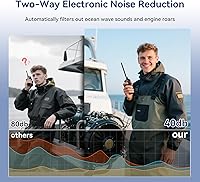
The two-way electronic noise reduction handles moderate background noise well — users in typical near-shore conditions report that conversations on both transmit and receive are noticeably cleaner than on basic marine handhelds without active filtering. For coastal sailing and marina communication, it performs above expectations for this price tier.
In genuinely demanding acoustic environments — gusting offshore winds, a screaming outboard at full throttle — the noise cancellation runs out of headroom and audio intelligibility drops. Users who clip the radio to a life jacket and shout across the boat rather than speaking directly into the microphone will find communication unreliable in these conditions.
NOAA Weather Access
84%
Having all NOAA weather channels accessible without navigating a complex menu is exactly what recreational boaters need when conditions change quickly. Being able to check a forecast before leaving the marina or monitor an incoming storm warning while underway is a practical, genuine safety benefit that early users consistently mention positively.
NOAA channel access is a standard feature across virtually all marine VHF radios and does not differentiate the RM15 in any meaningful way from competing units. There is no indication of SAME alert capability — the function that filters NOAA alerts by your specific geographic area — which would have made the weather feature substantially more useful.
Charging Convenience
89%
USB-C is the charging standard that most boaters already have cables for in their kit bag, on their phone, and at the helm, removing the friction of hunting for a proprietary cable. The 3.5-hour fast charge means even a half-drained battery can be fully replenished between a morning paddle and an afternoon sail.
A single USB-C port is a single point of failure — saltwater or debris in the connector can make charging impossible until the port is cleaned or serviced. There is no drop-in charging cradle mentioned, which many boaters prefer for regular overnight charging, and no option to carry a spare swappable battery as a backup.
Corrosion Resistance
83%
Anti-corrosion treated charging contacts address one of the most common failure points on marine electronics — standard contacts oxidize and fail faster than almost anything else in a saltwater environment. This is an engineering decision that reflects genuine understanding of how marine gear actually gets used and degraded over time.
The corrosion-resistant treatment appears focused primarily on the charging contacts, and it is not clear from available specifications how the antenna connector, button hardware, and other exposed metal components are protected in a sustained saltwater environment. Long-term corrosion resistance across the full unit remains unverified given the product's recent launch.
Ease of Use
76%
24%
The control layout is intuitive enough for recreational boaters to navigate channel scanning, volume, and NOAA access without a steep learning curve or needing to consult a manual on the water. USB-C charging removes one of the most common frustrations of older marine handhelds — hunting for a proprietary cable at the wrong moment.
Operating a handheld VHF with wet or gloved hands is the norm on a boat, and this aspect has not yet been well-documented in early user reviews. Programming custom channels and adjusting squelch sensitivity tends to be fiddly on mid-range marine handhelds of this type, and buyers should expect a learning curve there.
Value for Money
81%
19%
At a mid-range price point, packaging together IP68 waterproofing, a floating body with alarm, two-way noise cancellation, NOAA weather, and USB-C fast charging is competitive against established marine radio brands that charge a premium for similar feature sets. For recreational coastal boaters who want real functionality without over-spending, the feature-to-price ratio stands up well.
The value calculation assumes the build holds up over time, and with only a few months of user history available, that remains an open question. Buyers who find the unit needs repair or replacement within a season will reassess the value equation quickly, making the 2-year warranty an important but as-yet-untested backstop.
Channel Coverage
67%
33%
With 88 channels available, the RM15 covers the operational range needed for recreational coastal boating across most regions, including the critical international distress and calling channel. A wide channel pool reduces interference conflicts when operating in crowded anchorages or busy coastal waterways where multiple vessels are communicating simultaneously.
The absence of DSC — Digital Selective Calling — is the most significant limitation here. DSC lets a mariner in distress transmit an automated alert with GPS coordinates at the press of one button, and its absence puts this radio outside the capability set that solo sailors or offshore passage-makers should rely on for primary distress communication.
Weight and Ergonomics
79%
21%
At just over 300 grams, this floating VHF radio hits a practical weight for a full day on the water — substantial enough to feel well-made in hand, but light enough to carry clipped to a life jacket or tucked in a chest pocket without fatigue during a long coastal passage.
Ergonomic feedback from users operating the radio with cold, wet, or gloved hands — the realistic on-water scenario — is minimal given the small review pool. Whether the grip texture, button spacing, and overall form factor hold up reliably during extended passages in rough conditions is something only a larger body of user experience can confirm.

Suitable for:

The Retevis RM15 VHF Marine Handheld Radio is built for recreational boaters who spend their time in coastal and inshore waters — think bay fishing, harbor day trips, lake cruising, or coastal kayaking where staying connected to weather updates and other vessels genuinely matters. If you have been relying on a consumer walkie-talkie on the water, this handheld VHF is a meaningful safety upgrade that does not require a large investment or a complicated installation. Kayakers and anglers will appreciate the floating alarm design especially, since losing a radio overboard in moving water is a very real risk. It also works well as a secondary radio for a sailboat crew member, or as a ditch bag unit kept ready alongside a primary fixed-mount radio. The Type-C charging and all-day battery life make it easy to maintain without fussing over proprietary cables or dead units at the dock.

Not suitable for:

The Retevis RM15 VHF Marine Handheld Radio is not the right tool for offshore or bluewater passages, where a fixed-mount DSC radio with GPS integration is the standard — and for good reason. Handheld units at this tier simply cannot replicate the reliability, antenna height advantage, or distress signaling capability of a properly installed fixed radio on an ocean crossing. Serious cruisers or racing sailors who need advanced channel scanning, programmability, or ruggedized mil-spec durability may also find this radio limiting. The range claim of 16km is a theoretical ceiling under ideal open-water conditions; in practice, terrain, weather, and antenna positioning will bring that figure down considerably, so buyers expecting consistent long-distance communication may be disappointed. Finally, anyone who needs an extensively reviewed, field-proven radio should note that the RM15 only launched in early 2025 and carries a very small number of real-world ratings — the track record simply is not there yet.

Specifications

  • Output Power: The radio transmits at 6W, which is the standard maximum output for handheld VHF marine radios.
  • Claimed Range: Retevis rates the communication range at up to 16km, measured under ideal open-water conditions.
  • Waterproof Rating: Certified IP68, meaning it is tested to survive submersion in up to 1.5 meters of water for 30 continuous minutes.
  • Floating Design: The radio is buoyant by design and will remain on the water surface if accidentally dropped overboard.
  • Fall Alarm: A falling-water flash alarm activates automatically on water contact, combining a visible strobe and an audible alert to aid retrieval.
  • Battery Capacity: The integrated rechargeable battery has a capacity of 2000mAh.
  • Charging: Powered via USB-C connector with a fast-charge cycle of approximately 3.5 hours from empty to full.
  • Battery Runtime: Active use runtime exceeds 10 hours, with a standby time of approximately 100 hours on a single full charge.
  • Speaker Output: The built-in speaker delivers 1000mW of audio output, intended for use in loud maritime environments.
  • Noise Cancellation: A two-way electronic noise reduction system is integrated into both the transmit microphone and the receive audio path.
  • Channel Count: The radio supports 88 channels in total across its operating frequency range.
  • NOAA Weather: All standard NOAA weather broadcast channels are included for real-time maritime weather monitoring.
  • FM Radio: A built-in FM radio function allows reception of standard FM broadcast stations as a secondary feature.
  • Charging Contacts: The charging contacts are treated with anti-corrosion and rust-proof materials to resist salt spray, humidity, and chemical exposure.
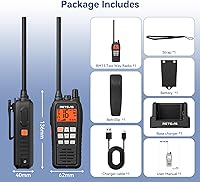
  • Weight: The unit weighs 302.3 grams (approximately 10.7 oz) with the battery installed.
  • Warranty: Retevis provides a 2-year warranty on the radio body and a 1-year warranty on included accessories, with out-of-warranty maintenance service also available.

Related Reviews
Retevis RM01 Handheld Marine Two-Way Radio
74%
83%
Waterproofing & Water Resistance
91%
Floating Ability
58%
Battery Life & Power System
74%
Audio Clarity & Receive Quality
81%
NOAA Weather Alert Reception
More
Retevis RT55 Handheld Marine Radio
86%
91%
Waterproof Performance
88%
Ease of Use
84%
Sound Quality
92%
Build Quality
72%
Battery Life
More
Retevis RM21 Handheld Marine VHF Radio
81%
86%
Audio Clarity
83%
Waterproofing & Durability
91%
Floating & Overboard Detection
88%
Battery Life
82%
Noise Cancellation
More
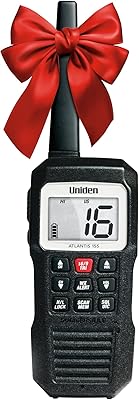
Uniden Atlantis 155 Handheld VHF Marine Radio
80%
91%
Waterproof Performance
88%
Buoyancy & Drop Safety
89%
Ease of Use
61%
Transmit Power & Range
86%
NOAA Weather Alerts
More
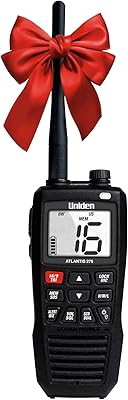
Uniden Atlantis 275 Handheld VHF Marine Radio
81%
93%
Waterproof Performance
88%
Display Quality
79%
Transmit Power & Range
82%
Battery Life
76%
Build Quality
More
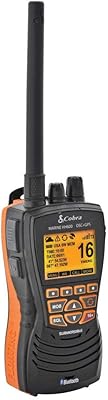
Cobra MR HH600FLTBTGPS Handheld Floating VHF Marine Radio
85%
93%
Waterproof & Durability
88%
Ease of Use
83%
Battery Life
91%
Bluetooth Connectivity
87%
GPS Accuracy & Safety Features
More
Cobra MR HH350 FLT Floating Marine Radio
82%
93%
Water Resistance & Floatability
88%
Audio Clarity & Microphone Performance
79%
Range & Signal Performance
61%
Battery Life
82%
Ease of Use & Interface
More
Uniden UM435BK Fixed Mount VHF Marine Radio
80%
93%
Waterproofing & Weather Resistance
88%
Audio Clarity & Reception
84%
Ease of Installation
91%
Channel Coverage & Compatibility
82%
Value for Money
More
Uniden MHS75 VHF Marine Radio
89%
94%
Waterproof Performance
85%
Range & Signal Strength
88%
Battery Life
90%
Ease of Use
91%
Build Quality
More
Retevis RM40 GPS Marine Handheld Radio
77%
88%
Safety Features
79%
GPS Performance
83%
Waterproofing
86%
Floating Design
61%
Ease of Setup
More

FAQ

Yes, the RM15 is designed to stay on the surface if it enters the water. What makes it more useful than a radio that merely floats is the automatic activation of a flashing light and audible alarm on water contact — so even in choppy conditions or at night, you have a fighting chance of spotting and recovering it. For solo sailors especially, that combination is hard to put a value on.

IP68 means the radio is tested to survive submersion in up to 1.5 meters of water for 30 minutes. In day-to-day terms, that covers heavy rain, wave splash, and an accidental drop in shallow water. What it does not mean is that the radio is safe under sustained or deep water pressure — it is not a diving instrument. Repeated deep immersions over time may also degrade the seals, so treat it as a genuine safety net rather than an invitation to abuse it.

Based on the available product specifications, DSC does not appear to be included. DSC is the feature that lets a radio send an automated distress signal with your GPS coordinates at the press of a single button — it is standard on higher-specification marine VHF radios and is required for GMDSS compliance. If DSC is a priority for your safety setup, verify this directly with Retevis before purchasing and consider a unit that explicitly lists it as a feature.

The 2000mAh battery is rated for over 10 hours of active use, which covers most full day trips comfortably. If you are using it intermittently — monitoring NOAA weather and checking in occasionally — it will stretch further. The standby time of around 100 hours means leaving it powered on overnight between shorter outings will not significantly drain it.

Retevis treated the charging contacts with anti-corrosion and rust-proof materials specifically to address this concern, which is a genuine weak point on many marine electronics. That said, no treatment lasts forever in a saltwater environment. It is good practice to rinse the radio with fresh water after heavy salt exposure, keep the port covered when not charging, and dry it before plugging in.

The two-way electronic noise reduction and the 1000mW speaker make a noticeable difference compared to basic handheld radios. In moderate conditions — a typical outboard engine at cruising speed or a steady coastal breeze — communication stays reasonably clear. In extreme conditions like a high-wind offshore passage or a loud diesel inboard, no handheld VHF is going to sound perfect, but the noise cancellation does help. Most users in recreational coastal settings should find it adequate.

It is very much a best-case figure, measured across open water with good antenna height and no obstructions between radios. In practice, antenna height on a small boat sitting low in the water, combined with any terrain or land mass between you and the other station, will reduce that range considerably. For coastal and near-shore recreational use, effective range is typically sufficient — but do not plan an offshore safety strategy around hitting 16km consistently.

It is a solid choice for that use case. The IP68 rating handles rain and splashing without concern, wet or damp hands are not a problem during operation, and the floating design means dropping it overboard is recoverable rather than catastrophic. The corrosion-resistant contacts also help it hold up after repeated exposure to a wet, salty fishing environment. Rinsing it down after use will keep it in good shape over multiple seasons.

At the time of writing, the RM15 holds a 4.2 out of 5 star rating, but from only 8 reviews — too small a sample to draw firm conclusions. It is a relatively new product, so the review base is still building. Early buyer impressions are positive, particularly around build quality and the floating recovery system, but it is worth checking back for a larger body of feedback if you want more confidence before committing.

For coastal day trips and recreational use, this floating VHF radio covers the essentials without overwhelming a new boater with complex professional features. NOAA weather monitoring, solid waterproofing, and the floating safety design are all genuinely useful from day one. The USB-C charging is convenient, and the battery life is long enough that you do not need to think about it constantly. The one caveat is the apparent absence of DSC — worth factoring into your overall safety plan as you gain experience on the water.