Overview

The Reecom R-1630C Weather Alert Radio is a dedicated NOAA receiver built to keep homes and offices informed when severe weather threatens. It sits comfortably in the mid-range category — more capable than a bare-bones alert radio, but without the complexity of professional broadcast equipment. What genuinely sets this unit apart is its 200-hour battery backup, meaning it keeps working long after the power grid fails. Reecom Electronics has been shipping this model since 2004, and that kind of longevity in a niche market says something real about its dependability. This alert receiver was designed with storm-prone households squarely in mind.

Features & Benefits

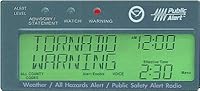
The most practical feature here is SAME county filtering, which lets you program up to 26 specific county codes so you only hear alerts that actually affect your area — not every warning blanketing a multi-county broadcast zone. The 16-level siren volume tops out at 90dB, loud enough to cut through a busy kitchen or a sleeping household. A countdown timer on the display shows how much time remains on an active alert, which is genuinely useful when deciding whether to take shelter or wait it out. The EOM detection automatically returns the unit to whatever it was doing before the alert fired, so you're not left staring at a frozen screen. A dual alarm clock rounds things out for everyday use.

Best For

This weather radio makes the most sense for people living in tornado alleys, hurricane corridors, or any region where county-specific alerts genuinely matter. A basic weather radio will blare warnings across an entire multi-county broadcast zone; the Reecom unit lets you narrow that down considerably. Office managers or building coordinators needing a reliable, audible alert system for staff will also find it practical. It's a solid pick for anyone who doesn't trust smartphones as their sole emergency notification tool — phones miss alerts, go dead, or get left in another room. If you want hands-on control over your alert settings rather than simply plugging something in and hoping for the best, this alert receiver delivers that.

User Feedback

Long-term owners consistently praise the SAME filtering accuracy and note that programming county codes is more straightforward than expected. The event memory and countdown timer draw genuine appreciation — people mention checking the display during severe weather and finding the remaining-time readout calming and practical. On the downside, a recurring complaint involves initial setup; the manual isn't always clear, and some users needed a second read-through before things clicked. Audio quality gets mixed marks — the siren is undeniably loud, but voice broadcast clarity can vary with signal strength. Given two decades on the market, long-term reliability comments trend positive, and the unit frequently surfaces in gift recommendations for family members in storm-prone regions.

Pros

  • SAME county filtering eliminates irrelevant alerts, reducing false-alarm fatigue significantly over time.
  • The 200-hour alkaline battery standby keeps this weather radio functional through extended power outages.
  • Sixteen siren volume levels give genuine control, from quiet bedroom settings to building-wide audibility.
  • The event countdown timer tells you exactly how long an active alert has remaining — genuinely useful under pressure.
  • Twenty-five-event memory lets you review past alerts with timestamps long after the storm has passed.
  • EOM detection automatically resumes prior operation the moment an alert ends, no manual reset needed.
  • Two decades on the market with consistent long-term reliability reports from real multi-year owners.
  • The dual alarm clock adds practical daily utility beyond emergency use, reducing nightstand clutter.
  • Broad alert type coverage includes warnings, watches, advisories, and statements across all NOAA channels.
  • Once fully configured, the Reecom unit operates as a true set-and-forget monitoring device.

Cons

  • The setup manual is widely criticized as unclear, making initial programming harder than it needs to be.
  • Battery runtime drops noticeably faster during active alert playback than the standby figure suggests.
  • The display is difficult to read in low-light conditions due to limited brightness.
  • Reception in rural areas or thick-walled buildings can be inconsistent and requires careful unit placement.
  • The plastic casing and overall design aesthetic feel noticeably dated compared to newer competitors.
  • Button labels can fade with heavy long-term use, creating a minor but real usability issue over time.
  • No smart home integration or smartphone pairing limits appeal for connected-household buyers.
  • The volume curve on lower siren settings still feels abrupt in very quiet environments.
  • Scrolling through the event memory log feels clunky and lacks the ability to delete individual entries.
  • Users who want a truly portable emergency radio for outdoor or vehicle use will find this unit too limited.

Ratings

The Reecom R-1630C Weather Alert Radio has been scored by our AI system after analyzing verified buyer reviews from across the globe, with spam, bot-generated, and incentivized feedback actively filtered out. The scores below reflect honest, real-world usage patterns — covering what this alert receiver genuinely does well and where it falls short for everyday users. Both strengths and frustrations are weighted transparently so you can make a confident, informed decision.
SAME Filtering Accuracy
91%
Users in tornado-prone and hurricane-affected regions consistently highlight how reliably the county filtering works once programmed. Being able to store up to 26 county codes means the unit only sounds off for threats that are geographically relevant, which dramatically reduces alert fatigue over time.
A handful of users noted occasional missed alerts in fringe reception areas where signal strength is inconsistent. This appears tied to antenna sensitivity rather than the SAME logic itself, but it's worth considering if you live in a low-signal rural zone.
Battery Backup Reliability
88%
The 200-hour alkaline battery standby is one of the most cited reasons buyers choose this unit over competitors. During extended outages — the exact moments when weather monitoring matters most — owners report the radio continuing to function without issue for days.
The 200-hour figure applies to standby mode, not active alert or audio playback. Users running the radio more actively during storm season found battery drain noticeably faster, and a few wished the unit included a low-battery warning indicator.
Alert Volume & Siren
86%
The 16-level siren control gives users genuinely useful granularity — soft enough for a bedroom at night, loud enough at maximum to wake a deep sleeper in an adjacent room. The 90dB ceiling is competitive and well-regarded by users in noisy households.
Some buyers found the lower siren levels still jarring in quiet environments, suggesting the volume curve isn't perfectly linear. A small number of users also noted that the siren tone itself sounds dated compared to newer models on the market.
Setup & Programming Experience
61%
39%
Users who took time with the manual generally report that programming county codes and alert preferences becomes intuitive after a first full run-through. The touch controls are responsive, and the display makes it possible to confirm settings without guessing.
This is the most consistently flagged pain point across reviews. The manual is considered unclear by a meaningful portion of buyers, and initial SAME code entry can feel unintuitive. Users who are not comfortable with multi-step electronic setup may find the learning curve genuinely frustrating.
Event Memory & Countdown Timer
89%
The 25-event memory with timestamps and remaining effective time display is frequently called out as a standout feature. During active storm events, being able to glance at the display and see exactly how long a tornado warning has left removes real anxiety from the experience.
The memory log interface isn't the most visually modern, and scrolling through older entries can feel clunky. A few users wanted the ability to export or clear specific entries rather than managing the full log manually.
Reception Sensitivity
79%
21%
In urban and suburban environments with reasonable NOAA transmitter proximity, users report strong, clear signal lock with no manual tuning required. The 7-channel digital PLL tuning handles the full NOAA broadcast band reliably under normal conditions.
Reception drops noticeably in rural areas or buildings with thick walls and limited window placement options. Some users had to reposition the unit multiple times to find a stable signal, which is frustrating for a device meant to sit on a shelf and be forgotten.
Build Quality & Durability
74%
26%
For a tabletop unit that has been manufactured since 2004, the physical construction holds up reasonably well. Owners who have used the same unit for five or more years frequently describe it as still functioning without hardware failures.
The light grey plastic casing feels utilitarian rather than premium, and the overall aesthetic reflects the product's age. A few long-term users noted that button labels can fade with heavy use, which is a minor but real usability issue over time.
Display Clarity
72%
28%
The real-time clock, auto-calendar, and countdown display are readable under typical indoor lighting. Having all key alert information visible without navigating menus is a practical advantage during an actual emergency.
The display is not backlit brightly enough for some users, making it difficult to read in dim conditions without moving closer. Compared to more modern weather radios, the display technology feels noticeably dated.
EOM Auto-Resume Function
84%
The End of Message detection that automatically returns the unit to its previous state is quietly one of the most appreciated features among experienced users. If the radio was playing music or monitoring a channel, it picks right back up after the alert ends without any manual input.
A small number of users reported the EOM function occasionally failing to resume correctly after multi-part or back-to-back alerts. It appears to be an edge case rather than a widespread issue, but worth knowing about if seamless automation is a priority.
Dual Alarm Clock Functionality
69%
31%
Having a fully functional dual alarm clock with snooze built into a weather radio adds genuine day-to-day utility. Users who keep this unit on a nightstand appreciate not needing a separate bedside clock.
The alarm clock interface shares the same setup complexity as the rest of the unit, and some users found programming both alarms alongside SAME codes more confusing than it should be. It works, but it does not feel like a priority feature in the design.
Value for Money
83%
Relative to what comparable SAME-capable weather radios with event memory and battery backup cost, this unit lands in a reasonable range. Buyers who have owned it for several years without needing a replacement frequently cite it as money well spent.
Buyers who compare it strictly on aesthetics or display quality against newer competitors at similar price points may feel the hardware has not kept pace with its cost. The value case rests on feature depth and durability, not on modern design.
Ease of Daily Use
71%
29%
Once fully configured, the day-to-day experience is largely hands-off. The auto-resume, countdown display, and alert memory mean users can genuinely set it up and trust it to do its job without constant interaction.
Getting to that set-and-forget state requires an upfront investment of time and patience that not all buyers are willing to make. Users expecting plug-and-play simplicity often rate this unit lower because the out-of-box experience does not meet that expectation.
Alert Type Coverage
87%
Coverage across warning, watch, advisory, and statement alert types means the unit captures the full spectrum of NOAA broadcasts. Users in multi-hazard regions — where both severe thunderstorm watches and flood advisories are common — appreciate the breadth.
There is no app integration or push notification pairing, which younger buyers increasingly expect. For users who want a standalone device with no smartphone dependency, this is a non-issue, but it limits appeal for a connected-home audience.
Portability & Form Factor
66%
34%
At roughly one pound and with battery backup included, the unit can be moved from room to room or taken to a vacation property without much hassle. Its slim profile fits on most nightstands, desks, or kitchen counters without dominating the surface.
The corded power setup and tabletop-only mounting mean it is not truly portable in a field or outdoor sense. Users hoping to use it in a vehicle or during camping trips will find it does not suit those scenarios well.

Suitable for:

The Reecom R-1630C Weather Alert Radio is built for households and workplaces where severe weather is a recurring reality, not a once-a-decade concern. If you live in tornado alley, along a hurricane coast, or anywhere that sees regular flood and severe thunderstorm warnings, the county-specific SAME filtering alone makes this alert receiver a smarter choice than any basic model. It suits people who want a dedicated, always-on device that does not depend on a phone signal, a working internet connection, or a charged battery to deliver a critical alert. Office managers and building coordinators who need an audible, reliable warning system for staff will find the 90dB siren and granular volume controls practical for open-plan spaces. It also makes a genuinely thoughtful gift for elderly family members or relatives in storm-prone regions who want simplicity after initial setup, without sacrificing the depth of alert information available on screen.

Not suitable for:

Buyers expecting a plug-and-play experience with zero learning curve should think carefully before purchasing, because this alert receiver asks for a real upfront time investment in programming and setup. The Reecom R-1630C Weather Alert Radio is not the right fit for anyone hoping to integrate their emergency alert system with a smart home platform, voice assistant, or smartphone app — there is no wireless connectivity of any kind. If modern industrial design and a crisp backlit display matter to you, the hardware aesthetic will feel dated, because the form factor has not significantly evolved in years. It is also a poor match for users who need true portability — camping trips, vehicle use, or field deployment are outside its scope given the corded power setup and tabletop-only form factor. Those who only need the most basic weather alert functionality and find feature depth overwhelming would likely be better served by a simpler, stripped-down model at a lower price point.

Specifications

  • Brand: Manufactured by Reecom Electronics, Inc., a company with a focused history in dedicated NOAA weather alert receivers.
  • Model: The model designation is R-1630C, a tabletop weather alert radio that has been in production since September 2004.
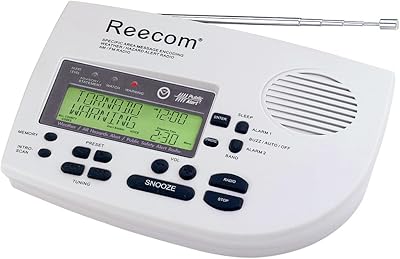
  • Dimensions: The unit measures 8″ in length, 5.4″ in width, and 1.85″ in height, making it compact enough for most nightstands or desktops.
  • Weight: The radio weighs approximately 1 pound, which is light enough to reposition easily between rooms.
  • Power Source: Operates on corded AC power at 12V DC, with alkaline batteries providing backup power during outages.
  • Battery Backup: In standby mode with batteries installed, the unit is rated for up to 200 hours of backup operation when AC power is unavailable.
  • Siren Output: The siren reaches a maximum of 90 decibels and is adjustable across 16 discrete volume levels to suit different environments.
  • SAME Memories: Up to 26 individual SAME county codes can be stored, allowing highly localized alert filtering across multiple geographic areas.
  • Event Memory: The unit stores up to 25 alert events, including both active and expired alerts, each logged with date, time, and remaining effective time.
  • Countdown Display: An active alert countdown timer displays the remaining effective time issued by NOAA, covering a range from 15 minutes up to 6 hours.
  • Tuning System: Reception is handled by a 7-channel digital PLL tuner covering the full NOAA Weather Radio All Hazards broadcast band.
  • Alert Types: The receiver captures and distinguishes between Warning, Watch, Advisory, and Statement alert categories as broadcast by NOAA.
  • EOM Detection: An End of Message detection function automatically returns the radio to its previous operating state as soon as an alert broadcast concludes.
  • Alarm Clock: A dual alarm clock with snooze function and real-time auto-calendar is built into the unit for everyday use independent of weather alerts.
  • Sensor Technology: The unit uses digital radio sensor technology for alert reception, with no analog tuning dial or manual frequency adjustment required.
  • Mounting Type: Designed exclusively for tabletop mounting; no wall-mount bracket or vehicle-mount adapter is included or officially supported.
  • Control Method: All functions are operated via touch controls on the front panel of the unit.
  • Color: The unit is available in light grey, a neutral finish suited to both home and office tabletop environments.

Related Reviews
Reecom R-1650D Weather Radio
85%
95%
Alert Accuracy
91%
Battery Backup Duration
88%
Siren & LED Visibility
72%
Ease of Setup
90%
Display Readability
More
TFTDOUP Emergency Weather Alert Radio
86%
88%
Overall Performance
85%
Battery Life
90%
Charging Options
80%
Ease of Use
87%
Build Quality
More
Leaton Emergency NOAA Weather Alert Radio
85%
88%
Battery Life & Charging Options
85%
Weather Alerts & Reception
90%
Build Quality & Durability
93%
Portability & Size
87%
Ease of Use
More
Sangean CL-100 Weather Alert Radio
79%
93%
Alert Reliability
88%
SAME Filtering Accuracy
61%
Ease of Setup
84%
Build Quality & Durability
58%
Audio Quality
More
Sangean H205TQ Portable AM/FM/Weather Alert Radio
85%
88%
Build Quality & Durability
81%
Sound Quality
90%
Ease of Use
72%
FM Reception
85%
Battery Life
More
Sangean DT-800BK AM/FM/NOAA Weather Alert Pocket Radio
77%
88%
AM/FM Reception Quality
91%
NOAA Weather Alert Reliability
93%
Portability & Form Factor
67%
Build Quality & Durability
72%
Battery Life
More
LIJIANI SH01 Portable NOAA Weather Radio
75%
83%
Reception Quality
81%
NOAA Weather Alert Performance
91%
Portability & Size
67%
Battery Life
88%
Ease of Use
More
QAUYYW Emergency Weather Radio XSY330
86%
89%
Battery Life
85%
Ease of Use
92%
Portability
75%
Radio Reception
88%
Build Quality
More
OnLyee CR1030 Emergency Weather Radio
76%
88%
Power Source Redundancy
83%
Hand Crank Durability
61%
Solar Charging Performance
79%
NOAA Reception Quality
67%
Battery Capacity & Phone Charging
More
Sttfaishen F20 Emergency Hand Crank Weather Radio
72%
82%
NOAA Alert Reception
54%
Battery Capacity & Honesty
61%
Hand Crank Usability
57%
Solar Charging Performance
83%
USB-C Charging Speed
More

FAQ

Yes, for SAME filtering to work correctly you need to enter at least one FIPS county code. Without a code programmed, the unit will still receive all alerts broadcast in your area, but it won't filter down to just your county. Programming your specific county code is what makes the alerts genuinely useful rather than overwhelming.

The unit uses standard alkaline batteries for backup power. The 200-hour standby rating is accurate for passive standby mode, but expect that figure to drop if the radio is actively receiving and sounding alerts during a storm event. For most users in a typical storm season, a fresh set of batteries should last through multiple events before needing replacement.

Yes, that is one of its core design purposes. As long as the unit is powered and your county SAME code is programmed, it will trigger the siren automatically regardless of what mode it was in, including sleep or standby. The siren volume is adjustable, so you can set it loud enough to wake a sleeping household without startling everyone unnecessarily during lower-priority advisories.

Setup is moderately involved, and the manual gets mixed feedback from buyers. Most users report that programming county codes and configuring alert preferences takes 20 to 40 minutes on first use. The process becomes more intuitive once you understand the menu structure, but it is fair to say the documentation could be clearer. Watching a walkthrough video online alongside the manual tends to smooth things out considerably.

This unit is designed specifically for the NOAA Weather Radio All Hazards network, which operates in the United States and covers U.S. territories. Canada has its own Weatheradio Canada system that uses some overlapping frequencies, so border-area reception is sometimes possible, but full SAME functionality and reliable coverage are not guaranteed outside the U.S.

The EOM (End of Message) detection function handles this automatically. Once the NOAA broadcast signals the end of the alert, the radio returns to whatever state it was in before the alert triggered — whether that was displaying the clock, playing audio, or sitting in standby. You do not need to manually reset or acknowledge anything.

Yes, the unit includes a Defeat Siren function that lets you configure up to 48 event message types individually for siren enable or disable. So if you want full siren activation for tornado warnings but a silent alert for less urgent advisories, that level of customization is available once you work through the setup menu.

At maximum volume, the 90dB siren output is substantial and carries well through interior walls, especially in average-sized homes. Users in open-plan offices and multi-room households generally report being able to hear it clearly from adjacent rooms. In very large homes with solid doors and multiple floors, placing the unit centrally will improve coverage.

Yes, that is one of the more practical aspects of the alert memory system. The 25-event log stores both active and expired alerts with the original date, time, and how much effective time remained when each alert was issued. If a watch or warning fired overnight, you can scroll through the log in the morning and review exactly what came through.

It can be an excellent choice, but with one honest caveat: the initial setup does require patience and attention to the manual. If you can set it up and program the county codes yourself before gifting it, the day-to-day experience for the recipient is straightforward — the radio monitors silently and only demands attention when a real alert fires. Many buyers specifically mention purchasing this alert receiver as a safety gift for older relatives living alone in hurricane or tornado regions.

Where to Buy