Overview

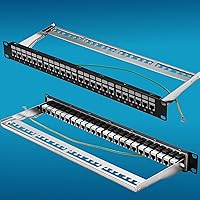
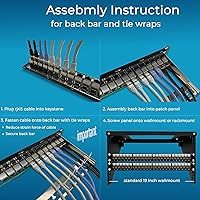
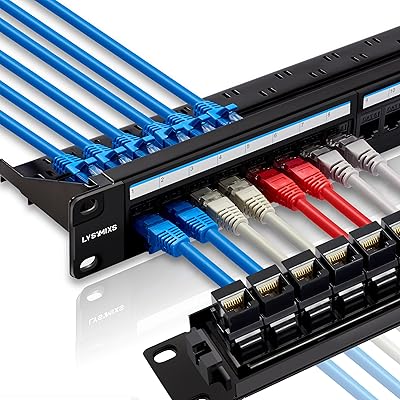
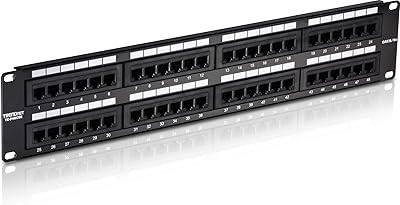
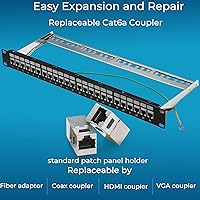
The Rapink 24-Port Cat6A Inline Keystone Patch Panel takes a different approach to rack termination — one that skips punch-down tools entirely in favor of inline keystone couplers. It fits a standard 19-inch 1U rack slot, so dropping it into a home lab cabinet or small office closet is straightforward. Unlike traditional panels where you terminate each run directly into the panel, this coupler-based patch panel acts as a pass-through: you plug your field cable into the back coupler and your patch cable into the front. It ships ready to go, with 24 couplers pre-installed, a rear cable bar, screws, and zip ties included out of the box.
Features & Benefits

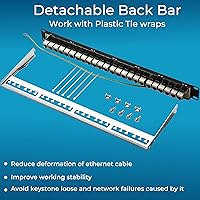
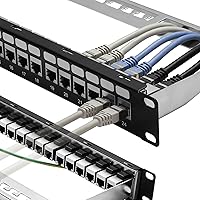
The standout practical advantage here is how quickly you can get 24 ports live. No punch-down tool, no termination block — just plug a cable into each coupler and you're done. Each coupler uses gold-plated RJ45 contacts rated for 10 Gigabit speeds and 550 MHz bandwidth, though it's worth noting that hitting those numbers in the real world depends on your entire cabling run, not just the panel. The STP shielded chassis helps keep interference in check in crowded rack environments. The detachable rear cable bar is a small but genuinely useful touch for keeping cable stress off the coupler ports. And because each coupler slots out independently, per-port replacement takes seconds rather than requiring a full panel swap.

Best For

This inline keystone panel is a natural fit for home lab builders who want a tidy rack without investing in a punch-down tool or spending hours on terminations. It also suits small business installers who need to turn around a 24-port installation quickly. If you're upgrading a network from Cat5e or Cat6 and want a panel that handles both without replacing all your cabling in one go, this works well for that transition. There's also a less obvious use case worth mentioning: the keystone slots accept non-Ethernet inserts — fiber, coax, and HDMI keystones all fit — which makes it useful beyond pure network closet applications. Structured wiring panels in media rooms and garage setups are a solid real-world application.

User Feedback

Across roughly 130 reviews, the Rapink panel holds a 4.6-out-of-5 rating, and the pattern in the comments is pretty consistent. Most buyers lead with how fast the installation went — 24 ports without a punch-down tool is a genuine time saver, and that resonates. The ability to swap out a single faulty coupler without rewiring anything also gets frequent praise. On the critical side, a few users raise a fair point about inline coupler performance at longer runs: while Cat6A inline connections are technically rated for 10GBase-T, real-world signal integrity can vary depending on coupler quality and cable length. The steel rear bar draws mild criticism for feeling lighter than expected. Overall, a well-received panel with minor build reservations.

Pros

  • No punch-down tool required — 24 ports can be terminated in well under an hour by a single person.
  • Individual couplers are hot-swappable, so a failed port takes seconds to fix without touching other runs.
  • STP shielded chassis helps control interference in crowded racks near power cables or other noisy equipment.
  • Gold-plated RJ45 contacts on every port support 10G speeds and 550 MHz bandwidth for future-proofing.
  • Ships completely ready to use — couplers pre-loaded, rear bar, screws, and zip ties all included.
  • Keystone slots accept fiber, coax, HDMI, and other adapters, making it more versatile than a pure Ethernet panel.
  • Compatible with Cat5e, Cat6, Cat6A, and Cat7 cabling, so it works across mixed or transitional network environments.
  • Fits any standard 19-inch 1U rack without adapters or modifications.
  • 4.6-star average across 130 reviews reflects consistently positive real-world experiences from DIY and IT buyers alike.

Cons

  • Inline coupler connections add an extra mating point per run, which can matter on long Cat6A runs targeting true 10GBase-T performance.
  • The rear cable bar is made from lighter-gauge steel than some buyers expect at this price point.
  • Coupler-based termination is not compatible with standard TIA link certification testing procedures.
  • No brand-name coupler warranty or replacement program — if included couplers fail, you're sourcing replacements independently.
  • Shielding effectiveness depends on proper grounding of the rack; without it, the STP chassis provides limited real benefit.
  • Panel labeling options are minimal — port identification requires additional label strips not included in the box.
  • At longer cable runs, real-world 10G throughput depends on the full channel quality, not just this panel's specs.

Ratings

The Rapink 24-Port Cat6A Inline Keystone Patch Panel earns a strong overall position in its category, and these scores reflect exactly that — generated by AI after analyzing verified global buyer reviews while actively filtering out incentivized, duplicate, and bot-driven submissions. Both the genuine strengths and the recurring frustrations are represented here without softening either side, so you get an accurate picture of what real installers and home lab builders actually experienced.
Ease of Installation
93%
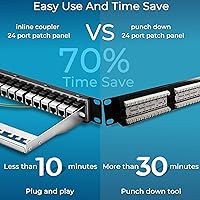
This is the category where the coupler-based design really pulls ahead. Reviewers consistently report terminating all 24 ports in under 30 minutes without touching a punch-down tool, which is a meaningful advantage for solo installers or anyone setting up a rack on a weekend.
A handful of buyers who were used to traditional punch-down panels found the inline coupler concept slightly unfamiliar at first, requiring a short mental adjustment before the process clicked. Instructions in the box are minimal, so first-timers may need to watch a quick video.
Port Repairability
91%
Individual coupler hot-swap is one of the most consistently praised real-world features. When a port goes bad, users report pulling the faulty coupler and snapping in a replacement in under a minute, without disrupting any other active connections in the panel.
Replacement couplers are not always easy to source locally, and buyers who need to match the exact shielding spec of the originals may have to wait for online shipping. There is no clearly documented replacement coupler model number from Rapink, which causes minor friction.
Build Quality
74%
26%
The main steel chassis is solid and well-regarded by the majority of buyers, with no reported flexing or racking issues during normal use. The overall panel feels appropriately rigid for a 1U rack-mount application in home and small office environments.
The detachable rear cable bar is the weak link — multiple reviewers independently noted it feels lighter and thinner than the front chassis suggests it should be. Under heavy cable loads, a few users experienced minor bowing of the bar over time.
Signal Performance
78%
22%
For the vast majority of buyers running Cat6A at typical home and small office distances, link speeds and stability were exactly what they expected. The gold-plated contacts appear to maintain reliable connections without oxidation or intermittent drops after months of use.
The inline coupler design introduces a measurable insertion loss compared to a direct punch-down connection, and a small number of users running longer Cat6A runs for 10GBase-T reported needing to verify their full channel margin more carefully. It is not a dealbreaker but it is a real variable.
Value for Money
88%
Compared to modular patch panels from established structured cabling brands, this coupler-based patch panel lands at a price point that is hard to argue with for a complete, ready-to-install 24-port kit. The fact that couplers, cable bar, screws, and zip ties are all included makes the out-of-box value feel genuinely fair.
Buyers who later needed to purchase additional or replacement couplers found that the per-unit cost of quality Cat6A STP couplers adds up, slightly eroding the initial savings. If you are building out multiple panels, that ongoing cost is worth factoring in upfront.
Rack Compatibility
89%
Fits cleanly into any standard EIA 19-inch rack without adapters, shims, or creative mounting solutions. Buyers installing this in a range of rack types — open-frame, enclosed, and wall-mount — all reported a straightforward physical fit with no alignment issues.
The included rack screws cover the most common thread sizes but a couple of buyers with older or non-standard racks had to source their own hardware. The panel itself does not ship with cage nuts, which some enclosed rack installations require.
Cable Management
71%
29%
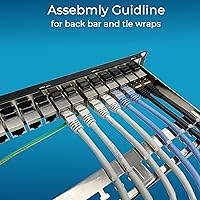
The rear cable bar with zip tie anchor points does a reasonable job of keeping field cables organized and reducing mechanical stress on the coupler connections. For smaller cable counts or neatly bundled runs, it works without complaint.
In a fully loaded 24-port setup with thicker Cat6A cables, several users found the rear bar alone insufficient for clean cable dressing and supplemented it with additional Velcro ties or cable management rings. The bar positioning also limits access to the lower rack space slightly.
Shielding Effectiveness
73%
27%
In properly grounded rack environments with shielded cabling end-to-end, buyers running equipment near power panels or other interference sources reported stable, clean connections with no unusual noise-related dropouts. The STP construction performs as expected when the whole cabling chain is shielded.
The shielding benefit is only realized if your rack is properly grounded and your cables are also shielded — a detail several buyers missed initially. In ungrounded setups or with UTP field cables, the shielded chassis contributes little practical benefit.
Port Labeling
52%
48%
The panel face has port numbering printed clearly enough for basic identification during initial installation, which at least makes it possible to map ports without external reference during setup.
There is no label window, label strip slot, or included labeling hardware, which is a genuine gap for any installation that grows or changes over time. Buyers managing more than a few cable runs found themselves resorting to hand-labeling or adhesive labels that do not stay put reliably.
Keystone Flexibility
83%
The ability to drop in fiber, coax, or HDMI keystones alongside RJ45 couplers is a real differentiator that several buyers put to practical use, especially in media room or mixed-wiring closet setups where more than one cable type needs to terminate in the same location.
The panel does not ship with any non-Ethernet keystones, so buyers who want to take advantage of this flexibility need to source and purchase those inserts separately. Compatibility with off-brand keystone form factors is not guaranteed and varies by insert manufacturer.
Included Accessories
81%
19%
Coming ready to install with 24 pre-loaded Cat6A STP couplers, a rear cable bar, mounting screws, and zip ties means most buyers can go from unboxing to a live panel without a hardware store run. That completeness is appreciated, especially for first-time structured wiring projects.
Zip ties are included in limited quantity, and buyers fully loading all 24 ports with stiff Cat6A cable reported running out before every run was secured. A slightly more generous accessory kit would make the out-of-box experience more complete.
Backward Compatibility
86%
Users upgrading from mixed Cat5e and Cat6 environments appreciated that the panel handled both older and newer cable standards without requiring separate hardware. It is a practical bridge for phased network upgrades rather than forcing an all-at-once rip-and-replace.
While backward compatible, running older cable standards through a Cat6A-rated coupler does not improve their performance characteristics, which is an obvious but occasionally misunderstood expectation among less experienced buyers. Documentation on compatibility limits could be clearer.
Long-Term Reliability
76%
24%
Buyers who have had this coupler-based patch panel installed for over a year report consistent port stability with no coupler failures or creeping connection issues, suggesting the gold-plated contacts hold up reasonably well under normal static rack conditions.
Because the product line is relatively young and the reviewer base is still growing, there is limited long-term data beyond 12 to 18 months. Buyers in high-humidity or dusty environments have not yet reported conclusively on coupler longevity under those conditions.

Suitable for:

The Rapink 24-Port Cat6A Inline Keystone Patch Panel is built for people who want a functional, professional-looking rack installation without the learning curve or tooling cost that traditional punch-down panels demand. Home lab enthusiasts are the obvious sweet spot — if you're running Cat6A drops to a small rack in a basement or closet and you just want everything terminated cleanly and quickly, this coupler-based approach is genuinely faster than anything requiring a 110 punch-down tool. It also makes a lot of sense for small business installers or IT generalists who handle occasional network builds rather than full-time structured cabling work, where buying and maintaining dedicated termination tools isn't always worth it. The hot-swap coupler design is a practical advantage for anyone who expects their network layout to change over time, since fixing or repurposing a single port takes seconds. DIY-minded users setting up a mixed-media wiring panel — one that might carry Ethernet today but could need a fiber or coax port added later — will appreciate that the keystone slots aren't locked to RJ45.
Not suitable for:

The Rapink 24-Port Cat6A Inline Keystone Patch Panel is not the right call for environments where certified, low-insertion-loss termination is a hard requirement. Inline coupler connections add an extra mating point to every run, and while that's inconsequential in most home or small office contexts, it's a measurable variable in long-run 10GBase-T deployments or any setting where signal margin is tight. Enterprise IT teams and structured cabling contractors who need to document and certify every link to TIA or ISO standards will find the inline approach non-compliant with standard testing protocols. If you're running a high-density server room or need to support Power over Ethernet at higher wattage levels across all 24 ports simultaneously, it's worth confirming the coupler specs align with your PoE requirements rather than assuming they do. Buyers who prioritize the absolute neatest rear-side cable dressing may also find the rear bar thinner than what a premium panel from a tier-one brand would include.

Specifications

  • Port Count: This panel provides 24 individual keystone coupler ports, each independently accessible and replaceable.
  • Form Factor: Designed for standard 19-inch 1U rack mounting, fitting any compatible network rack or wall-mount enclosure without modification.
  • Termination Type: Uses inline STP keystone couplers for toolless pass-through termination, requiring no punch-down tool or specialized equipment.
  • Shielding: Full STP (shielded twisted pair) construction on both chassis and couplers helps reduce electromagnetic and radio frequency interference.
  • Cable Compatibility: Supports Cat5, Cat5e, Cat6, Cat6A, and Cat7 cabling standards, making it suitable for mixed or transitional network environments.
  • Max Speed: Each coupler port is rated for 10 Gigabit per second Ethernet throughput under appropriate full-channel conditions.
  • Bandwidth: Rated to 550 MHz, providing sufficient headroom for high-density 10GBase-T deployments when paired with compliant cabling.
  • Connector Type: All 24 ports use RJ45 8P8C connectors with gold-plated contacts to minimize corrosion and maintain consistent signal quality.
  • Coupler Swap: Each of the 24 couplers is individually removable and replaceable without affecting adjacent ports or requiring cable retermination.
  • Keystone Slots: The keystone bays accept standard-sized non-Ethernet inserts including fiber, coax, HDMI, and VGA adapters in addition to RJ45 couplers.
  • Cable Management: Includes a detachable steel rear cable bar with zip tie anchor points to secure and organize incoming field cables.
  • Package Dimensions: The retail package measures approximately 19.53 x 5.59 x 1.97 inches and weighs 2.38 pounds including all accessories.
  • Included Accessories: Ships with 24 pre-installed Cat6A STP couplers, one detachable rear cable bar, mounting screws, and zip ties.
  • Brand & Model: Manufactured by Rapink under model number C6APP, available in a 24-port configuration as reviewed here.
  • Rack Compatibility: Mounts in any EIA-standard 19-inch rack using the included screws, occupying exactly 1U of vertical rack space.

Related Reviews
Lysymixs 24-Port Cat6 Keystone Patch Panel
76%
88%
Ease of Installation
93%
Port Repairability
71%
Build Quality
74%
Keystone Jack Quality
86%
Mixed-Media Flexibility
More
Rapink 48-Port Cat6 Patch Panel
82%
93%
Value for Money
86%
Port Termination Quality
67%
Build Quality & Housing
91%
Ease of Installation
89%
Compatibility & Cable Flexibility
More
Cable Matters 48-Port 2U Keystone Patch Panel
86%
91%
Build Quality
87%
Value for Money
93%
Port Density & Rack Efficiency
88%
Cable Management
84%
Port Labeling & Documentation
More
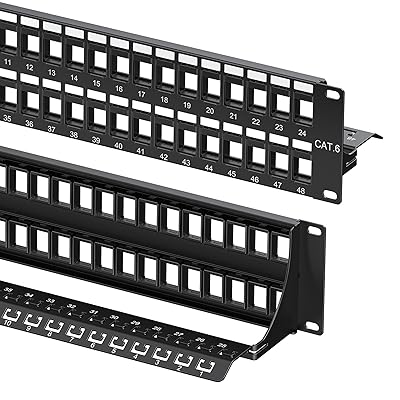
Cable Matters 24-Port Cat6 Patch Panel
82%
91%
Termination Ease
78%
Build Quality
93%
Rack Fit & Compatibility
88%
PoE Passthrough
71%
Cable Management
More
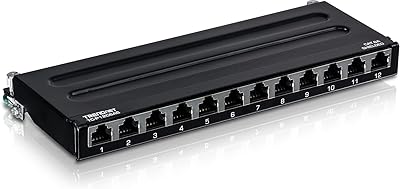
Lysymixs 24 Port RJ45 Patch Panel Cat6 Feed Through
89%
91%
Ease of Installation
94%
Performance (Speed/Connectivity)
88%
Build Quality
82%
Cable Management
85%
Durability
More
Lysymixs 24 Port RJ45 Patch Panel Cat7 STP Feed Through
87%
92%
Ease of Installation
88%
Build Quality
89%
Performance & Speed
85%
Cable Management
91%
Value for Money
More
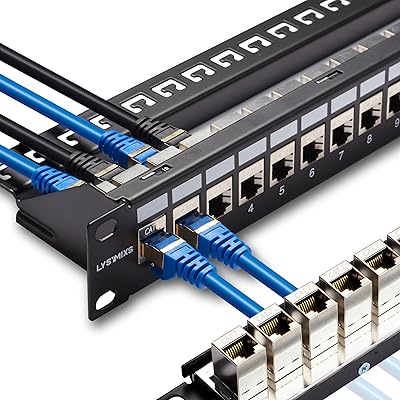
TRENDnet TC-P12C6AS 12-Port Cat6A Shielded Patch Panel
86%
89%
Build Quality
85%
Ease of Installation
91%
Shielded Design (EMI Reduction)
90%
Performance (10G Ethernet Support)
87%
Compatibility (Networking Standards)
More
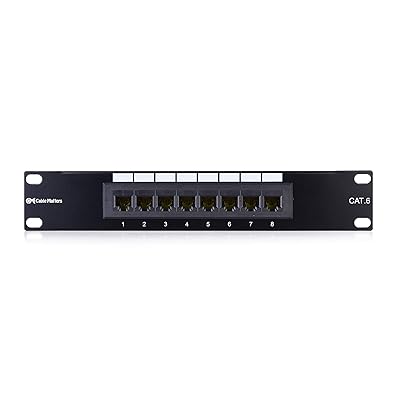
TRENDnet TC-P48C5E 48-Port Cat5e Patch Panel
79%
83%
Build Quality
79%
Port Labeling & Organization
86%
Punch-Down Termination
67%
Cable Management
91%
NDAA Compliance
More
Cable Matters 8-Port Mini Patch Panel
84%
91%
Ease of Installation
86%
Build Quality
58%
Port Capacity
83%
PoE & Power Delivery
88%
10G Performance
More
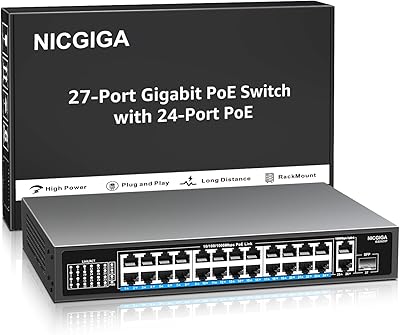
NICGIGA GS2421P 24-Port PoE+ Gigabit Switch
77%
91%
Value for Money
93%
Ease of Setup
78%
PoE Performance
84%
Build Quality
62%
Thermal Management
More

FAQ

No, that is genuinely the point of this design. Instead of punching down each wire pair with a 110 tool, you simply plug your field cable into the back of each coupler and your patch cable into the front. A screwdriver for the rack ears is about all you will need for the whole job.

The couplers are rated for 10G, but whether you actually hit those speeds depends on your entire cabling channel — the cables, their run length, any other connectors in the path, and your switch ports. The panel itself is not the limiting factor in most home or small office setups, but it is not a guarantee of 10G performance on its own.

It works fine with Cat5e, Cat6, and Cat6A. The couplers are backward compatible, so if you have a mix of older and newer cable runs, that is not a problem. You will just be limited to the speeds your slowest cable supports on any given run.

Yes, it is a standard 1U panel designed for any EIA-compliant 19-inch rack. Wall-mount enclosures that accept 19-inch patch panels will work just as well as open-frame or enclosed floor racks.

You just pull that single coupler out and push a replacement in. The other 23 ports keep running without interruption. This is one of the more practical advantages of the inline keystone design over a traditional punched-down panel, where a faulty port can be much harder to address cleanly.

Yes, and this is an underrated feature. The keystone slots accept standard-form fiber adapters, coax couplers, HDMI keystones, and similar inserts. If you are wiring a media room or a mixed-use closet, you can run a few Ethernet ports alongside a coax or fiber drop in the same panel.

Shielding helps when it is properly grounded. If your rack is grounded and your cables are shielded end-to-end, the STP construction on this coupler-based patch panel does reduce interference meaningfully, especially in environments with nearby power runs or dense equipment. If your cabling is UTP, the shielded panel adds less practical benefit.

There is a real, measurable insertion loss added by any inline connector, including these couplers. In practice, for most Cat6A runs under 90 meters in a home or small office, it is negligible and will not cause link failures or speed drops. Where it can matter is in borderline long-run 10GBase-T deployments with marginal signal margin — if you are right at the edge of your cable budget, an extra connector does not help.

The core trade-off is speed versus termination quality. A traditional punch-down panel makes a more permanent, lower-insertion-loss connection that is easier to certify to industry standards. This inline panel is significantly faster to install, easier to repair, and requires no tools, but adds a coupler interface to each run. For home labs and small offices, that trade-off is almost always worth it. For enterprise or certified installations, punch-down panels are still the standard.

Standard Cat6A STP keystone couplers are widely available from multiple vendors on Amazon and elsewhere. Rapink sells them separately, but you are not locked into their brand — most standard-form keystones will fit the panel slots. Just confirm the coupler is rated for Cat6A and STP if you want to maintain the shielding continuity of the installation.