
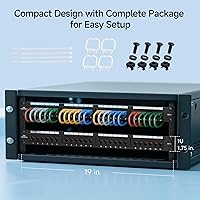
Overview

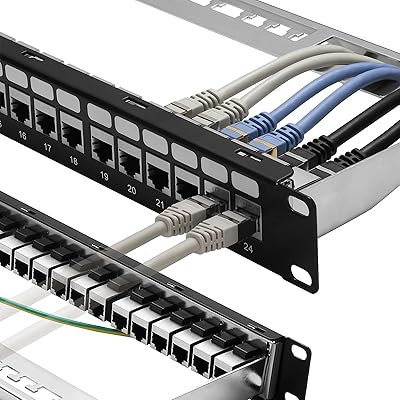
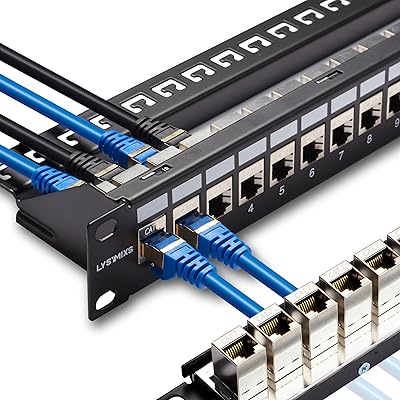
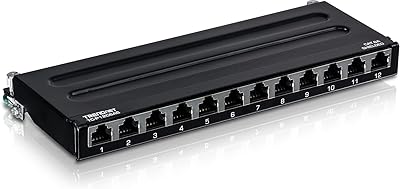
The Cable Matters 24-Port Cat6 Patch Panel has been a fixture in structured cabling setups since its 2012 debut, and its sustained bestseller ranking in the networking category is not accidental. This patch panel occupies a practical mid-range position — capable enough for serious home lab builds and small business wiring closets, without the overhead of enterprise-grade hardware. Its UL listing (E486099) is worth calling out directly; fire safety compliance gets glossed over in this category far too often, and having it certified genuinely matters on commercial installs. At its core, the job is straightforward: terminate your Cat6 runs, mount it in a 19-inch rack or on a wall bracket, and keep your network organized.

Features & Benefits

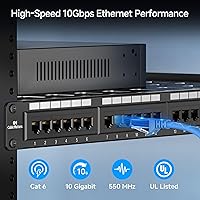
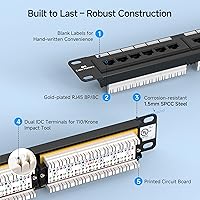
With 24 gold-plated RJ45 ports, this Cat6 panel delivers consistent, low-resistance terminations that hold up through repeated patch cable swaps. It handles Cat6 natively at 10 Gigabit speeds, though achieving true 10GbE across your runs depends on your switches, cable quality, and installation — the panel is just one piece of that chain. PoE, PoE+, and PoE++ passthrough means you can power access points and IP cameras without injectors cluttering the rack. The T568A/T568B wiring diagrams printed directly on the panel face are a practical touch; you will not be hunting for a reference sheet mid-termination. D-rings and cable ties are included, covering basic cable management without any additional purchases.

Best For

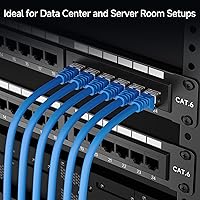
This patch panel hits its stride in a few specific scenarios. Home lab builders looking to organize Cat6 runs into a rack will find the 1U form factor and wall-mount flexibility genuinely useful. Small offices centralizing wiring from multiple rooms — a dental practice, a small law office, a mid-sized retail space — get a reliable, organized solution without overbuying. IT installers on light commercial jobs where a UL-listed panel is required will appreciate the compliance documentation. Where it falls short is port density: if you are managing a large deployment and need 48 or 96 ports in a single unit, this panel is not built for that scale.

User Feedback

The Cable Matters 24-port panel carries a strong average rating across a large number of reviews, and the feedback trends are consistent. Installers and home lab builders frequently praise the clarity of the printed port labeling, which speeds up termination work noticeably. Fit inside both branded and off-brand 19-inch enclosures is cited as reliable. On the critical side, some users report that port retention clips feel less sturdy after many patch cable cycles — not a concern for mostly static installs, but relevant if you swap cables often. A handful of reviewers found the included cable ties thinner than expected. Overall build quality for the price point is consistently rated as solid.

Pros

  • Gold-plated RJ45 contacts provide reliable, low-resistance connections that hold up through normal patch cable cycling.
  • UL listing gives installers a legitimate compliance credential for light commercial and small business environments.
  • T568A and T568B wiring diagrams printed directly on the panel face speed up termination work in the field.
  • PoE, PoE+, and PoE++ passthrough eliminates the need for separate power injectors when running cameras or access points.
  • The 1U profile fits cleanly into both name-brand and off-brand 19-inch enclosures with no fitment issues reported.
  • Backward compatibility with Cat5e and Cat5 makes this panel a practical choice for mixed-cable environments during upgrades.
  • D-rings and cable ties are included, so basic cable management is covered without an extra trip to the supply house.
  • At this price point, the build quality is consistently rated as solid by working installers and home lab builders alike.
  • The panel has been on the market since 2012 with sustained strong reviews, which is a credible sign of product stability.
  • Lightweight at roughly one pound, making wall-mount installation straightforward without bracket reinforcement concerns.

Cons

  • Port retention clips have been flagged by some users as less durable under repeated patch cable insertion and removal cycles.
  • No punch-down tool is included, which is an added cost for buyers who do not already own a 110 or Krone impact tool.
  • Included cable ties are thinner than what experienced installers typically prefer for long-term cable management.
  • Port count tops out at 24, making this panel impractical for any deployment that needs higher density in a single unit.
  • No channel certification documentation is provided, which matters for installations requiring formal Cat6 performance verification.
  • The product is not rated for Cat6A, so it is not suitable for shielded or augmented cabling projects.
  • D-ring hardware, while functional, is basic and may not satisfy installers who prefer more robust cable management accessories.
  • Achieving full 10 Gigabit performance depends entirely on the quality of the full cabling run, not just the panel itself.

Ratings

The scores below for the Cable Matters 24-Port Cat6 Patch Panel were generated by AI after analyzing thousands of verified buyer reviews from global markets, with spam, bot-submitted, and incentivized feedback actively filtered out. The results reflect a genuine cross-section of installer experiences, home lab builds, and small business deployments — strengths and frustrations alike are represented transparently.

Termination Ease
91%
Installers consistently praise the T568A and T568B wiring diagrams printed directly on the panel face, calling them genuinely useful rather than decorative. In practice, having that reference on the hardware itself reduces errors during solo installs where stopping to consult documentation costs real time.
A small number of users noted that the punch-down slots require moderate force to seat conductors cleanly, which can be tiring on large termination jobs. The panel also does not support tool-less termination, which some buyers expected at this price tier.
Build Quality
78%
22%
The steel chassis feels appropriately rigid for a 1U panel, and the gold-plated RJ45 contacts hold up well in environments where the cables are plugged in and left alone. For static installs in a home wiring closet or small office, the construction is more than adequate.
Port retention clips have drawn repeated criticism from users who swap patch cables frequently — clips loosen noticeably over many cycles. The overall metal finish is functional rather than refined, and a few buyers noted minor sharp edges around the punch-down block area.
Rack Fit & Compatibility
93%
Feedback from installers is particularly positive here: this patch panel fits cleanly into both name-brand enclosures and generic off-brand 19-inch cabinets without alignment headaches. The 1U form factor is consistent with the stated dimensions, which is not always the case with budget alternatives.
Wall-mount bracket installation is supported but brackets are not included, requiring a separate purchase. A small number of users reported that the rack ear screw holes did not align perfectly with certain older or non-standard enclosures.
PoE Passthrough
88%
Users running IP cameras and wireless access points through this Cat6 panel report clean PoE, PoE+, and PoE++ passthrough with no evidence of power degradation or heat buildup under normal loads. Eliminating separate injectors from the rack keeps installs tidy.
There is no indicator or labeling on the panel to identify which ports are actively carrying PoE, which can complicate troubleshooting in denser setups. A small number of users expected PoE budget or management features that are simply not present on a passive panel.
Cable Management
71%
29%
The included D-rings and cable ties provide a functional starting point for organizing the front-facing patch cables, and most home lab users find the included hardware sufficient for their port count. Having these accessories in the box avoids a separate trip to the supply house.
The cable ties are noticeably thin and several installers replaced them immediately with higher-quality alternatives. The D-ring placement works for modest installs but feels limiting when all 24 ports are populated and cable bulk increases substantially.
Value for Money
86%
At its price point, this patch panel delivers a feature set — gold-plated contacts, UL listing, PoE passthrough, printed wiring diagrams — that would cost meaningfully more from comparable brands. Home lab builders and small office IT managers consistently rate it as strong value relative to what they actually need.
Buyers who later discover the port clip durability limitations or need to purchase a punch-down tool separately may revise their value assessment downward. For applications demanding Cat6A or channel-certified performance, the price advantage disappears because this panel cannot fulfill those requirements.
UL Safety Certification
94%
The UL listing under file E486099 is a concrete, verifiable credential that IT installers rely on for light commercial compliance sign-offs. In a product category where many competitors skip this step entirely, having documented fire safety certification is a practical differentiator.
The UL listing covers fire safety and materials compliance but does not constitute a channel performance certification, which some buyers conflate. Users who need full TIA or ISO channel certification documentation for their project will still need to look elsewhere.
Port Clip Durability
59%
41%
For installs where patch cables are connected once and left in place — a typical home office or SMB wiring closet — the port clips perform adequately and users in these scenarios rarely raise concerns. Initial clip tension is sufficient for normal patch cable retention.
This is the most consistently cited limitation in critical reviews: clips lose retention feel after repeated insertion and removal cycles, particularly noticeable in training labs or environments where ports are frequently repurposed. The issue is not universal, but it surfaces too consistently across reviews to dismiss.
Installation Instructions
74%
26%
The color-coded diagrams on the panel face reduce the need for separate documentation during basic installs, and most buyers with moderate networking experience find setup intuitive without additional guidance. Numbered port labels also speed up the patching process considerably.
Printed documentation in the box is minimal, and novice installers attempting their first structured cabling project may want more detailed guidance than what is provided. There is no dedicated quick-start guide tailored to first-time patch panel installations.
10GbE Performance
82%
18%
In properly installed Cat6 environments with quality cabling throughout the run, this panel supports 10 Gigabit throughput without being the limiting factor. Users upgrading from Cat5e patch panels report no performance regression at the panel level.
The panel cannot independently guarantee 10GbE results — that depends entirely on the cable quality, run length, connector integrity, and switch capability in the full system. A handful of buyers attributed network speed issues to the panel when the real cause was elsewhere in their infrastructure.
Backward Compatibility
89%
Cat5e and Cat5 cables terminate cleanly on this panel, which makes it a practical choice during phased network upgrades where not all runs have been re-pulled yet. Mixed-cable environments are handled without requiring separate panels for different cable generations.
Terminating lower-category cables on a Cat6 panel does not improve their performance characteristics, and a few buyers needed a reminder that the panel does not uplift Cat5e to Cat6 speeds. This is an inherent limitation of the underlying cable rather than a design flaw.
Port Count Adequacy
67%
33%
For home labs, small offices, and single-floor commercial deployments, 24 ports covers most real-world needs without forcing buyers into larger, more expensive panels. Users planning structured cabling for under 20 rooms consistently find the port count appropriate.
Buyers who underestimate their eventual port requirements frequently return or supplement this panel after running out of termination capacity. Installers managing multi-floor commercial sites or medium-density environments quickly outgrow 24 ports and should plan for higher-density hardware from the start.
Product Longevity
88%
The fact that this panel has maintained a high review rating and bestseller ranking since its 2012 introduction is meaningful evidence of consistent manufacturing quality over a long production run. Buyers can source it with confidence knowing it is not a recently introduced product with an unproven track record.
The product design has not been significantly updated since launch, which means it does not incorporate some newer cable management or tooling features found in more recently engineered competitors. Some buyers looking for modern panel aesthetics or enhanced clip mechanisms may find newer alternatives more appealing.

Suitable for:

The Cable Matters 24-Port Cat6 Patch Panel is a strong fit for anyone building or formalizing a structured wiring setup at a home lab, small office, or light commercial site. If you are terminating Cat6 runs from multiple rooms into a central closet or rack cabinet, this panel handles that job cleanly without requiring enterprise-level spending. Home lab enthusiasts who want their cabling to look and perform like a professional install will appreciate the 1U form factor and wall-mount flexibility. Small businesses — a dental office, a real estate agency, a mid-sized retail space — benefit especially from the UL listing, which satisfies compliance requirements on commercial jobs without sourcing a specialty product. Anyone running PoE-powered devices like wireless access points or IP cameras will find the PoE, PoE+, and PoE++ passthrough support removes the need for separate power injectors, keeping the rack tidy and reducing hardware costs.

Not suitable for:

The Cable Matters 24-Port Cat6 Patch Panel is not the right tool for large-scale enterprise or data center deployments where port density and channel-certified performance documentation are non-negotiable requirements. If your project calls for 48, 72, or 96 ports in a single panel, this unit simply will not meet that need and shopping for higher-density alternatives is the smarter move. Network engineers managing environments where patch cables are swapped frequently — say, a dynamic lab or a training facility — should weigh the reported variability in port clip durability carefully over a long service life. This panel also does not ship with an impact punch-down tool, so buyers who do not already own a 110 or Krone tool will need to factor in that additional purchase. Finally, if your application demands Category 6A shielded performance for full 10GbE compliance at longer runs in high-interference environments, a dedicated Cat6A panel is a better specification match.

Specifications

  • Port Count: The panel provides 24 RJ45 ports, supporting up to 24 individual cable terminations in a single 1U unit.
  • Connector Type: All 24 ports use standard RJ45 connectors with gold-plated contacts for reliable, low-resistance signal transfer.
  • Cable Compatibility: Fully compatible with Cat6 cabling and backward compatible with Cat5e and Cat5 installations.
  • Max Data Rate: Supports up to 10 Gigabit Ethernet throughput when used with appropriate Cat6 cabling and compatible switching hardware.
  • PoE Support: Passes through PoE, PoE+, and PoE++ power signals, supporting devices up to the PoE++ standard without additional injectors.
  • Rack Compatibility: Designed for standard 19-inch rack enclosures and compatible with wall-mount bracket installations.
  • Panel Height: Occupies a single rack unit at 1U (1.75 inches), minimizing vertical space consumption in the enclosure.
  • Dimensions: Physical dimensions measure 20.4 x 5.9 x 2.4 inches, fitting standard 19-inch rack and wall-mount configurations.
  • Weight: The panel weighs approximately 1 pound, making it straightforward to handle during rack or wall-mount installation.
  • Contact Plating: RJ45 port contacts are gold-plated to reduce oxidation and maintain signal integrity over the panel's service life.
  • Wiring Standard: T568A and T568B color-coded wiring diagrams are printed directly on the panel face to guide correct termination.
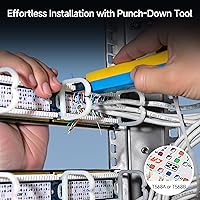
  • Termination Tool: Compatible with standard 110 and Krone impact punch-down tools; no proprietary tooling is required.
  • Safety Certification: UL Listed under file number E486099, confirming the panel meets recognized fire safety and materials standards.
  • Mounting Type: Supports both 19-inch rackmount and wall-mount bracket installation, offering flexible deployment in various environments.
  • Cable Management: Includes D-rings and cable ties in the box for organizing patch cables at the front face of the panel.
  • Model Number: The manufacturer model number for this panel is 180011, useful for procurement documentation and warranty reference.
  • Brand: Manufactured by Cable Matters, a brand with a consistent track record in structured cabling and networking accessories.
  • Market Availability: The panel has been commercially available since January 2012 and remains an active, non-discontinued product.

Related Reviews
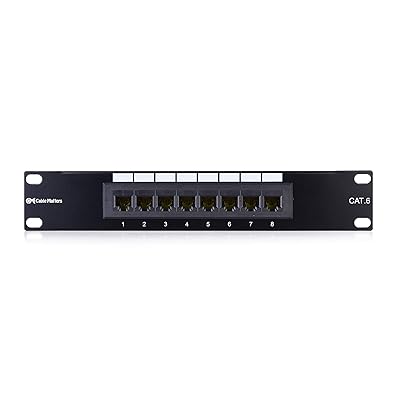
Cable Matters 8-Port Mini Patch Panel
84%
91%
Ease of Installation
86%
Build Quality
58%
Port Capacity
83%
PoE & Power Delivery
88%
10G Performance
More
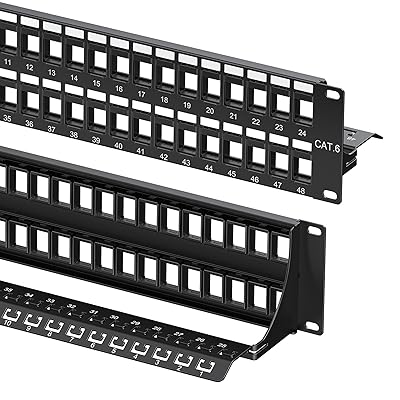
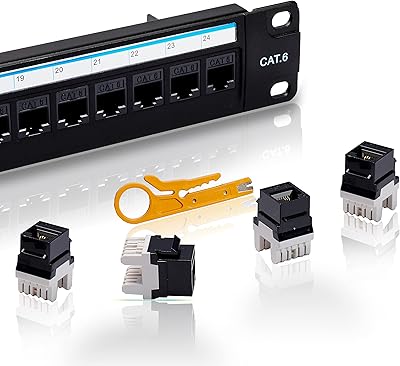
Cable Matters 48-Port 2U Keystone Patch Panel
86%
91%
Build Quality
87%
Value for Money
93%
Port Density & Rack Efficiency
88%
Cable Management
84%
Port Labeling & Documentation
More
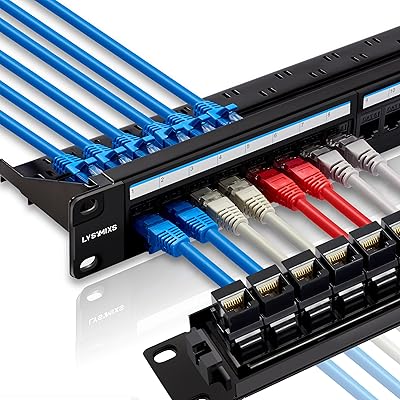
Lysymixs 24-Port Cat6 Keystone Patch Panel
76%
88%
Ease of Installation
93%
Port Repairability
71%
Build Quality
74%
Keystone Jack Quality
86%
Mixed-Media Flexibility
More
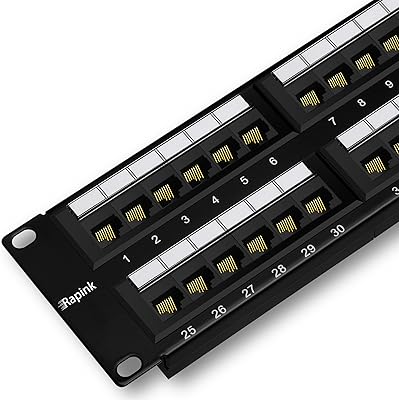
Lysymixs 24 Port RJ45 Patch Panel Cat6 Feed Through
89%
91%
Ease of Installation
94%
Performance (Speed/Connectivity)
88%
Build Quality
82%
Cable Management
85%
Durability
More
Rapink 48-Port Cat6 Patch Panel
82%
93%
Value for Money
86%
Port Termination Quality
67%
Build Quality & Housing
91%
Ease of Installation
89%
Compatibility & Cable Flexibility
More
Rapink 24-Port Cat6A Patch Panel with Inline Keystone
88%
94%
Setup & Installation
89%
Build Quality
91%
Performance (Network Speed)
85%
Ease of Use
87%
Compatibility with Ethernet Cables
More
Lysymixs 24 Port RJ45 Patch Panel Cat7 STP Feed Through
87%
92%
Ease of Installation
88%
Build Quality
89%
Performance & Speed
85%
Cable Management
91%
Value for Money
More
TRENDnet TC-P48C5E 48-Port Cat5e Patch Panel
79%
83%
Build Quality
79%
Port Labeling & Organization
86%
Punch-Down Termination
67%
Cable Management
91%
NDAA Compliance
More
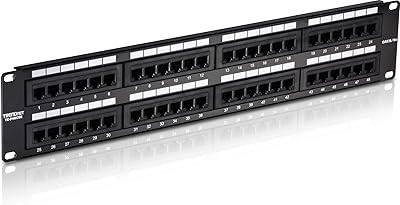
Cable Matters 4-Port USB 3.0 KVM Switch
77%
91%
Ease of Setup
78%
Switching Reliability
83%
RF Remote Control
74%
Build Quality
86%
USB 3.0 Transfer Speed
More
TRENDnet TC-P12C6AS 12-Port Cat6A Shielded Patch Panel
86%
89%
Build Quality
85%
Ease of Installation
91%
Shielded Design (EMI Reduction)
90%
Performance (10G Ethernet Support)
87%
Compatibility (Networking Standards)
More

FAQ

You will need a standard 110 or Krone impact punch-down tool, which are widely available and inexpensive. The panel is not compatible with tool-less termination methods, so if you do not already own one, factor that into your setup cost. Either tool type works fine with this panel.

The panel itself is rated for 10GbE, but whether your network achieves those speeds depends on your full cabling run — the quality of your Cat6 cable, the length of the runs, and whether your switches support 10GbE. The panel is not the bottleneck in a properly installed Cat6 system, but it cannot compensate for substandard cable or connectors elsewhere in the chain.

Yes, this Cat6 panel is backward compatible with Cat5e and Cat5 cabling. You can terminate Cat5e runs on it without any issues, though your maximum throughput on those runs will be limited to what Cat5e supports rather than full 10GbE.

It does. The panel passes through PoE, PoE+, and PoE++ signals, so power delivery to connected devices like wireless access points and IP cameras flows through without any degradation or conversion. You do not need separate injectors as long as your switch supplies PoE natively.

It is designed for standard 19-inch rack enclosures and takes up 1U of vertical space. It also supports wall-mount bracket installation if you are not using a full rack cabinet. Users report it fits both name-brand and generic 19-inch enclosures without alignment issues.

It is one of the more popular choices for home lab builds precisely because it hits a practical balance of port count, form factor, and price. The 1U height keeps things compact, the wiring diagrams on the panel face make termination straightforward, and the included D-rings help keep patch cables organized in tighter spaces.

This is one area where feedback is mixed. For mostly static installs where patch cables are plugged in and left alone, the port clips hold up well. If your environment involves frequent patch cable swaps — a training lab, for example — some users have noted that the retention clips can feel less firm after extended cycling. It is not a universal complaint, but worth knowing if your use case involves constant replugging.

Yes, D-rings and cable ties are included in the box. They cover basic front-face cable management and are adequate for home lab and light commercial use. A few users have noted the cable ties are on the thinner side, so if you are managing a high cable count or want more robust organization, you may want to supplement with your own hardware.

The panel carries a UL listing under file number E486099, which satisfies fire safety compliance requirements on many light commercial jobs. If your project requires specific channel performance certification or shielded Cat6A specifications, this panel does not cover those requirements and you would need a different product.

Yes, both T568A and T568B color-coding diagrams are printed directly on the panel. This is genuinely useful in the field because you can verify your termination sequence at a glance without pulling up a reference sheet. Most North American installs use T568B, but having both printed on the panel keeps your options open.

Where to Buy