Overview

The Pyle PT390AU 4-Channel Home Audio Amplifier has been quietly holding its ground in the budget amplifier space since 2013 — a surprisingly long run for a sub-$200 device. It targets karaoke hosts, small PA setups, and casual home entertainment without pretending to be anything more. The 300W figure is peak power, not continuous, so expect real-world output to be considerably more modest. With 754 ratings averaging 3.9 stars, the picture is mostly positive but not without caveats. It's a rack-mountable box that fits neatly into a shelf or AV cabinet, and for the price tier, the feature count is genuinely hard to argue with.
Features & Benefits

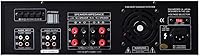
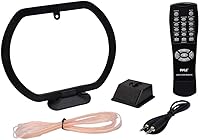
What stands out most about this Pyle amplifier is how much it packs into a single box. Two microphone inputs come with independent echo, bass, and treble controls — a real convenience for karaoke nights or events where you need quick mic adjustments on the fly. Source flexibility is strong: USB flash drives, RCA, AUX, and a built-in AM/FM tuner mean you're not scrambling for adapters. The blue LED buttons and LCD display are practical touches that make navigating inputs easy even with the lights down. A bundled remote, antenna, and audio cable mean you're not hunting for extras before your first use.

Best For

The PT390AU is a natural fit for home karaoke setups where you want mic effects without buying a standalone karaoke machine. It also works well in small community spaces — think garage parties, church fellowship halls, or basement home theaters — where you need modest amplification across multiple speakers without a complex system. If you hate juggling multiple components and want one unit to handle your phone, USB drive, and a microphone all at once, this home karaoke receiver delivers that. It's not built for audiophiles or large venues, but within its lane it covers a surprisingly broad range of everyday use cases.

User Feedback

Among buyers, setup ease and value for money come up repeatedly as highlights — people appreciate getting this many inputs and controls at this price point. The criticisms, though, are consistent: the 300W claim is frequently called out as misleading once buyers realize it's a peak figure, not sustained output. A handful of users note that the knobs and chassis feel lighter than expected for a rack-mount unit. The remote and USB playback work reliably for most, but draw occasional complaints. Sound quality at moderate volumes gets solid marks; push it harder and some distortion creeps in — a real trade-off worth knowing before buying.

Pros

  • Dual mic inputs with echo and EQ controls make home karaoke genuinely fun without extra hardware.
  • Connects to smartphones, USB drives, RCA sources, and AM/FM radio from a single unit.
  • Setup is fast — most users are running audio within minutes of unboxing.
  • Rack-mountable form factor fits neatly into AV cabinets or semi-permanent event installations.
  • LED-lit buttons and LCD display make input switching easy in dim or dark environments.
  • Bundled remote, audio cable, and antenna reduce day-one accessory costs.
  • Four speaker binding post pairs let you run multiple speaker zones simultaneously.
  • The PT390AU has stayed in production since 2013, suggesting a baseline level of market reliability.
  • Rotary EQ and separate volume knobs give hands-on control without navigating any menus.

Cons

  • The 300W power rating is peak-only — continuous output is a fraction of what the spec implies.
  • No Bluetooth connectivity is a significant gap for modern wireless streaming workflows.
  • Chassis and knobs feel noticeably lightweight, raising durability concerns under regular use.
  • Sound clarity softens at higher volume levels, limiting usefulness in louder or larger spaces.
  • Remote control reliability is inconsistent, with several users reporting failure within months.
  • USB playback has compatibility issues with certain drive formats and higher-bitrate audio files.
  • Echo effect is basic and one-dimensional — no reverb presets or adjustable delay timing.
  • The LCD display is too small and low-contrast to read comfortably from across a room.
  • Long-term users report knob responsiveness degrading and occasional channel dropout over time.

Ratings

Our AI-driven scoring for the Pyle PT390AU 4-Channel Home Audio Amplifier was built by analyzing hundreds of verified global buyer reviews, with spam, bot activity, and incentivized feedback actively filtered out before any score was calculated. The result is an honest, balanced picture — the genuine strengths that keep this receiver in shoppers' carts after a decade on the market, alongside the real frustrations that surface once buyers get it home and plugged in.
Value for Money
83%
For buyers setting up a karaoke corner or small PA system on a limited budget, the sheer number of inputs and onboard controls packed into this price range is hard to beat. Most comparable receivers strip out mic effects or limit input options at this tier, making the PT390AU feel like an overachiever on paper.
The value equation takes a hit once buyers realize the advertised wattage is a peak figure, not sustained output. Those expecting room-filling power for the price often feel misled, and the lightweight chassis reinforces the sense that corners were cut somewhere.
Sound Quality
67%
33%
At moderate listening volumes — background music for a gathering, a karaoke session in a living room, or a small community hall announcement — the audio output is clean enough to satisfy casual listeners. The onboard EQ gives users some room to compensate for room acoustics without needing external gear.
Push the volume past the midpoint and clarity starts to soften noticeably, with some users describing a thin or slightly distorted character at higher output levels. Audiophiles or anyone running higher-sensitivity speakers will find the limitations frustrating fairly quickly.
Microphone Performance
78%
22%
The dual mic inputs with independent echo, bass, and treble controls are a genuine highlight for karaoke use and public address situations. Being able to dial in each mic separately without external processors is a convenience that users consistently praise, especially for party hosting.
Echo effect quality is functional rather than polished — at stronger settings it can sound artificial and dated. Users expecting studio-style mic treatment will be disappointed, and the echo control offers limited range before it becomes distracting.
Ease of Setup
86%
Nearly every reviewer comments on how quickly this unit gets up and running. The labeled inputs, push-button source selector, and included cables mean most users are playing audio within minutes of unboxing, with no manual-digging required for basic operation.
The included documentation is minimal, and users trying to integrate the PT390AU into a more complex system — like pairing with a subwoofer or configuring all four speaker channels simultaneously — often hit a wall without seeking outside guidance.
Build Quality
58%
42%
The unit holds together reliably for light to moderate use, and the rack-mount form factor at least suggests some structural intent. Several long-term owners report years of functional service without hardware failures under casual conditions.
The chassis feels noticeably lightweight for its size, and the rotary knobs have a plasticky feel that erodes confidence during regular adjustments. A handful of reviewers report knobs loosening or the housing flexing slightly under minimal pressure, which is a concern for semi-permanent installations.
Input Versatility
81%
19%
Covering USB flash drives, RCA, AUX, and a built-in AM/FM tuner from a single box genuinely simplifies setup for users who would otherwise need a separate tuner or switcher. Smartphone and tablet compatibility via AUX keeps the unit relevant for modern source devices.
There is no Bluetooth connectivity, which feels like an increasingly glaring omission given how most people stream music today. Users regularly flag this as a frustration, particularly when comparing against newer budget receivers that include wireless input as standard.
Remote Control
62%
38%
Having a bundled remote is a convenience most users appreciate, particularly for adjusting volume across a room during a party or event. For basic playback and volume control from a couch or stage, it works as advertised.
Reliability complaints are consistent — some users find the remote stops responding within months of purchase, and the operating range is shorter than expected. A few reviewers note that the remote lacks the build quality to survive regular use without the buttons becoming unresponsive.
USB Playback
71%
29%
The USB flash reader handles common audio formats reliably for most users, making it easy to load a playlist onto a drive and walk away without needing a connected phone or laptop. For karaoke backing tracks or background music at events, this works well in practice.
Compatibility with certain USB formats and higher-bitrate audio files is inconsistent, and some users report the unit failing to read drives that work fine on other devices. There is no display of file names or track info beyond a basic input indicator, which makes navigation cumbersome.
Display & Controls
74%
26%
The LCD display and LED-backlit buttons make operating the unit in darker environments genuinely practical — a thoughtful detail for basement setups or dimly lit event spaces. The physical knobs for EQ and volume give a tactile control feel that touch-based units at this price often lack.
The LCD display is small and shows only basic function information, offering no metadata or input labeling beyond rudimentary indicators. The display contrast and brightness are also modest, making it harder to read from across a room in brighter lighting conditions.
Wattage & Power Accuracy
44%
56%
For genuinely low-demand situations — a small bedroom, a compact meeting room, or a backyard gathering with efficient speakers — the available output is sufficient to fill the space without straining the unit.
The 300W claim is a peak figure under ideal lab conditions, and real-world continuous output is a fraction of that number. This is the single most common complaint across reviews, with buyers feeling the specification is actively misleading rather than a standard industry caveat.
Karaoke Functionality
77%
23%
As an entry point into home karaoke without buying a dedicated machine, the PT390AU covers the essentials well. Two mic channels, echo control, and enough output for a living room or small basement setup make weekend karaoke nights genuinely viable without a big investment.
The echo effect, while useful, is fairly one-dimensional — there are no reverb presets or delay time adjustments beyond a single knob. Serious karaoke enthusiasts will outgrow the mic processing capabilities relatively quickly and find themselves wanting more nuanced control.
PA & Public Address Use
69%
31%
For small-scale public address applications — a church announcement system, a community room, or a compact outdoor event with efficient speakers — the dual mic inputs and four-channel output cover the basics without much fuss. The ability to run multiple speaker pairs simultaneously is genuinely useful.
The modest real-world power output limits how large a venue this unit can realistically cover. In spaces with poor acoustics or background noise, users report needing to push the unit harder than comfortable, which is where the sound quality trade-offs become most noticeable.
Long-Term Durability
61%
39%
The fact that this model has been available since 2013 with ongoing sales is itself a signal of baseline reliability — it is not a product that failed spectacularly and disappeared. A segment of reviewers report units still functioning after several years of regular use.
Older reviews flag gradual degradation in knob responsiveness and intermittent channel dropout over extended periods. The lightweight internal components suggest this unit was designed for light-duty use, and buyers running it hard at events regularly report a shorter functional lifespan.
Connectivity & Compatibility
72%
28%
The broad impedance range of 4 to 16 ohms means buyers can connect a wide variety of speaker types without worrying too much about mismatch. RCA outputs also allow the unit to feed into powered subwoofers or secondary amplifiers, extending its usefulness in a layered system.
The absence of digital inputs like optical or coaxial is limiting for users with newer source components. There is also no phono preamp for turntable users, which narrows the compatibility story for buyers looking to consolidate a full home audio system into one unit.

Suitable for:

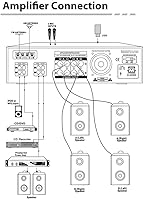
The Pyle PT390AU 4-Channel Home Audio Amplifier is a solid pick for anyone who wants a versatile, all-in-one audio hub without spending heavily on separate components. It makes the most sense for home karaoke enthusiasts who want real mic controls — echo, independent bass and treble per channel — without buying a dedicated karaoke machine. Small community spaces like church fellowship halls, basement rec rooms, or garage party setups will find the dual mic inputs and multi-speaker output genuinely practical for light PA work. It also suits buyers who juggle multiple source devices — a phone, a USB drive, a DVD player — and want one central unit to handle switching without a tangle of adapters. For first-time amplifier buyers or anyone stepping up from a basic Bluetooth speaker setup, the learning curve is low and the out-of-box experience is refreshingly straightforward.
Not suitable for:

Buyers who take audio quality seriously should look elsewhere, because the PT390AU was not designed with critical listening in mind. The 300W figure is a peak rating under ideal conditions — real-world continuous output is considerably lower, and anyone expecting to fill a medium or large venue with authority will be left wanting. The build quality, while functional, reflects the budget tier: the chassis is light, the knobs feel plasticky, and long-term heavy use tends to surface reliability concerns that more robust units avoid. There is no Bluetooth connectivity, which is a genuine dealbreaker for anyone whose primary audio source is a phone or streaming service. Home theater enthusiasts chasing surround sound fidelity, DJs needing pro-grade mixing, or anyone running high-impedance studio monitors will find this home karaoke receiver falls short of their requirements in both power and processing capability.

Specifications

  • Peak Power: The unit is rated at 300W peak output across all four channels combined — this is a maximum instantaneous figure, not a continuous RMS rating.
  • Channels: Four independent amplifier channels allow simultaneous connection of multiple speaker pairs in stereo or multi-zone configurations.
  • Speaker Impedance: Compatible with speakers rated between 4 and 16 ohms, covering most standard home and PA speaker types.
  • Microphone Inputs: Two dedicated 1/4-inch microphone inputs are included, each with independent echo, bass, and treble adjustment controls.
  • Audio Inputs: Source inputs include USB flash reader, two RCA stereo inputs, one AUX input, and a built-in AM/FM tuner with antenna.
  • Audio Outputs: Two RCA line outputs and four pairs of speaker terminal binding posts allow flexible routing to external devices or speaker arrays.
  • EQ & Controls: A rotary equalization knob, push-button source selector, and separate master and microphone volume knobs provide direct manual control.
  • Display: A built-in LCD digital meter displays the active input source and basic function status during operation.
  • Indicator Lighting: Blue LED-backlit buttons illuminate all source selection and function controls for easy use in low-light environments.
  • Dimensions: The unit measures 18.25″ x 14.75″ x 7″, sized to fit standard rack-mount enclosures or sit on a shelf.
  • Weight: At 2 pounds, the chassis is notably lightweight for a four-channel receiver of this size.
  • Form Factor: The rack-mountable black steel enclosure is compatible with standard 19-inch AV rack systems for permanent or semi-permanent installations.
  • Color & Finish: The unit is finished in matte black with blue LED accent lighting on the front control panel.
  • Wireless: There is no Bluetooth or Wi-Fi connectivity; all audio sources must be connected via physical cable or USB flash drive.
  • Included Accessories: Package includes one wireless remote control, one FM antenna, and one audio cable to support immediate out-of-box setup.
  • Model Number: The manufacturer model number is PT390AU, produced by Sound Around under the Pyle brand.
  • First Available: This model was first listed for sale in March 2013 and remains in active production as of the current date.
  • Compatibility: The USB input supports playback from flash drives formatted with common audio files; smartphones and tablets connect via the AUX input.

Related Reviews

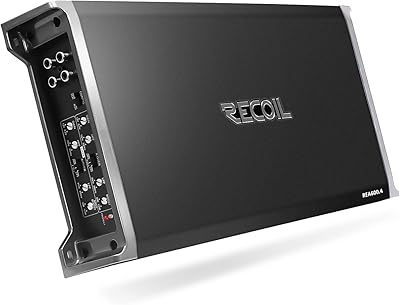
Recoil REA600.4 4-Channel Car Audio Amplifier
84%
89%
Audio Performance
91%
Ease of Installation
85%
Sound Quality at High Volumes
62%
Heat Management
90%
Power Output
More
Planet Audio AC2400.4 4-Channel Car Amplifier
84%
95%
Power Output
89%
Sound Clarity
87%
Bass Performance
82%
Ease of Installation
65%
Thermals/Heat Management
More
Recoil DI800.4 4-Channel Car Audio Amplifier
83%
88%
Sound Quality
92%
Power Output
65%
Thermal Management
84%
Build Quality
91%
Ease of Installation
More
Recoil DI550.4 4-Channel Car Audio Amplifier
85%
88%
Sound Quality
91%
Power Output
72%
Ease of Installation
85%
Cooling Efficiency
90%
Customizability of Controls
More
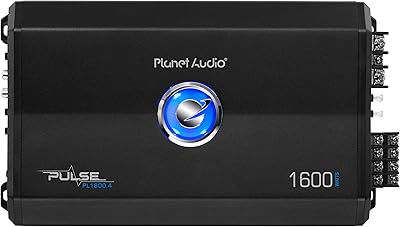
Planet Audio PL1600.4 4-Channel Car Amplifier
84%
89%
Power Output
85%
Sound Quality
72%
Ease of Installation
91%
Size & Compactness
93%
Value for Money
More
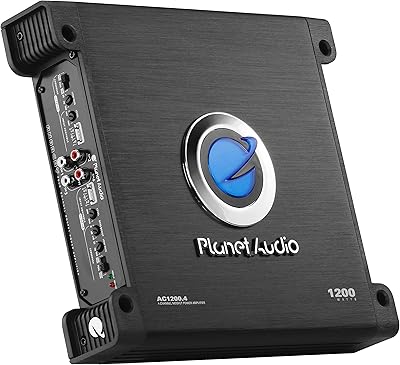
Planet Audio AC1200.4 Anarchy Series 4-Channel Car Amplifier
85%
88%
Sound Quality
91%
Bass Performance
85%
Power Output
90%
Ease of Installation
80%
Durability
More
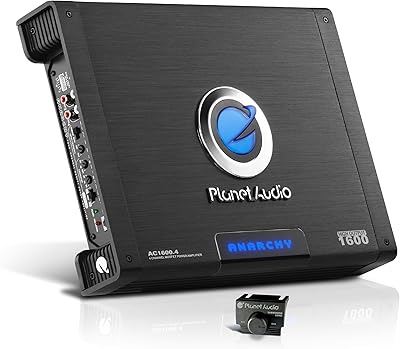
Planet Audio AC1600.4 Anarchy Series 4-Channel Car Amplifier
82%
94%
Power Output
88%
Sound Quality
70%
Ease of Installation
92%
Value for Money
85%
Build Quality
More
Soundfy SA 400.4 4-Channel Digital Car Audio Amplifier
86%
88%
Sound Quality
86%
Build Quality
90%
Ease of Installation
87%
Power Output
84%
Heat Management
More
BOSS Audio Systems R2504 Riot Series 4-Channel Car Audio Amplifier
83%
87%
Performance
90%
Sound Clarity
82%
Bass Boost Control
78%
Build Quality
91%
Power Output
More
Stetsom HL 2000.4 2-Ohm 4-Channel Car Audio Amplifier
87%
93%
Power Output
85%
Cooling System Efficiency
88%
Sound Quality
91%
Ease of Installation
82%
Durability
More

FAQ

It is a peak figure — meaning the maximum power the unit can theoretically produce for a brief instant under ideal lab conditions. The real-world continuous RMS output is considerably lower. This is one of the most common points of confusion buyers raise after purchase, so it is worth calibrating your expectations before you buy, especially if you need to fill a large or noisy space.

Yes, the two RCA line outputs on the back can feed a powered subwoofer directly. You would run the RCA output into the subwoofer's line-level input, which is a standard setup for adding bass reinforcement to the system without running the sub off the speaker terminals.

Standard dynamic microphones with a 1/4-inch plug connect directly to the mic inputs without any adapter. If your mic has an XLR connector, you will need a simple XLR-to-1/4-inch adapter cable, which is inexpensive and widely available.

Yes, it has four pairs of speaker binding posts, so you can run four speakers simultaneously. Keep in mind that distributing output across four speakers will reduce the effective power delivered to each one, so the actual volume per speaker will be lower than if you were only driving a single pair.

No, the Pyle PT390AU 4-Channel Home Audio Amplifier does not include Bluetooth. All sources need to connect via a physical AUX cable, RCA cable, or USB flash drive. If wireless streaming is important to you, you would need to pair this unit with a separate Bluetooth receiver plugged into one of the AUX or RCA inputs.
It is functional and gets the job done for casual karaoke or party use, but it is fairly basic — more of a single-knob echo than a nuanced reverb system. At moderate settings it sounds fine; push it too far and it can come across as artificial or over-processed. For a home gathering it is more than acceptable; for a serious performance setup it would feel limiting.

Yes, it is designed to fit a standard 19-inch equipment rack. If you are building a permanent PA or home theater rack setup, it slots in without modification. Just confirm the rack unit height clearance before purchasing, as the 7-inch depth is on the shallower side.

The USB input handles standard MP3 files reliably in most cases. Compatibility with other formats like WAV or FLAC is inconsistent based on user reports, and high-bitrate files occasionally cause playback issues. For the most reliable experience, stick with standard MP3 files at typical bitrates when loading a USB drive for playback.

For a small space with modest acoustic demands — think a chapel, a community meeting room, or a classroom — this home karaoke receiver can handle basic PA duties reasonably well. Two mic inputs and multi-speaker output cover the core needs. That said, the real-world power output has limits, and in a larger or reverberant space you may find it struggles to project clearly without distortion at higher volumes.

The remote handles basic functions like input selection and volume adjustment, which is convenient for controlling the unit from across a room. Reliability is mixed based on buyer experience — some users report it working fine for years, while others find it becomes unresponsive within a few months. It is best treated as a convenience feature rather than a critical part of the setup.