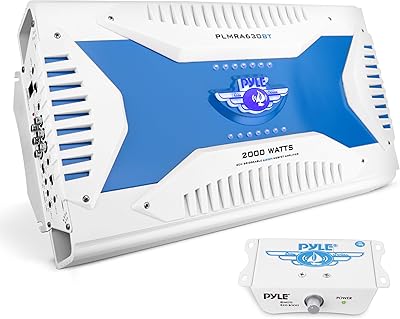
Overview

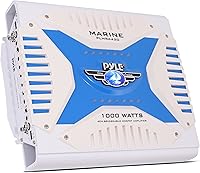
The Pyle PLMRA420 4-Channel Marine Amplifier has been a go-to option for budget-conscious boaters since it first hit the market back in 2004 — and the fact that it still ranks in the top 10 of marine amplifiers says something real about its staying power. This marine amp delivers up to 1000 watts of peak power across four bridgeable channels, giving you genuine flexibility when building out a boat audio system. Its IP-01 waterproof rating makes it a practical choice for open-water environments where moisture is a constant concern. Expectations should be calibrated accordingly — this is a mid-range unit aimed at casual to enthusiast boaters, not a boutique audiophile rig.
Features & Benefits

What makes this waterproof amplifier genuinely useful is its flexibility. The tri-mode configuration lets you run it as a standard 4-channel stereo amp, bridge channels for more power to a subwoofer, or use the built-in crossover network to separate highs and lows — all without adding external components. The dual MOSFET power supply keeps the output stable under load, and the dual adjustable GAIN controls help you dial in your specific speaker setup properly. If your head unit lacks RCA outputs, the high-level inputs let you tap directly into speaker wire, which is a practical touch that saves both time and money during installation. Gold-plated terminals and a heavy-duty aluminum heatsink round out a feature set that punches above its price tier.

Best For

The Pyle 4-channel amp is a natural fit for anyone upgrading a tired factory marine stereo on a modest budget. Pontoon boat owners, PWC riders, and small runabout enthusiasts who want noticeably better sound without a complex, expensive install will find it approachable. The high-level input option is especially handy for DIY installers who want to avoid rewiring their entire head unit. It also works well for setups mixing full-range cabin speakers with a single subwoofer, since you can bridge two channels for extra bass output. If you are chasing audiophile-grade clarity, keep looking. But for a straightforward boat audio upgrade that fits a reasonable budget, this marine amp delivers solid value without requiring professional installation know-how.

User Feedback

Across nearly 700 ratings, this waterproof amplifier holds a 4.1-star average — a score that reflects real satisfaction with some honest caveats. Buyers consistently praise how straightforward the installation is and how much of a jump in volume and clarity they get over factory-installed speakers. That said, the 1000-watt claim draws legitimate criticism: that figure is peak power, not continuous RMS output, and a few reviewers feel the actual headroom is more modest than advertised. A recurring practical note from owners is that the unit runs warm, so mounting it somewhere with good airflow is important for longevity. On the whole, long-term durability feedback trends positive for buyers who install it correctly, with seasonal saltwater use holding up reasonably well.

Pros

  • Bridgeable 4-channel design gives real flexibility for mixing full-range speakers and a subwoofer in one install.
  • High-level inputs let you connect directly to head units without RCA outputs, saving time and money.
  • Gold-plated output terminals actively resist the corrosion that shortens the life of marine electronics.
  • Most DIY installers report completing the full setup solo in a couple of hours without specialist tools.
  • Sound improvement over factory marine stereo systems is consistently described as noticeable and satisfying.
  • Thermal overload and short-circuit protection has prevented damage in real installs where wiring errors occurred.
  • The Pyle 4-channel amp has maintained a top-10 marine amplifier ranking for over two decades, a track record worth noting.
  • Tri-mode configuration handles stereo, crossover, and bridged operation without any add-on hardware required.
  • At this price tier, the aluminum alloy chassis feels more substantial than many competing budget marine amps.
  • Compatible with a very wide range of marine head units, including older and budget models.

Cons

  • The 1000-watt headline figure is peak power only — actual sustained output is significantly lower and often feels misleading.
  • A subset of buyers report channel dropout or complete unit failure after one to two boating seasons.
  • The included installation manual lacks detail on wiring gauge and bridged configuration, frustrating less experienced installers.
  • Ground loop hum and alternator whine have been reported by multiple users, sometimes requiring an additional noise filter to resolve.
  • The unit runs noticeably warm under load, and poor mounting placement leads to thermal shutdowns on hot days.
  • IP-01 waterproofing handles splash and humidity but is not adequate for exposed or high-spray mounting locations.
  • This waterproof amplifier weighs over 9 pounds, which can be awkward when fitting into tight or overhead mounting spaces on smaller boats.
  • Pyle customer support receives mixed reviews, with slow or unhelpful responses noted during troubleshooting.
  • Gain and impedance settings require careful attention in tri-mode configurations — a step that trips up some buyers during initial setup.
  • Long-term durability beyond two seasons is not consistently reliable across the review pool, with enough failure reports to warrant attention.

Ratings

The Pyle PLMRA420 4-Channel Marine Amplifier earns a broadly positive reception from the boating community, and the scores below reflect what real buyers actually experienced — not marketing claims. Our AI analyzed verified global reviews, actively filtering out incentivized, spam, and bot submissions, to surface honest patterns across hundreds of real-world installations. Both the standout strengths and the genuine frustrations are captured here without sugarcoating.
Value for Money
84%
For boaters on a tight budget, this marine amp consistently surprises buyers with how much audio improvement it delivers relative to what they paid. Reviewers upgrading from stock marine systems routinely describe it as one of the better spending decisions they made for their boat.
A few buyers feel the value proposition weakens once they factor in the modest real-world RMS output versus the advertised peak wattage. If you need serious continuous power, you may find yourself outgrowing it faster than expected.
Sound Quality
76%
24%
Most users report a clear, noticeable jump in audio quality compared to factory head units, with better separation across channels and improved low-end response when channels are bridged for a subwoofer. For casual listening on a pontoon or small runabout, the output is satisfying and full-sounding.
Audiophiles or buyers coming from higher-end amplifiers will find the sound reproduction a step behind in terms of clarity and dynamic range at higher volumes. Distortion starts creeping in when pushed close to its limits, which is a common complaint among more discerning listeners.
Power Output Accuracy
52%
48%
The amplifier does deliver a genuine improvement in output over unamplified factory setups, and for moderate listening levels on smaller vessels it performs reliably. Buyers who understood going in that the 1000-watt figure is a peak rating — not sustained — were generally satisfied with what they got.
This is the most cited frustration across reviews: the 1000-watt claim is peak power, and the actual continuous RMS output is considerably lower. Many buyers felt misled, and a subset specifically warned others to research the RMS figure before purchasing based on power expectations.
Ease of Installation
88%
The inclusion of high-level inputs is a genuine practical advantage — buyers with head units lacking RCA outputs can connect directly to speaker wires, skipping a costly head unit swap. Multiple reviewers described completing the install solo in under two hours, even without professional experience.
The manual draws occasional criticism for being vague on wiring gauge recommendations, which matters more in marine environments where undersized wire can create real safety concerns. A handful of buyers had to consult online forums to clarify the best approach for bridged configurations.
Waterproofing & Marine Durability
78%
22%
The IP-01 rating and gold-plated terminals hold up well in typical marine conditions — reviewers using it through full boating seasons in humid, splash-prone environments generally reported no corrosion or moisture-related failures. The protection feels genuine rather than cosmetic.
IP-01 is a relatively modest waterproofing standard, and buyers on vessels with heavy spray or those mounting in exposed locations have reported concerns about long-term resilience. It handles splash and humidity well, but direct water exposure is a different story.
Build Quality
73%
27%
The aluminum alloy chassis feels solid and purposeful for the price tier, and the heatsink construction gives the unit a more substantial feel than competing amps at this price point. Gold-plated output terminals are a nice detail that signals some attention to corrosion resistance.
Some reviewers noted that the plastic housing components feel less premium up close, and a few questioned whether the overall build would hold up beyond a couple of seasons of heavy use. It reads more as durable-enough rather than genuinely rugged.
Thermal Management
61%
39%
The built-in aluminum heatsink does its job under normal operating loads, and the thermal protection circuit has saved at least a few installs from damage based on reviewer accounts. The LED indicator for fault conditions is a handy diagnostic touch.
Running warm is one of the more consistent complaints across reviews, particularly when the amp is mounted in confined spaces without airflow. Buyers who ignored ventilation during install reported automatic shutdowns on hot days, which points to a thermal ceiling that is lower than ideal.
Channel Flexibility
86%
The tri-mode configuration gives this amp a versatility that buyers genuinely appreciate — running four full-range speakers, splitting into a bi-amp setup, or bridging two channels for a sub are all achievable without add-on hardware. That kind of flexibility is rare at this price.
Switching between modes requires careful attention to gain and impedance settings, and a few less experienced installers found the configuration options confusing without clearer documentation. Mistakes during setup can result in underpowered or mismatched speaker performance.
Compatibility
83%
The combination of RCA inputs and high-level speaker inputs makes this amp compatible with a very wide range of marine head units, including older or budget models that lack dedicated preamp outputs. Reviewers consistently praised not needing to replace their existing receiver just to add amplification.
Buyers using higher-end head units with sophisticated signal processing occasionally noted that the input sensitivity options, while adjustable, did not perfectly match their source output, requiring some trial and error to dial in without noise or clipping.
Protection Circuitry
79%
21%
The short-circuit and thermal overload protection has functioned as intended based on buyer accounts — several reviewers credited the fault protection with preventing damage to both the amp and their boat's electrical system after wiring errors during DIY installs.
A small number of buyers reported that the protection circuit trips too aggressively under high load, cutting output during peak moments even when conditions seemed within spec. Whether this reflects conservative tuning or component variance is unclear, but it was a recurring frustration.
Size & Mounting
81%
19%
At just over 12 inches long, this marine amp fits into typical under-seat or under-console spaces on small to mid-size boats without major modification. The surface-mount design is straightforward, and the footprint strikes a practical balance between power capacity and physical size.
At just over 9 pounds, it is heavier than some compact competitors, which can be a minor inconvenience when mounting in tight or overhead spaces. A few buyers on smaller PWC or kayak-style vessels found the dimensions a bit large for their available mounting areas.
Long-Term Reliability
69%
31%
A meaningful portion of reviewers report using this waterproof amplifier across multiple boating seasons without significant issues, particularly those who installed it with proper ventilation and correct wiring gauge. For a budget-tier marine amp, multi-year durability is a reasonable expectation.
Failure reports do exist in the review pool, with some buyers experiencing channel dropout or complete unit failure after one to two seasons. Whether these cases reflect installation errors or unit variance is hard to separate, but the pattern is frequent enough to note.
Noise & Signal Clarity
71%
29%
Under normal operating conditions with properly shielded RCA cables, most buyers report a clean, quiet signal floor that does not introduce noticeable hiss or interference — important on boats where electrical noise from engines and bilge pumps can contaminate audio.
A subset of reviewers noted ground loop hum or alternator whine, which is a known challenge in marine electrical environments. Resolving it sometimes required adding a noise filter, which is an extra cost and step that buyers should factor into the total install budget.
Customer Support & Documentation
47%
53%
Some buyers found Pyle's basic documentation sufficient for a straightforward 4-channel stereo install, and the product's long availability means there is a decent amount of third-party install guidance and forum support available online to fill in gaps.
The included manual is widely criticized as thin and lacking in practical guidance — especially for bridged or tri-mode configurations. Pyle's direct customer support receives mixed marks, with several reviewers noting slow or unhelpful responses when troubleshooting installation issues.

Suitable for:

The Pyle PLMRA420 4-Channel Marine Amplifier is a strong fit for boaters who want a meaningful audio upgrade without committing to a high-budget install. If you own a pontoon, a small runabout, or a PWC and you are tired of straining to hear music over engine noise and wind, this marine amp delivers exactly the kind of volume and clarity boost that makes a real difference on the water. It is particularly well-suited to DIY installers, since the high-level inputs mean you can wire it directly to an older head unit without replacing your receiver first. Budget-focused buyers replacing a failed or aging amp will also find it a sensible brand-name choice that does not require professional installation. Anyone planning a mixed speaker setup — a few full-range cabin speakers plus a bridged subwoofer channel — will appreciate the tri-mode flexibility without needing extra crossover hardware.
Not suitable for:

Buyers chasing raw, sustained power output should approach the Pyle PLMRA420 4-Channel Marine Amplifier with caution, because the advertised wattage is a peak figure and the continuous RMS output is considerably more modest. If you are building a serious, high-output audio system for a larger vessel or you already own quality component speakers that demand clean, stable power to perform properly, this waterproof amplifier will likely leave you underwhelmed. Boaters who plan to mount in a tightly enclosed space with no airflow should also think twice — the unit runs warm under load and needs room to breathe, or thermal shutdowns become a recurring frustration. Those who want factory-level documentation and responsive manufacturer support may also find the experience lacking, as the manual is thin and customer service reviews are mixed. Finally, if you are replacing an amp on a vessel that regularly takes heavy spray or near-submersion conditions, the IP-01 rating here is not the robust protection you need.
Specifications

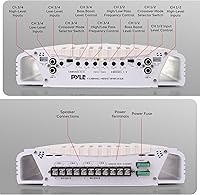
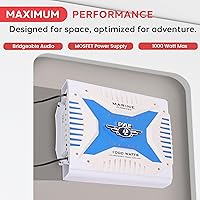
  • Output Power: Maximum peak output is 1000 watts across all four channels, though real-world continuous RMS power is considerably lower — a distinction buyers should factor into their expectations.
  • Channels: Features 4 fully bridgeable channels, allowing flexible speaker configurations from standard stereo to bridged mono output for subwoofer use.
  • Configuration Modes: Supports tri-mode operation: full-range stereo, active electronic crossover, and bridged mono — all selectable without additional hardware.
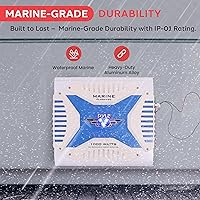
  • Waterproof Rating: Carries an IP-01 marine waterproof certification, providing protection against humidity and light splash in typical open-water boating environments.
  • Power Supply: Dual MOSFET power supply design delivers stable, consistent voltage regulation under varying electrical loads common in marine 12V systems.
  • Input Types: Accepts both RCA line-level inputs and high-level speaker wire inputs, ensuring compatibility with marine head units that lack dedicated preamp outputs.
  • GAIN Controls: Dual adjustable input sensitivity controls cover a 10k Ohm range for low-impedance sources and a 100 Ohm range for high-level speaker inputs.
  • Heatsink: Heavy-duty aluminum alloy heatsink is integrated into the chassis to dissipate heat during sustained operation and protect internal components.
  • Protection: Built-in thermal overload and short-circuit protection circuits are paired with an LED fault indicator that alerts users to electrical issues in real time.
  • Output Terminals: Speaker output connectors are gold-plated to minimize oxidation and maintain signal integrity in saltwater and high-humidity marine environments.
  • Operating Voltage: Designed to run on a standard 12V DC power supply, compatible with the electrical systems found on the vast majority of recreational boats and PWCs.
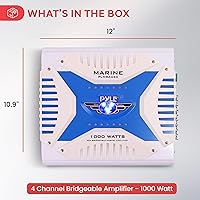
  • Dimensions: The unit measures 12 x 10.9 x 2.7 inches, a footprint suited to under-seat or under-console surface mounting on small to mid-size vessels.
  • Weight: Weighs 9.13 pounds, which is moderately heavy for its size class and worth accounting for when planning mounting location on smaller craft.
  • Mounting Type: Designed for surface mounting, with hardware attachment points that allow secure installation on flat surfaces inside a boat's console or storage areas.
  • Speaker Impedance: Supports speaker impedance loads ranging from 100 Ohm (high-level input) down to standard low-impedance 4-ohm and 2-ohm bridged configurations.
  • Crossover Network: Integrated high and low electronic crossover network allows independent frequency filtering without requiring a separate external crossover component.
  • Customer Rating: Holds a 4.1 out of 5 star average based on approximately 695 verified ratings on Amazon, with consistent praise for ease of installation and sound improvement.
  • Market Availability: Has been continuously available since October 2004, making it one of the longer-standing SKUs in the budget marine amplifier category.
  • Model Number: Official model designation is PLMRA420, manufactured by Pyle Audio and sold under the Hydra Elite marine amplifier product line.
  • Wireless Remote: Does not include a wireless remote control; all gain and configuration adjustments are made directly on the unit at the time of installation.

Related Reviews
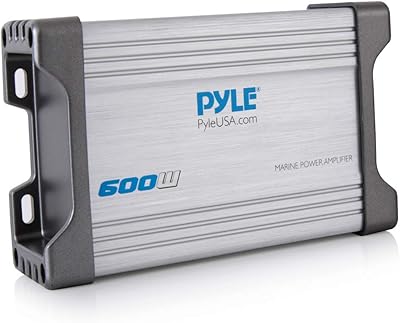
Pyle PLMTR4A 4-Channel Marine Amplifier
69%
78%
Value for Money
73%
Weatherproof Durability
41%
Power Accuracy
58%
Build Quality
86%
Installation Ease
More
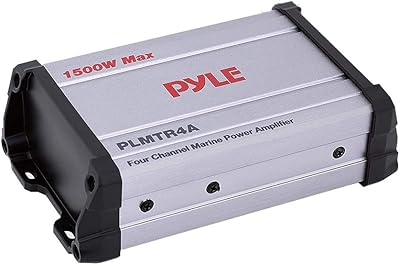
Pyle PLMRMP4A 4-Channel Marine Amplifier
64%
61%
Value for Money
53%
Build Quality
67%
Waterproofing
58%
Power Output
79%
Ease of Installation
More
Pyle PLMRMB4CB 4-Channel Marine Amplifier
67%
78%
Value for Money
54%
Power Output
63%
Bluetooth Connectivity
61%
Water Resistance
58%
Build Quality
More
Pyle PLMRA402 4-Channel Marine Amplifier
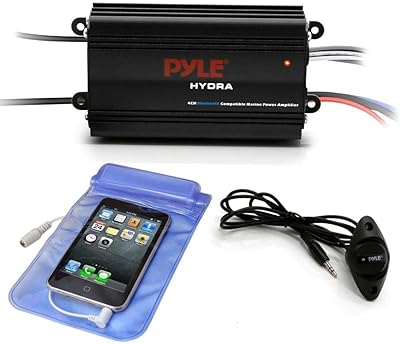
69%
83%
Value for Money
81%
Ease of Installation
67%
Sound Quality
49%
Power Accuracy
62%
Build Quality
More
Pyle PLMRMP3B 4-Channel Marine Amplifier
68%
83%
Ease of Installation
71%
Value for Money
62%
Sound Quality
68%
Waterproof Performance
44%
Actual Power Output
More
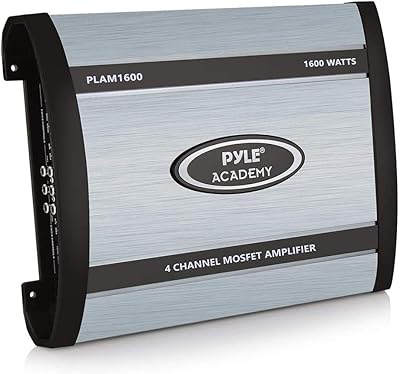
Pyle PLAM1600 4-Channel Car Amplifier
69%
74%
Value for Money
67%
Sound Quality
51%
Power Output Accuracy
83%
Ease of Installation
59%
Build Quality
More
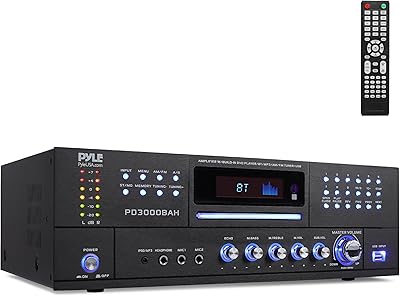
Pyle PD3000BAH 4-Channel Bluetooth Amplifier
73%
83%
Value for Money
61%
Power & Amplification
88%
Connectivity & Input Range
74%
Bluetooth Performance
77%
CD/DVD Player Functionality
More
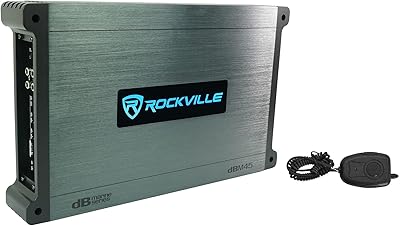
Rockville DBM45 4-Channel Marine Amplifier
71%
78%
Sound Quality
74%
Build Quality
71%
Waterproofing
69%
Power Delivery
57%
Thermal Management
More
NVX MVPA4 4-Channel Marine Amplifier
80%
91%
Waterproof Protection
88%
Power Accuracy
84%
Build Quality
83%
Sound Quality
92%
Compact Form Factor
More
Soundstream SM4.1000D 4-Channel Marine Amplifier
87%
93%
Power Output
88%
Sound Quality
90%
Build Quality
91%
Weather Resistance
87%
Ease of Installation
More

FAQ

No, and this is the most important thing to understand before buying. The 1000-watt figure is a peak rating, meaning it reflects a momentary maximum under ideal conditions, not sustained output. The continuous RMS power — which is the number that actually describes everyday performance — is significantly lower. If you are sizing speakers or planning a system around this amp, research the RMS specification specifically rather than relying on the peak figure.

Yes, that is exactly what the high-level inputs are designed for. You connect your head unit's speaker output wires directly to the amp's high-level inputs, bypassing the need for RCA jacks entirely. It is a genuinely useful feature, especially on older boats where swapping the head unit is not practical.

The IP-01 rating means it is certified to handle moisture and light splash, which covers most real boating conditions like ambient spray, condensation, and the occasional rain shower. That said, it is not submersion-proof, and you would not want to mount it somewhere that takes direct, sustained water exposure. A protected location under a console or seat is the right approach.

Yes, ventilation matters with this unit. Multiple buyers have reported that it runs noticeably warm under sustained use, and installs in tightly enclosed spaces without airflow have led to thermal shutdowns on hot days. Mount it somewhere with at least a few inches of clearance on all sides and ideally some passive airflow, and you should be fine.

Most buyers describe it as a manageable DIY project, even without professional audio install experience. The high-level inputs simplify wiring significantly, and the basic 4-channel stereo setup is fairly intuitive. The main caveat is that the included manual is thin on detail, so if you plan to use a bridged or crossover configuration, spend some time reading third-party guides or forums before you start running wire.

The manual does not specify this clearly, which has frustrated a number of buyers. For an amp in this power class, 8-gauge wire for power and ground is a commonly recommended starting point, with a correctly rated inline fuse as close to the battery as possible. In a marine environment, using tinned copper wire rather than standard automotive wire is also strongly advisable for corrosion resistance.

Yes, and this is actually one of the better use cases for this amp. You can run two channels in standard stereo mode for your full-range speakers and bridge the remaining two channels together to drive a single subwoofer with more power. The built-in crossover lets you send only low frequencies to the bridged sub channel, so you do not need a separate crossover component to do it properly.

As of the current product listing, Pyle has confirmed it is not discontinued, and it has remained in continuous production since 2004. That kind of longevity in a budget product category is relatively uncommon and suggests consistent demand.

It is rated to handle standard 4-ohm loads in normal operation, and when bridged it can work with a 4-ohm subwoofer on the bridged channels. Running 2-ohm loads is possible in some configurations but can cause the amp to run hotter and trigger thermal protection more readily — so sticking to 4-ohm speakers is the safer and more reliable approach with this unit.

In a marine environment, it genuinely matters. Bare copper or brass terminals oxidize quickly when exposed to salt air and moisture, which degrades your signal connections over time and can cause intermittent audio issues. Gold-plated terminals resist that oxidation process meaningfully, so it is a practical feature rather than a cosmetic one — especially if you plan to use this waterproof amplifier through multiple seasons.

Where to Buy