Overview

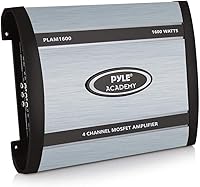
The Pyle PLAM1600 4-Channel Car Amplifier has been around since 2008, and that kind of staying power in the budget audio space says something. It puts out up to 1600W of bridgeable power in a slim chassis that won't eat up your trunk space or demand a creative install. The Class AB design strikes a reasonable middle ground between running cool and sounding decent — not audiophile territory, but genuinely better than the tinny output of a factory head unit. This Pyle amp is clearly built for the casual upgrader who wants more from their speakers without diving deep into professional-grade equipment or pricing.
Features & Benefits

The MOSFET power supply is probably the most practical spec here — it keeps the signal cleaner than older transformer-based designs and reduces the kind of distortion that makes budget amps sound harsh at higher volumes. Silver-plated RCA ports are a thoughtful touch at this price point, helping preserve signal quality from head unit to speaker. The configurable crossover network lets you run 2, 3, or 4 channels depending on your setup, and the switchable bass boost gives you a quick way to add low-end punch without any additional hardware. Built-in thermal and overload protection adds a layer of reassurance for daily use.

Best For

The PLAM1600 makes the most sense for first-time amp buyers who are replacing factory speakers in a daily driver and want a noticeable improvement without a complicated install. Its slim profile is genuinely useful when mounting space is tight — under a seat or in a shallow trunk corner. It also works well as a secondary build amp, say for a work truck or a second car where you want decent sound but aren't willing to invest heavily. Those wanting multi-channel flexibility without reading a 40-page manual will appreciate how straightforward the tri-way configuration actually is in practice.

User Feedback

Across roughly 175 ratings, this 4-channel amplifier lands at 3.8 out of 5 stars — a score that honestly reflects a split experience. Buyers consistently praise the easy installation and the compact footprint, with several noting it fit into spots where larger amps simply wouldn't. The recurring criticism, though, is worth flagging: real-world output falls noticeably short of the advertised peak wattage, which is common in this tier but still catches some buyers off guard. A few longer-term owners raised questions about build longevity, which isn't surprising given the price bracket. For casual daily use, many found it satisfactory; for demanding builds, expectations need to be set accordingly.

Pros

  • Slim, compact chassis fits easily in tight installs where most 4-channel amps simply won't.
  • Onboard crossover supports 2, 3, or 4-channel configs without any extra hardware.
  • Silver-plated RCA ports are a notably quality touch at this budget level.
  • Soft turn-on circuit makes wiring to a standard head unit clean and straightforward.
  • Switchable bass boost adds real low-end punch without needing a separate processor.
  • Built-in thermal, overload, and short circuit protection adds daily-use peace of mind.
  • LED diagnostic indicator helps beginners troubleshoot faults without guesswork.
  • The PLAM1600 has a long market track record — parts, forums, and install guides are easy to find.
  • First-time installers consistently report the setup process is approachable and well within DIY reach.
  • Subsonic filter helps protect speakers from low-frequency stress in bridged subwoofer use.

Cons

  • Advertised peak wattage is misleading — real continuous output is significantly lower than the headline figure.
  • Build longevity is a concern, with several owners reporting failures within one to two years.
  • Bass boost control is fixed rather than parametric, offering little precision for careful tuning.
  • The crossover configuration documentation is thin and can leave beginners second-guessing their settings.
  • Thermal shutoff can trigger under moderate sustained load in poorly ventilated installs.
  • No adjustable subsonic filter cutoff limits usefulness across different subwoofer configurations.
  • Ground loop hum was reported in some vehicle electrical environments, requiring extra grounding work.
  • Gain matching when bridging channels is not clearly explained, leading to imbalanced output for some users.
  • Internal component quality reflects the price tier and will not satisfy anyone used to mid-range or better gear.

Ratings

The scores below were generated by AI after analyzing verified buyer reviews for the Pyle PLAM1600 4-Channel Car Amplifier from multiple global sources, with spam, bot, and incentivized feedback actively filtered out. The result is an honest snapshot of where this Pyle amp genuinely delivers and where it falls short — no score has been softened to protect the brand.
Value for Money
74%
26%
For drivers who want to move past factory audio without spending heavily, the PLAM1600 offers a reasonable return on investment. The multi-channel flexibility and included crossover network are features you'd typically pay more for, making the overall package feel competitive at this price tier.
Some buyers felt the gap between advertised peak wattage and real-world output undermined the value proposition. If you factor in that you may need to manage expectations on power delivery, the cost-to-performance ratio feels less compelling for even mildly demanding builds.
Sound Quality
67%
33%
For daily commuters upgrading from factory speakers, the PLAM1600 delivers a clear, audible improvement in clarity and stereo separation. The MOSFET supply keeps background noise relatively low, and most casual listeners found the overall output cleaner than they expected at this budget level.
At higher volumes, some users noticed the sound could lose its composure, particularly in the low-mid range. It's not a distortion-free experience at full push, and anyone coming from a higher-end amp will notice the ceiling fairly quickly.
Power Output Accuracy
51%
49%
Under light to moderate listening conditions, the amp does provide enough headroom to drive a set of aftermarket 4-ohm speakers without obvious strain. For casual listening at moderate volumes, most users found it adequate for a commuter setup.
The 1600W figure is a peak bridgeable claim, and the actual continuous RMS output is considerably lower — a fact that caught many buyers off guard. Several reviews specifically called out the wattage discrepancy as the single biggest disappointment, especially for users who chose this amp based on the headline number.
Ease of Installation
83%
This was the most consistently praised aspect across reviews. The slim profile slides into tight spaces easily, the wiring terminals are clearly labeled, and the soft turn-on circuit means it plays nicely with standard head unit setups. First-time installers repeatedly described the process as straightforward.
A small number of users ran into ambiguity around the crossover configuration switches, finding the manual less helpful than expected. Those running a 3-channel setup in particular noted that the configuration options could benefit from clearer documentation.
Build Quality
59%
41%
The chassis feels solid enough for a budget unit, and the silver-plated RCA ports are a genuinely nice touch that signals some attention to component quality. For a secondary vehicle or a modest daily driver build, the construction holds up adequately in the short term.
Longer-term owners raised durability concerns, with some units showing signs of wear or performance degradation after extended use. The internal components reflect the price tier, and a handful of reviewers reported failures within the first year of regular use.
Thermal Management
71%
29%
The built-in thermal protection circuit does its job in normal conditions — the amp shuts down before it overheats rather than cooking itself silently. Users running the amp at moderate levels in ventilated installs reported no thermal shutoff issues during regular commutes.
In poorly ventilated installs or during extended high-volume sessions, the amp can run noticeably warm. A few buyers reported more frequent thermal shutoffs than expected, suggesting the cooling margin is not particularly generous for this design.
Signal Clarity & Noise Floor
69%
31%
The silver-plated RCA inputs and the MOSFET supply together keep the noise floor reasonably quiet for the category. Most users reported no audible hiss or alternator whine under normal driving conditions, which is a genuine plus at this price.
In some vehicle electrical environments, a faint ground loop hum was reported. It was not universal, but sensitive ears in quieter cabins did pick it up, and resolving it required additional grounding work not everyone anticipated.
Bass Performance
66%
34%
The switchable bass boost gives a quick, noticeable lift to low-end response, which many users found satisfying for genres like hip-hop or EDM without any additional equipment. Paired with a capable subwoofer in bridged mode, the low-frequency output was considered punchy for the class.
The bass boost control is fairly blunt — there is no fine-grained frequency selection, so it either feels right for your music or it overshoots. Audiophiles wanting precise bass tuning will find the control too coarse for serious calibration.
Crossover Functionality
72%
28%
Having an onboard configurable crossover that handles 2, 3, or 4-channel layouts is genuinely useful for a beginner building out a full system. It removes the need for an external crossover component in many common setups, simplifying both cost and wiring.
The crossover's frequency range and slope options are limited compared to standalone units. Users building more complex systems found it functional but basic, and the documentation on how to optimize settings for different speaker configurations was sparse.
Compact Form Factor
81%
19%
At under 18 inches long and barely 3 inches tall, this Pyle amp fits in spots where most 4-channel units simply won't. Under-seat installs, shallow trunk corners, and custom enclosure spaces are all realistic options, which is a meaningful practical advantage.
While slim, the footprint is still wide enough that some under-seat installs in smaller vehicles were tighter than buyers expected. A few noted the mounting flanges limited flexibility in unconventional install positions.
Protection Circuitry
76%
24%
Thermal, overload, and short circuit protection working together gives genuine peace of mind for daily driving use. The LED diagnostic indicator helps quickly identify the fault type, which is particularly helpful for beginners who might not otherwise know where to start troubleshooting.
Some users found the protection circuit triggered a bit conservatively — occasional nuisance shutoffs during high-demand transients that were not true fault conditions. It errs on the side of caution, which is safe but occasionally inconvenient.
Frequency Response Range
73%
27%
A 15Hz to 30kHz frequency response covers the full audible spectrum and then some, meaning the amp is not artificially limiting what your speakers can reproduce. In practice, this translates to a natural, open sound that does not feel rolled off at the extremes.
Spec-sheet frequency range and real-world accuracy at the extremes are not always the same story. At the very low end, some users found the response less controlled than the numbers suggest, especially without the subsonic filter engaged.
Subsonic Filter Effectiveness
68%
32%
The subsonic filter is a practical safeguard that not every amp at this price includes. It helps prevent speakers and subwoofers from trying to reproduce frequencies below the audible range, which can damage drivers or waste amplifier headroom in a real install.
The filter's cutoff point is fixed rather than adjustable, which limits its usefulness for fine-tuning a system. Users with specific subwoofer configurations sometimes found the fixed cutoff was either too high or too low for their particular setup.
Channel Configuration Flexibility
77%
23%
The tri-way 4/3/2 channel flexibility is a legitimate strength for a budget amp. Being able to bridge channels for a dedicated subwoofer output while still running front speakers in stereo gives beginners real system-building options without buying additional equipment.
Bridging the amp for subwoofer duty while maintaining full-range output on the remaining channels requires careful gain matching that the manual does not explain in enough detail. A few users reported imbalanced output levels when first attempting this configuration.
Long-Term Reliability
54%
46%
For users running the amp at moderate levels in a well-ventilated install, many reported trouble-free operation over a year or more of daily use. The protection circuitry does appear to prevent catastrophic failures in typical low-stress conditions.
Longer-term reliability is the most common concern in extended reviews. Several owners reported degraded performance or complete unit failure after 12 to 24 months of regular use, suggesting the internal components are not built for high-demand longevity.

Suitable for:

The Pyle PLAM1600 4-Channel Car Amplifier is the kind of purchase that makes the most sense for someone taking their first real step beyond factory audio. If you drive a daily commuter, a work truck, or a weekend vehicle and you want noticeably better sound without building a dedicated audio system, this amp fits that brief well. Its slim profile is a genuine practical advantage for anyone working with limited trunk space or trying to squeeze into an under-seat install. Beginners who want multi-channel flexibility — running front and rear speakers while bridging a channel for a small sub — will find the onboard crossover and bass boost useful without requiring external processors. It also works well as a budget solution for a second vehicle where the goal is decent sound rather than reference-quality performance.
Not suitable for:

The Pyle PLAM1600 4-Channel Car Amplifier is not the right tool for anyone building a serious or competition-grade audio setup. The advertised 1600W figure is a peak bridgeable claim, and the actual continuous output is a fraction of that number — experienced buyers who understand RMS ratings will find the real-world power delivery underwhelming for power-hungry speakers or subwoofers. Durability is a genuine concern too; longer-term reviews suggest some units show signs of performance degradation or outright failure within a couple of years of regular use, which makes it a poor investment for anyone who wants to install once and forget. If you are running high-impedance speakers, demanding component sets, or need precise crossover tuning for a complex multi-driver system, the limitations of this 4-channel amplifier will surface quickly. Audiophiles or anyone upgrading from a mid-tier or premium amp should look elsewhere.
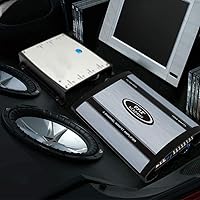
Specifications

  • Total Output: The amp delivers up to 1600W of peak bridgeable output across all channels combined, though continuous RMS output is considerably lower in real-world use.
  • Channels: Supports tri-way configuration allowing operation as a 4-channel, 3-channel, or 2-channel amplifier depending on the install.
  • Amplifier Class: Class AB design, which balances thermal efficiency and audio fidelity for everyday listening conditions.
  • Power Supply: MOSFET pulse width modulation power supply for reduced signal distortion and cleaner audio delivery to connected speakers.
  • Dimensions: The unit measures 17.91 x 10.63 x 3.07 inches, providing a slim profile suitable for space-constrained installations.
  • Weight: The amplifier weighs 7.01 pounds, making it manageable for single-person installation in most vehicle types.
  • Supply Voltage: Operates on a 12V DC supply, compatible with standard automotive electrical systems.
  • Frequency Response: Rated frequency response spans 15Hz to 30kHz, covering the full audible spectrum and extending slightly beyond it in both directions.
  • RCA Ports: Silver-plated RCA input and output ports are included to minimize signal degradation between source unit and amplifier.
  • Input Connector: Features a high-level low-impedance MOLEX input connector for direct integration with factory or aftermarket head units.
  • Crossover: Onboard configurable electronic crossover network allows users to set high-pass, low-pass, or full-range output per channel grouping.
  • Bass Boost: Includes a switchable bass boost control to increase low-frequency output without requiring an external equalizer or processor.
  • Subsonic Filter: A built-in subsonic filter helps block sub-audible frequencies that can stress speakers and waste amplifier headroom.
  • Protection: Equipped with thermal, overload, and short circuit protection circuits that shut the unit down safely under fault conditions.
  • LED Indicator: An LED diagnostic condition indicator provides a visual signal to help identify fault states during troubleshooting.
  • Turn-On Circuit: Soft turn-on circuit reduces the electrical stress of powering up and integrates cleanly with remote turn-on leads from standard head units.
  • Certification: FCC certified for use in the United States, confirming the unit meets federal radio frequency emission standards.
  • Mount Type: Designed for car mount installation, compatible with standard automotive mounting configurations in trunks, under seats, or custom enclosures.

Related Reviews
Planet Audio PL1600.4 4-Channel Car Amplifier
72%
88%
Value for Money
84%
Ease of Installation
74%
Sound Quality
58%
Power Output (Real-World)
61%
Build Quality
More
Recoil DI800.4 4-Channel Car Audio Amplifier
83%
88%
Sound Quality
92%
Power Output
65%
Thermal Management
84%
Build Quality
91%
Ease of Installation
More
Recoil DI550.4 4-Channel Car Audio Amplifier
74%
91%
Value for Money
78%
Power Output
86%
Ease of Installation
74%
Sound Quality
67%
Build Quality
More
Recoil REA600.4 4-Channel Car Audio Amplifier
84%
89%
Audio Performance
91%
Ease of Installation
85%
Sound Quality at High Volumes
62%
Heat Management
90%
Power Output
More
Planet Audio AC2400.4 4-Channel Car Amplifier
84%
95%
Power Output
89%
Sound Clarity
87%
Bass Performance
82%
Ease of Installation
65%
Thermals/Heat Management
More
Soundfy SA 400.4 4-Channel Car Amplifier
71%
78%
Value for Money
72%
Sound Quality
63%
Power Output
58%
Build Quality
81%
Thermal Management
More
Planet Audio AC1600.4 Anarchy Series 4-Channel Car Amplifier
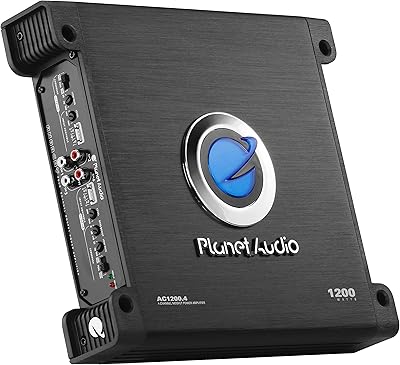
82%
94%
Power Output
88%
Sound Quality
70%
Ease of Installation
92%
Value for Money
85%
Build Quality
More
Planet Audio AC1200.4 4-Channel Car Amplifier

73%
88%
Value for Money
67%
Power Output
83%
Installation Ease
74%
Sound Quality
61%
Build Quality
More
Stetsom HL 2000.4 2-Ohm 4-Channel Car Audio Amplifier
87%
93%
Power Output
85%
Cooling System Efficiency
88%
Sound Quality
91%
Ease of Installation
82%
Durability
More
Hifonics BXX800.4 Brutus 800W RMS 4-Channel Car Audio Amplifier
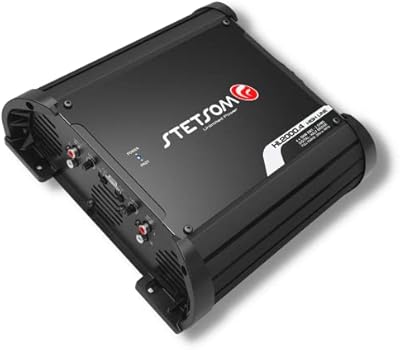
86%
88%
Sound Quality
92%
Power Output
85%
Build Quality
72%
Heat Management
89%
Ease of Installation
More

FAQ

Not in the way most people expect. The 1600W figure is a peak bridgeable claim, which represents the maximum the amp can theoretically produce in short bursts under ideal conditions. The continuous RMS output — the number that matters for real-world listening — is significantly lower. If you are sizing speakers or a subwoofer, plan around the RMS spec rather than the headline wattage.

Yes, that is one of the more useful things about it. You can bridge two channels to drive a subwoofer and use the remaining two channels for front speakers in stereo. Just make sure you set the gain and crossover correctly for each channel group, as the documentation on this particular configuration is a bit thin.

Quite possibly, yes. At just over 3 inches tall and under 18 inches long, it is genuinely slim compared to most 4-channel amps. That said, measure your available space first — the width is just over 10 inches, which can be a tighter fit in smaller vehicles with shallow under-seat clearance.

It is one of the more beginner-friendly options at this price point. The terminals are clearly laid out, the soft turn-on circuit means you just connect the remote lead from your head unit and it works, and there are plenty of install guides and forum threads online for this model given how long it has been on the market.

It works with standard 4-ohm car speakers, which covers the vast majority of aftermarket options. In bridged mode, make sure the subwoofer you connect is rated for at least 4 ohms, as bridging effectively halves the load impedance seen by the amp and running a 2-ohm sub bridged can overstress the output stage.

That is almost certainly the thermal protection circuit doing its job. It usually means the amp is either getting too hot due to poor ventilation, or it is being pushed harder than the internal components can sustain. Try moving it to a more ventilated location, reducing the gain slightly, or checking that your power and ground wiring gauges are adequate for the current draw.

No — the package includes the amplifier only. You will need to purchase a separate wiring kit that includes power cable, ground cable, remote wire, RCA cables, and an inline fuse. A basic amp wiring kit sized for the power draw of this unit is a modest additional purchase and widely available.

Some users have reported faint alternator whine or ground loop hum, particularly in vehicles with noisier electrical systems. This is not universal, but it does happen. The fix is usually a solid ground connection to bare metal close to the amp, and making sure your RCA cables are routed away from power wires. A ground loop isolator is a cheap fix if the problem persists.

The onboard crossover lets you select high-pass, low-pass, or full-range for your channel configuration. For a typical setup with front speakers and a bridged subwoofer, set the sub channels to low-pass and the speaker channels to either full-range or high-pass to prevent the speakers from straining on bass frequencies. The specific switch positions are labeled on the unit, though the manual is not especially detailed on recommended frequency settings.

It depends on what you need it for. The core technology — MOSFET supply, Class AB design, onboard crossover — has not become obsolete, and the long production run means there is plenty of real-world feedback to draw from. For a budget daily-driver install or a secondary vehicle, it is still a reasonable choice. If you are after the latest features or maximum reliability, a newer unit from a similar or higher price tier might serve you better.

Where to Buy