
Overview

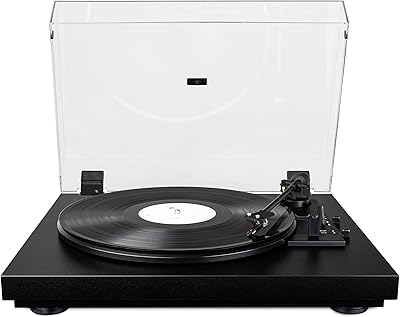
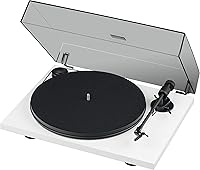
The Pro-Ject Primary E Phono Turntable is one of those rare entry points into vinyl that doesn't feel like a compromise. Pro-Ject is an Austrian manufacturer with a serious reputation — these aren't mass-market units assembled to hit a price tag, but genuinely considered decks built by people who care about how records sound. The belt-drive mechanism keeps motor vibration away from the platter, which matters more than most beginners realize. Because the built-in phono preamp lets you plug straight into powered speakers or any amp with a line input, there's no extra gear to buy on day one. The white finish is a deliberate aesthetic choice — clean, modern, and at home on a shelf next to a plant and a Spotify-free evening.

Features & Benefits

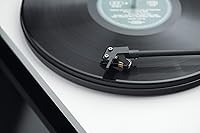
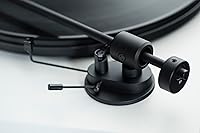
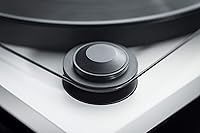
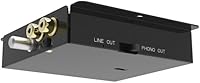
What separates the Primary E Phono from cheaper alternatives is the attention paid to the parts that actually touch your records. The pre-installed Ortofon OM cartridge arrives factory-set at the correct tracking force, removing one of the most nerve-wracking parts of turntable ownership for newcomers. The 8.6-inch aluminum tonearm is light enough to track the groove without excess wear, and rigid enough to keep the stylus from wandering — in plain terms, your records play cleanly and consistently. There's also a switchable phono/line output on the back, meaning you can add a dedicated external preamp whenever you're ready to upgrade. The manual speed change between 33 and 45 RPM is a slight inconvenience, but it keeps the motor circuit simple and less prone to long-term failure.

Best For

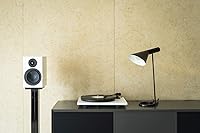
This belt-drive deck is a strong match for first-time vinyl buyers who want a real turntable — not a suitcase player — without having to research tonearm geometry before unboxing. If you already own powered speakers or an amplifier with a standard line input, setup is genuinely straightforward. Compact enough for a desk or bookshelf, it fits naturally into smaller rooms without dominating the space. It also makes a thoughtful gift for someone curious about vinyl but not yet ready to configure a full separates system. For the listener who suspects they'll eventually want to swap the cartridge or add an external phono stage, the mechanical foundation here is solid enough to make those future upgrades worthwhile.

User Feedback

Based on roughly 50 ratings, this turntable holds a 4.5-star average — respectable, though not yet a large enough sample to draw sweeping conclusions. Most buyers highlight out-of-box sound quality as the standout, noting it outperforms what they expected at this price tier. Setup earns positive marks too, though a handful of users mention that leveling the platter and balancing the tonearm takes more patience than the phrase plug-and-play implies. The felt mat and manual speed switching draw occasional mild criticism — neither is a serious flaw, but buyers used to automatic decks notice both. Those who compared it against the Debut Carbon generally position the Primary E Phono as the smarter choice for casual daily listening.

Pros

  • Trusted Austrian brand with a long track record in serious turntable manufacturing.
  • Factory-fitted Ortofon OM cartridge arrives pre-adjusted, removing a major setup headache for beginners.
  • Built-in phono preamp means no extra gear is needed to start listening immediately.
  • Switchable phono and line output keeps the deck relevant as your system grows.
  • Belt-drive design isolates motor vibration, delivering noticeably cleaner playback than same-price direct-drive rivals.
  • Aluminum tonearm is a meaningful step up from the plastic arms found on cheaper competitors.
  • Compact dimensions fit naturally on a shelf, desk, or in a smaller living space.
  • Dust cover hinges are adjustable and feel solid — not an afterthought like on budget decks.
  • Manual speed mechanism is simple, with fewer electronics to wear out or fail over time.
  • Clean white aesthetic suits minimalist setups and makes it a genuinely presentable gift.

Cons

  • Changing speeds between 33 and 45 RPM requires manually moving the belt, which interrupts listening sessions.
  • The built-in phono stage is convenient but noticeably outperformed by even a modest dedicated external preamp.
  • The included felt mat is basic and some users find swapping it for an aftermarket option improves sound noticeably.
  • With around 50 ratings at time of writing, the feedback pool is still relatively small for a confident consensus.
  • No automatic tonearm return or stop — fully manual operation requires you to be present at the end of each side.
  • Leveling and tonearm balance require patience; the setup is not as instant as the plug-and-play framing might suggest.
  • The stainless steel bearing and aluminum arm are solid, but cartridge and preamp upgrades will eventually outpace the deck itself.
  • Only available as a belt-drive unit, so buyers wanting the speed consistency of direct drive need to look at other options.

Ratings

Our AI rating engine analyzed verified buyer reviews for the Pro-Ject Primary E Phono Turntable from global sources, actively filtering out incentivized submissions, duplicate accounts, and bot-generated feedback to surface what real owners genuinely think. Scores reflect a balanced picture — the areas where this belt-drive deck consistently impresses, and the friction points that come up repeatedly in honest user accounts. Both strengths and frustrations are weighted into every number below.

Sound Quality
86%
Most buyers are genuinely surprised by how clean and grounded the playback sounds straight out of the box, especially during quieter late-night listening sessions. The belt-drive isolation keeps the noise floor low, and the Ortofon cartridge tracks grooves with enough precision that familiar records reveal details some users had never noticed before.
The built-in phono stage, while convenient, does introduce a subtle ceiling on dynamics and imaging that becomes apparent when compared side-by-side with an external preamp. A handful of more experienced listeners noted the sound felt slightly polite or restrained compared to pricier decks in the same brand family.
Build Quality
81%
19%
The aluminum tonearm and stainless steel main bearing give the deck a solidity that feels noticeably above its price tier, and most owners comment that it looks and feels more substantial in person than photos suggest. The chassis does not flex or creak, which matters when you are carefully dropping a stylus onto a record.
The plinth itself is MDF with a plastic finish rather than anything premium, and some users noted minor cosmetic inconsistencies on the white surface around the edges. The dust cover, while functional, is noticeably thinner than the covers found on more expensive decks and can rattle faintly at higher listening volumes.
Ease of Setup
72%
28%
Compared to sourcing and aligning a separate cartridge from scratch, having the Ortofon OM arrive factory-mounted and pre-adjusted removes the single most intimidating step for a first-time owner. Most buyers report having music playing within 30 to 45 minutes of opening the box, which is a reasonable expectation for a deck at this level.
The process is not as turnkey as the plug-and-play framing implies — tonearm balancing and platter leveling require patience, and the instructions, while included, leave some gaps that send new owners to YouTube tutorials. A few buyers reported minor confusion around belt routing during initial setup.
Cartridge Performance
83%
The Ortofon OM is a respected entry-level moving-magnet cartridge, and having it pre-installed at the correct tracking force means records play cleanly from the first listen without the risk of mistracking damage that poorly set-up cartridges can cause. Users regularly cite it as a genuine value-add over similarly priced turntables that ship with anonymous no-name styli.
The OM in its base configuration is the starting point of the Ortofon range, not a destination, and audiophile-leaning buyers will feel the urge to upgrade the stylus within a year. A small number of users noted slight sibilance on heavily compressed pressings, which is characteristic of the cartridge rather than the deck.
Phono Preamp
67%
33%
For casual listeners and beginners, the built-in MM phono stage is entirely adequate — it produces a warm, listenable signal without any obvious coloration, and removes the need to budget for or research a separate component. Paired with a decent set of powered bookshelf speakers, it holds up well for everyday listening.
Experienced listeners switching from a dedicated external stage will notice a reduction in soundstage depth and dynamic range fairly quickly. The stage is a convenience feature first and a performance component second, and the switchable output only highlights how much headroom users are leaving on the table by not upgrading it.
Speed Stability
78%
22%
Measured wow and flutter figures sit at 0.29% and 0.27% for the two speeds respectively, which translates to stable, pitch-consistent playback across most musical genres. Listeners playing classical piano or solo voice recordings — formats that expose pitch drift most harshly — generally report no distracting wobble during normal use.
Speed variance of around 0.8% at 33 RPM is acceptable but not class-leading, and a small number of users with well-trained ears noticed very subtle pitch inconsistencies on longer sustained notes. This is unlikely to bother casual listeners but is worth knowing for anyone with a particularly critical ear.
Speed Switching
54%
46%
The manual belt-shift approach keeps the motor circuit simple and eliminates the electronic switching components that tend to degrade or fail on cheaper automatic-speed decks over time. For listeners who primarily play LPs at 33 RPM, this limitation rarely surfaces in day-to-day use.
Switching to 45 RPM for 7-inch singles requires lifting the platter mat, physically repositioning the belt on the motor pulley, and replacing everything — a 60-second interruption that owners who regularly spin singles find genuinely irritating. Several reviewers flagged this as the single most frustrating aspect of living with the deck long-term.
Value for Money
82%
18%
When you factor in the included Ortofon cartridge, the built-in phono stage, and the brand credibility behind the product, the overall package represents a competitive offering at this price point relative to similarly spec'd alternatives. Most owners feel they received more than they paid for, particularly when comparing the tonearm quality against budget rivals.
Buyers who later discover they want an external preamp and a better stylus may feel the total cost of ownership climbs faster than expected. A handful of users noted they could have purchased an entry-level Debut-series deck with a stronger cartridge for a modest premium, raising reasonable questions about the ceiling of this specific configuration.
Aesthetic Design
88%
The white finish is clean and deliberate — it sits naturally in modern, minimal setups and looks far more considered than the generic black-box aesthetic that dominates this price category. Several owners specifically mention it as a reason they chose this model over functionally similar alternatives.
The white surface shows fingerprints and light dust more readily than a matte black finish, and a few users noted that the bright colorway felt out of place in a more traditional warm-toned listening room. The design choice is polarizing in a minor way — it is very right for some spaces and slightly wrong for others.
Tonearm Quality
84%
The 8.6-inch aluminum arm is a meaningful step above the plastic arms found on entry-level competitors, offering lower resonance and more stable stylus tracking across the record surface. Users who have owned cheaper decks previously tend to notice the difference immediately in the form of quieter groove noise and more consistent stereo imaging.
The arm lacks the anti-skating adjustment precision of higher-tier Pro-Ject models, and fine-tuning it requires some patience. A small number of users reported that after extended use, the bearing felt marginally less smooth than when new, though this did not appear to materially affect playback quality.
Dust Cover
73%
27%
The adjustable hinges are a genuine quality-of-life feature — they allow the cover to stay propped at a comfortable angle during playback, which is something owners notice every single time they use the deck. It fits securely and provides adequate protection for the stylus and platter when the turntable is not in use.
The acrylic is on the thinner side and transmits vibration more easily than the covers on more expensive decks, which can cause faint resonance at louder listening volumes. A few users noted minor flexing when opening or closing the cover, which adds a slightly less premium feel to an otherwise solid product.
Upgrade Path
79%
21%
The switchable phono and line output is a genuinely thoughtful inclusion — it means the deck can grow with a buyer's system rather than becoming obsolete the moment they want to add an external preamp. The standard half-inch cartridge mount and the Ortofon OM stylus upgrade ecosystem also give owners clear, affordable next steps.
At some point the tonearm and motor assembly will become the limiting factor for serious upgraders, which means the deck functions better as an entry point than a long-term platform. Buyers planning to invest significantly in cartridge upgrades may eventually find more value in starting with a more capable mechanical base.
Noise Floor
77%
23%
Belt-drive isolation does its job well here — the motor contributes very little audible hum or rumble to the signal, and most users playing records in a quiet room report a clean, dark background between musical passages. This is one of the clearest practical advantages over direct-drive decks at the same price.
The included felt mat does not provide the same level of static control as an aftermarket rubber or cork mat, and a few users noticed occasional static crackle when removing records in dry environments. Replacing the mat is inexpensive but slightly annoying for buyers who expected everything in the box to perform optimally.
Footprint & Portability
85%
At 420 x 330mm and roughly 3kg, this belt-drive deck fits comfortably on an IKEA Kallax shelf, a bedside table, or a compact desk setup without dominating the space. Its light weight also makes it easy to reposition between rooms, which apartment dwellers particularly appreciate.
The dust cover adds meaningful height when open, which can be a factor on low shelves or in tight cabinet setups. A handful of buyers also noted that the relatively light chassis requires a stable, level surface — placing it on an uneven or vibration-prone shelf can affect playback consistency.

Suitable for:

The Pro-Ject Primary E Phono Turntable is the kind of deck that makes the most sense for someone who is serious about getting into vinyl but doesn't want to spend a weekend watching setup tutorials before playing their first record. It works especially well for listeners who already own a pair of powered speakers or an integrated amplifier, since the built-in phono preamp means everything connects without sourcing additional components. Apartment dwellers and small-room listeners will appreciate its compact footprint — it fits comfortably on a desk or shelf without taking over the space. The factory-fitted Ortofon cartridge is a genuine time-saver for first-timers who would otherwise face the daunting task of cartridge alignment right out of the box. It also suits the kind of buyer who is thinking one or two steps ahead: the switchable output means upgrading to an external phono stage later is a real option, not an afterthought. And if you are shopping for a vinyl-curious friend or family member, this is one of the few turntables at this tier you can gift with confidence.

Not suitable for:

The Pro-Ject Primary E Phono Turntable is not the right fit for experienced listeners who already own a quality external phono stage and want a mechanical platform to match it — at this level, the built-in preamp is a convenience feature, not a high-end one, and the overall component spec reflects the price accordingly. DJs or anyone who needs direct-drive reliability, instant start-up torque, or pitch control should look elsewhere entirely; belt-drive decks like this one are built for home listening, not performance use. If you are the type of person who regularly switches between record formats and finds manually lifting and repositioning a belt to change speeds genuinely irritating, that friction will add up over time. Buyers expecting a fully automatic experience — auto-start, auto-return, auto-stop — will also be disappointed, as this is a purely manual deck. Those building a high-resolution audiophile system from the ground up and expecting the cartridge and tonearm to punch above the price point will likely feel the ceiling of this deck within a year or two.

Specifications

  • Drive Type: Belt-drive mechanism isolates the motor from the platter to minimize vibration and background noise during playback.
  • Speeds: Supports 33 and 45 RPM playback with manual belt repositioning required to switch between the two.
  • Cartridge: Ships with a factory-installed Ortofon OM moving-magnet cartridge, pre-adjusted to a tracking force of 18mN.
  • Tracking Force: Adjustable tracking force range spans 0 to 25mN, with the stylus set at 18mN from the factory.
  • Tonearm: 8.6-inch aluminum tonearm with an effective length of 218.5mm, an overhang of 22.0mm, and an effective mass of 8.0g.
  • Output: Rear-panel RCA output is switchable between phono level and line level to accommodate systems with or without a dedicated phono input.
  • Platter: 300mm platter with a felt mat included to cushion records and reduce static during play.
  • Main Bearing: Stainless steel main bearing provides a stable, low-friction foundation for the platter.
  • Wow & Flutter: Measured at 0.29% at 33 RPM and 0.27% at 45 RPM, indicating stable speed consistency during playback.
  • Speed Variance: Speed accuracy is rated at 0.8% at 33 RPM and 0.7% at 45 RPM under standard operating conditions.
  • Power Draw: Maximum power consumption is 4.5 watts, making it an energy-efficient choice for everyday use.
  • Dimensions: Unit measures 420 x 112 x 330mm (W x H x D), suitable for standard shelves and smaller listening spaces.
  • Weight: Weighs approximately 3kg, light enough to reposition easily but stable enough for consistent playback performance.
  • Dust Cover: Removable dust cover with adjustable hinges is included to protect the platter and stylus when the deck is not in use.
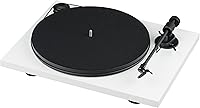
  • Color: Available in white, offering a clean, modern finish suited to minimalist or contemporary room setups.
  • Counterweight: Supplied counterweight accommodates cartridge masses between 3g and 7g for correct tonearm balance.
  • Power Supply: Comes with a dedicated external power supply unit designed to further reduce electrical interference from reaching the motor.

Related Reviews
Pro-Ject T1 Phono SB Turntable
77%
93%
Ease of Setup
78%
Sound Quality
67%
Build Quality
82%
Value for Money
84%
Design & Aesthetics
More
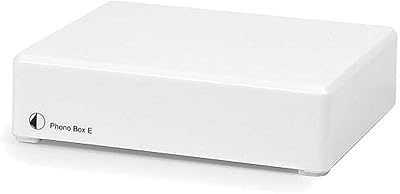
Pro-Ject Phono Box E Phono Preamplifier
79%
83%
Sound Quality
88%
Noise Floor
74%
Build Quality
91%
Ease of Setup
86%
Value for Money
More
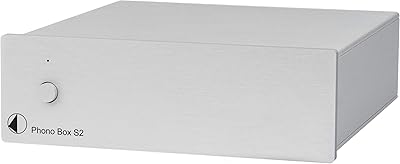
Pro-Ject Phono Box S2 MM/MC Phono Preamp
86%
94%
Sound Quality
92%
Adjustability (Gain & Impedance)
65%
Build Quality
88%
Ease of Use
89%
Value for Money
More
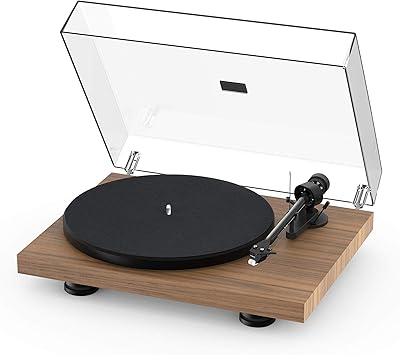
Pro-Ject Automat A1 Fully Automatic Turntable
72%
91%
Ease of Setup
83%
Automatic Operation
74%
Sound Quality
71%
Build Quality
54%
Quality Consistency
More
Pro-Ject Debut Carbon EVO
86%
93%
Build Quality
91%
Audio Clarity
88%
Motor Stability
86%
Ease of Use
84%
Value for Money
More
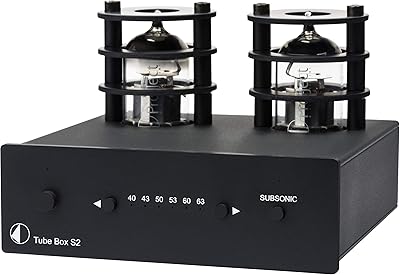
Pro-Ject Tube Box S2 Phono Preamplifier
83%
91%
Sound Quality
88%
Build Quality
93%
Cartridge Compatibility
89%
Gain & Loading Flexibility
82%
Noise Performance
More
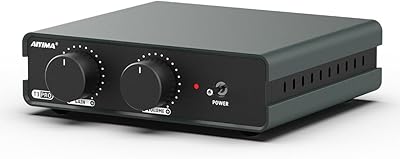
AIYIMA T3 Pro MM/MC Phono Preamp
81%
93%
Cartridge Compatibility
91%
Front Panel Usability
88%
MC Impedance Adjustment
86%
Build Quality & Housing
84%
Op-Amp Upgradability
More
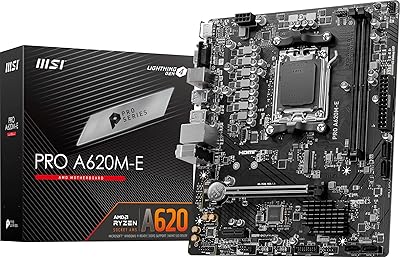
MSI PRO A620M-E mATX Motherboard
70%
88%
Value for Money
91%
Stability & Reliability
93%
Ease of Installation
84%
BIOS Experience
87%
CPU Compatibility & Longevity
More
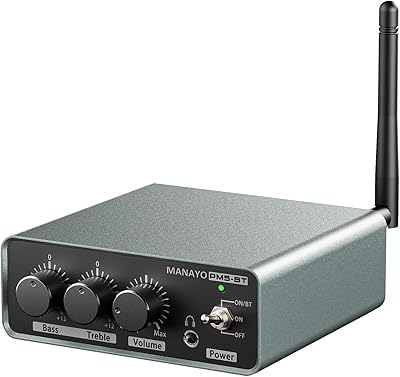
MANAYO PM5BT Bluetooth Phono Preamplifier
76%
83%
Sound Clarity
78%
Bluetooth Transmission Quality
81%
Ease of Setup
61%
Bluetooth Transmit-Only Clarity
86%
Build Quality
More
Pro-Ject Pre Box S2 Digital Preamplifier
77%
91%
Sound Quality
84%
Build Quality
58%
Windows Compatibility
93%
macOS Compatibility
88%
High-Res Format Support
More

FAQ

No — the Pro-Ject Primary E Phono Turntable has a built-in phono stage, so you can plug it straight into powered speakers or any amplifier with a standard line input. If you later decide to upgrade to a dedicated external preamp, you just flip the output switch on the back to line level and connect the new unit.

You need to manually move the drive belt between two positions on the motor pulley. It only takes about 30 seconds once you know where to feel for the belt, but it does mean lifting the platter mat to access it. It is a minor hassle if you regularly play 7-inch singles, but for most casual listeners it rarely comes up.

The cartridge arrives factory-fitted and pre-set to the correct tracking force of 18mN, which is right in the middle of the recommended range. You should still balance the tonearm with the counterweight when you first set up the deck, but the cartridge alignment itself is done for you, which saves a lot of frustration for first-timers.

Not directly — this belt-drive deck outputs an analog RCA signal, so you would need a Bluetooth transmitter that accepts a line-level RCA input to bridge the connection. Most people pair it with wired powered speakers or a conventional amplifier, which is the simpler and more reliable path for good sound.

It is more involved than a simple unbox-and-play experience, but not overwhelmingly so. The main steps are attaching the counterweight, balancing the tonearm, placing the belt, and leveling the deck. Pro-Ject includes instructions, and there are clear video guides online. Budget around 20 to 30 minutes and take it slowly the first time.

You can absolutely upgrade. The Ortofon OM series is a well-designed system where you can swap just the stylus tip for a better-performing version without replacing the entire cartridge body. If you want to move to a completely different cartridge, the standard half-inch mount on the tonearm accepts most MM cartridges in the compatible mass range.

That depends on your receiver. If it has a dedicated phono input, set the deck's output switch to phono and plug straight in. If it only has line-level inputs (CD, AUX, etc.), switch the output to line level and use any of those inputs. Either way, you are covered without buying anything extra.

It is a solid dust cover for this price tier. The hinges are adjustable, which is a detail that cheaper decks often get wrong — a cover that only opens to one fixed angle or pops off its hinges gets old quickly. It is not thick acrylic, but it does the job and stays in place.

The Debut Carbon is a meaningful step up in components — it uses a carbon fiber tonearm and ships with a slightly better stylus — but it also costs noticeably more and does not include a built-in phono stage. If you already have an external preamp or a phono-equipped receiver, the Debut Carbon makes sense. If you are starting fresh and want everything in one box, the Primary E Phono is the more practical entry point.

No — the deck only supports 33 and 45 RPM, so 78 RPM shellac records are not compatible. Beyond the speed limitation, 78s also require a different stylus profile to play safely without damaging the grooves, so a dedicated 78-capable turntable is the right tool for that format.

Where to Buy

AVcorp Poland
In stock $324.28