Overview

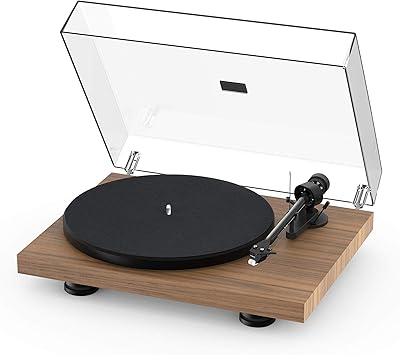
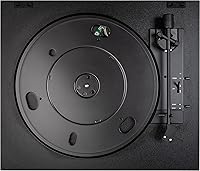
The Pro-Ject Automat A1 Fully Automatic Turntable is Pro-Ject's answer to a simple question: what if a well-engineered turntable just worked, without any fuss? Sitting at the entry level of the Austrian brand's lineup, it targets people who want to play records — not tinker with alignment protractors. The design is understated and modern, built around a resonance-damped wooden chassis that keeps things looking tidy on a shelf. Unboxing it is refreshingly quick; the tonearm comes pre-fitted with an Ortofon cartridge, so the gap between opening the box and dropping the needle is measured in minutes, not hours. At this price point, that kind of out-of-the-box readiness is genuinely rare.
Features & Benefits

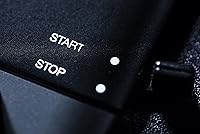
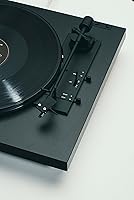
The standout feature of this automatic turntable is right there in the name: fully automatic operation. At the end of a side, the tonearm lifts, swings back, and parks itself — a small thing that matters enormously if you tend to drift off mid-album or simply don't want to worry about a stylus dragging across a label. The Ortofon OM10 cartridge arrives pre-fitted and aligned, tracking records with an elliptical stylus that already outperforms most budget carts. A built-in MM phono stage means you can plug straight into any amp with an aux input; if you later own a dedicated preamp, it's switchable. Electronic speed change between 33 and 45 RPM is handled by a button — no belt-swapping required.

Best For

The Automat A1 makes most sense for first-time vinyl buyers who want a respectable starting point without a steep learning curve — no cartridge alignment, no anti-skate wrestling, no extra preamp to budget for. It also suits people coming back to vinyl after years away, particularly those who remember automatic decks fondly and have no desire to babysit a tonearm. As a gift, it checks the right boxes: recognizable brand, tidy packaging, and zero configuration headaches for the recipient. Casual listeners who just want music in the room will be equally happy. Where it fits less neatly is with dedicated audio enthusiasts who want to fine-tune every parameter — that crowd has better-suited options at a similar spend.

User Feedback

Across roughly 145 ratings, this Pro-Ject deck lands at 3.6 out of 5 — honest enough to warrant a closer look. Buyers who are happy tend to highlight effortless setup and the reliable automatic return, with several noting the build feels more substantial than the price suggests. The criticisms, though, are consistent enough to take seriously: a subset of owners have reported speed wobbles and a faint but audible motor hum on their specific units, pointing to quality control inconsistency rather than a universal flaw. A few buyers also note the bundled phono cable is unremarkable and worth replacing early on. The overall picture is a deck with genuine strengths that depends somewhat on the unit you receive.

Pros

  • Fully automatic tonearm return protects your stylus and records without any intervention needed.
  • The Ortofon OM10 cartridge arrives pre-fitted and aligned — a genuinely capable starter cartridge.
  • Built-in phono stage means you can plug straight into any amplifier or powered speakers immediately.
  • Electronic speed switching between 33 and 45 RPM is handled with a single button — no belt swapping.
  • The resonance-damped wooden chassis keeps playback noticeably cleaner than cheaper plastic-bodied decks.
  • Compact footprint fits comfortably on a standard shelf or media unit without dominating the space.
  • Includes everything needed to get started: dust cover, felt mat, 7-inch adapter, and phono cable.
  • The phono stage is switchable, so upgrading to an external preamp later is a straightforward step.
  • Pro-Ject's Austrian engineering pedigree gives the Automat A1 more credibility than most decks at this tier.
  • Setup time from unboxing to playing a record is genuinely measured in minutes, not hours.

Cons

  • Quality control inconsistency means some units arrive with speed wobble or audible motor noise.
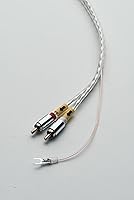
  • The bundled phono cable is underwhelming and worth replacing as an early, inexpensive upgrade.
  • At this price point, competing manual decks often offer better raw audio performance for critical listening.
  • The automatic mechanism adds mechanical complexity that can be a failure point over years of heavy use.
  • No 78 RPM support, which matters for collectors of older shellac records.
  • The built-in phono stage, while convenient, is not strong enough to satisfy buyers with better amplification already in place.
  • User reviews skew lower than expected for the brand, with a 3.6-star average flagging recurring unit-to-unit variance.
  • The felt mat is basic and some users find swapping it out necessary for improved resonance control.
  • No pitch adjustment or fine speed trimming, which limits usefulness for DJs or anyone needing precise tempo control.

Ratings

Our AI-generated scores for the Pro-Ject Automat A1 Fully Automatic Turntable are derived from analyzing verified buyer reviews across global markets, with spam, bot submissions, and incentivized feedback actively filtered out before scoring. Each category reflects the honest spread of real user experiences — strengths are credited where earned, and recurring pain points are scored without softening. The result is a transparent picture of where this automatic turntable genuinely delivers and where it falls short of expectations.
Ease of Setup
91%
Buyers consistently describe getting from unboxing to playing a record in under fifteen minutes, with no cartridge alignment or manual adjustments required. The pre-fitted Ortofon cartridge and included phono cable eliminate the two steps that trip up most newcomers, and the multilingual guide covers the basics clearly.
A small number of users found the dust cover hinge alignment fiddly straight out of the box, and a few noted the setup guide skips over the phono stage toggle switch without adequate explanation, causing brief confusion about which mode to use.
Automatic Operation
83%
The tonearm return mechanism is the feature buyers praise most consistently — it lifts cleanly at the end of a record side and parks reliably, which is genuinely useful for listeners who put music on while cooking, reading, or falling asleep. For new vinyl owners, it removes the anxiety of accidentally dragging a needle across a label.
A portion of reviewers noted that the automatic cueing action feels slightly mechanical rather than fluid, and on a handful of units the arm did not return cleanly every time, suggesting some variance in the mechanism's calibration between production batches.
Sound Quality
74%
26%
For casual listening in a living room context, the Automat A1 sounds noticeably cleaner than entry-level plastic-chassis rivals, with the Ortofon OM10 retrieving enough detail to make well-pressed records genuinely enjoyable. The damped platter keeps the noise floor reasonably low, and stereo imaging holds up well on vocal-led recordings.
Listeners who sit closer or have more resolving speakers start to notice the ceiling fairly quickly — the built-in phono stage compresses some of the dynamic range, and the overall presentation lacks the openness that similarly priced manual decks with better tonearms can deliver.
Build Quality
71%
29%
The wooden chassis feels noticeably more substantial than competing decks at this price tier, and the aluminium tonearm and platter contribute to a product that looks and feels more expensive than its entry-level positioning suggests. Most buyers describe the physical impression as reassuringly solid.
The dust cover plastic draws criticism for feeling thin relative to the chassis, and some reviewers noted minor finish inconsistencies around the plinth edges on their units. The bundled phono cable also feels budget-grade compared to the rest of the assembly.
Quality Consistency
54%
46%
When a well-calibrated unit arrives, buyers are largely satisfied with its performance and reliability over the first months of use. Those with good experiences tend to report steady, trouble-free operation with no mechanical issues requiring intervention.
This is the most polarizing aspect of ownership: a meaningful percentage of reviewers received units with audible motor hum, speed instability, or tonearm calibration issues that were present from day one. The variance between units is wide enough to drag the overall rating down significantly and warrants buying from a retailer with a clear returns policy.
Cartridge & Stylus
82%
18%
The Ortofon OM10 is a genuinely respectable starting cartridge — not a throwaway inclusion — and its elliptical stylus tracks record grooves with more precision than the conical styli found on many rivals at this price. It also opens a clear upgrade path: swapping to an OM20 or OM30 stylus tip is a tool-free improvement available down the line.
A few buyers with more discerning ears found the OM10 a touch lean in the low midrange on certain pressings, and those coming from higher-end setups may find themselves wanting to upgrade the stylus within the first year of ownership.
Built-in Phono Stage
67%
33%
For buyers connecting to a basic stereo receiver or a pair of powered bookshelf speakers, the onboard phono stage does the job without any extra boxes or cables — it is genuinely convenient and covers the needs of most casual listeners perfectly well.
Anyone running a better amplifier will likely notice the built-in stage acting as a bottleneck; the switchable bypass is a welcome option in theory, but it assumes the buyer already owns a separate preamp. At this price tier, the phono stage sounds slightly flat compared to dedicated budget preamps costing a fraction more.
Speed Stability
61%
39%
On units that arrive correctly calibrated, speed is stable enough for comfortable listening across full album sides, with no pitch drift noticeable on typical pop, rock, or jazz recordings under normal conditions.
Speed inconsistency is one of the most frequently cited complaints from dissatisfied buyers — some report wow audible on sustained piano or vocal notes, and others describe a slow drift over the course of a side. Whether this reflects a systemic motor issue or batch variance is difficult to determine from reviews alone, but it is cited often enough to be a genuine concern.
Value for Money
69%
31%
When the unit performs as intended, buyers generally feel the combination of a reputable brand, a pre-fitted Ortofon cartridge, and a built-in phono stage represents fair value for a fully automatic deck. The convenience premium feels justified compared to manual decks that require additional purchases to reach the same plug-and-play result.
The 3.6-star average rating pulls the value perception down considerably — buyers who received problematic units feel strongly that the price is not warranted given the quality control lottery. Competitors offering more consistent unit-to-unit reliability at comparable prices make the value argument harder to land cleanly.
Design & Aesthetics
84%
The understated modern look with the wooden plinth and black finish earns consistent praise for fitting naturally into contemporary living room setups. Buyers frequently describe it as looking more premium on a shelf than the price suggests, and the compact footprint means it works on smaller furniture without dominating the space.
Those who prefer a more classic or retro turntable aesthetic may find the design a little anonymous. The dust cover, while functional, is visually the weakest element — the plastic quality does not quite match the solidity of the base unit.
Noise Floor & Hum
58%
42%
Buyers with quiet units report a clean, low-noise listening experience — the resonance-damped chassis and damped platter do contribute meaningfully to reducing vibration-induced noise compared to cheaper alternatives without these materials.
Motor hum is a recurring complaint across a notable share of reviews, ranging from a faint background buzz to an audible mechanical tone that persists through listening. This is closely tied to the quality control variance issue and represents a significant risk factor that prospective buyers should weigh carefully.
Included Accessories
72%
28%
The box includes everything a first-time buyer genuinely needs: dust cover, felt mat, 7-inch single adapter, and a phono cable — there is nothing missing that would force an immediate additional purchase before playing a record.
The included phono cable is widely regarded as the weakest item in the box and is frequently the first thing buyers replace. The felt mat is similarly basic, and a small number of users noted the 7-inch adapter fit was slightly loose on their unit.
Upgrade Potential
79%
21%
The Ortofon OM cartridge family's modular stylus design makes a meaningful sonic upgrade as simple as snapping on a higher-spec stylus tip — no tools, no alignment, no additional setup. The switchable phono stage also means the deck grows with the buyer if they invest in a better external preamp later.
Beyond the stylus and phono stage, the upgrade path narrows quickly — the tonearm is fixed and the automatic mechanism limits the ability to swap cartridges freely the way a manual deck allows, which constrains long-term tinkering options for those whose interest in vinyl deepens over time.
Long-term Reliability
63%
37%
Buyers who have owned their unit for over a year without issues describe it as consistent and low-maintenance, with the automatic mechanism functioning reliably and the belt showing no signs of early degradation under regular use.
The automatic mechanism introduces more moving parts than a manual deck, and longer-term reliability data in the review pool is thinner than for established rivals. Some buyers expressed uncertainty about parts availability and service options if the mechanism requires repair outside warranty.

Suitable for:

The Pro-Ject Automat A1 Fully Automatic Turntable is built for people who want to listen to records, not spend weekends reading setup guides. It makes the most sense for first-time vinyl buyers who have no interest in learning cartridge alignment or anti-skate adjustment — everything arrives pre-configured and ready to play. Returning listeners who owned a fully automatic deck in the 1980s and simply want that same no-fuss convenience back will feel right at home. It also works well as a living room or apartment setup where the turntable connects straight to a receiver or powered speakers without needing an extra preamp box cluttering the shelf. As a gift for someone curious about vinyl, it is hard to fault: the brand carries genuine credibility, the packaging feels considered, and the recipient can be playing records within minutes of unwrapping it.

Not suitable for:

Anyone coming at this with serious audiophile intentions will likely find the Automat A1 frustrating before long. The automatic mechanism, while convenient, adds mechanical complexity that dedicated manual decks avoid entirely, and the built-in phono stage — though switchable — is not the strongest argument for spending at this level if pure sound quality is the priority. Buyers who already own a good external preamp will get more mileage out of a manual belt-drive deck with a better tonearm at a comparable price. The quality control reports scattered across user reviews are also worth weighing: this is not a deck where every unit performs identically, and someone investing in a long-term vinyl setup deserves more consistency. If you are comparing options and considering something like the Audio-Technica AT-LP120, know that the AT-LP120 offers direct drive and a more proven reliability track record, which matters if dependability is your top concern.

Specifications

  • Drive Type: Belt drive with fully automatic tonearm operation, meaning the arm lifts and returns to rest at the end of every record side without manual input.
  • Playback Speeds: Supports 33 and 45 RPM with electronic speed switching controlled by a button — no belt repositioning is required between speeds.
  • Tonearm: Ultra-light-mass 8.3-inch aluminium tonearm with a carbon-fibre-reinforced anti-magnetic headshell and an effective arm length of 211 mm with 19.5 mm overhang.
  • Cartridge: Ortofon OM10 moving magnet cartridge with an elliptical stylus profile, factory-fitted and pre-aligned at the manufacturing stage.
  • Phono Stage: Built-in switchable moving magnet (MM) phono stage with gold-plated RCA output connectors, allowing direct connection to amplifiers without a separate preamp.
  • Platter: Damped aluminium platter designed to reduce resonance and minimize wow and flutter during playback.
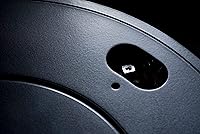
  • Chassis: Resonance-damped wooden chassis with a modern finish, engineered to absorb vibration and isolate the platter from external interference.
  • Wow & Flutter: Measured at ±0.27% at 33 RPM and ±0.25% at 45 RPM, indicating stable platter rotation with minimal audible pitch variation under normal conditions.
  • Signal-to-Noise: Signal-to-noise ratio of 65 dB, which represents a reasonably quiet background noise floor for an entry-level deck with a built-in phono stage.
  • Dimensions: The unit measures 14.37 × 16.93 × 5.12 inches (W × D × H), making it compact enough to fit on a standard media shelf or sideboard.
  • Weight: The turntable weighs 12.32 pounds, giving it a solid, planted feel on a shelf without being unwieldy to position or move.
  • Power Supply: Ships with a universal 15V DC / 0.8A power supply compatible with 110–240V mains, suitable for use in North America, Europe, and most other regions.
  • Power Consumption: Draws just 1.5 W during operation, making it one of the more energy-efficient options in the entry-level turntable category.
  • Included Accessories: Box includes a dust cover, felt mat, 7-inch single adapter, pre-fixed Connect-IT E phono cable, and a multilingual setup guide.
  • Connectivity: Outputs via a pair of gold-plated RCA connectors suitable for connection to any integrated amplifier, AV receiver, or preamplifier with an aux or phono input.
  • Compatibility: Compatible with integrated amplifiers, receivers, and preamplifiers fitted with an aux input; no dedicated phono input is required on the receiving device when using the built-in stage.
  • Manufacturer: Designed and manufactured by Pro-Ject Audio Systems, an Austrian company with a long-standing reputation in the affordable high-fidelity turntable market.

Related Reviews

Dual CS 429
Dual CS 429
82%
91%
Automatic Tonearm Operation
88%
Build Quality
84%
Sound Quality
86%
Vibration & Interference Isolation
83%
Speed Consistency
More
Pro-Ject Debut Carbon EVO
86%
93%
Build Quality
91%
Audio Clarity
88%
Motor Stability
86%
Ease of Use
84%
Value for Money
More
Pro-Ject T1 Phono SB Turntable
77%
93%
Ease of Setup
78%
Sound Quality
67%
Build Quality
82%
Value for Money
84%
Design & Aesthetics
More
Pro-Ject Primary E Phono Turntable
78%
86%
Sound Quality
81%
Build Quality
72%
Ease of Setup
83%
Cartridge Performance
67%
Phono Preamp
More
Denon DP-3000NE Fully Automatic Analog Turntable
83%
93%
Build Quality
88%
Sound Performance
67%
Value for Money
91%
Tonearm Performance
89%
Automatic Mechanism
More
Audio-Technica AT-LP60X
78%
94%
Ease of Setup
78%
Sound Quality
72%
Build Quality
91%
Automatic Operation
88%
Value for Money
More
Denon DP-400
Denon DP-400
81%
86%
Sound Quality
78%
Build Quality
93%
Ease of Setup
84%
Tonearm Performance
81%
Speed Accuracy
More
Pro-Ject Pre Box S2 Digital Preamplifier
77%
91%
Sound Quality
84%
Build Quality
58%
Windows Compatibility
93%
macOS Compatibility
88%
High-Res Format Support
More
Victrola Automatic Bluetooth Turntable
77%
93%
Ease of Setup
91%
Automatic Operation
78%
Sound Quality (Wired)
67%
Bluetooth Performance
63%
Build Quality
More
Pro-Ject Phono Box E Phono Preamplifier
79%
83%
Sound Quality
88%
Noise Floor
74%
Build Quality
91%
Ease of Setup
86%
Value for Money
More

FAQ

No, the Automat A1 has a built-in MM phono stage, so you can connect it directly to any amplifier or receiver using the aux input. If you already own a dedicated external preamp and prefer to use it, you can switch the built-in stage off via a toggle on the unit.

The Ortofon OM10 cartridge is factory-fitted and pre-aligned at the point of manufacture, so there is nothing to adjust out of the box. This is one of the genuine practical advantages of the Pro-Ject Automat A1 Fully Automatic Turntable over manual decks that require setup before first use.
Yes, speed switching is fully electronic. You press a button and the deck handles the rest — there is no need to lift the platter and reposition the belt, which is a common frustration on cheaper belt-drive decks.

Nothing is required from you. The tonearm detects the end of the record, lifts automatically, and swings back to its rest position. This protects both the stylus and the record label, and it is particularly useful if you tend to leave music playing while doing other things.

It depends on your powered speakers. If they have a built-in phono input, you can connect this deck directly. If they only have a line-level aux input, you still have the option of using the Automat A1's built-in phono stage, which converts the signal to line level before it leaves the RCA outputs — so in most cases, a separate amp is not required.

A subset of owners have reported a faint hum or motor noise on their units, and this appears to be a quality control variance rather than a design-wide flaw. Many buyers experience no such issue. If noise is a concern, it is worth buying from a retailer with a straightforward returns policy so you can swap the unit if yours happens to be affected.

Yes, and this is actually one of the strengths of starting with an Ortofon OM10. The OM cartridge family uses a snap-on stylus design, meaning you can upgrade to an OM20 or OM30 stylus simply by swapping the stylus tip — no tools, no alignment, and a meaningful improvement in tracking detail.

Yes, a hinged dust cover is included in the box. It sits over the platter and tonearm when the deck is not in use, which helps protect the stylus and the record surface from dust accumulation over time.

Yes, a 7-inch single adapter is included for playing 45 RPM singles with the larger centre hole. You slot it onto the spindle, select 45 RPM, and the automatic mechanism handles the rest just as it does with a standard 12-inch record.

The two decks sit at a similar price point but approach the market differently. The AT-LP120 uses direct drive, which tends to offer more consistent motor speed over long periods and is generally favoured for its reliability track record. The Automat A1 counters with the convenience of fully automatic operation and a pre-fitted Ortofon cartridge that many buyers consider a stronger starting point sonically. If reliability and direct drive matter most to you, the AT-LP120 is worth a serious look; if automatic operation and plug-and-play simplicity are the priority, this Pro-Ject deck makes a compelling case.

Where to Buy