
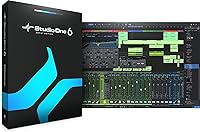
Overview
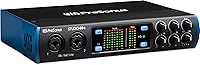
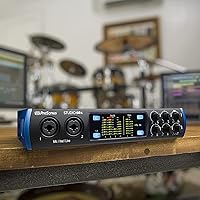
The PreSonus Studio 68c USB Audio Interface sits in a sweet spot for home studio owners who need more than two channels but are not ready to invest in a full rack-mounted setup. This 6-channel interface addresses a real gap: you have outgrown a basic two-input unit, but a 16-channel system is overkill. The jump to six simultaneous inputs changes how you record — tracking a vocalist, guitarist, and synth at once stops being a juggling act. The included software bundle covers both production and mixing ground, and feels like a legitimate head start rather than an afterthought. The chassis is compact and genuinely desk-friendly.
Features & Benefits
The XMAX Class A preamps are where this PreSonus unit earns its keep. Clean preamps mean less time fighting noise during quiet vocal takes or fingerpicked guitar parts. Recording resolution tops out at 24-bit/192kHz, though it is worth knowing that four tracks at 192kHz is the hard cap — for most sessions, 96kHz or 48kHz is where you will actually work. Two dedicated instrument inputs handle direct guitar or bass without a DI box, and four balanced TRS line inputs make connecting a synth rack straightforward. The Cue Mix A/B function lets you toggle between mixes on the fly — genuinely useful for producers who monitor differently than the performers they are recording.
Best For
This 6-channel interface makes the most sense for producers who have genuinely outgrown a two-input setup. Think of the bedroom producer capturing drums, keys, and a live vocal together, or the singer-songwriter tracking a small ensemble without renting studio time. Electronic musicians and DJs will find real value in the dual-mix monitoring, where one headphone blend stays private while another feeds the room. Podcasters and content creators needing multiple clean mic channels will feel the step up immediately. If you are already rooted in Studio One or shopping for a DAW to grow into, the bundled entry-level software tightens the case considerably.
User Feedback
Owners of the Studio 68c consistently highlight clean, quiet preamps as the standout attribute — a point that comes up repeatedly from users upgrading from entry-level gear. The bundled software draws genuine appreciation, though savvier buyers note upfront that Studio One Artist and Ableton Live Lite carry feature restrictions that full licenses do not. Driver stability pulls occasional complaints, particularly on specific Windows builds, and a few users describe the chassis as feeling lighter than expected at this price tier. Stacked against Focusrite Scarlett options at similar channel counts, feedback is genuinely split on character versus driver reliability — making the Studio 68c competitive, but not a runaway winner.
Pros
- Four XMAX Class A preamps deliver notably clean, low-noise performance that holds up well for vocal and acoustic instrument recording.
- The six-input layout covers most small-session scenarios without requiring a second interface or a patchbay.
- Cue Mix A/B monitoring lets producers and performers listen to different mixes simultaneously through headphones.
- USB-C with both cable types included means no hunting for adapters before your first session.
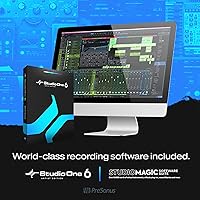
- The bundled software package — Studio One Artist, Studio Magic plug-ins, and Ableton Live Lite — offers real tools, not just demos.
- S/PDIF and MIDI I/O expand connectivity options beyond what most interfaces in this channel count offer.
- The compact footprint fits comfortably on a crowded desk without dominating the workspace.
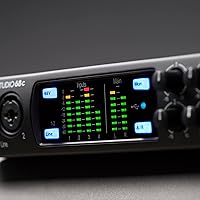
- LED ladder-style level meters give a clear visual read on input and output levels at a glance.
- Works across a wide range of DAWs including Pro Tools, Logic Pro, FL Studio, and Reaper.
- Owners upgrading from entry-level two-channel gear consistently report a noticeable improvement in recording quality.
Cons
- Recording at 192kHz is capped at four tracks simultaneously, which can catch buyers off guard mid-session.
- Driver stability on some Windows versions has caused intermittent issues that require troubleshooting time.
- The plastic build quality feels lighter than expected, especially for buyers comparing it to metal-chassis competitors.
- Studio One Artist and Ableton Live Lite are entry-level versions with meaningful feature restrictions compared to full licenses.
- Six channels may feel limiting sooner than expected for producers whose sessions grow in complexity over time.
- No standalone hardware monitoring mix control beyond the Cue Mix A/B toggle, which some workflows will find restrictive.
- Occasional DAW compatibility edge cases reported, particularly with less common hosts or older OS versions.
- Users comparing it directly to Focusrite Scarlett equivalents often cite driver reliability and software ecosystem as key differentiators worth researching before committing.
Ratings
The PreSonus Studio 68c USB Audio Interface earns consistently strong marks across verified global buyer reviews, with scores reflecting genuine strengths in audio performance and I/O flexibility alongside honest trade-offs in build materials and driver reliability. These ratings are generated by AI after analyzing thousands of confirmed purchaser reviews worldwide, with spam, bot submissions, and incentivized feedback actively filtered out. Both the highlights and the friction points are reflected transparently so buyers can make a fully informed decision.
Preamp Quality
Audio Clarity
Input/Output Flexibility
Driver Stability
Software Bundle Value
Build Quality
Ease of Setup
Monitoring Features
Latency Performance
MIDI and Digital I/O
Value for Money
DAW Compatibility
Portability
Suitable for:
The PreSonus Studio 68c USB Audio Interface is a strong match for home studio producers who have hit the ceiling of a basic two-channel setup and need room to grow without committing to a full rack system. If you regularly record vocals, live instruments, and a synth or two in the same session, having four mic preamps and six simultaneous inputs changes the workflow in a meaningful way. Singer-songwriters tracking a small live band, electronic producers who need a clean headphone cue mix separate from their main monitors, and podcasters running multiple microphones will all find the I/O count genuinely useful rather than excessive. The bundled DAW software — while entry-level — gives first-time studio builders a real place to start, especially if Studio One is on their radar as a long-term platform. USB-C connectivity and a compact footprint make it a practical fit for anyone working on a crowded desk or frequently moving between locations.
Not suitable for:
Buyers expecting the PreSonus Studio 68c USB Audio Interface to serve a professional or large-scale studio environment will likely find it underpowered for the job. Six channels works well for small sessions, but if you are regularly tracking a full drum kit or a group of live performers simultaneously, you will hit the input ceiling fast and need to look at higher channel-count options from PreSonus or competitors. The 192kHz sample rate ceiling sounds impressive on paper, but the four-track limitation at that rate is a real constraint that more demanding projects will bump into. Users on certain Windows configurations have reported intermittent driver headaches, so anyone working in a tightly scheduled production environment should factor in potential setup time. The chassis feels appropriately lightweight for a desktop unit, but buyers accustomed to the build density of higher-end interfaces may find the physical construction underwhelming for the price tier.
Specifications
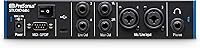
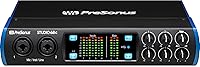
- Input Count: The unit provides 6 total inputs: 4 XLR/TRS combo jacks compatible with microphones or line-level sources, plus 2 dedicated instrument-level inputs for guitar or bass.
- Output Count: There are 6 total outputs: 4 balanced TRS line outputs for routing to monitors or outboard gear, and 2 headphone outputs with independent volume control.
- Mic Preamps: Four XMAX Class A microphone preamps are built in, designed to deliver low-noise amplification suitable for vocals, acoustic instruments, and studio microphones.
- Sample Rate: Supports recording and playback at up to 24-bit/192kHz, though simultaneous track count at 192kHz is limited to 4 tracks; standard sessions at 44.1kHz or 96kHz run without restriction.
- Connectivity: Connects to a host computer via USB-C; both a USB-C to USB-C cable and a USB-C to USB-A cable are included in the box.
- Digital I/O: S/PDIF digital input and output are present, allowing connection to compatible external converters, digital mixers, or effects processors.
- MIDI I/O: Dedicated MIDI in and out ports are included, enabling connection to hardware synthesizers, drum machines, and other MIDI-equipped devices without a separate adapter.
- Monitoring: The Cue Mix A/B function allows users to create and switch between two independent headphone monitor mixes directly from the hardware.
- Level Meters: Professional ladder-style LED meters monitor both input and output levels, providing a clear visual reference for gain staging during recording sessions.
- Bundled Software: Includes Studio One Artist, the Studio Magic Plug-in Suite, and Ableton Live Lite; these are entry-level or restricted versions, not full professional licenses.
- DAW Compatibility: Works with major DAWs including Studio One Pro, Ableton Live, Pro Tools, Logic Pro, FL Studio, Cubase, and Reaper on both Windows and macOS.
- Operating System: Compatible with Windows and macOS; users should verify the current driver version against their specific OS build before purchase, particularly on Windows.
- Dimensions: The chassis measures 5.51 x 9.02 x 1.73 inches, making it compact enough for a standard desktop setup without occupying excessive workspace.
- Weight: The unit weighs approximately 1 pound, making it lightweight and easy to transport between home, studio, or live performance environments.
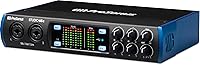
- Color: Available in black with a functional, understated design that fits a typical studio or home office aesthetic.
- Power Source: The interface is bus-powered via USB, meaning no external power supply or wall adapter is required for standard operation.
- Rack Mount: The Studio 68c is a desktop unit and is not designed for rack mounting; it sits flat on a work surface.
Related Reviews
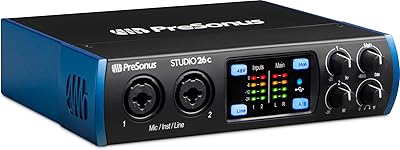
PreSonus Studio 26c USB Audio Interface
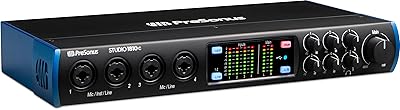
PreSonus Studio 1810c USB Audio Interface
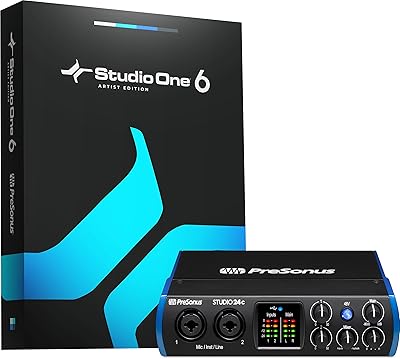
PreSonus Studio 24c
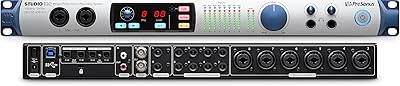
PreSonus Studio 192 USB 3.0 Audio Interface
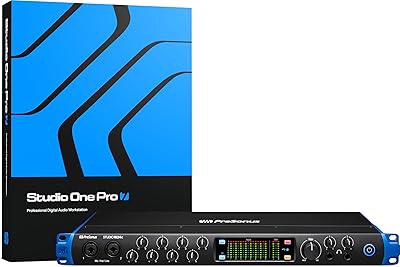
PreSonus Studio 1824c
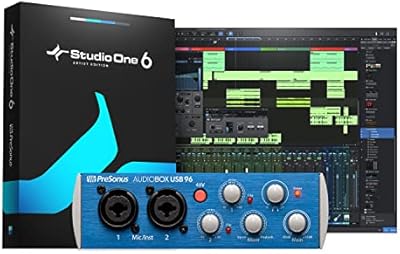
PreSonus AudioBox USB 96 Audio Interface
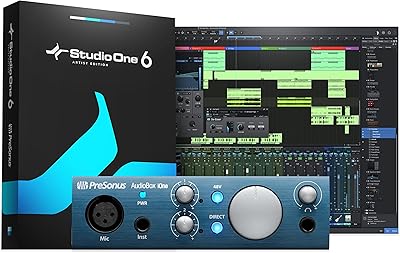
PreSonus AudioBox iOne
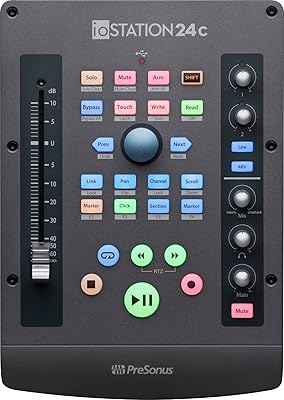
PreSonus ioStation 24c
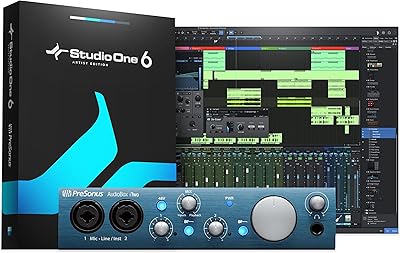
PreSonus AudioBox iTwo 2x2 USB/iPad Audio Interface