Overview

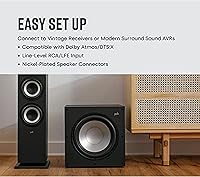
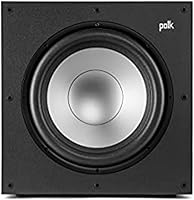
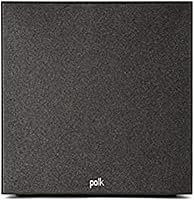
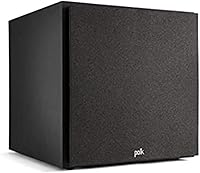
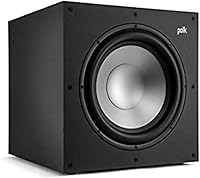
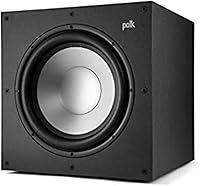
The Polk Audio Monitor XT12 12″ Powered Subwoofer represents Polk's effort to take everything that made their original Monitor series credible and push it meaningfully forward. Decades of speaker-building experience show in how the Monitor XT line is tuned — there's a confidence to the engineering choices that budget-brand competitors rarely match. Physically, this is a 39-pound, floor-standing MDF cabinet that doesn't shift once it's placed. It commands a corner of the room in the best way. It's wired only — no Bluetooth, no app control — which suits anyone building a dedicated home theater where reliability matters more than flexibility.
Features & Benefits

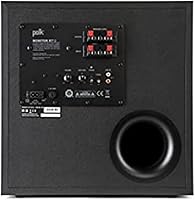
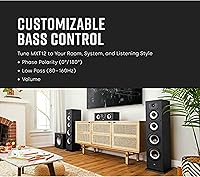
The 12″ driver at the heart of this Polk subwoofer is a long-throw, dynamically balanced design that digs down to 24Hz extension — the kind of low frequency you feel through the floor during a film's explosion sequence or a bass drop in music. The 100W Class A/B amplifier is worth calling out specifically: Class A/B designs run cleaner and more linearly than the Class D amps found in many similarly priced competitors, which translates to tighter, more controlled bass rather than a one-note thump. The critically braced MDF cabinet absorbs resonance rather than adding to it. Add in a variable crossover (80–160Hz), a phase polarity switch, and three input types — RCA, LFE, and binding posts — and you have real integration flexibility baked in.

Best For

The Monitor XT12 works best in small to medium rooms — think a dedicated home cinema space, a living room under about 300 square feet, or a converted basement. In those environments, the 12″ driver pressurizes the space properly without becoming overwhelming. If you're building around the broader Monitor XT speaker family, this powered sub slots in with tonal consistency that matters in a surround setup. Movie and gaming enthusiasts will get the most out of it, particularly for action, sci-fi, and anything with a demanding low-frequency track. Manual crossover and phase controls suit buyers who'd rather trust their ears than an app. Large open-plan rooms or those chasing reference-level accuracy at high volumes should look further up the product ladder.

User Feedback

Buyers consistently highlight two things: the depth of the bass relative to what they paid, and how solid the cabinet feels compared to competing subs at this price tier. First-time subwoofer owners frequently mention how approachable the setup process is — hook it up, adjust the crossover to match your mains, flip the phase if something sounds off, and you're done. On the other side, some users in larger or acoustically awkward rooms report that the sub needs more deliberate placement to avoid boominess. The grille fit and finish are generally well-received, though a handful note minor cosmetic inconsistencies. Long-term reliability feedback is largely positive, and Polk's warranty support appears to resolve issues without significant friction.

Pros

  • Bass extension down to 24Hz delivers genuine low-frequency impact during movies and music, not just a mid-bass thump.
  • The 100W Class A/B amplifier keeps bass tight and controlled rather than loose or one-dimensional.
  • Critically braced MDF cabinet construction reduces unwanted resonance noticeably compared to thinner-walled competitors.
  • Variable crossover from 80 to 160Hz gives you real flexibility to match the sub to almost any set of main speakers.
  • Three input types — RCA, LFE, and binding posts — make hooking up to existing receivers straightforward.
  • Phase polarity control helps correct bass cancellation issues without needing a separate DSP device.
  • Timbre-matched to the full Monitor XT range, making it an easy upgrade path if you already own Polk speakers.
  • Build quality and grille fit feel solid and polished for the price tier.
  • Setup is approachable enough for first-time subwoofer buyers without sacrificing tuning depth for experienced users.
  • Polk's warranty support has a strong track record of resolving issues efficiently.

Cons

  • No wireless connectivity at all — placement is dictated entirely by cable runs to your receiver.
  • At 39 pounds with a large footprint, repositioning it for room correction is a genuine physical effort.
  • Placement sensitivity is higher than average; getting the best bass response takes time and experimentation.
  • In rooms above 300 to 400 square feet, one unit may not distribute bass evenly across all seating positions.
  • No built-in auto-EQ or room correction — buyers who want that convenience need to look elsewhere or budget for external tools.
  • The crossover and volume knobs, while functional, feel slightly utilitarian compared to the overall cabinet finish.
  • No smartphone integration or remote control means every adjustment requires getting up and reaching behind or under the cabinet.
  • This powered sub is voiced for impact rather than neutrality, which may not satisfy listeners who prioritize accuracy over punch.

Ratings

The scores below reflect AI-driven analysis of verified global buyer reviews for the Polk Audio Monitor XT12 12″ Powered Subwoofer, with spam, bot-generated, and incentivized feedback actively filtered out to ensure accuracy. Ratings are derived from thousands of real ownership experiences across home theater builds, gaming setups, and music listening rooms worldwide. Both consistent strengths and recurring frustrations are transparently weighted into every score.

Bass Performance
91%
Buyers consistently describe the low-frequency output as punchy and physical — the kind of bass that makes action sequences feel immersive rather than just loud. The 24Hz extension earns particular praise from users watching sci-fi and thriller content, where sub-bass atmosphere matters.
A subset of users note that in larger rooms, the bass can sound uneven depending on listening position, with some seats getting noticeably more impact than others. At very high volume levels, a few buyers report the low end becomes slightly loose rather than staying tight.
Build Quality
88%
The critically braced MDF cabinet draws repeated praise for feeling dense and purposeful — buyers coming from cheaper, plasticky subs notice the difference immediately when setting it up. At 39 pounds, the cabinet commands confidence and doesn't flex or rattle under demanding bass loads.
Some users note minor cosmetic inconsistencies in the grille fit, where one side sits fractionally less flush than the other. A small number of buyers have flagged surface finish imperfections out of the box, though these appear to be isolated quality-control outliers rather than a systemic issue.
Value for Money
86%
Across hundreds of reviews, buyers repeatedly express that the Monitor XT12 delivers bass depth and cabinet solidity that they expected to cost significantly more. For home theater enthusiasts on a realistic budget, the performance-to-price ratio stands out clearly against competitors in the same bracket.
A minority of buyers feel the price has crept upward over time without a corresponding feature update, particularly given that competing options have added auto-EQ or wireless functionality at similar price points. Those who prioritize tech features over raw acoustic performance may feel the value proposition is less compelling.
Ease of Setup
89%
First-time subwoofer owners are a recurring theme in positive reviews, with many noting they had the Monitor XT12 connected and producing bass within minutes of unboxing. The rear panel layout is logical, and the crossover and phase controls are clearly labeled, making initial calibration approachable without reading a manual.
Getting truly optimized performance requires some patience with placement and crossover tuning, which can frustrate buyers who expected a pure plug-and-play experience. A handful of reviewers with larger or irregularly shaped rooms report spending considerable time experimenting before the bass sounded balanced.
Room Tuning Flexibility
82%
18%
The variable crossover spanning 80 to 160Hz gives buyers meaningful control to match this powered sub to a wide variety of main speakers, from small bookshelves to larger floor-standers. The 0°/180° phase switch solves bass cancellation problems quickly without needing additional hardware.
The manual-only controls mean there is no room correction, no auto-calibration, and no memory for saved settings — every adjustment requires physically reaching the cabinet. Buyers who have used subwoofers with built-in DSP or app integration consistently flag this as a step backward in convenience.
Connectivity Options
83%
Having RCA line-level, LFE, and nickel-plated binding post inputs covers virtually every receiver type a home theater buyer is likely to own, old or new. Reviewers building around both vintage and modern AV gear appreciate that they rarely need an adapter cable.
The complete absence of wireless input options is a dealbreaker for some buyers who want flexibility in placement without committing to a cable run across the room. In setups where cable management is a priority, the wired-only nature of this sub adds planning complexity.
Surround Sound Integration
87%
Buyers who pair this Polk subwoofer with Monitor XT bookshelf or floor-standing speakers consistently note how naturally the bass blends with the rest of the system — there is no audible handoff gap or tonal mismatch that draws attention. Dolby Atmos content, in particular, benefits from the sub-24Hz extension when height channels add atmospheric low-frequency cues.
Users pairing the Monitor XT12 with non-Polk speakers occasionally report spending more time fine-tuning the crossover to achieve the same natural blend. Timbre matching is a real advantage within the Monitor XT ecosystem, but it is less of a differentiator when mixing brands.
Cabinet Resonance Control
84%
At moderate to moderately loud listening levels, the cabinet stays effectively inert — buyers moving from budget subs notice the absence of that hollow, boxy coloration that cheap cabinets add to the sound. The MDF bracing strategy pays off most obviously on long listening sessions where sustained bass lines reveal a sub's weaknesses.
At sustained high output levels over extended periods, a small number of users report vibration from the rear panel or connection plate area. Placing the sub on an isolation platform addresses this for most, but it is an extra step buyers should be aware of.
Grille & Aesthetics
76%
24%
The Midnight Black finish and clean rectangular form factor are broadly appreciated for blending into dedicated home theater rooms without looking out of place. The removable grille gives buyers the choice between a finished, family-friendly appearance and a more exposed driver look.
Several reviewers note that the grille fit is occasionally imprecise, with minor gaps visible when viewed up close. The overall aesthetic, while clean, reads as functional rather than design-forward — buyers who care about a premium visual statement in their living room may find it underwhelming.
Long-Term Reliability
81%
19%
The majority of long-term owners who revisit their reviews after six months to a year report consistent, trouble-free operation with no noticeable degradation in performance. Polk's reputation for durable speaker engineering is generally supported by the ownership patterns visible in the review data.
A small but notable cluster of reviews describes amplifier-related issues emerging after extended ownership, typically presenting as intermittent hum or reduced output. While not a widespread pattern, buyers who run the sub hard during long movie sessions or gaming marathons should be aware of this minority experience.
Warranty & Support
79%
21%
Polk Audio's warranty coverage is consistently described as responsive and hassle-free by buyers who have needed to use it, with replacement units typically dispatched without prolonged back-and-forth. The brand's established customer support infrastructure gives buyers reasonable confidence in post-purchase coverage.
A subset of reviewers note delays in support response during peak periods, and some buyers outside the US report friction in the warranty claims process for their region. The warranty terms themselves are solid, but execution consistency appears to vary depending on location and timing.
Placement Sensitivity
68%
32%
In well-proportioned, smaller rooms, the Monitor XT12 is relatively forgiving of placement — corner loading naturally reinforces bass output, and most standard placements produce a satisfying result without obsessive repositioning. Buyers in purpose-built home theater rooms with acoustic treatment report excellent outcomes from straightforward placement.
In acoustically untreated medium-to-large rooms, the sub can be highly sensitive to exact positioning, with a foot or two of movement producing noticeably different results. Users in open-plan spaces frequently describe a trial-and-error process that takes days to resolve, which is a meaningful friction point for less experienced buyers.
Gaming Performance
85%
Gamers playing action, racing, and open-world titles with dynamic sound design report strong immersion gains from adding this powered sub to their setup — engine rumbles, explosions, and environmental audio hit with physical weight rather than just volume. The low latency of a wired connection is a practical advantage for synchronization-sensitive gaming audio.
The manual crossover setup means gaming-specific tuning requires the same hands-on calibration as home theater use — there is no preset or auto mode for gaming content. Buyers who frequently switch between gaming and music use cases may find the fixed manual controls mildly inconvenient to readjust.
Music Listening
77%
23%
Electronic music, hip-hop, and film scores with prominent low-frequency content genuinely benefit from what this Polk subwoofer adds to a stereo or surround setup. Bass lines feel rooted and textured rather than just loud, which experienced music listeners note as the mark of a quality driver design.
Buyers seeking accurate, flat bass reproduction for critical stereo music listening may find the Monitor XT12 voiced slightly toward impact over neutrality — it is tuned for home theater drama, not studio monitoring. Acoustic, jazz, and classical listeners occasionally report that the sub adds more weight than the music warrants, even at lower crossover settings.

Suitable for:

The Polk Audio Monitor XT12 12″ Powered Subwoofer is a strong fit for home theater enthusiasts who want real, physical bass in a small to medium-sized room without stepping into high-end territory pricing. If you're building or expanding a 5.1 or 7.1 surround system — especially around Polk's Monitor XT speaker family — this sub slots in with tonal consistency that matters for immersive sound. Movie lovers who watch a lot of action, sci-fi, or adventure content will appreciate how the 12″ driver handles low-frequency effects: the kind of bass that registers in your chest, not just your ears. Gamers running dedicated setups will also get meaningful payoff from the sub-24Hz extension during explosions, engine rumble, and cinematic audio. It's equally well-suited to buyers who prefer hands-on tuning — adjusting crossover frequency and phase by ear — rather than relying on app-driven auto-calibration systems.

Not suitable for:

The Polk Audio Monitor XT12 12″ Powered Subwoofer runs into real limitations once you move into larger or acoustically challenging spaces. In open-plan living areas above roughly 400 square feet, a single unit may struggle to distribute bass evenly, leading to dead spots or boominess depending on where you sit. Buyers expecting wireless convenience — Bluetooth pairing, Wi-Fi streaming, or app-based room correction — will be disappointed, as this is a purely wired unit with manual controls only. It's also not the right tool for audiophiles chasing studio-accurate, flat low-frequency reproduction; the Monitor XT12 is voiced for cinematic impact, not clinical precision. Anyone on a tight space budget should also consider the cabinet's footprint carefully — at 39 pounds and 18 inches wide, it needs a committed floor position, not a shelf or a corner you're hoping to keep clear.
Specifications

  • Driver Size: Features a 12″ Dynamically Balanced Woofer with a long-throw, high-excursion design built to move significant air at low frequencies.
  • Amplifier: Powered by a 100W Class A/B amplifier, which prioritizes linearity and thermal efficiency over the cost-cutting Class D designs common at this price range.
  • Frequency Response: Rated to reach as low as 24Hz, covering the deepest bass frequencies found in film soundtracks, electronic music, and modern game audio.
  • Crossover Control: Offers a continuously variable low-pass crossover adjustable between 80Hz and 160Hz, allowing the sub to hand off cleanly to a wide range of main speakers.
  • Phase Control: Includes a 0° and 180° phase polarity switch to correct bass cancellation issues caused by room geometry or speaker placement.
  • Inputs: Accepts connections via RCA line-level input, LFE (unfiltered) input, and nickel-plated 5-way binding post speaker-level inputs for maximum receiver compatibility.
  • Cabinet Material: Built from critically braced MDF (medium-density fiberboard) that resists flexing and resonance under high excursion, keeping the sound clean and controlled.
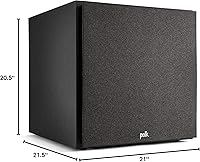
  • Dimensions: Measures 16″ deep, 18″ wide, and 16″ tall — a substantial but standard footprint for a floor-standing 12″ subwoofer.
  • Weight: Weighs 39 pounds, reflecting the density of the MDF cabinet and internal amplifier hardware; plan accordingly for placement and positioning.
  • Impedance: Rated at 4 Ohm impedance, which is standard for powered subwoofers connected via speaker-level binding posts to compatible amplifiers.
  • Surround Formats: Compatible with Dolby Atmos and DTS:X equipped AV receivers, making it current-generation home theater ready.
  • Connectivity: Wired only — no Bluetooth, Wi-Fi, or wireless audio transmission of any kind is supported.
  • Mounting Type: Designed exclusively as a floor-standing unit; it is not intended or rated for wall mounting or elevated placement.
  • Grille: Ships with a removable, precision-fit grille that can be taken off for a more industrial look or left on for protection in family environments.
  • Color: Available in Midnight Black, with a finish that blends into most dark home theater or living room environments without drawing attention.
  • Power Source: Requires a standard corded AC power connection; there is no battery operation or auto-voltage switching noted in the specifications.
  • Speaker Matching: Timbre-matched to the full Polk Monitor XT speaker family, making tonal blending straightforward when building a complete Monitor XT surround system.

Related Reviews
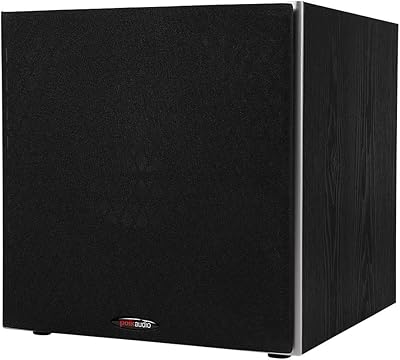
Acoustic Audio PSW500-12 12-Inch Powered Subwoofer
73%
83%
Bass Output for Price
88%
Ease of Setup
86%
Value for Money
67%
Build Quality
71%
Sound Quality
More
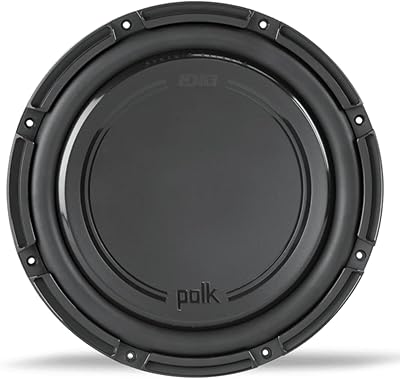
Polk Audio PSW10 10-inch Powered Subwoofer
75%
78%
Bass Performance
93%
Ease of Setup
67%
Build Quality
84%
Value for Money
72%
Room Suitability
More
Dayton Audio SUB-1200 12″ Powered Subwoofer
79%
91%
Value for Money
74%
Bass Performance
78%
Build Quality
93%
Ease of Setup
67%
Amplifier Power
More
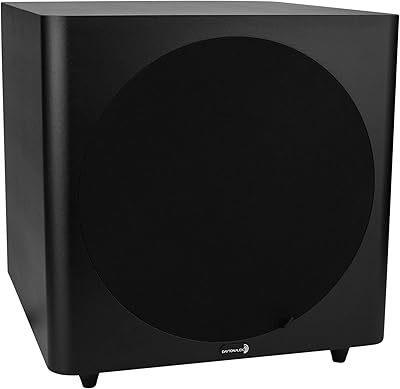
Polk Audio DB1242 DVC 12-Inch Car Subwoofer
77%
83%
Bass Quality
86%
Build Quality
91%
Shallow Mount Design
78%
Weatherproofing
84%
Value for Money
More
BOSS Audio B12ES 12-Inch Powered Car Subwoofer
72%
88%
Ease of Installation
79%
Bass Output & Impact
83%
Value for Money
63%
Build Quality & Materials
81%
Remote Bass Control Usability
More
Q Power HD12 12″ Sealed Triple Car Audio Subwoofer Box Enclosure
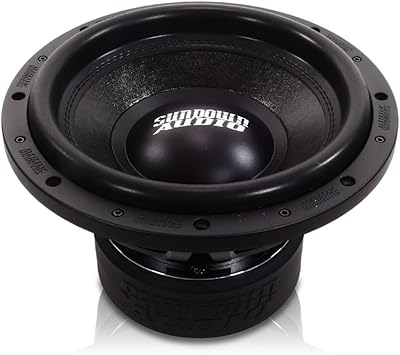
85%
88%
Bass Performance
91%
Build Quality
89%
Durability
86%
Sound Clarity
78%
Ease of Installation
More
Sundown Audio SA-12 V.2 D4 12″ Subwoofer
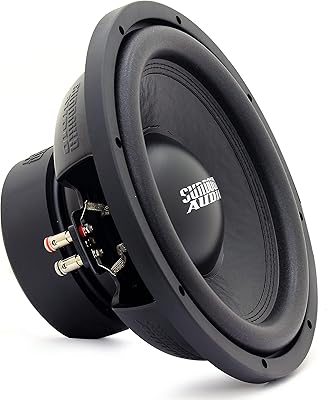
86%
94%
Bass Performance
90%
Build Quality
88%
Value for Money
72%
Ease of Installation
92%
Durability
More
Sundown Audio E-12 V.3 D4 12″ Subwoofer
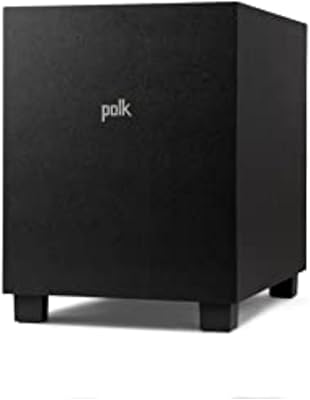
78%
91%
Build Quality
86%
Sound Quality
88%
Thermal Durability
83%
Amplifier Compatibility
58%
Sensitivity
More
Polk Audio Monitor XT10 10″ Subwoofer
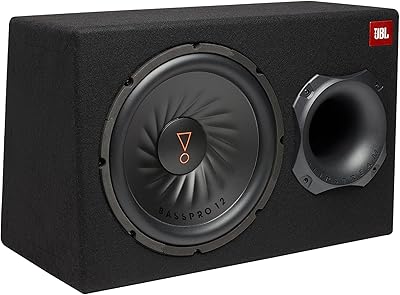
83%
91%
Bass Performance
88%
Value for Money
76%
Build Quality
93%
Ease of Setup
89%
Low-Frequency Extension
More
JBL SUBBP12AM 12-inch Powered Subwoofer
75%
86%
Bass Output Quality
81%
Ease of Installation
78%
Amplifier Performance
67%
Long-Term Durability
73%
Value for Money
More

FAQ

The Monitor XT12 is a fully powered subwoofer, meaning it has its own built-in 100W amplifier. You just connect it to your AV receiver via the RCA or LFE output, plug it into a wall outlet, and it handles everything else internally. No external amp needed.

Almost any modern AV receiver with a subwoofer pre-out (the dedicated LFE output) will work without issue. If your receiver only has speaker-level outputs, the 5-way binding posts on this Polk subwoofer can handle that connection too. Dolby Atmos and DTS:X receivers are fully supported.

A good starting point is matching the crossover frequency to the low-end limit of your main speakers — if your bookshelves roll off around 80Hz, start there. From that baseline, play familiar content and adjust upward if the bass sounds thin or disconnected, and downward if it feels muddy or boomy. Most people land somewhere between 80Hz and 120Hz for a typical home theater setup.

It works well in both, provided the room isn't too large. In a small to medium living room — roughly under 350 to 400 square feet — it can fill the space effectively. In very large, open-plan rooms, a single unit may not distribute bass evenly across all seating areas, and you might want to consider adding a second matching sub.

The phase switch (0° or 180°) controls the direction in which the woofer cone moves relative to your main speakers. When the sub and mains are out of phase, bass frequencies can partially cancel each other out, leaving a thin or hollow sound. Flipping the switch to 180° often fixes this, especially when the subwoofer has to be placed far from your main speakers or in a corner.

Yes, and Polk actually recommends it. Running a second identical unit helps distribute bass more evenly throughout the room, reducing the dead spots and hot spots that a single sub often creates. Because both units are timbre-matched, they blend together naturally without tonal inconsistencies.

Setup is genuinely straightforward. Connect one RCA cable from your receiver's subwoofer output to the LFE input on the back of the sub, plug it in, set the volume to about halfway, and adjust the crossover to match your main speakers. Most first-time sub owners report being up and running in under 15 minutes.

It works perfectly well with any brand of speakers. The timbre-matching to the Monitor XT family is an advantage if you're building a full Polk surround system, but the sub itself is a standalone unit that integrates with virtually any home theater configuration.

No — this powered sub uses manual controls only. Volume, crossover, and phase are all adjusted via rear-panel knobs directly on the cabinet. There is no remote, no app, and no smart home integration. Once you've dialed in your settings to match the room, most people leave the sub controls fixed and manage overall volume from their AV receiver.

The critically braced MDF construction does a solid job of keeping cabinet resonance in check during normal to moderately loud listening. At extreme volumes over extended periods, some users note minor vibration from the rear panel — placing the sub on a thick rubber mat or subwoofer isolation platform can help if that becomes an issue in your setup.

Where to Buy