Overview

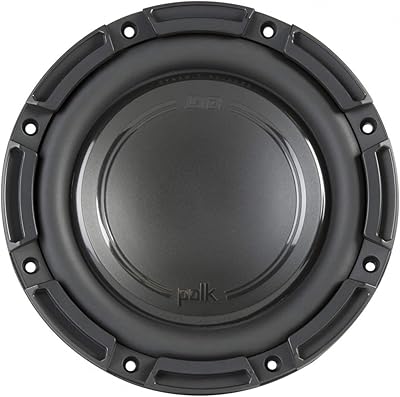
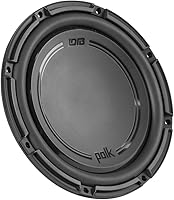
The Polk Audio DB1242 DVC 12-Inch Car Subwoofer sits in an interesting spot in the market — it's a shallow-mount, dual-voice-coil driver from Polk's DB+ series, built for both car and marine installs. If you've ever tried squeezing a full-depth sub into a crew-cab truck or a center console boat, you know how quickly space becomes the limiting factor. This Polk shallow-mount sub addresses that problem without asking you to compromise on bass quality. It's priced in the middle ground — well above the generic imports flooding online marketplaces, but short of the boutique drivers that cost three times as much. Think of it as a practical audio upgrade for everyday listeners, not a competition-grade weapon.
Features & Benefits

At just under 4.5 inches of mounting depth, the DB1242 DVC fits enclosures and locations where a conventional sub simply won't go — think spare tire wells, underseat boxes, or the shallow cavities common in smaller SUVs. The dual 4-ohm voice coils give you genuine wiring flexibility: run them in parallel for a 2-ohm load when your amp needs more current, or wire them in series for an 8-ohm load to suit a different setup. Polk's Dynamic Balance Technology uses laser imaging during the design phase to tune the cone materials, which in practice means cleaner output without harsh distortion peaks. The polypropylene cone and Santoprene surround are light but tough — exactly what you want when moisture or UV exposure is part of the equation.

Best For

This marine-certified subwoofer makes the most sense for people who've run out of real estate in their vehicle but still want meaningful bass. Truck owners with cramped cab setups, Jeep and UTV riders who need something that can take a splash, or anyone swapping out a weak factory system — these are the buyers who tend to get the most out of it. The dual voice coil design also appeals to DIYers who want to match their amp's impedance without buying new gear. What it isn't built for is serious SPL competition or home theater applications where long excursion, high displacement, and peak output dominate the requirements. Know your use case going in and it's hard to be disappointed.

User Feedback

Owners consistently point to tight, controlled bass as the standout quality — particularly impressive given the shallow build. Installation feedback is mostly positive, with many noting the physical fit came together quickly in underseat and spare-tire-well locations. The main recurring frustration is amp pairing: the DB1242 DVC genuinely needs a properly sized amplifier to perform as expected; run it underpowered and it sounds flat. There's also noticeable confusion in reviews around the peak power figure versus the actual RMS rating — worth clarifying before you spec your whole system. Buyers who installed this Polk shallow-mount sub on boats or UTVs broadly confirm the weatherproofing holds up in real conditions. Overall, it earns strong marks as a value-focused DVC option from a well-established brand.

Pros

  • Shallow mounting depth opens up install locations — underseat boxes and spare tire wells — that full-depth subs cannot fit.
  • Dual voice coils let you wire for 2-ohm or 8-ohm loads, giving real flexibility to match your existing amplifier.
  • IP56 certification is backed by actual salt-fog, UV, and humidity testing — not just a sticker on the box.
  • Polypropylene cone and Santoprene surround hold up well in moisture-prone environments without adding cone weight.
  • Bass output is consistently described as tight and controlled rather than boomy or loose.
  • Coated steel basket resists corrosion, a meaningful advantage over cheaper baskets that oxidize in coastal or marine use.
  • Polk's Dynamic Balance tuning process keeps distortion in check across the usable frequency range.
  • Strong brand reputation provides peace of mind that budget no-name alternatives cannot offer.
  • Works across multiple vehicle types — cars, boats, ATVs, and motorcycles — making it genuinely versatile.
  • Installation feedback from owners is largely positive, with most reporting a straightforward fit in standard shallow enclosures.

Cons

  • Requires a properly sized external amplifier to perform well — running it underpowered produces flat, uninspiring results.
  • The 1110-watt peak figure is misleading to less experienced buyers; the RMS rating is what actually matters for amp matching.
  • At nearly 12 pounds, this Polk shallow-mount sub is not the lightest option if weight is a concern in smaller builds.
  • Limited warranty coverage may feel thin compared to brands that offer longer or more comprehensive protection policies.
  • Bass extension stops around 26Hz, which means very deep sub-bass frequencies are not reproduced.
  • Enclosure tuning is critical — buyers who drop it into a poorly built or mismatched box will not hear its best performance.
  • No wiring harness or mounting hardware is included, which adds small but real additional cost for some installs.
  • The marine certification is splash protection only — do not expect it to survive full submersion or heavy wave wash.

Ratings

Our scores for the Polk Audio DB1242 DVC 12-Inch Car Subwoofer are generated by AI after analyzing thousands of verified owner reviews worldwide, with spam, bot activity, and incentivized feedback actively filtered out. The ratings reflect the full picture — where this shallow-mount sub genuinely impresses and where real buyers have run into frustrations. Both the standout strengths and the recurring pain points are weighted transparently into every category score.
Bass Quality
83%
Owners consistently describe the low-end output as tight and controlled — not the loose, boomy character common in budget drivers. In daily commutes with music-heavy genres like hip-hop and electronic, the DB1242 DVC tracks bass lines cleanly without smearing into mud.
At higher volumes, some listeners feel the sub lacks the deep sub-bass slam that full-depth drivers produce. Below around 30Hz, output rolls off noticeably, which matters to listeners who want genuine infrasonic presence rather than just punchy mid-bass.
Build Quality
86%
The coated steel basket and Santoprene surround feel substantively different from the flimsy construction on no-name competitors — owners who have handled multiple subs in this price range consistently call out the solidity of the assembly. After extended use in humid and coastal environments, most report no visible degradation.
A small number of buyers noted minor cosmetic inconsistencies around the basket edges and tinsel lead routing, suggesting quality control is not perfectly uniform across production runs. These are aesthetic issues rather than functional ones, but they do surface occasionally.
Shallow Mount Design
91%
This is arguably where the DB1242 DVC earns its keep most decisively. Truck owners with underseat enclosures and compact car drivers using spare-tire-well boxes regularly report that it fits where other 12-inch drivers simply do not, without requiring custom fabrication or enclosure modifications.
The shallow depth does come with a physical trade-off in excursion capability — the cone simply cannot move as far as a full-depth driver can, which caps ultimate output. For most listeners this is an acceptable compromise, but high-volume listeners will feel the ceiling.
Weatherproofing
78%
22%
Boat and UTV owners who have put this marine-certified subwoofer through real-world exposure — rain spray, salt air, and prolonged sun — largely report that the IP56 certification reflects genuine performance rather than just a marketing label. The surround and basket hold up noticeably better than non-certified drivers in the same conditions.
IP56 means splash resistance, not submersion tolerance, and a handful of marine installers learned this the hard way by mounting it too low in a hull where wave wash exceeded what the rating covers. The protection is real but has clear limits that the product listing does not always communicate clearly enough.
Value for Money
84%
At its price point, buyers are getting a name-brand driver with genuine marine certification, dual voice coils, and Polk's Dynamic Balance tuning — a combination that would cost significantly more from boutique audio brands. Owners who previously ran budget imports report a meaningful and immediate improvement in sound quality.
The value proposition depends heavily on pairing it with the right amplifier, which adds to total system cost. Buyers who factor in only the driver price and skip on amplifier budget often feel let down, skewing their perception of value despite the driver itself being competitively priced.
Wiring Flexibility
79%
21%
The dual 4-ohm voice coils genuinely expand compatibility — DIY installers who already own an amplifier rated for 2-ohm or 8-ohm loads can adapt the wiring to suit their existing gear without buying a new amp. This practical flexibility is something single-voice-coil drivers at the same price cannot offer.
For first-time buyers unfamiliar with impedance, the dual voice coil configuration introduces a learning curve that can lead to wiring errors. Some negative reviews stem directly from incorrect wiring rather than driver defects, suggesting clearer documentation in the box would help.
Installation Experience
81%
19%
Most owners describe the physical installation as straightforward, with the shallow depth making it cooperative in tight spaces. The included cutout template reduces guesswork, and the terminal connections are clearly organized for both parallel and series wiring.
No mounting screws or wiring are included, which catches some buyers off guard — particularly first-timers who assumed the package would be more complete. For experienced installers this is a non-issue, but it adds a small unexpected errand before the install can proceed.
Amplifier Dependency
58%
42%
When paired with a properly rated amplifier, the DB1242 DVC responds well and delivers the clean, controlled bass output that positive reviews describe. Buyers who did the system math correctly consistently rate their satisfaction higher than those who did not.
This is a consistent pain point in user feedback: underpowering the sub produces flat, underwhelming results that frustrate buyers who expected more from a 12-inch driver. The sub has no tolerance for poor amp pairing, and many negative reviews trace back entirely to this mismatch rather than any flaw in the driver itself.
Power Rating Clarity
52%
48%
The 370W RMS figure, once understood, gives buyers a clear and workable target for amplifier sizing. Owners who researched the difference between RMS and peak ratings before purchasing report setting up their systems correctly on the first attempt.
The 1110W peak figure prominently displayed in product listings creates genuine confusion — a notable share of negative reviews mention feeling misled after discovering the sustained power handling is a fraction of that number. This is an industry-wide listing practice, but it causes real buyer frustration here.
Distortion Control
77%
23%
Polk's Dynamic Balance laser-tuning process produces a measurably cleaner result than drivers of comparable price that skip this step. At moderate listening volumes, distortion is not a complaint that surfaces frequently in owner feedback, suggesting the cone breakup management works as intended.
At the upper end of the volume range — particularly when driven hard in a poorly tuned enclosure — some owners report audible harshness creeping in. Distortion control is good for the price but not exceptional, and enclosure quality has a meaningful impact on how clean the output remains.
Low-Frequency Extension
68%
32%
A 26Hz lower boundary is genuinely capable for a shallow-mount driver, covering the fundamentals of bass guitar, kick drums, and the majority of bass-heavy music production. For everyday listening in a car or boat, the extension is sufficient for most genres.
The shallow cone excursion limits how much air the driver can move at the very bottom of its range, so the rated 26Hz extension is more of a gradual rolloff than a firm flat response. Listeners who prioritize true deep bass — cinematic scores, certain electronic subgenres — will notice the limitation.
Longevity
74%
26%
Santoprene surrounds are genuinely more durable than foam in UV-exposed and temperature-variable environments, and owners who have run this Polk shallow-mount sub for multiple seasons in harsh conditions generally report it holding up without surround cracking or cone delamination.
Long-term durability data is harder to assess because the driver has a defined owner lifespan in the feedback pool. A small number of buyers reported early failure linked to overdriving, and the limited warranty offers less reassurance than the longer or more comprehensive coverage some competitors provide.
Marine Versatility
76%
24%
The ability to use a single driver across a car, boat, and ATV without buying separate marine and automotive models is a genuine practical advantage. Owners who run the same sub in a truck during the week and a pontoon on weekends appreciate the cross-platform reliability.
The IP56 rating, while real, does cap where this marine-certified subwoofer can realistically be installed on a vessel. Dedicated marine-only brands offer higher IP ratings and broader installation flexibility on open-water craft, making this a better fit for freshwater and recreational use than offshore or high-spray environments.
Brand Reputation
88%
Polk Audio carries significant trust currency among car audio buyers, and that credibility translates into confidence when purchasing the DB1242 DVC. Owners frequently cite brand recognition as a deciding factor when choosing it over similarly priced but unfamiliar alternatives.
Brand reputation can cut both ways — some buyers arrive with expectations calibrated to Polk's higher-end home audio products and find the performance of an entry-to-mid-tier car sub falls short of that benchmark. The DB+ series is not Polk's flagship line, and the experience reflects that positioning.

Suitable for:

The Polk Audio DB1242 DVC 12-Inch Car Subwoofer was clearly designed with space-constrained installs in mind, making it a strong pick for drivers who want real bass without gutting their cargo area or spare tire well. Truck and SUV owners who have tried and failed to fit a standard-depth sub into an underseat enclosure will immediately appreciate how shallow this driver sits — it opens up mounting locations that most competitors simply cannot reach. Boat owners and off-road riders get an added layer of value here, because the IP56 marine certification means splash exposure, humidity, and UV light are handled without babying the hardware. That said, IP56 means splash-resistant, not waterproof, so it belongs above the waterline rather than in a bilge. DIY installers who already own an amplifier will also appreciate the dual voice coil wiring options, which let you dial in the impedance load to suit your existing gear rather than buying something new. Essentially, if you are upgrading from a factory system and want dependable, clean bass from a recognizable brand at a reasonable price, this driver covers the brief well.
Not suitable for:

The DB1242 DVC has real limits that are worth understanding before you buy. Serious SPL competitors or anyone building a dedicated bass-focused system will find the excursion capability and peak output fall short of what purpose-built competition drivers deliver — this sub is tuned for everyday listening quality, not maximum loudness at a car show. Home theater enthusiasts should also look elsewhere; this driver is engineered around automotive and marine power systems and is not a natural fit for home amplifier setups or sealed home enclosures. Buyers who plan to run it off a modest head unit without a dedicated amplifier will likely feel underwhelmed — the DB1242 DVC needs a properly rated amp to show what it can actually do. Anyone expecting the 1110-watt figure printed on the box to reflect real-world continuous power should recalibrate: that is a peak rating, and the sustained RMS figure is significantly lower, which is the number that actually governs long-term performance and amp pairing. If your priority is raw output, deep sub-bass extension below 25Hz, or true submersion protection, this is not the right tool.

Specifications

  • Driver Diameter: The woofer cone measures 12 inches across, placing it in the full-size subwoofer category suited for both shallow enclosures and standard sealed or ported boxes.
  • Mounting Depth: At just 4.4″ of required mounting depth, this driver fits enclosures and vehicle cavities where standard subs cannot be installed.
  • RMS Power: Continuous RMS power handling is rated at 370W, which is the figure you should use when sizing a compatible amplifier.
  • Peak Power: Peak power handling is listed at 1110W, representing a brief transient ceiling rather than a sustainable operating level.
  • Frequency Response: The driver covers a range from 26Hz to 200Hz, which spans deep bass fundamentals through the upper bass region.
  • Voice Coils: Two independent 4-ohm voice coils are included, allowing wiring flexibility for either a 2-ohm parallel or 8-ohm series impedance load.
  • Cone Material: The woofer cone is made from polypropylene, a lightweight and moisture-resistant material that maintains consistent stiffness across temperature changes.
  • Surround Material: The surround is constructed from Santoprene, a thermoplastic elastomer known for long-term flexibility and resistance to UV degradation and humidity.
  • Basket Material: The basket is built from coated steel, providing structural rigidity while resisting the corrosion common in marine and coastal environments.
  • Marine Certification: The driver carries an IP56 rating, certified against salt-fog exposure, prolonged UV radiation, and high-humidity conditions.
  • Compatibility: Designed for use in cars, boats, ATVs, motorcycles, and other powersports applications where a wired subwoofer can be mounted.
  • Product Dimensions: Overall product dimensions measure 4.4″ deep by 10″ wide by 8″ tall, reflecting the compact footprint of the shallow-mount design.
  • Item Weight: The unit weighs 11.6 pounds, which is typical for a 12-inch driver with a steel basket and dual voice coil assembly.
  • Connectivity: Connection is entirely wired via standard push-terminal inputs on the dual voice coil leads; no wireless pairing or digital inputs are involved.
  • Warranty: Polk Audio covers this driver under a limited warranty; buyers should confirm current terms directly with Polk or the point of purchase.

Related Reviews
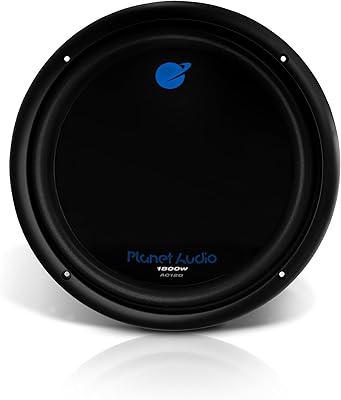
Planet Audio AC12D 12-Inch Car Subwoofer
72%
88%
Value for Money
74%
Bass Output
83%
Voice Coil Flexibility
62%
Build Quality
57%
Long-Term Durability
More
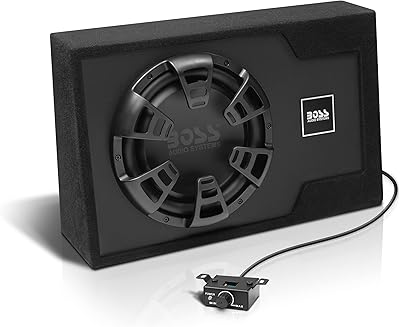
BOSS Audio B12ES 12-Inch Powered Car Subwoofer
72%
88%
Ease of Installation
79%
Bass Output & Impact
83%
Value for Money
63%
Build Quality & Materials
81%
Remote Bass Control Usability
More
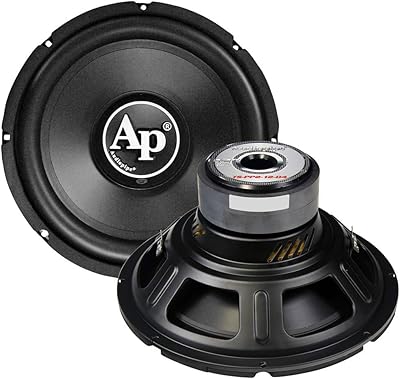
Audiopipe TS-PP2-12-D4 12-inch Car Subwoofer
70%
74%
Value for Money
71%
Bass Output
67%
Build Quality
58%
Power Handling
73%
Voice Coil Quality
More
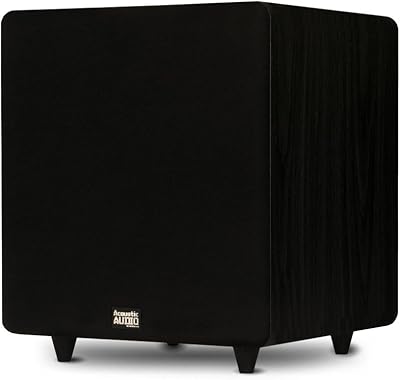
Acoustic Audio PSW500-12 12-Inch Powered Subwoofer
73%
83%
Bass Output for Price
88%
Ease of Setup
86%
Value for Money
67%
Build Quality
71%
Sound Quality
More
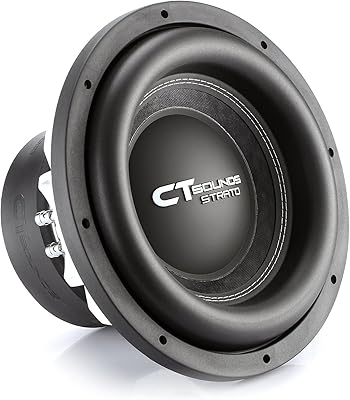
CT Sounds STRATO-12-D4 12-Inch Car Subwoofer
78%
89%
Bass Output & Volume
91%
Build Quality
88%
Thermal Durability
86%
Value for Money
74%
Installation Experience
More
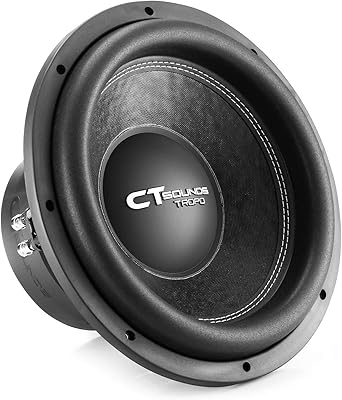
CT Sounds TROPO-12-D4 12-inch Car Subwoofer
77%
93%
Value for Money
81%
Bass Output Quality
86%
Build Quality
78%
Thermal Performance
84%
Installation Ease
More
CT Sounds STRATO-12-D2 12 Inch Dual 2 Ohm Car Subwoofer
86%
93%
Bass Performance
89%
Durability
91%
Power Handling
88%
Sound Clarity
84%
Ease of Installation
More
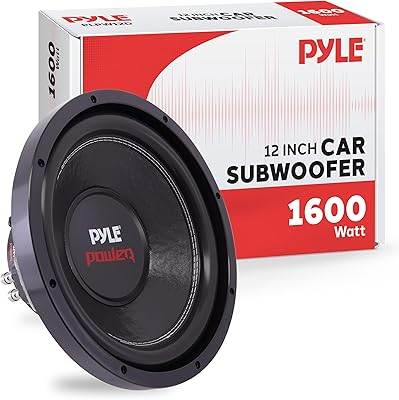
Pyle PLPW12D 12-Inch Car Subwoofer
68%
84%
Value for Money
76%
Bass Output
63%
Build Quality
88%
Ease of Installation
58%
Amp Compatibility
More
Polk Audio DB842 DVC 8″ Car Subwoofer
76%
88%
Installation Ease
73%
Bass Output
84%
Build Quality
71%
Weather Resistance
58%
Sensitivity & Amp Matching
More
Rockville RV1212P Dual 12″ Subwoofer Enclosure
76%
88%
Bass Output
91%
Value for Money
79%
Build Quality
74%
Ease of Installation
61%
Enclosure Size & Fit
More

FAQ

Plan around the 370W RMS rating, not the peak figure. A stable amplifier delivering somewhere between 200W and 370W RMS into the impedance load you choose will give you strong, clean output without stressing the driver. Going well below 150W RMS tends to leave the sub sounding flat and underpowered.

Wiring the two 4-ohm coils in parallel gives you a 2-ohm load, which typically lets your amp push more power — good if your amplifier is stable at 2 ohms. Wiring them in series gives you an 8-ohm load, which suits amps that prefer higher impedance or have a 4-ohm stereo output you want to bridge. Neither option is universally better; it depends entirely on your amplifier's specs.

The IP56 certification is a real, tested rating — it means the driver has been verified against pressurized water spray, salt-fog, UV exposure, and high humidity. Owners who have installed it in boats and UTVs generally confirm the weatherproofing holds up in practice. That said, IP56 is splash protection, not submersion protection, so keep it above the waterline and away from standing water.

The driver requires about 4.4 inches of mounting depth, which is what makes it viable for underseat boxes, shallow spare-tire-well enclosures, and other tight spaces. Always measure your available depth and compare it to the manufacturer's cutout template before committing to a mount location.

Technically yes, but in practice you will be disappointed. Factory head unit outputs are typically around 15–20W RMS per channel, which is a fraction of what the DB1242 DVC needs to produce meaningful bass. A dedicated amplifier is not optional if you want this sub to perform anywhere near its potential.

The Polk Audio DB1242 DVC 12-Inch Car Subwoofer is compatible with both sealed and ported enclosures, and Polk publishes recommended box volumes for each type. Sealed boxes generally produce tighter, more accurate bass, while ported enclosures tend to be louder and more impactful at the cost of some precision. Check Polk's official documentation for the specific volume recommendations for this driver.

That 1110W figure is a peak rating, meaning the driver can momentarily absorb that level of energy during brief transients without physical damage. It says nothing about continuous performance. The RMS rating of 370W is the number that governs real-world amp pairing — that is the sustained power level the driver is designed to handle over time.

It is a reasonable choice for a first build, especially if space is a constraint. The dual voice coil wiring is slightly more involved than a single voice coil driver, but the concept is easy to grasp with a quick diagram. If you are new to car audio, spend some time understanding impedance and box tuning before you buy — getting those details right will make a bigger difference than the driver choice itself.

Owners consistently describe the bass from this Polk shallow-mount sub as controlled and clean rather than boomy or one-note. Budget no-name drivers in the same size class often have more distortion at higher volumes and cheaper surrounds that degrade faster. The Polk DB+ construction — particularly the Santoprene surround and laser-tuned cone — tends to hold up better over time and deliver more accurate output.

The package includes the driver and documentation, but mounting hardware such as screws, wiring, or an enclosure are not included. You will need to source those separately. Polk typically provides a cutout template in the included literature, which you can use to mark and cut your mounting surface accurately.