Overview

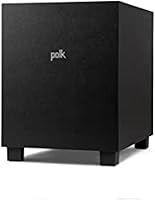
The Polk Audio Monitor XT10 10″ Subwoofer is Polk's serious entry into the mid-range powered subwoofer market, purpose-built for home theater enthusiasts who want real bass without overspending. It represents a meaningful step up from the older Monitor series, pairing a 10-inch woofer with a 100W Class D amplifier in a package that competes well at this price point. Worth stating upfront: this Polk subwoofer is not a casual Bluetooth speaker or a background music add-on. It's designed to anchor a proper wired surround sound system, and that focused purpose shows in every design decision Polk made here.
Features & Benefits

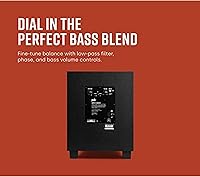
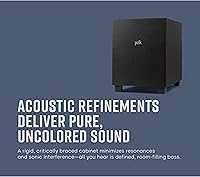
The XT10's long-throw 10-inch woofer reaches a genuinely deep frequency floor, delivering the physical weight behind movie explosions and bass-heavy music that smaller drivers simply cannot reproduce. A 100W Class D amplifier keeps things efficient and cool while maintaining clean output across the range. The rigid MDF cabinet uses a down-firing ported design that minimizes unwanted resonance and keeps bass tight rather than bloated. Onboard controls — volume, variable crossover frequency, and a phase polarity switch — make tuning this powered sub to any AV receiver straightforward. It accepts both LFE and line-level inputs, with full compatibility for Dolby Atmos, DTS:X, and Auro 3D receiver configurations.

Best For

The XT10 is a natural fit for anyone already building around the Monitor XT lineup, since it's timbre-matched to pair cleanly with Polk's tower, center, and bookshelf speakers in that family. Outside that ecosystem, it works best in small to medium-sized rooms — a dedicated media room, a typical living room, or a large bedroom. Apartment setups benefit especially, since this powered sub delivers satisfying impact without needing extreme volume levels. It's also a compelling upgrade for anyone stepping up from an entry-level sub who wants noticeably more low-end extension. The flexible input options make it a practical match for virtually any modern AV receiver.

User Feedback

With a 4.6-star average across well over three thousand ratings, buyer satisfaction here is broad and consistent. The most common praise centers on bass clarity and depth relative to the price — many buyers note it outperforms expectations and integrates easily with their existing receiver in just a few minutes. On the downside, users in larger or open-plan rooms occasionally report that the sub runs short on headroom at higher volumes, which is an honest limitation worth knowing. Some also mention that crossover calibration takes a round of trial and error before it blends perfectly with satellite speakers. One point worth clarifying: despite a Bluetooth listing in some spec sheets, this is a strictly wired subwoofer.

Pros

  • Bass extension reaches genuinely low frequencies, adding real physical weight to movie soundtracks and bass-heavy music.
  • The 100W Class D amplifier runs cool and efficiently, even during extended listening sessions.
  • Down-firing ported cabinet design keeps bass tight and controlled rather than boomy or loose.
  • Onboard crossover and phase controls make tuning to virtually any AV receiver straightforward.
  • Accepts both LFE and line-level inputs, giving it broad compatibility with modern and legacy receivers.
  • Timbre-matched to the Monitor XT speaker family for buyers building a full Polk system.
  • Rated 4.6 stars across more than 3,500 buyer reviews — a reliable indicator of consistent satisfaction.
  • Compact enough for apartments and mid-size rooms without dominating the floor plan.
  • Includes a grille for a cleaner look when bass performance doesn't need to be on display.
  • Setup is quick — most buyers report being up and running within minutes of unboxing.

Cons

  • Output ceiling is limiting in large or open-plan rooms; it can struggle to fill bigger spaces at high volumes.
  • The black vinyl finish looks functional but feels underwhelming next to premium cabinet options in this category.
  • Crossover blending with satellite speakers often requires several rounds of adjustment to sound right.
  • At 26 pounds, it is heavier than it looks, which can complicate placement in tighter setups.
  • No wireless connectivity whatsoever — the Bluetooth listing in some specs is misleading and incorrect.
  • The limited warranty provides basic coverage but does not inspire confidence for a long-term investment.
  • Buyers without an AV receiver cannot use this sub at all — it is not a standalone solution.
  • Low-frequency tuning can expose room acoustic problems that cheaper subs simply mask.
  • No auto-on feature mentioned, which may require manual power management depending on receiver configuration.

Ratings

The Polk Audio Monitor XT10 10″ Subwoofer scores have been generated by AI after systematically analyzing thousands of verified global buyer reviews, with spam, bot-submitted, and incentivized feedback actively filtered out. The results reflect a genuinely balanced picture — this powered sub earns strong marks in several areas that matter most to home theater buyers, while a few real-world limitations are scored honestly and without gloss. Both the standout strengths and the friction points are represented transparently so you can make a fully informed decision.
Bass Performance
91%
Buyers consistently describe the low-end output as punchy and physically present — the kind of bass you feel during action sequences, not just hear. For a 10-inch driver at this price tier, the depth it reaches is a genuine surprise to most first-time owners upgrading from budget alternatives.
In larger or open-plan rooms, the sub can feel slightly underpowered when pushed to its upper limits, with a noticeable compression in the lowest registers. It performs best at moderate to high volumes in contained spaces rather than in truly demanding large-room scenarios.
Value for Money
88%
Most buyers feel they are getting significantly more subwoofer than the price suggests — the combination of driver size, amplifier quality, and cabinet construction places it in a tier that comparable brands often charge considerably more to reach. It is a strong value proposition for anyone building a first serious home theater.
A small number of buyers who compared it directly against premium competitors noted that the gap narrows when considering long-term build longevity, and felt the warranty coverage does not fully match the otherwise competitive value story. Those with higher expectations based on brand reputation alone occasionally felt underwhelmed.
Build Quality
76%
24%
The MDF cabinet feels solid and resonance-free in use — knocking on it produces a satisfying density that cheap particle board alternatives simply do not. The overall construction inspires enough confidence that most buyers do not worry about the unit degrading over years of regular use.
The black vinyl finish divides opinion; it looks clean and neutral but reads as functional rather than premium, especially next to units with real wood veneer finishes at a similar price. A few buyers noted that the vinyl edges show handling marks fairly easily during setup.
Ease of Setup
93%
Hookup is genuinely straightforward — a single RCA cable from the receiver subwoofer output and a power connection, and most buyers report being up and running within ten minutes of unboxing. The included quick start guide is clear enough that first-time sub owners do not need to consult additional resources.
While the physical connection is simple, dialing in the crossover frequency and phase polarity to blend cleanly with satellite speakers requires patient listening and some trial and error. Buyers without receiver-based auto-calibration systems (like Audyssey) spend more time fine-tuning than they initially expected.
Low-Frequency Extension
89%
The XT10 reaches into genuinely deep bass territory that most subwoofers at this size and price cannot sustain without audible strain — this matters most during film scores with sustained low-end rumble, or electronic music with extended sub-bass content. Buyers switching from 8-inch alternatives consistently note the difference immediately.
At absolute maximum output, the very lowest frequencies can lose some definition and tighten slightly under load. This is rarely a problem at typical listening levels, but buyers who regularly mix at high volumes with bass-heavy content may occasionally notice the floor of the sub's clean output range.
Room Integration
74%
26%
The down-firing ported design is forgiving of placement in typical rectangular rooms, and the variable crossover control gives buyers enough adjustment range to blend the sub reasonably well with most satellite speaker configurations. Buyers in carpeted rooms especially noted that placement felt flexible.
Getting a truly smooth bass transition across the full listening area takes considerable placement experimentation — corner loading helps output but can exaggerate certain frequencies, and the sub rewards buyers who are willing to move it around and re-calibrate rather than set it and forget it.
Amplifier Efficiency
87%
The Class D amplifier runs noticeably cooler than the older linear amplifier designs found in competing units at this price, which matters for buyers who run their systems for extended movie marathons or gaming sessions. Power draw is modest relative to output level, which satisfied energy-conscious buyers.
A small subset of buyers who compared it to higher-end Class D implementations felt the amp stage was not quite as refined at the very top of its dynamic range, with occasional hints of compression during sudden transient spikes. This is mostly a non-issue at sensible volume levels.
Crossover Controls
79%
21%
Having a variable crossover dial rather than a fixed filter is a genuine practical advantage — buyers pairing this sub with full-range tower speakers set it differently than those using small bookshelf speakers, and the control range accommodates both scenarios well. The phase toggle is a small but meaningful addition.
The crossover and phase controls are analog knobs without detents or labeling precision, which makes repeatable settings difficult to nail down. Buyers who relocate their system or change satellite speakers have to re-calibrate from scratch rather than returning to a saved position.
Connectivity Options
82%
18%
Supporting both LFE and line-level inputs means this powered sub can connect to virtually any receiver — from modern Atmos-capable units down to older stereo integrated amplifiers with a subwoofer pre-out. That flexibility removes a common compatibility concern buyers face when purchasing a dedicated sub.
There is no wireless connectivity of any kind, which is worth noting clearly since Bluetooth appears in some automated listings for this product. Buyers who specifically need a wireless subwoofer solution will need to look at other options, as this unit requires a cable run to the receiver regardless of placement.
Cabinet Resonance Control
86%
The rigidly braced MDF enclosure does its job well — there is no audible cabinet rattle or buzzing even at higher output levels, which is a common failure point in cheaper alternatives. The down-firing woofer orientation contributes to a cleaner, more focused bass character that buyers describe as tight rather than diffuse.
Buyers on hard floor surfaces occasionally noted that the sub transmits some vibration through its feet into the floor, particularly at higher volumes. A simple aftermarket isolation pad resolves this, but it adds a minor additional cost that is not mentioned in the box contents.
Monitor XT System Matching
84%
For buyers already running Monitor XT bookshelf or tower speakers, the tonal consistency across the lineup is a real benefit — the crossover transition between the sub and the mains feels cohesive rather than stitched together, which is not always the case when mixing subwoofers and satellites from different brands.
The system-matching advantage is fairly narrow in practice, since a properly calibrated subwoofer of any brand crosses over below the range where timbre differences between manufacturers are perceptible. Buyers without other Monitor XT speakers get essentially no tangible benefit from this particular design feature.
Long-Term Reliability
77%
23%
The majority of owners who have run the XT10 continuously for extended periods report no mechanical or amplifier issues, and the MDF cabinet shows no sign of structural degradation with regular use. The brand has a reasonable track record for driver and amplifier longevity at this tier.
The limited warranty offers basic protection but does not specify a particularly generous coverage window, which introduces some uncertainty for buyers factoring in long-term ownership costs. A handful of reviews mention amplifier channel issues after extended high-volume use, though these appear to be isolated rather than systemic.
Volume Output Headroom
68%
32%
For typical apartment or mid-size room use at reasonable listening levels, the output is entirely adequate and rarely feels strained. Movie watching at normal reference levels and music listening in smaller spaces never really tests the ceiling of what this sub can deliver cleanly.
Push it in a large room or crank the volume for a genuine high-output listening session and the headroom limitations become apparent — it runs out of clean output before a 12-inch or more powerful alternative would. Buyers who entertain in open-plan spaces reported this as the sub's most noticeable real-world limitation.

Suitable for:

The Polk Audio Monitor XT10 10″ Subwoofer is an excellent match for home theater builders who want genuinely deep, controlled bass without crossing into high-end pricing territory. It fits naturally into small to medium-sized rooms — a dedicated media room, a standard living room, or even a large bedroom — where a 10-inch driver has enough space to perform without being asked to fill a room it was never designed for. Buyers already running other Monitor XT speakers will find this powered sub integrates almost effortlessly, since Polk engineered the whole family to blend tonally. It also works well for first-time home theater builders who want a real subwoofer experience and are connecting to a modern AV receiver with Dolby Atmos or DTS:X support. For anyone stepping up from a cheap, underpowered entry-level sub, the jump in low-end extension and overall clarity will feel substantial.
Not suitable for:

The Polk Audio Monitor XT10 10″ Subwoofer is not the right call for buyers expecting to fill a large, open-plan living space or a dedicated home theater room with generous square footage — at high volumes, this sub will run out of headroom before it fully pressurizes a big room. It is also not a casual desktop or bookshelf audio upgrade; this is a wired, floor-standing unit that needs an AV receiver to function properly, so buyers hoping for a simple plug-and-play Bluetooth subwoofer should look elsewhere. Despite Bluetooth appearing in some spec sheet listings, the XT10 is strictly a wired subwoofer, and that distinction matters. Those prioritizing raw output for music listening at concert-level volumes, or for truly demanding two-channel audio setups, would be better served by a larger or more specialized unit. Finally, buyers who want a truly finished aesthetic — premium cabinet veneer, brushed metal accents — may find the black vinyl finish adequate but unremarkable.

Specifications

  • Driver Size: The woofer measures 10 inches in diameter, using a long-throw dynamically balanced design for extended low-frequency excursion.
  • Amplifier Power: An onboard 100W Class D amplifier powers the driver efficiently with low heat output and minimal distortion.
  • Frequency Response: The sub reaches down to 24Hz at the low end, covering the deep bass range needed for home theater impact.
  • Cabinet Material: The enclosure is constructed from MDF (medium-density fiberboard), a rigid material chosen specifically to reduce resonance and cabinet vibration.
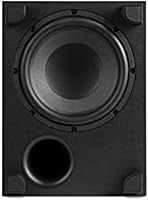
  • Cabinet Design: A down-firing bass reflex (ported) configuration channels bass output downward, helping to isolate woofer sound and minimize unwanted sonic interference.
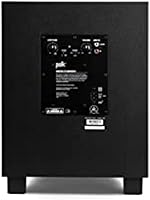
  • Inputs: Connectivity includes an LFE (low-frequency effects) input with unfiltered pass-through and a line-level stereo input for broader receiver compatibility.
  • Onboard Controls: Three user-adjustable controls are provided: a volume dial, a variable crossover frequency selector, and a phase polarity toggle switch.
  • Format Compatibility: The sub is engineered to work with AV receivers decoding Dolby Atmos, DTS:X, and Auro 3D surround sound formats.
  • Dimensions: The cabinet measures 16.6″ deep by 11.9″ wide by 15.7″ tall, making it a compact but substantial floor-standing unit.
  • Weight: The unit weighs 26 pounds, reflecting the density of the MDF cabinet and internal amplifier components.
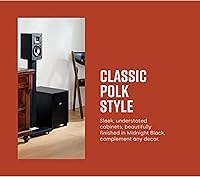
  • Color & Finish: The exterior is finished in black vinyl, giving it a clean, neutral appearance that suits most home theater environments.
  • Connectivity: This is a strictly wired subwoofer; connection to a receiver is made via standard RCA cables, with no wireless or Bluetooth functionality.
  • Speaker Family: The XT10 is part of the Monitor XT lineup, and its driver and crossover characteristics are tuned to blend with other speakers in that family.
  • Included Items: The package contains the subwoofer, a removable grille, a power cord, and a printed quick start guide.
  • Power Source: The sub operates on standard corded AC power and does not support battery operation or any wireless power delivery.
  • Surround Config: Designed as the bass foundation in a 5.1 or larger surround sound configuration when paired with compatible satellite speakers.
  • Warranty: Polk Audio provides a limited warranty on this product; buyers should confirm current warranty terms directly with Polk for duration and coverage details.
  • EU Parts Duration: Spare parts availability for EU markets is guaranteed for a period of five years from the product release date.

Related Reviews
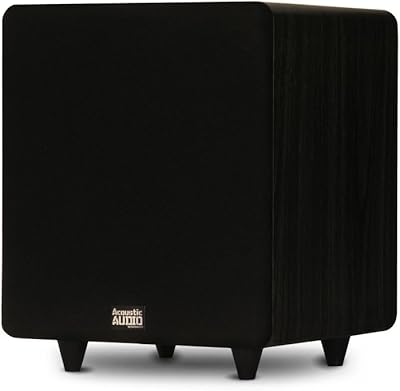
Polk Audio PSW10 10-inch Powered Subwoofer
75%
78%
Bass Performance
93%
Ease of Setup
67%
Build Quality
84%
Value for Money
72%
Room Suitability
More
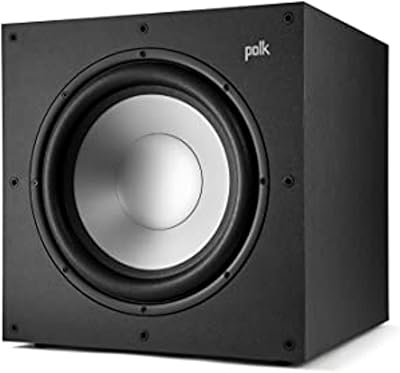
Acoustic Audio PSW400-10 10-Inch Powered Subwoofer
85%
91%
Bass Performance
88%
Ease of Setup
85%
Sound Quality
92%
Value for Money
87%
Build Quality
More
Polk Monitor XT12 Powered Subwoofer
85%
94%
Bass Performance
90%
Sound Quality
88%
Build Quality
86%
Ease of Setup
89%
Connectivity Options
More
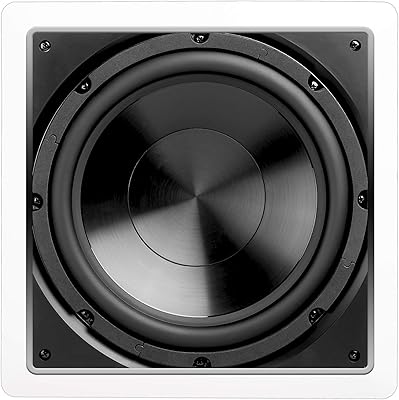
Polk Audio Atrium SUB100 Outdoor Subwoofer
73%
83%
Bass Performance
91%
Weather Durability
54%
Installation Experience
46%
Amplifier Dependency
88%
Build Quality
More
OSD Audio Forza 10 Outdoor Subwoofer
77%
88%
Bass Performance
91%
Build Quality
86%
Weather Resistance
58%
Ease of Setup
72%
Value for Money
More
OSD Audio IWS10 In-Wall Subwoofer 10″
84%
87%
Sound Quality
90%
Bass Performance
78%
Ease of Installation
85%
Value for Money
92%
Design & Aesthetics
More
Polk Audio DB842 DVC 8″ Car Subwoofer
76%
88%
Installation Ease
73%
Bass Output
84%
Build Quality
71%
Weather Resistance
58%
Sensitivity & Amp Matching
More
Polk Audio Signa S4 Soundbar with Subwoofer
82%
92%
Dialog Clarity
88%
Bass Performance
74%
Dolby Atmos Height Effect
93%
Setup & Installation
86%
Value for Money
More
Dayton Audio SUB-1000 10″ Powered Subwoofer
79%
83%
Bass Output & Extension
91%
Value for Money
93%
Ease of Setup
76%
Build Quality
62%
Room Size Suitability
More
Polk Audio DB1242 DVC 12″ Marine Subwoofer
87%
94%
Bass Performance
91%
Durability & Weather Resistance
86%
Ease of Installation
89%
Sound Clarity
92%
Value for Money
More

FAQ

You need a receiver or amplifier with a dedicated subwoofer output — this Polk subwoofer cannot be driven directly from a TV's speaker terminals. Most modern AV receivers have an LFE or subwoofer pre-out jack, and that is exactly what the XT10 is designed to connect to. If your TV only has a headphone jack or optical output, you would need a receiver or a processor in between.

No, the XT10 is a wired-only subwoofer. Bluetooth appears in some automated spec sheet aggregations, but it is not a feature this sub actually supports. Connection is made via RCA cables to your receiver's subwoofer output — straightforward, reliable, and lag-free, but strictly wired.

It is genuinely well-suited for those spaces. A 10-inch driver in a ported cabinet produces meaningful bass output without needing to be pushed to uncomfortable volume levels, which matters a lot in apartments. You will get satisfying impact for movies and music without the sub struggling or bottoming out at moderate listening levels.

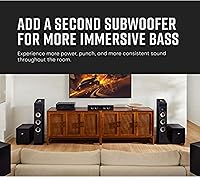
One unit is sufficient for a standard 5.1 setup in a small to medium room. Two subwoofers are generally only necessary in larger spaces where a single unit cannot evenly pressurize the room, or for dedicated listening rooms where bass evenness across the entire space is a priority.

The physical hookup is simple — one RCA cable from your receiver's subwoofer output to the sub's LFE input. Getting the crossover frequency right takes a bit more patience; most buyers find that starting around 80Hz and adjusting by ear (or using their receiver's auto-calibration system like Audyssey or YPAO) produces good results. It is not complicated, but it does reward a few minutes of careful listening.

Yes, absolutely. The Dolby Atmos and DTS:X compatibility refers to the receiver decoding those formats and sending the bass signal via the LFE channel — the subwoofer itself just reproduces whatever low-frequency signal it receives. This sub works perfectly well with any receiver that has a subwoofer pre-out, regardless of how old or new it is.

The XT10 includes an auto-on circuit that detects an incoming audio signal and powers the amplifier up accordingly. When no signal is detected for a period of time, it drops into standby mode. You can also leave it in always-on mode if you prefer not to wait for it to wake up at the start of a listening session.

The main differences you notice are in low-end extension and cabinet quality. Budget subs at a lower price point often use smaller drivers, less rigid enclosures, and lower-powered amps that result in bass that sounds boomy or one-note rather than defined and deep. The XT10 resolves bass lines more clearly and reaches lower without audible strain, which becomes obvious on anything with genuine sub-bass content like action films or electronic music.

Yes, without any issues. The timbre-matching to the Monitor XT family is a bonus for buyers building a full Polk setup, but the XT10 crosses over at a frequency low enough that the transition between it and virtually any brand of satellite speaker is practically inaudible when calibrated correctly. Brand matching at the subwoofer level matters far less than matching your main left, right, and center speakers to each other.

The grille attaches with standard pegs and pulls off cleanly without tools. Without it, you can see the down-firing woofer cone from certain angles, but since the driver faces downward, it is largely hidden during normal use. Most buyers leave the grille on for a cleaner look, though it has no measurable effect on sound performance either way.

Where to Buy