Overview

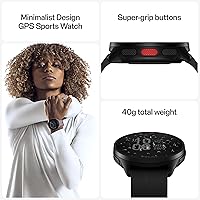
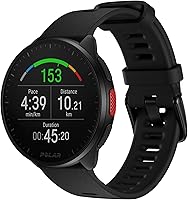
The Polar Pacer GPS Running Smartwatch arrived in 2022 as Polar's answer to runners who felt existing options were either too basic or too bloated. At just 40 grams, it sits in an interesting middle ground — more capable than a simple fitness band, but deliberately stripped of the smartwatch extras that add weight and complexity. The always-on MIP display stays legible in harsh midday sunlight without punishing the battery. Competing against the Garmin Forerunner lineup and the Coros Pace series, this Polar running watch targets athletes who want a dedicated training tool rather than a wrist-worn smartphone companion.
Features & Benefits

The Pacer's 35-hour GPS battery is genuinely impressive for a watch this size — it will outlast most training weeks on a single charge, and the 100-hour power-save option means you could carry it through a multi-day stage race without hunting for a wall socket. An integrated barometer quietly logs elevation on hilly routes, while komoot turn-by-turn navigation makes unfamiliar trails far less stressful. Running performance tests and a leg recovery assessment add structured coaching depth that many watches in this price range simply skip. The wrist-based heart rate sensor rounds out a focused, well-considered feature set built specifically around running.

Best For

This GPS running watch suits marathon and ultramarathon athletes who want reliable metrics without constant smartwatch distractions buzzing on their wrist mid-run. The featherlight build pays dividends during long training blocks where even minor discomforts compound over miles. If you already use the Polar Flow app and value its recovery and training load analysis, the Pacer fits cleanly into that ecosystem. Runners who train on exposed trails or in bright sunlight will appreciate the display's outdoor readability. That said, anyone expecting Garmin-level smart notifications or Apple Watch app integration will likely find it underwhelming — this watch does one thing and focuses hard on it.

User Feedback

Buyers consistently praise the lightweight feel on long runs and the display's clarity in direct sunlight — two qualities that genuinely affect daily usability. GPS reliability earns solid marks in most urban and open environments, though dense tree cover can affect consistency as it does with most watches. Where opinions split is on the software side: newcomers to Polar sometimes find the Flow app less intuitive than Garmin Connect, and the setup curve can frustrate early on. A handful of reviewers have noted heart rate inconsistencies during hard intervals, which matters if precise zone work drives your training. The 4.0-star average reflects a capable, focused device with a few legitimate rough edges.

Pros

  • At just 40 grams, the Pacer is light enough to forget mid-run, even on efforts lasting several hours.
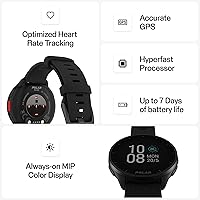
  • The always-on MIP display stays clearly readable in direct sunlight where most touchscreen watches wash out completely.
  • Thirty-five hours of GPS battery life comfortably covers ultramarathon distances on a single charge.
  • The integrated barometer provides cleaner elevation data than GPS-only altitude calculations on hilly routes.
  • Komoot-powered turn-by-turn navigation lets you explore unfamiliar roads and trails without carrying a phone.
  • Built-in running performance tests and leg recovery assessments add structured coaching depth at no subscription cost.
  • Unisex S-L sizing makes this GPS running watch genuinely accessible for a wide range of wrist sizes.
  • The focused interface keeps distractions off your wrist, which many serious runners actively prefer during training blocks.
  • Power-save mode extends operation to 100 hours, a practical safety net for staged or multi-day race formats.

Cons

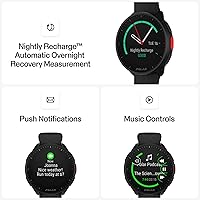
  • Smart notification support is minimal — no app alerts, music controls, or contactless payment functionality.
  • The Polar Flow app has a steeper learning curve than Garmin Connect, especially frustrating for first-time Polar users.
  • Heart rate accuracy drops noticeably during high-intensity intervals, making chest strap reliance likely for precise zone work.
  • Third-party app integration is thin compared to Garmin's ecosystem, limiting tools like live Strava segments or direct TrainingPeaks sync.
  • No running dynamics data — cadence, vertical oscillation, ground contact time — without purchasing additional accessories.
  • GPS signal acquisition can be slow in urban canyons or dense tree cover, and occasional route drift has been reported.
  • The silicone strap can cause mild skin irritation during hot-weather runs when worn tight for extended periods.
  • Long-term battery capacity may degrade after 12 to 18 months of heavy daily use, a common lithium polymer limitation.
  • At its price, the absence of multisport profiles means cyclists and swimmers will need a separate device entirely.

Ratings

The Polar Pacer GPS Running Smartwatch earns a well-deserved but nuanced reputation among dedicated runners — our AI has analyzed thousands of verified global user reviews, actively filtering out incentivized and bot-generated feedback to surface what real athletes actually experience day-to-day. Scores below reflect both the genuine strengths that keep buyers loyal to the Pacer and the friction points that prevent it from being a universal recommendation. Nothing has been glossed over.

GPS Accuracy
83%
On open roads and tracks, most runners report that pace and distance readings are tight and consistent — reliable enough to pace a marathon without second-guessing the numbers. Multi-satellite support helps in varied environments, and long-run data tends to match mapped routes closely.
In dense urban canyons or heavily wooded trails, signal acquisition can take longer than expected and occasional drift affects route traces. A handful of reviewers noted that the first GPS lock of the day sometimes takes over a minute in challenging conditions.
Battery Life
91%
Thirty-five hours of continuous GPS tracking means you can run a 100-mile ultra, sleep with the watch on, and still have reserves left. Runners training for multi-day events particularly appreciate the 100-hour power-save mode as a genuine safety net, not just a marketing figure.
Battery performance does degrade noticeably when using heart rate monitoring alongside GPS at the highest recording frequency. A small number of long-term users have reported that capacity diminishes after 12 to 18 months of heavy daily use, as is typical with lithium polymer cells.
Display Readability
89%
The always-on MIP color display is one of the most consistently praised features across reviews — runners training in Florida summers or high-altitude mountain conditions both note they can read pace data without shading the watch or squinting. Brightness holds up without the battery penalty of AMOLED screens.
The 1.2-inch screen is compact, and a few runners with larger hands or older eyes found the data fields slightly cramped when displaying multiple metrics simultaneously. The display is not as visually rich or vibrant as the AMOLED panels found on some competing smartwatches.
Heart Rate Accuracy
71%
29%
During steady-state efforts like easy long runs and tempo sessions, the wrist-based optical sensor performs well and broadly agrees with chest strap readings. For most recreational runners logging aerobic base miles, it is accurate enough to guide zone-based training without additional hardware.
At high-intensity intervals and sprint efforts, a meaningful portion of reviewers report noticeable lag and occasional spikes that diverge from actual exertion. Runners who rely on precise heart rate zones for VO2 max work or lactate threshold training may find themselves reaching for a chest strap more often than expected.
Comfort & Wearability
88%
At 40 grams, the Pacer genuinely disappears on the wrist during long efforts in a way that heavier multisport watches simply cannot replicate. Reviewers logging 18-plus-mile training runs frequently mention that they forget they are wearing it, which matters when you are three hours into a marathon training block.
The silicone strap, while functional, has attracted some criticism for stiffness during cold-weather runs and mild skin irritation during sweaty summer sessions when worn tight. The S-L sizing covers most wrists but those with very small wrists occasionally report that even the small setting feels slightly loose.
Running Metrics Depth
82%
18%
Beyond basic pace and distance, the Pacer delivers running performance tests, leg recovery assessments, and structured interval tools that add genuine coaching value without requiring a subscription. Serious runners training for goal races appreciate having recovery guidance baked directly into the device.
The running test suite, while useful, is narrower than what Garmin's Forerunner lineup or Polar's own Vantage series offers. There is no running dynamics data — cadence, vertical oscillation, ground contact time — without additional accessories, which leaves data-obsessed athletes wanting more depth.
Navigation & Route Guidance
74%
26%
The komoot-powered turn-by-turn navigation works well for pre-planned trail routes and unfamiliar road courses, giving runners enough directional confidence to explore new areas without a phone in hand. Setup through the Polar Flow app is straightforward once you have mapped a route in komoot.
The navigation experience depends entirely on pre-loading routes — there is no spontaneous rerouting if you miss a turn, and the map view is minimal compared to watches with full-color topographic displays. Runners who prefer on-the-fly exploration rather than structured routes will find it limiting.
App & Ecosystem Experience
66%
34%
Polar Flow provides genuinely useful training load and recovery metrics that help runners avoid overtraining, and syncing after a run is fast and reliable over Bluetooth. Long-term Polar users already invested in the ecosystem will find the Pacer integrates cleanly with their historical data.
New users migrating from Garmin Connect or even a basic fitness app frequently report a steep learning curve with Polar Flow's interface and terminology. The third-party app integration library is notably thinner than Garmin's Connect IQ platform, which frustrates runners who rely on tools like Strava live segments or TrainingPeaks direct sync.
Smart Notification Support
44%
56%
Basic call and message alerts do come through from a connected phone, which satisfies runners who simply want to know if something urgent arrives mid-run without pulling out their phone. For training-only use, the absence of notifications is almost irrelevant.
Compared to what Garmin, Apple, and even some budget competitors offer, the smart notification experience on this watch feels deliberately bare-bones — no app notifications, no music controls, no contactless payments. Buyers expecting even half the smartwatch functionality of a Garmin Forerunner 255 will be genuinely disappointed.
Build Quality & Durability
84%
The watch feels solid and purposeful in hand, with a scratch-resistant mineral glass lens that has held up well across reviewers who run trails regularly. Water resistance has not been a common complaint, and the overall construction inspires confidence for daily training in varied weather.
The plastic case construction, while keeping weight low, does feel less premium than metal-bodied competitors when you set them side by side. A few reviewers reported minor button stiffness developing over time, particularly on the side controls used most frequently during workouts.
Value for Money
72%
28%
For runners who will genuinely exploit the battery life, running test suite, and GPS reliability, the Pacer offers a focused package at a price below the most capable Garmin and Suunto alternatives. The ultralight build alone justifies serious consideration for long-distance athletes.
At its asking price, the lack of smart features, thinner third-party ecosystem, and occasional heart rate inconsistencies make it harder to recommend as straightforwardly as similarly priced Garmin options. Runners who want versatility beyond pure running will find better value elsewhere.
Elevation & Barometer Performance
78%
22%
The integrated barometer tracks elevation changes with solid accuracy on hilly road runs and moderate trail courses, giving runners cleaner ascent and descent data than GPS-only altitude calculations typically provide. Hill repeat sessions and course profiling benefit noticeably from having real barometric readings.
In rapidly changing weather conditions, the barometer can occasionally confuse atmospheric pressure shifts with actual elevation changes, producing slightly erratic altitude readings mid-run. It is a minor issue for most users but worth noting for mountain runners who depend on precise vertical gain tracking.
Setup & Ease of Use
76%
24%
Once the initial pairing is complete, day-to-day operation is genuinely intuitive — starting a run, cycling through data screens, and ending a session require minimal button fiddling. The focused feature set actually works in the watch's favor here, since there is simply less to configure.
The out-of-box setup process, particularly syncing with komoot and configuring the Polar Flow app for the first time, draws repeated criticism for being less guided than Garmin's onboarding experience. Users who are not technically patient tend to rate their early experience poorly even when the watch performs well afterward.
Size & Fit Versatility
81%
19%
The unisex S-L strap sizing and relatively compact 1.77-inch case diameter make the Pacer one of the more wrist-friendly GPS running watches at this capability level, particularly for women and runners with narrower wrists who find many GPS watches oversized and distracting.
The single color option and limited customization in strap design mean it does not appeal to buyers who treat their running watch as part of a lifestyle aesthetic. The round case, while clean, is not as slim in profile as a few competitors targeting the same minimalist audience.

Suitable for:

The Polar Pacer GPS Running Smartwatch is built squarely for runners who treat their watch as a training tool rather than a lifestyle device — and that distinction matters. If you are logging serious weekly mileage, training for a half marathon, full marathon, or an ultramarathon, the 35-hour GPS battery and focused running metrics will serve you well without the weight penalty of bulkier multisport watches. Outdoor runners who train in bright conditions will immediately appreciate the always-on MIP display, which stays readable when a touchscreen watch would be nearly invisible in direct sunlight. Minimalists who find Garmin's feature sprawl overwhelming will feel at home with the Pacer's clean, purposeful interface. It also fits naturally into the Polar ecosystem — if you already use Polar Flow to monitor training load, recovery status, and long-term fitness trends, this GPS running watch slots in without friction. Lightweight runners and smaller-wristed athletes who have struggled to find a serious GPS watch that does not overwhelm their wrist will find the compact 40g build a genuine relief over long efforts.

Not suitable for:

The Polar Pacer GPS Running Smartwatch is a poor fit for anyone who expects a watch at this price point to double as a capable smartwatch. If you rely on app notifications, music storage or playback controls, contactless payments, or a vibrant color touchscreen for daily use, this watch will frustrate you almost immediately — those features simply are not here. Garmin and Apple Watch buyers considering a switch should go in with clear expectations: the Pacer offers a fraction of the third-party app ecosystem and smart connectivity that those platforms provide. Runners who need highly precise heart rate data for structured interval work or lactate threshold training should know that the wrist-based sensor can struggle at high intensities, and a chest strap workaround adds cost and inconvenience. Triathletes or cyclists looking for a multisport device will also find the running-centric feature set limiting. Finally, buyers who are new to Polar and unfamiliar with the Flow app should be prepared for a moderate setup learning curve before the experience feels intuitive.
Specifications

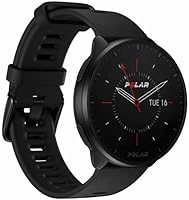
  • Weight: The watch unit weighs 40 grams, making it one of the lightest dedicated GPS running watches in its class.
  • Display: Features a 1.2-inch always-on MIP (Memory-In-Pixel) color display that remains clearly visible in direct sunlight without active backlighting.
  • Dimensions: The case measures 1.77 x 1.77 x 0.45 inches, with a round profile designed to sit low on the wrist.
  • Battery Life: Supports up to 35 hours in full GPS training mode, up to 100 hours in power-save mode, and approximately 7 days in standard watch mode.
  • Battery Cell: Powered by a built-in 265mAh Lithium Polymer battery that is non-removable and recharged via a proprietary magnetic connector.
  • GPS System: Equipped with built-in multi-satellite GPS for continuous position tracking during outdoor training sessions.
  • Heart Rate: Uses Polar's advanced wrist-based optical sensor to monitor heart rate continuously during workouts and throughout the day.
  • Barometer: An integrated barometric pressure sensor tracks real-time elevation changes for accurate ascent and descent data on hilly or trail routes.
  • Navigation: Supports turn-by-turn route guidance powered by komoot integration, with routes pre-loaded via the Polar Flow app before a run.
  • Connectivity: Connects to smartphones and accessories via Bluetooth; compatible with Bluetooth heart rate belts and other Polar sensors.
  • Memory: Onboard storage capacity is 32MB, sufficient for training data logs, route files, and watch settings.
  • Strap Size: Ships with a silicone wrist strap available in a combined S-L size range to accommodate a broad variety of wrist circumferences.
  • Running Tests: Includes three structured assessment tools: Walking Test, Running Performance Test, and Leg Recovery Test for fitness and readiness evaluation.
  • Running Metrics: Tracks pace, distance, laps, elapsed time, interval timer, and stopwatch natively without requiring a connected phone.
  • App Ecosystem: Syncs with the Polar Flow app for training load analysis, recovery tracking, and workout history; Polar Flow is available on iOS and Android.
  • Water Resistance: The watch is water-resistant and suitable for use in rain and sweat conditions typical of outdoor running training.
  • Compatibility: Full feature functionality requires the Polar Flow mobile app; basic PC sync is also supported via the Polar FlowSync software on Windows.
  • Case Shape: Features a classic round case design constructed with a mineral glass lens for everyday scratch resistance during training.

Related Reviews
Garmin Forerunner 245 GPS Running Smartwatch
75%
92%
GPS Accuracy
89%
Battery Life
88%
Training Plan Quality
71%
Running Dynamics
91%
Comfort and Wearability
More
Garmin Forerunner 955 GPS Running Smartwatch
88%
93%
GPS Accuracy
91%
Battery Life
88%
Build Quality
90%
Training Metrics
87%
Health Tracking Features
More
Garmin Forerunner 945 GPS Running/Triathlon Smartwatch
87%
95%
GPS Accuracy
92%
Battery Life
88%
Build Quality
90%
Comfort for Long Runs
85%
Music Storage & Playback
More
FILA SW52-GPS Smartwatch
85%
89%
Value for Money
85%
GPS Accuracy
74%
Battery Life
88%
Build Quality
91%
Display Quality
More
Garmin Forerunner 265S Running Smartwatch
87%
94%
Battery Life
91%
GPS Accuracy
89%
Display Quality
87%
Comfort & Fit
90%
Health Tracking Features
More
Garmin vivoactive 4 GPS Smartwatch
88%
90%
Battery Life
94%
Fitness & Health Tracking
86%
Music Storage & Playback
88%
Build Quality
85%
Ease of Use
More
Garmin Instinct Solar Rugged Smartwatch
78%
88%
Battery Life
93%
Build Quality
91%
GPS Accuracy
89%
Navigation Features
74%
Solar Charging
More
Garmin Forerunner 965 Running Smartwatch
81%
93%
Display Quality
88%
GPS Accuracy
91%
Training & Recovery Insights
78%
Battery Life
89%
Build Quality & Design
More
Garmin Venu 2 GPS Smartwatch
87%
94%
Battery Life
88%
Health Tracking Accuracy
91%
Display Quality
80%
Ease of Use
86%
Fitness Features
More
Garmin tactix Delta Tactical GPS Smartwatch
78%
93%
Battery Life
91%
Durability & Build
89%
GPS & Navigation Accuracy
88%
Tactical Features
84%
Sports & Fitness Tracking
More

FAQ

The Pacer works with both iPhone and Android smartphones through the Polar Flow app. You pair it over Bluetooth and sync your workouts after each session. The app experience is consistent across both platforms, though some users find the initial setup slightly more involved than they expected.

The watch handles rain, sweat, and splashes without any issues, and most users wear it through wet outdoor runs without concern. However, Polar does not rate the Pacer for open-water swimming or pool training, so it is best kept out of prolonged submersion.

In practice, runners using GPS with continuous heart rate monitoring typically report 28 to 33 hours per charge, which is still excellent for marathon and ultramarathon training. The closer you get to the 35-hour ceiling, the more you need to dial back recording frequency or use power-save features. For everyday training runs of one to three hours, most users charge it once or twice a week at most.

For road running on open courses, the GPS is reliable and consistent enough to pace a marathon confidently. In dense city centers or under heavy tree canopy, you may see occasional drift or slower signal acquisition, which is common across most GPS watches in this category. If sub-meter accuracy on technical trails is a priority, you may want to compare it against watches with dual-frequency GPS.

The watch operates completely standalone during runs — GPS, heart rate, pace, distance, and navigation all work without your phone nearby. You only need the phone to sync completed workouts to Polar Flow or to load new komoot routes before heading out.

For easy and moderate-effort runs, the wrist-based sensor tracks closely enough to guide zone-based training effectively. At high intensities — sprint intervals, hill repeats, or race efforts — it can lag behind or produce brief spikes, which is a known limitation of optical wrist sensors generally. Serious interval runners often pair it with a Polar Bluetooth chest strap for precise data during hard sessions.

Polar Flow is clean and well-organized once you learn where everything is, but the terminology and layout feel unfamiliar compared to Garmin Connect. New users commonly spend the first week or two adjusting to concepts like Training Load Pro and the recovery feedback system. The data depth is genuinely good — it just takes some patience to unlock it.

No, the Pacer does not have onboard music storage or streaming app controls. It does not support Spotify, Apple Music, or any other audio platform. If music during runs is important to you, you will need to manage playback from your phone separately.

Yes — once a route is loaded onto the watch via the Polar Flow app before your run, the navigation works fully offline using the onboard GPS. You do not need a phone signal or Wi-Fi during the run itself, which makes it practical for remote trail running.

The watch ships with a strap that covers both small and large wrist sizes through adjustable holes, so most people find a comfortable fit without needing to purchase additional bands. If you are between sizes or have a particularly narrow wrist, it is worth checking Polar's official fit guide, which gives specific wrist circumference measurements corresponding to each size range.