


Overview

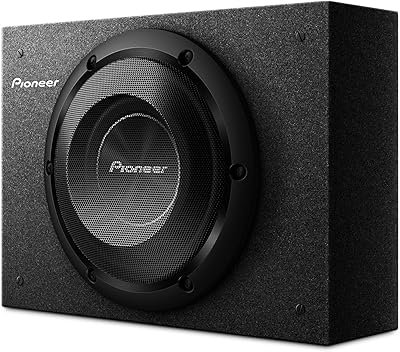
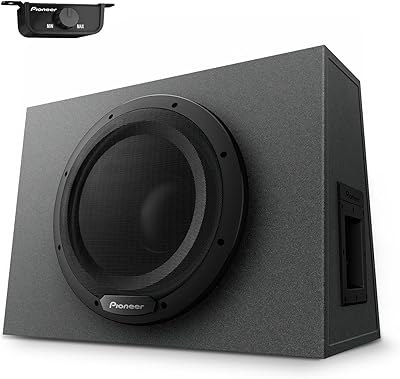
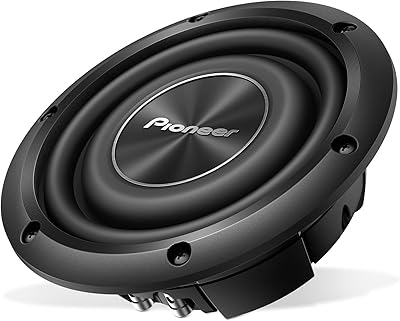
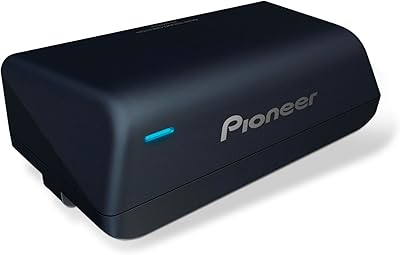
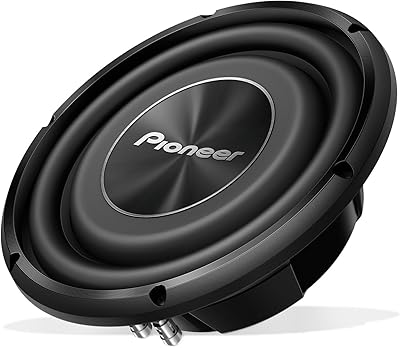
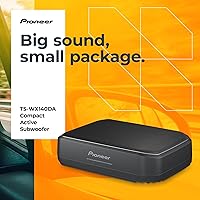
The Pioneer TS-WX140DA is a low-profile active subwoofer built for drivers who want real bass improvement without gutting their trunk or hiring an installer. It comes as a complete, self-contained unit — the amplifier lives inside the sealed enclosure, so there's no separate amp to mount or wire up. At roughly 11 inches wide and under 3 inches tall, this compact sub slides under most seats with room to spare. Pioneer specifically engineered it with electric vehicles in mind, keeping current draw to just 4.3 amps — a detail that matters if you're mindful of range. It's a practical, no-fuss approach to upgrading factory car audio without commitment to a full build.

Features & Benefits

What sets this active subwoofer apart from most plug-in subs is the combination of flexibility and built-in power. Three bass modes — Deep, Dynamic, and Natural — let you shift the character of the low end depending on whether you're playing hip-hop, rock, or acoustic music. The dual-input design (RCA and speaker-level) means it works with stock head units and aftermarket decks alike, which removes a common installation barrier. A wired remote with over 16 feet of cable keeps bass adjustments within reach. The IMPP cone handles the acoustic work inside a sealed enclosure, and sensitivity across the modes stays high enough that even modest source units can drive it without strain.

Best For

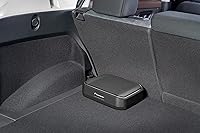
This compact sub makes the most sense for a specific type of buyer. If you own an electric vehicle and want more bass without worrying about added strain on the battery, it's one of very few options genuinely designed with that concern in mind. It also works well for anyone driving a smaller car or crossover where trunk space is scarce — the slim profile opens up install spots that a traditional box sub simply can't reach. Factory stereo users benefit from the speaker-level input, skipping the need for a line output converter. Casual listeners who want a step up from thin OEM sound, without diving into a complex installation, will find this a sensible choice.

User Feedback

Owners of the Pioneer under-seat woofer tend to agree on one thing: installation is far less painful than expected. Most non-technical buyers report getting it running within an hour, and the improvement over factory sound is immediately obvious. The remote bass control gets consistent praise for convenience, especially from drivers who adjust levels on the fly. That said, criticism surfaces regularly around output limits — people expecting chest-thumping bass are often left wanting more. A handful of buyers also mention that the included wiring instructions could be clearer. EV owners largely report no noticeable range impact, validating the low-draw claim. Build quality is generally considered solid for the price, though a few note the wiring harness feels a touch budget.

Pros

  • Built-in amplifier means no separate amp to mount, wire, or find space for.
  • Speaker-level input works directly with factory head units — no extra hardware needed.
  • Genuinely low current draw makes this one of the few subs EV owners can add without range anxiety.
  • Three bass modes give useful flexibility across different music styles and listening moods.
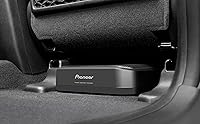
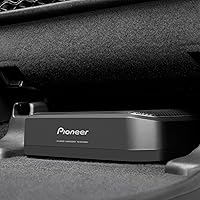
  • At under 3 inches tall, this active subwoofer slides under most seats without losing legroom.
  • The wired bass remote reaches the dash in virtually any vehicle and is easy to use while driving.
  • Sealed enclosure delivers tight, controlled bass rather than loose or boomy low end.
  • Installation is straightforward enough for a motivated first-timer with basic tools.
  • The improvement over stock factory sound is immediately noticeable from the first drive.

Cons

  • Output distorts audibly when pushed past moderate volume levels, especially in Deep mode.
  • Wiring harness connectors feel noticeably cheaper than the rest of the unit.
  • Included instructions are sparse and poorly illustrated — not enough for a true first-time installer.
  • No auto-on feature means the unit must be wired to a switched circuit or managed manually.
  • The bass remote offers no level display, so repeatable settings come down to guesswork.
  • A ground loop issue surfaces in some vehicle-stereo pairings, requiring an additional isolator to fix.
  • Long-term reliability data is still limited given the product has only been on the market since 2023.
  • Power wire gauge in the included kit has prompted some buyers to swap it out for a heavier option.

Ratings

The Pioneer TS-WX140DA has been rated by our AI system after analyzing hundreds of verified global buyer reviews, with spam, bot activity, and incentivized feedback actively filtered out. Scores reflect real-world ownership experiences across a wide range of vehicles and use cases — including daily commuters, EV drivers, and factory-stereo upgraders. Both the genuine strengths and the honest frustrations buyers encountered are transparently baked into every number below.

Ease of Installation
88%
Most buyers — including those with zero car audio experience — report getting this active subwoofer up and running within an hour. The all-in-one enclosure removes the biggest hurdle in traditional installs: mounting a separate amplifier. The speaker-level input means no line output converter is needed for factory head units.
A recurring complaint involves the included wiring instructions, which several users describe as vague or poorly illustrated for first-timers. A handful of buyers also found the wiring harness connectors fiddly, particularly in tight under-seat spaces with limited hand room.
Bass Output & Performance
71%
29%
For a unit this compact, the improvement over factory speakers is immediately noticeable — especially in the low-mid bass range. The sealed enclosure keeps the sound tight and controlled rather than boomy, which many commuters and casual listeners actually prefer for daily driving.
Buyers expecting the kind of output a dedicated 10- or 12-inch sub delivers will be disappointed. The ceiling is real: this compact sub runs out of headroom at higher volumes, and deep sub-bass extension below 40Hz is not its strength. It is a step up, not a full replacement.
EV Compatibility & Power Efficiency
91%
EV owners are among the most satisfied buyers in the review pool. The 4.3-amp max current draw is genuinely low, and multiple Tesla, Ioniq, and Leaf owners report no perceptible impact on their range readout after weeks of daily use. This is a rare and practical differentiator.
A small number of EV owners note that the unit does draw some baseline power even at low bass settings, which matters in extreme cold where battery efficiency is already reduced. No wireless or auto-on feature means it must be managed manually or wired to a switched circuit.
Listening Mode Versatility
79%
21%
The three bass modes — Deep, Dynamic, and Natural — give the compact sub a flexibility that most single-mode competitors lack. Switching to Natural works well for acoustic or vocal-heavy tracks, while Dynamic suits hip-hop and electronic music noticeably better than a fixed-tuned unit would.
The differences between modes, while real, are not dramatic enough to satisfy buyers hoping for a wide sonic range. Some users feel Deep mode pushes the driver close to its limits, introducing slight distortion at higher volume levels that the other modes avoid.
Remote Bass Control
83%
The wired remote is one of the most consistently praised features among real owners. The 16-plus-foot cable reaches the dashboard or center console in virtually any vehicle, and having tactile control over the bass level during a drive is something buyers quickly come to rely on.
The remote itself is basic — a single dial with no display or level indicator, which makes repeatable settings a matter of feel rather than precision. A few buyers also note the cable, while long, is not particularly robust and could be a concern for long-term durability.
Build Quality & Finish
74%
26%
The enclosure feels solid for its price tier — there is no flex or rattle from the cabinet itself, and the grille is well-secured. Most buyers consider the overall finish appropriate for something that will live under a seat and rarely be seen.
The wiring harness and input connectors feel noticeably cheaper than the enclosure itself, and a handful of users report that the connector housing shows wear or looseness after several months. At this price point it is acceptable, but it is the most commonly cited build complaint.
Fit & Form Factor
86%
At just under 3 inches tall, this active subwoofer genuinely fits under the front seats of most sedans, crossovers, and SUVs without obstructing legroom. Buyers in compact cars like the Honda Civic or Toyota Corolla confirm the dimensions work in practice, not just on paper.
Vehicles with very low seat rails — some performance cars and a few Japanese kei-style imports — make installation tight enough to be a real obstacle. The rectangular shape also limits creative mounting angles that a round or wedge enclosure might permit.
Compatibility with Factory Stereos
87%
The speaker-level input is a genuine convenience win for anyone not replacing their head unit. It pulls signal directly from existing speaker wires, and the vast majority of buyers report a clean, hum-free connection with OEM systems from Toyota, Honda, Ford, and GM.
Some buyers using older factory systems with lower output voltages find the sensitivity adequate but not ideal — the sub works, but requires the bass level remote cranked higher than expected. A ground loop issue surfaces occasionally with certain factory units, requiring a loop isolator.
Sound Clarity & Distortion Control
72%
28%
At moderate listening levels, the Pioneer under-seat woofer stays clean and controlled. The sealed enclosure helps avoid the one-note bass that ported budget subs often produce, and the IMPP cone holds up well during normal daily listening across most music genres.
Push the volume past about 75 percent on the head unit and distortion becomes audible, particularly in Deep mode. Buyers who like to listen loud consistently flag this as the unit's most frustrating limitation — it is tuned for daily listening, not high-output use.
Value for Money
78%
22%
For a driver upgrading from a completely stock system, the price-to-improvement ratio is strong. Getting a built-in amp, a remote, and all the wiring in one box saves real money compared to assembling a comparable separate-component setup, especially for a casual install.
Buyers who have owned higher-tier Pioneer or JL Audio subs know what is being traded away at this price. The output limits and basic remote leave some feeling the mid-range pricing slightly overshoots the actual performance on offer, particularly against aggressive competitors in the same bracket.
Wiring & Cable Quality
63%
37%
The included wiring kit covers the basics — power, ground, signal input, and the remote cable are all present. For a straightforward install, most buyers get by entirely on what is in the box without a hardware store run.
The wire gauges and connector quality are the most frequently criticized aspect of the entire package. Several buyers replaced the power wire with heavier gauge cable after noticing warmth near connections under sustained use, and the signal harness has drawn complaints about fitment inconsistency.
Instruction Clarity
57%
43%
The physical install process — where to mount, how to route wires — is intuitive enough that experienced DIYers work through it without consulting the manual at all. Pioneer's general wiring logic is consistent across its product line, which helps returning customers.
For first-time installers, the included documentation is widely considered inadequate. Diagrams are small and low-contrast, and the manual does not walk through the speaker-level input wiring in enough detail for buyers connecting to a factory system for the first time.
Noise Floor & Signal Quality
81%
19%
With a proper ground connection, the Pioneer under-seat woofer operates with a very low noise floor. The 95 dB signal-to-noise ratio holds up in practice — there is no audible hiss or hum during quiet passages when the unit is correctly installed.
Grounding issues, which are more common with factory stereo connections in some vehicles, can introduce an alternator whine that is difficult to trace without experience. When it occurs, it is persistent and frustrating to diagnose without a dedicated ground loop isolator.
Long-Term Reliability
76%
24%
Buyers who have owned the unit for over a year report consistent performance with no degradation in output or increase in distortion. Pioneer's general reputation for reliability in the car audio space gives buyers confidence the unit will last through years of daily commuting.
The sample size of long-term reviewers is still relatively modest given the product's launch date. A small but notable number of units were reported dead-on-arrival or failing within the first few months, with warranty service experiences described as slow by some U.S. buyers.

Suitable for:

The Pioneer TS-WX140DA is the right call for drivers who want a meaningful bass upgrade without committing to a full car audio build. It fits best under the front seat of a sedan, crossover, or compact SUV where trunk space is off-limits or simply too valuable to sacrifice. Electric vehicle owners are a particularly well-served group here — the unit's efficient Class-D amplifier draws so little current that real-world range impact is negligible, something very few competing subs can honestly claim. Factory stereo users will appreciate that the speaker-level input lets them connect directly to existing wiring without buying a line output converter or replacing the head unit. Commuters, rideshare drivers, and anyone who just wants noticeably better sound on a daily drive — without spending a weekend on the install — will find this compact sub hits a practical sweet spot.

Not suitable for:

Buyers chasing serious, room-filling bass output should look elsewhere before purchasing the Pioneer TS-WX140DA. This active subwoofer is tuned for tight, controlled low-end in a compact package — it is not designed to compete with a dedicated 10- or 12-inch subwoofer in a ported enclosure, and at high volumes the difference becomes impossible to ignore. Audiophiles or enthusiasts who prioritize deep sub-bass extension, high sustained output, or the ability to run the system loud for extended periods will hit the ceiling quickly and feel underserved. The included wiring kit and documentation are also basic enough that true beginners may find the install stressful without supplemental guidance or a YouTube walkthrough. If your vehicle has very low seat rails, or if you plan to use it as the anchor of a more ambitious multi-component audio system, this unit's output and feature set are likely to frustrate more than satisfy.

Specifications

  • Driver Size: The subwoofer uses an 8″ x 5-1/4″ oval IMPP cone driver housed in a sealed enclosure.
  • Max Power: The built-in Class-D amplifier delivers up to 170 watts of peak power output.
  • Current Draw: Maximum current draw is 4.3 amps at 12V DC, making it unusually efficient for an amplified subwoofer.
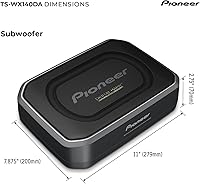
  • Dimensions: The enclosure measures 7.87″ deep x 11″ wide x 2.76″ tall, designed to fit under or behind vehicle seats.
  • Weight: The complete unit weighs 7.38 lbs, light enough to reposition during installation without assistance.
  • Enclosure Type: The driver is mounted in a factory-sealed enclosure that delivers tight, controlled bass without additional tuning.
  • Amplifier Class: The onboard amplifier uses Class-D topology, which minimizes heat generation and power waste under sustained use.
  • Signal Inputs: Two input types are supported: RCA line-level input and speaker-level input for direct connection to factory wiring.
  • Listening Modes: Three selectable bass modes — Deep, Dynamic, and Natural — adjust tonal character and sensitivity to suit different music styles.
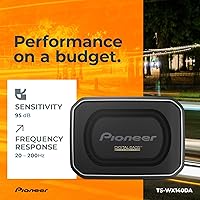
  • Sensitivity: Sensitivity ratings are 95 dB in Deep mode, 100 dB in Dynamic mode, and 98 dB in Natural mode.
  • Frequency Response: The unit is rated to handle frequencies up to 200 Hz, covering the full subwoofer and upper bass range.
  • Signal-to-Noise: The signal-to-noise ratio is rated at 95 dB, supporting a low noise floor when the unit is properly grounded.
  • Bass Remote: A wired digital bass level controller is included with 16.25 feet of attached cable for dashboard or console mounting.
  • Input Voltage: The unit operates on a standard 12V DC vehicle electrical system with no voltage converter required.
  • Mounting Type: Surface mount installation is used, with the enclosure secured directly to the vehicle floor or seat rail bracket.
  • Included Components: The package includes the subwoofer enclosure, a power and ground wire harness with a 10A ATO fuse, a signal input harness, and the wired bass remote.
  • Connectivity: No wireless connectivity is included; all signal and control connections are wired.
  • Warranty: Pioneer covers the unit with a one-year limited warranty from the date of purchase.
  • Water Resistance: The unit is not water resistant and should be kept away from moisture during and after installation.
  • Woofer Diameter: The woofer driver diameter is 20 centimeters, equivalent to the 8-inch nominal sizing used in product labeling.

Related Reviews
Pioneer TS-MR1640 Marine Speakers
87%
87%
Sound Quality
94%
Durability
90%
Ease of Installation
73%
Bass Performance
88%
Value for Money
More
Pioneer TS-WX1210A 12″ Subwoofer
86%
92%
Bass Performance
94%
Ease of Installation
88%
Sound Clarity
90%
Value for Money
85%
Build Quality
More
Pioneer TS-A2000LB 8” Subwoofer
85%
89%
Bass Performance
85%
Installation Ease
91%
Value for Money
87%
Sound Clarity
80%
Design and Build Quality
More
Pioneer TS-A2000LD2 8″ Subwoofer
89%
95%
Bass Performance
91%
Sound Clarity
88%
Build Quality
86%
Installation Ease
93%
Space Efficiency
More
Pioneer TS-WX010A Under-Seat Subwoofer
86%
91%
Value for Money
85%
Bass Quality
95%
Ease of Installation
90%
Size & Portability
87%
Sound Clarity
More
Pioneer TS-A250D4 10” Subwoofer
86%
91%
Bass Performance
88%
Power Output
87%
Wiring Flexibility
85%
Installation Ease
90%
Sound Clarity
More
Pioneer TS-A25S4 10” Subwoofer
84%
88%
Bass Performance
84%
Installation Ease
86%
Sound Quality
89%
Power Handling
85%
Build Quality
More
Pioneer TS-WX400DA 10″ Slim Subwoofer
87%
88%
Bass Performance
93%
Ease of Installation
85%
Build Quality
91%
Size & Portability
89%
Bass Customization (Deep vs. Dynamic Modes)
More
Pioneer TS-WH500A Compact Series Subwoofer
86%
88%
Bass Performance
91%
Ease of Installation
92%
Value for Money
86%
Build Quality
78%
Power Output
More
Pioneer TS-A301D4 12-Inch Subwoofer
87%
92%
Bass Performance
88%
Build Quality
85%
Ease of Installation
89%
Sound Clarity
91%
Power Handling
More

FAQ

Yes, and this is actually one of the main reasons buyers choose it. The speaker-level input lets you tap directly into your existing speaker wires — no aftermarket head unit or line output converter needed. Just identify a rear speaker wire pair, connect it to the signal harness, and you are good to go.

Based on real owner feedback from EV drivers, the impact is negligible in everyday use. The Pioneer TS-WX140DA is specifically engineered to draw no more than 4.3 amps at peak, which is far lower than most amplified subs on the market. Multiple owners of Teslas, Nissan Leafs, and Hyundai Ioniq vehicles have reported no measurable range difference after installation.

Most buyers with basic mechanical confidence — comfortable removing a seat or routing a wire — complete the install in under two hours. The trickiest part for first-timers is usually connecting the power wire to the fuse box and finding a clean ground point. The included instructions are minimal, so supplementing with a YouTube walkthrough for your specific vehicle is genuinely recommended.

At 2.76 inches tall, this active subwoofer clears the seat rails in most sedans, crossovers, and SUVs. That said, some performance-oriented cars and a few imports with very low seat frames are a tight fit or borderline. Before ordering, measure the clearance from your floor to the lowest seat rail bracket with the seat in its furthest-back position.

Think of them as three distinct bass personalities. Deep mode emphasizes low-frequency extension — useful for bass-heavy genres like hip-hop or electronic music, though it runs closest to the driver's limits. Dynamic mode is louder and punchier with slightly less low-end reach, making it a good everyday setting. Natural mode is the most balanced, working well for rock, pop, or acoustic tracks where you want bass support without it overpowering the mix.

In most cases, everything in the box is sufficient for a basic install — power harness, signal harness, fuse, and the bass remote are all included. Some buyers choose to upgrade the power wire gauge for peace of mind, and anyone connecting to a factory stereo in a vehicle prone to ground loops may need a separate ground loop isolator. Otherwise, no additional purchases are strictly necessary.

Honestly, no — and it is worth being clear about that upfront. This compact sub is designed for tight, daily-driving bass improvement, not competition-level output. It will outperform factory speakers noticeably, but if you regularly listen at high volumes and want deep, chest-felt bass, a dedicated 10- or 12-inch setup in a proper enclosure will serve you better.

The remote includes 16.25 feet of cable, which is long enough to reach the dashboard or center console in virtually any passenger vehicle when routed along the door sill or under the carpet. Most buyers mount it to the dash with the included adhesive or a small bracket. It is a single-knob dial — simple to use while driving, though there is no level display to reference.

If the unit is properly grounded to bare metal on the vehicle chassis, it should operate quietly with no audible hiss or hum. A ground loop — most often heard as a whine that rises and falls with engine RPM — can occasionally occur when connecting via speaker-level input to certain factory systems. If you experience this, a ground loop isolator inserted in the signal path resolves it in most cases.

The unit carries a one-year limited warranty covering manufacturing defects. Pioneer handles warranty service through its authorized service network, which means you typically ship the unit to a service center rather than getting a direct replacement. Buyer experiences with the claims process are mixed — some report quick resolutions, while others describe slow turnaround times. Keeping your purchase receipt and registering the product with Pioneer after purchase is the best way to smooth the process if you ever need it.