Overview

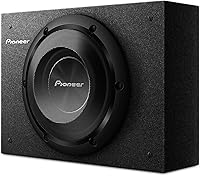
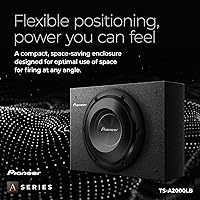
The Pioneer TS-A2000LB 8-inch Subwoofer is a pre-loaded, sealed-enclosure unit built specifically for drivers who want real bass without gutting their cargo space. It sits within Pioneer's A-series ecosystem, so if you're already running their full-range speakers, the tonal pairing is intentional rather than accidental. The shallow-mount enclosure fits comfortably in pickup truck cabs and compact cars where a standard box simply won't go. One critical detail to flag before anything else: this is a passive subwoofer, meaning you'll need a separate amplifier to power it. That's not a flaw — it's a design choice that gives you more control over your sound — but it's worth knowing upfront before you hit checkout.
Features & Benefits

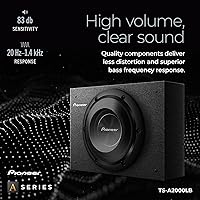
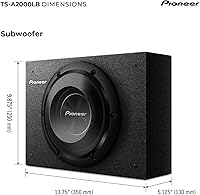
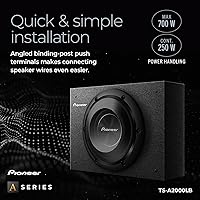
The real workhorse spec here is the 250W RMS power rating — that's the number that matters day-to-day, not the 700W max figure headlining the listing. The cone is built from a glass-fiber and mica reinforced IMPP material, which keeps it stiff and responsive under pressure. At 84 dB sensitivity, this shallow-mount sub won't ask much from your amplifier to get moving. The enclosure measures 5.13″ deep, 9.88″ wide, and 13.75″ tall — compact enough to lay flat in a truck cab or stand vertically behind a rear seat. The single 2Ω voice coil keeps wiring straightforward, though you'll need to confirm your amp handles 2-ohm loads before buying. The included hardware kit — feet, brackets, and screws — means you're not hunting for parts on install day.

Best For

This Pioneer subwoofer makes the most sense for a specific kind of buyer: someone who wants more bass than factory speakers can provide but doesn't want to redesign their vehicle's interior to get it. Truck owners with standard or extended cabs will find the shallow enclosure fits naturally behind or beneath the rear seat. It's also a strong pick for anyone already invested in Pioneer's A-series lineup — the system was built to work together. If you're a first-time DIY installer, the pre-loaded box removes the biggest hurdle, which is building or sourcing an enclosure. What it's not ideal for: pure bass enthusiasts chasing competition-level output. An 8-inch sealed sub has physical limits, and expecting it to perform like a 12-inch ported box will lead to disappointment.

User Feedback

With over 500 ratings and a 4.3-star average, this enclosed subwoofer sits comfortably in positive territory — and the pattern across reviews is consistent. Installation ease gets mentioned constantly, with buyers appreciating that the box arrives ready to mount. Truck and compact-car owners tend to report solid fitment, which aligns with how the product is marketed. On the critical side, a handful of buyers were caught off guard by the need for a separate amp — a reminder that reading the specs before purchasing matters. A few others note that bass output, while clean, is modest in depth compared to larger setups. That's not a surprise for an 8-inch sealed design, but it's worth factoring in if deep, heavy bass is your primary goal.

Pros

  • Pre-loaded sealed enclosure means no custom box building — just mount, wire, and go.
  • Shallow profile fits under rear seats in most pickup truck cabs without sacrificing storage.
  • Included mounting hardware covers the install without a separate trip to the hardware store.
  • Multiple mounting orientations let you optimize bass response for your specific vehicle layout.
  • The 84 dB sensitivity allows this shallow-mount sub to perform well with a modest amplifier.
  • Clean, tight bass reproduction suits daily listening and music genres where accuracy matters.
  • Pioneer's A-series compatibility creates a genuinely cohesive sound when paired with matching speakers.
  • At 8.8 pounds, this enclosed subwoofer is easy to position solo during a DIY install.
  • The 2-ohm single voice coil keeps amplifier wiring simple for those who know their setup.
  • Over 500 verified ratings with a 4.3-star average reflects consistent real-world buyer satisfaction.

Cons

  • Requires a separate external amplifier — not included — which adds to the total purchase cost.
  • The 2-ohm impedance catches buyers off guard if their existing amplifier is not rated for 2-ohm loads.
  • Bass output noticeably compresses at higher volume levels due to the sealed shallow enclosure design.
  • The instruction manual provides minimal guidance on amplifier matching, leaving beginners to figure it out themselves.
  • Enclosure surface finish scuffs easily in high-traffic cargo areas over time.
  • The 1-year limited warranty is short for a component exposed to daily heat, vibration, and temperature swings.
  • Voice coil degradation has been reported beyond the warranty period by a notable share of long-term owners.
  • Face-down mounting on low-pile carpet can restrict airflow and slightly muffle bass response.
  • Buyers in large SUVs or vans will likely find the output underwhelming relative to the cabin size.
  • The 700W max power figure on the listing creates unrealistic expectations that the 250W RMS reality does not match.

Ratings

The Pioneer TS-A2000LB 8-inch Subwoofer earns its place as one of the more consistently reviewed shallow-mount options in its price class, with our AI-driven analysis combing through hundreds of verified global purchases — filtering out incentivized and bot-generated submissions — to surface what real drivers actually experience. Scores reflect the full picture: where this shallow-mount sub genuinely delivers and where it falls short depending on your setup and expectations.
Bass Output Quality
74%
26%
For an 8-inch sealed unit, the bass is tight and accurate rather than boomy — a quality that daily commuters and casual listeners consistently appreciate. It handles mid-bass frequencies cleanly, giving kick drums and bass lines definition that factory speakers simply cannot reproduce.
Buyers expecting chest-thumping low-end will be underwhelmed. The sealed shallow enclosure physically limits extension below 40Hz, and compared to a ported 10- or 12-inch sub, the output ceiling is noticeably lower at higher volumes.
Installation Ease
91%
The pre-loaded enclosure is genuinely one of the strongest arguments for this sub. First-time DIY installers repeatedly mention that unboxing to in-vehicle took under an hour, with the included mounting hardware covering most of what you need without an extra trip to the hardware store.
Wiring to an external amplifier still requires some baseline knowledge, and the 2-ohm impedance trips up buyers who accidentally pair it with an amp not rated for 2-ohm loads. The instruction manual is adequate but sparse on amplifier-matching guidance.
Enclosure & Build Quality
78%
22%
The sealed MDF enclosure feels solid and doesn't rattle or flex under moderate bass pressure. The included adhesive and threaded feet are a small but thoughtful touch that prevents the box from sliding around on carpet in truck cabs during hard acceleration.
The enclosure finish is functional rather than refined — the black wrap shows scuffs over time in high-traffic cargo areas. A few buyers noted that the front grill feels slightly less sturdy than expected for long-term daily use.
Vehicle Fitment Versatility
86%
Truck owners with standard and extended cabs are the clearest winners here — the shallow profile slides neatly under rear seats or against the cab wall without eating into usable space. Compact and mid-size car owners report equally good results when positioning it in the trunk corner.
Full-size SUV or minivan owners may find the output underwhelming relative to the available space. The sub is optimized for tight placement; in larger, less acoustically confined vehicle interiors, the bass feels thin.
Power Handling & Efficiency
81%
19%
The 250W RMS rating is honest and achievable with a mid-range mono amplifier. The 84 dB sensitivity means the sub responds quickly without requiring a high-powered amp to wake up, which keeps the total system cost reasonable for budget-conscious upgraders.
The 700W max power figure marketed on the listing creates inflated expectations. In real-world use, pushing beyond the RMS threshold for extended periods leads to audible compression, and the cone shows strain before the box does.
Amplifier Compatibility
67%
33%
The single 2-ohm voice coil keeps wiring dead simple — one run of speaker wire from your mono amp and you are done. For buyers who already own a stable 2-ohm amplifier, the pairing process is straightforward and produces consistent results.
The 2-ohm impedance is a recurring sticking point. Many buyers don't realize their existing head unit or 4-ohm-rated amp won't work without an additional purchase, and this disconnect accounts for a disproportionate share of the negative reviews.
Sound Clarity & Definition
79%
21%
The glass-fiber and mica reinforced IMPP cone keeps distortion controlled at moderate listening levels. Vocals-heavy tracks and acoustic music benefit from the sub's clean low-frequency extension, adding warmth without muddying the midrange from companion speakers.
At higher gain settings, the sealed enclosure limits dynamic headroom and the bass can sound slightly restrained compared to ported alternatives. Listeners who prioritize punch over accuracy may find the tuning too conservative.
Value for Money
83%
At its mid-range price point, getting a branded enclosure, mounting hardware, and a reputable Pioneer driver in one purchase is genuinely competitive. Buyers consistently note that sourcing those components separately would cost more and require more effort.
The mandatory amplifier purchase adds meaningful cost on top of the sticker price, which some buyers don't budget for upfront. When the total system cost is factored in, the value proposition narrows compared to all-in-one powered sub options.
Mounting Orientation Flexibility
88%
The ability to mount face-up, face-down, or vertically is a practical differentiator that gets real appreciation from installers working around irregular trunk shapes or cab floor configurations. It adds genuine versatility without requiring any physical modifications to the unit.
While orientation flexibility is useful, some buyers report subtle differences in bass character depending on direction — face-down in particular can sound slightly muffled against low-pile carpet, requiring an extra inch of clearance to breathe properly.
Brand Reliability & Reputation
84%
Pioneer's track record in car audio lends credibility that newer or generic brands can't match at this price tier. Buyers with existing Pioneer components tend to purchase with confidence, and quality control consistency is frequently cited as a reason for repeat purchases.
A small but notable portion of reviews mention unit failures within the first year, primarily related to voice coil issues. The limited 1-year warranty provides basic coverage but does not inspire confidence for long-haul durability claims.
A-Series System Integration
82%
18%
Buyers running Pioneer A-series component or coaxial speakers report a noticeably cohesive soundstage — the crossover tuning and tonal character align well enough that the sub doesn't feel bolted-on. This coherence is a real benefit for listeners who care about balanced audio reproduction.
Outside of the A-series pairing, the integration benefit disappears entirely. Buyers mixing this sub with non-Pioneer speakers get a competent subwoofer but none of the tuning synergy, which limits the appeal for those building a mixed-brand system.
Package Contents & Accessories
76%
24%
The box includes everything needed for physical installation — adhesive feet, threaded feet, mounting brackets, screws, and a warranty sheet. For a first-time installer, having this hardware in the box avoids a frustrating secondary purchase run before the install can proceed.
No RCA cables or wiring harness are included, which surprises some buyers who expect a more complete kit. The instruction manual is thin on detail for those unfamiliar with car audio fundamentals, and there is no quick-start guide specifically for amplifier pairing.
Weight & Portability
71%
29%
At 8.8 pounds, this enclosed subwoofer is easy enough for one person to carry, position, and reposition during installation without assistance. This matters more than it sounds during a solo install in a cramped cab or trunk.
While not heavy, the box dimensions make it awkward to maneuver in truly confined spaces like under double-cab rear seats without some disassembly of seat hardware. A slightly more compact footprint would have expanded its usable vehicle range.
Long-Term Durability
69%
31%
The majority of buyers reporting back after six or more months of daily use describe consistent performance with no noticeable degradation in output or cone integrity. The sealed design also protects internal components better than ported alternatives in dusty environments.
The 1-year warranty window is limiting for a car audio component exposed to temperature swings and vibration year-round. Reports of voice coil degradation and surround wear beyond the warranty period appear often enough to be a legitimate concern for long-term ownership.

Suitable for:

The Pioneer TS-A2000LB 8-inch Subwoofer is purpose-built for drivers who want a meaningful bass upgrade without committing to a full custom audio build. Pickup truck owners with standard or extended cabs will find it fits naturally under or behind the rear seat, reclaiming bass without losing usable cab space. It's also a smart pick for compact and mid-size car owners who have trunk space but not enough depth for a conventional box. If you're already running Pioneer's A-series speakers, the tonal pairing is intentional and the results show — the system sounds cohesive rather than cobbled together. First-time DIY installers benefit most from the pre-loaded enclosure format, since it removes the most intimidating part of a subwoofer build: sourcing or constructing a properly tuned box. Anyone who wants precise control over bass output through a dedicated external amplifier, rather than a fixed powered unit, will also find this format rewarding once the system is dialed in.
Not suitable for:

The Pioneer TS-A2000LB 8-inch Subwoofer is the wrong choice for anyone chasing serious low-end output or competition-style bass pressure. An 8-inch sealed driver has hard physical limits — it will not replicate the chest-feel of a ported 12-inch setup, and buyers who expect otherwise will be frustrated. It's also not a plug-and-play solution: this is a passive subwoofer, and without a compatible external amplifier rated for a 2-ohm load, it simply won't work. Buyers on a tight total budget should factor in the amplifier cost before committing, since that addition can significantly change the overall spend. Large SUV or full-size van owners will likely find the output underwhelming in a bigger, less acoustically confined cabin. And if you prefer the simplicity of a single powered subwoofer unit with no extra wiring or equipment, an all-in-one powered sub will serve you better than this enclosed subwoofer.
Specifications

  • Subwoofer Size: The driver measures 8 inches in diameter, optimized for tight-space installations where larger subwoofers cannot fit.
  • RMS Power: Continuous power handling is rated at 250W RMS, representing the reliable daily-use performance ceiling for this driver.
  • Max Power: Peak power handling reaches 700W, intended for brief transient bursts rather than sustained output levels.
  • Impedance: The single voice coil is wound to a 2-ohm impedance, requiring a compatible amplifier rated stable at 2 ohms.
  • Voice Coil Type: A Single Voice Coil (SVC) design is used, simplifying amplifier wiring to a single set of speaker terminals.
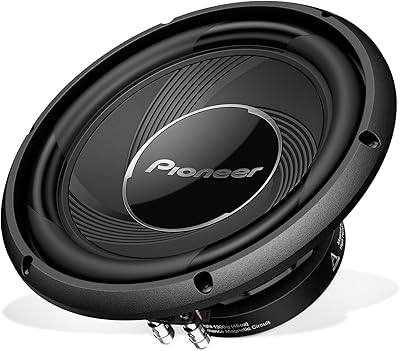
  • Cone Material: The cone is constructed from Glass-Fiber and Mica Reinforced IMPP, providing high rigidity and resistance to flex under bass pressure.
  • Sensitivity: Driver sensitivity is rated at 83–84 dB, meaning it produces usable output without requiring an extremely high-powered amplifier.
  • Enclosure Type: The subwoofer arrives pre-loaded in a sealed MDF enclosure, eliminating the need to source or build a separate box.
  • Enclosure Dimensions: The enclosure measures 5.13″ deep, 9.88″ wide, and 13.75″ tall, sized for placement in truck cabs and compact car trunks.
  • Mounting Orientations: The enclosure supports face-up, face-down, and vertical mounting positions to accommodate varied vehicle layouts.
  • Connectivity: This is a passive wired subwoofer with no built-in amplifier; connection is made via standard speaker wire terminals to an external amp.
  • Weight: The complete pre-loaded unit weighs 8.8 pounds, light enough for a solo one-person installation in most vehicles.
  • Vehicle Compatibility: Designed for use in cars, pickup trucks with standard or extended cabs, and other vehicles with limited enclosure space.
  • Included Accessories: The package includes 4 adhesive feet cushions, 4 threaded feet, 2 mounting brackets, 8 mounting screws, and an instruction manual.
  • Warranty: Pioneer covers this subwoofer under a 1-year limited warranty from the date of original purchase.
  • Model Number: The official model designation is TS-A2000LB, part of Pioneer's A-series car audio product family.
  • Power Source: The unit is powered via corded electric connection through a compatible external amplifier; no wireless or battery operation is supported.
  • Waterproofing: This subwoofer is not waterproof and should be kept away from moisture, direct water exposure, and humid environments.

Related Reviews
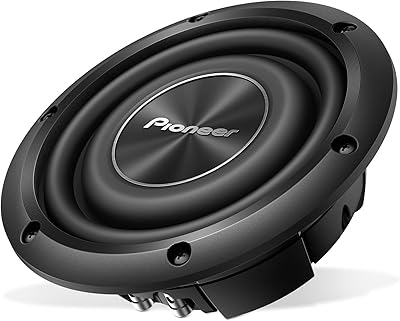
Pioneer TS-A2000LD2 8″ Shallow-Mount Subwoofer
77%
81%
Bass Output for Size
89%
Fitment & Installation Ease
76%
Sound Clarity & Definition
72%
Amplifier Compatibility
83%
Build Quality & Durability
More
Pioneer TS-A301D4 12-inch Car Subwoofer
75%
83%
Bass Output
79%
Build Quality
88%
Value for Money
81%
Amplifier Compatibility
63%
Installation Ease
More
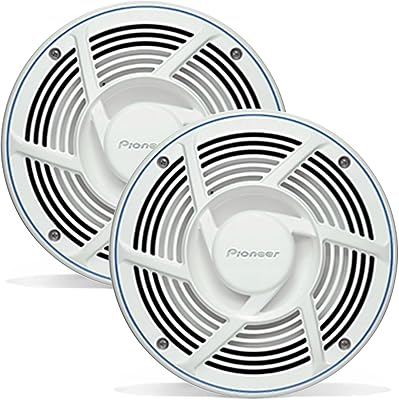
Pioneer TS-MR2040 Marine Speakers (Pair) 8-inch
86%
88%
Sound Quality
94%
Durability Against Weather
85%
Installation Ease
72%
Bass Performance
90%
Build Quality
More
CT Sounds TROPO-8-D2 8-Inch Car Subwoofer
77%
91%
Value for Money
83%
Bass Quality
88%
Build Quality
67%
Enclosure Compatibility
71%
Amplifier Pairing
More
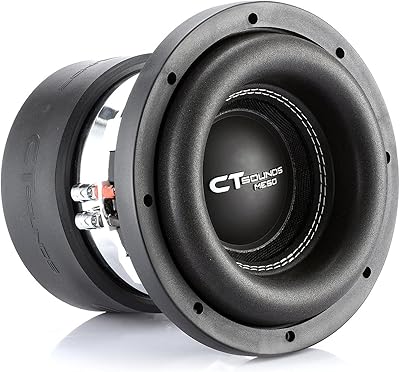
CT Sounds MESO-8-D4 8-Inch Dual 4 Ohm Car Subwoofer
87%
94%
Bass Performance
91%
Build Quality
88%
Sound Clarity at High Volumes
93%
Power Handling
84%
Ease of Integration
More
Pioneer TS-A250D4 10-inch Car Subwoofer
81%
88%
Bass Performance
91%
Value for Money
83%
Build Quality
92%
Amplifier Compatibility
79%
Installation Experience
More
Pyle PLTB8 8-Inch Carpeted Subwoofer Tube Enclosure
71%
83%
Value for Money
88%
Ease of Installation
71%
Bass Output & Impact
58%
Sound Clarity at High Volume
66%
Build Quality
More
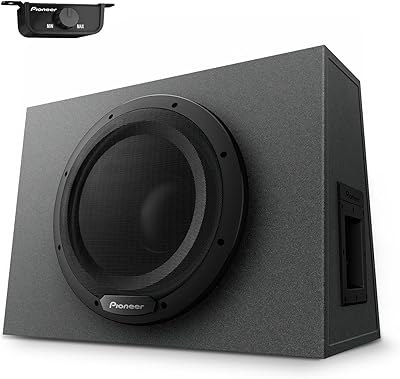
Pioneer TS-A25S4 10-inch Car Subwoofer
79%
84%
Bass Accuracy
88%
Value for Money
81%
Build Quality
83%
Installation Ease
79%
Amplifier Compatibility
More
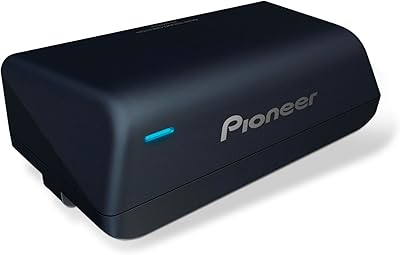
Pioneer TS-WX010A Powered Under-Seat Subwoofer
80%
91%
Ease of Installation
67%
Bass Output Quality
93%
Factory Stereo Compatibility
78%
Crossover Tuning
62%
Physical Fit & Clearance
More
Pioneer TS-WX1210A 12-inch Powered Subwoofer
74%
88%
Ease of Installation
79%
Bass Output Quality
84%
Factory Stereo Compatibility
83%
Value for Money
72%
Tuning & Sound Customization
More

FAQ

Yes, absolutely — this is a passive subwoofer, which means it has no built-in amplifier and will not produce any sound on its own. You will need to connect it to a dedicated external mono amplifier. Make sure the amp you choose is stable at a 2-ohm load, since that is the impedance of this sub's voice coil. Pairing it with a 4-ohm-only amp will result in poor performance or potential damage.

In most cases, yes. The enclosure is 5.13″ deep, so it slides under or behind the rear seat of standard and extended cab trucks without too much trouble. That said, clearance varies by truck model and year, so it is worth measuring your available space against the full box dimensions — 5.13″D x 9.88″W x 13.75″H — before purchasing.

No, you cannot. Head units do not supply enough power to drive a passive subwoofer properly, and some stereos do not even have a dedicated subwoofer output. You need a standalone amplifier in the signal chain between the head unit and this sub.

Look for a mono amplifier rated at 200–300W RMS into a 2-ohm load — that range sits cleanly within the sub's 250W RMS rating and gives you headroom without overpowering it. Brands like Rockford Fosgate, Kenwood, and Pioneer's own amplifier lineup all have well-regarded options in this power class. Avoid underpowering it with an amp rated below 150W RMS, as that tends to cause distortion before the sub reaches usable volume.

Honestly, there is a noticeable difference. An 8-inch sealed driver in a shallow enclosure produces tight, defined bass but does not extend as deep or hit as hard as a ported 10- or 12-inch setup. If you mainly listen to rock, pop, or podcasts and want more body to your audio without room-shaking bass, this shallow-mount sub is a solid choice. If you want heavy sub-bass that you feel in your seat, you will likely want to consider a larger driver.

You have three options: face-up, face-down, or vertical. The included feet and mounting brackets support all three orientations. Vertical mounting is particularly useful behind a rear seat or against a trunk sidewall where laying flat is not practical.

Yes, it works with any stereo system as long as you pair it with an external amplifier. The A-series branding refers to Pioneer's own speaker ecosystem, where the tonal tuning is designed to complement their full-range A-series speakers. Running it with non-Pioneer components is perfectly fine — you just lose the engineered tonal synergy, which is only relevant if your listening standards are fairly critical.

For a first-timer, the main steps are: run a power wire from the battery to the amp location, run an RCA signal cable from the head unit to the amp, connect the amp to the subwoofer via speaker wire, and then physically secure the enclosure using the included hardware. The box arrives fully assembled with the driver already mounted, which removes the biggest hurdle. Expect to spend two to four hours if it is your first install, less if you have done car audio work before.

Yes, a front grill is included with the pre-loaded enclosure. It provides basic protection against contact damage during and after installation, which is useful if the sub is mounted in an exposed position inside the cab.

The 700W figure is the peak maximum — a spec that represents brief transient handling under ideal conditions, not a realistic sustained output target. The number that actually matters for amplifier matching is the 250W RMS rating. A mono amp delivering 200–300W RMS into 2 ohms is the practical sweet spot. Chasing a 700W amp to match that headline figure will either cost you more money than necessary or risk blowing the driver if the gain is set too aggressively.

Where to Buy