
Overview

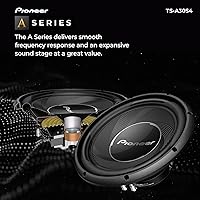
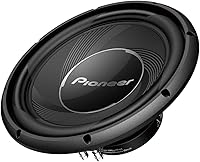
The Pioneer TS-A30S4 12-inch Component Subwoofer sits comfortably in the mid-range of the car audio market, built for everyday drivers who want real, felt bass without spending a fortune. One thing to know upfront: this is a passive subwoofer, meaning you will need a separate external amplifier to power it. That is not a flaw — it is by design — but buyers who overlook that detail will be disappointed. Paired with a decent amp, this Pioneer sub delivers 400 watts of continuous power handling with a peak rating that leaves headroom for demanding tracks. It belongs to Pioneer's A-series family, making it a natural fit alongside their full-range speakers for a tonally consistent system.

Features & Benefits

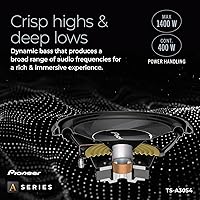
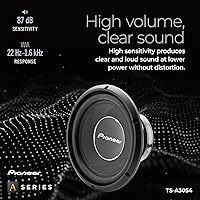
The cone is where this 12-inch passive sub earns its keep. Pioneer uses a Glass-Fiber and Mica Reinforced IMPP cone material that stays rigid under pressure, which keeps distortion in check even when you push the volume hard. The single 4-ohm voice coil simplifies wiring considerably — most aftermarket amplifiers handle this configuration without any adapter gymnastics. At 87 dB sensitivity, it does not demand a massive amplifier to get moving; a modest 200-watt RMS unit will drive it confidently in a daily-driver setup. The 6-inch mounting depth is a genuine practical advantage for tighter trunks, and Pioneer recommends a 1.25 cubic foot sealed box for accurate, controlled bass or a slightly larger vented enclosure if output volume is the priority.

Best For

The TS-A30S4 is a strong pick for daily drivers stepping up from factory audio who want punchy, satisfying bass without an elaborate or expensive build. Buyers already running Pioneer A-series components up front will find this sub slots in naturally, keeping the tonal character consistent across the whole system. It also suits DIY installers comfortable sourcing an amplifier and choosing or building their own enclosure — the setup is not plug-and-play, but it is approachable. Sedan and hatchback owners in particular will value the shallow mounting depth, which avoids consuming the entire trunk. Where this Pioneer sub falls short is in competition or high-SPL builds, where purpose-built subs with dual voice coils are the more appropriate choice.

User Feedback

Owners consistently highlight the clean low-end output and the straightforward single voice coil wiring as standout strengths, with many noting the build feels solid and well-finished relative to the price. The most frequent criticism centers on amplifier pairing — buyers who connect an underpowered amp walk away unimpressed, which is a setup issue rather than a flaw in the sub itself. Enclosure choice also shapes the experience noticeably: sealed box users report tighter, more controlled bass, while vented builds offer more volume but can sound slightly loose on quick bass lines. A recurring theme in negative reviews is surprise at the amplifier requirement, so understanding this before purchasing makes a meaningful difference in satisfaction.

Pros

  • Clean, controlled bass output that holds together well at moderate to high listening volumes.
  • The single 4-ohm voice coil makes amplifier wiring simple and compatible with a wide range of amps.
  • A 6-inch mounting depth gives real flexibility when fitting into tighter or shallower enclosures.
  • Solid build quality for the price — the cone material feels rigid and the surround is well-finished.
  • 87 dB sensitivity means a modestly powered amplifier can drive this Pioneer sub effectively.
  • Works with both sealed and vented enclosures, letting you tune the bass character to your preference.
  • Pairs naturally with other Pioneer A-series components for a tonally consistent full system.
  • At this price tier, it competes well with similarly rated 12-inch drivers from comparable brands.
  • The included mounting hardware and instruction manual make the physical install process straightforward.

Cons

  • No amplifier is included, and that additional cost can catch budget-conscious buyers off guard.
  • Underpowering the TS-A30S4 with a weak amplifier noticeably limits bass output and overall impact.
  • Vented enclosure builds can produce slightly loose or less defined bass on fast, complex music tracks.
  • The 1-year limited warranty is shorter than what some competing brands offer at this price range.
  • Finding or building the right enclosure adds time and cost that first-time buyers may not anticipate.
  • Not suited for high-SPL competition setups where dual voice coil woofers are the standard choice.
  • Buyers without prior car audio experience may find the amplifier matching and setup process genuinely confusing.
  • Output starts to strain if the amplifier consistently pushes toward the upper limits of the power range.

Ratings

Our AI has analyzed thousands of verified global user reviews for the Pioneer TS-A30S4 12-inch Component Subwoofer, actively filtering out incentivized, bot-generated, and low-quality submissions to surface what real buyers consistently experience. The scores below reflect both the genuine strengths that make this sub a popular daily-driver upgrade and the recurring pain points that affect certain buyers — nothing has been glossed over.

Bass Quality
83%
Owners regularly describe the low-end output as punchy and controlled, particularly in sealed box builds where the IMPP cone keeps bass tight even at higher volumes. For everyday music listening — hip-hop, R&B, rock — the bass character strikes a satisfying balance between impact and clarity without sounding bloated.
A handful of users note that very deep sub-bass extension feels limited compared to higher-tier drivers, and vented enclosure builds can sound slightly loose on fast, complex bass lines. It is a strong daily-driver performer, not a reference-grade low-frequency tool.
Value for Money
88%
At its price point, the TS-A30S4 consistently outperforms similarly priced no-name alternatives, offering Pioneer's build standards and A-series tuning in an accessible package. Buyers who factor in the total cost — sub plus a modest amplifier — still find the system delivers noticeably more than factory audio at a reasonable combined spend.
Once you add the required amplifier and an enclosure to the purchase price, the total investment is meaningfully higher than the sub's sticker price alone. Buyers on a strict budget occasionally feel the all-in cost was undersold in product listings.
Build Quality
81%
19%
The reinforced IMPP cone feels solid to the touch and the aluminum surround mount gives the driver a more premium look than expected at this tier. Long-term owners generally report no premature surround degradation or cone deformation under regular use conditions.
A small number of buyers noted that the tinsel leads and terminal connections feel less robust compared to higher-end Pioneer models. The driver holds up well under normal use, but pushing it hard with a poorly matched or clipping amplifier has led to early failures for some users.
Amplifier Compatibility
84%
The single 4-ohm voice coil is genuinely one of the most universally compatible impedance configurations available, and most buyers find their existing or newly purchased mono amplifier pairs without any wiring complications. The relatively efficient 87 dB sensitivity rating means you do not need a high-wattage amp to get satisfying results in a daily-listen setup.
The sub is noticeably sensitive to amplifier quality and output matching — underpowering it with a weak or entry-level amp produces disappointing results that unfairly reflect on the driver itself. A few users also report needing to dial in gain and crossover settings carefully to avoid muddiness, which can be frustrating for first-time installers.
Installation Ease
74%
26%
The physical mounting process is clean and uncomplicated — the eight included screws, clearly labeled terminals, and manageable 4.4-pound weight make the driver itself easy to drop into a compatible enclosure. DIY installers with any prior car audio experience consistently rate the hardware side of the install as hassle-free.
The passive design means the installation is inherently more involved than an all-in-one powered sub — running power cables, signal cables, and setting up an amplifier adds steps that genuinely trip up first-time buyers. Several users expressed frustration that the product description did not make the amplifier requirement clear enough before purchase.
Enclosure Flexibility
76%
24%
Supporting both sealed and vented configurations with clearly stated volume recommendations gives buyers meaningful flexibility depending on their vehicle and listening preferences. The 6-inch mounting depth opens up enclosure options in sedans and compact SUVs where deeper drivers simply will not fit.
The enclosure volume requirements — 1.25 to 1.5 cubic feet — are not trivial in smaller vehicles, and buyers in sub-compact cars occasionally find the box consumes more trunk space than expected. Pre-fabricated enclosures at exactly these volumes can also be hit-or-miss in terms of quality at the budget end of the market.
Sound Accuracy
71%
29%
In a properly tuned sealed enclosure with a well-matched amplifier, the TS-A30S4 tracks bass lines with reasonable accuracy for a sub at this price tier. Owners who take the time to set the amplifier crossover and gain correctly report a cleaner, more musical low end than they expected.
It is not an audiophile-grade driver, and listeners with critical ears will notice the bass can become somewhat indistinct on densely layered or fast-tempo tracks at higher volumes. The accuracy gap between this sub and higher-end alternatives becomes apparent when you directly compare them in a controlled setting.
Sensitivity & Efficiency
79%
21%
An 87 dB sensitivity rating is a practical asset in real-world installs — it means a 200-watt RMS amplifier can drive this 12-inch passive sub to genuinely satisfying levels without straining the vehicle's electrical system. Buyers with modest amplifier budgets appreciate that they do not need to overspend on power to get good results.
Compared to some competing subs in the same class that rate at 89 to 91 dB, this driver does require slightly more amplifier power to achieve the same perceived loudness. In vehicles with already strained electrical systems, the additional amplifier load is a factor worth planning for upfront.
Durability Over Time
77%
23%
The majority of longer-term owners report the driver holding up well after one to two years of regular daily use, with the cone and surround materials showing no significant signs of wear. Pioneer's manufacturing consistency at this tier is generally regarded as more reliable than off-brand alternatives.
A subset of users who experienced early failures trace the issue back to sustained amplifier clipping rather than material defect, but the driver's tolerance for that kind of stress is limited. The one-year warranty period is shorter than some competitors offer, which is a minor but notable concern for buyers planning a long-term install.
Low-Frequency Extension
67%
33%
For mainstream music genres and everyday car listening, the low-end reach of this Pioneer sub is more than adequate, delivering felt bass impact on kick drums and bass guitar lines that factory speakers simply cannot reproduce. In a vented enclosure, the extension reaches low enough to satisfy most casual bass listeners.
Dedicated home theater enthusiasts or buyers chasing sub-30 Hz performance for cinematic effect will find this driver falls short of that goal. The frequency response is optimized for musical bass rather than ultra-low rumble, which is a clear trade-off in its design priorities.
Wiring Simplicity
86%
The single voice coil design eliminates the wiring decisions that trip up buyers who encounter dual voice coil subs for the first time, making the connection to a mono amplifier entirely straightforward. Terminal labeling is clear and the included hardware covers everything needed for the physical mount.
There is no flexibility to change impedance load by wiring options, which limits configuration choices for buyers who might want to run multiple subs or match a specific amplifier's optimal load. For a single-sub daily-driver install this is rarely a problem, but it is a constraint for more advanced builds.
Brand Reliability
82%
18%
Pioneer's reputation in car audio carries real weight with buyers, and the A-series line benefits from the brand's decades of driver engineering experience. Customers who have owned Pioneer audio equipment before approach this sub with a justified baseline confidence in quality control.
Pioneer's warranty and customer support process for audio hardware receives mixed reviews — some users report smooth experiences, while others describe slow responses for warranty claims. The brand cachet is genuine, but post-purchase support does not always match the brand's overall reputation.
Packaging & Unboxing
72%
28%
The sub arrives adequately protected and the included instruction manual is detailed enough for a first-time installer to follow without external resources. The mounting screws being included in the box is a small but appreciated practical touch.
Several buyers noted the packaging is functional but not particularly robust for shipping, with minor cosmetic damage to the box reported in transit on occasion. The warranty sheet, while included, provides minimal detail on the actual claims process, which frustrates buyers who later need to use it.

Suitable for:

The Pioneer TS-A30S4 12-inch Component Subwoofer is a strong match for everyday drivers who are tired of flat, bass-light factory audio and want a meaningful upgrade without committing to a high-budget build. It fits especially well for anyone already running Pioneer A-series speakers up front, since the tonal character across the system stays consistent and cohesive. DIY installers who are comfortable sourcing a compatible amplifier and selecting an appropriate enclosure will find the single 4-ohm voice coil makes the wiring side of the job refreshingly straightforward. Sedan and compact SUV owners in particular benefit from the 6-inch mounting depth, which leaves more usable trunk space compared to deeper alternatives at this price point. If clean, punchy bass for daily listening is the goal — music, podcasts, the occasional late-night highway drive — this Pioneer sub delivers reliably without requiring a specialist-level setup.

Not suitable for:

The Pioneer TS-A30S4 12-inch Component Subwoofer is not the right tool for buyers expecting a plug-and-play experience straight out of the box. This is a passive driver, full stop — without a separate external amplifier, it simply will not work, and that amplifier cost needs to factor into the total budget from the start. Shoppers chasing maximum SPL output for competitions or events will find this sub lacks the brute-force headroom that purpose-built competition woofers offer. Similarly, audiophiles expecting studio-grade accuracy and ultra-low extension below 30 Hz should look at higher-tier drivers with more refined motor assemblies. Buyers with very limited trunk space who also need a large enclosure volume may find the 1.25 to 1.5 cubic foot box requirement more trunk-consuming than expected, particularly in smaller hatchbacks. If your vehicle's electrical system is not already upgraded to support an additional amplifier load, that is another cost and complexity factor to plan for before purchasing.

Specifications

  • Driver Diameter: This subwoofer uses a 12-inch driver, providing the cone surface area needed for deep, impactful low-frequency output in car audio applications.
  • Peak Power: The driver is rated at 1400 watts peak, representing the maximum short-term power it can handle without damage under ideal conditions.
  • RMS Power: Continuous (RMS) power handling is 400 watts, which is the practical figure to match when selecting a compatible amplifier.
  • Voice Coil: A single 4-ohm voice coil configuration simplifies wiring and ensures broad compatibility with the majority of aftermarket car amplifiers.
  • Sensitivity: Rated at 87 dB sensitivity (1W/1m), meaning the driver produces a moderate output level per watt and pairs well with mid-powered amplifiers.
  • Cone Material: The cone is constructed from Glass-Fiber and Mica Reinforced IMPP, a composite material chosen for its rigidity and resistance to distortion at high excursion levels.
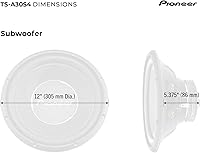
  • Mounting Depth: At 6 inches deep, this driver fits into relatively shallow custom or prefabricated enclosures, making it practical for sedans and compact vehicles.
  • Sealed Enclosure: Pioneer recommends a sealed enclosure of 1.25 cubic feet for tighter, more accurate bass reproduction with controlled low-end roll-off.
  • Vented Enclosure: For higher output volume, a vented (ported) enclosure of 1.5 cubic feet is recommended, though bass character will be slightly less precise than sealed.
  • Frequency Response: The driver covers frequencies up to 1.6 kHz, which is standard for a dedicated subwoofer crossed over appropriately within a full car audio system.
  • Impedance: Nominal impedance is 4 ohms, the most common impedance load for single-sub installs paired with a mono or two-channel bridged amplifier.
  • Dimensions: The overall unit measures 6″ deep by 12″ wide by 12″ tall, reflecting the standard footprint of a 12-inch subwoofer driver.
  • Weight: The driver weighs 4.4 pounds, which is relatively manageable during installation and typical for a 12-inch sub in this power class.
  • Mounting Type: Utilizes a surface mount configuration with an aluminum surround, providing a secure, stable fit within a properly constructed enclosure cutout.
  • Connectivity: Wired connection only; this is a passive driver that requires a dedicated external amplifier — no built-in amplification is included.
  • Compatibility: Designed for use in cars, trucks, and other vehicles, and intended to complement Pioneer's A-series full-range speaker components.
  • Included Items: The package includes the 12-inch subwoofer driver, eight mounting screws, an instruction manual, and a one-year warranty information sheet.
  • Warranty: Covered by a one-year limited manufacturer warranty from Pioneer, applicable to defects in materials and workmanship under normal use conditions.

Related Reviews
Pioneer TS-A301D4 12-inch Car Subwoofer
75%
83%
Bass Output
79%
Build Quality
88%
Value for Money
81%
Amplifier Compatibility
63%
Installation Ease
More
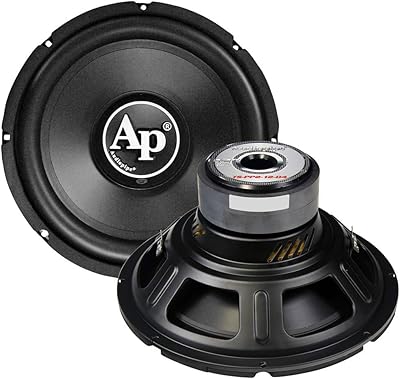
Audiopipe TS-PP2-12-D4 12-inch Car Subwoofer
70%
74%
Value for Money
71%
Bass Output
67%
Build Quality
58%
Power Handling
73%
Voice Coil Quality
More
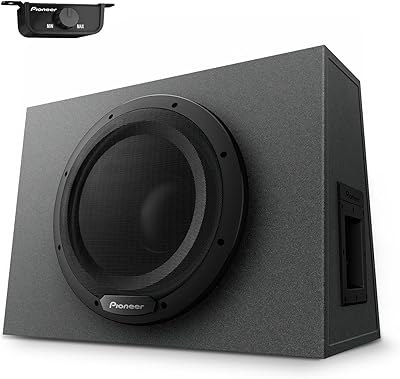
Pioneer TS-WX1210A 12-inch Powered Subwoofer
74%
88%
Ease of Installation
79%
Bass Output Quality
84%
Factory Stereo Compatibility
83%
Value for Money
72%
Tuning & Sound Customization
More
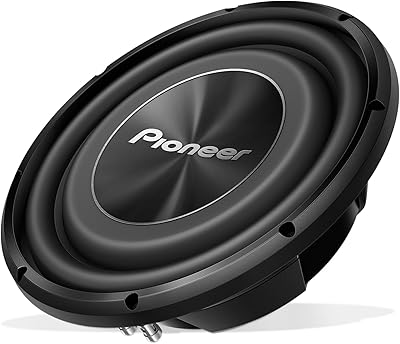
Pioneer TS-A3000LS4 12″ Shallow-Mount Subwoofer
78%
82%
Bass Output vs. Profile Tradeoff
88%
Installation & Fit
74%
Power Handling (Real-World RMS)
83%
Amplifier Compatibility & Wiring
79%
Sound Quality & Clarity
More
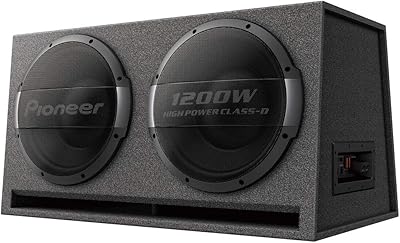
Pioneer TS-WX1220AH Dual 12″ Subwoofer Enclosure
77%
91%
Bass Output & SPL
88%
Ease of Installation
84%
Amplifier Performance
79%
Build Quality
62%
Physical Fit & Trunk Compatibility
More
HYANKA BSC-12-2 12-Inch Car Subwoofer
70%
84%
Value for Money
79%
Bass Output & Low-End Extension
72%
Build Quality
81%
Magnet & Motor Strength
66%
Installation Experience
More
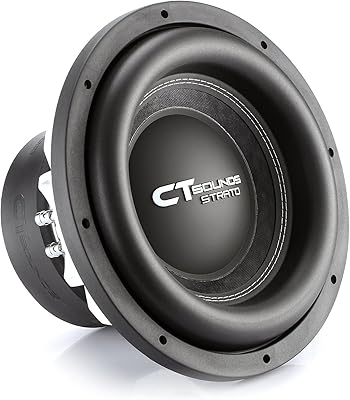
CT Sounds STRATO-12-D4 12-Inch Car Subwoofer
78%
89%
Bass Output & Volume
91%
Build Quality
88%
Thermal Durability
86%
Value for Money
74%
Installation Experience
More
Acoustic Audio PSW500-12 12-Inch Powered Subwoofer
73%
83%
Bass Output for Price
88%
Ease of Setup
86%
Value for Money
67%
Build Quality
71%
Sound Quality
More
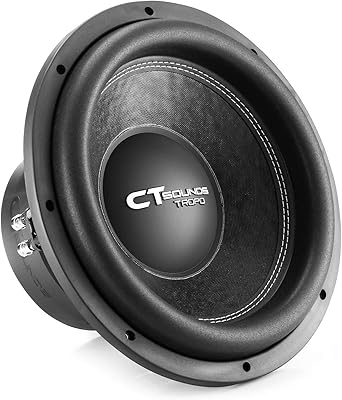
CT Sounds TROPO-12-D4 12-inch Car Subwoofer
77%
93%
Value for Money
81%
Bass Output Quality
86%
Build Quality
78%
Thermal Performance
84%
Installation Ease
More
CT Sounds STRATO-12-D2 12 Inch Dual 2 Ohm Car Subwoofer
86%
93%
Bass Performance
89%
Durability
91%
Power Handling
88%
Sound Clarity
84%
Ease of Installation
More

FAQ

No, it does not. The Pioneer TS-A30S4 12-inch Component Subwoofer is a passive driver, which means it requires a separate external amplifier to function. This is one of the most important things to clarify before purchasing — budget for a compatible mono amplifier alongside the sub itself.

You want an amplifier that can deliver around 300 to 400 watts RMS into a 4-ohm load, which matches the driver's continuous power rating. A quality mono block amplifier in that output range is the most common and practical pairing. Avoid underpowering it with a weak amp, as that is the most common complaint from buyers who walk away disappointed.

It depends on what you prioritize. A sealed box around 1.25 cubic feet gives you tighter, more accurate bass that tracks music well — great for rock, hip-hop with fast beats, or anyone who values precision. A vented box around 1.5 cubic feet will play louder overall but the low end can sound slightly looser on quick or complex bass lines. For daily listening, sealed is usually the more satisfying long-term choice.

The 6-inch mounting depth helps a lot here. Combined with the modest enclosure volume requirements, you can fit a sealed box in most mid-size sedan trunks and still have usable space remaining. Just measure your available trunk dimensions carefully against the enclosure size before committing to a box.

Technically yes, but it requires planning. Two 4-ohm single voice coil subs wired in series give you an 8-ohm load, and wired in parallel you get a 2-ohm load. Many mono amplifiers are stable at 2 ohms, but always confirm your specific amp's minimum impedance rating before attempting this configuration.

You can run it with a factory head unit as long as you use an amplifier with a high-level (speaker-level) input or an external line output converter. An aftermarket head unit with preamp RCA outputs makes the signal chain cleaner and easier, but it is not strictly required.

The sub itself is straightforward to mount — eight screws and the wiring terminals are clearly labeled. The more involved part is running power and signal cables to the amplifier, which takes some patience but is a common first DIY install. Plenty of online guides and forums cover the process step by step if you have not done it before.

Yes, though the experience varies by genre. For rock, metal, and acoustic music, a sealed enclosure setup keeps the bass accurate rather than boomy. The TS-A30S4 is not a one-trick sub — it handles low-end on well-recorded live music or film scores just as naturally as it does on bass-heavy tracks.

General feedback from longer-term owners is positive — the cone material holds up well under regular use and the surround does not show early signs of cracking or separation under normal conditions. As with any car audio driver, avoiding sustained clipping from an underpowered or poorly tuned amplifier is the single biggest factor in long-term durability.

Absolutely. The jump in sound quality from a generic budget sub to this Pioneer driver is typically noticeable, especially in terms of bass clarity and control. Pioneer's build standards and the quality of the IMPP cone material put it in a different category from off-brand alternatives at similar price points.

Where to Buy